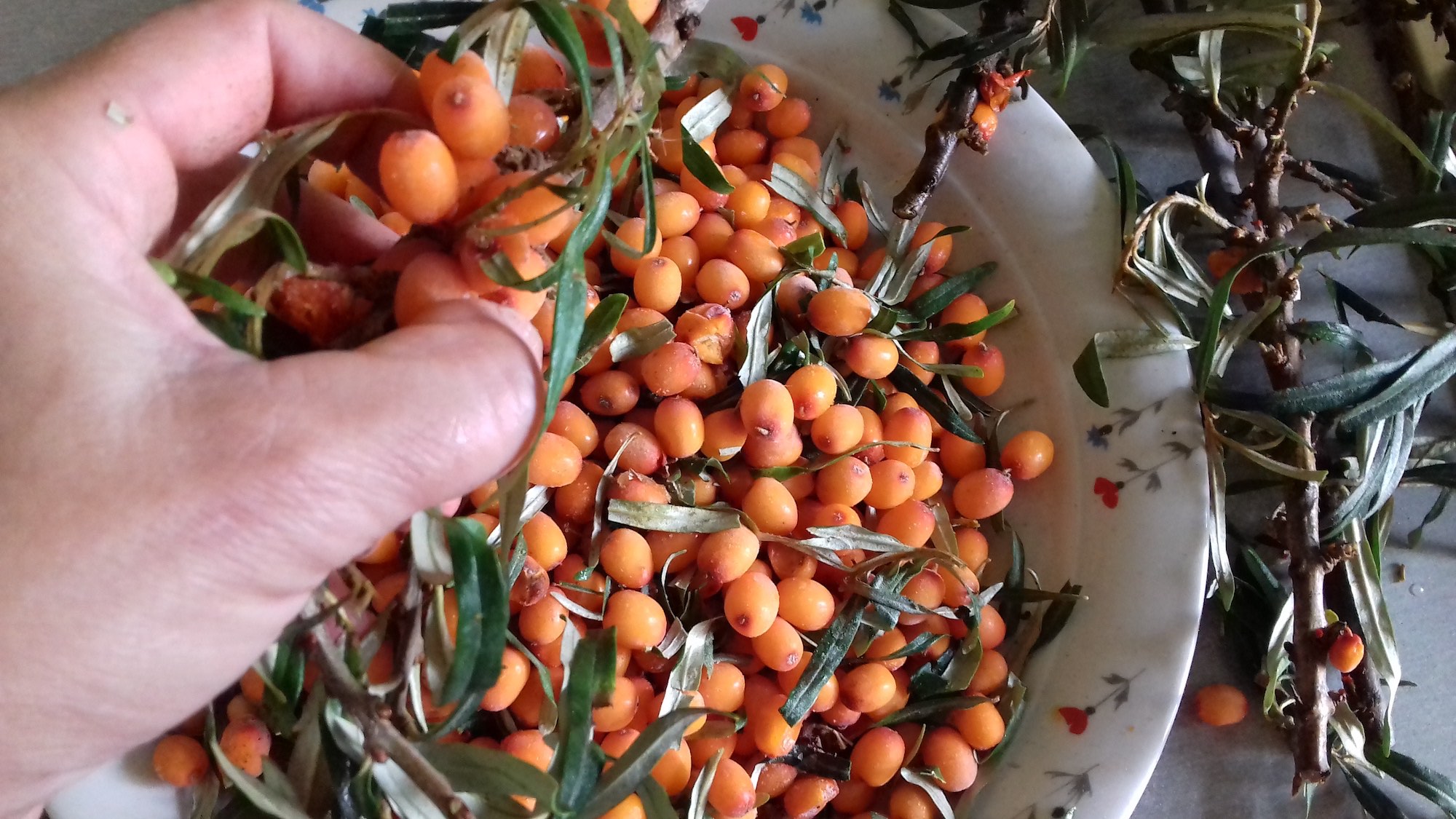
“Insider tip (aka a nipp!) – sea buckthorn leaves: the oft-forgotten side of this the powerful plant. Sea buckthorn leaves are rich in antioxidants such as polyphenols and flavonoids, at the level you'll find in green tea or rooibos. The minerals in the leaves are calcium and magnesium,” writes aylabeauty.com.
The Estonian name is deceptive: astel/paju literally means “thorny willow”, yet it belongs to the oleaster family, hõbe/puulised. It's not native to Estonia or North America, but is grown and harvested throughout. Its native range extends from the Atlantic coasts of Europe across to northwestern Mongolia and China. It thrives in the sandy soil of coastlines, tolerates dry semi-desert sites and also occurs as a sub-alpine shrub above the tree line in mountains.
My friend Mari-Liis piped in that she rolls the berry-laden woody branches between her hands while wearing töö/kindad (work gloves) to release its berries. They're a far cry from sweet wild strawberries – tremendously tart and have been described as having a “musty sour tang”, as well as being an all around “ridiculously frustrating fruit” (The Irish Times). But that won't stop kids from tossing them into smoothies or their morning puder (porridge) in their frozen state. They melt quickly and burst, turning the puder a cheerful oranž. It's a good nipp to know.
Riina Kindlam, Tallinn