Overcoming the deep-seated fear created by Soviet terror, the Estonian citizens’ movement resulted in an authentic referendum in favor of restoration of a fully independent state, relying on international law and the principle of legal continuity. By the time the first session of the Congress of Estonia convened in March 1990, a crucial mental and political change had taken place. Instead of cherishing hopes of being granted some more economic and cultural autonomy within the framework of the Soviet Union, Estonian citizens succeeded in creating a democratic alternative to the half-hearted reforms, offered by perestroika-minded communist elites. A new paradigm of full-fledged democracy and complete independence resulted. After the first session of the Congress of Estonia, the Estonian branch of the communist party quietly melted away.
The Citizens’ Committees movement relied on legal, not ethnic, principles. Among citizens of pre-occupation Estonia, there were thousands of Russians, Germans, Swedes, Jews and others, whose citizenship was hereditable by their children (ius sanguinis). Simultaneously, the Citizens’ movement offered non-citizens a chance to register themselves as applicants for Estonian citizenship. For such a courageous act, they were promised an easier path to citizenship, when and if Estonian independence was restored. About 60,000 individuals applied and elected their own representatives to the Congress of Estonia. This was the beginning of inclusive national politics.
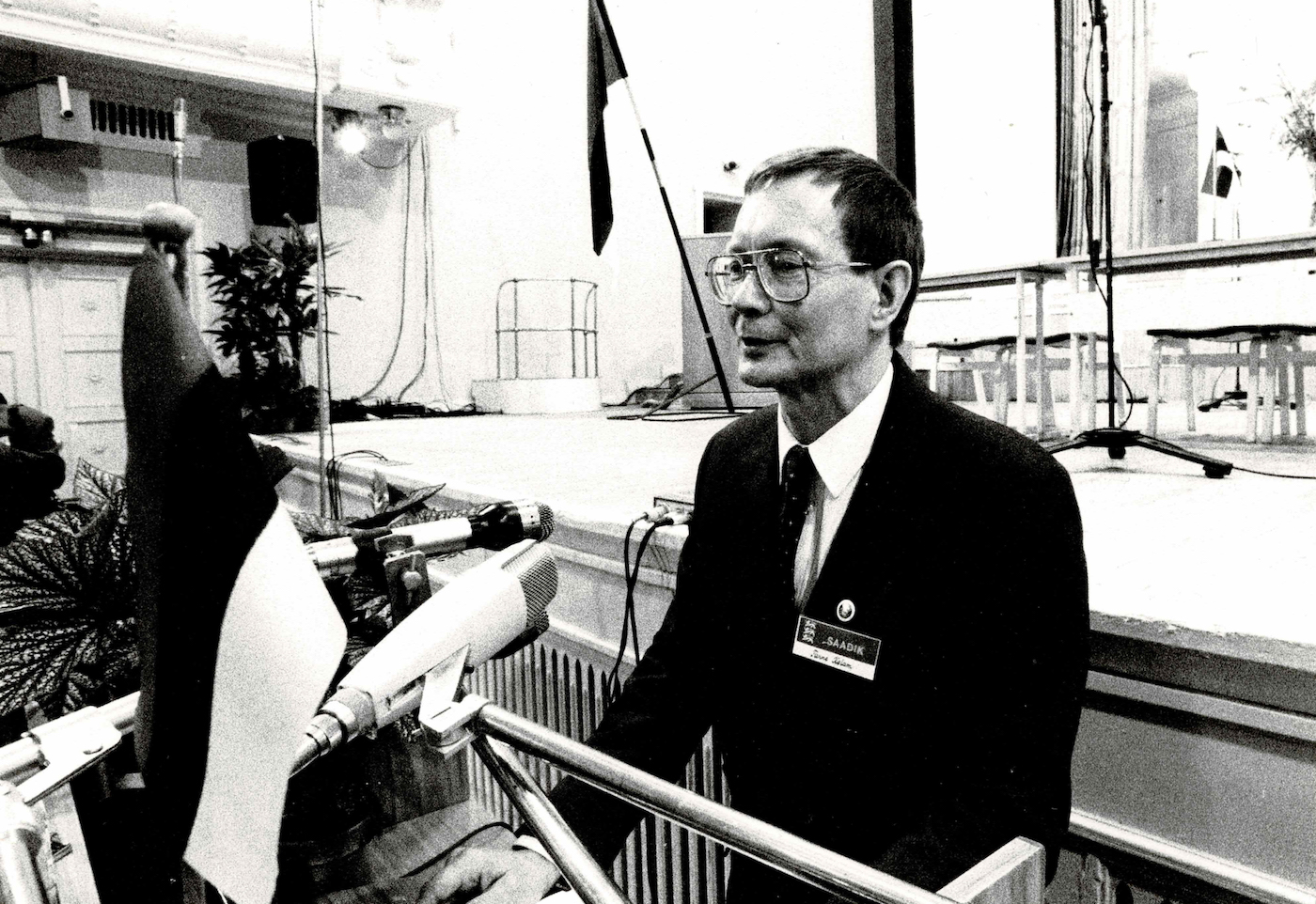
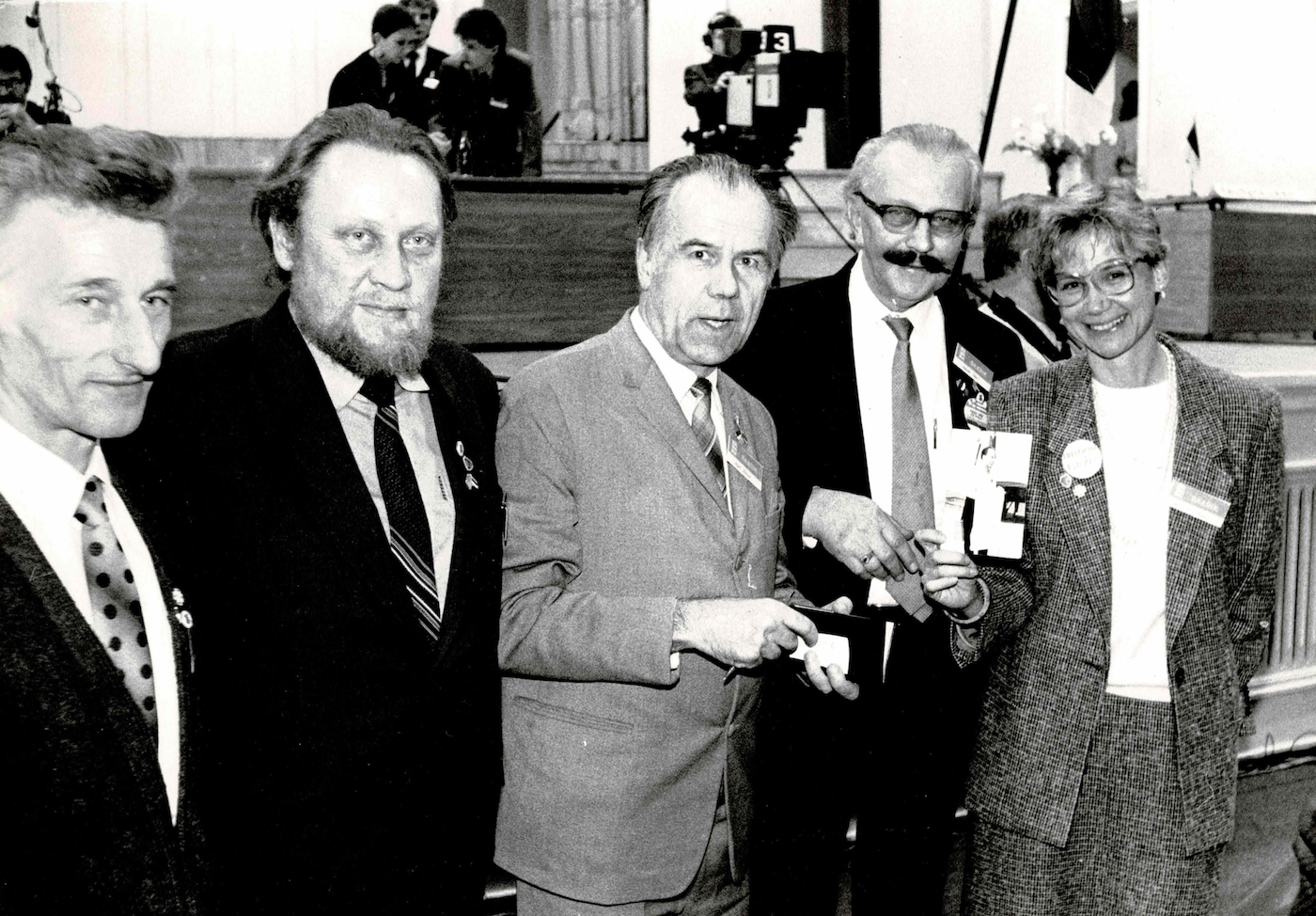
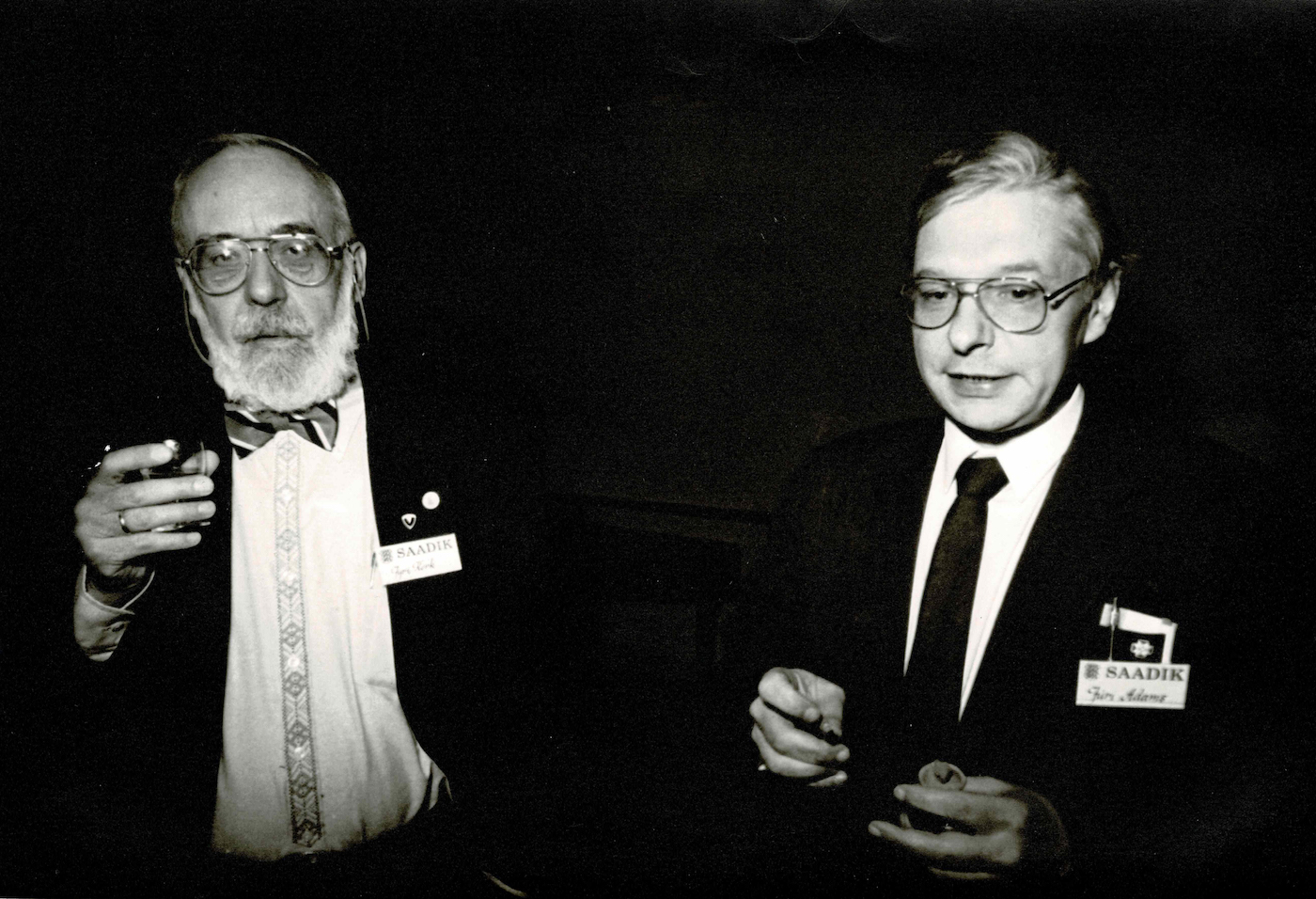
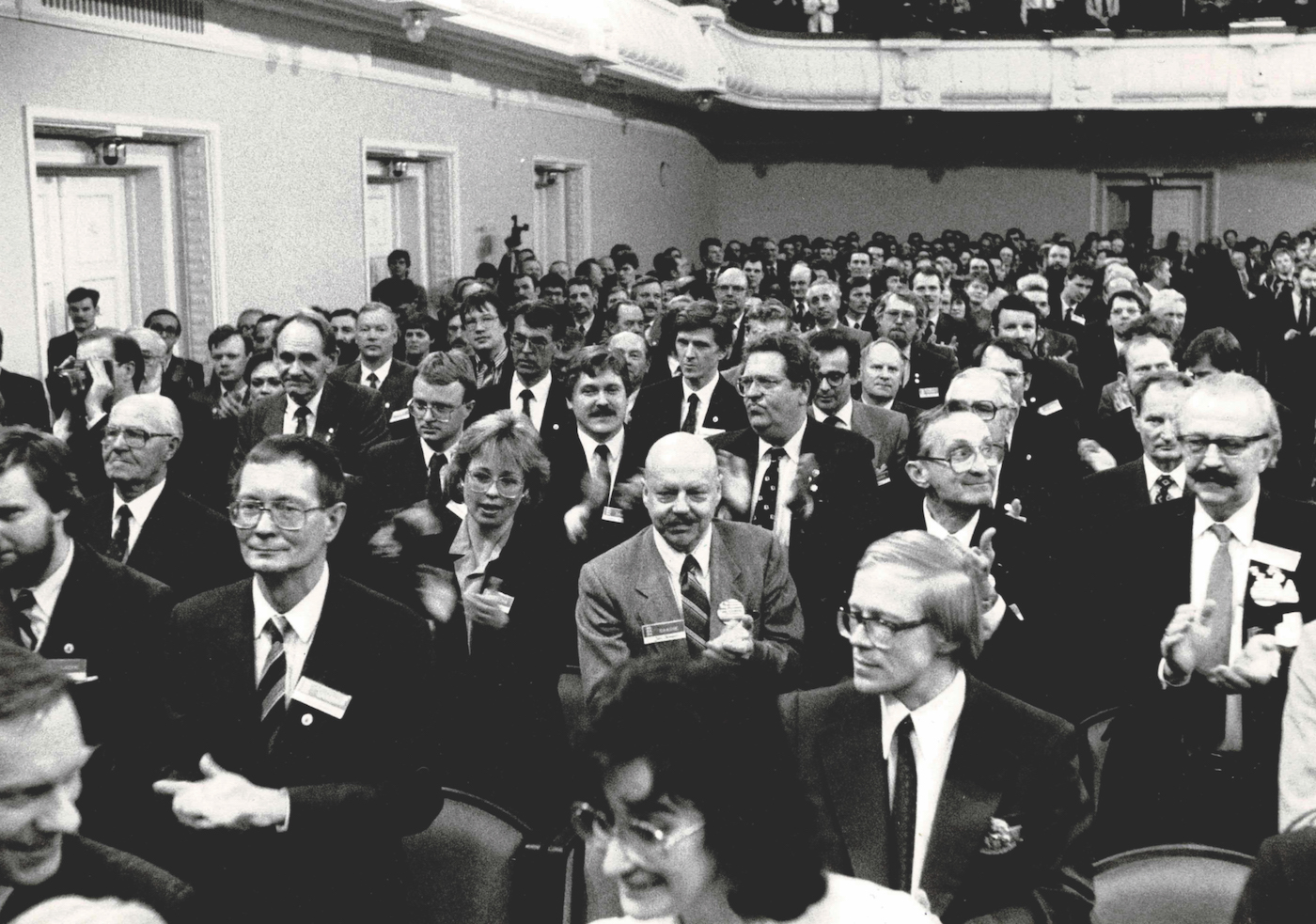
The Congress of Estonia was elected in February 1990 with the presence of several international observers. Nearly 90% of the registered citizens participated, the highest degree of political activity in the history of free Estonia. There were 1113 candidates for 499 seats. Thirty-one political parties and movements, the full political spectrum, were represented in the Congress of Estonia. As the democratically elected representative body of legal Estonian citizens, the Congress had a unique mandate to decide on the principles of statehood as well as citizenship. At the first session on March 11-12, 1990, a Declaration on the Restoration of Legal State Power in Estonia was adopted. However, instead of claiming power immediately, the Congress, in cooperation with the newly elected Supreme Soviet, proclaimed a transition period. This mechanism provided for more flexibility and avoided violent clashes. A democratic, non-Soviet political alternative had entered the crumbling Estonian SSR reality.
From 1990-92, the Congress of Estonia convened 10 times, serving also as an important hotbed for the fledgling democracy. As the representative body of Estonian citizens, it thwarted the attempts of the Soviet Estonian power structures to form a pseudo-state based on the Estonian SSR. On August 20, 1991, leaders of the Congress of Estonia reached a national understanding with the Supreme Soviet on restoring the Republic of Estonia as an independent, democratic nation state relying on legal continuity. Under the terms of the national understanding, a Constitutional Assembly was formed by representatives of the two bodies on the basis of parity. After the first constitutional parliamentary elections in September 1992, the Congress of Estonia dissolved itself. Its goal – the restoration of the legal state power – had been accomplished.
President Lennart Meri has stated: “The Congress of Estonia became the largest citizens’ initiative in the history of Estonian nation.”
“We need to stress over and over that Republic of Estonia did not restore its independence in 1991 by modifying the Soviet system. It was not a mere change of signboards. I want to stress that we have restored the independence of our nation on the basis of legal continuity. In this regard the Supreme Council was the practical lever. But the legal foundation, the fulcrum on which this lever rested, were the Estonian Citizens’ Committees. Only in this way did the Estonian people win back their independence.”
By Tunne Kelam, former Member of the Congress of Estonia