Subscribe Menu

5 Eurovision highlights from Estonia and beyond

For approximately 180 million global television viewers, the Eurovision Song Contest (ESC) is a yearly ritual. To label it as a showcase of European pop music is only partially true, because each year brings to TV screens a rich variety of styles and artistic ideas. Disco, techno, folk, indie rock, and classical crossover, to name a few.

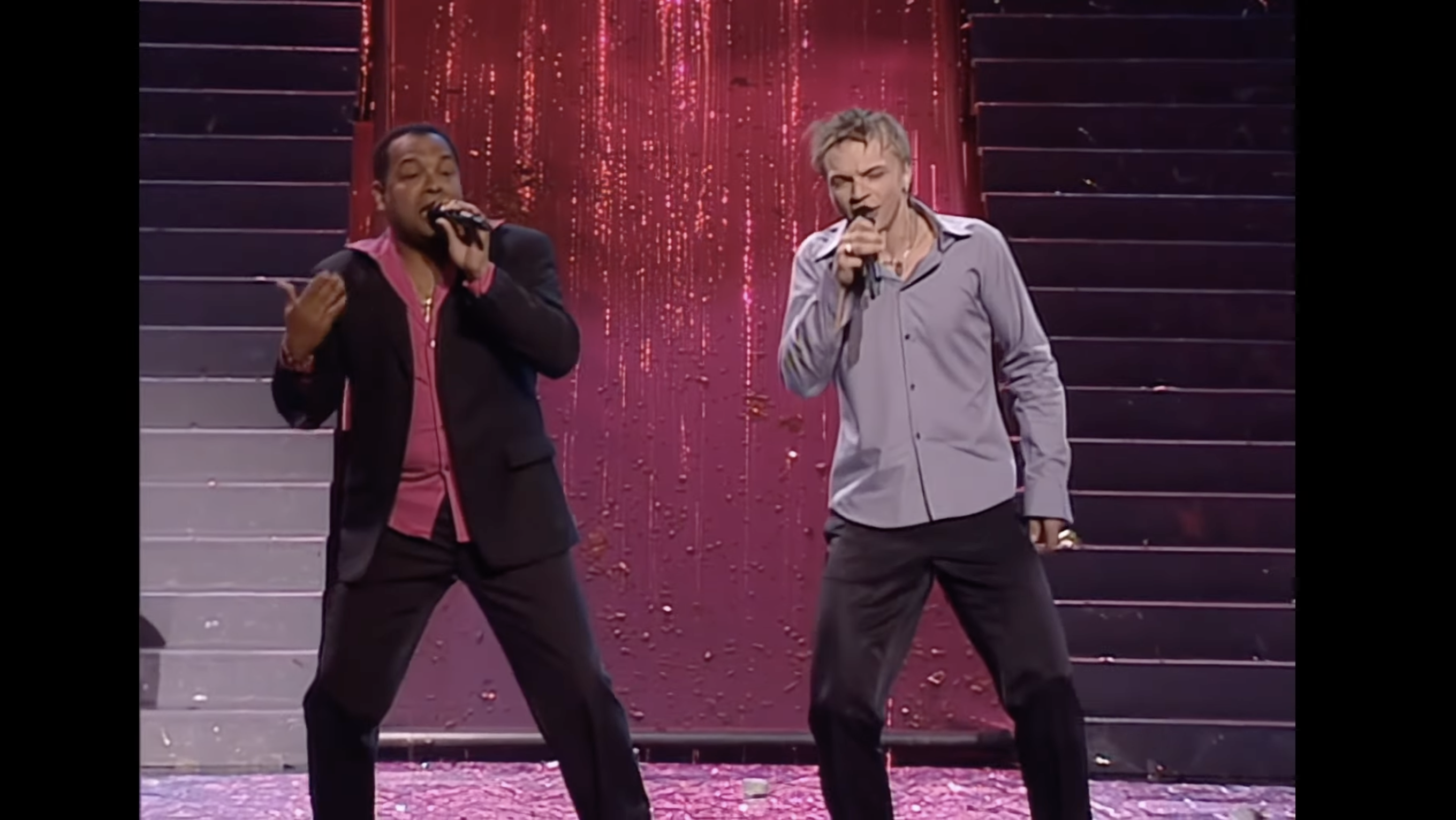
Dave Benton and Tanel Padar

What unites it all is a focus on singing and tight songwriting. The catchier the song, the better. At times, artists who are chosen to represent their countries opt for a maximalist approach, with choreographed dance routines, elaborate costumes, animated visual backgrounds, and pyrotechnics. Alternatively, the artists emphasize commanding balladry.

Both at home and in public spaces, fans of Eurovision get together for watch parties with refreshments and high hopes for their favourite artists. Pretty soon — between Tuesday May 7th and Saturday May 11th — people will get a chance to revel in the anthems, drama, and glory of this year’s contest.

Before it comes, though, let’s look at five Eurovision highlights from over the years.

Everybody” by Tanel Padar, Dave Benton, and 2XL: One can’t talk about Estonia and Eurovision without mentioning this feel-good party tune that won the contest in 2001. Estonians have officially taken part in Eurovision since 1994, but it wasn’t until this fusion of rich pop vocals and disco groove came about that Estonia got the votes to pour in.

They’re having the best time ever with 2XL backing them up on mics behind, egging people on to party with them, and before you know what’s happened, you’re up on your feet dancing, too.

It was a charismatic show for Estonia, with Benton and Padar duetting on stage with the dynamic of two lead characters in a buddy action movie. They’re having the best time ever with 2XL backing them up on mics behind, egging people on to party with them, and before you know what’s happened, you’re up on your feet dancing, too. A special mention here for Tanel Padar singing with less of the rocky vibe that he usually goes for and the member of 2XL (now Soul Militia) breakdancing on the stage.

Waterloo” by ABBA: The ESC has been around since 1956, created with the aim to bring together European countries through song. It’s a leading force in international broadcasting.

Thus, it’s a perfect place to debut music for a wider audience. ABBA’s hit song “Waterloo” was first performed for 1974’s ESC, winning the contest and launching them to international stardom. It has an Estonian connection as well, as at least one Estonian will have told you before, because at one point, ABBA’s business manager was an Estonian by the name of Jaan Manitski.

…what makes it shine brighter is the cabaret dramatism of how Agnetha, Björn, Benny, and Anni-Frid play the song, around the foundation of a boogie-woogie rhythm section.

Lyrically, this song is a pop masterpiece, deftly analogizing romance to the final battle of the Napoleonic Wars. But what makes it shine brighter is the cabaret dramatism of how Agnetha, Björn, Benny, and Anni-Frid play the song, around the foundation of a boogie-woogie rhythm section. It’s “extra” and that’s what Eurovision is a perfect space for.

Saudade Saudade” by MARO: A rather hidden gem in the 2022 edition of Eurovision has to be this offering from Portugal. It’s beautiful on multiple accounts. From the start, the recorded version has a warbling quality to the guitar that feels like an old memory.

The sombre melody makes clear the bittersweet meaning of the lyrics, as do the harmonies of the singers. Like in the second verse:

Tem tanto que trago comigo
Foi sempre o meu porto de abrigo
E agora nada faz sentido
Perdi o meu melhor amigo

There's so much I bring with me

You were always my port of refuge

And now nothing makes sense

I lost my best friend

A particularly stunning rendition of this song was recorded by MARO, four guitarists, and seven singers in a reverberant church. At the end, palmas (hand clapping) and percussive guitar break down the song before one last round of the chorus.

“Kuula” by Ott Lepland: Every iteration of Eurovision needs a powerful ballad, and this is a top contender. Not only does Lepland go all in with intensity half-way through, he takes it up another notch soon after with a key change. It’s an excellent example of control and channelling emotion in singing.

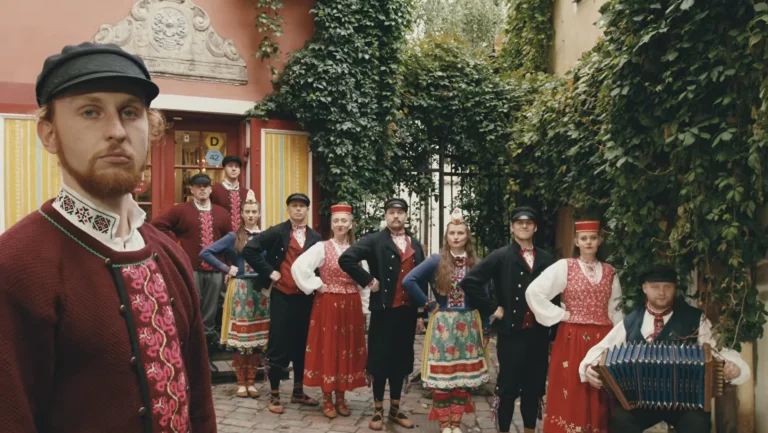
“Tii” by Neiokõsõ: Estonia didn’t hold back with this submission from 2004. Neiokõsõ didn’t go full-on nightclub like Jedward in 2011, but there’s quite a trance-inducing beat, shown off by the intense percussionist on stage left who, if you look closely, has devil horns on top of his head. He punches the notes out of the cymbals in between the intriguing blending of these singer’s five chanting voices in võru keel (the language of Võrumaa).

The accordion-filled chorus becomes brighter, but the song’s verses and ending are quite mysterious.

The song first bounces in with the notes of a jaw harp and one voice. Then another voice begins, followed by the other three singers and the blast of an electronic drum beat. The accordion-filled chorus becomes brighter, but the song’s verses and ending are quite mysterious.

Here’s to another exciting year of the festival, this time in Malmö, Sweden, and best of luck to 5MIINUST and Puuluup, representing Estonia this year!

Read more