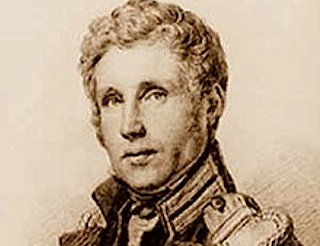
Shot not in anger but as the customary greeting of a visiting ship entering San Francisco Bay, Captain Otto von Kotzebue waited for a respectful seven-gun return salute . . . that never came: the rag-tag soldiers of San Francisco's Presidio had enough gunpowder for only five shots. Neither had the impoverished garrison a single seaworthy rowboat to meet the vessel, as courtesy demanded. Miffed, the famed Estonian-born navigator and Captain of the Russian naval vessel Rurik, refused the dinner invitation of the Presidio's Commandante, José Darío Argüello, until the proper cannon volley could be delivered — and Kotzebue ordered that sufficient gunpowder be lent to the Presidio. The next day, two make-up shots were fired. The slight was forgiven . . . but not forgotten.
On June 28th through July 3rd 2013, San Francisco will forever heal any lingering bruised feelings as it hosts the world festival of Estonian culture and community, LEP-ESTO 2013. Otto von Kotzebue, no doubt, would heartily approve. The four day event gathers Estonian-Americans and world Estonians together for collective singing (the “Laulupidu”), folk dancing (the “Tantsupidu”), a major film festival featuring a premiere by the directors of “The Singing Revolution”, an elegant Grand Ball at Union Square's Grand Hyatt Hotel and the first ever performance of the Estonian National Ballet, performing a piece especially choreographed for the event (a complete listing of events may be found at the event website, www.LEP-ESTO2013.com).
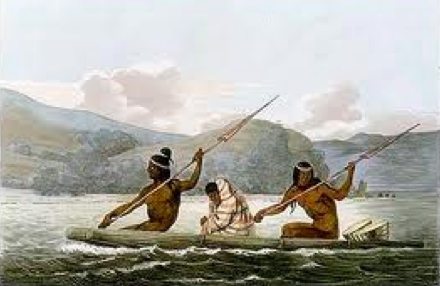 Under the heavy thumb of the Russian Czar even in Kotzebue's day, the story of the nation of Estonia is one of heroic defense of language and culture despite war, foreign occupation and determined efforts to efface the national identity. It is also the story of triumphal rebirth. Forcibly annexed by the USSR, an act never
recognized by the USA, Estonia won its freedom in 1991. The country today has leapt from the world economic doldrums and possesses one of the fastest growing economies of the European Union. The nation is a leading pole of IT innovation (Skype, the ubiquitous internet telephony app, was invented in Estonia) and is pioneering the field of Cyber-defense. In its fierce love of independence and innovation, Estonia, in many ways, shares a kindred spirit with the San Francisco Bay Area.
As Estonian-Americans prepare to gather in San Francisco for LEP-ESTO, it is appropriate to honor the San Francisco Bay explorations of Otto von Kotzebue, who figures as a historic bridge between these two lands separated by continents and oceans.
Otto von Kotzebue, son of famous Baltic-German playwright, Augustus von Kotzebue and family friend of Ludwig von Beethoven, was born in Tallinn, Estonia on December 30, 1787 and was trained at the Sea Cadets Academy of the Russian Imperial Navy in Saint-Petersburg. He died in Tallinn in 1846 at the age of 58, and lived his later years at his manor house, Kõue Mõis, in the village of Triigi, Kose Parish, Estonia (www.kau.ee). The illustrious Kotzebue Family is buried in the churchyard of Kose.
After accompanying his countryman, fellow Estonian-born Captain Adam Johann von Krusenstern on his round-the-world voyage in 1803-1809 on the Nazhdezda– the first circumnavigation of the earth by a Russian ship — Kotzebue was promoted to Lieutenant and requested by Count Nikolai Petrovich Rumyantsev, to locate a “Northwest Passage” between the Pacific and Atlantic Oceans and to explore the lesser known regions of Oceania and western North America. Kotzebue set sail on 30 July 1815 from Kronstadt Island, near Saint-Petersburg, with a crew of 27. Foremost among the crew: Estonian naturalist and University of Tartu graduate Johann Friedrich von Eschscholtz, French-German naturalist Adelbert von Chamisso and 20 year-old Ukrainian artist and illustrator, Ludovik (“Louis”) Choris, considered by Californian historians as one of the finest ethnographical artists of his era. The Rurik, a two-masted brig built for the expedition in Abo, Finland, was outfitted with the most advanced technology known in its day, including the first ever ocean-going ice machine.
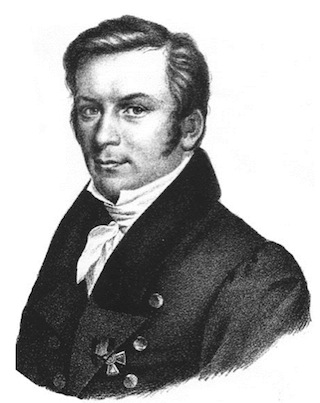 The adventures and discoveries of Kotzebue and the Naturalists aboard the Rurik are epic and are recounted in detail in the Kotzebue narratives — said to have been assiduously studied by Charles Darwin as he prepared The Beagle expedition. The 1816 visit to San Francisco lasted only one month, but the expedition geographic, ethnographic, botanical, and zoological observations, including Poppy, made by Eschsholtz and Chamisso. The naturalists named what is today made extensive studies of the California grizzly and the earliest description of the California California's official State Flower after the Estonian, Eschscholtizia californica, which was also the first recorded use of the word “California” in scientific
nomenclature.
Kotzebue returned to San Francisco for two months in 1824 as Captain of the Russian vessel, Predpriatie (“Enterprise”), and the explorer ranged more widely in Bay Area, traveling as far south as Mission Santa Clara, in what is now nicknamed “the Silicon Valley”, and as far north as Mission San Rafael, in Marin County, and Fort Ross on the Sonoma Coast, documenting the exotic flora and fauna of the region.
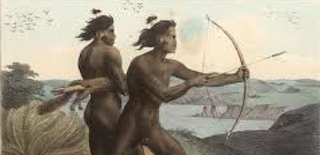 Otto von Kotzebue and Adelbert Chamisso are recorded among the earliest of critics of the Spanish “Mission” system, which they lamented as destructive of Native American rights, language, culture and ultimately, of the people themselves. Chamisso wrote, in protest of the rapid demise of local indigenous culture under the cruel missionaries,
“Every fragment of the history of man is of importance.”
At LEP-ESTO 2013, San Francisco will remember the first Estonian to set foot in this lovely, foggy city — with deep admiration of the humanity and bravery of Captain Otto von Kotzebue and the Naturalists of the Rurik and Prepriatie.
Ingrid Echter, President, LEP-ESTO 2013
ingrid@lep-esto2013.com
Kristjan Lewett
kris.lewett@gmail.com
Tel: +1 415 215 4238
Lugupeetud lugejad, kõikides paikades maailmas – saatke meile oma mälupilte (kas eesti või inglise keeles) ning allkirjadega varustatud fotosid Estodest ja Lääneranniku Päevadest – neid tõeliselt meelespidamist väärivaist suursündmustest! Jagame ja hoiame oma kultuuripärandit, eriti silmas pidades tänavust kultuuripärandi aastat!
Ootame Teie lugusid ja/või fotosid: eetalitus@eestielu.ca või eetoimetus@eestielu.ca