Subscribe Menu

Estonians win first place in the world’s longest paddle race

Invest in Estonia has said that “For Estonians, the most truthful conversations happen in the sauna. We may seem a bit reserved at first, but the sauna is where we truly open up and understand each other. It’s our oldest social network (perhaps still the best one) and the perfect place to talk business.”

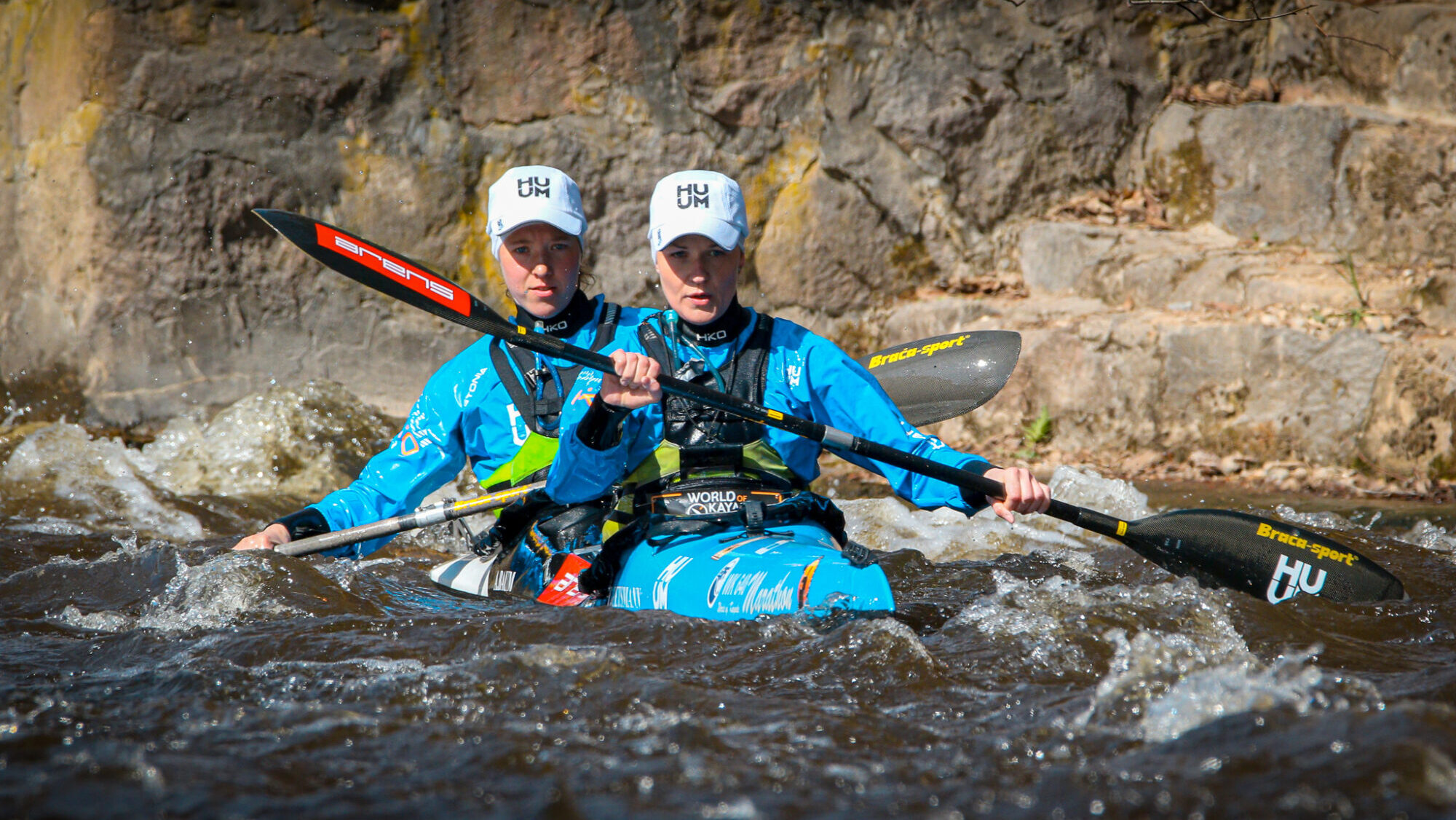
Anette Baum and Linda Tetsmann from the HUUM Sauna Kayak Team (source: yukon1000.org)

It’s not just business, though. As Anette Baum — who won this year’s Yukon 1000 race with her friend Linda Tetsmann — explained, the steam also inspires athletic feats. She says, “The most challenging and outstanding ideas are born when women meet in a sauna after another river marathon. That’s how our journey started!”

They were going to compete in the Yukon 1000, the world’s longest paddle race.

It’s dubbed a “paddle race” because the Yukon 1000 reviews the applications of canoers, kayakers, and stand up paddlers alike, for a 1,000 mile (1,600 kilometre) race down the Yukon River. From a beach in Whitehorse, racers follow the wild course of the river to the Gold Rush town of Dawson City, over the border into Alaska “until the Dalton Highway Bridge, in the Arctic Circle…” And this year was a fantastic result for Estonia. Three Estonian kayaking teams either won or were among the top eight competitors of 15.

In eighth place were Martin Ilumets and Hillar Irves from the World of Kayaks team (completing the race in seven days, four hours, and 36 minutes). In fourth place were Rait Hutrov and Marek Lindmaa from the Estonian Adventurers team (seven days, one hour, and 58 minutes). In first place were Linda Tetsmann and Anette Baum of the HUUM Sauna Kayak Team, blazing across the finish line in six days, nine hours, and 12 minutes. 16 minutes behind them were Carmen Gustafson and Crispin Studer, the Canadian “Not a Crisis” canoe team.

The physical challenge alone sifts out many athletes. Competitors paddle up to 18 hours a day, with a mandatory six hours of rest each night. Skimping on sleep might be physically possible but it will get you disqualified by the race organizers.

Still, there is a cut-off of nine days and 18 hours to finish the race, which means each hour of paddling ought to be maximized through sheer perspiration and reading the river. The fastest ever paddle of the race’s 1,000 miles was in 2022, when American kayakers Daniel Staudigel and Jason Magness finished in five days, 11 hours, and 48 minutes.

Then there is the rule that you must carry everything with you from start to finish, namely tents and food. Re-supplying part-way through isn’t allowed. So food is crammed into boats or onto paddle boards. Potable water can be accessed most easily by using tools such as a LifeStraw or purification tablets, but carrying other gear adds to the difficulty of paddling.

On top of athleticism and paddling technique, competitors must be competent in navigation with the use of GPS technology and maps. The course of the Yukon River starts out simple enough, but soon, one must be aware so as not to turn onto a different river and to safely traverse around and between islands. All of this is in a region without human contact for nearly the entire race. As the Yukon 1000 organizers state, “More people have been up Everest than have been beyond Dawson City.”

It tells you a lot when you see that the cost of the race covers “repatriation of mortal remains up to $15,000 to your home country.” However, the rigorous application process, adherence to the packing list, and careful decisions day by day (such as keeping food away from one’s tent when sharing space with wildlife) prevent unnecessary risks and harm.

Perhaps the most vital element that contributes to winning the race, though, is the social element. Hopefully you’ve paired yourself with a fellow paddler who aligns with your level of physical fitness and overall demeanour. On social media, Linda Tetsmann and Anette Baum demonstrate cohesiveness. They train together on cross-country skis in the winter. They have tackled many smaller races to prepare, such as the 100 km Võhandu Maraton and the 360 km Dordogne Intégrale.

And when the paddling is over, they go to the sauna together. There’s a good chance they’ve been planning their next challenges from there already.

Read more