Such were the conditions faced by Korvpalliklubi Kalev (Kalev Tallinn), the basketball team representing Estonia, when they competed in the 1991 USSR Premier Basketball League championship. In addition to Estonia, this league included teams from Belarus, Georgia, Kazakhstan, Kyrgyzstan, Latvia, Russia, Ukraine, and Uzbekistan.
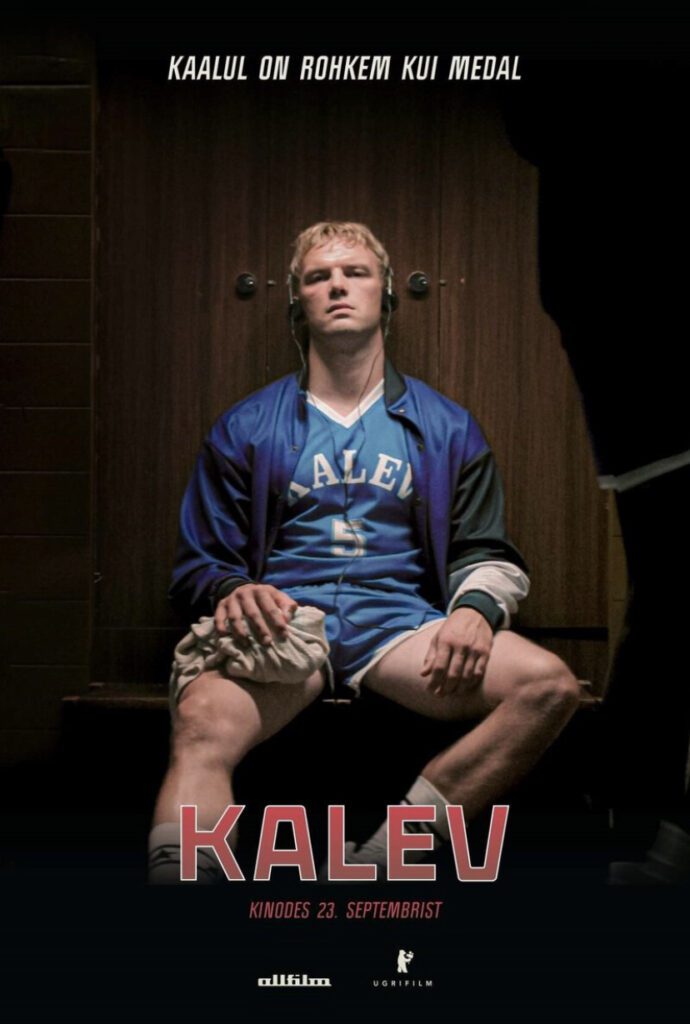
Kalev Tallinn was to compete in a championship where the odds were against them when it came to morale, resources, and the inner workings of Soviet competitive sports. But they were talented players with a fiery coach and a dedicated club president. This uphill battle is the focus of Ove Musting's 2022 film, Kalev.

We’re entranced by stories like these, as shown by the huge turnout for the screening of Kalev at the 2023 European Union Film Festival. Excitement lingered in the air and it was a full house at Toronto's Alliance Française.
Estonian Honorary Consul General and Estonian Life editor Laas Leivat spoke at the start of the screening, stating that the film wasn’t really so much about basketball as it seemed. And it’s true. The film is more about the collapse of the Soviet Union, the re-gaining of Estonian independence, and the political implications of playing sports in that tumultuous time.

From the outset, we’re introduced to the struggles of Kalev’s players, head coach Jaak Salumets (played by Mait Malmsten) and club president Riho Soonik (portrayed by Priit Võigemast). Life in Soviet-occupied Estonia is tough. The housing situation for star shooting guard Aivar Kuusmaa (Reimo Sagor), his wife Mari (Liisa Saaremäel), and their baby is cramped and precarious. Hot showers are a luxury. At one point, George Jackson, the American teammate Kalev hires (portrayed by American-Estonian basketball player Howard Frier) expresses his shock at the squalor of Soviet infrastructure compared to his hometown of Detroit.
Mait Malmsten is the standout of the whole cast, boiling in his own blood at the edge of the court as the Estonian team’s rotation of plays is foiled.
Indeed, we’re really made to connect and empathize with the team. The whole cast is likeable, or at least charismatic in their representation of historical figures. Priit Võigemast plays Riho Soonik sensitively, believing in the team even at their lowest points. Mait Malmsten is the standout of the whole cast, boiling in his own blood at the edge of the court as the Estonian team’s rotation of plays is foiled by teams from Latvia, Russia, and Ukraine. Off the court, he dukes it out with the press, including one particularly persistent reporter, played by Nero Urke.
Early on, the team has to decide whether they will take part in the league championship, even when it will be seen as an unpatriotic attempt to legitimize the disintegrating Soviet regime. To this, young recruit Gert Kullamäe (Mihkel Kuusk) chimes in that “We are not a tank unit, we play basketball.” And within two hours of screen time, the head coach breaks their problem down to one sentiment—there is no option but to win the championship.
Kalev’s darkest point would have to be the scene in which we hear of Lithuanian civilians being killed by the Soviet military during the January Events (Sausio įvykiai), when the threat of violent retaliation looms over the Baltic nations seeking to restore independence. Then there is the disappointment of the Estonian team resorting to bribery.
Kuusmaa shoots to kill on the court and leads his army of athletes through numerous setbacks.
Yet, Kalev proved to be an uplifting film in the end. Although never explicitly stated, we are poetically supplied with player Aivo Kuusmaa as the heroic “Kalev” in this narrative. In a manner of speaking, Kuusmaa shoots to kill on the court and leads his army of athletes through numerous setbacks, proving that what happens in each game is symbolic of something bigger.
Pay no mind to someone who says “It's just a game” when watching sports like basketball. Sport is never just about movement and points, it's far weightier than that.