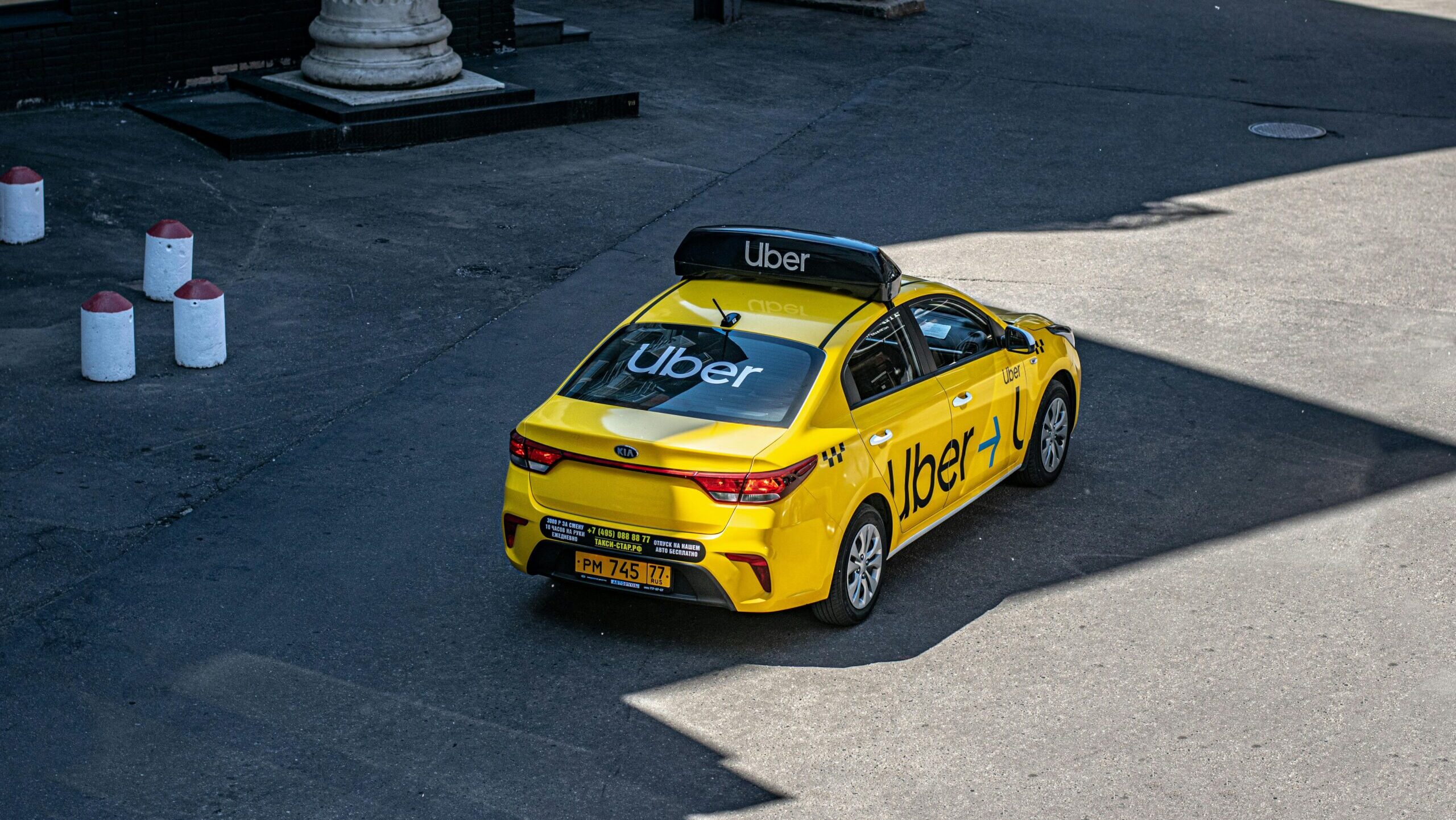
The European Union's Platform Work Directive (2024) acknowledges these challenges and aims to improve the livelihoods of platform workers.
Still, the directive was met with resistance from some EU member states (including Estonia), driven by the lobbying powers of various platforms. This demonstrates a crucial point: platforms exert economic leverage and wield political influence, shaping legislation to serve their interests. Therefore, we must be adamant about critically examining who these developments ultimately benefit to safeguard the rights of those at risk of being left behind.
Who are platform workers?
Platform work is not a new concept. Freelance work, as it has been known, has existed for decades. Today, the difference is that much of it is facilitated by online platforms. The European Commission (2021) outlined its criteria, which involve three parties: the online platform, the client, and the worker, to carry out specific, detailed tasks that are provided on demand.
New systems of management
Underneath the benefits of platform work lies a more complex work environment. Traditional labour relationships involve a hierarchical employee-employer relationship, where management clearly outlines the employee's tasks with transparency and accountability. Platform work blurs this relationship. Scholars have raised concerns over “algorithmic management,” referring to algorithms that dictate what tasks are assigned, who performs them, for what amount of money, and when. Importantly, the inner workings of these algorithms are hidden under a veil of opacity. Limited transparency in user rating systems, metrics, and other codes of conduct leaves platform workers in the dark in regard to how they are evaluated.
And, without any clear systems of accountability, platforms can justify discriminatory automated decisions with vague references to the algorithm, leaving workers with little to no recourse.
While Uber has responded with assurances of “flexible” work, the company's portrayal of its automated decisions as neutral veils its power asymmetry between workers and itself, allowing corporate interests to prevail at its workers' expense.
A study released on June 19th, 2025, by researchers at the University of Oxford, shows how this plays out. In 2023, Uber introduced its “dynamic pricing” algorithm, which determines fares and fees in real time. Since then, Uber's “take rates” (or commission) have increased up to 50% on some trips in the UK, while drivers' hourly wages have decreased, according to the study. While Uber has responded with assurances of “flexible” work, the company's portrayal of its automated decisions as neutral veils its power asymmetry between workers and itself, allowing corporate interests to prevail at its workers' expense.
Despite these conditions, platform workers in the EU often lack access to adequate social protection, collective representation, and bargaining, as well as other employee benefits. This is because they are considered “freelance” and are therefore not afforded the same rights as full-time employees.
With these issues becoming increasingly common, the European Commission put forward its proposal on new rules for platform work to the Council and European Parliament in 2021. Known today as the Platform Work Directive, the legislation aims to clarify the classification of platform work and improve working conditions.
One key mechanism addressing misclassification is the legal presumption of employment, where “a person performing platform work shall be legally presumed to be in an employment relationship when facts indicate control and direction,” according to the Council. “This will grant platform workers easier access to their rights under EU law,” it adds. Crucially, a platform may challenge this presumption, but only if it can demonstrate that the platform worker is not in an employment relationship.
Invisible influence
The PWD was not officially adopted until October 2024. Several European member states, including Estonia, abstained or voted against it. Most of their objections revolved around the legal presumption of employment that the PWD introduced.
An article in Euro News states that “According to the Commission's estimates, about 5.5 million of the 28 million platform workers active across the bloc are currently misclassified and would therefore fall under the legal presumption. Doing so would make them entitled to rights like minimum wage, collective bargaining, work-time limits, health insurance, sick leave, unemployment benefits and retirement pensions.” This promise stands in direct opposition to the business models of platforms like Uber, which rely on reduced labour costs.
The directive's delays are no coincidence.
It's no secret that corporations lobby influential individuals to promote their interests. In 2022, Uber's former chief lobbyist, Mark MacGann, leaked more than 124,000 files revealing the extent of Uber's secret and illegal lobbying tactics.
Just two years later, the Corporate Europe Observatory (CEO) obtained internal documents from the Estonian Ministry of Economy, showing that “extremely close coordination took place between [platforms] and the Estonian government in order to water down social protections for platform workers.” Correspondences between lobbyists for the Estonian ride-hailing platform Bolt and the Estonian government align with parliamentary debates and delays, which ultimately lead to a heavily compromised version of the PWD that “leaves it up to national governments to develop rules regarding who should be considered a worker” (CEO).
“Our duty is to ensure clear and dignified working conditions for the growing number of platform workers in Europe. On the other hand, we should not do this at the expense of the sustainable development of an innovative economic sector.”
(Tiit Riisalo, former Estonian Minister of Economic Affairs and Information Technology)
This agreement was finally reached in March 2024, after Estonia and Greece “broke a blocking minority they previously formed with Germany and France,” according to Euractiv. The agreement came as a surprise, when Estonia and Greece “voted in favour ‘in the spirit of compromise,'” according to Eurativ. The former Estonian Minister of Economic Affairs and Information Technology, Tiit Riisalo, said that “Our duty is to ensure clear and dignified working conditions for the growing number of platform workers in Europe. On the other hand, we should not do this at the expense of the sustainable development of an innovative economic sector,” according to an article in ERR.
Now, member states have two years to incorporate the PWD into national law.
The PWD is, without a doubt, a step in the right direction for protecting workers' rights. However, its continued delays and compromises point to the power that platforms and Big Tech wield. In this context, constant regulation is required—but it is far from foolproof. We must be critical of technological developments and the evolving policy landscape, not only for the sake of protecting workers' rights but to confront the deeper power imbalances embedded in our institutions.
This article was written by Natalie Jenkins as part of the Local Journalism Initiative.