It was almost exactly one year to the day that Juta’s story appeared in Eesti Elu (February 14th, 2024, nr. 7, Enn Hallik, Suurpõgenemine – 80. Minna ei tahtnud, jääda ei saanud). After her passing, Kadri Tüür wrote an “In Memoriam” to Juta, which appeared in the Estonian newspaper Muhulane (nr. 3, märts 2025). Piret Noorhani memorialized Juta in BaltHerNet newsletter (https://www.balther.net/wp-content/uploads/2025/03/BHN_1_48_2025_4.pdf)
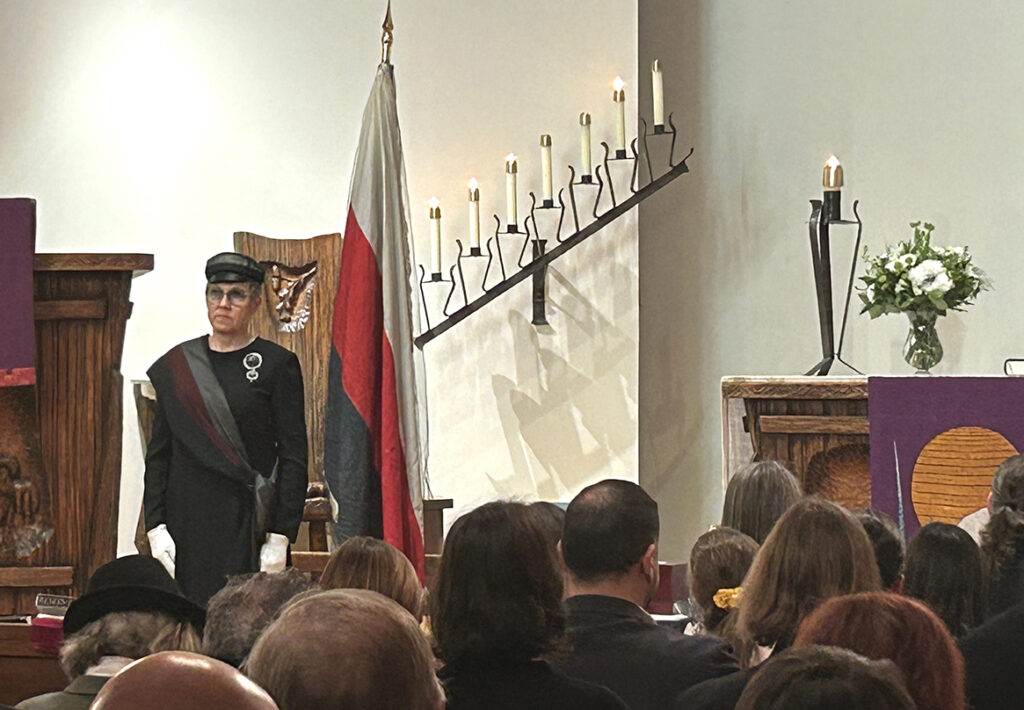
In Vancouver, family, friends, community members, and all those she had in some way impacted had the chance to pay their respects and celebrate Juta’s life on April 5th.
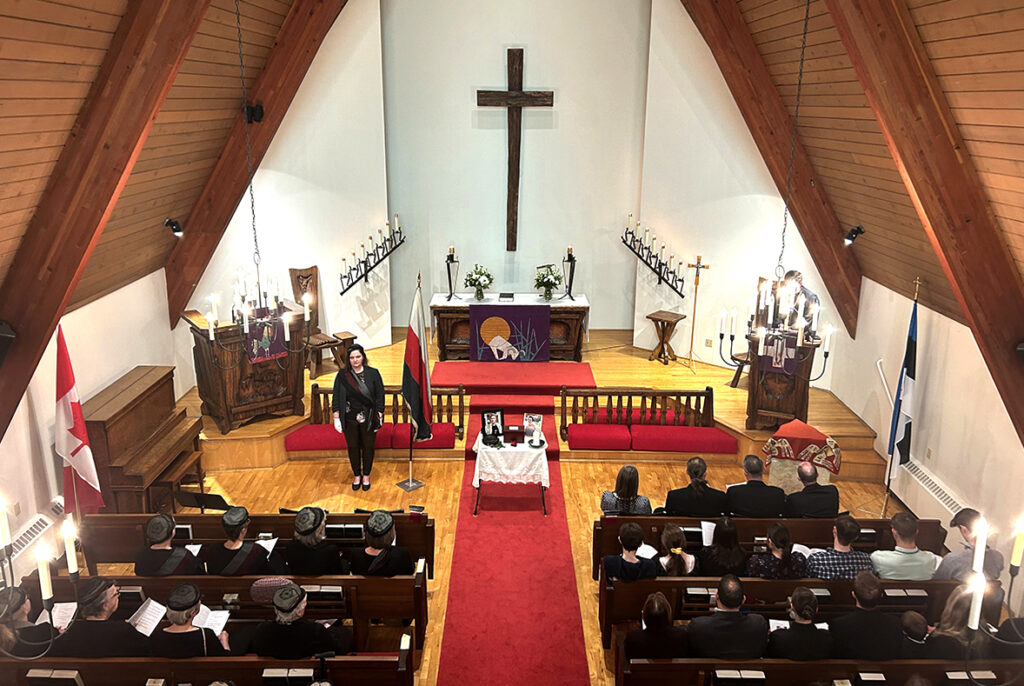
The service took place in the Meie Kodu building where Juta had spent so much time following its construction. In fact, Juta’s wedding to Laurence Kitching in 1964 was the first wedding to take place in Meie Kirik.
Juta was born on May 10th, 1935, in Muhu, Estonia. The day was a doubly special one: Just a few hours apart, Juta and her cousin were born in the same farm house. But circumstances changed quickly: In 1944, Juta, her mother Raissa, her father Vassel, and her younger brother Hain, fled to Sweden, and in 1951, the family moved once more, onwards to Canada.
A “pillar,” an “inspiration,” a “pioneer” – Juta was many things to many people.
After studying at the University of British Columbia (UBC), Juta moved to Bloomington, Indiana, where she received her PhD from Indiana University. As a linguist, Juta published an extensive amount of academic works. One example of her ambitious nature is an article from 1993 entitled “Aspects of Johannes Aavik’s language reform as reflected in his translations of Edgar Allan Poe,” which had amongst its objectives both evaluating Aavik’s Estonian language reform, as well as providing the first critical overview of Aavik’s translations of Poe.
After living in Ontario for a relatively short while, Juta, Laurence, and their four children – Michael, Thomas, Arthur-Lemb, and Julie-Tiia – settled into a house across from Douglas Park, in a neighbourhood which has become the epicentre of Halloween in Vancouver.
Indeed, even including this past year, Juta has always been diligent in handing out candy to the many trick or treaters that come knocking. Perhaps this is just another reflection of her willingness to engage with the community, a willingness to which anybody in the Vancouver Estonian community who has been around Juta may attest. A “pillar,” an “inspiration,” a “pioneer” – Juta was many things to many people. Whether it was for the local publication Läänekaare Postipoiss, or in more academic contexts, Juta also dedicated herself to remembering and documenting the history of those Estonians who were forced to flee from their homeland on account of the Soviet invasion. Her 1998 article “Estonian refugees: From Sweden to Canada 1947-1950” is but one example of this passion of hers.
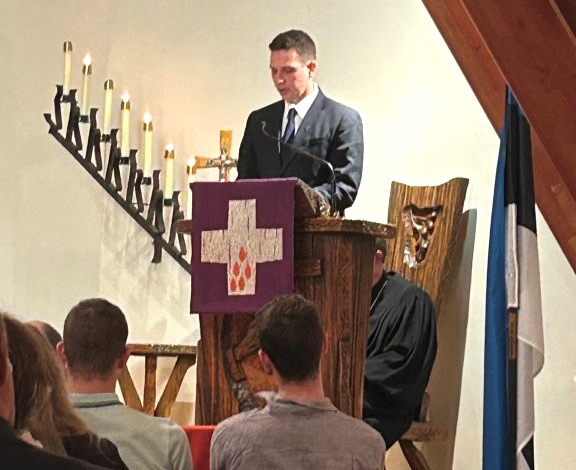
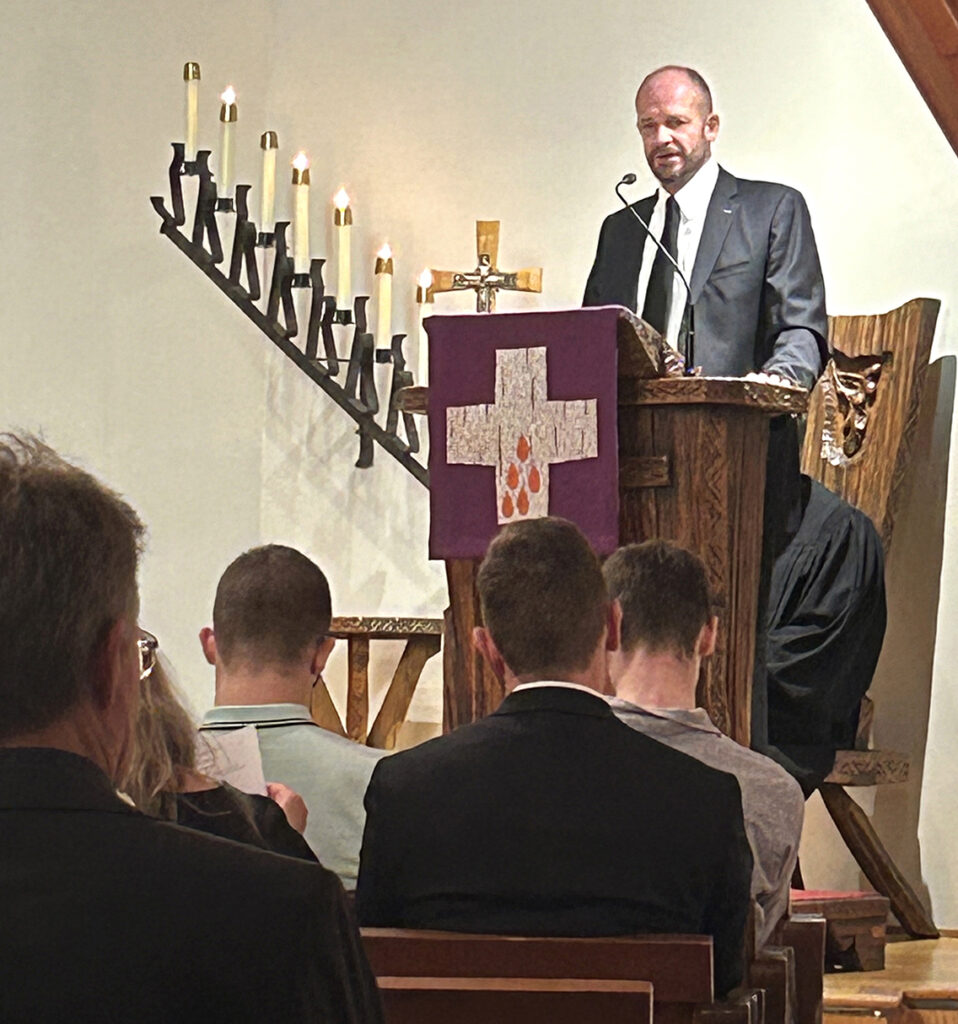
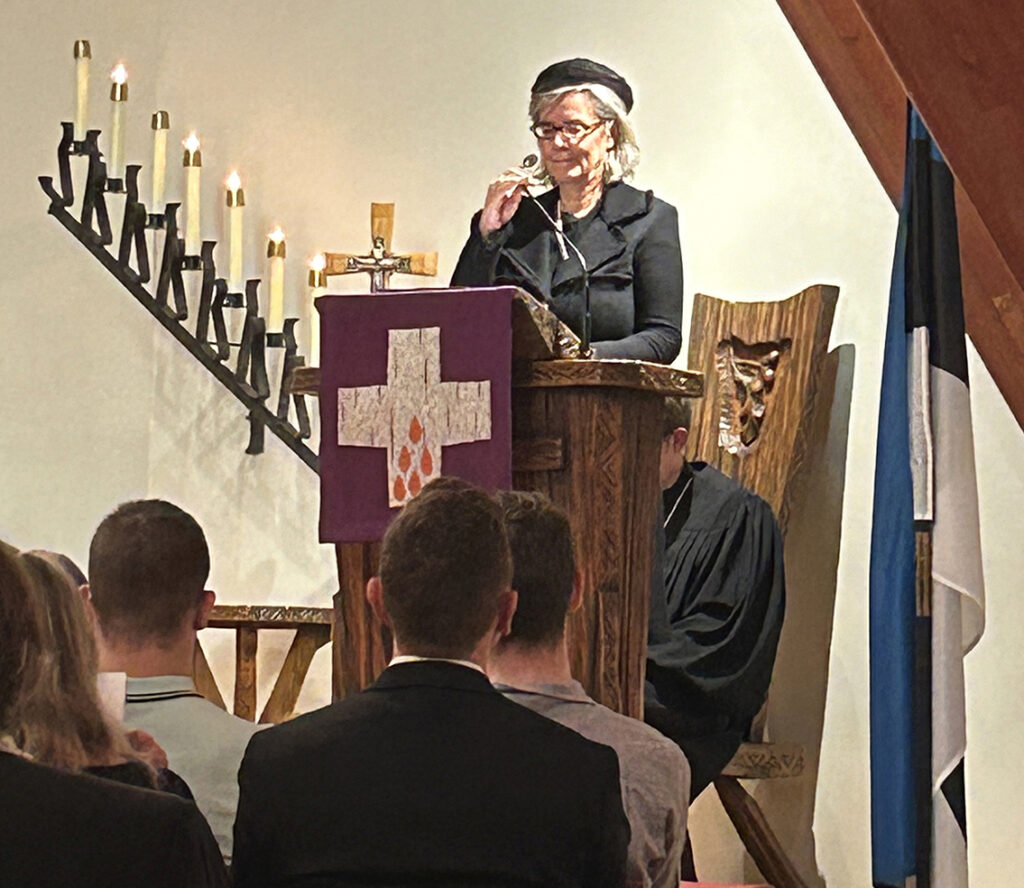
Juta’s memorial service, and at the reception that followed, provided the perfect platform for many to share their memories of Juta. There were personal anecdotes, condolences from Estonia, recognition of Juta’s role in many Vancouver Estonian institutions, and so on. One speaker reminisced about the role Juta played in the Estonian Girl Guides, when they were still active in BC. Another marvelled at how Juta persevered and earned her PhD at a time when it was especially difficult for women, and did so while simultaneously and uncompromisingly raising a family. A third speaker emphasized Juta’s role in the Korp! Filiae Patriae (FP) sorority, and the support that she showed her many “academic daughters.” FP demonstrated their respect by formally participating for the duration of the service and assisting Juta’s dear friend, Viivi Alexander, with the catering of the reception.
Juta’s dedication to academia and community was only surpassed by the love she had for her family.
On display at Juta’s memorial was the Order of Merit she received from the Estonian Central Council in 2023, overviewing her outstanding contribution to Estonia and the Estonian community in Canada. Some milestones – amongst many – include teaching Estonian or Estonia-related courses (and founding an Estonian chair) at both UBC and Simon Fraser University, playing a central role in the founding and early operation of the Finno-Ugric Studies Association of Canada, and being one of the founders of SAESC.EKÜK (Society for the Advancement of Estonian Studies in Canada/Eesti Kultuuri Ühing Kanadas), which she presided over for forty years (1981-2021), and which under her guidance initiated the Estonian Archives Vancouver/Eesti Arhiiv Vancouveris (EAV).
Juta was always interested in discussing Estonia, its language and its culture, and commemorating its important historical dates. She was an expert on Johan Pitka and his legacy in northern BC, and was at the unveiling of his monument in Fort St. James in 2009.
Her discussions, however, always seemed to sidestep any reference to her own accomplishments or creative interests. For example, in 2006, Juta wrote a “polylinguistic” poem in five different languages – Estonian, Swedish, English, German, and French – which she only shared with a handful of people last year. The poem was entitled “Gratitude – põgeniku tänu.”
Juta’s dedication to academia and community was only surpassed by the love she had for her family. On the one hand, she spent the last year of her life organizing the personal archive of her mother Raissa – a playwright and author – and arranging for it to be sent to the Estonian Literary Museum.
On the other hand, Juta was a loving daughter and grand-daughter, sister and cousin, wife and mother, sister-in-law and aunt, grandmother (to seven grand-children) and great-aunt, or whatever other familial relation. Indeed, exploring the family tree and meeting long-lost relatives was always something that made Juta happy. During the school year of 2023/2024, I saw firsthand how Juta prepared pancakes and whipped cream every Tuesday for a four-year old visitor, gently reminded him to say aitäh toidu eest, and then played Go Fish or helped him build an Elliot Moose puzzle.
When people speak about Juta, stories of kindness, respect, and resilience abound. One sentiment that was echoed was that it was difficult to accept that she was truly gone, and it is even now still difficult to switch from the present tense to the past one. As I am writing, different ideas and memories pass through my head, and I realize I could keep going through the night.
But there will be time for more reminiscing in the future. In fact, Juta’s legacy is also in need of examination and systematization, just like her mother’s was. But, until then, all we can say is:
Rest in Peace to Dr. Juta Kõvamees Kitching, or to some, simply Tädi Juta.