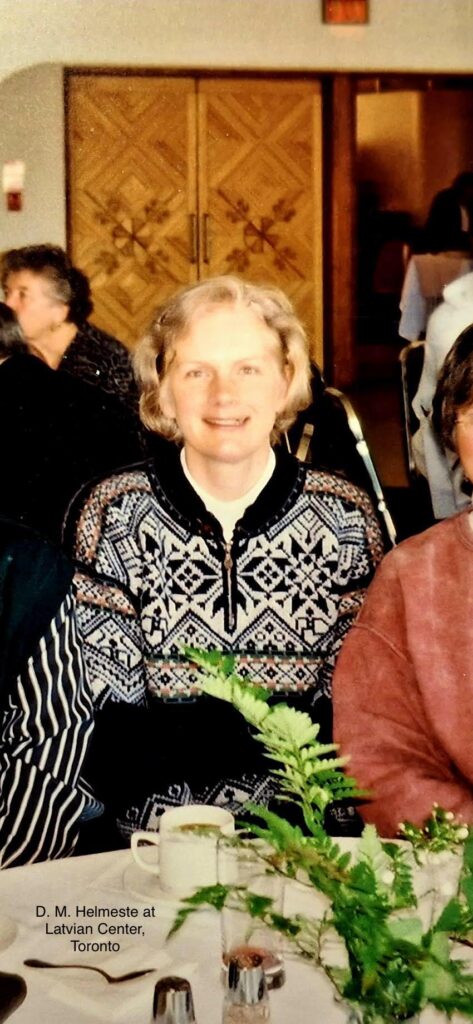
Coming from a childhood in Montréal, I thought that the University of Toronto would be an ideal place for a graduate degree. Not too far away from my home in Montréal and on par academically with McGill University, where I did my undergraduate degree.
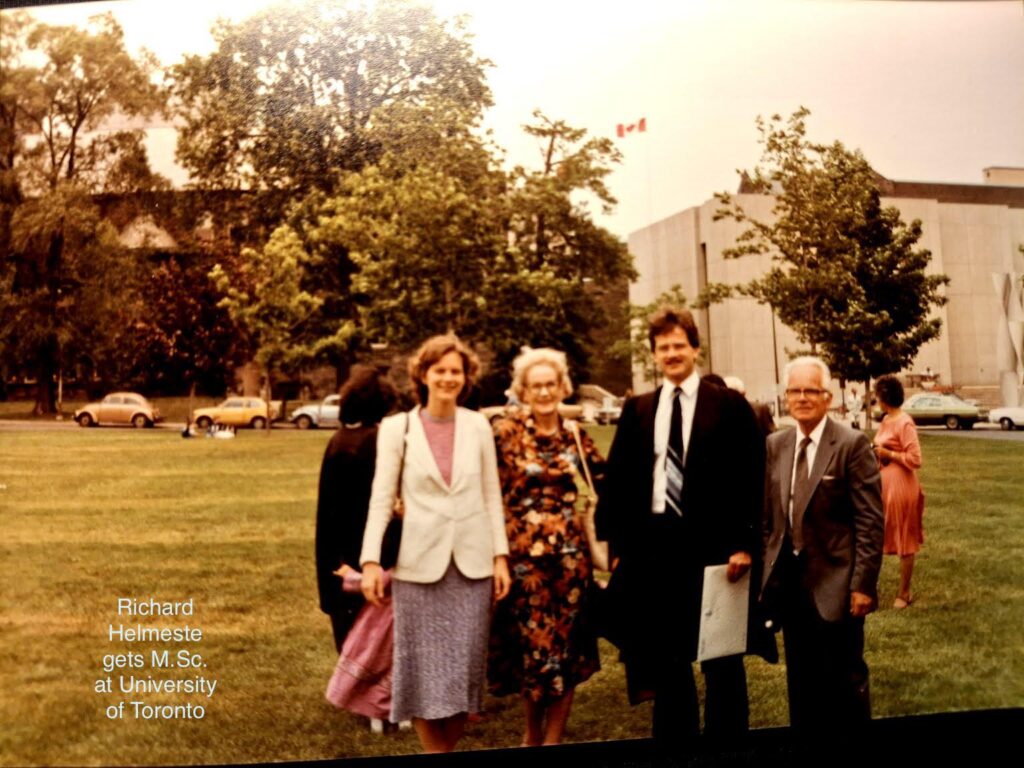
As a student at McGill, I had already done more than one summer of research in different campus research labs and had also been a neuroanatomy lab instructor for older students, a position usually given to graduate students at the time. With the pioneering Montreal Neurological Institute nearby, and being able to attend lectures by the world renowned neurosurgeon Dr. Wilder Penfield, Donald Hebb, and others, I was already very attracted to research in neuroscience at McGill, for which the University of Toronto was equally famous. Dr. Oleh Hornykiewicz, who maintained a lab at the Clarke Institute of Psychiatry, U of T (now called CAMH) the institute where I did my M.Sc. degree, had already received international recognition—along with Dr. Theodore Sourkes, in whose lab I did summer research at McGill—for work on L-Dopa and Parkinson’s disease.
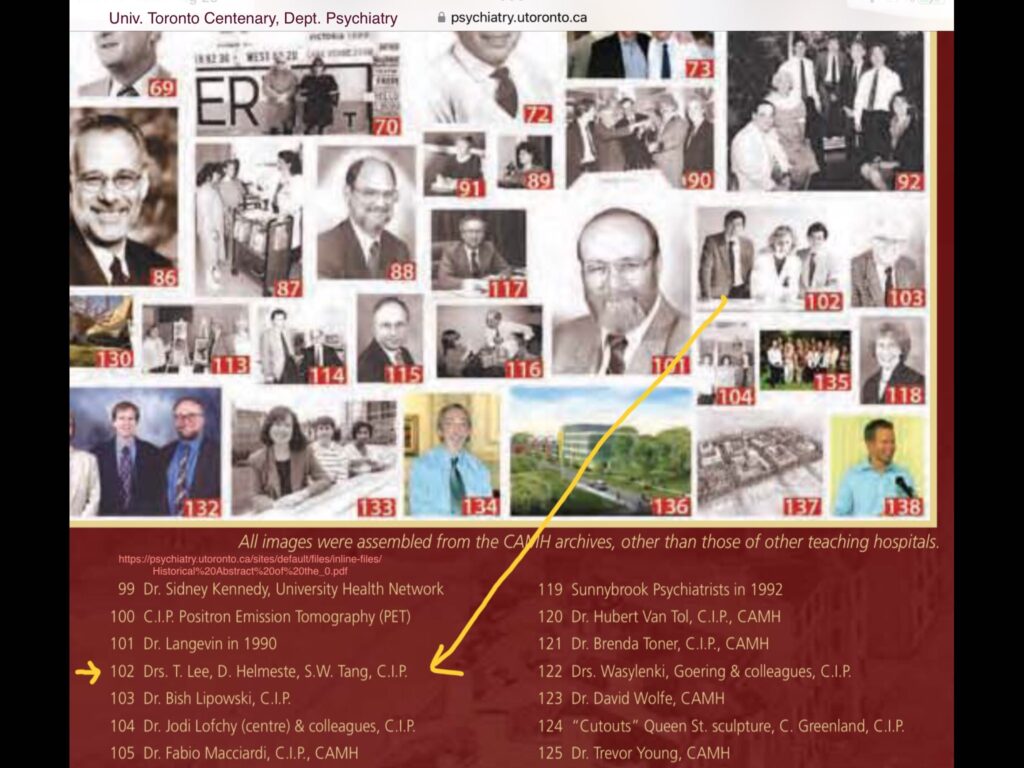
Being fascinated with neuropharmacology, I became a PhD student in the Pharmacology department at U of T after finishing my M.Sc. at the Clarke Institute. My PhD supervisor, Dr. Philip Seeman, was internationally known for his pioneering work on dopamine D2 receptors and schizophrenia. Most of the receptor discoveries relied on the radioreceptor assay (RRA) technique, which required the development of high specific activity radioligands, preferably tritiated ligands, since other bulky labels would often alter the affinity of the ligand for the receptor and lead to a poor signal-to-noise ratio in lab tests. This type of work required close collaborations with pharmaceutical firms at the time.
The Pharmacology department at U of T was also home to Dr. Werner Kalow, considered “the father of pharmacogenetics.” His work on P450 metabolic enzymes was very useful for understanding how “otherwise benign drugs could prove deadly in certain patients with genetic defects.” One of my favourite topics for teaching pharmacology to medical residents includes the title “death by grapefruit.” If you’re curious why, see the FDA’s educational page about why grapefruit juice and some drugs don't mix.
My father worked as production manager for the British pharmaceutical giant Burroughs-Wellcome (Montréal) at the time. I greatly appreciated this side of pharmaceutics as well.
As a graduate student, it was often the case that we were allowed to take one month-long vacations. Instead of going to the beach, I took the opportunity to make my vacations into “study abroad” opportunities. It was easy for me to study Chinese art in Hong Kong because it was a British Colony at the time and English is widely used there. The father of one of my colleagues at the Clarke Institute of Psychiatry was a famous Hong Kong movie actor and had personal contacts with many of the best Hong Kong artists at the time. Hong Kong had an overabundance of famous Chinese artists during that time period, when borders with the mainland were still basically closed.
“… my art colleague, Dr. Susan Ho Fung-Lin got our art professor (Chao Shao-an in Hong Kong) to give us a letter of introduction to visit Chang Dai-chien in Taipei. We were very fortunate to be able to visit Chang Dai-chien at his home and also get a tour of his garden (which included a fish pond, birds, and monkey). A few months after our visit, Chang Dai-chien passed away…”
So, with a letter of recommendation from my colleague, I made my vacations into study abroad opportunities on more than one occasion.
One of the most memorable visits during that time period was when my art colleague, Dr. Susan Ho Fung-Lin got our art professor (Chao Shao-an in Hong Kong) to give us a letter of introduction to visit Chang Dai-chien in Taipei. We were very fortunate to be able to visit Chang Dai-chien at his home and also get a tour of his garden (which included a fish pond, birds, and monkey). A few months after our visit, Chang Dai-chien passed away; his home is now a museum and is called the Chang Dai-chien Memorial Hall.
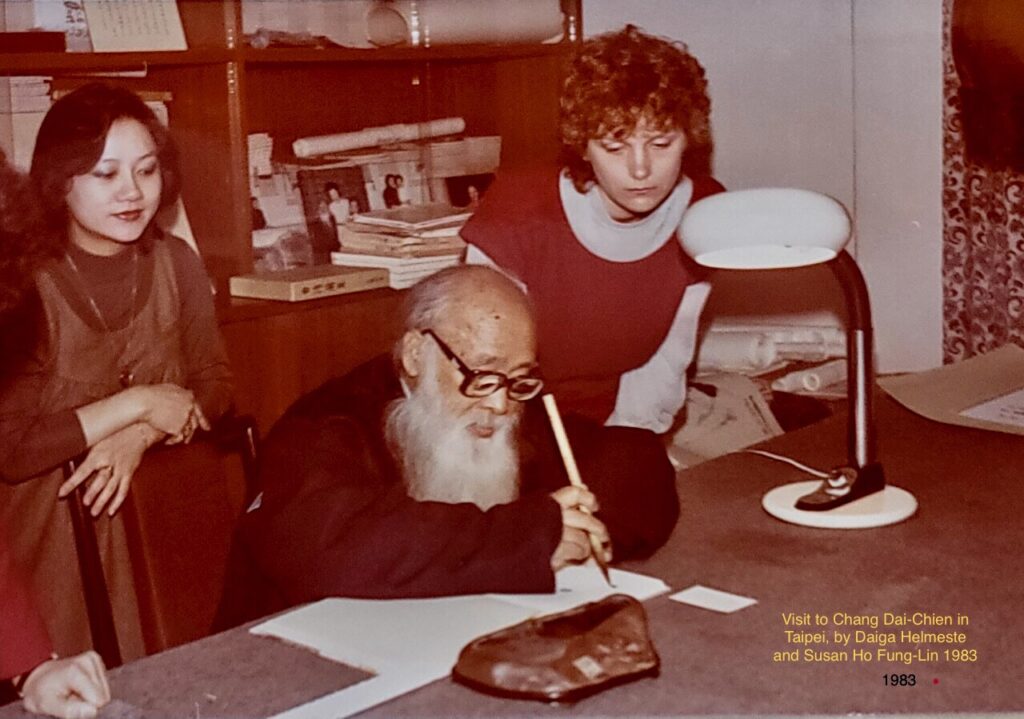
Besides being friends with Picasso, and a known forger of Chinese paintings in several North American museum collections, Chang Dai-chien had an adventurous youth.
As Constance Bond wrote in He was a Lion Among Painters, at age seventeen he was captured by bandits while returning home from boarding school in Chongqing. When the head of the bandits ordered him to write a letter home to demand a ransom, he was so impressed by the boy’s brushmanship that he made the boy his personal secretary. Chang Dai-chien was held captive for over three months, during which time he read books of poetry that the bandits had looted. In the 1940s he was also famous for studying and copying ancient Buddhist paintings in the caves of Dunhuang. Meeting such a great artist with such a colourful history was definitely a memorable event!
Moving into the early and mid-1980s, I was already a faculty member at the University of Toronto at that time. This is also the start of the time when the Estonian re-independence movement was being given more thought and discussion… a topic which definitely requires even more discussion and analysis in the near future.