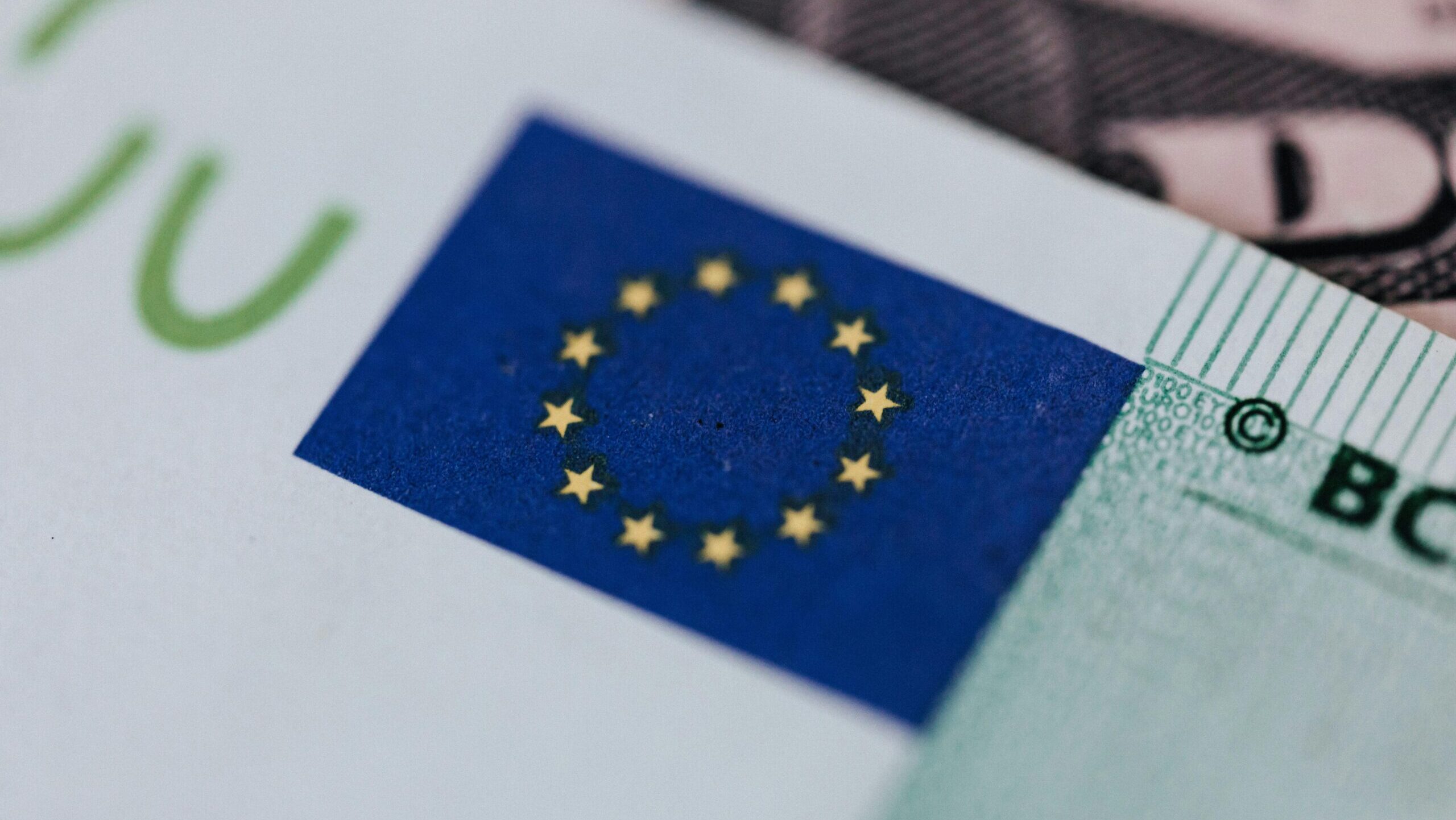
EU: regulatory legacy
Known as a regulatory powerhouse, the norms produced by the EU frequently shape global standards—a phenomenon known as the Brussels effect. Its normative power has been fundamental in setting regulatory precedents that uphold democratic rights and constrain tech companies’ political and economic power. For example, the General Data Protection Regulation (GDPR) protects personal data and outlines how organizations can process it; the Digital Services Act (DSA) regulates content moderation and platform transparency; the Digital Markets Act (DMA) makes digital markets fairer by regulating large platforms. One of the most significant tech regulations is the recently published AI Act, which is the first-ever legal framework on AI.
The shift toward innovation
However, the EU has recently repositioned itself as a champion of innovation and competitiveness. Taken at face value, the logic makes sense: burdensome regulation deters investment, making it more difficult for the EU to compete with American and Chinese tech dominance.
But the real obstacles to Europe’s competitiveness lie elsewhere. Fragmented digital markets, publicly financed infrastructure, and reliance on foreign infrastructure are more significant factors explaining the EU’s lagging AI capability, says Carnegie Europe Fellow, Dr. Raluca Csernatoni, in The EU’s AI Power Play: Between Deregulation and Innovation.
… the same rules designed to keep technology safe and corporations accountable are now being reframed as barriers to economic growth.
Nonetheless, the European Commission has embraced a “simplification agenda,” which also happens to neatly align with Silicon Valley lobbying. The strategic shift, embodied by Former European Central Bank president Mario Draghi’s 2024 competitiveness report to the 2025 Competitiveness Compass and omnibus packages, commits the EU to cutting red tape, accelerating implementation processes, and rolling back existing regulations.
In other words, the same rules designed to keep technology safe and corporations accountable are now being reframed as barriers to economic growth.
The tech “broligarchy”
The EU’s pivot has not emerged in a vacuum. It mirrors the approach taken by the US, where the Trump administration (2025) quickly dismantled Biden-era AI safeguards, which included robust public transparency, internal oversight, and accountability tests. The absence of these safeguards in favour of rampant innovation signals the presence of Big Tech’s enormous political and economic influence. Now it is attempting to do the same in Europe.
X’s Elon Musk and Meta’s Zuckerberg have strategically aligned themselves with the US government. While Musk donated millions of dollars to President Trump’s election campaign, Meta strategically removed third-party fact-checkers under the justification that it would promote “free speech.” Quite conveniently, it reintroduced space for the political mis- and disinformation that Trump has routinely amplified.
The intimate intertwining of corporate power and political authority in the US (the tech “broligarchy”) allows the deregulatory model to be exported abroad, packaged and neatly wrapped with promises of technological innovation. But what lies within this Trojan horse is Big Tech’s ultimate goal: to weaken EU regulation in a way that would absolve itself of democratic oversight. Framing the GDPR, DMA, and AI Act as “discriminatory” to the US by hindering innovation strategically positions American tech firms to evade scrutiny while promoting a regulatory environment that limits oversight and maximizes their market control.
These pressures are manifesting in real threats to the EU’s sovereign right to regulate tech. Despite a trade agreement reached between the US and EU in late July, President Trump posted the following on Truth Social just weeks later:
“I will stand up to Countries that attack our incredible American Tech Companies. Digital Taxes, Digital Services Legislation, and Digital Markets Regulations are all designed to harm, or discriminate against, American Technology… I put all Countries with Digital Taxes, Legislation, Rules, or Regulations, on notice that unless these discriminatory actions are removed, I, as President of the United States, will impose substantial additional Tariffs on that Country’s Exports to the U.S.A…Show respect to America and our amazing Tech Companies or, consider the consequences!”
In response, over forty NGOs called on the European Commission to maintain its sovereign right to regulate technologies on September 2nd (AlgorithmWatch):
“[President Trump’s threats] are merely convenient pretexts for the administration’s true aim: to help American corporations escape democratic oversight in Europe and other parts of the world, including rules that would limit their ability to interfere in democratic debate and democratic elections, violate the rights and freedoms of individual European citizens, and undermine fair competition…”
Simplification: worth the risk?
The broligarchy is leaving its mark in Brussels. In late 2024, the Draghi report emphasized the need to deregulate, highlighting the AI Act as an example of a barrier to tech growth. The Commission quickly responded with the Competitiveness Compass in January 2025, which pledged to “simplify the regulatory environment” and “accelerate the speed of administrative procedures” by reducing reporting responsibilities by at least 25% for all companies and at least 35% for SMEs. It also introduced a series of Omnibus packages to be rolled out this year, targeting “sustainability reporting, due diligence, and taxonomy laws.”
… Ursula von der Leyen, has framed simplification purely in economic terms, where its benefits will ultimately be the creation of a resilient and growth-oriented Europe—language mirroring that used by the US to justify innovation at the expense of democratic rights, including covert data collection and surveillance practices.
The Commission’s president, Ursula von der Leyen, has framed simplification purely in economic terms, where its benefits will ultimately be the creation of a resilient and growth-oriented Europe—language mirroring that used by the US to justify innovation at the expense of democratic rights, including covert data collection and surveillance practices. Seen in this light, the threat of deregulation models that erode digital safeguards spreading in Europe quickly overshadow any promises of competitiveness and economic growth.
Looking forward
The EU should not succumb to the broligarchy’s political whim. Doing so would abandon its legacy as a regulatory power and demonstrate that democratic values are but a bargaining chip when it comes to promoting corporate interests. Instead, echoing the sentiments of the NGOs and digital rights activists outraged by Trump’s threats, Europe should stand firm in its sovereign right to regulate tech. Otherwise, corporate interests will prevail at the expense of the rights that underpin safe, accountable, and just technologies.
This article was written by Natalie Jenkins as part of the Local Journalist Initiative.