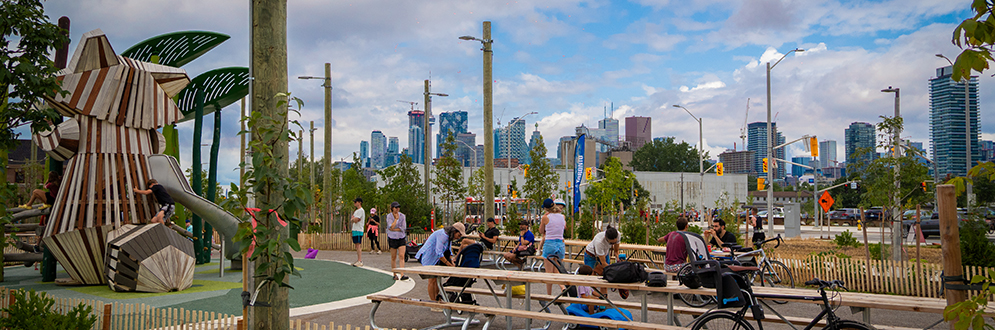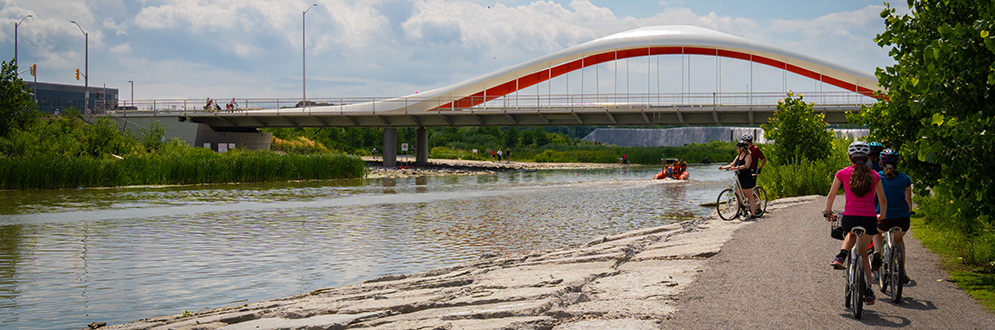
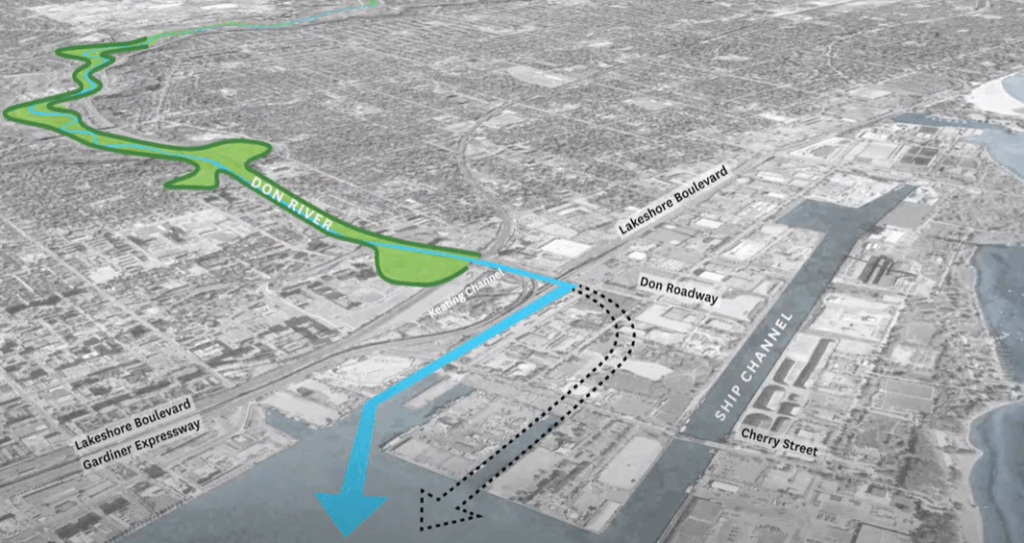
For more than a century, this area was an industrial landscape of shipping yards, oil tanks, and warehouses. The Port Lands Flood Protection Project has changed that. The Don River now flows into a new naturalized valley. Wetlands have been restored. Parks are being created. The work is not just beautification. It protects neighbourhoods like Leslieville and Riverdale from flooding and opens the door for thousands of new homes.
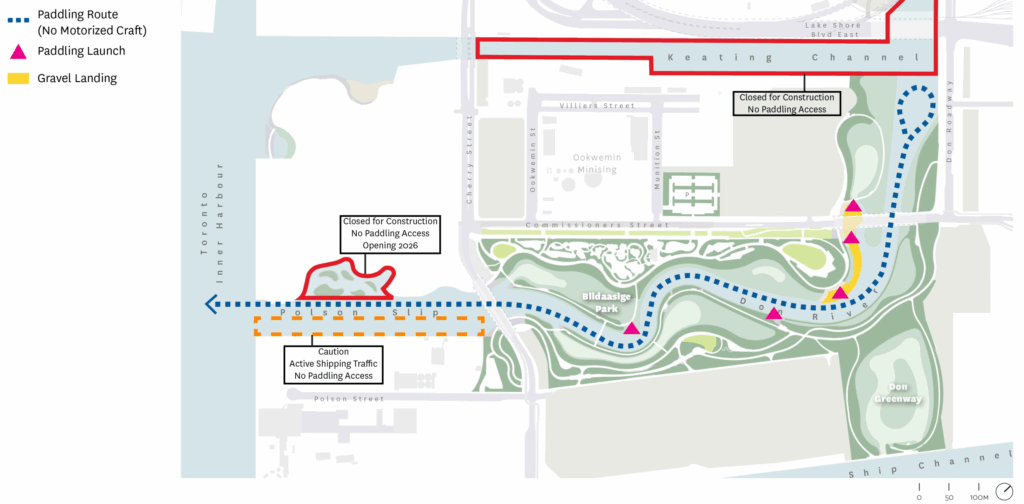
At its core, Biidaasige Park is a place to reconnect with the river. There are wide paths for walking and cycling; tall grasses and benches along the water. The park also sits on top of a flood-protection landform, an engineered ridge that shields nearby communities from extreme storms.

I was involved in the Port Lands Indigenous Naming Initiative, which brought together Indigenous Elders, Knowledge Keepers, and community members to choose names for the new island, its parks, and streets. I supported the language circle that named Biidaasige Park. Listening to those discussions, I was reminded of how deeply language is tied to culture and belonging. Circle members spoke about Anishinaabemowin not only as a way of speaking, but as a way of seeing and being seen in the world. Today there are about 36,500 Anishinaabe speakers, and revitalization efforts are central to sustaining the culture.
Growing up in Toronto’s Estonian community, it was always clear to me that language was central to identity and belonging. My grandfather, Edgar Marten, was the longtime principal of Toronto’s Estonian language school. For Estonians in Canada, language has always been more than grammar or vocabulary. It has been a way to hold on to culture through migration and change. To hear the Circle speak about language in the same way felt familiar and humbling.
Keeping small languages alive matters. They carry memory, history, and identity, and when they are lost, more than words disappear. Increasingly, it is up to local communities and governments to support revitalization.
But unlike eesti keel, Indigenous languages do not have a nation state to support their survival. More than seventy distinct Indigenous languages are currently spoken by First Nations people, Métis, and Inuit in Canada. Many of them are endangered. Keeping small languages alive matters. They carry memory, history, and identity, and when they are lost, more than words disappear. Increasingly, it is up to local communities and governments to support revitalization.
On September 30th, Canadians observed the National Day for Truth and Reconciliation. It is a reminder that reconciliation is not abstract. It shows up in choices like the ones made on Toronto’s waterfront to lift Indigenous language to ensure it is heard, spoken, and seen in our shared spaces.
Biidaasige Park, with its Anishinaabemowin name, makes that connection visible. It tells everyone who visits that Indigenous language and culture belong here, in the centre of the city. I felt privileged to be a witness to the conversations that led to this name, and I hope others sense the same weight and beauty when they walk through the park.
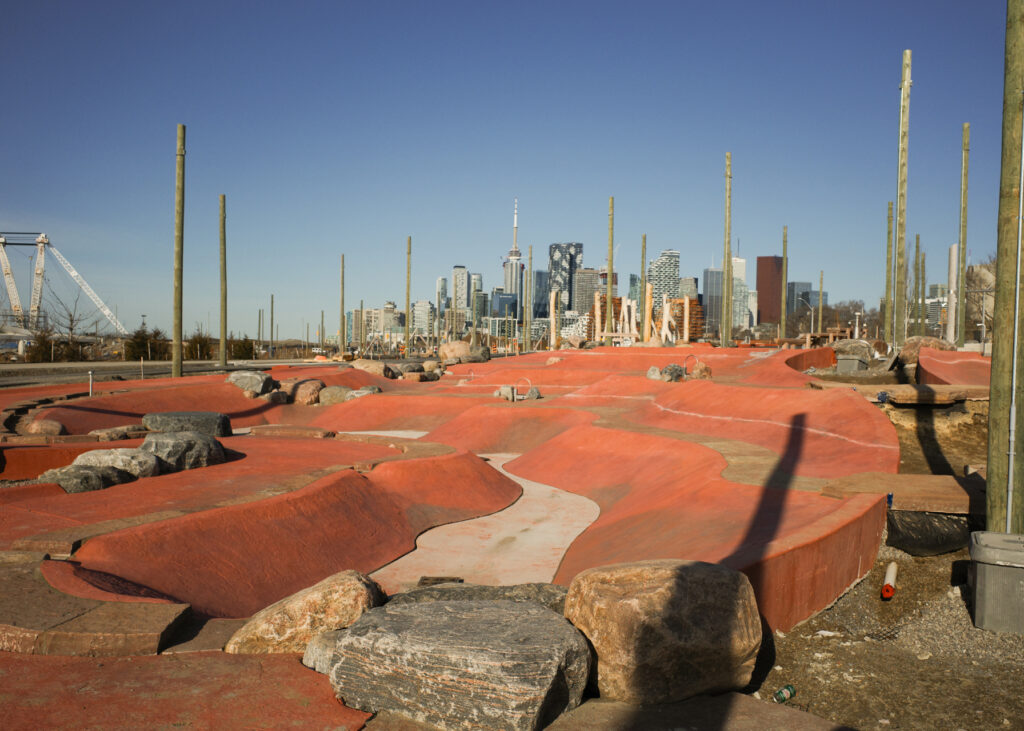
The story does not stop here. Biidaasige Park sits on the edge of a new island created when the Don River was re-routed. Last fall, the same Circle chose a name for that island as well. It is now called Ookwemin Minising, pronounced “Oh-kway-min Min-nih-sing”,” which means “the place of the black cherry trees.” The name recalls the natural history of the site and roots its future in Indigenous language and teaching.
In the months ahead I will be helping to carry this vision forward as the island takes shape. Waterfront Toronto has selected a design team led by Danish nature-based studio SLA and engineering firm GHD to plan the streets, infrastructure, and public realm. They are working with Indigenous-owned Trophic Design, and their approach Niwiijiganaa Gikendaasowin, or “We Braid Knowledge,” weaves engineering, ecology, and Indigenous placekeeping together.
The plan is ambitious: forty-eight acres of land will be developed for more than 15,000 residents, bordered on three sides by water and Biidaasige Park. The design is rooted in resilience, with rainwater systems that work with nature, streets that increase biodiversity, and infrastructure built for a changing climate.
For me, this continuation of the Naming Initiative is especially meaningful. Just as Biidaasige Park carries a name that speaks of light and water, Ookwemin Minising will carry the memory of the black cherry trees that once grew here. Both names restore Indigenous presence to Toronto’s landscape and shape how future generations will know this part of the city.