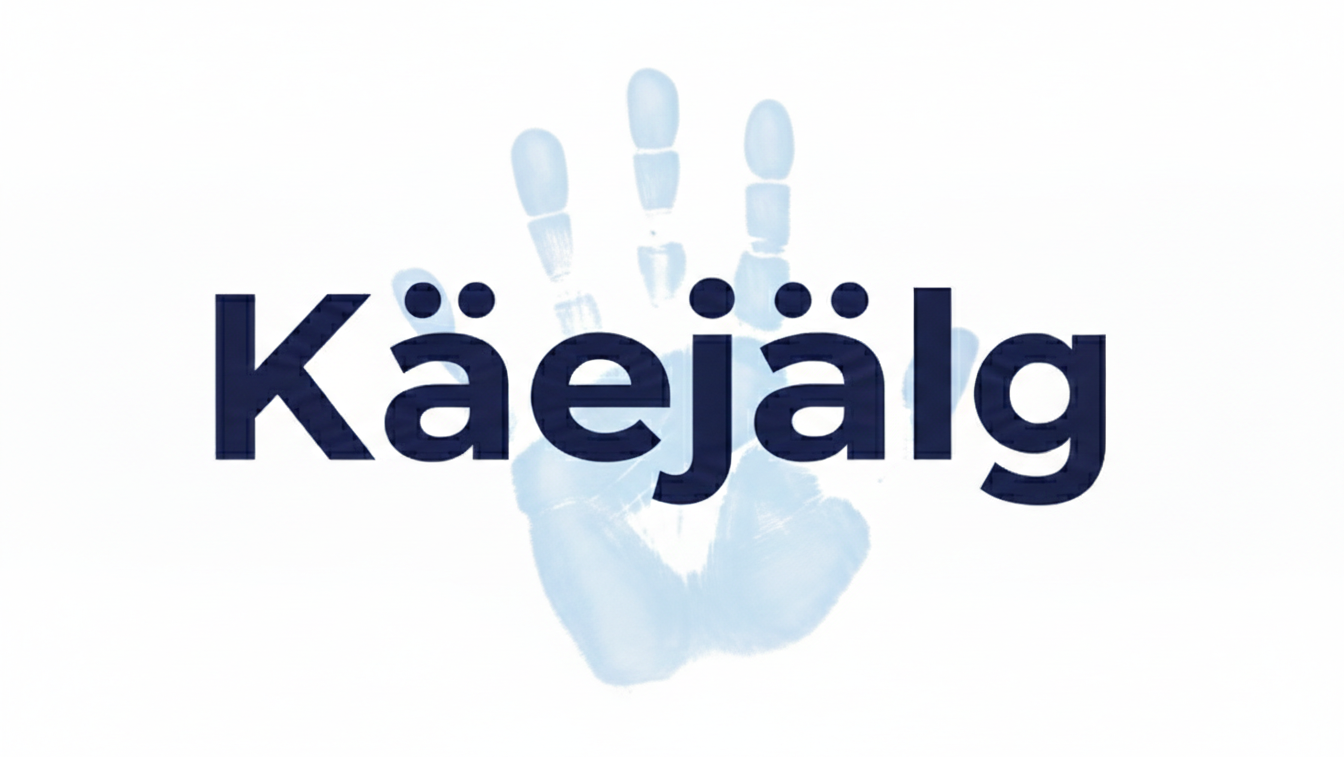
As reported by ERR News in their coverage of the 2025 edition, the dictionary is moving away from archaic terminology to make room for words that define modern priorities. One of the notable additions is the word käejälg (“handprint”).
Linguistically, the word is a compound of two ancient roots. Käsi (hand) is a foundational Finno-Ugric word, appearing in various forms across related languages, from the Finnish käsi to the Hungarian kéz. Jälg (trace, print, or track) connects to the Proto-Finnic jälki. While the physical definition of an impression left by a human hand has always existed, its inclusion in the ÕS 2025 denotes its transition into a specific, metaphorical term within sustainability discourse.
For years, a dominant environmental term has been the ökoloogiline jalajälg (ecological footprint). A footprint is a measurement of damage. It tracks the resources we consume and the waste we leave behind. In contrast, a käejälg represents the positive impact an individual or organization has on the environment. If a footprint measures what you take, a handprint measures what you give back or the harm you prevent through intentional action.
Täismahus artikkel on loetav Eesti Elu tellijatele
Igal nädalal toome me sinuni kõige olulisemad kogukonna uudised ja eksklusiivsed lood uutelt kolumnistidelt. Räägime eestlastele südamelähedastest teemadest, kogukonna tegijatest ja sündmustest. Loodame sinu toele, et meie kogukonna leht jätkuks pikkadeks aastateks.
Hind alates $2.30 nädalas.