Directed by Tallinn-born filmmaker Meel Paliale, Pikad Paberid is a nostalgic testimony to the existentialism that seems to define early adulthood. Growing up, it seems impossible to escape the narrative that your early twenties will be among the best years of your life. You step into a newfound freedom and independence that, at first, casts a bright, blinding optimism over everything you do. Yet for some, this seemingly unquenchable thirst for experience gradually gives way to frustration upon the realization that, no matter how much you want to, sometimes you simply cannot do it all.
Although I am speaking from my own experiences with the tumultuousness of early adulthood, this feeling has been described by writers, poets, and individuals from all walks of life across generations: in The Bell Jar, Sylvia Plath describes the metaphorical anxiety of sitting beneath a plentiful fig tree, forced to choose just one fruit while fearing the loss of the others. Whether we embrace life’s abundance or hesitate until the figs begin to rot is a dilemma reflected in the ethos of the film’s main characters, both in Silo’s lust for life and Sebastian’s initial pragmatism.
Pikad Paberid reminds us what it’s like to be pulled in both directions, which is as disorienting as it is deeply familiar. This is what gives the film its nostalgic quality. Even as we witness the main characters wade through existential dread, Paliale leans into the lighthearted humour of it all. The film—through its atmospheric sequences drifting between earnest conversations, idle moments of hanging out, and sweeping views of Tallinn—captures a stage of life that is both restless and fleeting.
“Touring with the movie, it has been nice to see that people relate to this film. Even when we were in New York or Sweden, there were always people that came up to me and told me that the movie spoke to them.”
(Meel Paliale)
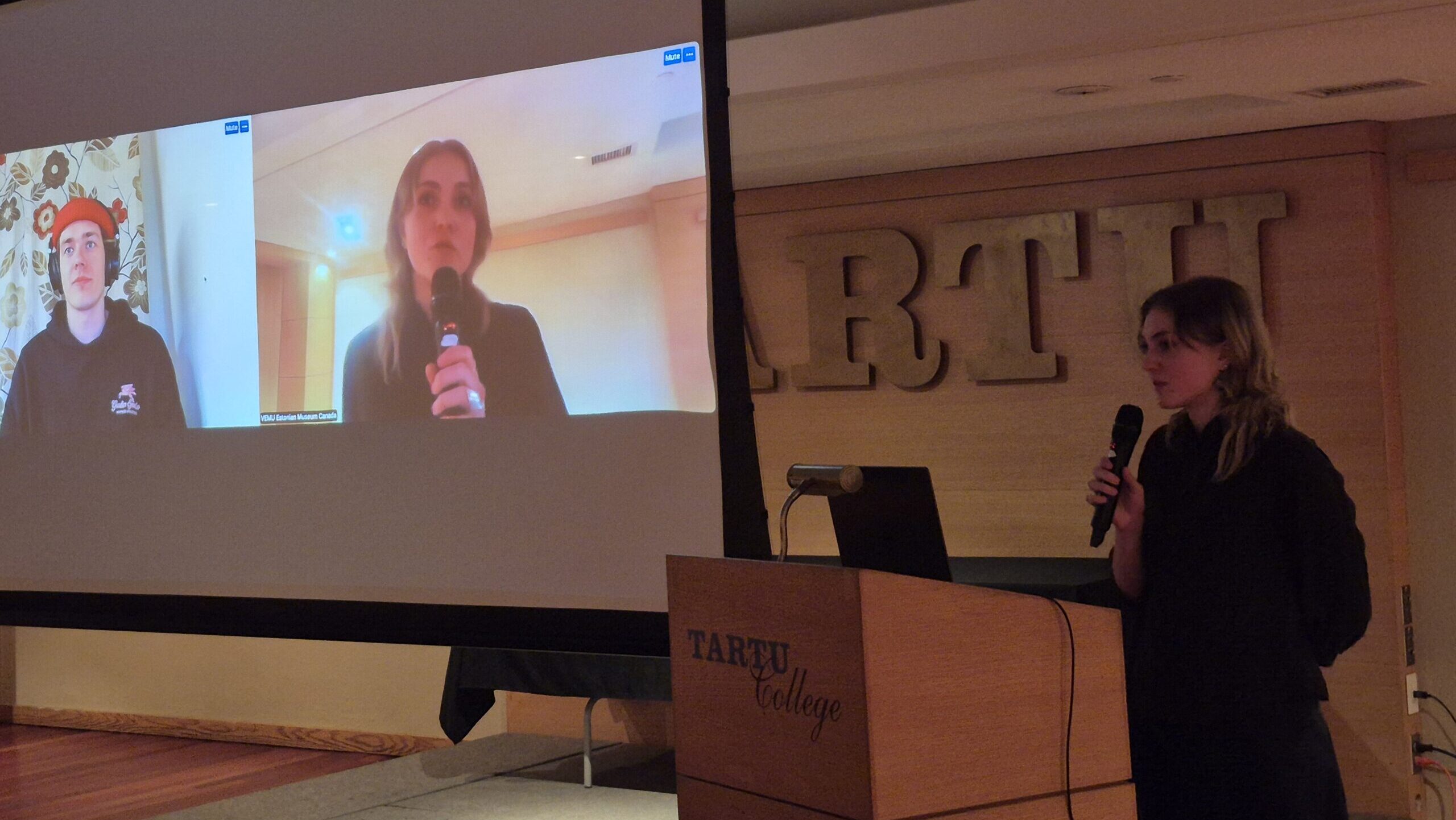
“Youth around the world have universal problems, nothing too specific to one nation or gender,” Paliale said at Friday’s screening. “Touring with the movie, it has been nice to see that people relate to this film. Even when we were in New York or Sweden, there were always people that came up to me and told me that the movie spoke to them.”
Kaisa Kasekamp, who helped organize the event, said that part of the motivation stemmed from noticing a lack of youth attendance at Estonian events in Toronto. After attending ESTO ’25 and joining the NGO Estonian Worldwide Youth Network (ÜENV)—which partners with INSA and Global Estonian to organize youth-focused opportunities and events—Kaisa joined forces with Katariina Jaenes. At the time, Katariina was developing a survey through the Canadian Youth Estonian Association (KENA) to better understand youth engagement and interest across Canada.
Their shared commitment to creating youth-oriented programming in Toronto eventually came together under VEMU Estonian Museum Canada, whose Chief Archivist, Piret Noorhani, suggested pairing the film’s themes with broader conversations about career development.
“We decided to combine the movie with a career workshop led by Merit Luik on Saturday afternoon, where we got to hold a career training/brainstorming session on professional self-confidence alongside multiple diverse career and academic paths represented around the table,” said Kaisa.
Reflecting on the event’s turnout, Kaisa noted that “the film night was held in hopes of engaging more Estonian youth around the ages of sixteen to thirty-five who, from time-to-time, appear at Estonian functions and would like to keep in touch with Estonian youth culture today. We were extremely happy to see many from the target audience come out to enjoy the screening.”
“Younger people praised the film’s cinematography, humour, and the New Wave characteristic of lacking a plot, while others found the film more sad and existential…”
(Kaisa Kasekamp)
She added that the audience walked away with a range of impressions: “Younger people praised the film’s cinematography, humour, and the New Wave characteristic of lacking a plot, while others found the film more sad and existential, reflecting on today’s youth struggling with finding work, meaning, and robust social networks.”
The event’s organizers hope to sustain continued youth engagement in Toronto-Estonian events. Kaisa encourages young Estonians to share their perspectives by completing the Canadian Youth Estonian Association’s (KENA) survey, which aims to better understand the needs and interests of the next generation of young Estonians.
Those looking to stay connected can also explore the work of the Estonian Worldwide Youth Network (ÜENV) through its social media channels (Ulemaailmne Eesti Noortevõrgustik on Facebook, and @uenv.globaalsednoored on Instagram) or subscribe to its newsletter for updates on future initiatives!
This article was written by Natalie Jenkins as part of the Local Journalism Initiative.