The 14th of March marks Emakeelepäev (Mother Tongue Day), a date chosen to honour the birthday of Kristjan Jaak Peterson, the pioneer of Estonian poetry. In the early nineteenth century, Peterson famously asked in his poem “Kuu,” “Kas siis selle maa keel / laulu tuules ei või / taevani tõustes üles / igavikku omale otsida?” (“Cannot, then, the language of this country / in the wind of song / rising up to the heavens / seek eternity for itself?”).
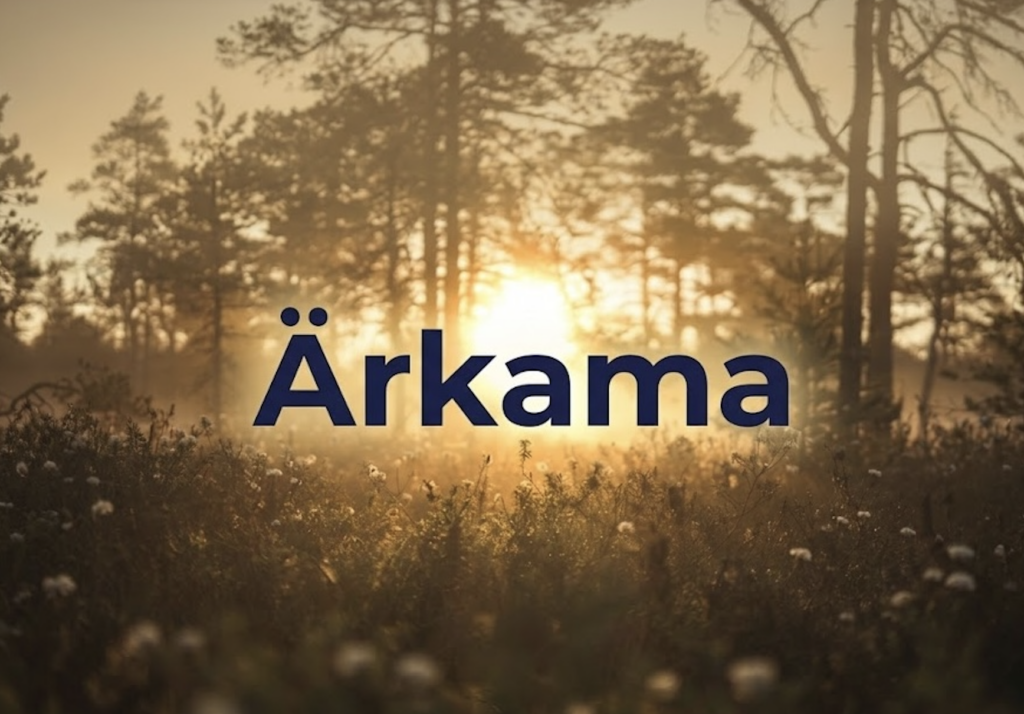
As we celebrate our linguistic heritage this week, the verb ärkama (to awake) reminds us of the history of the Estonian people and our personal daily drives.
Linguistically, ärkama is a quintessential Finnic word. According to the Estonian Etymological Dictionary, it shares cognates with the Finnish herätä. In the Estonian language, it functions as an intransitive verb (a verb that does not take a direct object), describing the transition from a state of sleep or inactivity to one of consciousness and action. The Estonian Etymological Dictionary also notes that the word has descriptive, onomatopoeic connections, echoing the suddenness of a start or a movement. Using one’s imagination, the “är” could be like the call of a crow. Its morphological cousins—äratama (the causative “to wake someone else up”) and ärksus (“alertness” or “mindfulness”)—reveal a spectrum of uses.