This visual shift represents a total legislative pivot in how Ontario manages its roads, which leads us to consider—what are the pros and cons of speed cameras?
While Ontario has moved towards a near-total abolition of automated speed enforcement, Estonia as a nation is undergoing its own changes, shifting from stationary hardware to sophisticated AI tools. Both Estonia and Canada are grappling with the same fundamental tension of how to ensure public safety without being accused of unfair “revenue grabbing” from the driving public.
In Ontario, the rise and fall of automated speed enforcement happened quite quickly. According to reports from CBC News, these cameras were initially heralded as a vital tool for Vision Zero initiatives. A study from Toronto Metropolitan University highlights the effectiveness of this technology, noting that cameras cut speeding by as much as 45% in the school zones of Toronto. The data suggests that the presence of a camera was a more effective deterrent than the occasional presence of a patrol car. However, the public perception never quite aligned with the statistical success. As noted in The Globe and Mail, while cameras were effective, they generated significant revenue, leading to the “cash grab” narrative that eventually became a political liability. By late 2025, the Ontario government officially banned speed enforcement cameras across the province. This move was supported by groups who felt the cameras were a form of hidden taxation, although it left municipal leaders and the Ontario Association of Chiefs of Police concerned about how to manage traffic safety in high-risk areas without the automated help.
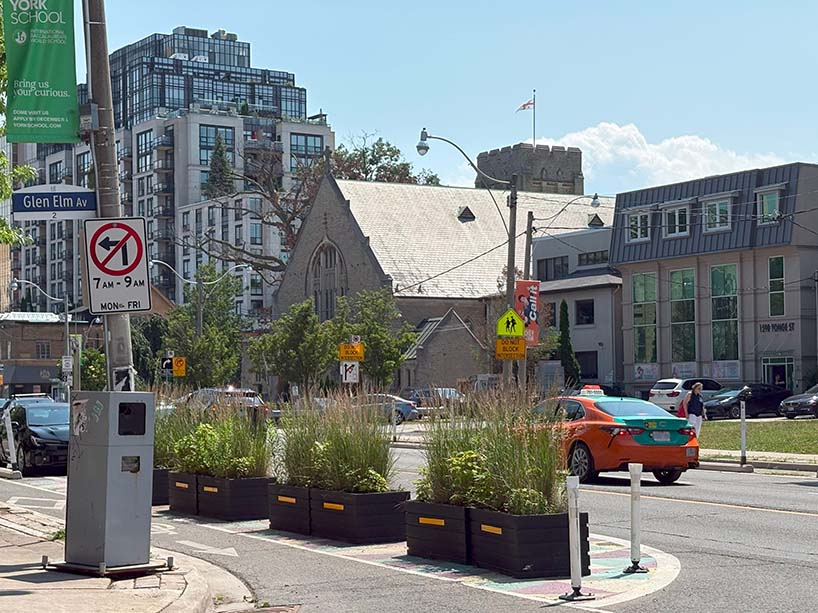
The City of Mississauga recently issued a reminder to its residents that “just because there are no speed cameras doesn’t mean there are no speed limits.” This statement underscores the current Ontario provincial reality. That is, a return to traditional, officer-led enforcement.
While this approach is more popular with a public that felt targeted by machines, it’s inherently less consistent. A police officer can’t sit in a school zone twenty-four hours a day. But a camera can. And so public reception is prioritized over pure numerical efficiency.
Estonia provides an intriguing, almost future-predictive counterpoint, though it, too, is moving away from the fleets of grey boxes. ERR News noted that Estonia is currently overseeing a shift to AI that spells the end of stationary speed cameras as we know them.
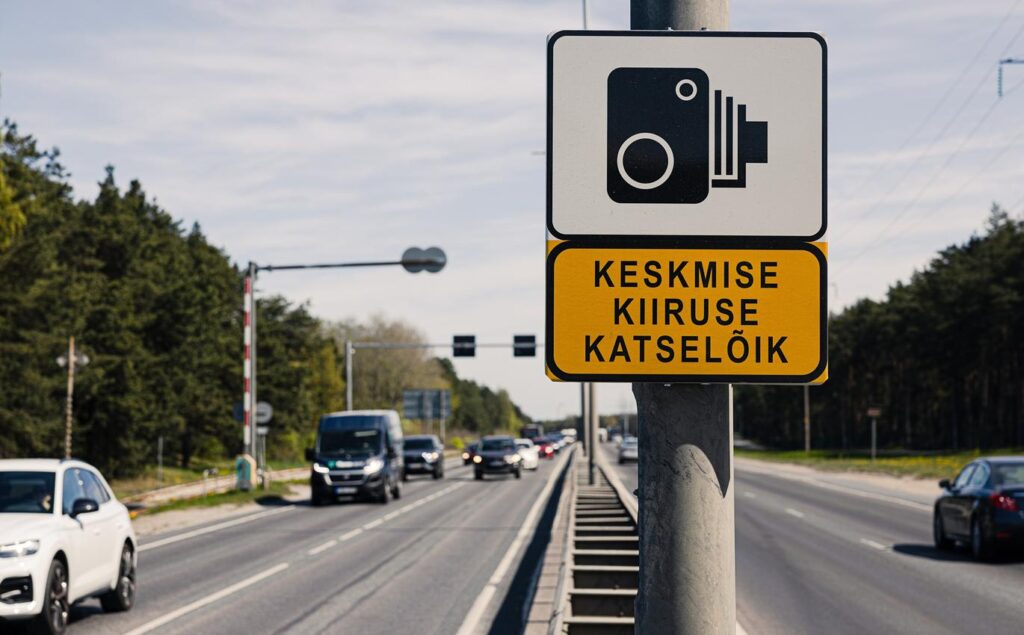
Just as in Ontario, Estonia has seen a pushback against stationary enforcement. ERR News reported that the Estonian government explicitly struck references to average speed cameras from its latest road safety plan. Average speed cameras, which track a vehicle’s speed over a long stretch of highway rather than at a single point, are often viewed as the strictest form of enforcement because they’re impossible to circumvent by braking before a camera. Likewise, with recent legislative changes, Estonia is abandoning fixed points in favour of mobile, AI-integrated units that can be moved to where they’re most needed. The technology may also be equipped with sensors and software capable of identifying cabin-level infractions: e.g. a driver using a mobile phone or a passenger not wearing a seatbelt.
In Ontario, with a populace that is already faced with a consistently increasing cost of living and a high pressure, fast-paced way of life, that trust was exhausted. Thus, the technology was scrapped entirely.
The Estonian model, of flexible speed management as it were, appears to be more sustainable in terms of long-term safety, even if it comes with a higher cost of equipment. In contrast, Ontario’s total ban risks a resurgence in traffic fatalities in certain areas where that had decreased with automated enforcement.
Public trust is a finite resource. In Ontario, with a populace that is already faced with a consistently increasing cost of living and a high pressure, fast-paced way of life, that trust was exhausted. Thus, the technology was scrapped entirely. But an increase in human enforcement may not satiate the simultaneous desire for safe roads and communities either.