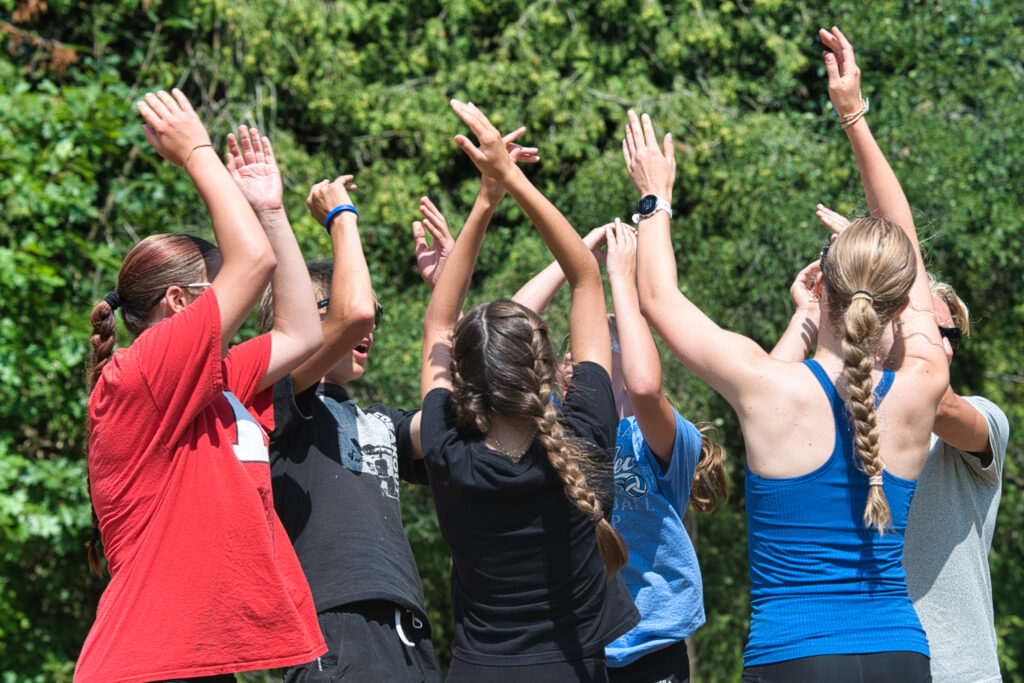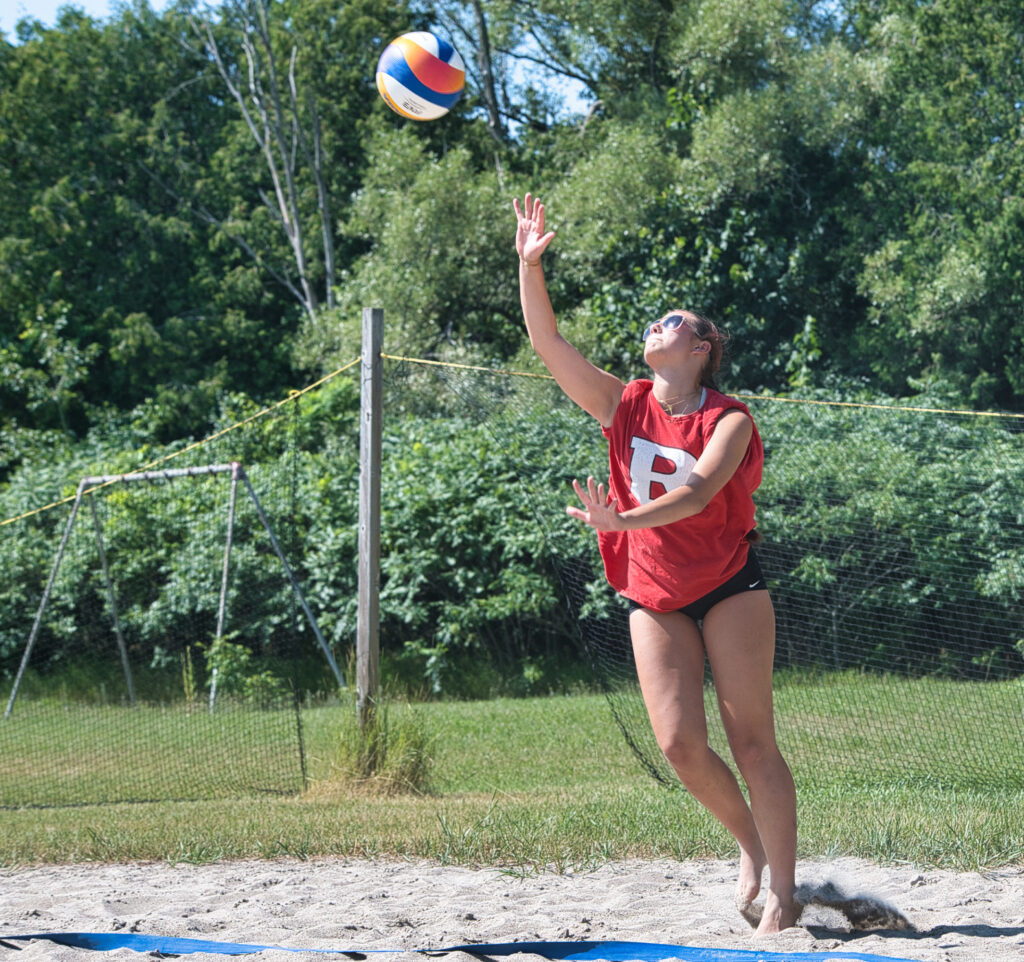
The annual Jõekääru volleyball camp tournament provided a wonderful opportunity to practice volleyball photography techniques. As seen in the attached photos, the sunny weather made for perfect light conditions. The tournament included play on both grass courts as well as on “the beach.” Although I used two camera bodies and three different lenses, I know that the following principles can be applied to smartphones also.
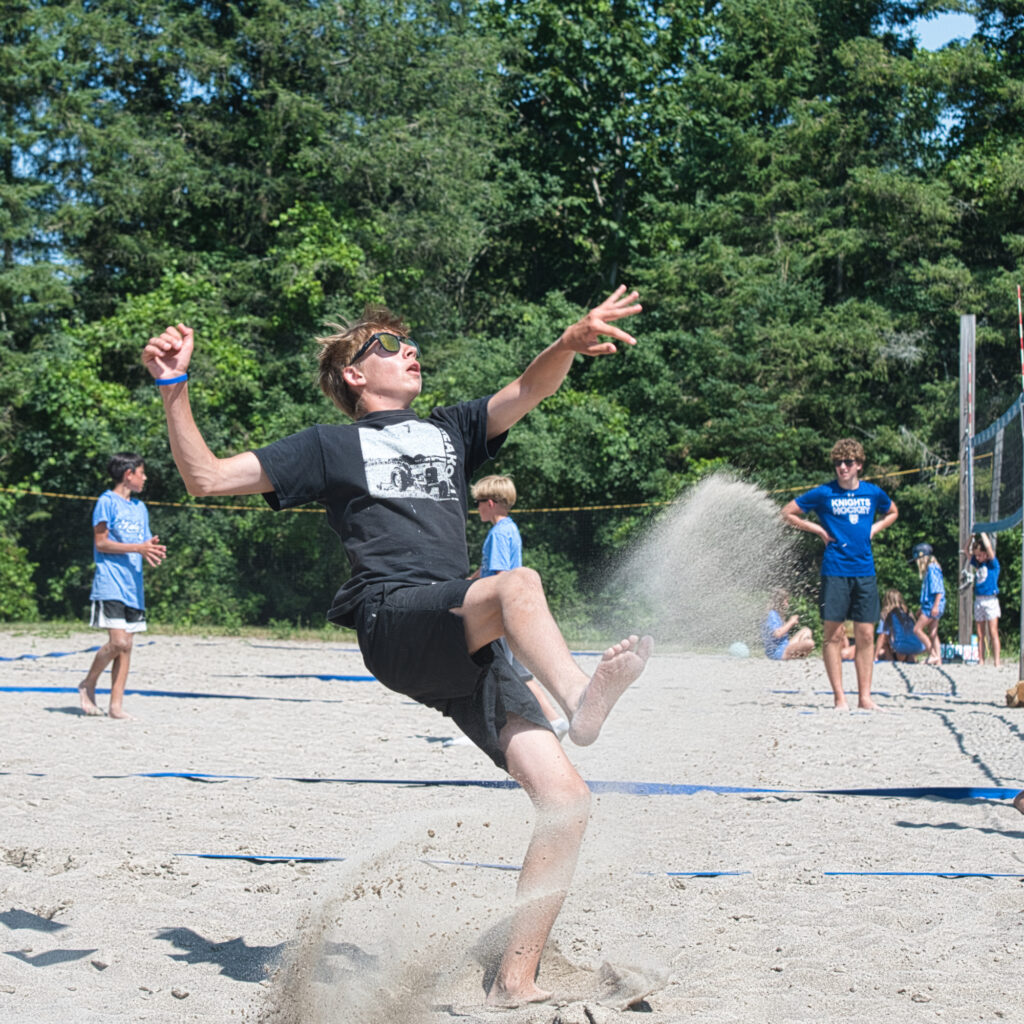
Although the volleyball skills on display were virtually identical, for a photographer, the two venues differed in several important ways. While the grass courts featured up to six players per side, there were only two per side for beach volleyball. Therefore, it was much easier to focus on two players on each side of the net for the beach variant. In addition, the flying sand on the beach courts added a unique dimension to some of the photographs as players were more likely to dive (or “dig”) for balls on the beach courts.
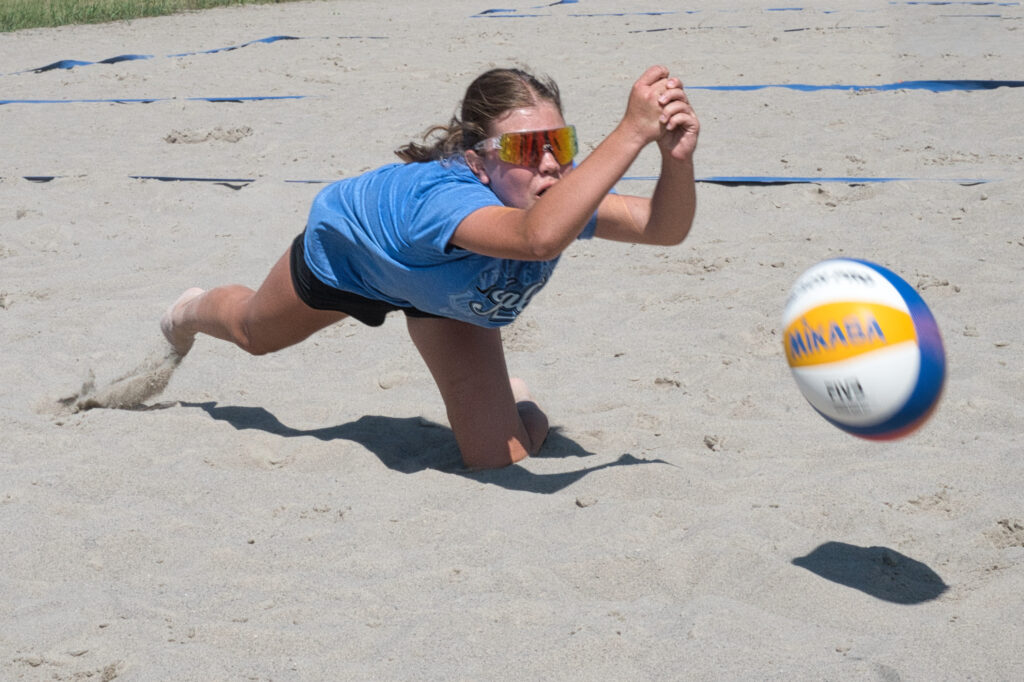
The photographer’s shooting locations were similar for both events. As with most photography, shooting with the sun behind one’s back made exposures easier. A position immediately behind the field of play, perpendicular to the net, provided interesting shots of action at the net. This was best captured with a 70-200mm lens at its full telephoto capacity. However, only one side’s player(s) were likely to be facing the camera. A much more versatile photo position was at the side, about two meters away from the net and about two meters from the sideline tape. This allowed for images of the server, the retrievals on one side and action at the net. In addition, some photos taken under the net also captured the reception of serves on the other side. A small portable folding stool allowed me to sit at a very low angle, allowing for more eye-level images of the athletes. I found the 24-70mm lens to be the most versatile from this position.
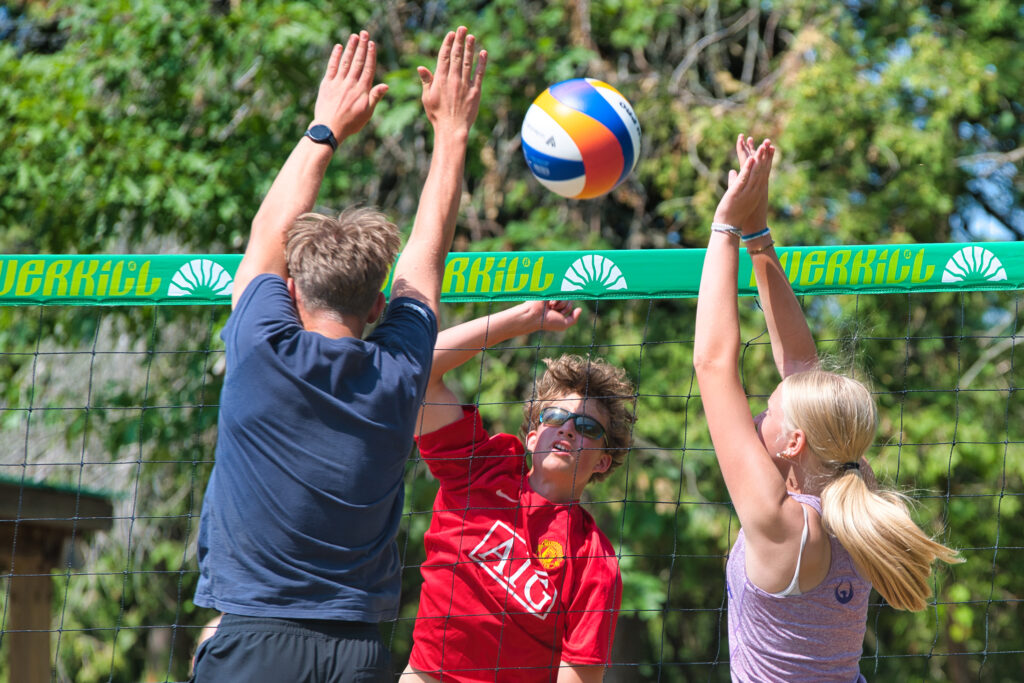
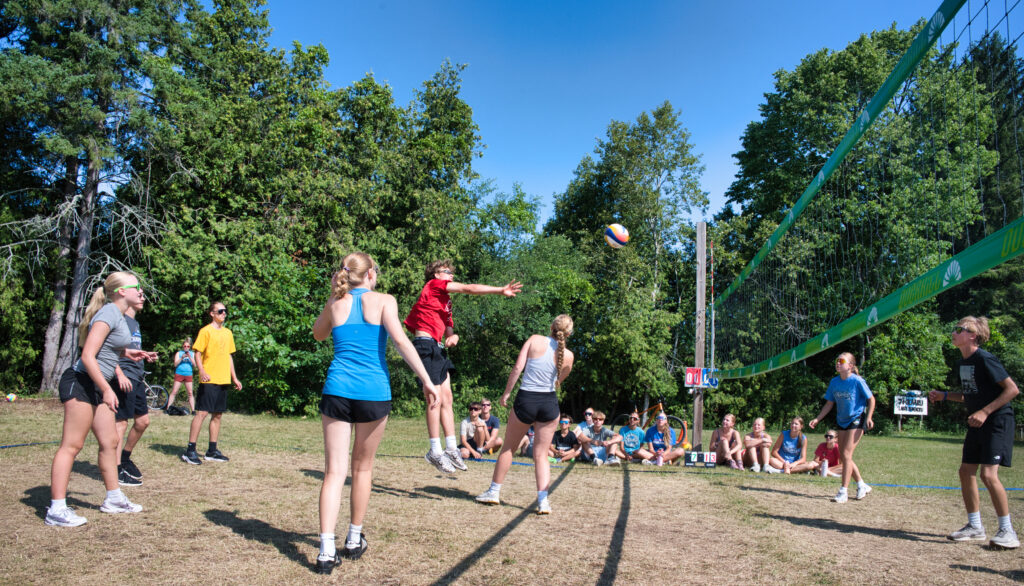
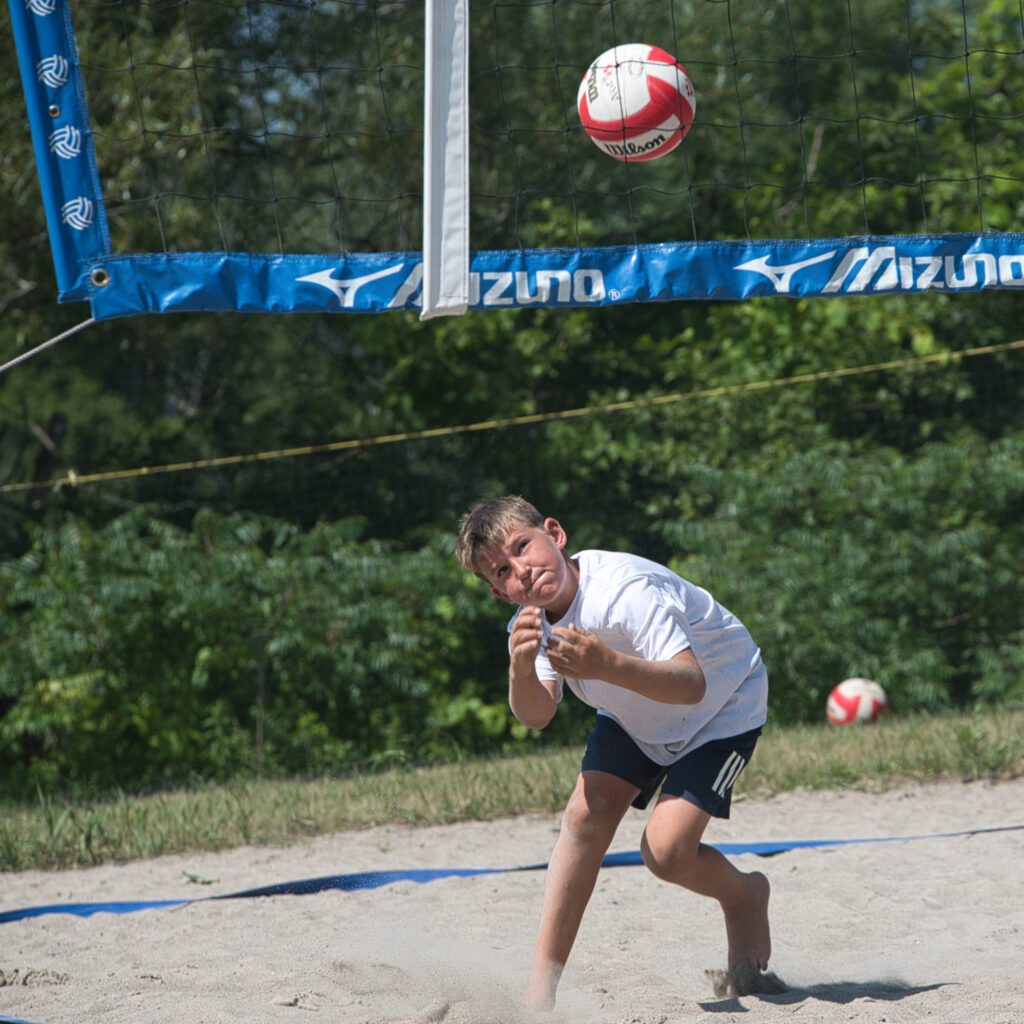
As with all sports photography, shutter speed must be fast enough to capture in-focus images of the athletes, even if the ball itself is slightly blurred when in motion. All the action images were shot with a shutter speed of 1/800 second. And finally, whenever possible, the volleyball itself should be in the photo. There are exceptions, of course, especially when the photo conveys emotions such as great teamwork or the jubilation of a game well played.
Text and photos by Peeter Põldre