Yet, thousands of kilometres to the south, Brazilian culinary traditions offer a remarkable parallel comfort in the form of feijoada, the celebrated black bean and pork stew that’s considered the national dish.
Feijoada is seemingly quite distant from Baltic cuisine and its ingredients, but the parallel is found in humble, everyday pantry staples transformed through patience. It’s a dish that would be lovingly prepared by a grandparent. Feijoada developed over centuries, and in a way it tells the story of the country, from the profound culinary and cultural imprints of enslaved West Africans, Indigenous Brazilian ingredients like cassava, and European cured meats brought by Portuguese settlers. While authentic Brazilian feijoada features dry beans that are soaked for hours, specialty salted pork trimmings, beef jerky, and pig ears, a deeply flavourful version can easily be made at home using accessible butcher-counter meats and canned beans.
It’s an adaptable recipe. By combining half a kilogram of stewing beef with crispy bacon, garlicky sausages, and black beans, you achieve the signature smoky gravy even if some of the traditional components can prove difficult to locate in North America. Accompany the stew with bright, sautéed greens and farofa (a crunchy toasted cassava flour topping) for a well-rounded meal.
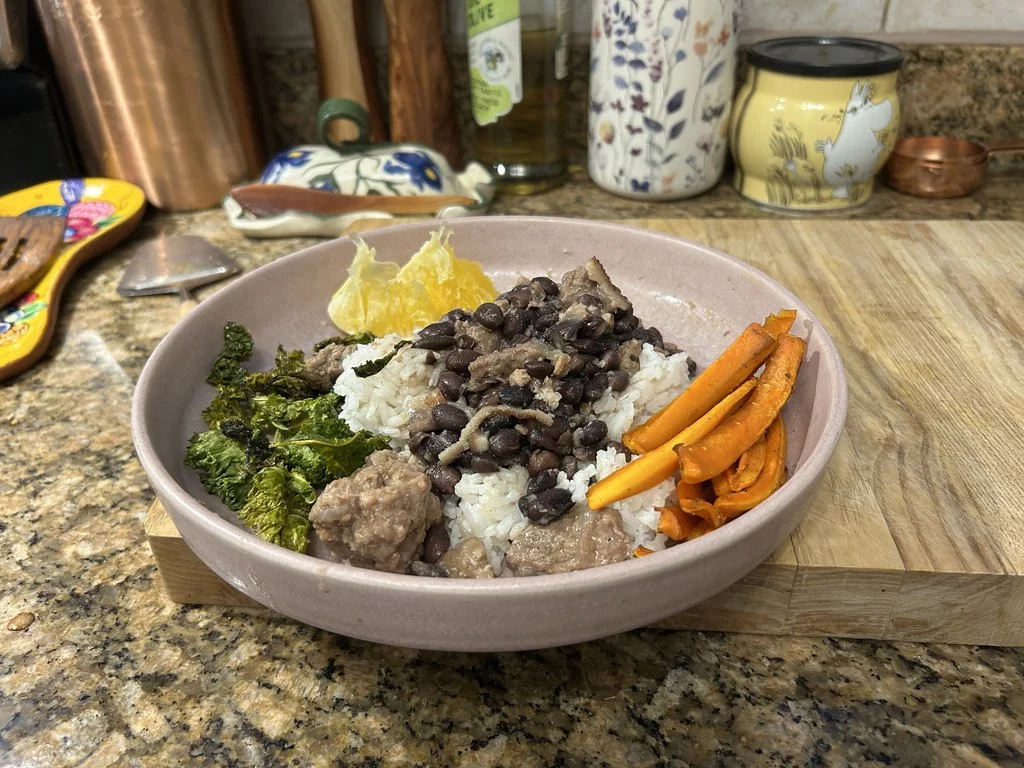
Alternatively, if you’re looking for more vegetables and less carbs, you may wish to substitute the farofa with some roasted julienned carrots, seasoned with onion powder and served on the side. For that matter, you may even want to include other root vegetables that you enjoy.
Cooking time: two hours
Servings: six portions
Ingredients:
For the stew
- 500 grams of stewing beef, cut into medium-sized cubes
- half a standard pack of bacon, diced
- 2 Italian sausages, sliced into small pieces
- 4 cans (400 grams each) of black beans
- 1 large yellow onion, finely diced
- 5 cloves of garlic, minced
- 3 dried bay leaves
- 750 ml (3 cups) of beef broth or water
- Salt and black pepper
- Orange segments (to add on at the end)
- White rice (ideally long-grain, to serve on the side)
For the farofa
- 1.5 cups coarse cassava flour (which you might see packaged with the label “farinha de mandioca”)
- 3 tbsp of unsalted butter
- 1 small yellow onion, diced
- 2 cloves of garlic, minced
For the greens
- 1 large bunch of dark kale or collard greens, washed and with stems removed
- 1 tbsp of olive oil
- 2 cloves of garlic, minced
- The juice from half of a fresh lemon
- A crack of salt
Preparation method:
- Heat a large, heavy-bottomed pot over medium heat. Add the diced bacon and cook it until the bacon begins to turn golden and crisp. Add the sliced Italian sausage pieces and cubed stewing beef directly to the bacon. Sear until all sides develop a golden-brown crust.
- Push the browned meats toward the outer edges of the pot. In the center with the fat bubbling away, add the diced onion, minced garlic, and bay leaves. Sauté for five minutes until the onions soften, let them absorb the browned bits from the bottom of the pot. Stir it all together.
- Pour in the beef broth or water, bringing the liquid to a boil. Reduce the heat to low, cover the pot with a lid, and let it simmer for an hour and a half. Stir periodically until the stewing beef becomes tender.
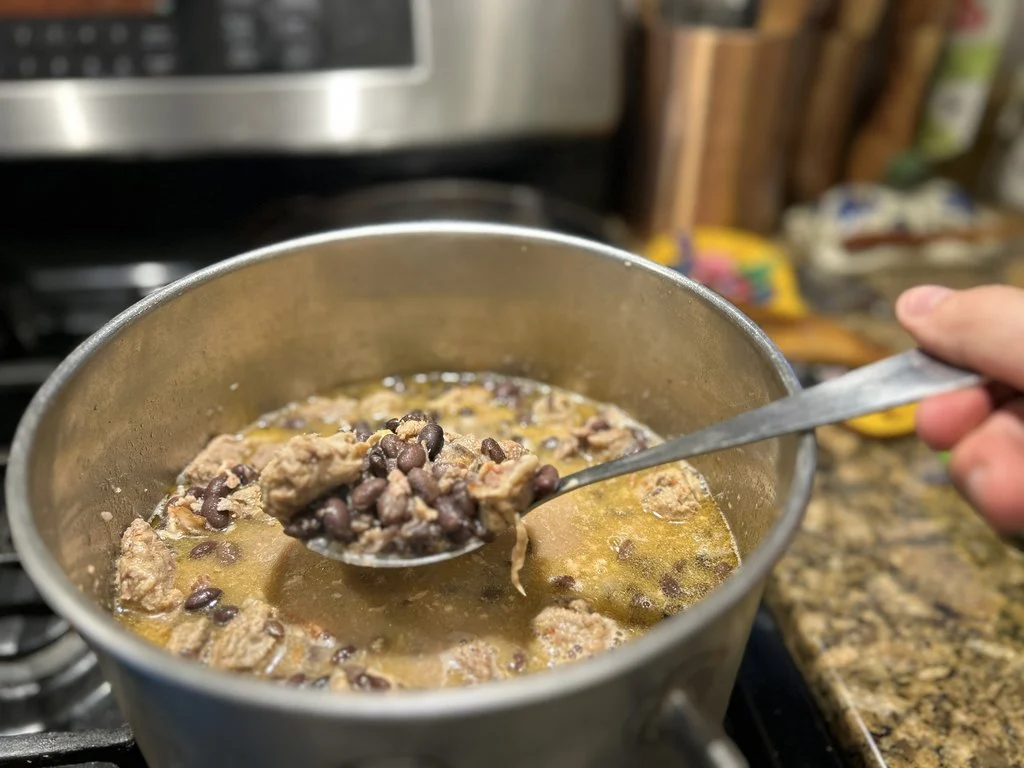
- Add all four cans of black beans to a sieve and wash them under cold water. Place them in the pot. Keep the pot uncovered and let the stew simmer for fifteen minutes. To create the authentic thick consistency, remove roughly one cup of beans from the pot, mash them into a smooth paste on a plate using a fork, and stir them back into the stew. Simmer for another ten minutes. It should become rather murky.
- While the stew finishes, melt butter in a skillet over medium heat. Add the onion and garlic designated for the farofa, cooking that onion and garlic until they’re translucent. Stir in the cassava flour, stirring constantly for about five minutes until the flour becomes a bit crisp. Season with salt if you wish and transfer the farofa to a bowl.
- Cut the kale into fine strips. In a separate pan, heat the olive oil over medium-high heat, add minced garlic, and toss in the kale. Sauté for three minutes until it’s wilted but still bright green. Season with salt and the fresh lemon juice.
- Ladle a generous helping of the feijoada over the white rice. Top with a spoonful of crunchy farofa (or the roasted carrots) and place the sautéed kale on the side along with a freshly sliced orange pieces for a tangy, sweet contrast.
Bom apetite! / Head isu!