The Estonian leader was leaving a message for the International Olympic Committee (IOC): if Russia and Belarus participate in the Paris 2024 Olympics, Estonia will boycott the competition.
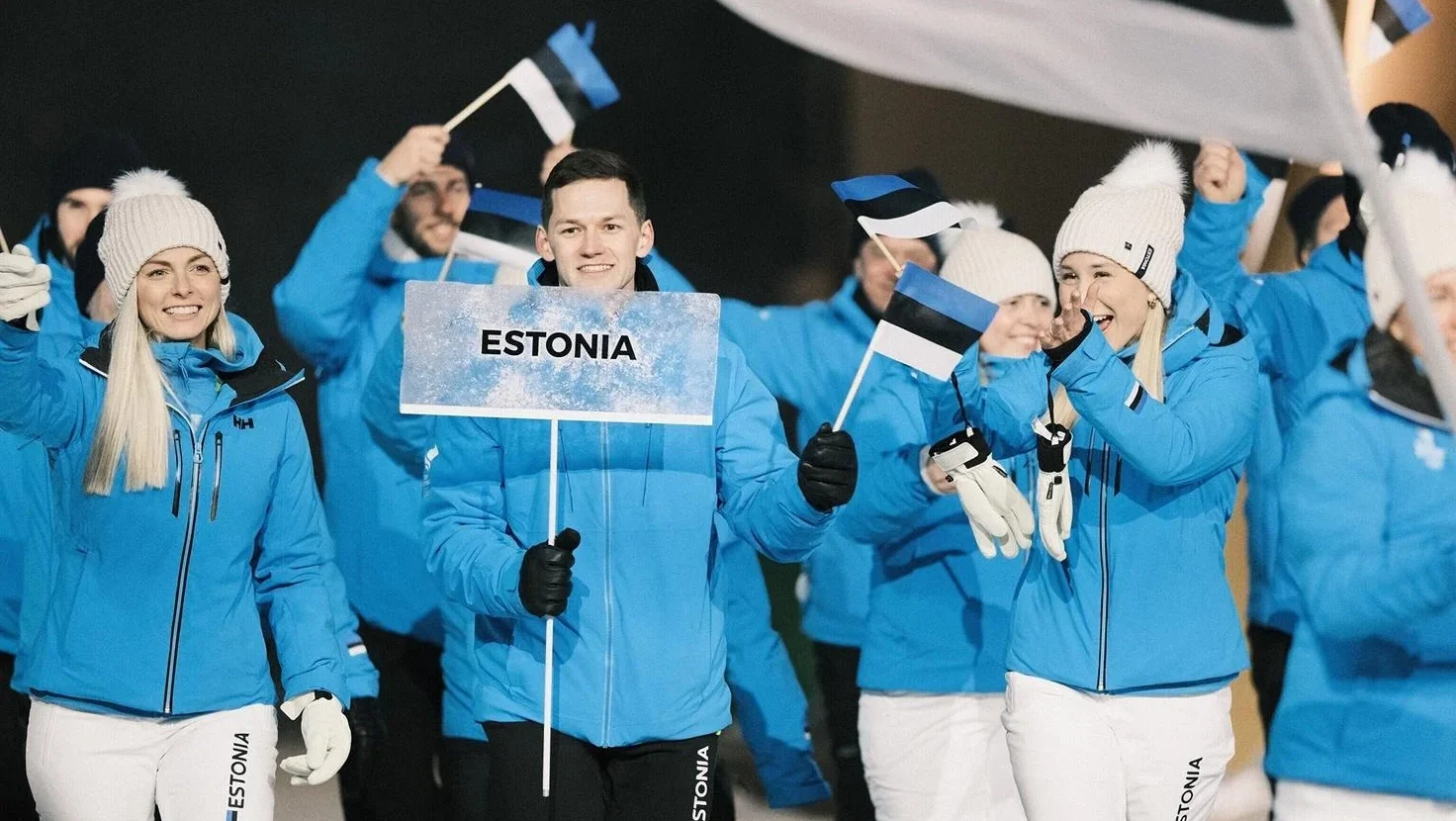
Russia and Belarus ultimately would not participate in the Paris games, and because of this, Estonia would send twenty-four of their best athletes to France.
For clarification, Russian and Belarusian athletes participated in both the 2024 and the 2026 Olympics. But these athletes did not represent their countries; instead, they participated as Individual Neutral Athletes (AIN).
What Prime Minister Kallas was opposing was the athletes representing both of these countries. In light of the ongoing Russian invasion and occupation of Ukraine, Estonia wanted to position itself as strictly opposed to any representation of the Russian government at the Olympic Games.
The first sign of Russian and Belarusian participation was at the 2026 Paralympics, when six Russian athletes were allowed to participate in the games and the Russian flag and anthem were used.
On April 13th, 2026, World Aquatics, the global authority for administering aquatic sports, lifted their ban and full sanctions on Russian and Belarusian athletes. It is worth considering that World Aquatics acts as a partner to the IOC, as they manage the swimming and water events that take place at the games.
On July 7th, 2026, the IOC followed in World Aquatics’ footsteps when the executive board provisionally lifted its ban on the Russian Olympic Committee, stating that athletes should not be held accountable for the actions of their governments.
This decision received major pushback from nine European countries: Estonia, Latvia, Lithuania, Finland, Sweden, the Netherlands, Poland, Denmark, and Romania.
These nine countries subsequently submitted a request to the European Commissioner to suspend EU funding for the IOC.
“Respect for human rights, the rule of law, and peaceful relations between nations are among the core principles underpinning international sport and the Olympic movement.” These nine countries emphasized the importance of peace in their letter to the European Union.
Russia has time and time again initiated full-scale military invasions around the Olympics, knowing that the countries are focused on the games, making them less capable of responding to a Russian attack.
Russia has long had a complicated relationship with the games. In 2008, they invaded Georgia during the Summer Beijing Olympics opening ceremonies. In 2014, they invaded Ukraine six days after the closing ceremony of the Sochi Winter Olympics. In 2022, they waited another six days after the closing ceremony of the Winter Beijing games to storm Ukraine.
It is also worth considering that in 2015 Russia was accused of state-sponsored doping. In 2016 the McLaren Report was released, and the findings confirmed this accusation by exposing that Russia had meticulously crafted a system that allowed for athletes to use performance-enhancing drugs (PEDs) during the 2014 Sochi Olympics.
Russia has time and time again initiated full-scale military invasions around the Olympics, knowing that the countries are focused on the games, making them less capable of responding to a Russian attack.
The use of the Olympics as a distraction for the mobilization of their army and state-sponsored doping should be enough to ban Russia indefinitely from major sporting events.
Russia and Belarus’ participation has not gone over well in Estonia. The upcoming Youth Olympics, from October 31st to November 13th, will have twelve Estonians in participation. However, Eesti Rahvusringhääling (ERR), Estonia’s public radio and television organization, made the decision not to broadcast the games due to Russia and Belarus’ participation, despite being set to show both ceremonies.
This decision was made after the IOC confirmed that both Russian and Belarusian athletes would participate in the Youth Olympics under their national flags.
When asked about the decision not to broadcast the event, Rivo Saarna, the head of ERR’s sports department, said, “It must be acknowledged that granting the Russian and Belarusian youth teams, which were originally supposed to compete as neutral athletes, the right to bring the flags and symbols of aggressor countries into the stadium is a regrettable development.”
These recent developments have put into question the future relationship between the Olympics and Estonia. A nation that has participated in fourteen Summer and twelve Winter Olympic Games and has won forty-five medals: fourteen gold, twelve silver, and nineteen bronze.
The recent IOC decisions have caused Estonian officials to question Estonian participation in future games. A fate that former Prime Minister Kaja Kallas alluded to but never thought it would come to.
On October 25th, Estonia’s Foreign Minister Margus Tsakhna stated. “We will soon raise the question of whether we will participate in the Olympic Games ourselves.”
The recent decisions made by the IOC have caused Estonia to reconsider its position on attending the Olympics. While the future is uncertain, Estonia and the IOC’s relationship has rapidly deteriorated since the beginning of the year.
This article was written by Marc-André Perron as part of the Local Journalism Initiative.