Telli Menüü

What Is a Hing? What Does It Do and Where Does It Go?

October and November bear the designation of hingedeaeg in Estonia. This is believed to be the time of the year when the spirits of our forebears visit the places that used to be familiar to them while they inhabited the physical places and bodies. November 2nd, hingedepäev, is the day when candles are lit both in cemeteries and in the homes from where someone has left to the other side.

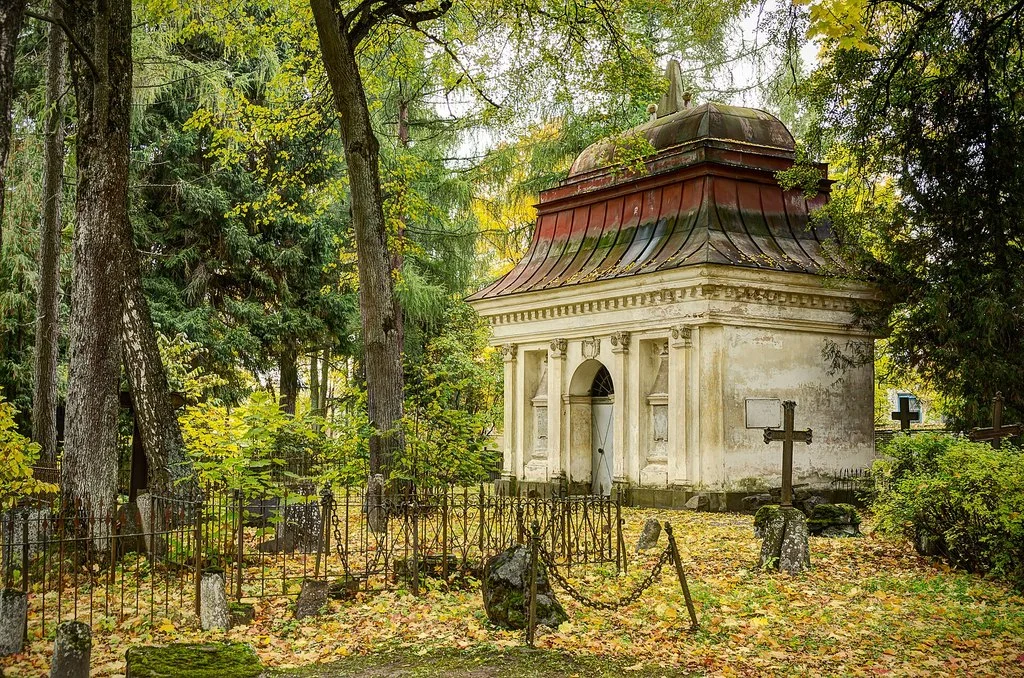
Old St. John's/Raadi cemetery in Tartu (photo by Janno Loide, CC BY-SA 3.0 EE)

The weather of hingedeaeg is usually calm in Estonia: frost at night, fog in the morning, and light drizzle throughout the day. The hours with light are limited. Sounds are muffled, as damp air does not allow them to travel far. A perfect time to withdraw and contemplate all by oneself. What else would one think of under such circumstances than what has passed and what has been there before? Or, more precisely, who has been there before.

The spirits of the ancestors are called “hinged” (plural for “hing”). There is no good single word for “hing,” to be honest. Etymology, the explanation of the origins of the words, does not entirely help us here, either. In the Finnic languages of the Baltic Sea region, “hing” is related to breathing, “hingamine.” Once a living being is born and starts to breathe, they become hingeline—someone who has a hing inside them. The hing enters—and leaves, for that matter—the body in the form of air.

Täismahus artikkel on loetav Eesti Elu tellijatele

Igal nädalal toome me sinuni kõige olulisemad kogukonna uudised ja eksklusiivsed lood uutelt kolumnistidelt. Räägime eestlastele südamelähedastest teemadest, kogukonna tegijatest ja sündmustest. Loodame sinu toele, et meie kogukonna leht jätkuks pikkadeks aastateks.

Hind alates $2.30 nädalas.

Vaata tellimispakette

Loe edasi