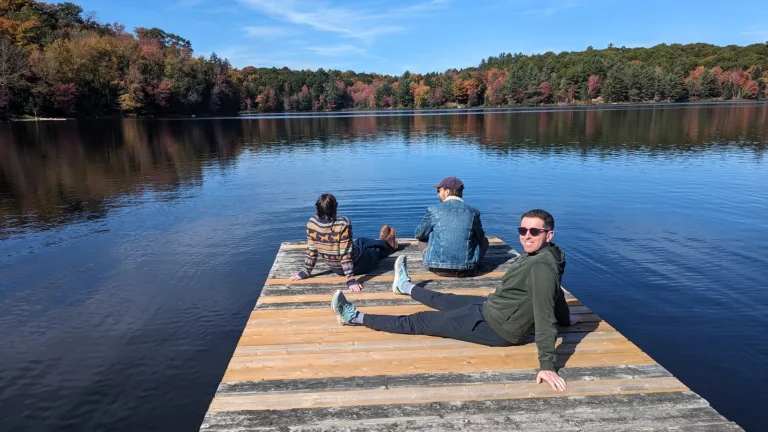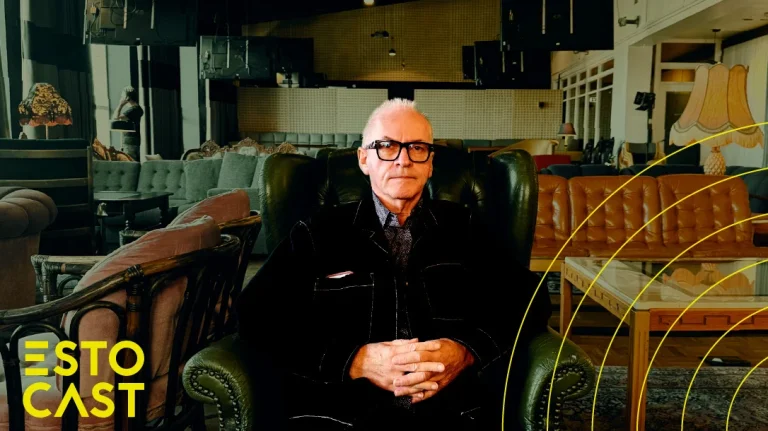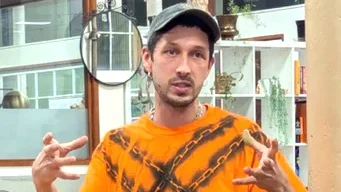
Sasha came to Hamilton at the end of September and stayed for 5 weeks to explore the local geography, the history of the lands within the Escarpment, and the different groups of people who have made the area their home. His focus was to look at the relationships between humans, climate change, biodiversity and sustainable artistry. His creative response to the experience was displayed in his working studio at The Cotton Factory and visited by the attendees after the slide presentation of different places he has visited and worked in.
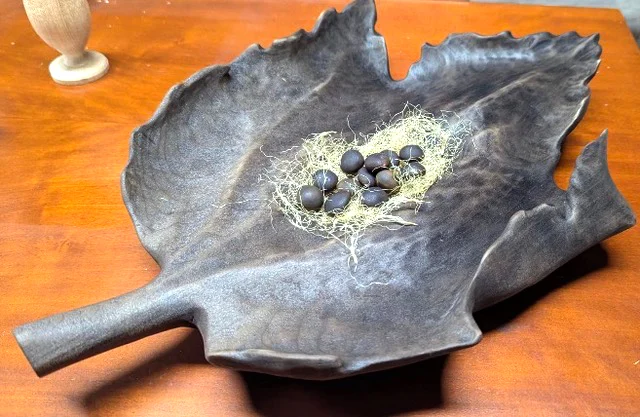
In Sasha’s Hamilton studio space, there was evidence of different carved wood pieces from native species like Honey and Black Locust. His visit to the Six Nations Reserve helped to spark his curiosity to research the evolution of trees which are becoming less known such as the Pawpaw.
What is very noticeable is Sasha’s enthusiasm for exploring the elements of the environment he sees and linking this concept into the shapes of the art pieces that he creates. For example during his visit to the Black Forest in Germany, the delicate shape of the Ginko tree leaf lent itself to his designing Ginko-shaped butterflies in his woodcarving. When researching the wood of olive tree for his exhibition “Her Branches in the Ground, Her Roots in the Sky”, he noticed the symbolic links between Mediterranean land and cultural identity. In his residency visit to Latvia he experimented with pit-fired earthenware, or wild clay, dug out from the region and then fired while immersed in the organic matter nearby. In London England, as part of ACAVA artists’ community (Association for Cultural Advancement through Visual Art), Sasha collaborated with Wojtek Kawczyk to offer carpentry courses to reuse found wood, rope and metal, to create sustainable furniture. Inspired by designs by innovative Italian designer Enzo Mari, Sasha and Wojtek used discarded wooden pallets to build chairs. In another project to promote circular economy a communal play structure was imagined and built that could be reshaped with wood and bolts to keep it interesting.
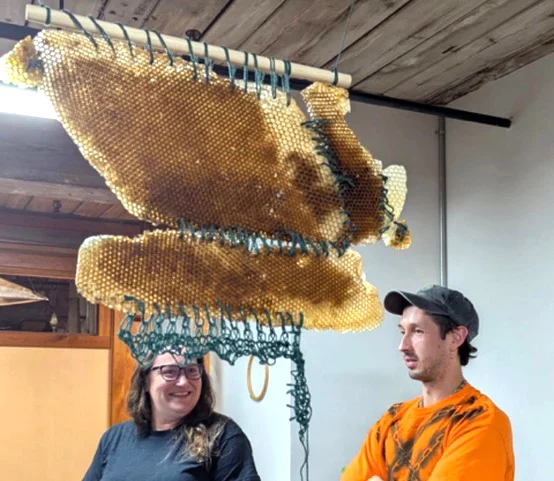
In Sasha’s Hamilton studio space, there was evidence of different carved wood pieces from native species like Honey and Black Locust. His visit to the Six Nations Reserve helped to spark his curiosity to research the evolution of trees which are becoming less known such as the Pawpaw. The discussion amongst the visitors at the Artist Talk was robust as the history of the tree’s fruit was shared, and Sasha’s sketches and drawings of these items were observed. Sasha was able to create delicate hanging, tied sculptures using bee honeycomb structures, supplied by Hamilton based bee-keeper Krista Koger. The metaphor of “hanging in balance” came to mind with climate and bee behaviour.
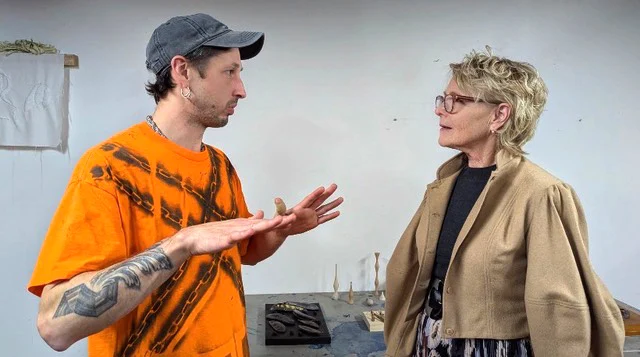
Sasha Tishkov stated he is sensitive to finding a “visual voice” for the land in his eco-inspired visit to Hamilton. He said the stay evolved in unexpected ways, but his audience also gained new ideas about an outsider’s view of the delicate landscape in our own backyard that is evolving because of the intersection of people, climate change, and the environment.
Elva Palo is an artist, expressive arts practitioner, and member of EKKT working in the GTA.