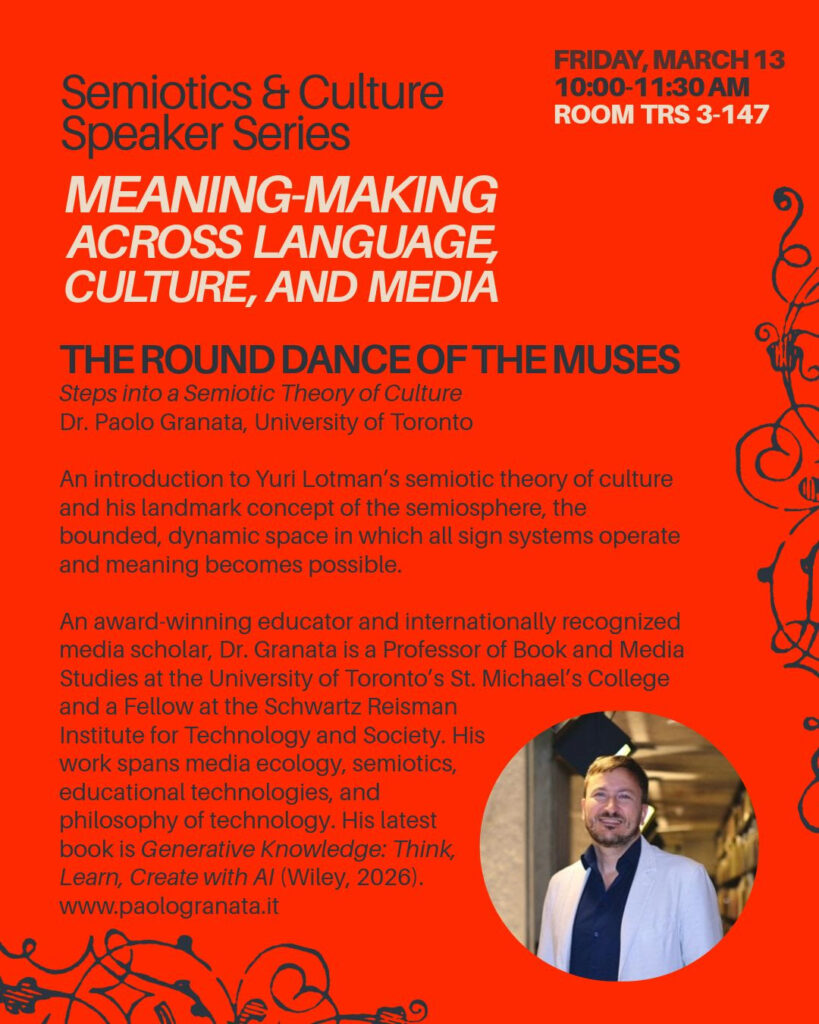
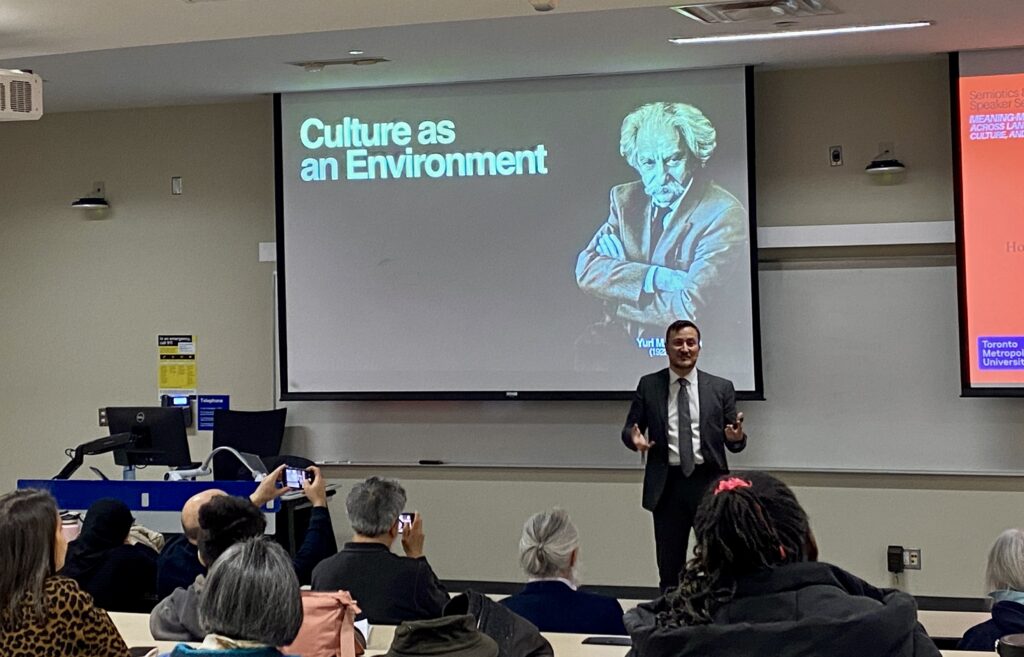
His presentation, titled “The Round Dance of the Muses: Steps into a Semiotic Theory of Culture,” served as an invitation to reconsider the legacy of Juri Lotman, a man Granata described as the “Estonian Marshall McLuhan.” The atmosphere was one of interdisciplinary curiosity, reflecting this year’s theme of “Meaning-making across language, culture, and media.” The lecture was a comprehensive lay of the land for anyone learning about semiotics and the seeds that became Lotman’s theories.
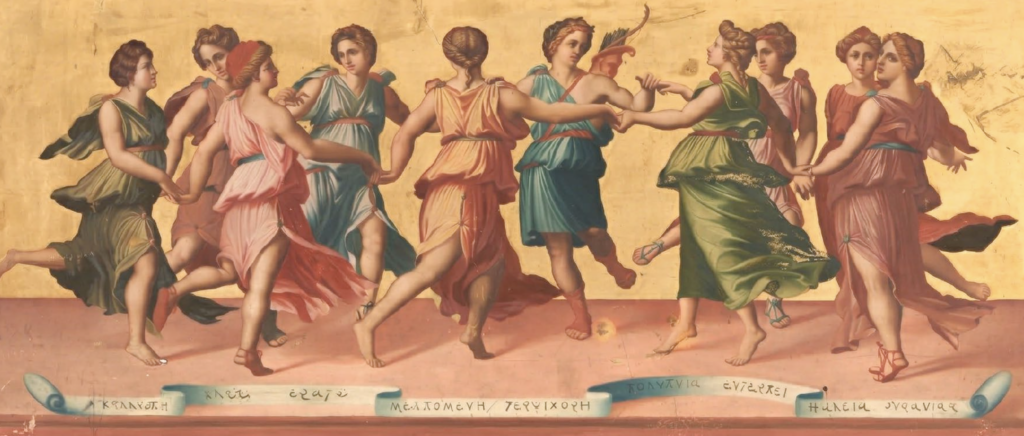
Granata began with a visual meditation on the Round Dance of the Muses, an image featuring ten figures with Apollo at the centre. In Greek mythology, these muses represented various artistic, poetic, literary, and intellectual expressions.
This serves as a primary metaphor for Lotman’s work. That is, culture is a dynamic, swirling dance of different sign systems.
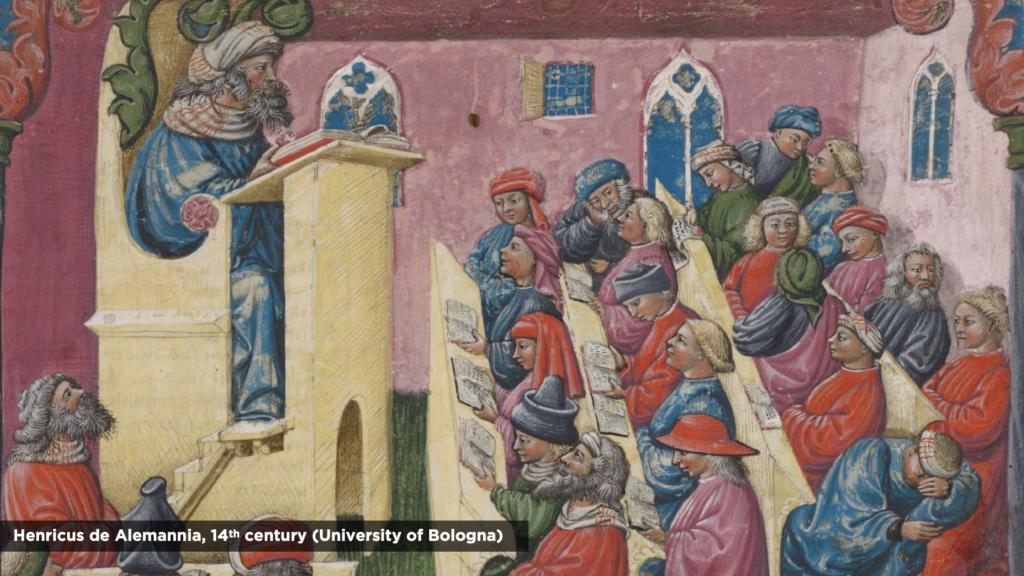
To illustrate this further, Granata shared a 14th-century illustration of a university lecture in Bologna. This rather familiar image is a representation of what Lotman called the semiosphere. In this space, there is a clear centre where the professor lectures and the most attentive students sit, representing the conservation of tradition and the preservation of established knowledge. At the periphery, students might be chatting or even sleeping. In Lotman’s view, the periphery is not a place of failure but of potential. It’s at these edges where the rules are less rigid that innovation and new meanings are born. Granata noted that universities are conservative institutions in the most literal sense. That is, they’re designed to conserve the memory of a culture, providing the stability necessary for future expansion.
As Dr. Granata explained, Juri Lotman viewed culture as an environment rather than just a collection of artifacts. He famously paralleled the semiosphere to the biosphere. Just as the biosphere is the biological precondition for life, such as the air we breathe and the soil that feeds us, the semiosphere is the precondition for meaning.
Without this semiotic space, no individual sign, word, or image can possess meaning. Context, therefore, is what determines content. Granata used the modern airport as a practical example. An airport exists as a functioning system only because of a pre-existing sign system. We know where to stand and how to move because the semiosphere of travel has already organized the space for us.
Attendees learned a bit about Lotman’s own life, too. Born in St. Petersburg to a Jewish family, he moved to Tartu, Estonia, in 1950. This move was partly a strategic retreat from the antisemitism and rigid intellectual oversight of Moscow and present-day St. Petersburg. On the edges of the Iron Curtain, Tartu provided a space where Lotman could cultivate a unique intellectual community. Despite the Soviet ban on the word “semiotics” (which was viewed with suspicion as a Western bourgeois invention), Lotman and his colleagues, including Boris Uspenskij, circumvented censorship by using the term “modelling systems.” This led to the 1973 Manifesto of Tartu-Moscow Semiotics, a landmark document that merged Russian Formalism, structuralism, and cybernetics.
In a universe constantly moving towards entropy, or the dispersion of energy and order, Lotman argued that culture is the only force capable of battling this decay. Culture organizes information and stores memory, allowing humanity to resist the chaos of the natural world.
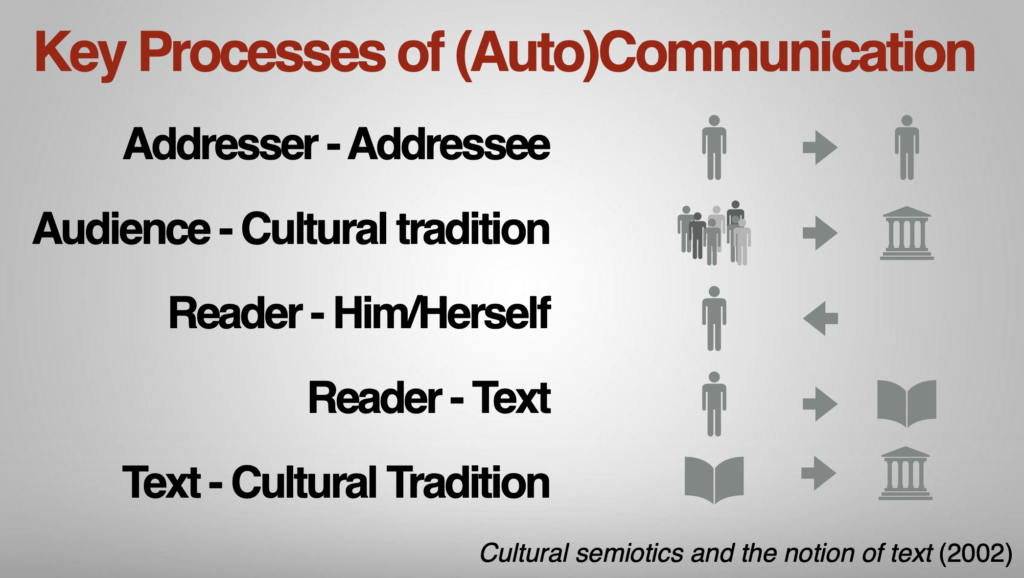
Lotman was deeply influenced by his teachers, including Boris Eikhenbaum and Vladimir Propp. While the earlier Formalist school focused on the intrinsic structures of a text, Lotman went further. He integrated the work of semioticians like Louis Hjelmslev from Denmark and the Paris school represented by Algirdas Julien Greimas and Roland Barthes. He also drew upon the emerging field of cybernetics, which connects to the Greek “kubernētēs” (“steersman”). In a universe constantly moving towards entropy, or the dispersion of energy and order, Lotman argued that culture is the only force capable of battling this decay. Culture organizes information and stores memory, allowing humanity to resist the chaos of the natural world. One of the most compelling concepts Granata highlighted was that of autocommunication. This is the process by which a culture communicates with itself. It’s a relationship that reshapes the identity of the person or group involved. Communication, as Granata reminded the attendees, comes from the Latin commūnis, meaning “common.” Communication is building a shared world.
As the lecture moved toward its conclusion, Dr. Granata touched upon the implications of Lotman’s theories for the age of artificial intelligence. If culture is a mechanism for generating new meaning and storing memory, then AI represents a new kind of boundary device in our semiosphere. Students and scholars today are using Lotman’s tools to analyze how we might contest or preserve meaning in an environment shaped by algorithms.
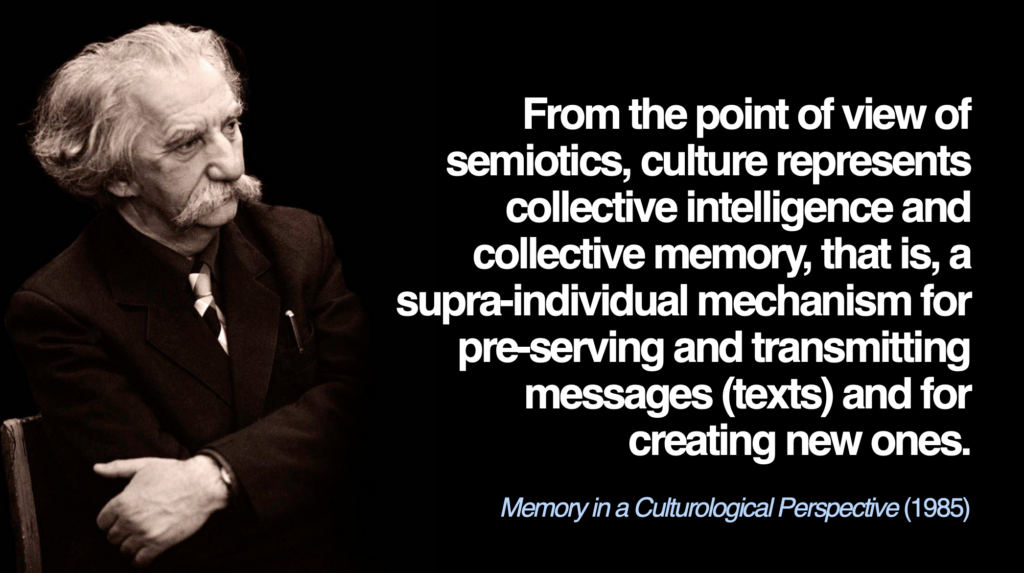
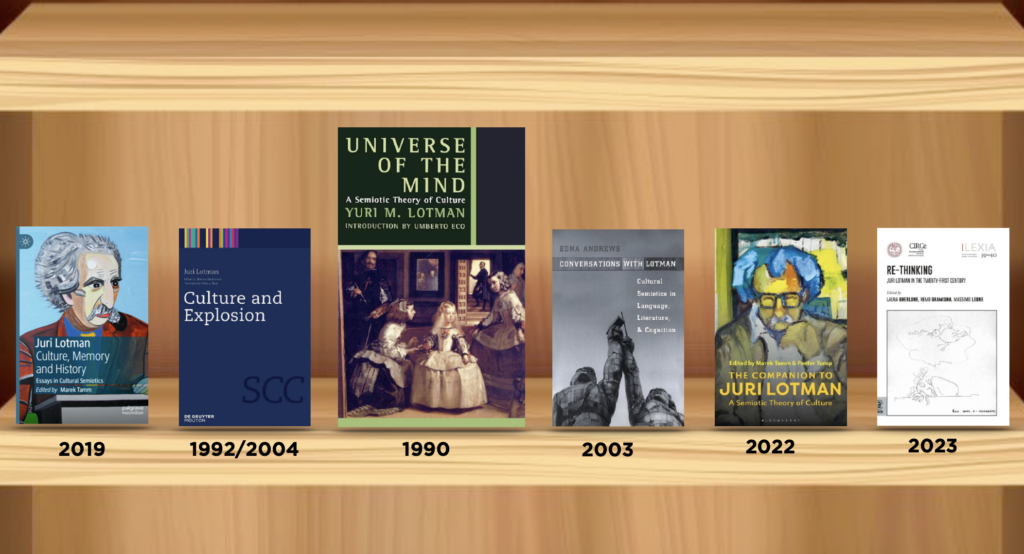
For the global Estonian community, Lotman’s legacy (and books of his such as Universe of the Mind) has us consider once again how culture is a survival mechanism. Culture allows us to create a symbolic reality, to think of tomorrow, and to maintain a collective memory that transcends borders.
By partaking in Estonian culture, we are maintaining the very environment that allows us to understand ourselves and the world around us.