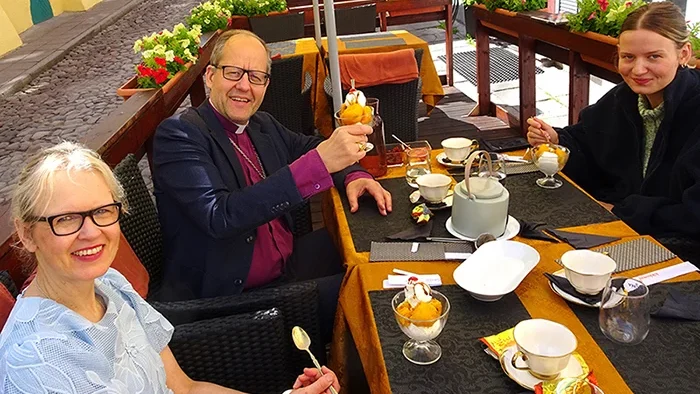
Having lived in Tallinn for several years, and with English being almost like a native language to me, I was looking for a place to connect with native English speakers and improve my language skills. Luckily, I learned about the American English Club—a wonderful place to meet people, discuss topics related to American society, and immerse oneself in American culture.
One of the key figures in the club is Aubrey Lay, who co-leads the sessions and brings a wealth of experience and enthusiasm to the discussions. Aubrey is in Estonia as a Fulbright English Teaching Assistant (ETA). The Fulbright Program, funded by the U.S. State Department, is an initiative that fosters cultural and academic exchanges between nations. Aubrey’s work primarily involves teaching English to Ukrainian refugees and engaging with them through educational and community programs.
Although Aubrey initially applied to join the program in Ukraine, circumstances led him to Estonia, where he has made a significant impact through his work. Inspired by his first year, Aubrey decided to extend his grant for a second year, continuing his engagement with both Estonian and Ukrainian communities.
I decided to speak with Aubrey to learn more about what brought him here, what his work entails, and how he finds life in this country. He kindly agreed to meet for an interview, during which he shared his story, his experience with the Fulbright Program, and his impressions of living in Estonia.
Before we begin, it's important to note that the views expressed in this interview are solely those of Aubrey Lay and do not represent the Fulbright Program, the American Embassy in Tallinn, the U.S. Government, or any host institution.
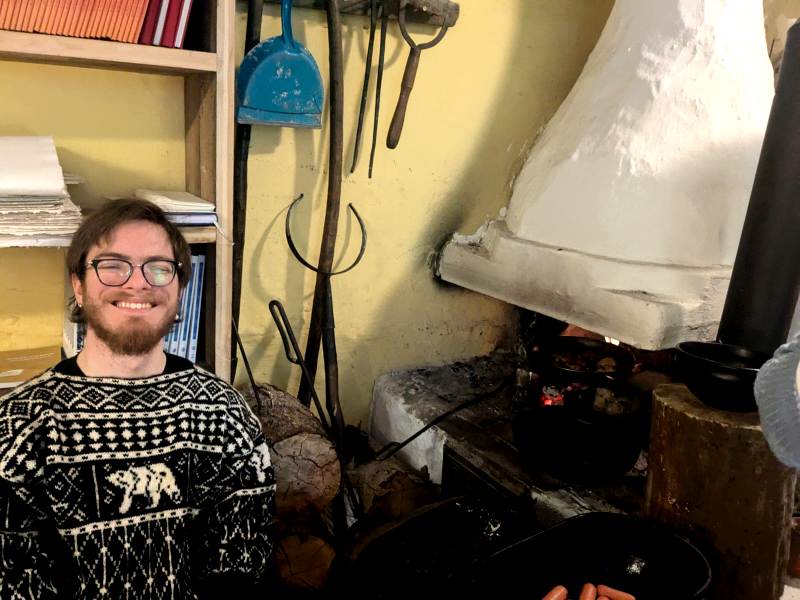
Why did you decide to apply for the Fulbright Program in Ukraine, and how did you find yourself in Estonia?
In university, I worked for a nonprofit called QUA – LGBTQ Ukrainians in America, which supports the Ukrainian diaspora in the United States. Through that work, I learned a lot about Ukrainian culture, history, and people, even though I don’t have personal ties to Ukraine. After the full-scale invasion in 2022, I felt that participating in a Fulbright exchange and working directly with the Ukrainian community would be an important way to contribute to supporting Ukraine.
“…only four people applied because of the war. Eventually, two of us were redirected to Estonia. I received an email from the U.S. Embassy offering me an interview for a placement at a Ukrainian school in Tallinn, and I was thrilled.”
(Aubrey Lay)
When I applied, the situation in Ukraine was still very uncertain. Typically, the Fulbright Program in Ukraine is large, with many applicants and participants, but that year, only four people applied because of the war. Eventually, two of us were redirected to Estonia. I received an email from the U.S. Embassy offering me an interview for a placement at a Ukrainian school in Tallinn, and I was thrilled.
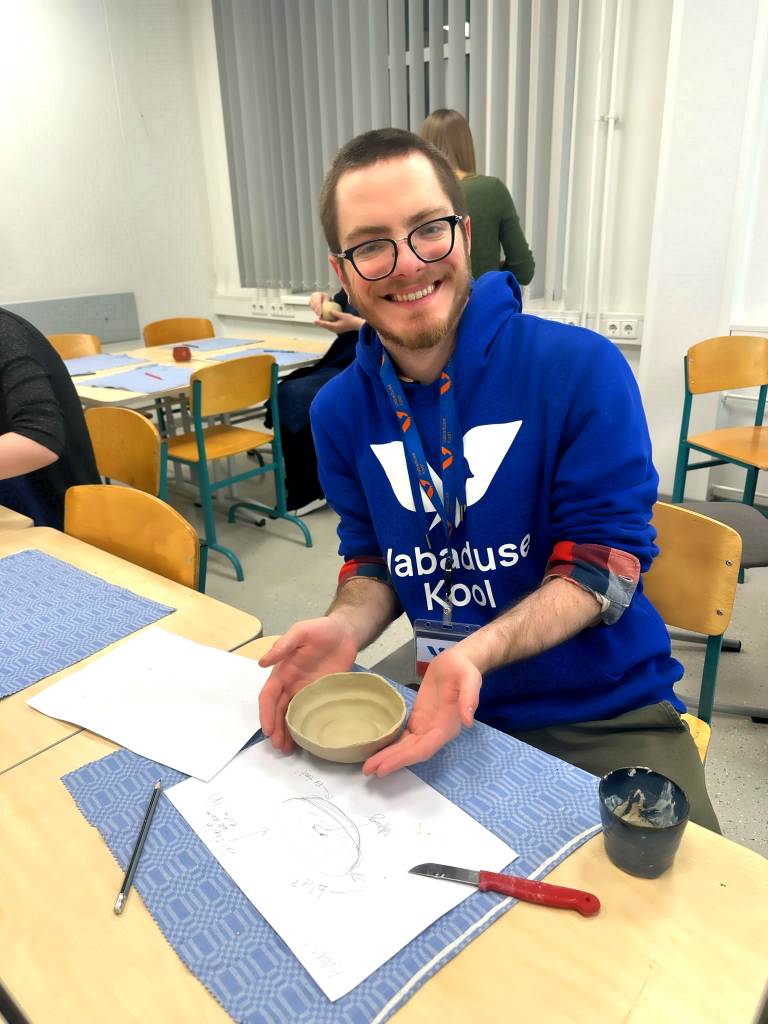
Now, my main placement is at Vabaduse Kool (Freedom School) in Tallinn, which was founded in 2022 for Ukrainian refugee students. It’s a bilingual school where students are taught in both Ukrainian and Estonian. I’ve been here since September 2023, and while the grant usually lasts for nine months, I decided to extend it for a second year because I really enjoyed my time in Tallinn. I’m grateful for this opportunity to teach and support the Ukrainian community here. It’s been an incredible journey of growth and connection.
One of the highlights of my experience has been participating in the rich cultural traditions of Estonia. For instance, I’m staying a bit longer after my grant ends this June to attend the Estonian Song and Dance Festival, something I’ve been looking forward to since I first heard about it.
Could you share your thoughts on the importance of the Estonian National Song and Dance Festival and your involvement in it?
The Estonian Song and Dance Festival is a major cultural and historical event that happens every few years. Thousands of people gather in Tallinn to perform Estonian folk dances and sing traditional songs, many of which played a role in Estonia’s fight for re-independence.
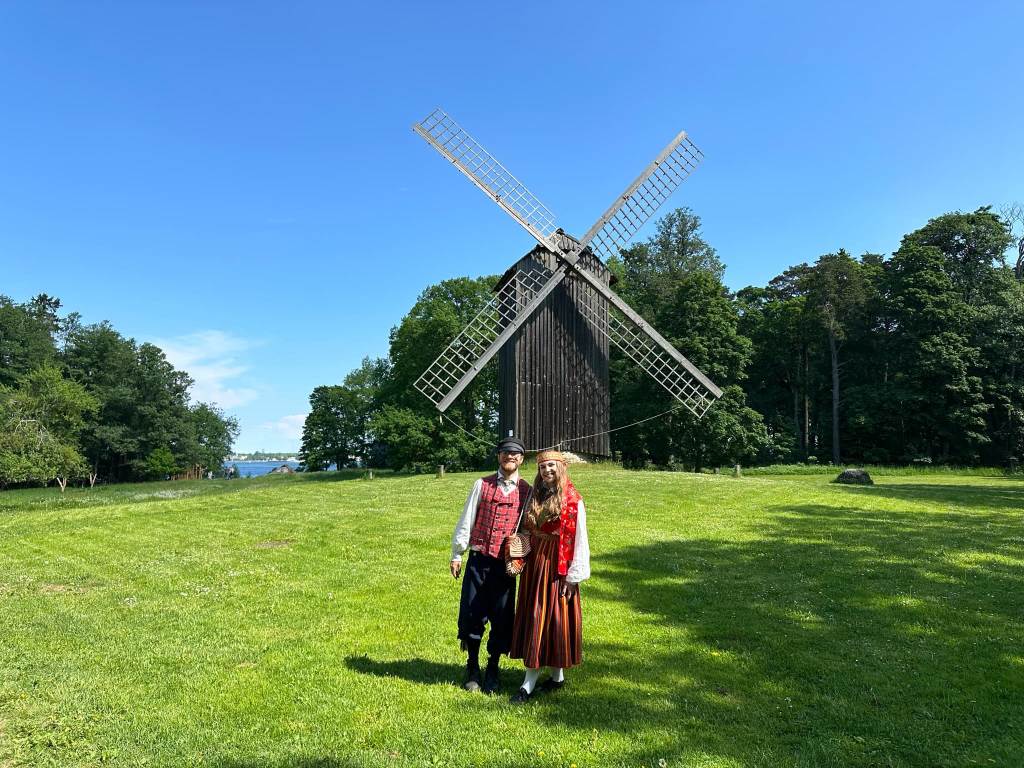
I’m currently part of a dance group called Leigarid, which has over one hundred members in Tallinn and Tartu. We’re preparing for auditions to perform at the festival. Some of the dances we’re learning are very traditional, while others combine modern elements. It’s a wonderful way to engage with Estonian culture, and I hope to be a part of it this summer.
Can you describe the different roles you take on as a teaching assistant, both in the classroom and in the broader community?
I take on several roles in my work. First, I assist in over a dozen classes each week, where I help students with whatever they need—whether it’s grammar, vocabulary, pronunciation, reading, writing, or understanding cultural context. English grammar can be especially challenging for non-native speakers, particularly when it comes to understanding articles (“a,” “an,” and “the”), and my task is to explain these nuances to my students. I also lead lessons on U.S. culture and politics—in November, for example, I taught about the U.S. Electoral College; this February we did a lesson series on African American spirituals and how music played a role in the Underground Railroad.
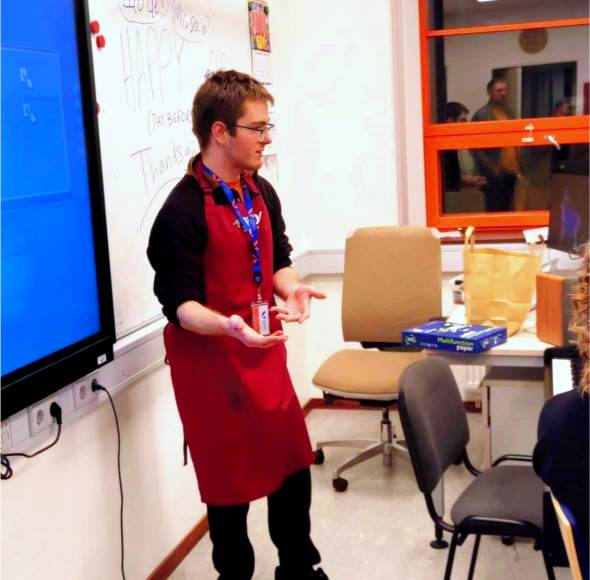
In addition to classes, I organize cultural events. I’ve hosted a big Thanksgiving dinner at Vabaduse Kool both in 2023 and 2024. It featured traditional American dishes like turkey, mashed potatoes, and stuffing. My students were surprised at just how much butter everything had in it! There were also Ukrainian and Estonian foods brought by students and staff. This celebration reflected the diversity of our school community and made me feel at home, even far away from my family.
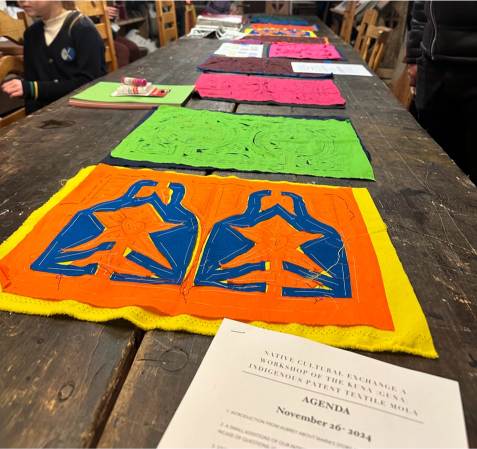
I also coordinated a series of textile craft workshops with visiting U.S. artist Maria Loyd and indigenous Guna community leader Kandra Yanira Ehrman Pérez. Maria runs a business in Jim Thorpe, Pennsylvania, where she incorporates traditional Guna Mola fabric art into modern style. The Guna people are indigenous to Panama and Colombia, and make these beautiful, colourful multilayered cloth pieces that Kandra and Maria taught students at Vabaduse Kool and the Ukrainian Centre how to make. It was really powerful to talk together with Estonians and Ukrainians about how their own traditions of national dress have similarly resisted colonialism and imperialism in the past and present. I find so many resonances between Estonian and Ukrainian history and resilience.
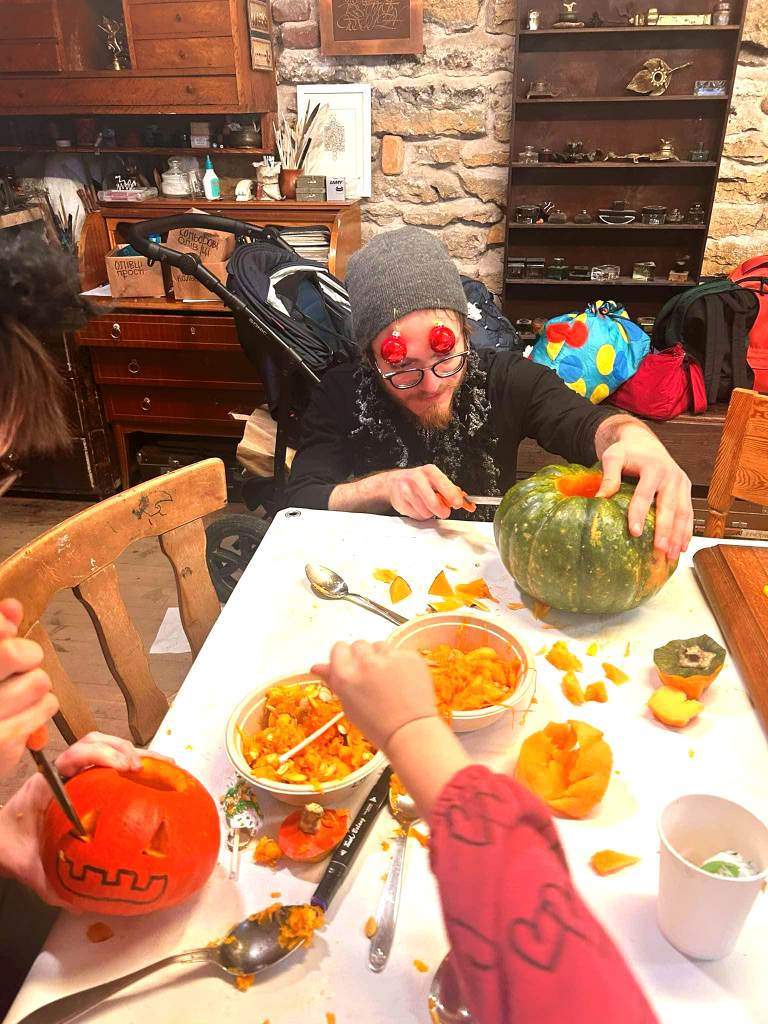
I also run English conversation clubs for middle schoolers, high schoolers, and even the staff at the school. Outside Vabaduse Kool, I teach at Tõnismäe Riigigümnaasium and volunteer at the Labora weekend school at the Ukrainian Cultural Centre, where I work with youth on English and cultural lessons. The centre is a fantastic organization in Tallinn’s Old Town, and I hope more people learn about this centre.
What are your impressions of the bilingual education system at Vabaduse Kool, and why do you think this approach is so important?
From what I’ve seen, the system is incredibly powerful. It’s vital for students to maintain a connection to their home language and culture while living in another country. This connection helps them preserve their identity and provides a sense of belonging, even far from home. At the same time, learning Estonian is crucial for integrating into society here.
A bilingual education enables students to engage fully with both cultures, which is invaluable. It not only supports their academic growth but also fosters mutual understanding and respect between cultures. The combination of Ukrainian and Estonian languages in this type of education ensures that students are prepared for whichever path they choose, whether it’s continuing their education here or contributing to rebuilding Ukraine.
What challenges do the students and the teachers face?
There are definitely challenges. For instance, many students initially struggled with learning Estonian, especially in a full-immersion environment. However, immersion is the most effective way to learn, and over time, they’ve made remarkable progress.
Another challenge is that some students don’t speak Ukrainian as their home language. They may speak Russian or Surzhyk (a combination of Ukrainian and Russian), which adds complexity to the learning process. Even so, having Ukrainian language education prepares them for life in Ukraine if they decide to return.
The biggest challenge, though, is the emotional toll of the ongoing war. Many students and teachers have experienced deep trauma—losing homes, family members, or worrying about loved ones still in Ukraine. News of attacks and tragedies weigh heavily on everyone, and it makes learning difficult. Despite this, the sense of community at the school helps. Students and teachers support one another, creating an environment where no one feels alone in facing these struggles.
What kind of emotional challenges do your students face because of the ongoing war? Could you give some examples?
Even the simplest activities in a language classroom can take on a completely different meaning when working with students who have been displaced from their homes. I remember a lesson during my first month at the school where the coursebook curriculum focused on travelling. The activity was straightforward: asking students about their ideal trip.
“a seemingly neutral question in a coursebook can lead the students to reflect on their homes and the lives they left behind. But it’s important to remember that any topic can remind these students of the war trauma.”
(Aubrey Lay)
But instead of the usual answers like, “I’d go to Spain” or “I’d pack sunscreen for a beach vacation,” almost every student in the class of a dozen said they wanted to go back home. One student said they longed to see the Carpathian Mountains again. Another wished they could return to Crimea someday.
This is just one example of how a seemingly neutral question in a coursebook can lead the students to reflect on their homes and the lives they left behind. But it’s important to remember that any topic can remind these students of the war trauma. This doesn’t mean avoiding important subjects for language learning, but being sensitive in bringing them up and prepared for unexpected responses. Recognizing and respecting these challenges is a key part of creating a meaningful and supportive educational environment.
Are there any notable differences in teaching methods or educational approaches between Estonia and the United States? If so, what stands out to you?
One of the first things I noticed here is how technologically advanced the classrooms are compared to many I’ve seen in the United States. This makes sense, given Estonia’s reputation as a digital nation. It was one of the first things I read about when researching the country before coming here.
Another difference I’ve observed involves some students, particularly those coming from the Ukrainian educational system, who might be more accustomed to a Soviet-influenced teaching style. This approach often focuses on rote memorization and grammar patterns, with teachers acting as the primary source of knowledge. In contrast, the teaching style I am used to encourages conversation and open-ended questions like, “What do you think?” or “How do you feel?” At first, students were caught off guard by this approach, but I’ve found that with time and consistent encouragement, they become more comfortable thinking creatively and expressing their own ideas.
Overall, teaching at Vabaduse Kool has been a deeply rewarding experience. The school emphasizes not only collaboration between students and teachers but also interconnection across the disciplines and a strong sense of community within the school. It truly feels like a koolipere (“school family”) and I’ve loved being part of such a supportive and innovative environment.
What are some stereotypes about refugees that you think are important to challenge?
One of the most important stereotypes to challenge is the idea that refugees are defined solely by their trauma. While it’s true that being forced to leave your home is a deeply traumatic experience, refugees are so much more than that.
For every story I could share about the challenges faced by our students and Ukrainian teachers at Vabaduse Kool, I could tell you a dozen stories about the joys they’ve found in Estonia. Whether it’s through keeping their language and culture alive, forming new friendships, or embracing opportunities in a new environment, they demonstrate incredible resilience and strength.
This applies to refugees everywhere. In the United States, for example, we are a nation built by immigrants and refugees. While some may try to portray refugees or immigrants negatively, I believe the diversity of experiences and cultures they bring is a tremendous blessing. It enriches society, increases understanding, and creates opportunities for growth.
Rather than focusing solely on the difficulties refugees face, we should also celebrate their resilience, their contributions, and the meaningful lives they build wherever they go. This perspective not only challenges stereotypes but also helps us appreciate the strength and beauty of diverse communities.
Why do you think there's a trend to portray refugees or immigrants negatively, and why do you see them as a blessing?
There’s a narrative among some people that refugees bring economic ruin, are uncivilized, ungrateful, or unwilling to integrate. But I think that’s the farthest thing from the truth.
“Fear of difference is something we need to overcome, whether it’s about refugees, queer people, or anyone else who doesn’t fit into the perceived norm. I believe that diversity enriches society…”
(Aubrey Lay)
People seek meaningful and fulfilling lives. They want to contribute to the societies they live in. On a fundamental level, I believe most people would agree with that. The issue is that refugees are often seen as less than human. In my country—and I think this happens everywhere—there’s sometimes a certain fear of those who are different, even though there’s no reason for such fear.
I signed up for the Fulbright Program because I believe that learning about and engaging with other cultures is fundamentally good—for me as an individual and for society as a whole. It broadens horizons, builds empathy, and teaches valuable skills that can be applied both professionally and personally. Just as much as I’m here to teach English, I’m also here to learn—from Estonians, Ukrainians, and everyone I meet.
Fear of difference is something we need to overcome, whether it’s about refugees, queer people, or anyone else who doesn’t fit into the perceived norm. I believe that diversity enriches society, and the more we connect with each other, the more we grow as individuals and as communities.
You are one of the co-leaders of the American English Club, where we first met. How would you describe the purpose of this place?
The American English Conversation Club at the American Space in TalTech has been running for about ten years. It’s part of the broader American Spaces initiative, a U.S. State Department program that provides places where people around the world can learn about U.S. culture and engage in a cultural exchange. In Estonia, there are American Spaces in Tallinn, Kuressaare, Viljandi, and Narva, each offering unique programming.
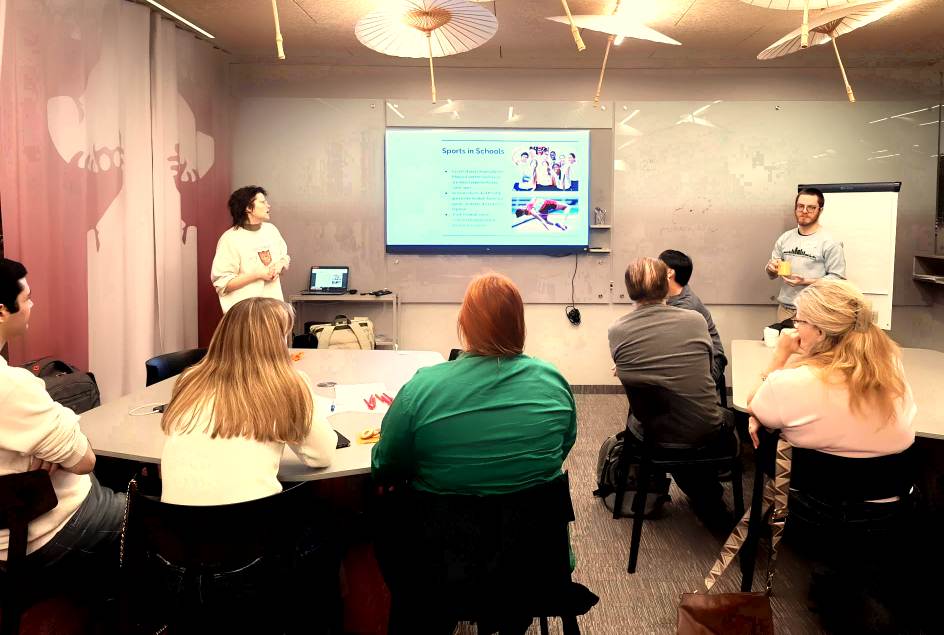
The club in Tallinn focuses on helping people practice English and learn more about U.S. culture. What makes it special, though, is the sense of community it creates. The diversity of participants is incredible—we have Estonians, people from other countries, and attendees ranging from middle school students to retirees. There’s a variety of experiences and native languages represented, and I feel like I learn just as much from the participants as they do from me.
It’s truly a space for cultural exchange, and that’s why it’s one of my favorite placements here. The U.S. Embassy officially assigns me to both Vabaduse Kool and the English Club, and I really enjoy working in both environments. This club and similar American Spaces around the country—they all share the goal of fostering connections and understanding between people of different cultures.
What other activities or events are hosted by the American Spaces in Estonia, and what makes them unique?
The American Spaces in Estonia offer a wide variety of programming tailored to the needs and interests of their local communities. For example, in Viljandi, there was an amazing Halloween party last year that brought people together for a fun celebration. In Narva, they host training sessions for older adults on using technology, such as photography and smartphones, as well as career workshops for both local residents and Ukrainian refugees.
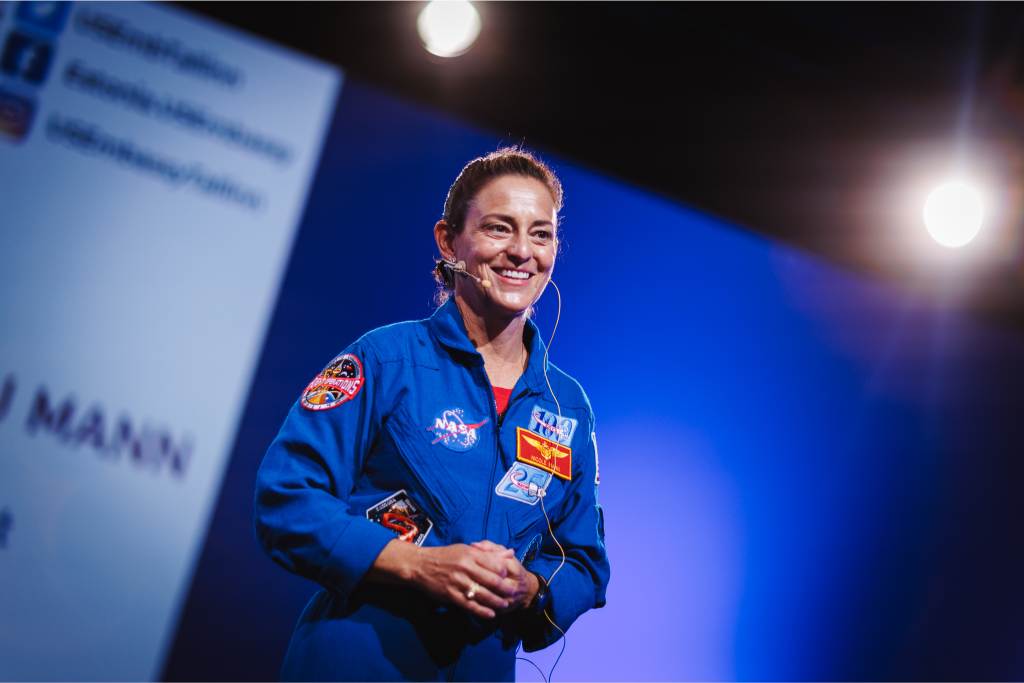
One of the highlights of the American Spaces is the opportunity to bring in guests from the United States. In the fall of 2023, Nicole Aunapu Mann, an Estonian-American astronaut and the first Native American woman to go into space, visited Estonia. She gave a talk to Estonian students, sharing her inspiring journey.
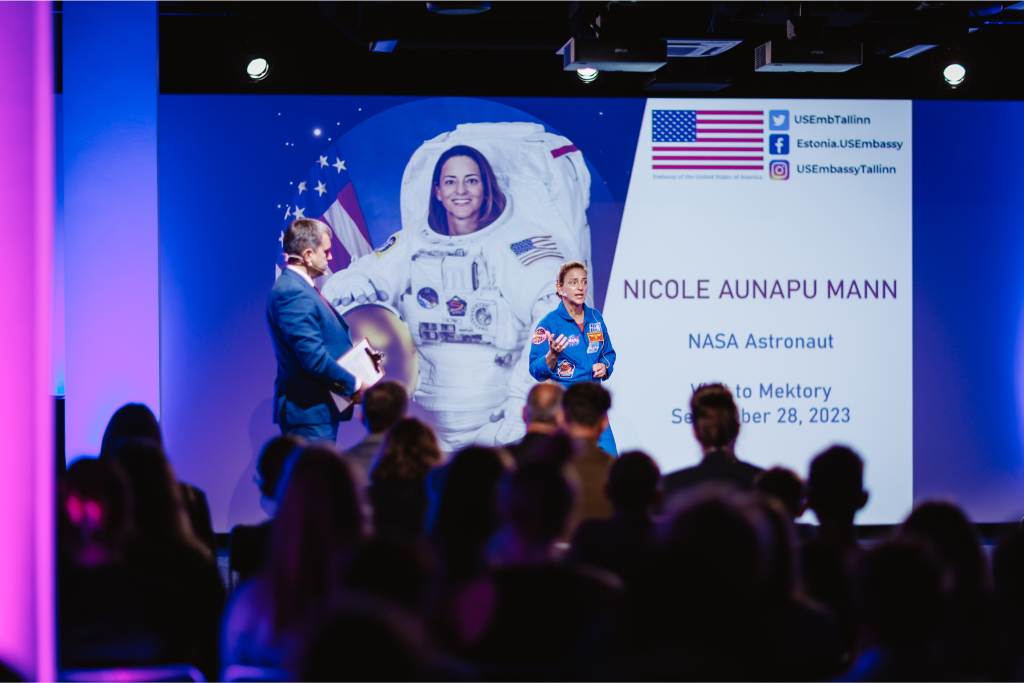
Nicole’s visit was particularly special because it was her first time in Estonia, where some of her ancestors are from. During her trip, Nicole also visited the area her family originally came from, deepening connection with her Estonian roots, which complement her Native American heritage. Meeting her was an incredible experience and a great example of how the American Spaces foster meaningful cultural exchanges and connections.
You teach English. What languages have you studied yourself, and what has your language-learning journey been like?
In high school, I studied French, and later, at university, I studied Mandarin Chinese. Before coming to Estonia, I had no experience with Uralic or Slavic languages, so learning Estonian and Ukrainian has been a completely new challenge for me.
How has your experience of learning Estonian and Ukrainian influenced you?
I’m very grateful for the opportunity to learn and be immersed in both of these languages. Estonian and Ukrainian are both incredibly beautiful, yet so different from each other. Since I’m living in Estonia and teaching Ukrainian students, I feel it’s not only important but also my responsibility to learn both languages. Just as much as I’m here to teach, I’m here to learn.
I studied linguistics at university, so I’ve always been fascinated by the structure of languages and the deep connection between language and culture. Learning both Estonian and Ukrainian has given me a unique perspective on how language shapes identity and how it reflects the history and traditions of a nation.
Through learning Estonian and Ukrainian, I’ve been able to engage more deeply with cultural traditions and events. For instance, I’ve enjoyed taking part in Kadripäev celebrations with friends, and being able to understand some Ukrainian helped me celebrate an unforgettable Christmas at the Ukrainian Cultural Centre.
In my first year, I was learning Estonian alongside my students at Vabaduse Kool, which was both fun and challenging. Meanwhile, I studied Ukrainian independently and practiced with colleagues. Last summer, I had the privilege of attending an intensive Ukrainian course at the Harvard Ukrainian Research Institute, thanks to a generous scholarship. Now, I continue my Ukrainian studies online with the University of Kansas, and am studying to take the B1 exam in Estonian. The learning never stops, and I’m grateful for every opportunity to deepen my connection to the communities around me.
What are your impressions of Estonia? What are some cultural contrasts between life here and in the United States, and how did you adapt to them?
One of the things I love most about Tallinn is its public transportation system. Compared to most cities in the United States, it’s incredibly accessible, especially with free transportation for residents. In the U.S., travel is often much more expensive and less convenient, as public transport infrastructure isn’t as widely developed. Here in Estonia, I can get almost anywhere by bus or train at an affordable cost, which has been a wonderful experience.
“Some of my Estonian friends have said that making the effort to learn the language fast-tracked my friendships by a few months—it showed them that I was serious about being here.”
(Aubrey Lay)
Another aspect of Estonia that stands out to me is how deeply song and dance are embedded in the national culture and identity, particularly the influence of regilaul/runic singing. I’ve attended folk concerts where the entire audience sings along in a way that’s hard to explain to my American friends. While people in the U.S. also sing along at concerts, the call-and-response nature of many Estonian folk songs makes it feel like an integral part of the experience. It’s a very organic and beautiful tradition.
One cultural difference that took some adjusting was how reserved Estonians can be when you first meet them. In the U.S., it’s common to smile at strangers, but here, I quickly realized that doing so made people look at me strangely. At first, I wasn’t sure how to interpret it, but over time, I learned that Estonians are simply more private with people they don’t know. However, once you do build a connection, you don’t feel it is much different from the U.S.
Learning Estonian has helped me integrate and connect with people even more. Some of my Estonian friends have said that making the effort to learn the language fast-tracked my friendships by a few months—it showed them that I was serious about being here. Even though we often communicate in English, they’ve been patient and supportive in helping me improve my Estonian, which I deeply appreciate.
How do you plan to use your experience in Estonia in your future career or personal life?
I already knew that I wanted to continue working with Ukraine, but my time in Estonia has solidified that commitment. When the time comes to rebuild Ukraine, I hope to contribute in some way—whether professionally or as a volunteer. Working with the Ukrainian community here has deepened my understanding, strengthened my language skills, and given me valuable experience that I hope to apply in the future.
Beyond that, I’ve built meaningful friendships and gained personal growth that I will carry with me wherever I go. I also hope to return to Estonia and continue practicing my Estonian. When I go back to the U.S., I want to share what I’ve learned with others—especially about this beautiful country, which many Americans don’t know much about.
Do you see yourself actually traveling to Ukraine to take part in the rebuilding process when the time comes?
I’m not sure yet. After my Fulbright grant ends, I am required to return to the U.S. for a period of time. Whether I eventually work in Ukraine directly or advocate for support from the U.S., I want to help in any way I can. I see it as essential to continue supporting the Ukrainian people, preserving cultural heritage, and ensuring that people who can’t return home still have ways to maintain their identity and connections. I don’t know exactly what my role will be, but I feel a renewed sense of purpose in being part of this effort.
Would you recommend exchange programs in general? What advice would you give to those interested in participating in programs aimed at working with refugees?
I highly recommend seeking out cultural exchange opportunities—whether by traveling abroad or simply connecting with people from different backgrounds in your own community. These experiences enrich both our lives and our understanding of the world.
“Refugees are not just people in need, they are individuals with strength, resilience, and so much to contribute. Seeing past simplistic narratives of suffering or deprivation leads you to more meaningful relationships and gives people the respect they deserve.”
(Aubrey Lay)
When it comes to working with refugees, the most important thing is to approach every interaction as a genuine human connection, not an act of charity. Refugees are not just people in need, they are individuals with strength, resilience, and so much to contribute. Seeing past simplistic narratives of suffering or deprivation leads you to more meaningful relationships and gives people the respect they deserve.
Is there a message or wish you’d like to share with our readers?
Keep learning. Keep making connections. If you feel a cultural or linguistic divide that makes it hard to communicate with someone, reach out anyway. Overcoming those barriers can actually bring you closer and create deeper understanding in the process of working through the discomfort. At a time when people are more connected digitally but increasingly isolated in their own social bubbles, stepping outside of those spaces is crucial. Fear of the “other” is often based on a lack of exposure.
And don’t be afraid of the challenges that come with learning a new language or adapting to a new culture. When learning a language, you’ll sound like a kindergartener at first. I certainly did in Estonian and Ukrainian! I constantly use the wrong case out of Ukrainian’s seven or Estonian’s fourteen. But that’s part of the process. The key is to embrace the discomfort, because that’s how real progress happens. The bumps along the way are part of the journey, part of the learning experience. In the end, every step you take broadens your perspective and deepens your ability to empathize.
Jerry Mercury, Tallinn, February 2025