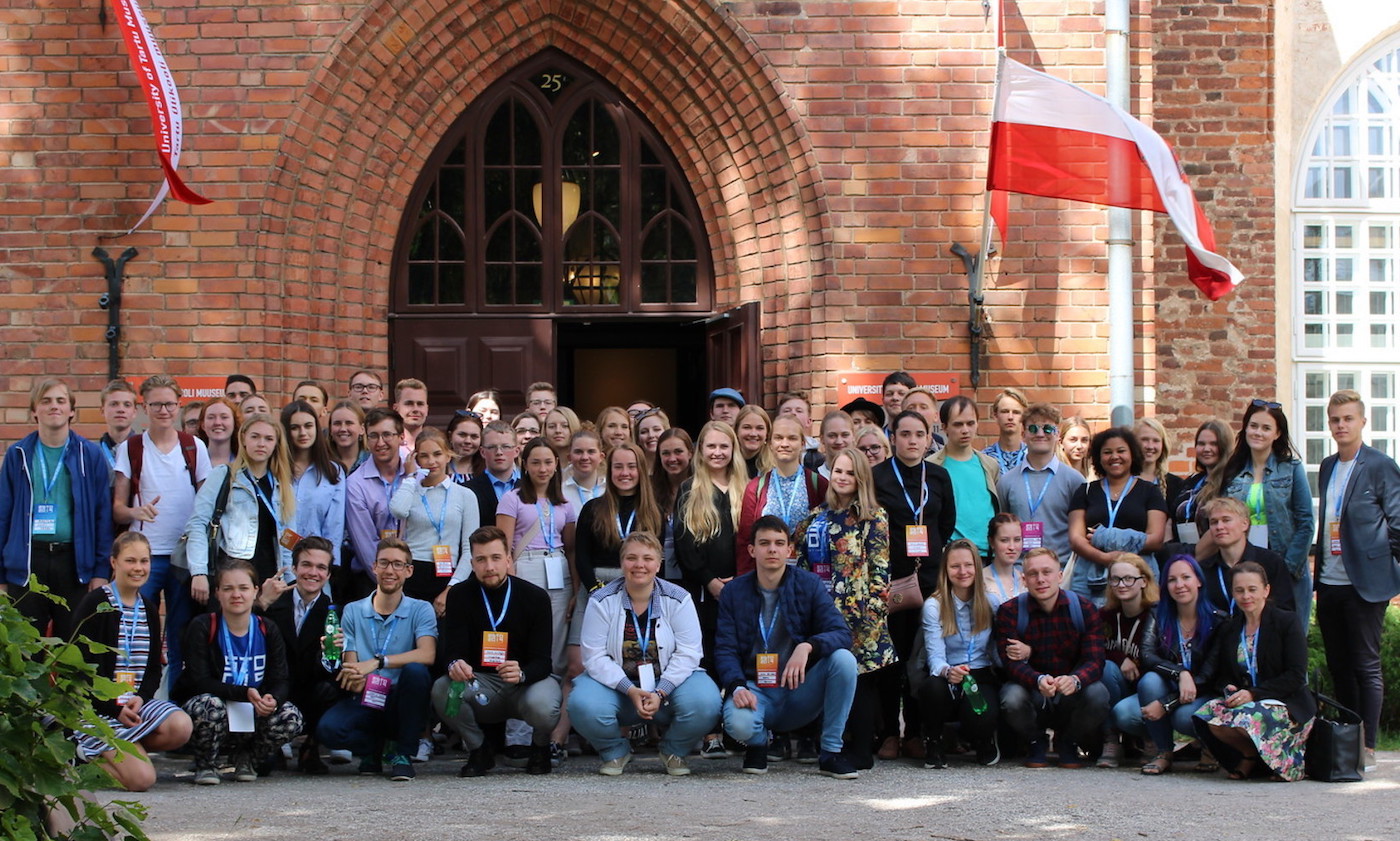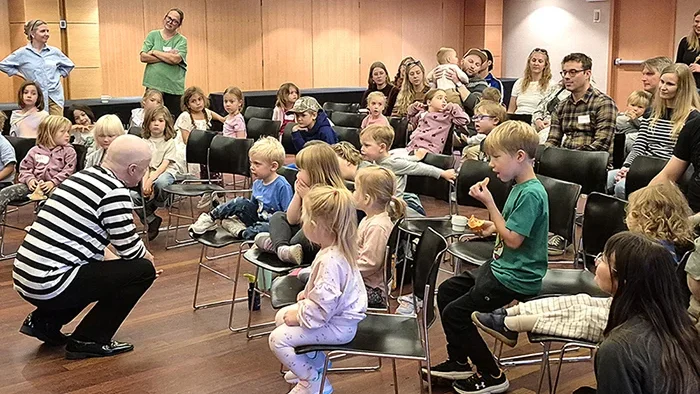
Perhaps most special about this year’s ESTO festival was its youth programme, which brought together more than 60 young Estonians from more than 25 different countries across the globe. Estonians in their teens and early twenties from various countries were able to apply as candidates, or be selected by their communities, to be ESTO 2019 Youth Delegates. Together, six Canadians participated in this youth programme: Katrine Eistrat, Juku Gold, Katariina Jaenes, Mihkel Jaenes, Andres Jeeger and Livia Kelle. In addition to being a youth delegate, Katrine Eistrat played an important role in organising the ESTO youth programme, working as director of communications.
The youth programme was designed to follow several underlying themes designed to foster group debate, and to be discussed throughout activities in Helsinki, Tartu and Tallinn. The themes focused on Estonian identity, culture, language, youth, living abroad, returning to live in Estonia, how to stay connected (including through the internet), and more.
In Helsinki, youth delegates were introduced to Estonian history and society in Finland. We were given lectures on Finnish-Estonian relations and history in the Helsinki Estonian house, and learned more from Estonian Ambassador Harri Tiido and his staff at the Estonian Embassy. A comprehensive seminar on youth and the future was held in Oodi library, where we, and the public, learned about the successes and challenges of the 72,000-strong Estonian community in Finland. Youth delegates engaged in discussion among ourselves and with guest speakers, including Estonian Population Minister Riina Solman, and Finnish entrepreneur Peter Vesterbacka – who is leading the project to build an underground tunnel between Helsinki and Tallinn.
From Helsinki to Tallinn we youth delegates joined hundreds of other global Estonians aboard a Silja Europa cruise ship for the official ESTO 2019 opening party. This included an EstDocs film programme, a folk dance programme, and dancing throughout the night kicked off by Estonian pop star Ott Lepland.
After the night’s festivities aboard the Silja, the youth delegates headed to Tartu. The first day there, we learned about the opportunities in Estonian universities, cruised on the Emajõgi, sang together in ESTO Song in Tartu’s town square, met with the Mayor of Tartu Urmas Klaas, and revelled in song, dance, history and culture throughout the night. Most important, we convened at Tartu’s History Museum to hold our Youth Congress (available online), in which we discussed and debated the above-mentioned ESTO themes, sharing both personal experiences as well as those of our respective Estonian communities abroad.
The second day in Tartu was mostly spent in the new Estonian National Museum (ERM), where we toured the museum’s exhibits, including a special ESTO exhibit prepared jointly by ERM and VEMU – the Toronto-based museum of Estonians abroad. We also spent several hours in working groups aimed at creating consensus and proposals related to the ESTO discussion themes. In the evening, we attended a special showing of the play “L A H U S” [eng: “Separated”], a powerful production about Estonians abroad and at home, which takes place in the archives of Toronto’s Tartu College. (It was Toronto Estonian Kaja Telmet’s idea to order the play from Estonia’s Rakvere Theatre, which produced it with support from VEMU). Later in the evening, there was the opportunity to tour houses of and learn about some of the Estonian fraternities (korporatsioonid).
On July 1, ESTO moved to its final destination: Tallinn. There, we youth delegates had a meeting at the Estonian Academy of Sciences, after which we moved to a conference in Telliskivi district where various global Estonian community representatives spoke about topics such as: Estonian language teaching abroad; youth camps and youth exchanges; and Estonian houses and clubs abroad. This was followed by a showing of the play “Üks väike tuba” [eng: “One Small Room”], which tells the story of 100 years of Estonian history through looking at a single room, its inhabitants, and various changes throughout the century. Capping off the night was a massive party to celebrate Canada Day – featuring road hockey, Canadian music, and many hundreds of attendees. Beer ran out more than once during the night.
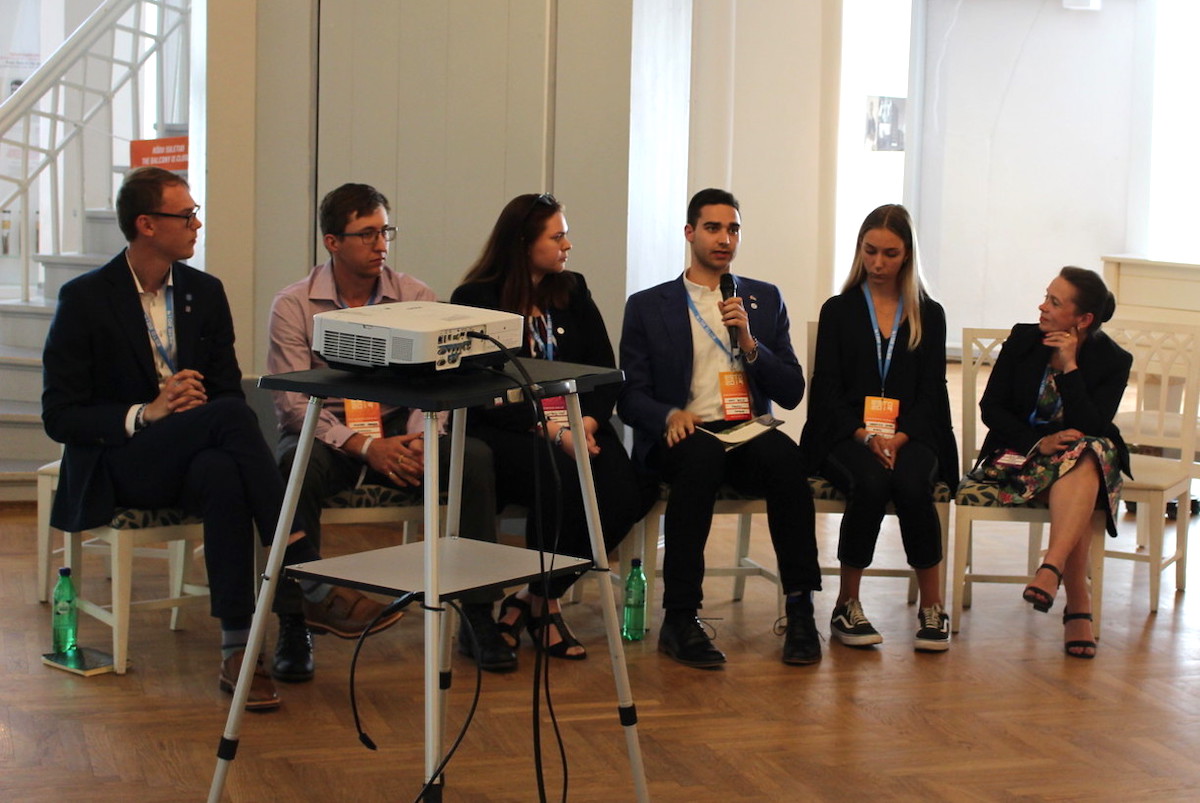
July 2 featured the Estonian World Council (ÜEKN) Rahvuskongress (eng: National Congress), one of the ESTO festival’s most important elements – held in Estonia for the first time ever. The aim of the congress is to discuss issues affecting global Estonians, along with current relevant and political topics. Estonian President Kersti Kaljulaid delivered the keynote address, stressing that Estonians abroad are always welcome in Estonia and that Estonians are Estonians, regardless of where they may live. Other notable speakers included Foreign Minister Urmas Reinsalu, Member of Parliament Keit Pentus-Rosimannus, and Population Minister Riina Solman. Two panel discussions took place during the congress featuring various thought leaders and cultural figures; in a testament to the importance of youth, each panel featured one youth delegate: Juku Gold from Canada spoke in the morning session, and Karl Grabbi from the USA spoke in the afternoon session. The audience included several esteemed guests, including former Estonian President Arnold Rüütel, who stayed for the entire day.
Of particular note was a late afternoon presentation by ESTO Youth Programme organiser Tuuli-Emily Liivat, who presented the “ESTO Global Youth Declaration”, a culmination of the youth programme’s discussions and deliberations. The declaration, which is currently a working draft, outlines findings and recommendations regarding global Estonian youth and its future development. The declaration also proposes the creation of a global youth network for Estonians, emphasising the importance of staying connected and of the younger generation in preserving the Estonian language and culture.
The day after the National Congress, we attended a moving memorial ceremony at the newly-erected monument for the victims of communism, at Maarjamäe. The memorial featured stories from survivors of the first and second Soviet Occupations who had fled abroad, along with speeches by Archbishop Urmas Viilma and Justice Minister Raivo Aeg. We then moved to the Estonian History Museum where representatives from the Estonian Ministry of Culture, including Minister Tõnis Lukas, held a conference on “Estonia’s Impact on the World.”
ESTO 2019 officially closed on July 3 with an elegant ball in Tallinn’s Seaplane Harbour, but the programme continued the following day with a tour of Patarei Prison—soon-to-be the site of the world’s first International Museum for the Victims of Communism—followed by a reception at Tallinn’s city hall.
As Minister Riina Solman said in one of her addresses to us, the Estonian government wants to create conditions to ensure “that the Estonian community living abroad will have the confidence to continue its valuable work as goodwill ambassadors of Estonia.” If there is one thing that the ESTO youth programme accomplished, it is that it has taken sixty-something young, bright and enthusiastic Estonians from across the world, and has emboldened us, empowered us, and given us a new network through which to come together to further the words written in the preamble of Estonia’s constitution: the preservation of the Estonian people, the Estonian language and the Estonian culture through the ages.
Juku Gold, Toronto