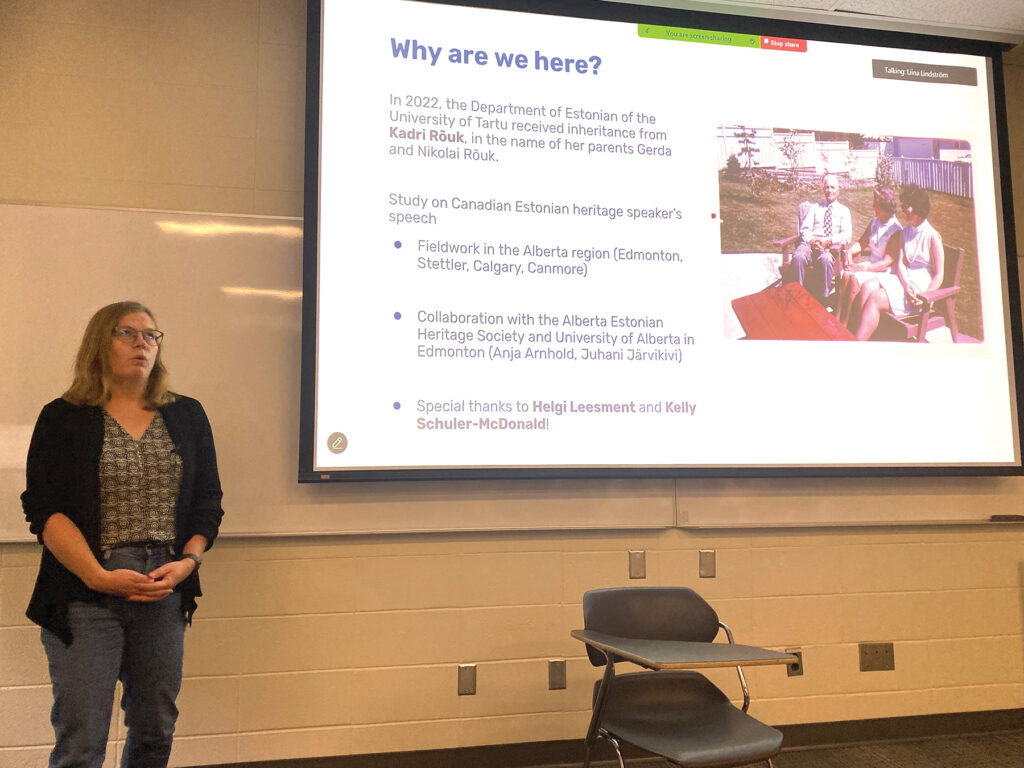
Estonians in Alberta have been interviewed this past month by researchers for an important Estonian linguistics project. The most generous donation ever made to the University of Tartu’s Institute of Estonian and General Linguistics, by Alberta Estonian Kadri Rõuk, has supported a research project studying the Estonian diaspora’s evolution of the Estonian language.
Kadri Rõuk, a second generation member of the Estonian community in Alberta, bequeathed two million dollars. The Rõuk parents and daughter Kadri wisely invested and conserved earnings. Her father was a lawyer in Estonia. However his European credentials as a lawyer were not accepted once he escaped the war and came to Canada in 1948. He and his wife Gerda both worked as bookkeepers in Canada. Their daughter Kadri became a high school teacher. It seems fitting that linguistics research would be facilitated from her bequest in 2022 by her carefully earned resources, given she had dedicated her life to language education.
Subsequently, at a meeting in September 2022, ideas flowed between the leadership of the Alberta Estonian Heritage Society (AEHS) and academics at the University of Tartu’s Institute of Estonian and General Linguistics (the Institute) regarding the connection, resulting in three Estonian linguistics specialists coming to Alberta October 11–23, 2025. AEHS presidentKelly Schuler-McDonald and former vice president Helgi Leesment have been a driving force behind the project, connecting Albertans and the Estonian researchers.Helgi and Kelly also provided insights and selections for the study, and detailed planning and an itinerary for the project.
Linguistics researchers investigate aspects of language development including: morphosyntax, semantics and phonetics as well as sociolinguistics, language acquisition, and computational linguistics… The participants of the present study are descendants of Estonian pioneers and immigrants who arrived in Canada after World War I as well as World War II refugees.
The academics on this project who came to Alberta are: Liina Lindström, PhD, Professor of Modern Estonian and Head of the Institute, Kaidi Lõo, PhD, Research Fellow in Psycholinguistics, and Maarja-Liisa Pilvik, PhD, Fellow in Estonian Language, Institute of Estonian and General Linguistics, University of Tartu. Kaidi earned her PhD in Edmonton at the University of Alberta.
The Institute consists of four departments, two laboratories and five centres, including one interdisciplinary consortium. It employs 105 people and there are 248 students, including 99 in Bachelor’s studies, 106 in Master’s studies and 43 in Doctoral studies. Linguistics researchers investigate aspects of language development including: morphosyntax, semantics and phonetics as well as sociolinguistics, language acquisition, and computational linguistics. (Source: University of Tartu website October 2025)
During their stay, the three Estonians also made a guest presentation at the linguistics department of the University of Alberta titled: “Estonian language variation: Historical background, language attitudes, and processing variation”.
The participants of the present study are descendants of Estonian pioneers and immigrants who arrived in Canada after World War I as well as World War II refugees. The linguists conducted interviews which were, on average, two hours long.
The researchers enjoyed warm western hospitality and travelled over 1400 km throughout the vast province of a size that could contain 17 Estonias. They experienced:
– a dinner hosted by Dr. Rein Pääsuke and his wife Janice at their home in Spruce Grove
– a lunch meeting with AEHS president Kelly Schuler-McDonald in Edmonton, hosted by the AEHS
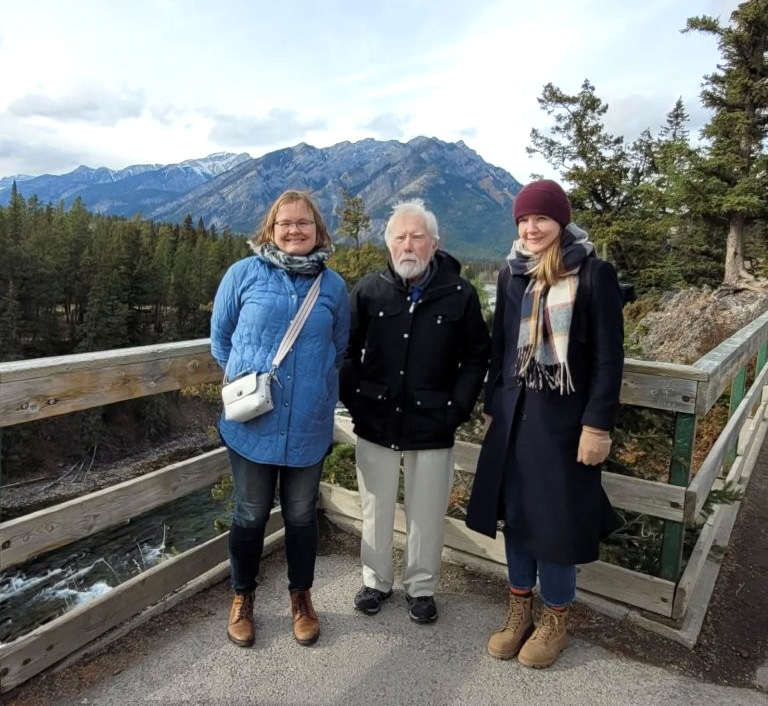
– a tour of an Alberta Estonian pioneer farm, hall and cemetery in the Stettler area, where Estonians have been living since 1910, and home visits with interviewees in Stettler, Calgary and Canmore.
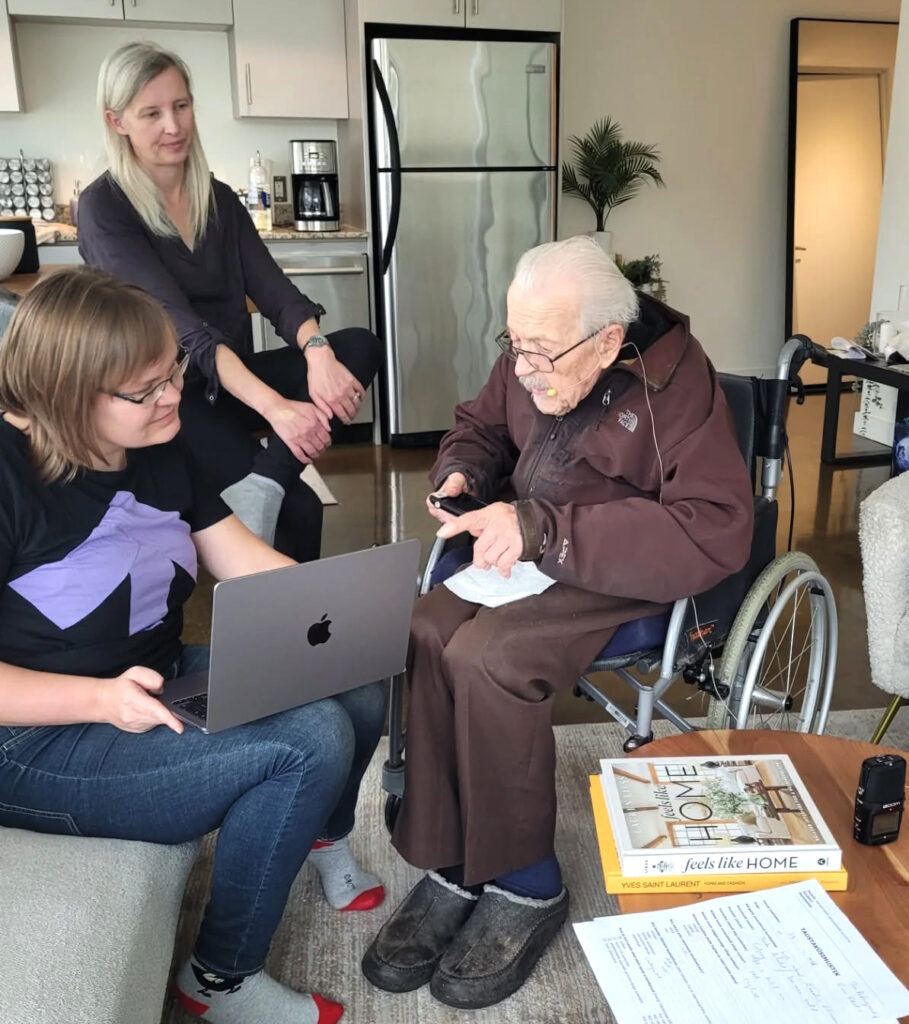
The participants of the present study are descendants of Estonian pioneers and immigrants who arrived in Canada after World War I as well as World War II refugees. The linguists conducted interviews which were, on average, two hours long. Participants read Estonian sentences, described what they saw in pictures presented, completed questions about their language background, and shared family stories and connections to Estonia. They also recorded participants’ ‘Estonian heritage speech’ to preserve in the Institute's speech archives for future generations.
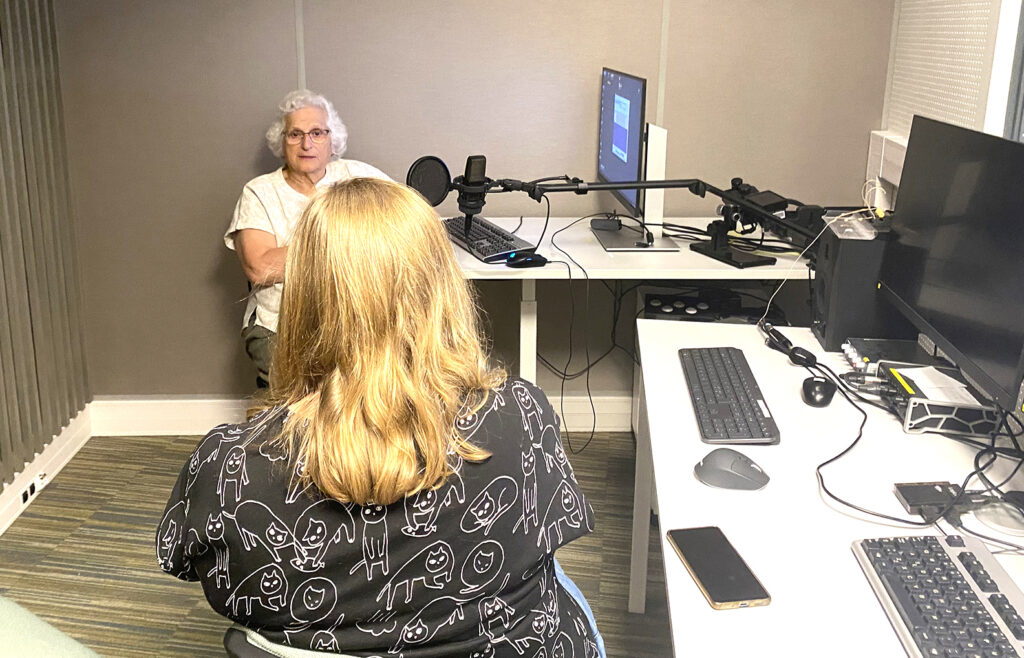
The interviews took place in Edmonton at the University of Alberta’s Linguistics Lab and in homes in Stettler, Calgary and Canmore.
Rein Pääsuke, Walter Johanson, Kristine Zielinski were interviewed at the Linguistics Lab. Rein Pääsuke said of his experience: “it was very pleasant and easy”.
Interviews in central Alberta were with descendants of pioneers: Evelyn Shursen, Deane Kerbes, Sylvia Walters. They still reside in the region where their Estonian ancestors homesteaded.
In southern Alberta, home visits and interviews were conducted with Bob Tipman, Toomas Renne, Helle and Jüri Kraav in Calgary and Toomas Pääsuke in Canmore.
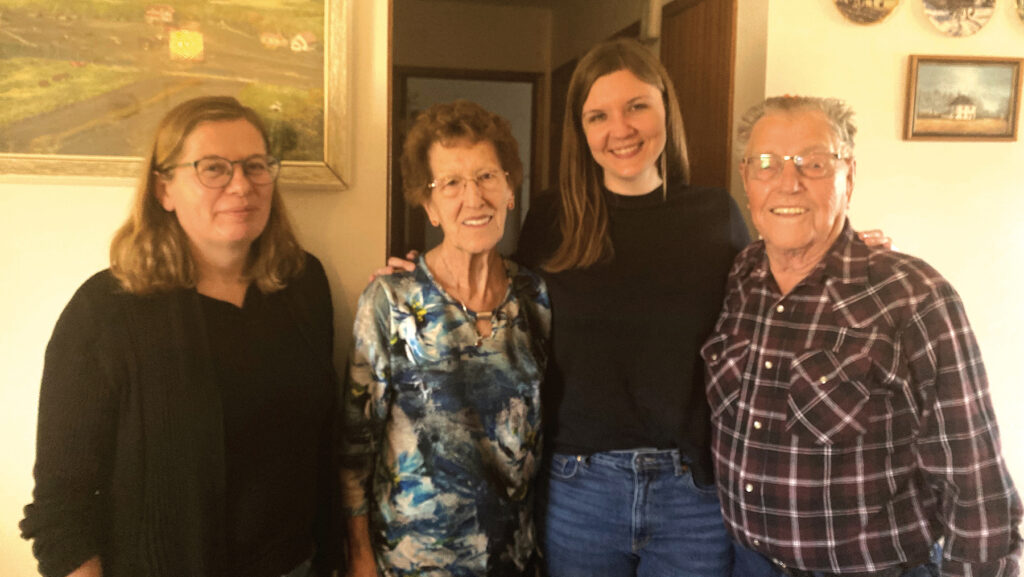
When the elderly Toomas Renne’s interview was conducted, his daughter Colleen was present. She was pleased to realize that the Estonian language skills from her studies in the AEHS’s Estonian language class provided a level of comprehension that enabled her to fine tune some of her Dad’s storytelling. The AEHS Estonian Language Course is now in its 18th series of lessons, with a cohort studying since 2020, thanks to support of the Estonian Foundation of Canada (EFC/ESK). The language studies group is also made up of pioneer descendants and children of World War II refugees. Three of the students have parents who were interviewed in Calgary for the research project. One classmate and pioneer descendant, Martha Munz Gue, was interviewed at University of Tartu, when visiting Estonia this summer with her family, including grandchildren, for the songfest. It was nostalgic for Martha to be interviewed at the University of Tartu, since her mother attended there between Estonia’s Independence and World War II. Surprisingly, where her mother studied pharmacy at the university was in the exact current location of the Institute and Linguistics Department.
An online event is being planned by AEHS and the linguists in 2026 to share the results of the research and stories of the interviewees. Stay tuned!
Written by Helgi Leesment, Kelly Schuler-McDonald, and Rein Pääsuke