The visit offered a first-hand look at the significant transformation underway at Canada’s principal naval base on the West Coast. More than $1.1 billion is being invested in infrastructure and workforce expansion to support new ships, submarines, and facilities as part of Canada’s National Shipbuilding Strategy.
We spent the morning aboard an Orca-class patrol vessel, where we observed naval officers receiving practical training at sea. We also learned about the scale of the growth planned for CFB Esquimalt and the broader effort to rebuild, rearm, and reinvest in the Canadian Armed Forces.
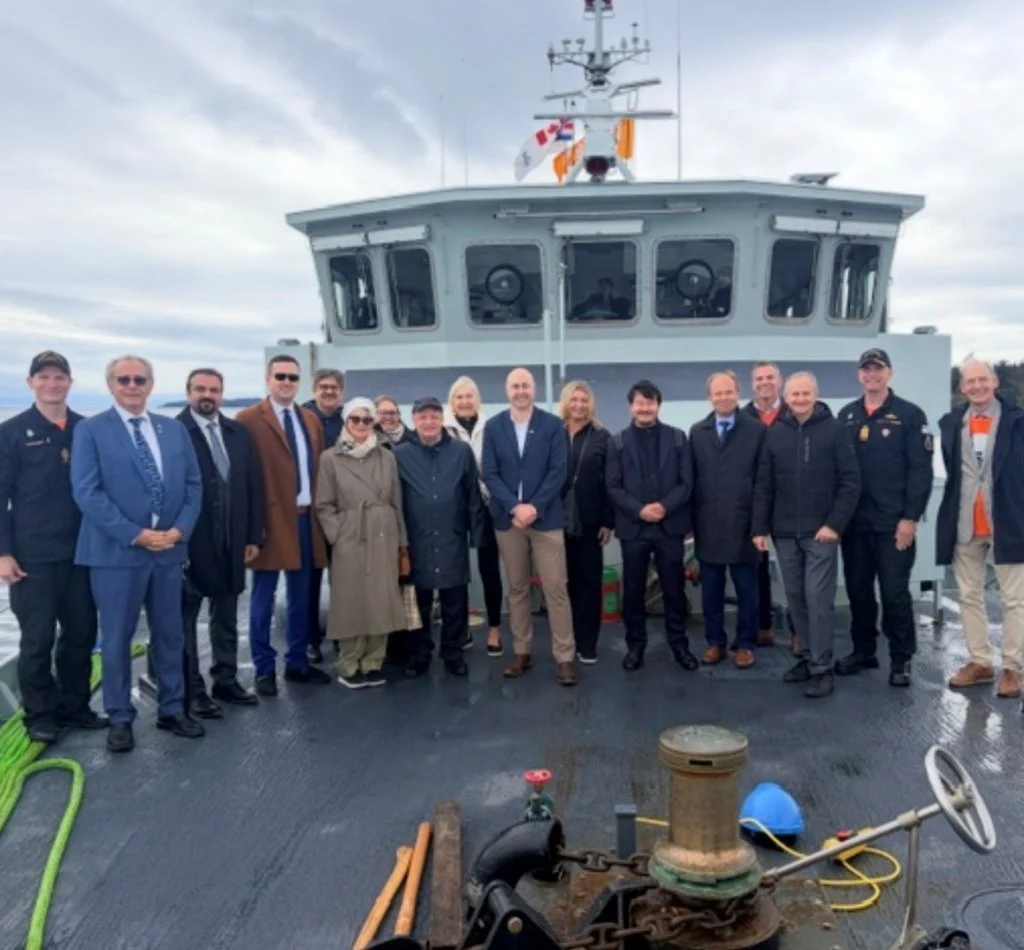
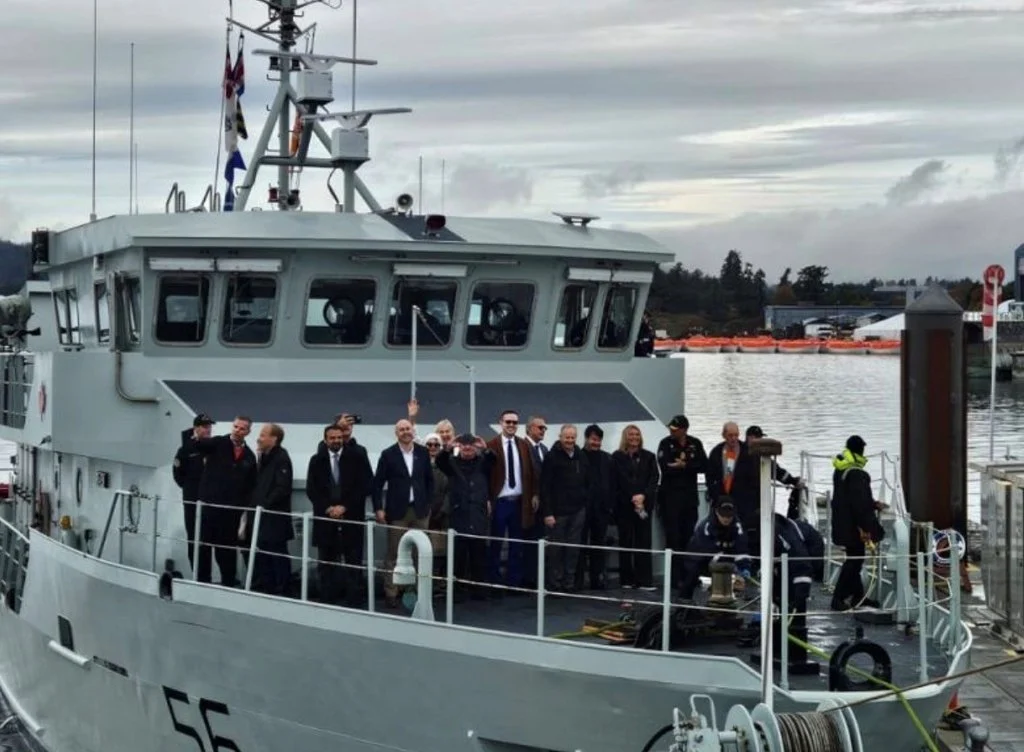
Canada has moved quickly to strengthen its defence capabilities and has now achieved NATO’s target of spending 2 percent of gross domestic product on defence. However, this is not the endpoint. The federal government has also outlined a path toward meeting NATO’s new Defence Investment Pledge of 5 percent of GDP by 2035.
CFB Esquimalt supports Canadian naval operations across a vast area, extending from the Arctic to South America. Work is underway in the harbour to accommodate incoming Arctic and Offshore Patrol Ships and Joint Support Ships. Esquimalt is also being considered as the primary West Coast home port and specialized maintenance facility for Canada’s future fleet of up to six new submarines, which would replace the current Victoria-class vessels.
The base’s physical expansion will be accompanied by substantial workforce growth. Staffing is projected to increase from approximately 6,500 defence team members to about 9,500 over the coming decade as new submarine and surface fleets enter service. This growth will bring challenges related to recruitment, training and housing, but it will also create important opportunities for businesses and communities throughout the region.
Canada is the first non-European country permitted to participate in the European Union’s €150-billion Security Action for Europe (SAFE) defence procurement program. This opens new pathways for Canadian companies to participate in European military supply chains...
Canada’s expanding defence investment will generate opportunities not only for Canadian companies, but also for businesses in allied countries, including Estonia.
Estonia has a highly regarded maritime sector, supported by companies and industry groups such as Baltic Workboats and the Estonian Marine and Manufacturing Initiative. These organizations help connect international prime contractors with more than 500 marine-related companies capable of contributing to defence manufacturing and complex maritime supply chains.
In his first visit to Canada earlier this year, Estonian Minister of Economy and Industry Erkki Keldo presented Estonia’s streamlined procurement practices and industrial-benefits strategies as a potential model for Canada’s continuing defence expansion.
The recently established EU–Canada Security and Defence Partnership creates further opportunities for cooperation. Canada is the first non-European country permitted to participate in the European Union’s €150-billion Security Action for Europe (SAFE) defence procurement program. This opens new pathways for Canadian companies to participate in European military supply chains while giving European companies, including those in Estonia, greater opportunities to contribute to Canada’s defence modernization.
Our visit to CFB Esquimalt demonstrated the scale of Canada’s naval transformation and the opportunities it creates for deeper international cooperation. With its advanced maritime expertise, strong manufacturing capabilities and close ties to both Canada and Europe, Estonia is well positioned to contribute to this next chapter of defence and industrial partnership.