Telli Menüü

Captain Jakob Pajos 1887-1950

Mutiny in the Azores during WWII

Jakob was born in the sea captains’ village of Käsmu, Estonia in the Tooma Talu. My grandmother was best friends with his wife, Minna, although everyone in my family called her Tooma-momma as if that were her name. As a child her pock-marked facial skin scared me but her eyes and demeanor were that of a heavenly angel. Later in life I learned that her husband, my 4th cousin, was a sea captain, and a crew member involved in a sea mutiny on the ship s.s. Harjurand during WWII.
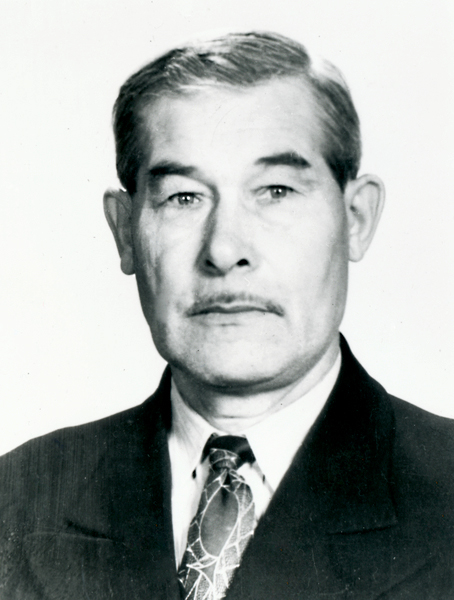
Capt. Jakob Pajos
Capt. Jakob Pajos

On July 31, 1940 the Soviets ordered all Estonian ships at sea to proceed to Murmansk, Russia. The Master of the s.s. Harjurand, Capt. Johannes-Eduard Eelmere (Eelloo) was a communist, he did not reveal to the crew information contained in telegrams received while the ship was in the Azores Islands (region of Portugal), however, the wireless operator did. A telegram, dated August 8, 1940, sent by Johannes Kaiv, the Estonian General Consul of the U.S.A., to Master Eelmere, gave an official order that the s.s. Harjurand was to sail under the Estonian flag to the U.S.A. immediately. and to disregard all instructions from the Soviets. The ship’s crew held a meeting and unanimously, aside from the Master, voted to follow Kaiv’s orders. However, the ship did not move. It finally left Fayal on August 15th, the infuriated Master informed the crew that each signatory to such mutiny would receive the death penalty.
S.S. Harjurand arrived in the U.S. on August 30th. The Estonian General Consul removed Eelmere as Master, and announced that Captain Hans Albert Ruben was its new Acting Master. Captain Eelmere refused to leave the ship. Capt. Ruben said he would “throw him off the ship and his belongings with him.” Eelmere left 30 days later.

Jakob Pajos continued working on the s.s. Harjurand as its Second Officer, the ship sailed from eastern U.S. ports up to Nova Scotia and Greenland. It wasn’t unusual for certified sea captains to take positions as first or second officers, rather than Master, if conditions suited them. On June 1, 1942 by authority of the U.S. President and the War Shipping Administration, the s.s. Harjurand was acquisitioned, used by the Navy as a rescue and salvage ship.

Top row left: Aleksander Lahtvee and wife Irma Pajos, Evi, Elmar, Bruno. Middle row left: Jakob jr., Minna, Capt. Jakob Pajos and Ellen. Lahtvee children seated left: Imbi, Tiiu and Toivo. Missing: Hans Pajos

Captain Pajos returned to Sweden where he was eventually reunited with his wife and 7 children, Irma, Bruno, Hans, Elmar, Evi, Ellen and Jakob, he died there at age 63 in 1950. His sister, Elisabeth Seeblum, died 1958 in Estonia. Minna Pajos immigrated to Toronto, Ontario in 1953 with all but two of her sons. Her daughter, Ellen, with husband, Hannes Oja, were very active in the Toronto Estonian community; Hannes Oja wrote approximately 400 articles for Eesti Elu.

Captain Johannes-Eduard Eelmere-Eelloo, lived in Glasgow, Scotland, continued working on merchant ships, and during a working journey to New Zealand died there in 1962. Capt. Eelmere was a Käsmu seaman, my second cousin, and an uncle by marriage to my husband. He and his brother were both sea captains and communists, and to all accounts nice men. I can’t help but wonder what their communist ideals would have made about the mass forced deportations of the Baltic people to Siberia beginning in 1941, or the terrorism and bombardment of war levied on Ukraine today. My problem with communism is that its brotherhood-politics whittles down to a one-man immutable dictatorship and then mimics a fascist regime. 60 Minutes reported recently that a Russian citizen calling what is happening in Ukraine today a ‘war’ would face a penalty of 15 years in prison.

Loe edasi