On Monday, March 23rd, 2026, the President of Estonia, Mr. Alar Karis, flew into London, England for the opening of the Estonian painter Konrad Mägi's exhibition at the Dulwich Picture Gallery. The exhibition remains open until July 12th, 2026.
The delegation accompanying the President was large and included leading Estonian language media outlets like Estonia’s leading news portal Delfi.ee, Eesti Rahvusringhääling (ERR, Estonia’s equivalent of the CBC in Canada), and of course, Eesti Elu.
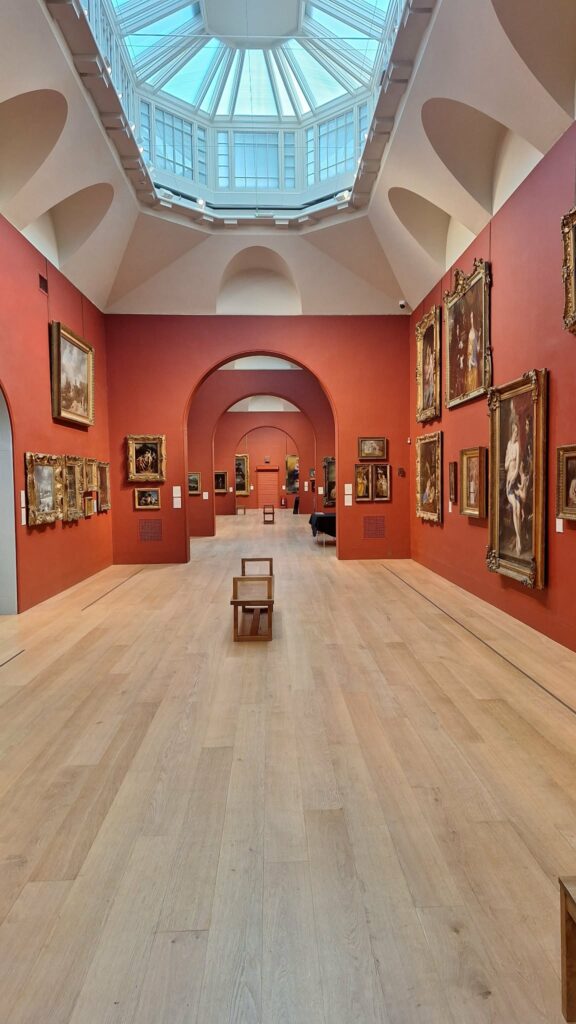
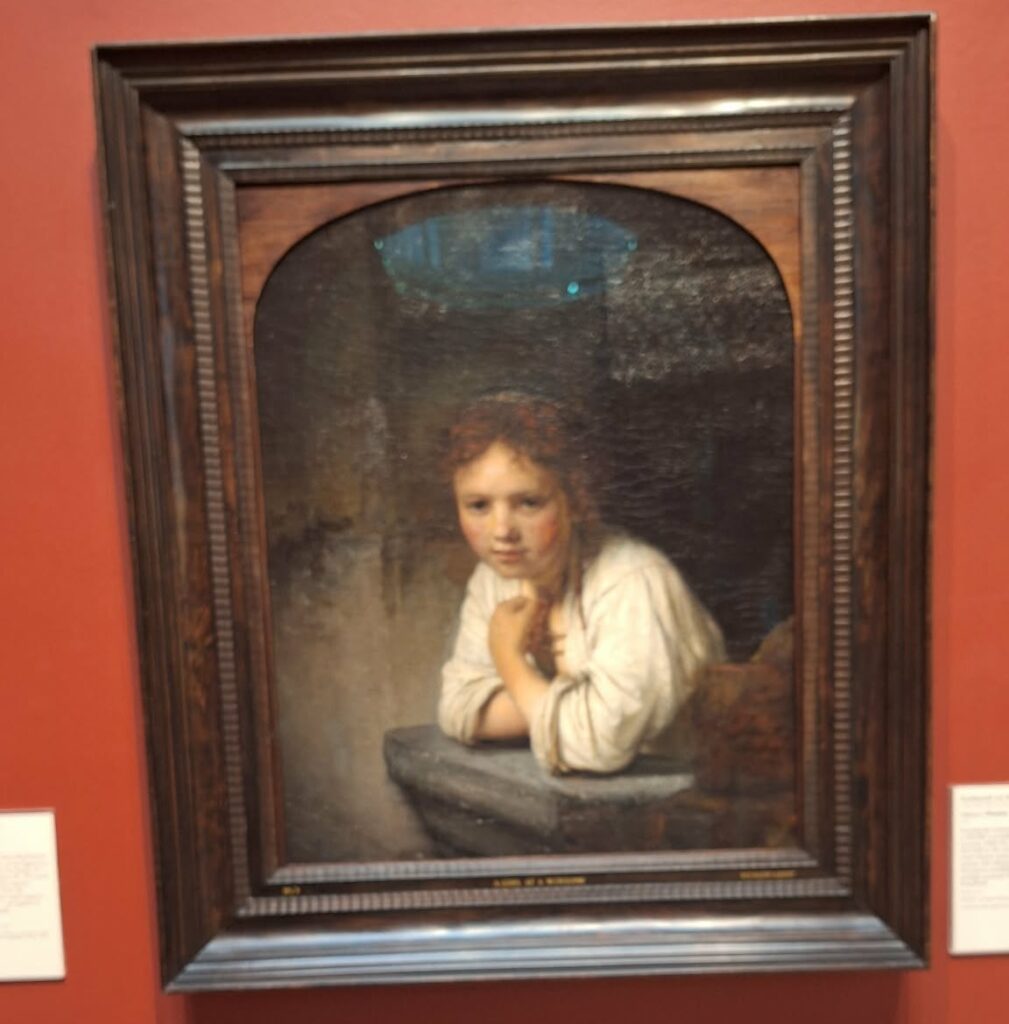
Dulwich Picture Gallery (“DPG”) is the first purpose-built public art gallery in England (built 1811 – 1817, with the architect being the world-famous Sir John Soane [1753 – 1837]). The permanent collection comprises 660 works of art, with three Rembrandts, including one of his most famous paintings Girl at a Window.
The DPG came into existence in an unusual manner. In 1790, the French born Noel Desenfans and the Swiss painter Francis Bourgeois were working in London as art dealers. The Head of Collection of the DPG Helen Hillyard noted that the English were not that interested in art at the time. Their art dealing careers were launched by the dowry of Desenfans’ wife, Margaret Morris (1731 – 1813), whose industrial family were leading figures in the Welsh copper trade. In 1790, Desenfans and Bourgeois were commissioned by Stanislaus Augustus, King of Poland, to form a royal collection from scratch. They devoted the next five years to this task. However, during this time span, Poland was gradually partitioned by its more powerful neighbours, leading to its complete disappearance as an independent state in 1795. As the two owners of the collection were on the edge of bankruptcy, they approached the British Government to purchase a collection fit for a king, but the British Government declined. Thus was born the DPG, with the architect, Soane, not charging a fee for his work and with some financial assistance from Desenfans’ wife Margaret Morris.
But the good reader asks, “How did the paintings of Konrad Mägi end up at DPG?” As a DPG staff member noted, “The DPG has a long history of exporting to England artists who are very famous in their home countries but are relatively unknown to the English public.” This was the case with the Danish painter Anna Ancher (1859 – 1935), who is so famous in Denmark that her name appears in Danish school textbooks. And yet, she is relatively unknown to the rest of the world. An exhibition of her works appeared in DPG from November 2025 to March 2026.
DPG really did come to Estonia to see if the Art Museum of Estonia had high standards for the preservation of art, a conservation-grade environment, and that it was professional in its approach to art history…
The same principle applied when DPG brought to England an exhibition of the works of Lithuanian artist and composer Mikalojus Konstantinas Čiurlionis (1875 – 1911), from September 2022 to March 2023. Many art historians would argue that Čiurlionis is the most famous artist from the three Baltic countries, to the annoyance of Estonian art fans. During preparations for that exhibition, staff from DPG were introduced to Konrad Mägi paintings. This created interest for Helen Hillyard (Head of Collections) and Kathleen Soriano (who would become the curator of the exhibition) to travel to Estonia in 2022 and—as the DPG tells it—acquaint themselves with Konrad Mägi’s paintings.
A senior member of the Art Museum of Estonia whispered to me during the opening that the DPG really did come to Estonia to see if the Art Museum of Estonia had high standards for the preservation of art, a conservation-grade environment, and that it was professional in its approach to art history. Estonia passed “the test” with flying colours and cooperation to make this exhibition happen began in earnest in 2022.
The Estonian industrialist and philanthropist, Enn Kunila—his companies and an NGO related to him, Sihtasutus Konrad Mägi Foundation—played a major role in covering expenses related to the exhibition.
Many Estonians have asked questions to the effect of “What can a foreign curator tell us about Konrad Mägi that we do not already know?” The DPG reached out beyond its own staff to a world renowned art curator, writer, and broadcaster Kathleen Soriano, a former Director of Exhibitions at the National Portrait Gallery and Artistic Director of the Royal Academy of Arts, London, to curate the Konrad Mägi exhibition. In her exclusive interview with Eesti Elu, Soriano stated, “I was impressed by the Estonian Art Museum’s willingness to open up and share their knowledge of Konrad Mägi. I was humbled to be able to receive so much knowledge.”
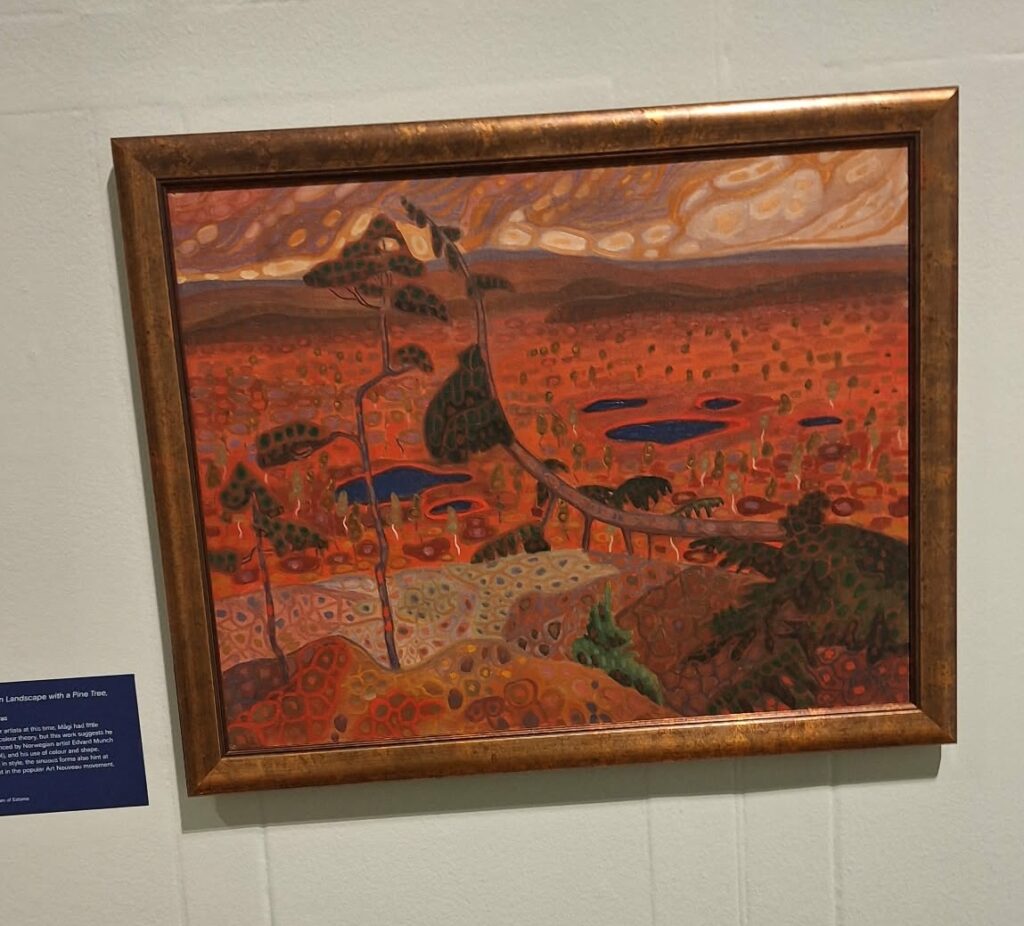
Soriano gave a curator’s tour of the Mägi exhibition to the Friends of the Art Museum of Estonia (about thirty-five people) who had flown in for the occasion. She had grouped Mägi’s works into four groups: the Norway period, portraits, the islands, and southern Estonia landscapes.
… Mägi preferred older art, admired da Vinci, and the only contemporary artists he liked were Edvard Munch and Pierre Puvis de Chavannes. But as Soriano pointed out on numerous occasions, what Mägi saw in Paris found its way into his works…
However, what struck the author was how she tied his paintings into what was occurring in the European art scene at the same time. Mägi stated he was “disappointed with contemporary art in Paris” and once famously said, “Perhaps I simply do not understand this new art yet, but I have realized that I do not particularly like contemporary French art.” According to a publication created jointly by the Art Museum of Estonia (Kumu) and the Dulwich Picture Gallery issued for the Konrad Mägi exhibition at the Dulwich Picture Gallery, Mägi preferred older art, admired da Vinci, and the only contemporary artists he liked were Edvard Munch and Pierre Puvis de Chavannes. But as Soriano pointed out on numerous occasions, what Mägi saw in Paris found its way into his works (“See the Cezanne in his painting Saadjärv/Äksi kirik?”)
The author believes that what Estonians most enjoyed about the curator’s tour was putting Mägi’s work into a European context and of all that was occurring in this tumultuous period of art history.
Mägi paintings are not (yet) obtaining Rembrandt-like prices at auctions, but the most recent Mägi sold at Bukowskis, the Nordic countries’ leading auction house, sold for approximately 344,000 USD in November 2021.
Art cognoscenti will remember that the former Director of the Dulwich Picture Gallery, Ian Dejardin (who was present at the opening of the Konrad Mägi exhibition) brought the Group of Seven and Tom Thomson exhibition from the McMichael Canadian Art Collection to the DPG in 2011. At that time, when it was being investigated if other European museums might be interested in hosting the Group of Seven exhibition, Dejardin mentioned in a New York Times interview that even the Art Museum of Estonia had contacted him about having the Group of Seven shown in Estonia. Dejardin was then hired by the McMichael Canadian Art Collection to be their Executive Director (2017 – 2023) to raise the international profile of the Group of Seven and Canadian art.
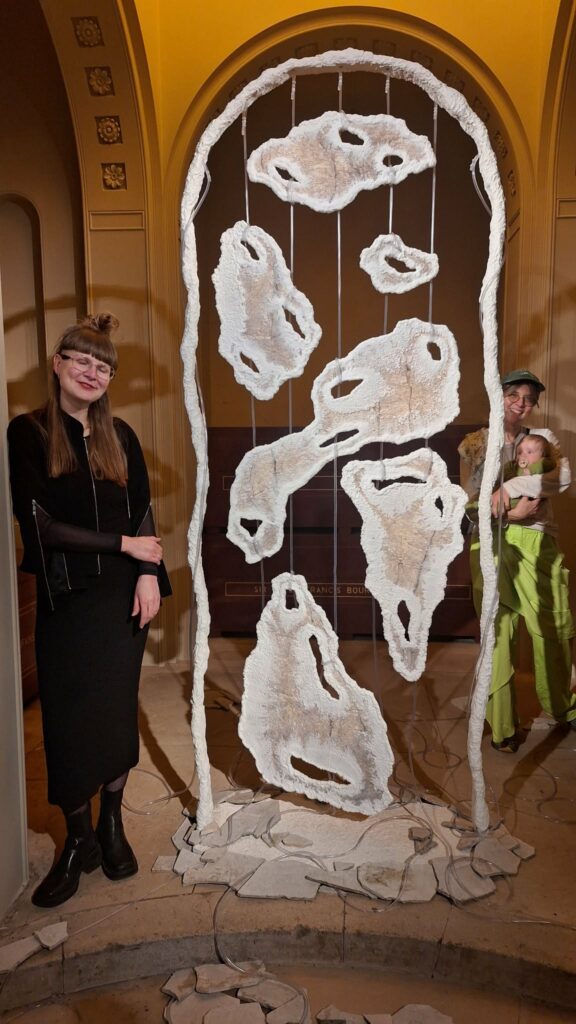
As is the fashion today, a “response” to the Mägi exhibition was commissioned by the Estonian Art Museum from contemporary Estonian artist Kristina Õllek (b. 1989). It is an installation entitled Between Sediments and Dead Zones, for which Õllek explains, “I want to continue working with the Baltic Sea and to highlight the islands of Saaremaa, as this location was important to Mägi [author’s note: many Mägi paintings of Saaremaa are part of the exhibition]. I want to draw attention to the oxygen-depleted areas in the Baltic Sea known as the dead zones, which are among the largest in the world.” Õllek is a rising star in the contemporary art world and has a contemporaneous art exhibition in Newcastle, England, at the Baltic Centre for Contemporary Art.
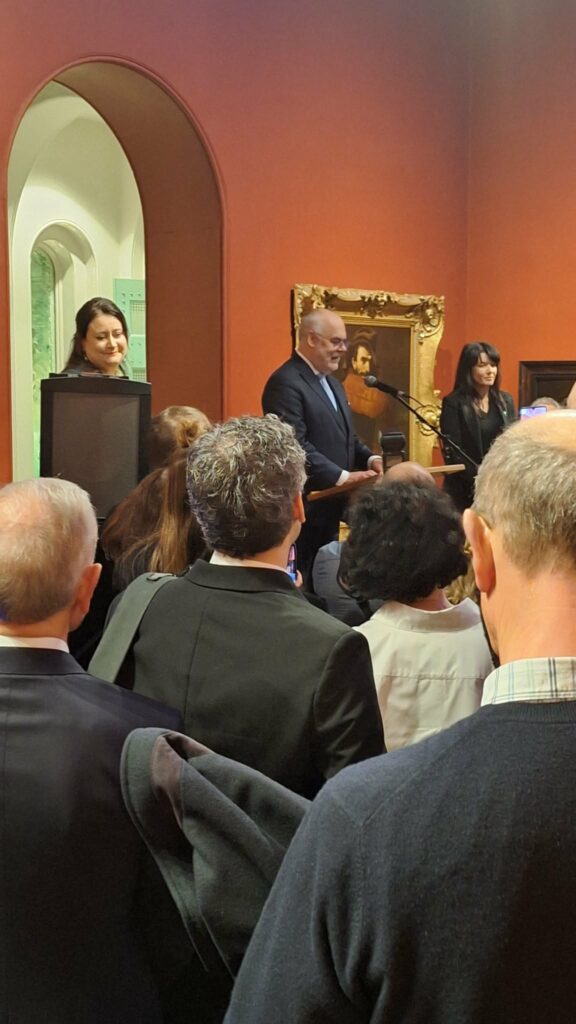
The exciting day found a fitting finish, with the arrival of Estonian President Alar Karis, to officially open the exhibition. In addition to both the President’s and Director Jennifer Scott’s speech, the most impressive speech of the evening was given by Estonia’s Minister of Culture, Heidy Purga, which began with a quote from John Donne’s “No Man is an island” and finished nicely by referring to the UK as an island state tied to a cultural world.
The Mägi exhibition has received both hot reviews and cold reviews. So if you are planning on visiting London this year, take the fifteen minute train ride from London’s Victoria station to the Dulwich Picture Gallery and make up your mind as to whether the Konrad Mägi exhibition speaks to you.