But none of them are the busiest residents of Jõekääru. Those would be the almost 200,000 bees that live north of the köök (kitchen) in three lovingly maintained bee hives.
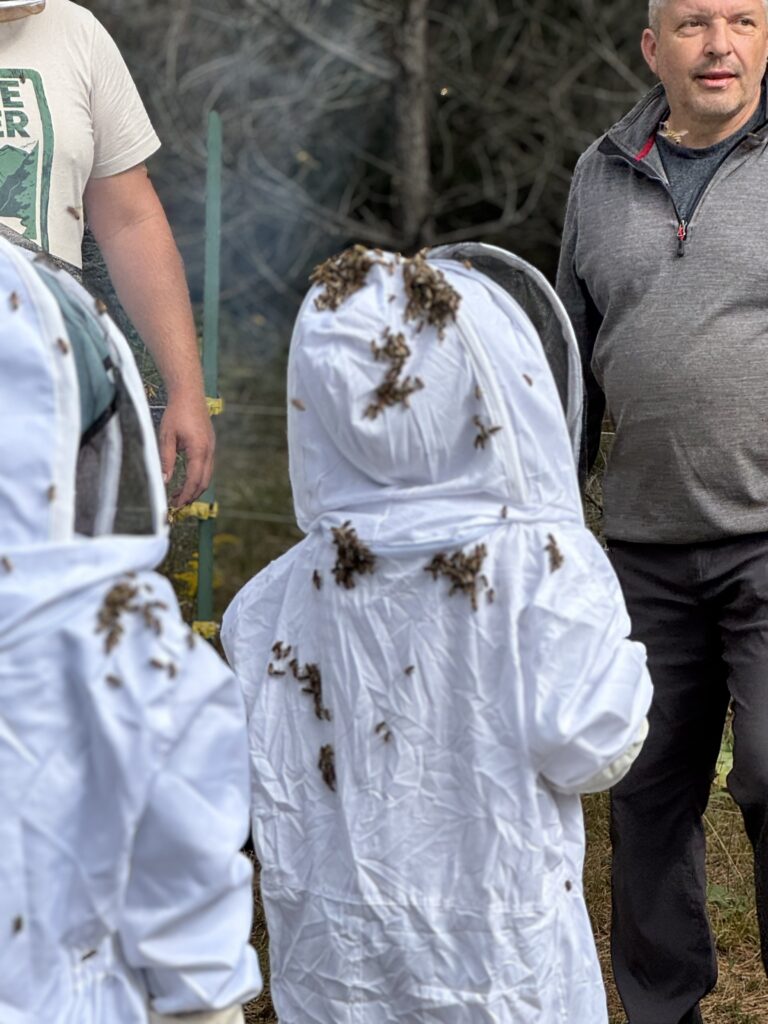
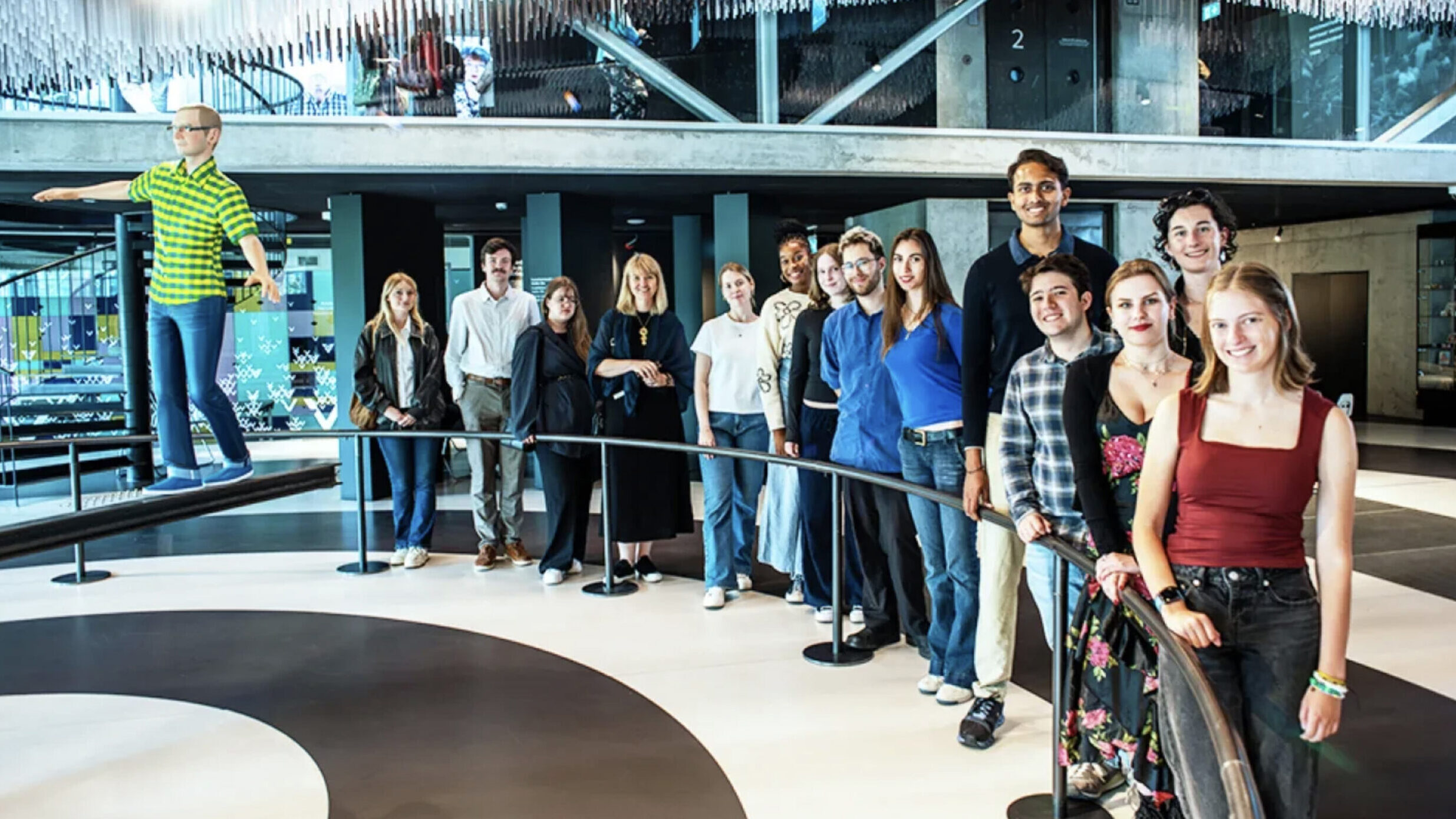
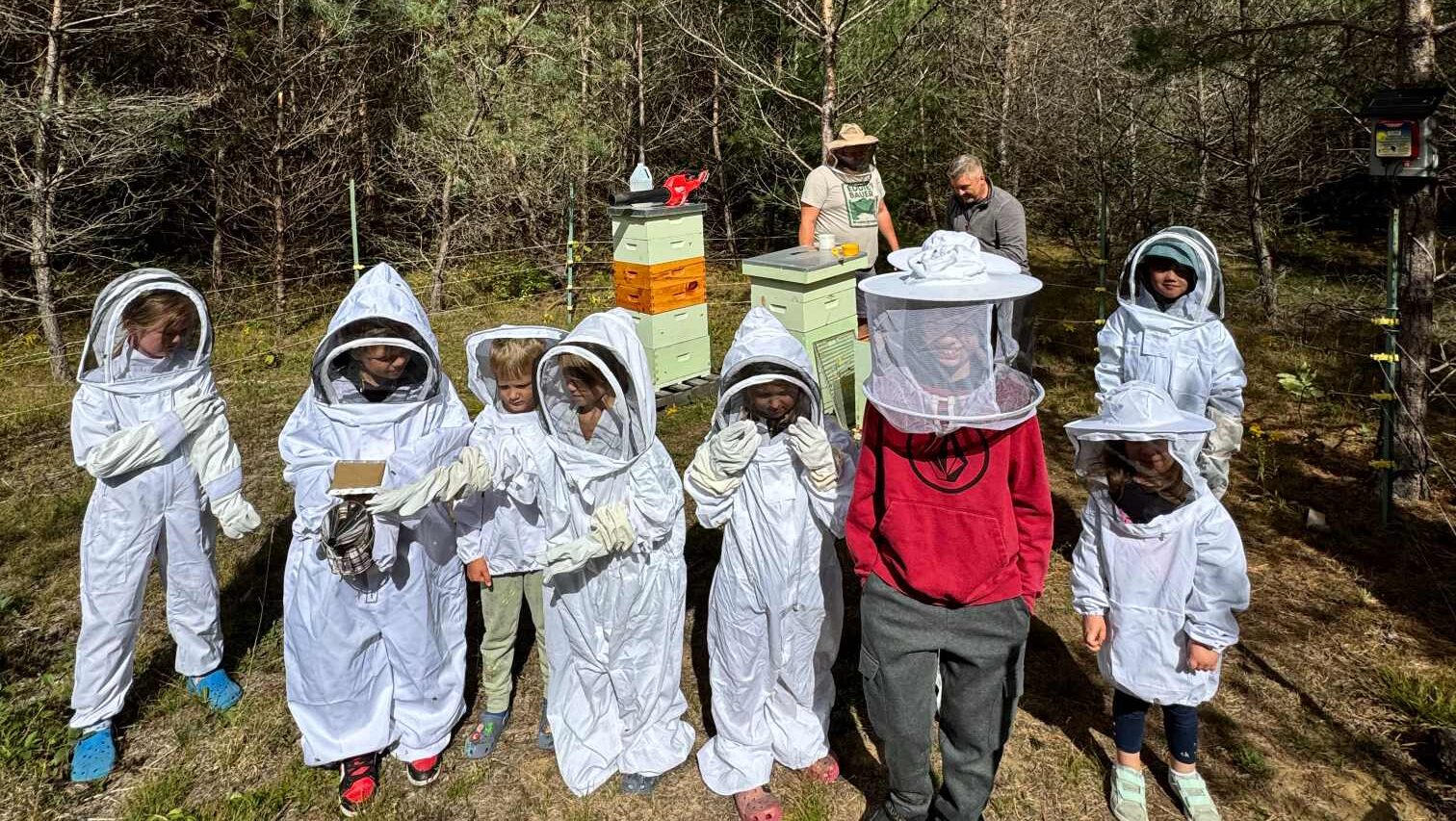
On September 7th, twenty-one Jõekääru kasvandikud (campers) and their parents visited the hives that Jõekääru has fostered for the past three years. While the kids—and adults—were nervous about being so close to the thousands of bees, Beekeeper-in-Chief Eerik Valter assured everyone that they were very docile bees. He, and Apiary Technician Markus Põldma, shunned the usual hazmat suits associated with beekeepers; Markus, in short sleeves, only had on a mesh hat for protection. Eerik wore latex gloves. Their faith in the good nature of the bees inspired courage from some adults in the audience. Not so much the kids though, who insisted on full beekeeping gear, and, looking like nuclear plant workers, ventured near the hives.
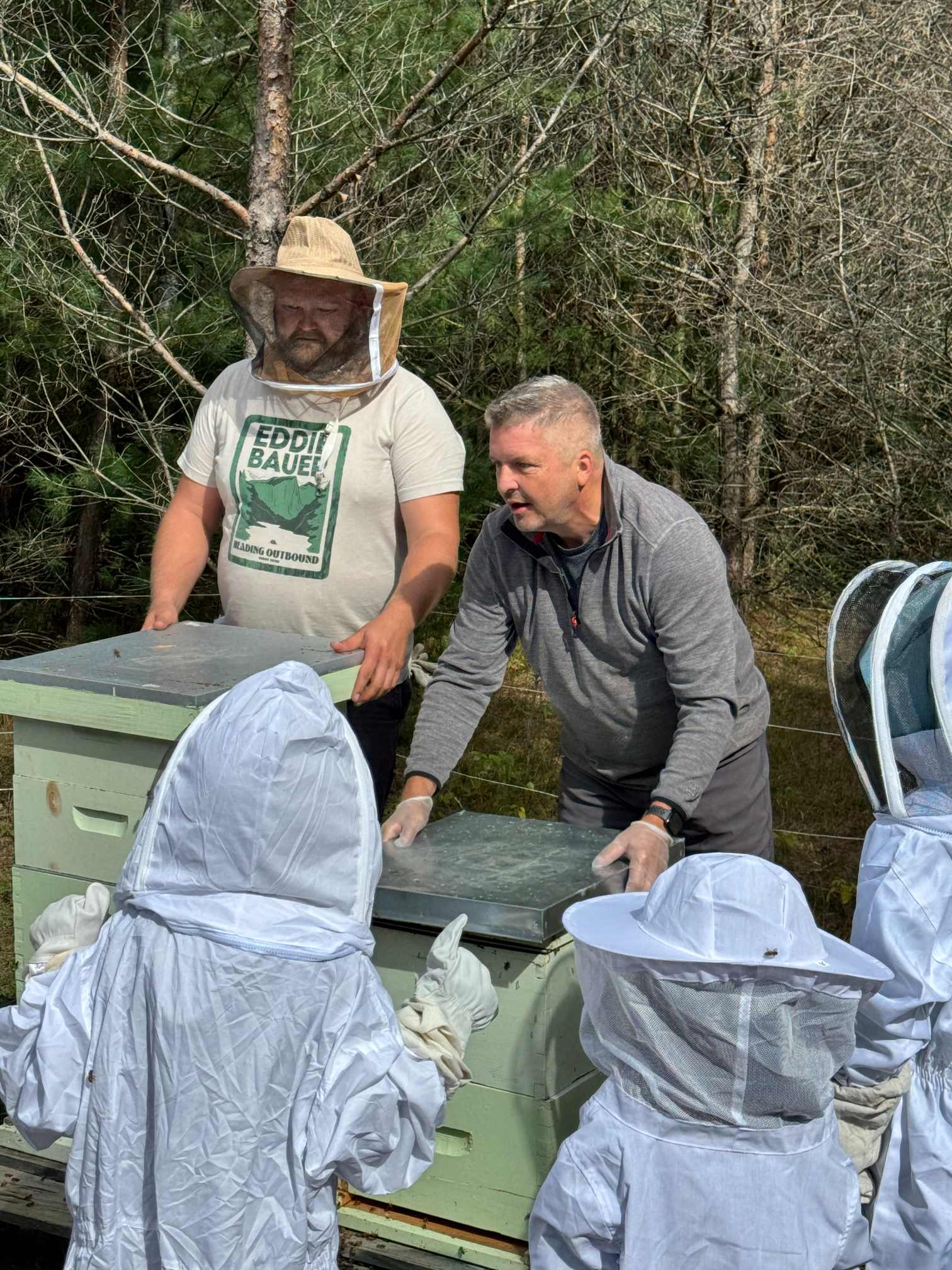
The hives themselves are kept behind an electric fence, to discourage large mammals such as raccoons, bears, or curious neighbours from interfering with the bees’ work. Eerik turned off the electricity, and to encourage calmness from the bees, Markus wafted smoke through the hives. Smoke doesn’t harm bees, but it interferes with their alarm pheromones and confuses them to think that their hive is on fire, so they need to move to a new location rather than defend their hive through stinging.
… the kids helped by scrapping the beeswax off the tops of the combs, allowing honey to flow from the comb on a wooden frame. The frames (eighty in total) were then put into a “honey extractor,” two at a time.
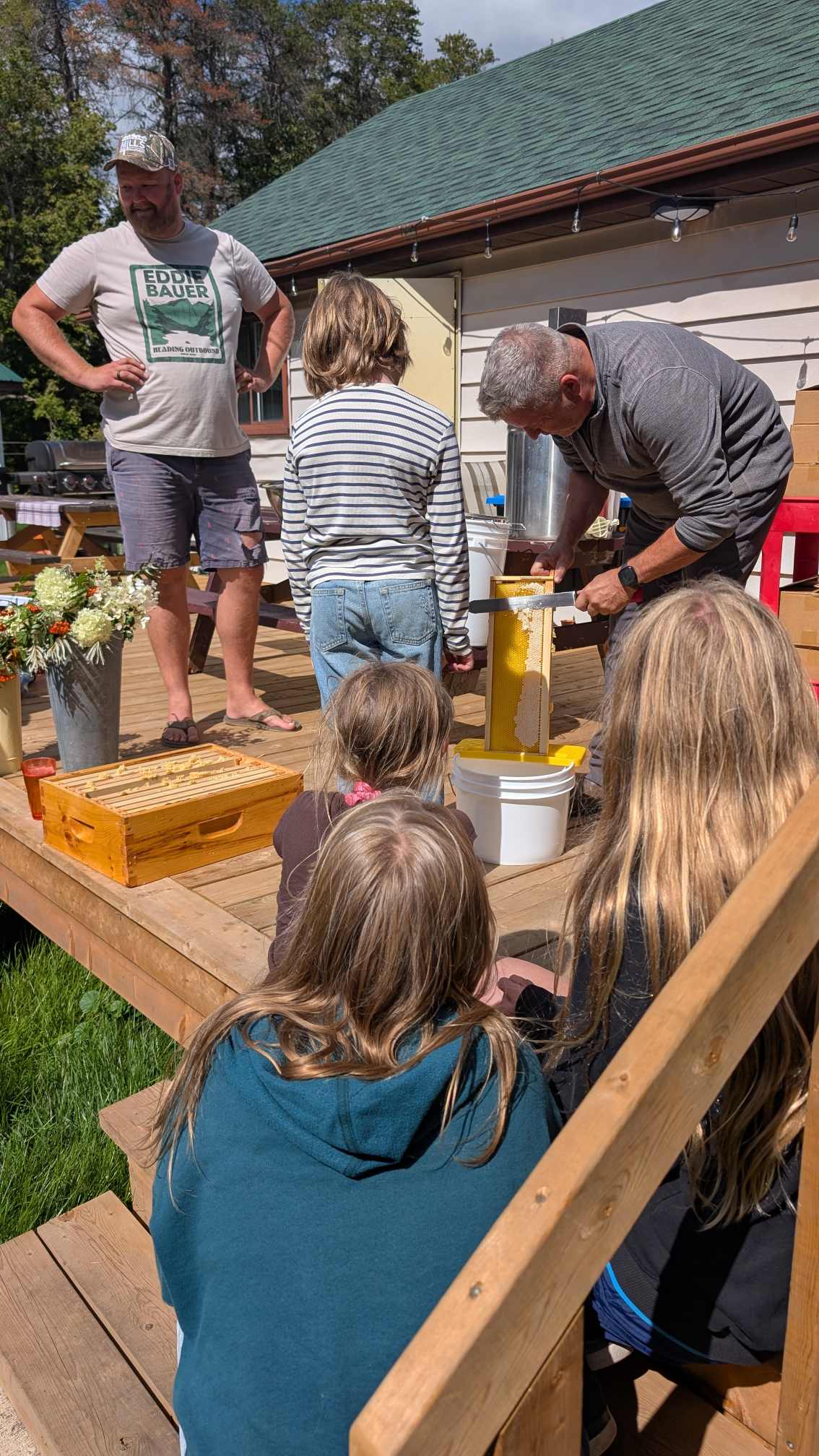
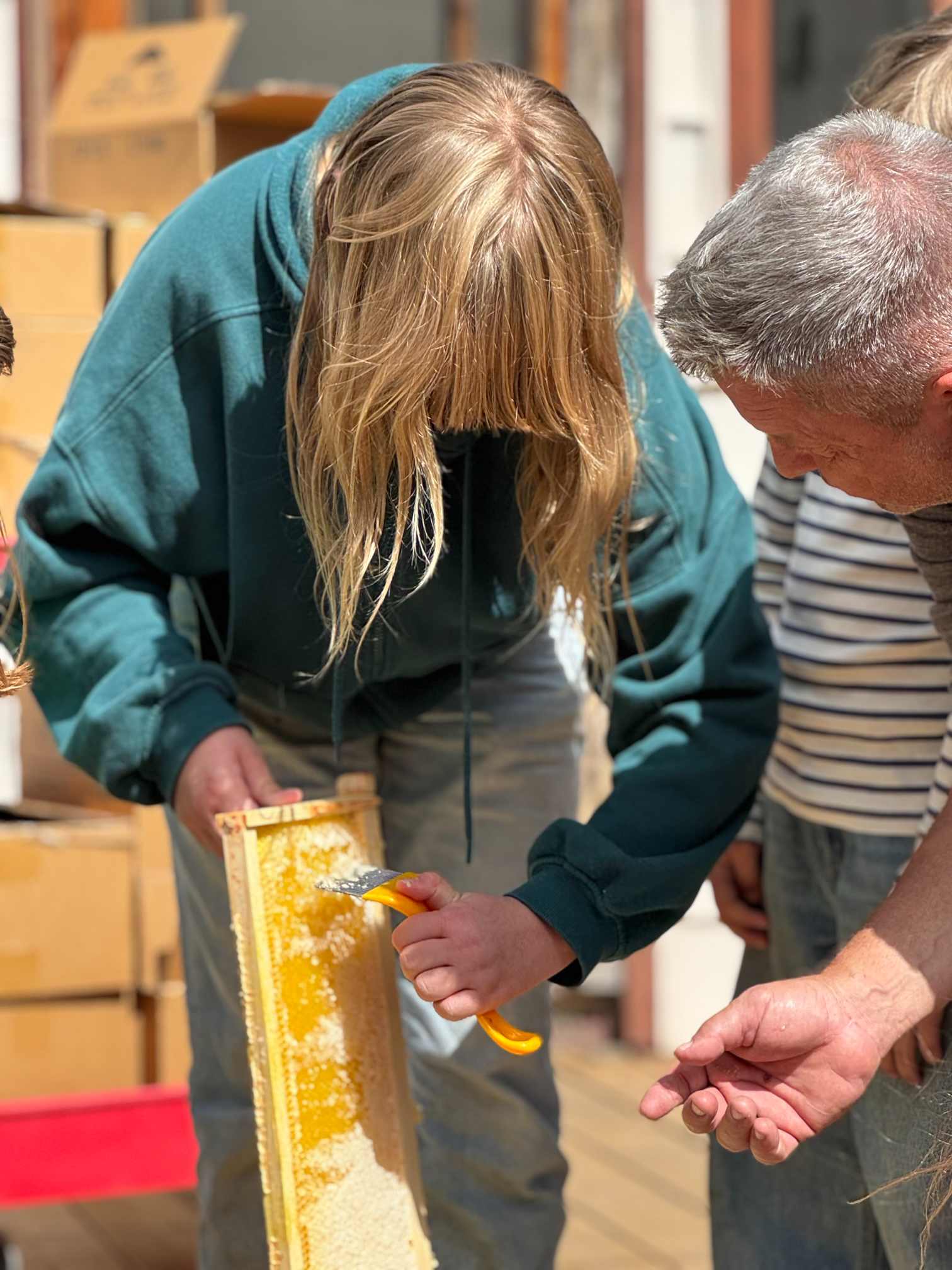
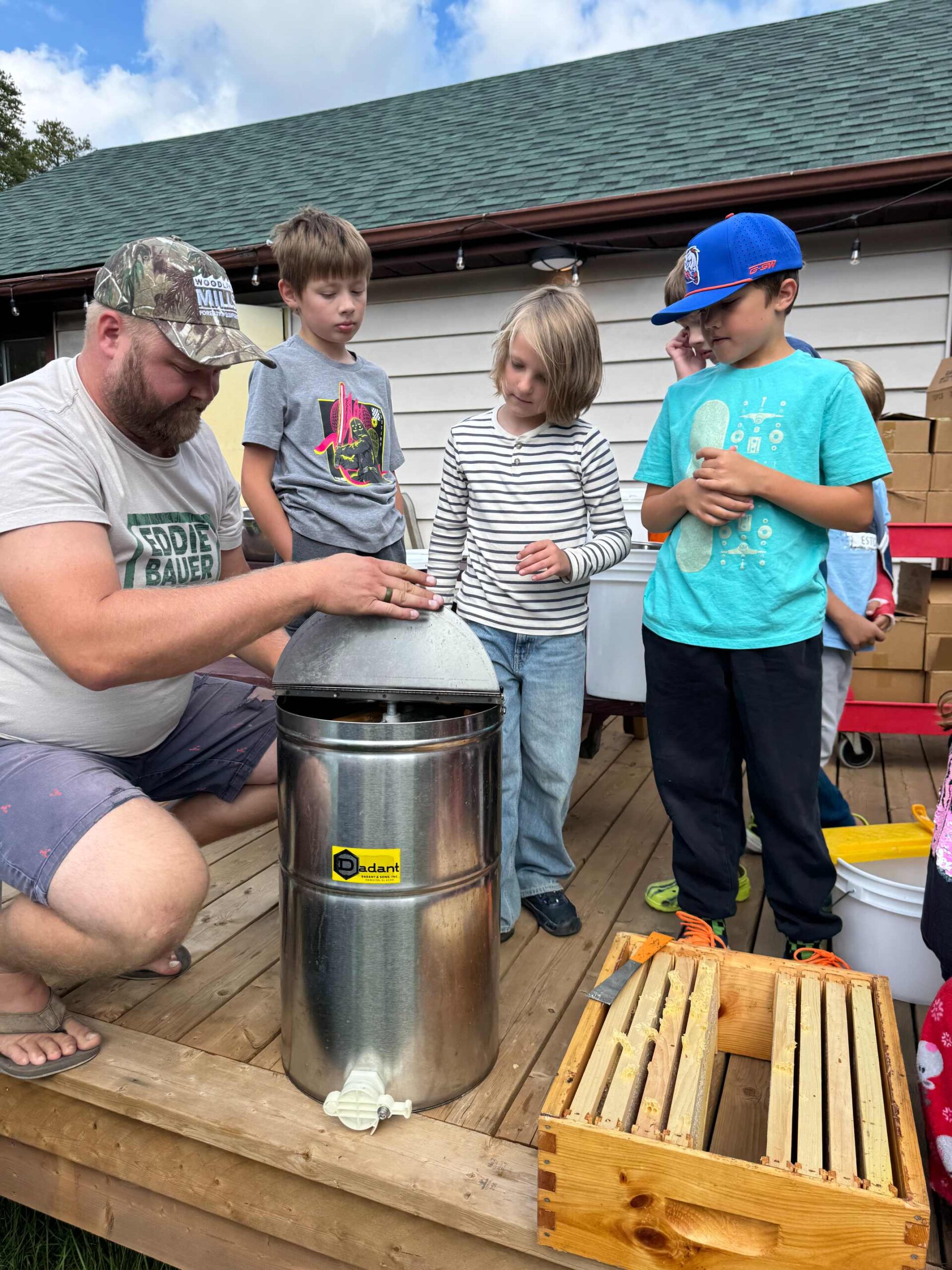
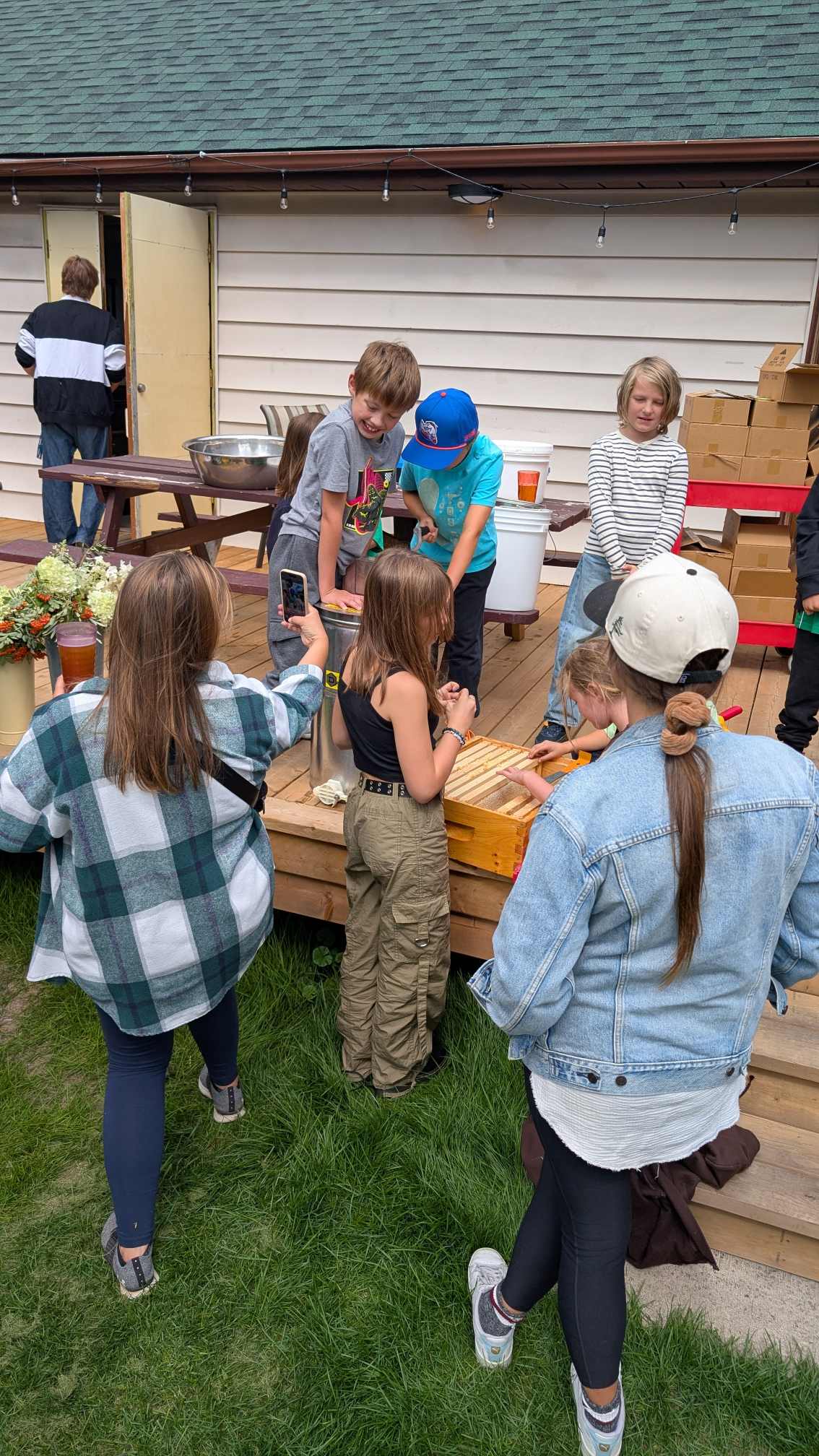
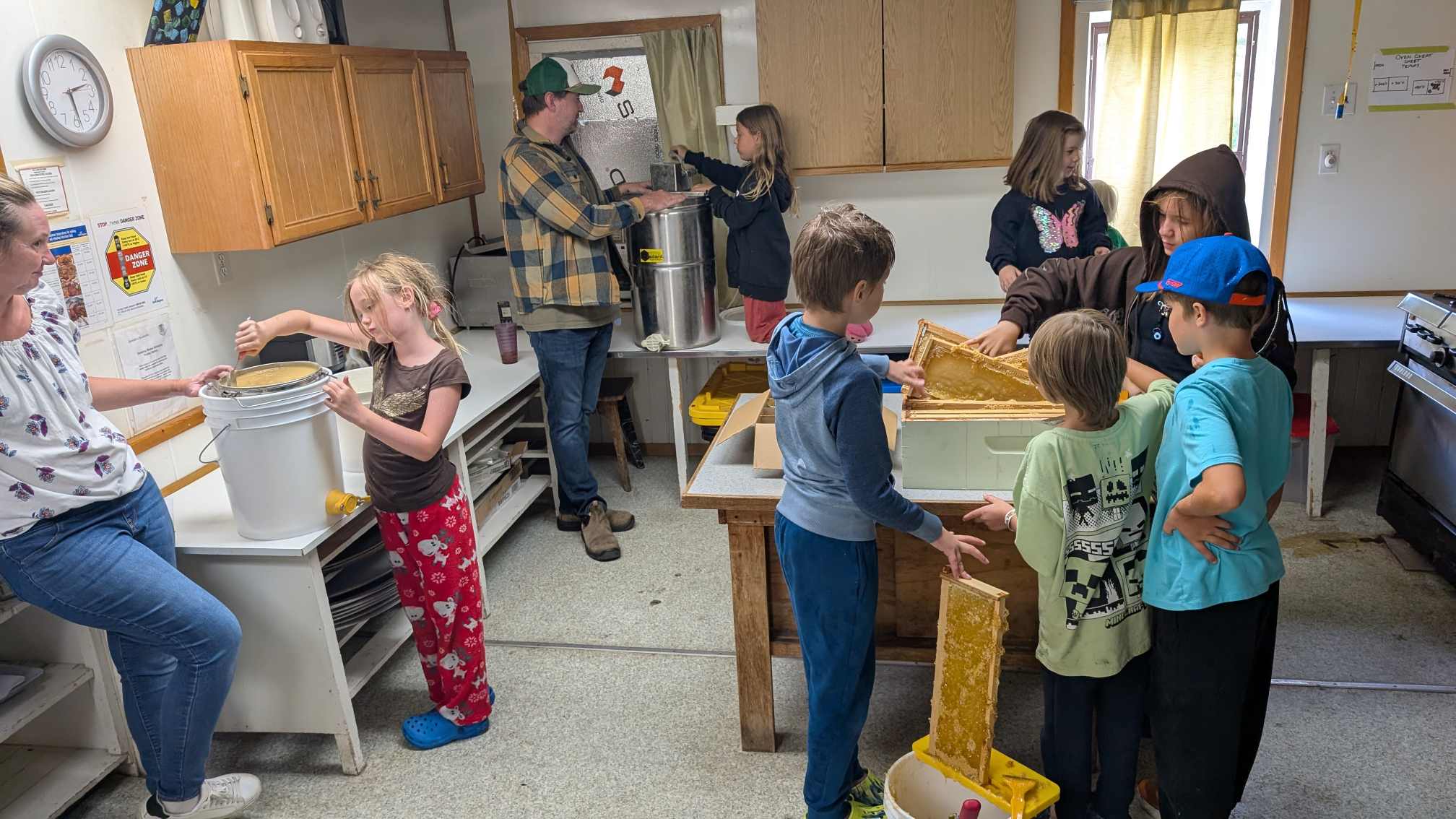
From the hive, Eerik and Markus lifted out frame after frame of honeycombs. Those were carried to the waiting pickup truck, where they were taken for processing at the köök. Here, the kids helped by scrapping the beeswax off the tops of the combs, allowing honey to flow from the comb on a wooden frame. The frames (eighty in total) were then put into a “honey extractor,” two at a time. Using centrifugal force—and powered by the kids present—the frames were spun around until honey started flying out. While gratifying to watch and delicious to experience, this was very time-consuming. Luckily, small arms take a while to tire, and the kids kept cranking away.
Fotogalerii
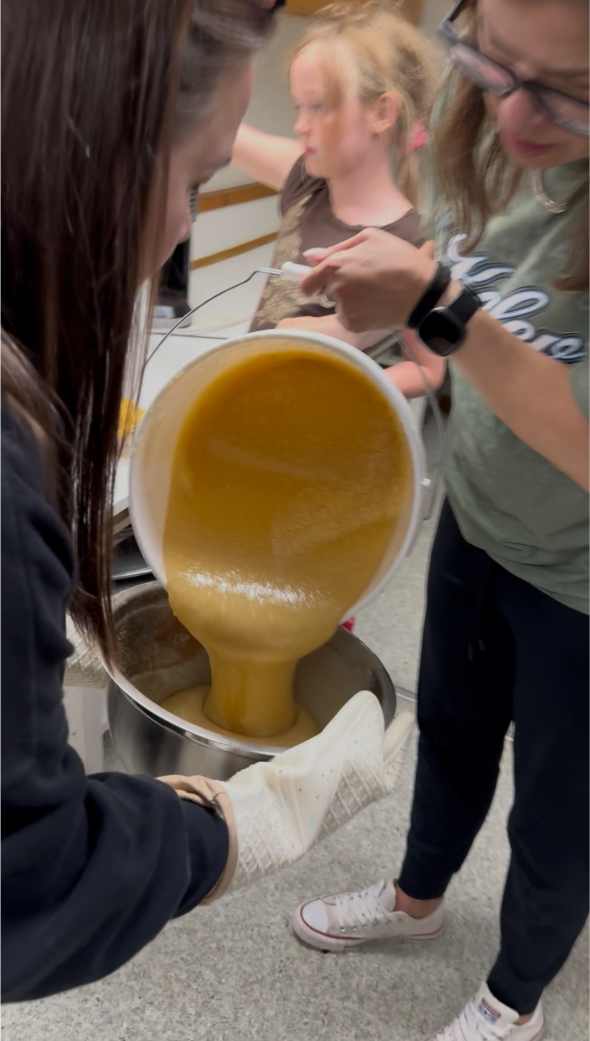
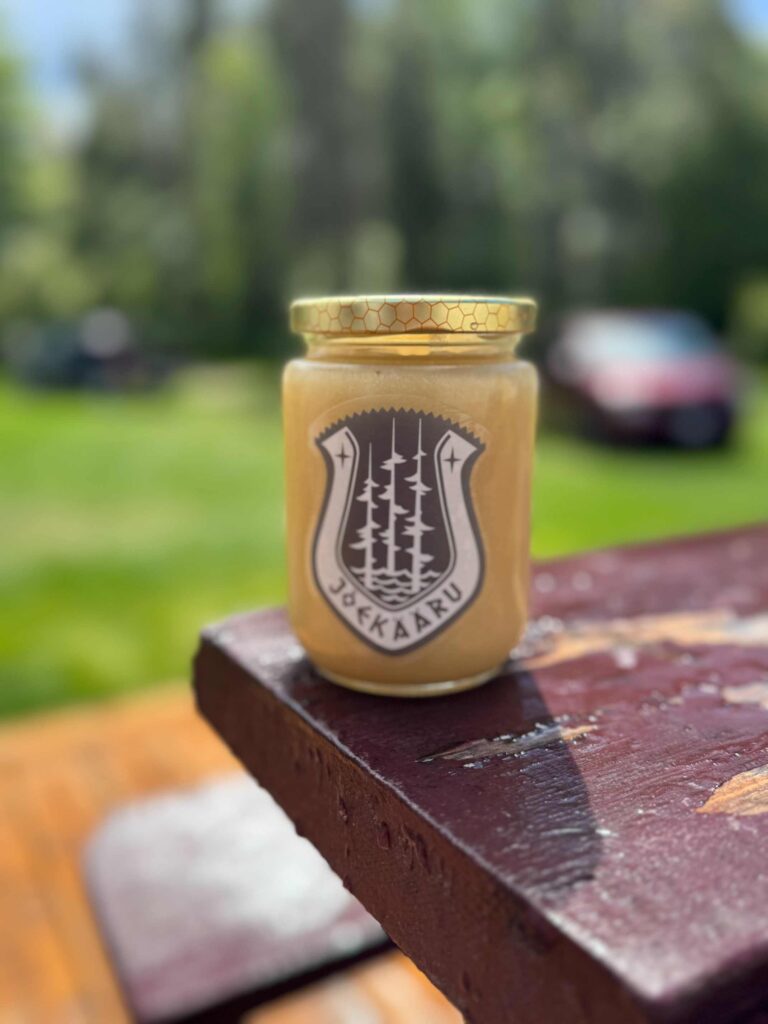
At the end of the afternoon, there was enough honey extracted that all the families present left with a small jar of honey to remember the afternoon. The rest of it will be sold by Jõekääru at the annual Eesti Rahvajõulupuu in December, with the goal that any money raised will be put back into the beekeeping operations, specifically to buy a new, mechanized four-frame spinner that will make the extraction easier.
Oh, and in case you’re wondering, yes, two bees did end up stinging people. But 199,998 didn’t. Eerik and Markus have trained them well.