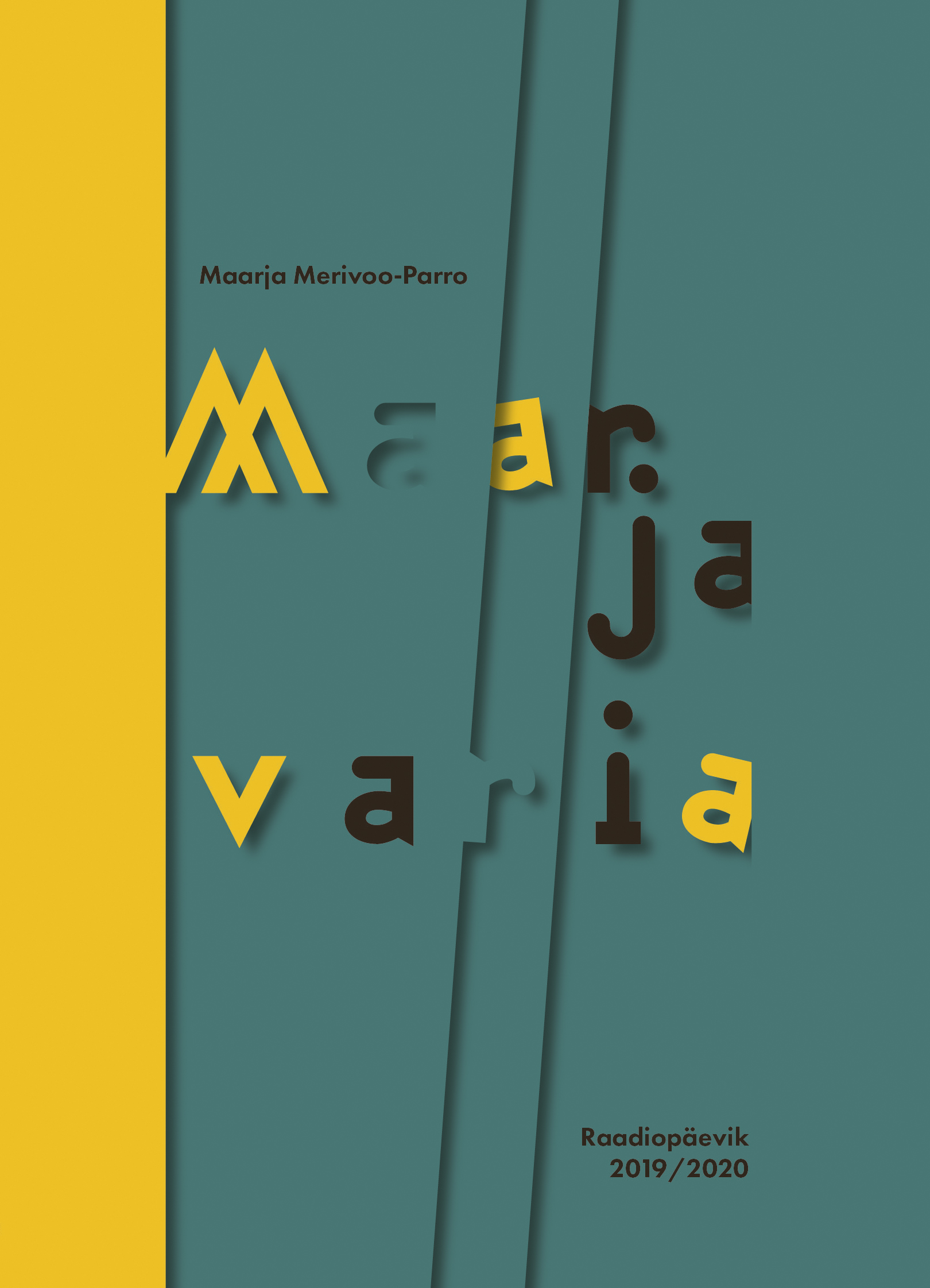
Information aligns with personal stories (including, as Merivoo-Parro relates, “that one time I played ping-pong at Paisley Park”, the home and studio of Prince). The author's reflections are supported by opaquely coloured, attitude-filled illustrations by Dr. Liiri Oja, a human rights lawyer.
It's not just the book that is a colourful medley, or “varia” as the title goes. Beyond working as the Executive Editor of Raadio 2, the study of culture and time has led Merivoo-Parro to curate panel discussions at Tallinn Music Week. She's served on the jury of Eesti Laul, as well as Supernova in Latvia. She is a board member of Baltic Heritage Network. In 2018, her doctoral thesis (titled “Pursuing Estonianness in Cold War U.S.A.: Education, Recreation, Humor and Overlapping Diasporic Conditions”) examined the dynamics and institutions of Estonian patriotism in the diaspora community.
Readers can find the book, in Estonian, on Rahvaraamat's website (www.rahvaraamat.ee)
What initially prompted you to transform your radio show topics into essays?
It was my mother who suggested I publish the radio shows as text after I told her about all the positive feedback I had been getting from people who I respect in the arts and culture scene. The notion of being on-air is quite ethereal and this way, the ideas I put forth gain a new type of existence, which will hopefully allow people to revisit them.
For someone who is just getting to know what you do, what three to five words would you use to describe your writing in this book?
I hope that what comes through is a voice that is sincere, resourceful and present, like a companion who listens, even though in this case the companion is in fact doing the talking.
As a historian, in what ways do you believe ancient phenomena have shaped Estonia as a land and people today?
Funny you should ask — I am actually getting ready to launch a new podcast in English which deals with questions like this. It’s called “Estonia Explained”, and I address topics that might seem puzzling to people who have not grown up here. It will be published on the Public Broadcasting portal news.err.ee and I’m always open to suggestions in terms of subject matter.
What connects music and the study of the past together for you?
I think everything has a beat that it dances or sways to. Whether I’m looking at a person, a culture or an empire, the road to understanding them is figuring out what makes them tick. In that sense I think what I do as a DJ is not that dissimilar from what I do as a historian.
What is something that väliseestlased (diaspora Estonians) may particularly enjoy about the book?
I think it’s a very good gateway into what the ever-evolving Estonian language is like at this moment in time. Although everything is grammatically correct, because these texts were born on the radio, they reflect the spoken language and could be used as a good tool for increasing fluency, especially because the shows themselves are still accessible via Raadio 2 web archive. So it’s possible to read and listen at the same time. Incidentally, a few of the chapters also touch upon diaspora culture!
How are your personal experiences, and the events of the last year or so, fused together in “Maarja varia”?
I tried to compose it so that different levels are weaved into each other in the hope that they wrap themselves around the reader like a scarf; giving out the warmth of being invited to a personal space, as well as providing some much needed support for venturing outside of their comfort zone to question the world around us.
This interview has been edited and condensed.
Interview by Vincent Teetsov, Toronto