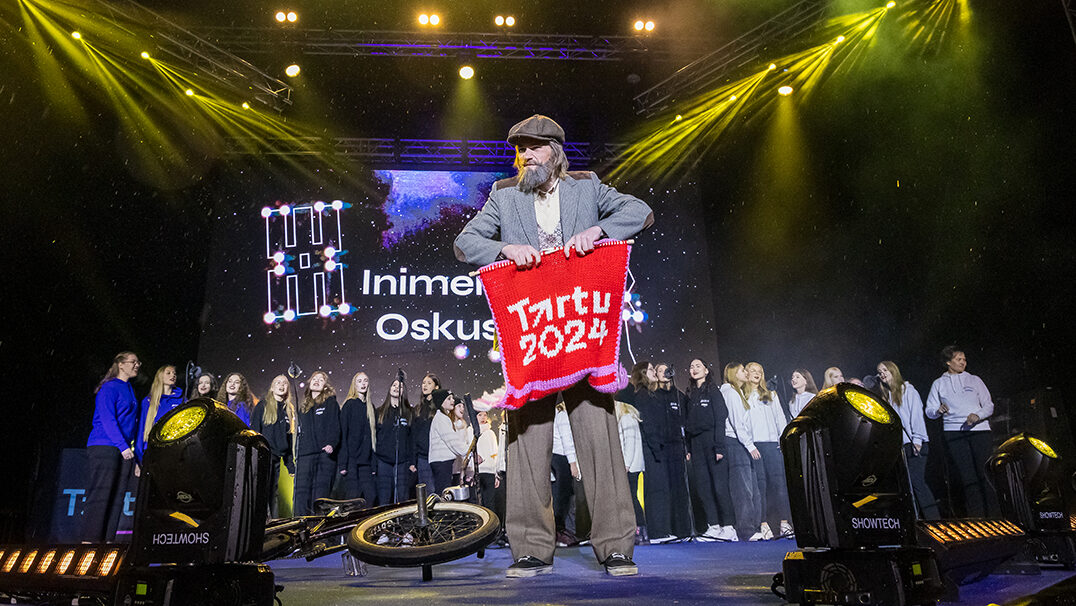
The road to 2024 has been full of twists and turns, a true testament of the Arts of Survival. Members of the Tartu 2024 team share their memories from the very beginning.
Some may recall that Tallinn was chosen as the country’s first European Capital of Culture for the 2011 calendar year. Tartu, the second-largest city in Estonia, came in second. While this outcome was a disappointment to some, in hindsight it was not that surprising.
“It was the first time for the country to hold the European Capital of Culture title competition. Previously in Lithuania and around the same time in Latvia, the capital won,” said Erni Kask, who led the candidacy team and now is the Tartu 2024 International Relations manager.
Still, observers agreed that Tartu’s bid was strong and lessons were learned. When the chance to reapply presented itself, the local government decided to do so.
“I believe that the first attempt left the people in Tartu and Southern Estonia with a hunger and ambition to do something unprecedented and that is why we took this journey on again,” said Kalle Paas, former Head of the Tartu 2024 Communication and Marketing Division and a member of the candidacy team.
The title is not given for what the city is, it is given for what the city wants to be. Tartu wanted the European Capital of Culture to be a catalyst for positive, forward-looking changes.
According to Paas, the European Capital of Culture is the biggest challenge that a region of this size can execute well: “We will never host the Olympic Games, they are at least 50 times more expensive than any European Capital of Culture. But this initiative is something we can do with high quality.”
A thousand seats at the table
Even so, eager enthusiasm is not enough. Tartu City Government’s decision to run again, set off the process of putting together an official bid. The next step for this was to go from the political level down to the grassroots.
“This meant involving and including different key groups in the city, organising events and roundtables,” explained Kask.
What the government thinks of the current situation in the city may not be the same as the perspective of artists or cultural managers. In total, over 1000 people gave their contributions, big or small, to the process.
Another key decision was to invite Southern Estonian municipalities to join the bid.
“We quickly understood that it is practical to join forces with our surrounding municipalities. Our team met with heads of local governments in 2018, they listened to us and agreed to jump on board. Now our area covers a quarter of Estonia, about 250 000 people. This is enough to be visible on the European level, without the region we would be very small,” spoke Paas.
Out of hundreds of ideas, 33 made it into the final bid book – a proposal that indicates what you want to do as an European Capital of Culture and how you are going to do it.
With important partners around the table, the candidacy team began to shape the first ideas into projects that would make up the upcoming title year programme. Out of hundreds of ideas, 33 made it into the final bid book – a proposal that indicates what you want to do as an European Capital of Culture and how you are going to do it.
“We had a lot of fun ideas! As soon as you start your candidacy, many foreign experts want to help you out. One of them came to visit Tartu and we drove through the city with him. At the end of his tour, he asked about the fountain in our town square and I told him the story of the kissing students. He responded that we should do something inspired by it,” reminisced Kask.
The project Kissing Tartu, born out of this encounter, will bring an educational programme, concert performance and record-breaking mass kissing session to Tartu next year.
A prophetic vision for the future
Every European Capital of Culture has a theme, an artistic concept that guides the programme creation and communication activities. For Tartu 2024 it is “Arts of Survival”.
Finding the “best” leitmotif can be difficult, explained Erni Kask. “We noted down our challenges, yet couldn’t find the right wording. We had a very good competitor in Narva, who had a very strong slogan “Narva is next”. Then, on one winter night, I received an email from writer Berk Vaher, where he put forth the idea of Arts of Survival. The rest is history.”
Initially, the theme emerged from common small-town worries like inaccessibility and diminishing population. Another aspect was climate change and its impact on the area.
Even before joining the team, Tartu 2024 Artistic Director Kati Torp felt that the concept resonated deeply with her interests. “I had just curated an exhibition in France that tackled climate topics. I was positively surprised that Tartu 2024 decided to handle this topic and thanks to that it was easy to make a connection with the concept on a personal level.”
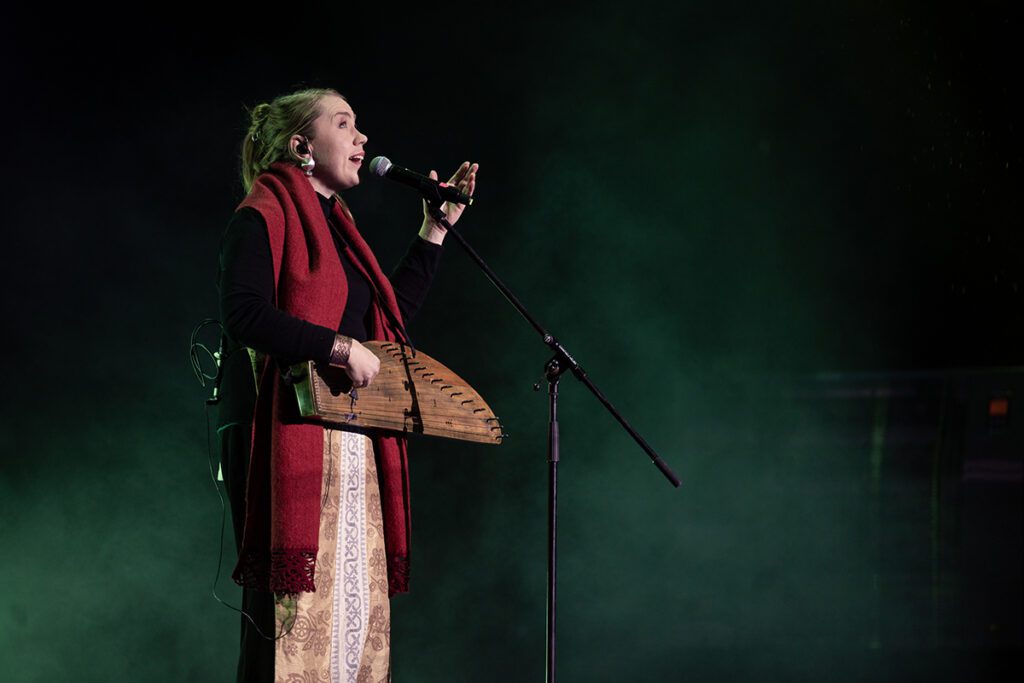
In time, the Arts of Survival morphed into something new and rather prophetic. Today it may seem that the COVID-19 pandemic is firmly in the past, yet the first days of the crisis were crushing. Arts of Survival became survival of the arts, cultural managers had to find ways to overcome budget cuts, closures and keep the artistic process going.
Having barely scraped out of the pandemic a new crisis shocked the entire continent. “It did not take long until we were faced with the Russian war of aggression against Ukraine. This made us think of the Arts of Survival in its most fundamental narrative. Now the Israeli-Hamas war also shocked with its rapid escalation,” said Torp.
The concept is open for interpretation and even playful jokes, as showcased by Tartu’s street artists.
Nevertheless, it is not all doom and gloom in Tartu and Southern Estonia, as focus is on survival not extinction, on finding solutions and striving for a better future. The concept is open for interpretation and even playful jokes, as showcased by Tartu’s street artists.
“When the jury responsible for selecting European Capitals of Culture visited us before making their decision, we asked Tartu street artists to make graffiti with the words “Arts of Survival”. And they did! But the next day, they went back to the scene and added a big “F” before “arts”. Hats off to them – this brought much-needed playfulness and a dash of irony to our concept,” said Kalle Paas.
Onwards to the future
With the momentous bidding process successfully over, the team started ironing out the details of the first projects and adding additional layers to the programme under the leadership of the newly appointed Artistic Director.
“I couldn’t shape the first projects making up the core of the programme, however I could accept them and build the next layers surrounding them,” said Kati Torp.
To usher in a positive change in the region and boost local cultural organisers skills in finding international partners or additional resources, the team chose to seek new projects through open application rounds. The first targeted Southern Estonian cultural operators and seeked events in the 19 municipalities making up the Tartu 2024 region.
Events like the Pagan Folklore Night, a mystical combination of folklore, dance and music at the Kubija Song Festival Grounds, and Crowing Linda, a revival of the legendary community centre of Linda kolkhoz long table parties, joined the programme this way.
The second, was an international call for projects taking place in Tartu, which turned out to be truly cosmopolitan with applications from over 20 countries. For example, International NAKS Festival 2024 will showcase the newest theatre plays for children and the youth, while Simple Session 2024 will bring the famous extreme sports event back home.
The last focused on small grassroots projects. “Our last call for projects was a real jackpot, we added so many new initiatives to our programme from various communities that were not present before,” told Torp.
These new initiatives include a gallery for newborns, drag performances and the Ukrainian Anti-Camouflage net project carried out by the Ukrainian community in Tartu and Southern Estonia.
Albeit the majority of the programme is made up by local cultural managers and organisations, the Tartu 2024 Foundation organises their own productions, like the grand opening and closing ceremonies and a large summer celebration. Moreover, cooperation productions will be carried out together with key institutions and people in Southern Estonia.
The entire European Capital of Culture Tartu 2024 programme was published on October, yet a few surprises are still kept for a later date.
The over five year long journey is reaching the finish line. Soon all eyes will be on Tartu and Southern Estonia and the lovingly curated programme full of authentic and unique experiences. The entire European Capital of Culture Tartu 2024 programme was published on October, yet a few surprises are still kept for a later date. Next year visitors from Estonia and abroad can enjoy over 1000 events in Tartu and Southern Estonia.
“People often laugh that Southern Estonians are slow and while it is true that we love to take our time and it took us over five years to build the programme, we are now ready to unleash it upon the world,” said Kati Torp. This is only the beginning.
•••
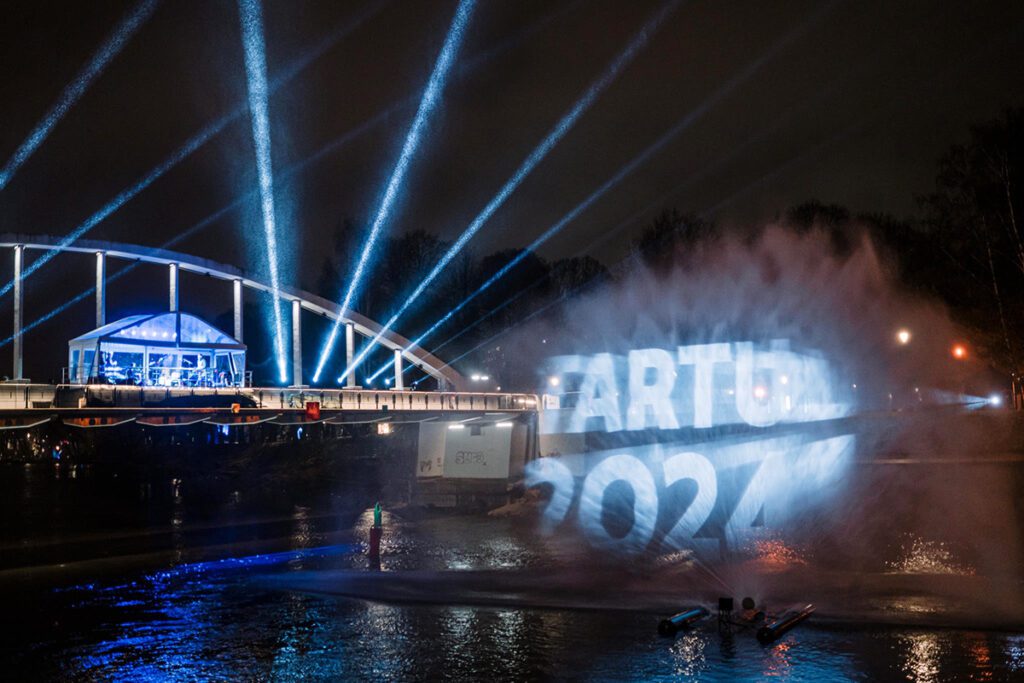
On January 26, 2024, the grand opening of the title year of the European Capital of Culture will take place in Tartu – the spectacle “All is One” on Emajõgi river in Tartu. Find out more about the events and experiences Tartu and Southern Estonia offers: tartu2024.ee.
Kaidi-Lisa Kivisalu, Tartu 2024 Communications Specialist