Tartu College is a very important place for the Estonian community of Canada. It’s the home of Eesti Elu / Estonian Life newspaper, VEMU Estonian Museum Canada, numerous academic organizations, and is also a place where many university students in Toronto reside.
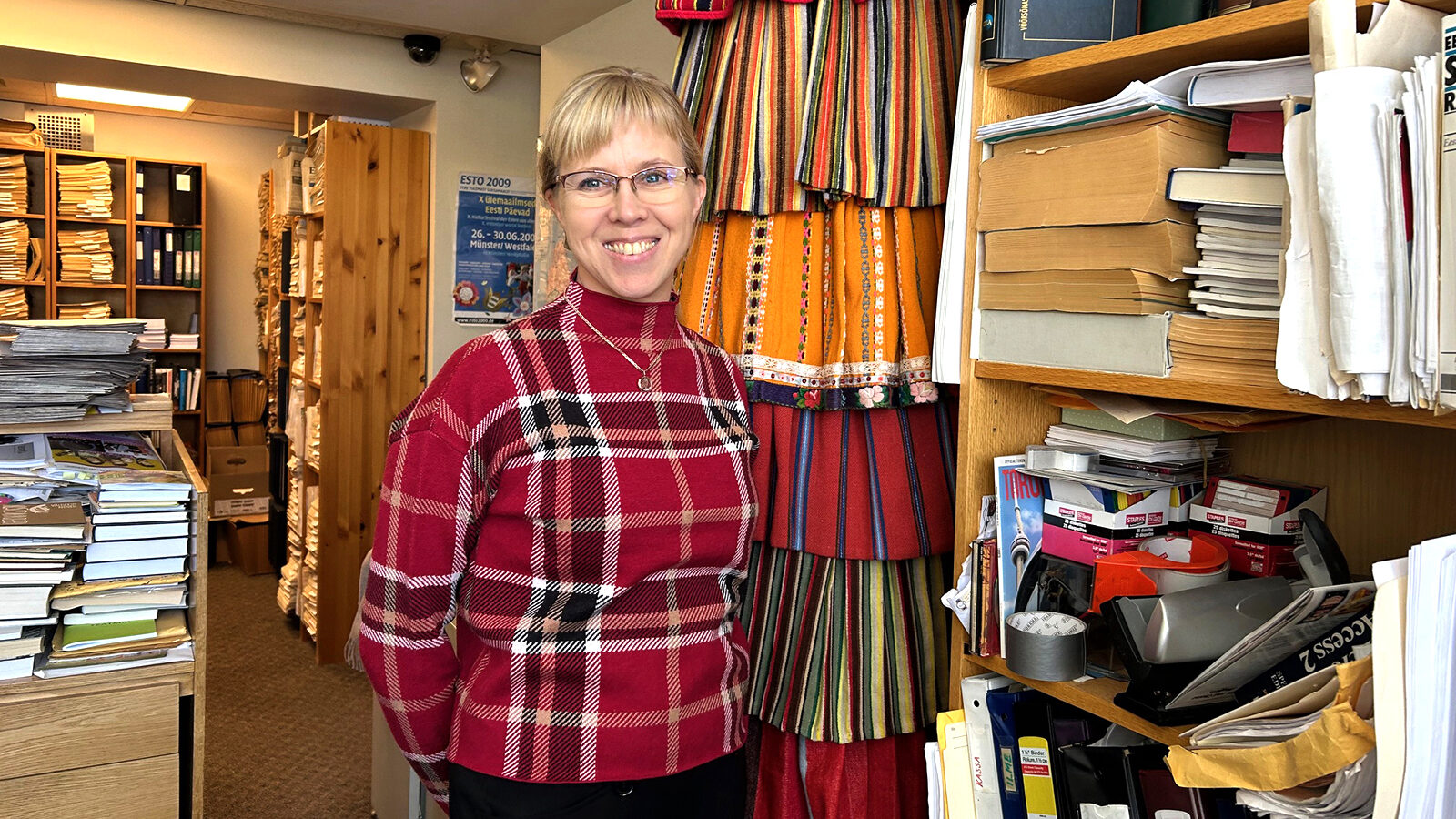
As Tartu College celebrates its 55th anniversary this year, we wanted to introduce readers to the people who make this place thrive. This time, we’re speaking with three long-time members of the housekeeping staff, who keep the student residence, offices, and community spaces clean, organized, and looking sharp for major events, student life, and others who work here.
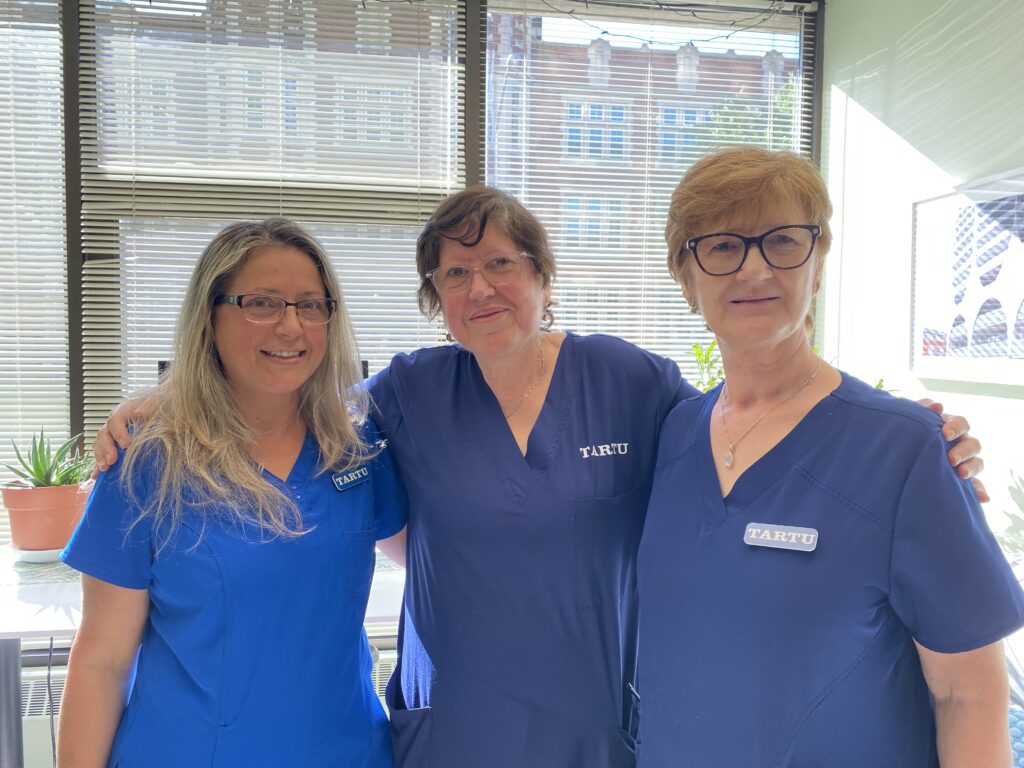
(Interview by Vincent Teetsov)
Vincent: I’ve heard there are many stories between the three of you. And Filomena, I also heard you’re retiring soon to spend more time with your grandchild. Congrats! You’ve been working at Tartu College since 1988, is that correct? What’s the story of your arrival at Tartu College?
Filomena Bettencourt: Yes, that’s correct. My mother worked here in the same position. They needed help in the summer, so she asked me to come and work.
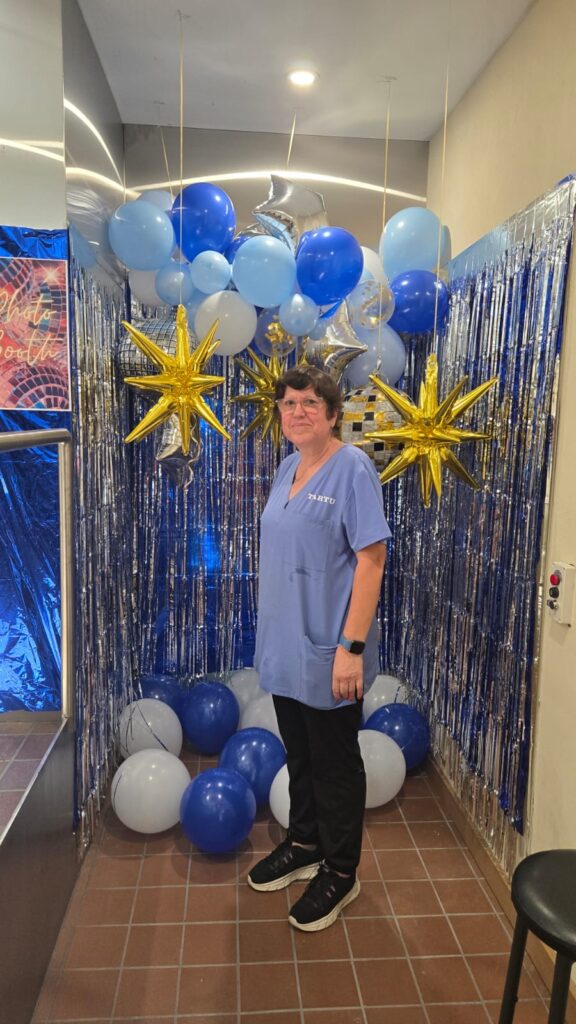
VT: And Branka, when were you hired? What brought you to TC?
Branka Glavan: My daughter had started school, and so I was looking for work. On the same day, my husband, who also worked here, told me they needed two more cleaners. That was in 1999. I’ve been here ever since.
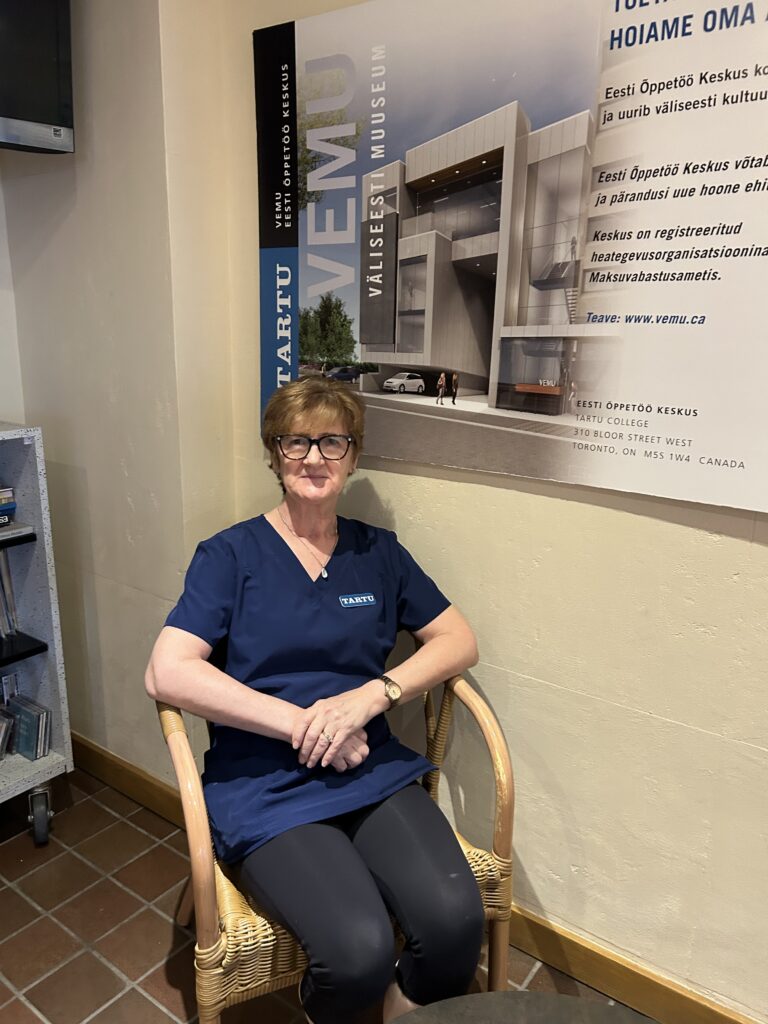
VT: Dina, you started in 2003. How did you join?
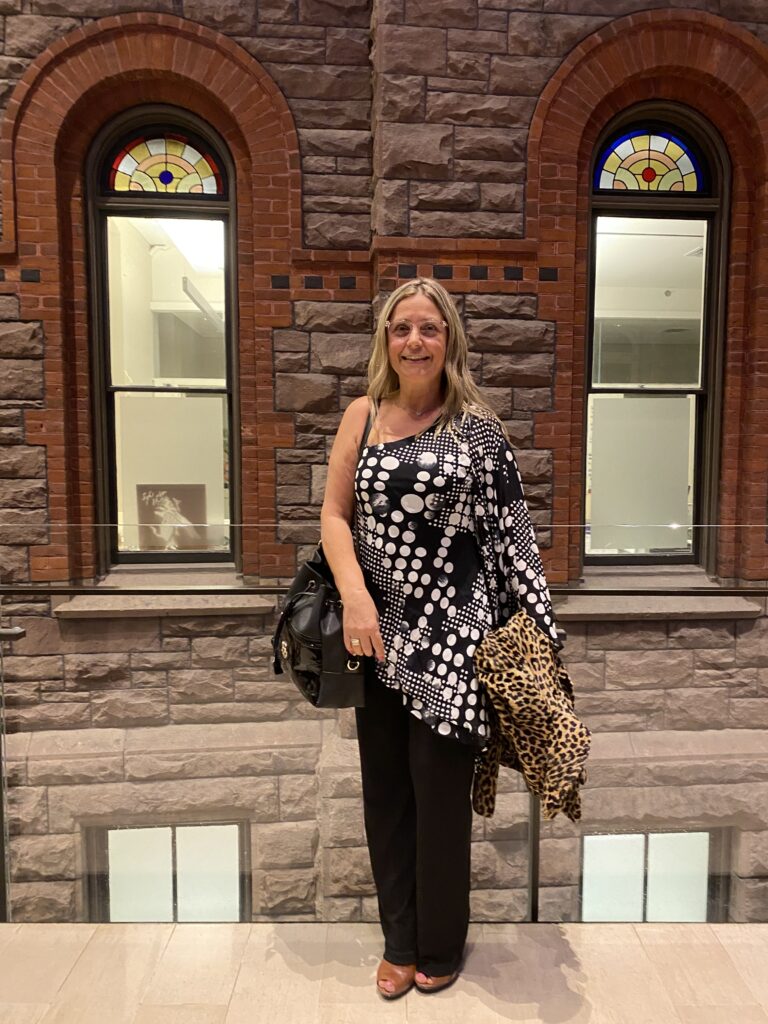
Dina Narciso: I had left another job to care for my child. Funnily enough, I was at a 50th anniversary party downstairs in the banquet hall, and I asked a family member who worked here if there were any available jobs. They mentioned a summer position. I applied, and that was the start of my time at TC.
VT: What’s changed at TC since then?
DN: I think there’s better communication and support. The workplace has become safer, too. I think we’re probably one of the safest buildings that I know of right now. Our elevator systems have been upgraded and everything has been brought up to par. Watching all the managers that we’ve experienced, I can honestly say Linda Karuks has put a lot of work into this place and done a lot to make sure that this place is good. But from the start, it was a tight-knit team, and some traditions still continue.
FB: The uniforms. We used to wear long brown ones. I remember wearing one when I was interviewed by someone from Estonia. They even had a camera. Though I never saw the video when it was finished. Now the uniforms are blue.
“Of course, innovation and renovated spaces also mean more work. We need to keep everything looking fresh.”
(Branka Glavan)
BG: Before, we were nervous to remind students about rules. Now, we have more respect and authority. Of course, innovation and renovated spaces also mean more work. We need to keep everything looking fresh.
VT: Filomena, can you describe your role at TC and the work that you do?
FB: In my role as the Housekeeping Supervisor for TC, I am responsible for every aspect of cleanliness around, so I assign tasks to our team members and explain our responsibilities and duties. I also make sure everyone is safe and covered when needed!
VT: Is that different from other roles here? Or is it pretty similar across the team?
DN: It’s a pretty even team. We handle garbage, recycling, apartments, and report issues. Training and teaching new staff is constant, as we’ve had a lot of transitions and people coming and going over the years. Some tasks have changed, but many old methods still work, so we keep them.
BG: We begin with common areas, then move to suites. Around two or three a day. I work from 10:00 a.m. to 4:00 p.m. now, so I handle fewer suites than before. By the end of the day, we check the lobby and office areas, and clean up if something happened during the day.
VT: Do you have any especially memorable moments from your years here?
“… we were sewing on the G floor, to fix the length of curtains, because the windows were a different size… I heard a big boom. I thought there was a power outage in the building. But really the entire city lost power.”
(Dina Narciso)
FB: So many. We’ve had a lot of moments together.
DN: I’ll never forget the 2003 blackout. During renovations, we were sewing on the G floor, to fix the length of curtains, because the windows were a different size. I thought I was here to do cleaning, but, you know, there’s also other stuff that we do in the background that helps keep Tartu going. Anyway, I heard a big boom. I thought there was a power outage in the building. But really the entire city lost power. Two coworkers were trapped in the elevator. It was frightening, but they got out safely.
BG: For me, it was when I had an accident here. That stays with me. But I also remember renovations. There was always something happening, events every day, too, and still we managed to keep the spaces ready.
VT: So the main hall is probably the most active in terms of cleanup?
DN: Oh, for sure. I remember when I started working here, the frats were having their parties and they would stack these tables five, six tables high and a piano would end up on there somehow. That’s not happening now, times have changed. But that was challenging, to come on weekends to work and do that, especially if you’re a smaller person.
VT: You’ve mentioned TC being multicultural. How have you interacted with Estonian and other cultures as a TC employee?
FB: We’ve cleaned and helped prepare for many cultural events.
BG: I’m a picky eater, but I’ve tried some Estonian foods, like sült (meat jelly). And verivorst (blood sausage), which I like. It’s different from the Mediterranean food I grew up with in Croatia. In Croatia, the blood sausages have corn flour instead of barley. The sauerkraut is different where I’m from, it’s more sour. Estonian sauerkraut tastes sweeter.
DN: I’ll stick to the kringel. It reminds me of Portuguese sweet bread. But I do try all the stuff. I like the beet salad, and I’m open to trying different cultural foods.
I found that together, we’re always teaching each other stuff and helping each other out. My Portuguese improved so much that people thought I was from Graciosa in the Azores, which is my boyfriend’s island. I’m from another island, but because all the ladies here were from Graciosa, that was the dialect that I picked up.
Here, I also learned how to crochet and knit. I learned some really good recipes. We always eat really good food here.
VT: If someone asked you what working here is like, what would you tell them?
BG: This isn’t just a nine-to-five job. Sometimes we work weekends. Reliability is important. If you don’t show up, your coworkers suffer.
DN: At the same time, when I started, there were only six cleaners. Now there are ten, so if there’s an emergency we have enough people who can cover for each other. It’s a good work ethic. We’re friends. And management is very supportive, too.
VT: What should students or parents know about TC?
BG: It’s different from all student residences. I tell them, I am like your “mom away from your mom.” And lots of times I figure out who is misbehaving, just like how moms have eyes on the backs of their heads. So it’s more like a home, you know, not like a business.
DN: I think the parents feel comfortable knowing that their children are coming here. When we meet the parents, they’re worried. You’d think they were leaving a child at kindergarten. But they see us, meet us, and talk to us, and they’re like “I’m handing off my child to you now.” So it’s also a good relationship with the parents.
VT: Do you have friendships or special connections from your time here?
FB: Yes, with students and coworkers, both.
VT: Tell me something not everyone knows about each other.
BG: Everyone knows Filomena cares deeply, but she worries too much sometimes.
FB: Dina is always friendly and helpful. And she’s a photographer.
DN: Photography is my outlet. I started when I was thirteen with a Kodak 110. Kerly, who also worked here, shared some of my photos, and that was actually a highlight moment in my life, seeing my photos published.
VT: What should everyone know about Tartu College?
Filomena: “It’s a nice place to live. We try to make students feel at home…”
Dina: “There’s a lot of good culture in this building. And it brings students back year after year. I like to say, ‘There’s always room at Tartu.'”
FB: It’s a nice place to live. We try to make students feel at home.
BG: Your home away from home. We’ve always said that.
DN: It’s multicultural, but the Estonian community also really holds their roots together. I remember cleaning wood for panelling that had been brought from Estonia. We treated it with care, because it carried meaning.
There’s a lot of good culture in this building. And it brings students back year after year. I like to say, “There’s always room at Tartu.”
(This interview has been edited for clarity.)