What is it that forces us to leave our everyday activities and gather like a swarm of bees at the Song Festival grounds and under the Song Festival bandshell, the song arch, every few years, no matter what the weather conditions are, whether the scorching sun is shining or the rain is pouring…? What forces us to make an effort to stand huddled together on the steps of the arch again and again and sing and sing…? What compels—as at the just-finished festival for example—the people to stand for hours in the rain, in the dirt and mud, to be alive together under the arch with all that is happening and to sing and sing…?
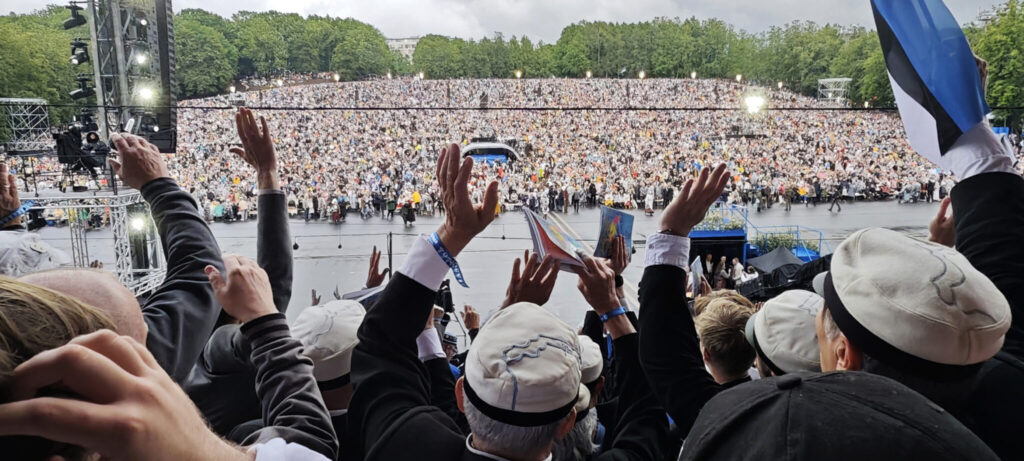
It’s a wonderful feeling of pride to see and be together with the shining eyes and inner energy of everyone when they arrive at the Song Festival grounds in the procession. And these people—our OWN people—come and come and come… By the thousands. What a feeling of wealth!
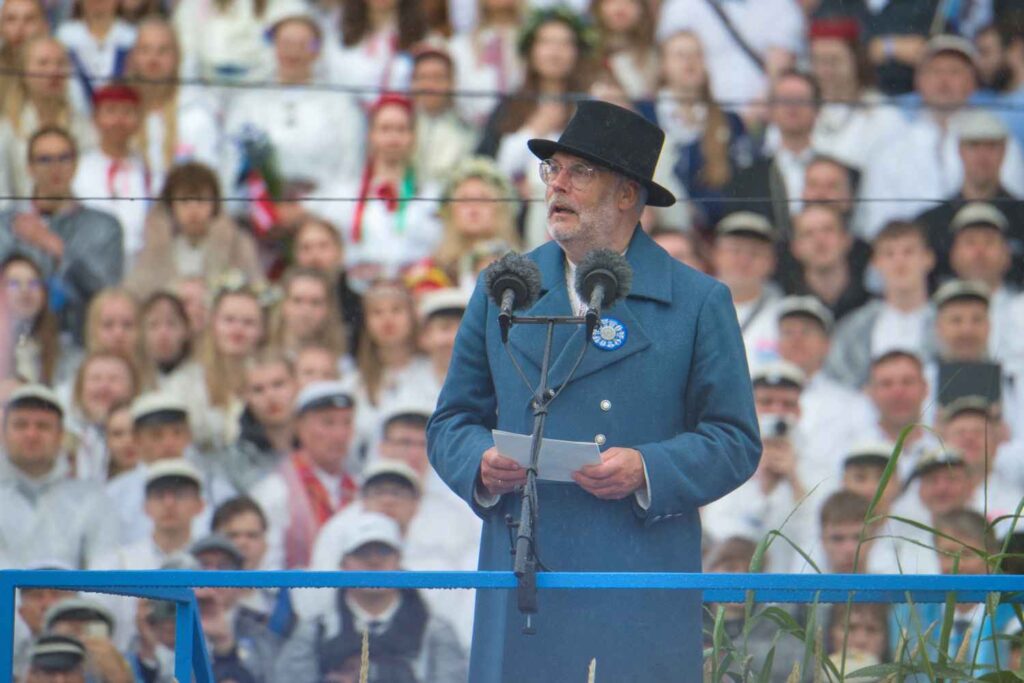
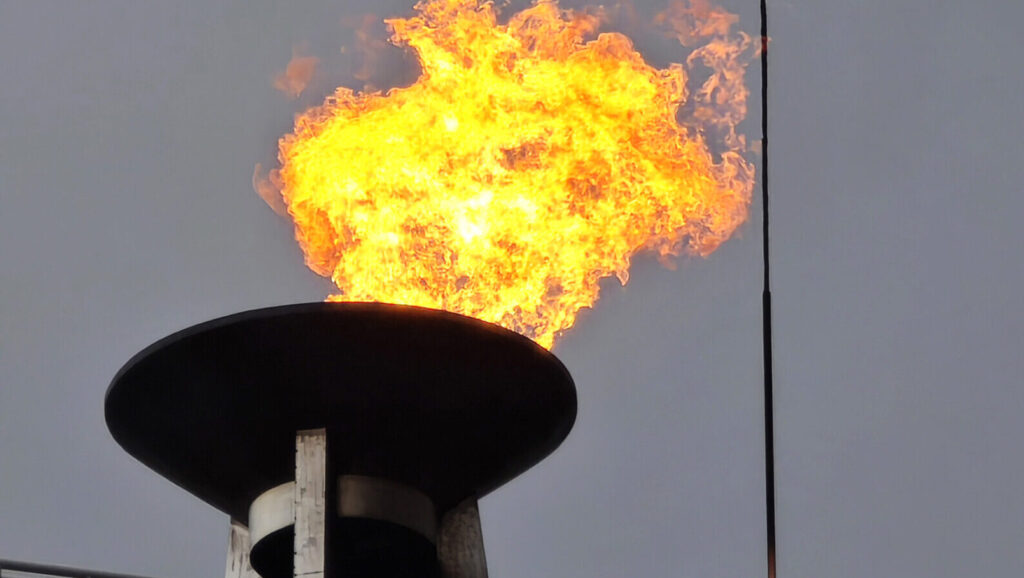
It’s wonderfully sublime and tender when the Song Festival torch begins its journey to the top of the fire tower, where the leaders of the choirs greet the torch on every floor and when finally Mihkel Lüdig's “Koit” (“Dawn”) echoes powerfully across the Song Festival grounds, concluding with the lighting of the Song Festival flame.
There is a great sense of togetherness when “Mu isamaa, mu õnn ja rõõm” (“My Fatherland, My Happiness and Joy”) resounds from the mouths of everyone at the Song Festival grounds, with the blue-black-and-white flags fluttering, high under the expanse of the sky.
There is a sense of pride when, under the firm leadership of Heli Jürgenson—the Song Festival’s first female general director in history—a folk song from Otepää parish, banned during the Soviet occupation but still performed under a different name, is performed, set to Mart Saar’s “Mis need ohjad meida hoidvad…” (“What Are These Reins Holding Us Back…”)
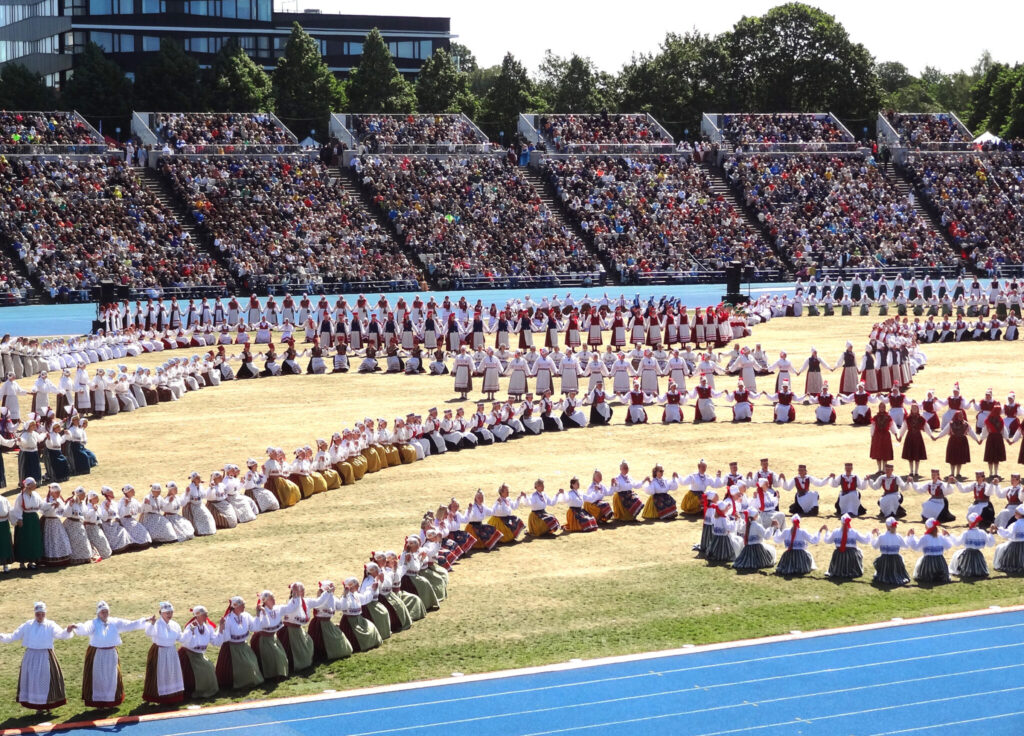
Our own Song Festival had begun. Dances were danced at sold-out performances earlier and the Folk Music Concert brought a huge audience to Freedom Square. Now it was the singers’ turn. The program for the first day of the Song Festival included both traditional and new songs, though they had their roots in our folklore and music.
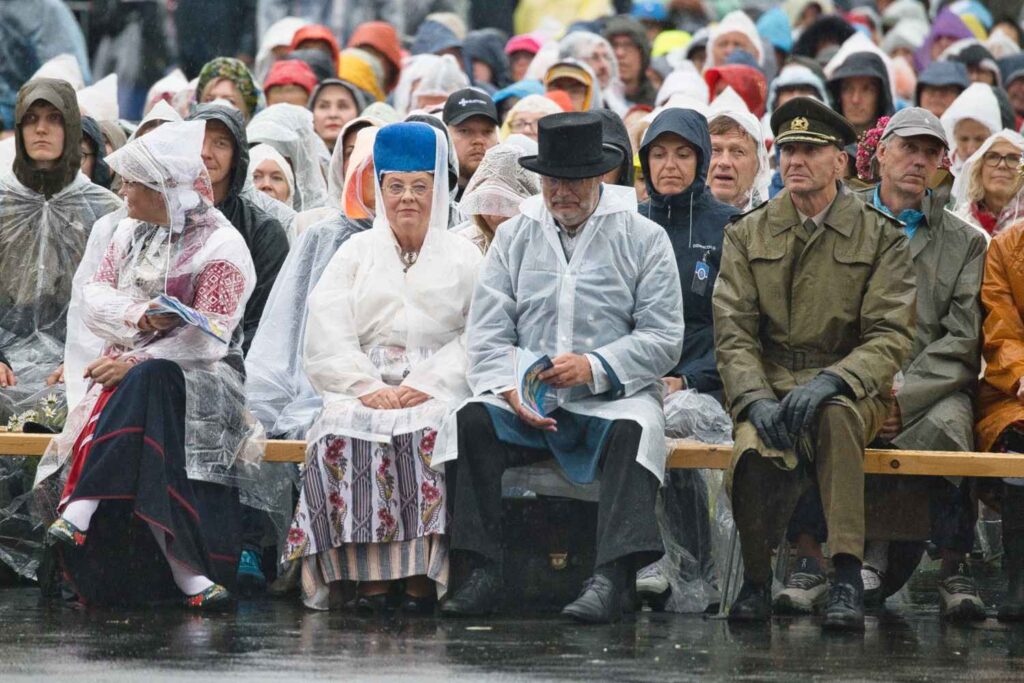
The weather was not kind to the performers and audience on the second day of the Song Festival. Rain. Rain. Rain. Continuously and continuously. But neither the singers nor the audience gave up. Not a single song that people wanted to hear repeated went unsung. What is it in us that doesn’t allow us to give up?
The ISEOMA Song Festival program was well organized, but the festival also had moments of spontaneity. During the gathering of the combined choirs, the singing did not subside, but spontaneously began, for example, to sing “Maa tuleb täita lastega” (“The Earth Must Be Filled With Children”) by the late 80s band Justament, set to Hando Runnel’s text and Vello Toomemets’ composition, carrying a message which is still very important today. Or “Mässajate laul” (“Song of the Rebels”), which became known as part of the cult classic film Viimne reliikvia (“The Last Relic”) and sounded quite menacing under the song arch with lyrics like “Mõisad, põlevad, saksad surevad…” (“Manors, burning, the Germans are dying…”). Or the first performance under the song arch of “Metsavendade laul” (“The Forest Brothers Song”) with its refrain “Ai-tsihh, ai-tsahh, ai velled…”
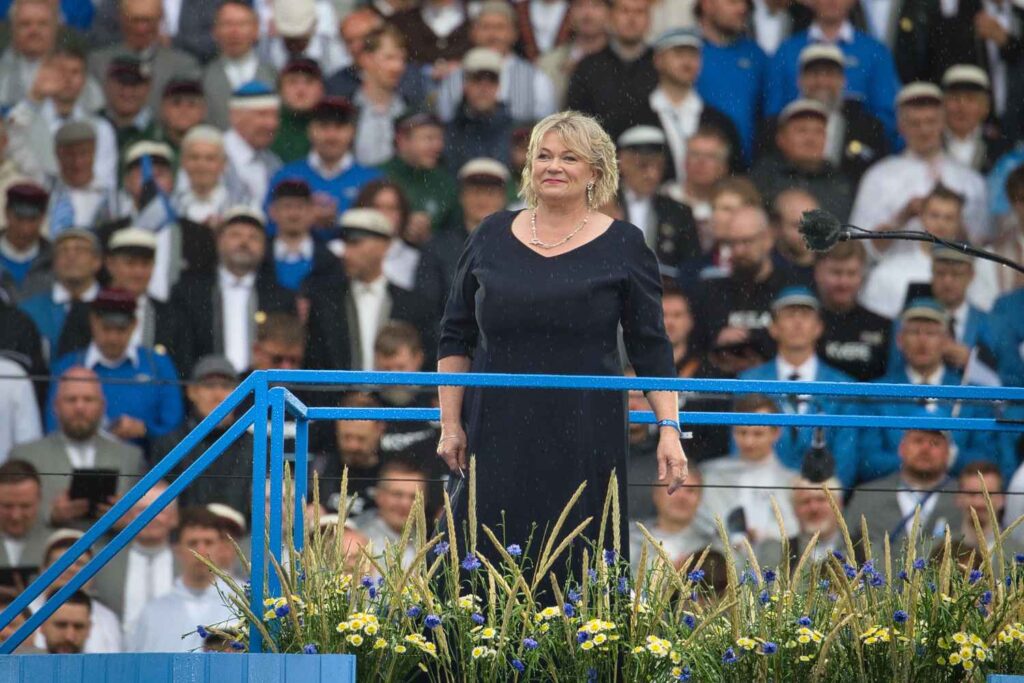
And then, the other expected songs came. Of course, there were tears of emotion. Sadness and joy together at the same time. A sense of grandeur and pride in our own being.
“Mu isamaa on minu arm” (“My Homeland is My Love”) sank into silence and then the song festival flame was put out. But the fire inside us has not been put out. It continues to glow, ready to be rekindled.
*
Facts about the Estonian Song and Dance Festival
The participants of “Iseoma,” the XXVIII Song and XXI Dance Festival
The “Iseoma” Song and Dance Festival featured 41,192 performers.
10,938 dancers, a record number, performed in the three performances of the Dance Festival, with a total of 11,613 participants.
The Folk Music Festival featured 88 groups and 65 soloists. A total of 765 musicians.
There were 32,022 participants in the Song Festival.
The Song Festival featured 45 foreign groups consisting of nearly 1,500 participants (31 choirs of singers with Estonian roots).
The Dance Festival featured 38 foreign groups with 517 participants (from around the world, i.e. groups of Estonians living abroad).
For the first time, all three general directors were women: the artistic director of the song festival was Heli Jürgenson, the main director of the dance festival was Helena-Mariana Reimann, and the creative director of the Folk Music Concert was Helin Pihlap.
Catering and wristbands
Participants ate nearly 205,000 slices of Leibur bread (200,586 slices of bread and pastries were eaten during the 2023 Youth Song and Dance Festival).
The Women’s Voluntary Defence Organization served 178,000 portions of soup to the participants during the festival, which makes a total of 70 tons of soup for the whole week.
This time, nearly 14.7 km of fabric wristbands were produced for the participants, which were made from recyclable PET plastic.
Youngest and oldest participants
The youngest participant in the entire festival was Isabella, a 6-year-old dancer.
The youngest participant in the Song Festival was 6-year-old Leeni.
The youngest participant in the Folk Music Concert was 7-year-old Adeele.
The oldest participant in the entire festival was 93-year-old Lille Õie, who was a Song Festival participant.
The oldest participant in the Dance Festival was 80-year-old Peet-Mati.
The oldest participant in the Folk Music Concert was 81-year-old Kalle.
Average Song and Dance Festival participant
The average Song Festival participant was 26 years old. The most common Song Festival participant name was either Laura or Oliver.
The average Dance Festival participant was 34 years old. The most common Dance Festival participant name was either Katrin or Martin.
The average Folk Music Concert participant was 35 years old. The most common Folk Music Concert participant name was either Kadri or Indrek.
The average age of the people at the Song and Dance Festival was 28 years old.
The most popular female name at the festival was Laura, the most popular male name was Martin.
Statistics by county
From Harju County there were 3,797 singers, 1,515 dancers, and 216 Folk Music Concert participants.
Hiiu County – 166 – 141 – 0.
Ida-Viru County – 869 – 279 – 14.
Jõgeva County – 553 – 270 – 13.
Järva County – 553 – 542 – 22.
Lääne County – 480 – 420 – 26.
Lääne-Viru County – 1,177 – 470 – 101.
Põlva County – 313 – 334 – 42.
Pärnu city – 1,424 – 414 – 29.
Pärnu County – 613 – 321 – 32.
Rapla County – 1,006 – 546 – 3.
Saare County – 771 – 434 – 34.
Tallinn – 10,918 – 2,537 – 94.
Tartu – 4,152 – 1,238 – 70.
Tartu County – 1,209 – 420 – 18.
Valga County – 412 – 188 – 11.
Viljandi County – 1,150 – 448 – 70.
Võru County – 813 – 552 – 27.
From all over the world, that is, from outside Estonia, 546 dancers came to the festival, and 1,595 singers came.
The most diligent groups and leaders
Elo Üleoja brought the most choirs to the festival – 9 choirs.
Heleri Kängsepp and Ulvi Mägi brought the most dancers to the festival, each with 9 dance groups.
Joosep Sang, Kadri Mägi, Lilian Kapp, and Pille Karras brought the most folk musicians to the party, each with 3 groups under their supervision.
The dance ensemble Sõprus brought the most groups to the party – 14 groups.
Tallinn School №21 brought the most participants to the festival – 433.
Approximately 48,000 ticketed spectators were expected for the opening concert and up to 58,000 for the main concert.
A total of 990 choirs and orchestras participated, consisting of more than 31,000 singers and musicians.
The event’s budget was estimated at 5.8 to 6.3 million euros, of which about a third was estimated to come from ticket sales. (Source: the Song and Dance Festival Foundation)