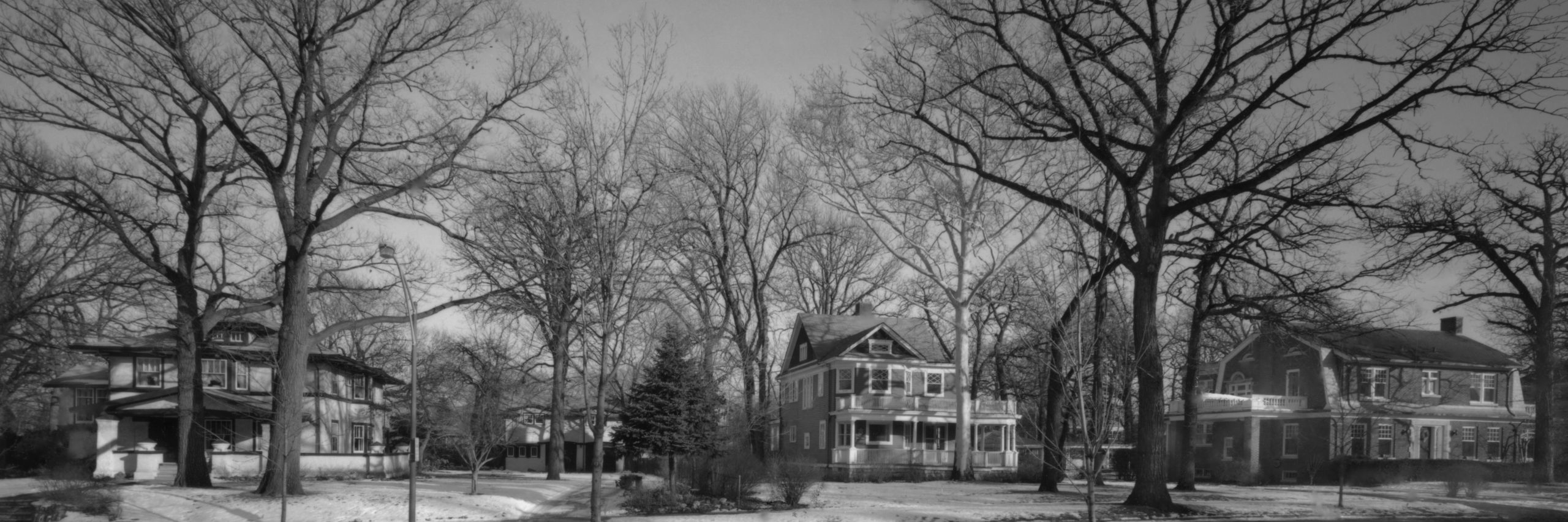
The Prairie School architectural giants of Louis Sullivan and Frank Lloyd Wright, how “form follows function,” the founding of “The New Bauhaus,” the principles of Mies van der Rohe; I’ve seen first-hand how all of it has shaped people’s work and philosophies, no matter where their life paths took them. Among our Estonian diaspora community, in the Chicago area, we find a photographer who has crystallized this hallowed architectural tradition with a large-format view camera. (That’s the kind you’d see in old movies with the focusing cloth over the back.)
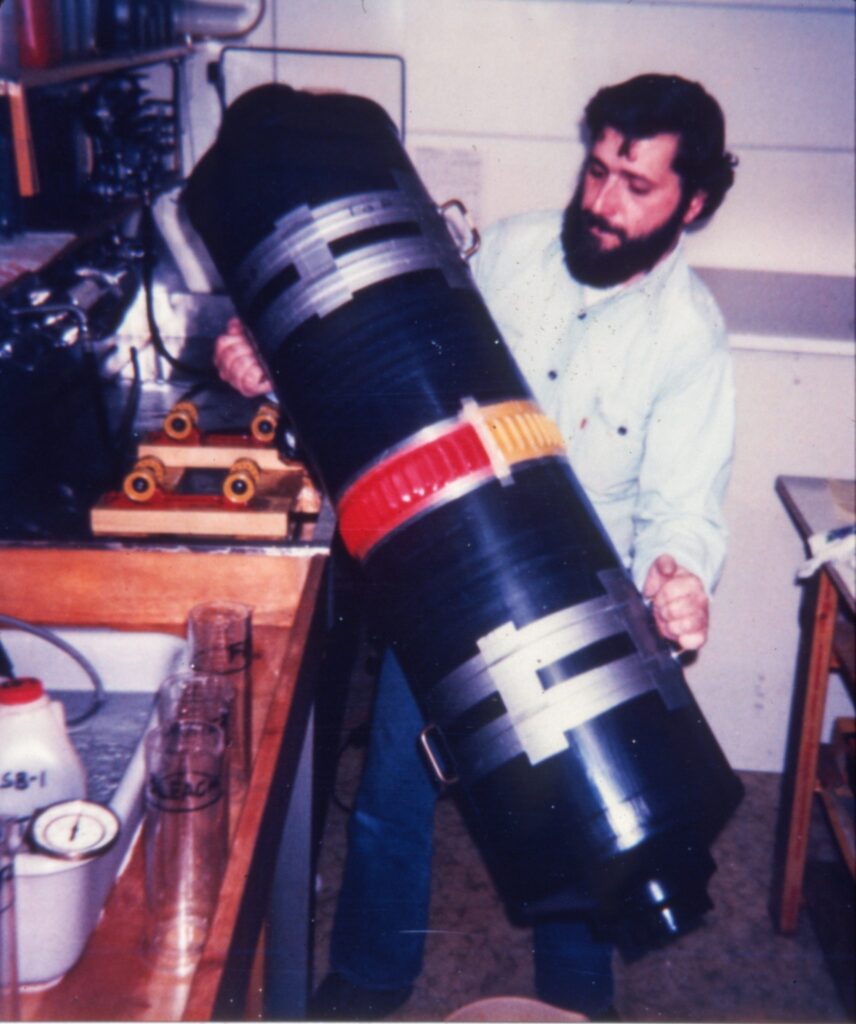
Mati Maldre is a retired Professor of Art/Photography from Chicago State University, having started the photography program there, teaching for thirty-five years. Viewing his books or the galleries on his site reveals a comprehensive timeline, from the late ‘60s to 2023. But let’s examine the whole picture, so to speak.
His path to this career began with a difficult childhood. Born in 1947, Maldre came to the United States as a refugee (from a DP camp in Geestacht, Germany) in 1950 with his mother, Pauline. Maldre recounts, “My natural father, Elmer Maldre left us in 1949, so my mother had to place me in a children’s home near Chicago when she settled in the city.” The isolation of this experience forced him to learn English rapidly, resulting in a total loss of his native Estonian and German, a linguistic barrier he says persists despite later efforts, including being confirmed in the Estonian Lutheran Church, being a member in an Estonian scout troop, and attending Estonian summer camp outside of Toronto as a child.
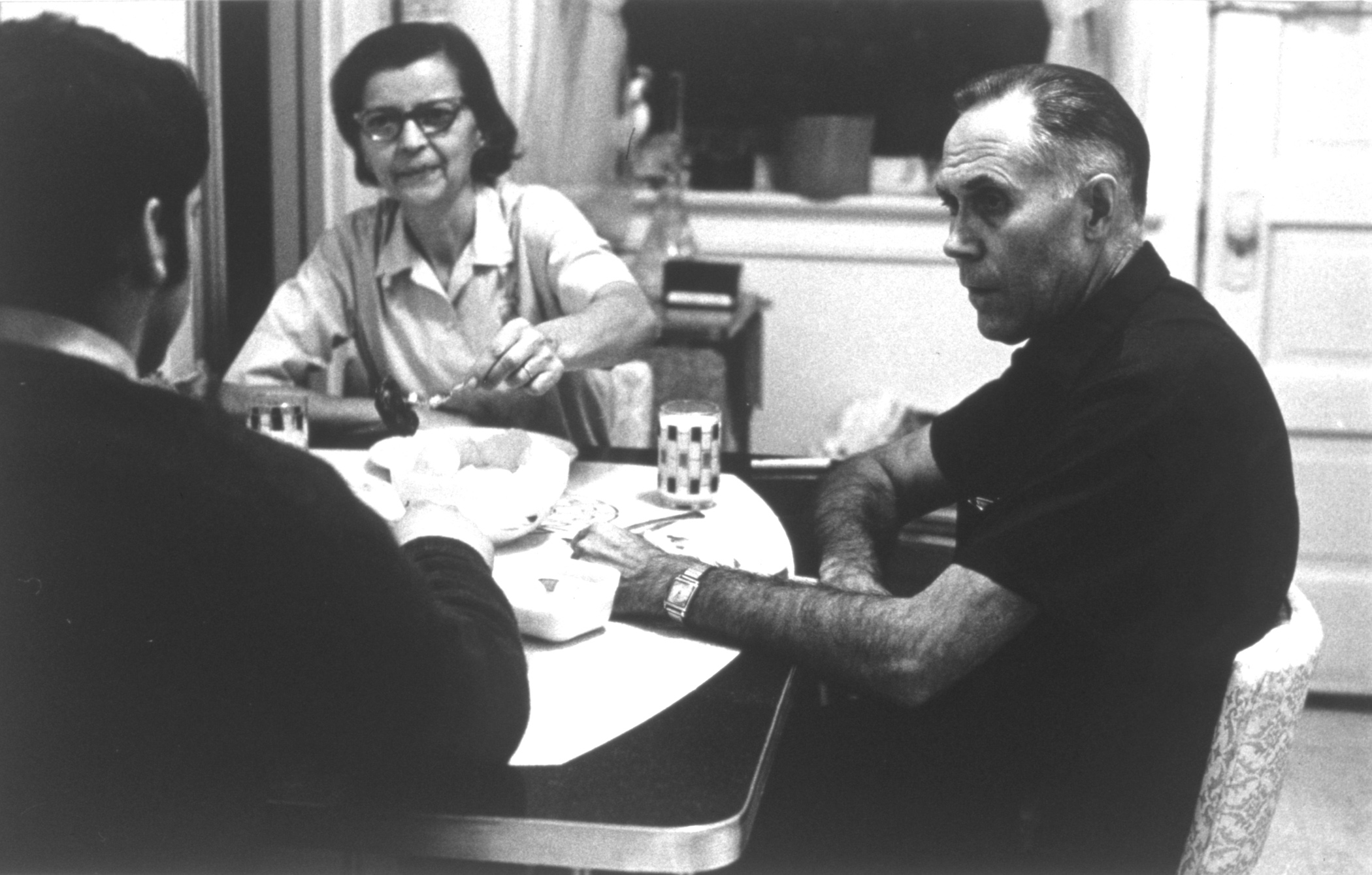
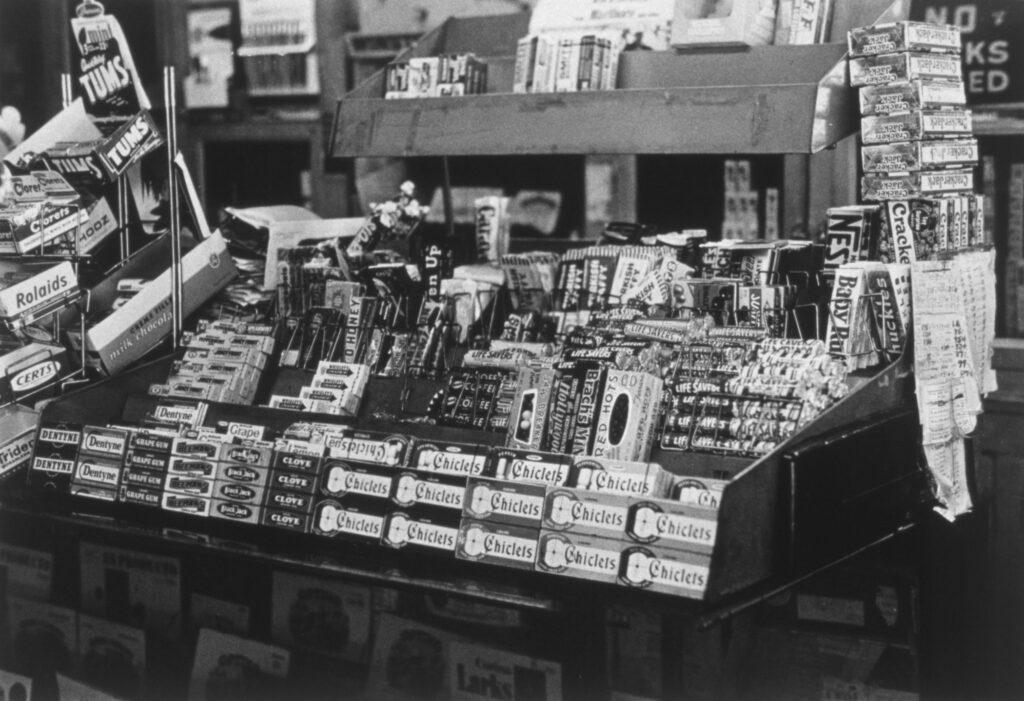
The “Ema ja Isa” (“Mom and Dad”) series and the “Devon Lakewood Sweet Shop, Chicago” series are some of his more “slice of life” shots… One can imagine or remember being in those retro scenes.
After attending Lane Technical High School, he initially studied engineering at the University of Illinois at Chicago but switched to art and design after a single photography elective. He eventually earned his graduate degree from the School of Design at IIT.
Among Maldre’s earlier work, structure emerges. The “Alphabet Study” series isolates details like pipe bends and staircase shadows, where he found the shapes of the alphabet. The “Ema ja Isa” (“Mom and Dad”) series and the “Devon Lakewood Sweet Shop, Chicago” series are some of his more “slice of life” shots, which are enjoyable for their simplicity. One can imagine or remember being in those retro scenes.
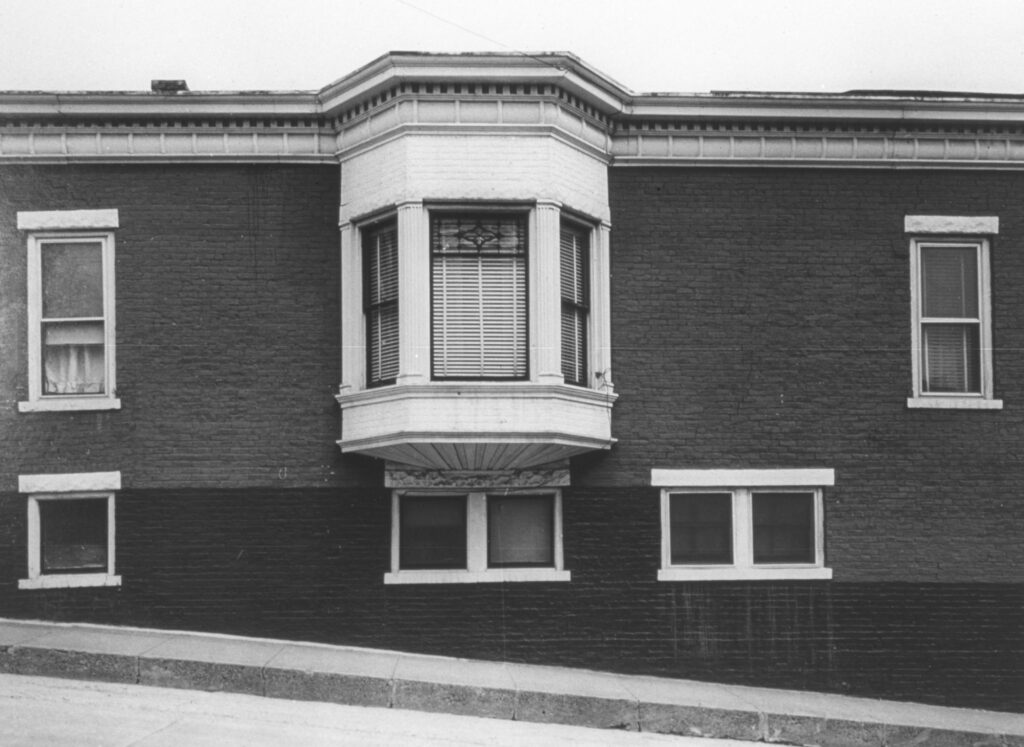
But Maldre’s specialization, architecture, appears to take hold in 1972, with deserted scenes of grand century homes, lonely shop fronts, and sloped streets in Galena, Illinois, a small former steamboat town on the Mississippi River.
An admiration of buildings and their position on the land makes sense of his most-used equipment, the 4×5/5×7 Deardorff view camera, which requires a slow, concentrated approach to composition. In the preface to his forthcoming book, The Architecture of Chicago’s Beverly Hills/Morgan Park, Maldre explains that this large-format perspective allows him to record the “special relationships” between individual structures and their landscape. His work is a meticulous study of how man-made environments interact with natural topography. He notes that the Beverly Hills/Morgan Park area is unique because it sits on a glacial ridge, offering winding streets and wooded glens that break from the rigid 90-degree grid typically associated with Chicago.
Often, the focus has been on the designs of Walter Burley Griffin, a contemporary of Frank Lloyd Wright. Maldre, in fact, lives in a house designed by the architect.
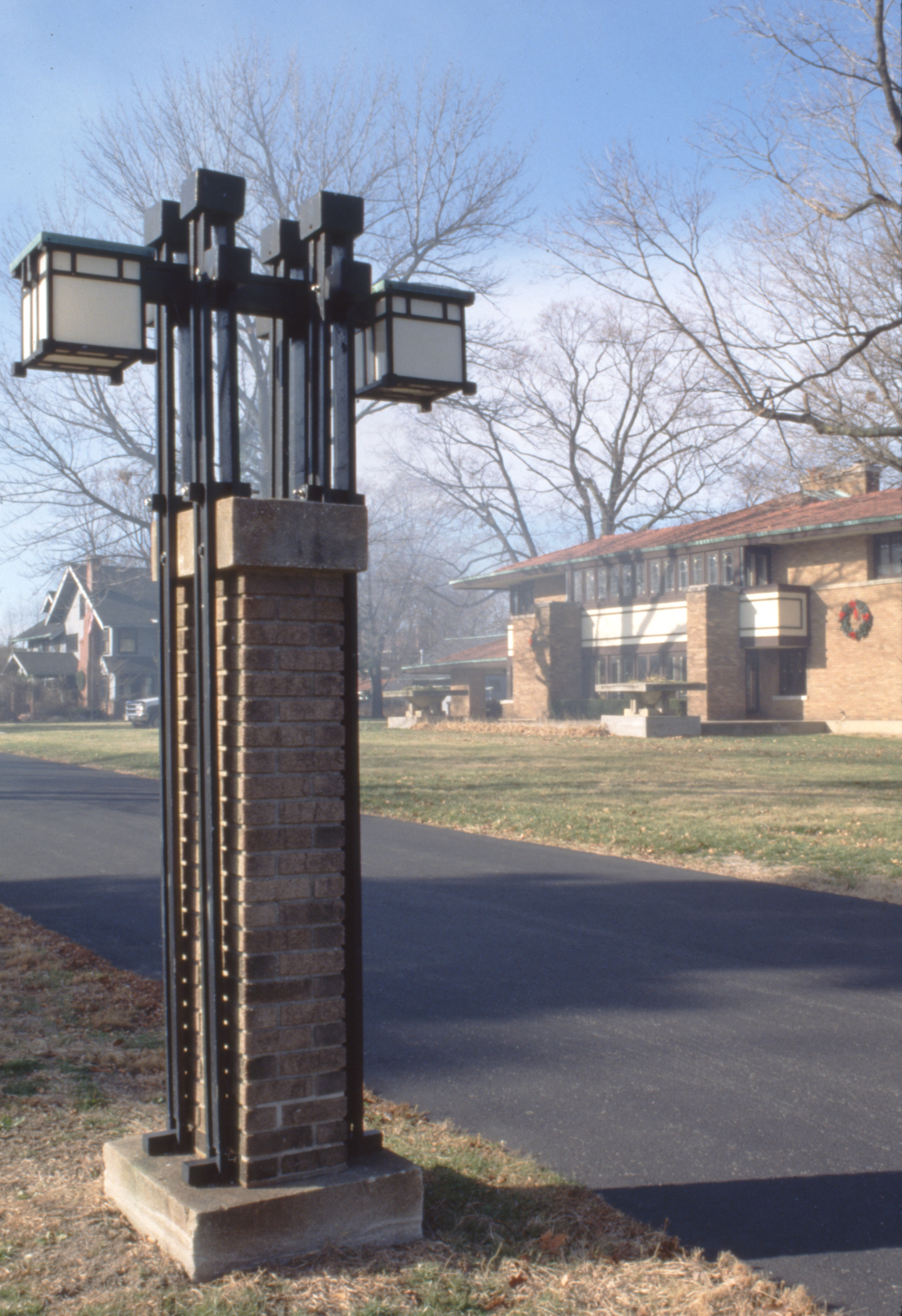
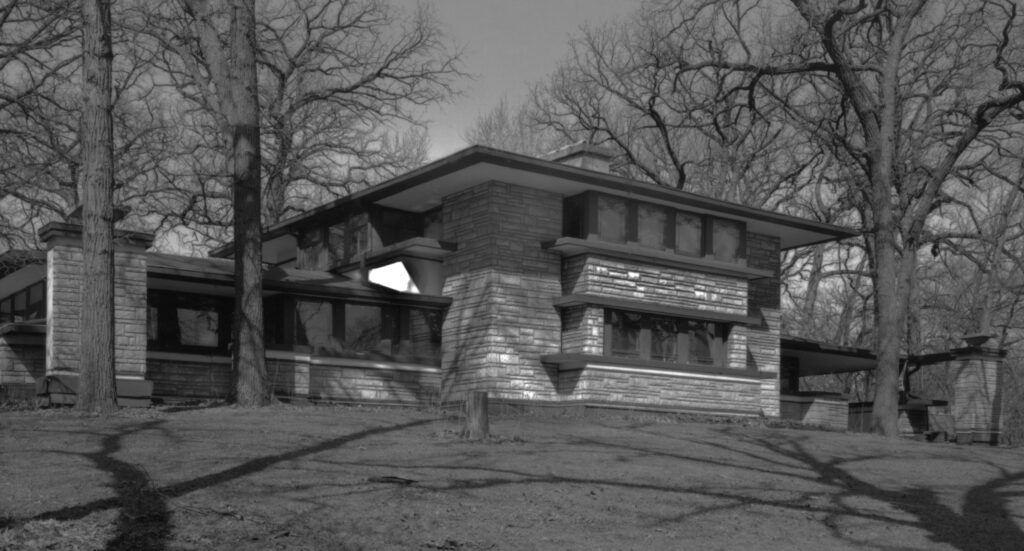
Notable among his architectural photographs is the soft horizontal reach of Prairie-style homes and non-residential buildings. Often, the focus has been on the designs of Walter Burley Griffin, a contemporary of Frank Lloyd Wright. Maldre, in fact, lives in a house designed by the architect. His photography of Griffin’s work spans continents, including projects in Australia (where Walter Burley Griffin and Marion Mahony Griffin designed Australia’s capital, Canberra) and India, supported by a National Endowment for the Arts grant.
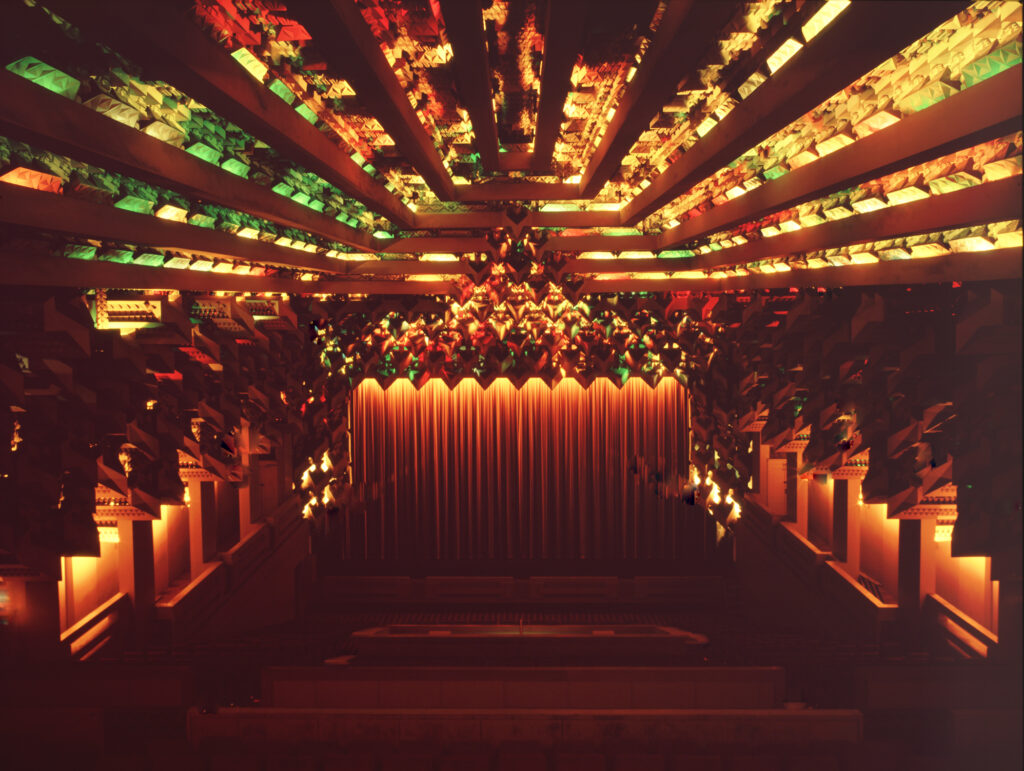
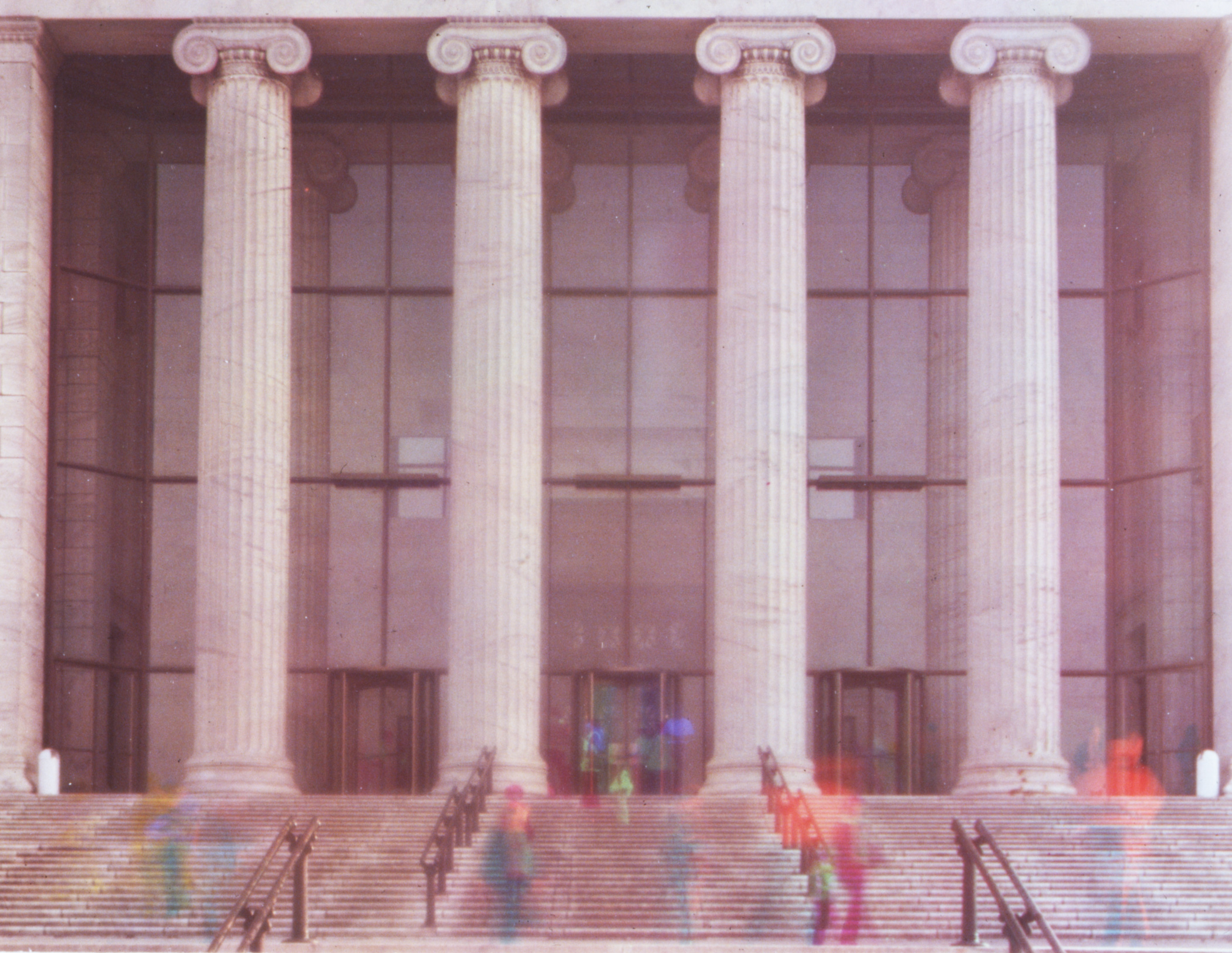
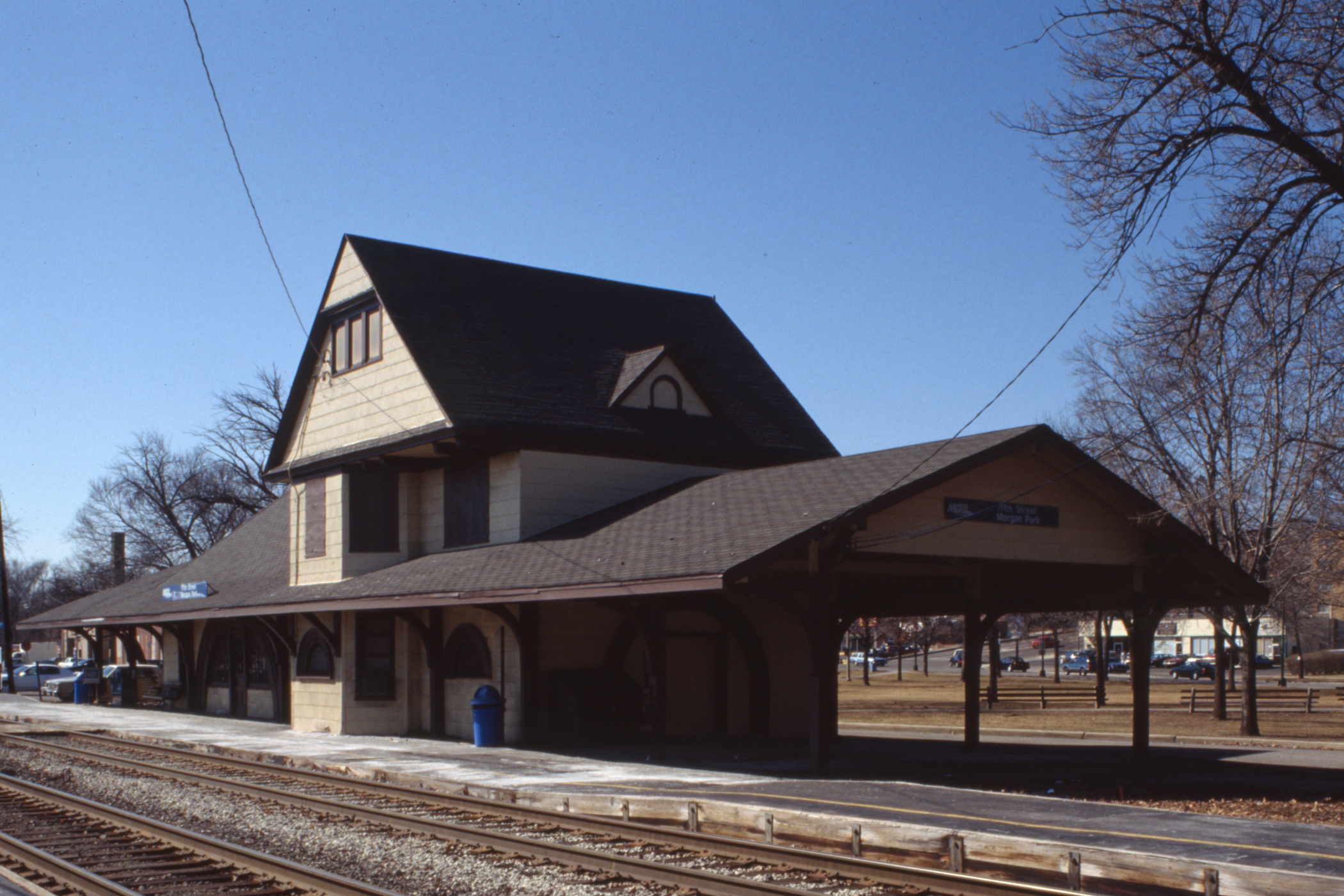
In Chicago, Maldre’s photos capture a city that is at times an architectural library—like the entry to the Field Museum, a temple of knowledge that’s equally meaningful to schoolchildren, historians, and art school students looking for inspiration—or an archive of industrial victories. Then again, the city can be humble. A bit rough. Or just practical, like a Metra rail station in the “Beverly Hills/Morgan Park” series, a frequent sight when commuting into the city from the suburbs around Chicago. The clarity of the large-format film grants structures, one and all, a certain dignity.
Maldre has published several books, including The Chicago Bungalow and Walter Burley Griffin in America. His newest project, The Architecture of Chicago’s Beverly Hills/Morgan Park, to be published by Belt Publishing, focuses on the specific urban area he has called home for decades. In the preface, he describes his goal as coupling a “firm respect for the subject’s integrity” with the “architect’s intent.” His focus remains on the “collective visual richness” of the area.
With his hometown as evidence, it can’t be overstated that well-designed, crafted buildings really do enrich us.
Fotogalerii