Tartu lies closer to Latvia than Tallinn [and is on the way to Lithuania]; a lot of Jews came here with and without permits. There were 1,774 Jews in 1897 in Tartu — much more than in Tallinn. During the years of the Estonian Republic, the number of Jews progressively decreased and in 1934, there were 990 Jews left in Tartu.
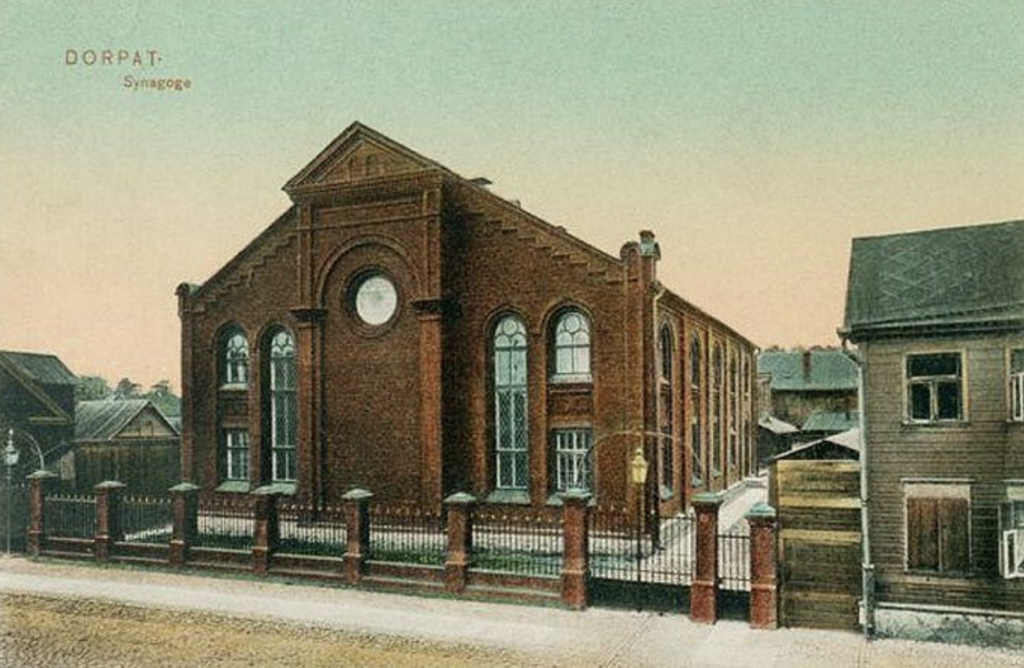
The first synagogue of Tartu was housed in a wooden building on Turu Street; it was opened in 1876. Money came, as was usual in these days, by selling [reserved] seats along the eastern wall. By selling the next two seat-rows, it was possible to widen the synagogue in 1878. By then, the synagogue possessed a new almemar [platform for readings].
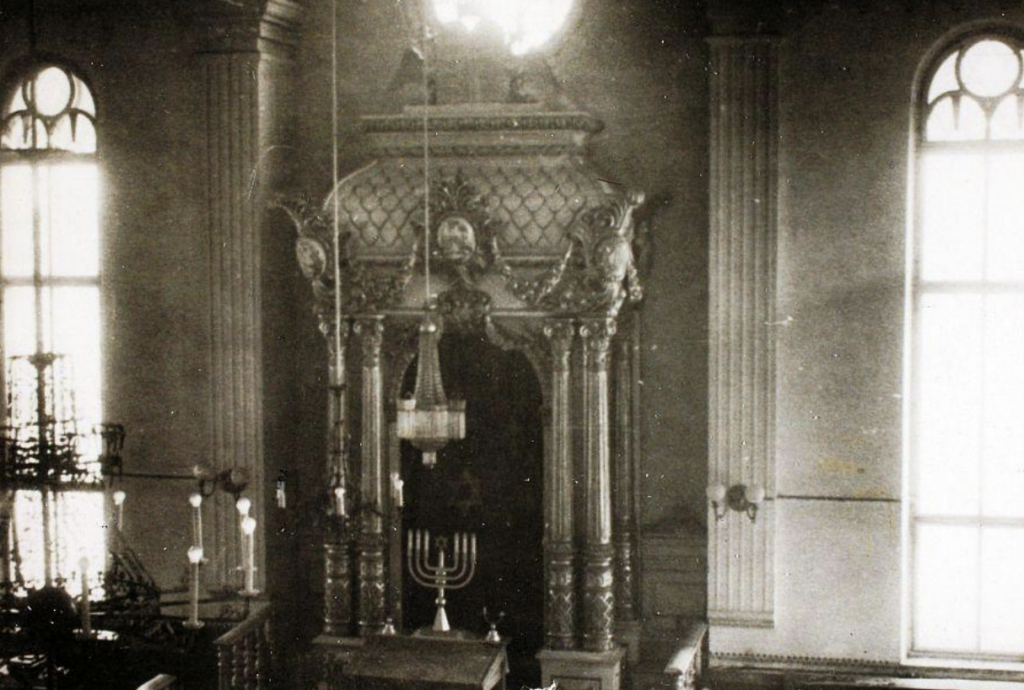
This synagogue did not satisfy the needs of the Tartu community and a festive cornerstone-placing ceremony for a new stone synagogue took place on the same street in 1909. The architect was Robert Pohlmann (born in 1868 in Tartu), who studied in Germany and worked in Tartu from 1894 to 1914. Tartu’s synagogue was smaller and simpler than that of Tallinn. It was a saddle-roofed rectangular red brick building in the Neo-Romanesque style. The narrower end façade opened onto Turu street. The place of Aron Hakodesh was marked on the street facade by a projecting avant-corps, decorated by a triumphal arch with a rounded window in the middle. On two sides there were high, round-arched windows. The longer yard facade was jointed by hood molded arched windows. The main entrance was in the southern facade. On three sides the hall was surrounded by women’s galleries supported on pillars.
Miraculously, almost all ritual and ceremonial objects of the Tartu Synagogue have been saved. 132 relics are held in Tartu in the Estonian National Museum. It is known that the Jewish relics of culture were saved mainly by two outstanding figures of Estonian culture: Uku Masing (1909-1985) and Paul Ariste (1905-1990).
They were able to convince the book loving German that burning these books would be a sin and the antiquarian composed a letter signed by Masing and Ariste that burning had been successfully completed. The antiquarian left for Germany and all Jewish libraries were saved. Ariste managed to rescue several big Torah scrolls, held now in the Estonian National Museum and in the archives of the University of Tartu.
Uku Masing was a theological professor at the University of Tartu, who specialized in the Old Testament. He was dedicated to scientific research work and poetry when ignored by the Communist order during the post-war years. The real greatness and amount of Uku Masing’s scientific and literary work became evident only recently.
Paul Ariste was an outstanding linguist and an internationally acknowledged specialist on Finno-Ugrian languages. He spoke tens of languages fluently, including Yiddish.
Both of them were devotees of Jewish culture and real humanists risking a lot when organized the saving of the Jewish cultural valuables during the German occupation. In one case, an antiquarian was sent to Estonia from Leipzig, Germany to burn all Jewish libraries including precious libraries of Jewish societies. These libraries had been previously collected at the library of the University of Tartu by Ariste and Masing. They were able to convince the book loving German that burning these books would be a sin and the antiquarian composed a letter signed by Masing and Ariste that burning had been successfully completed. The antiquarian left for Germany and all Jewish libraries were saved. Ariste managed to rescue several big Torah scrolls, held now in the Estonian National Museum and in the archives of the University of Tartu.
It’s a pity that the masterful wood-carved Neo-Baroque Aron Hakodesh had been destroyed together with the Tartu Synagogue during the war.
Perhaps the most interesting [Jewish] building in Estonia is the chapel- mausoleum of Schaje Levinovitsh, the longstanding chairman of the Tallinn Jewish community, in the Jewish cemetery on Magasini street. This building was demolished at the beginning of 1960s during the liquidation of the old Jewish cemetery, replacing it with a motor depot. The old Christian cemeteries of Kopli and Kalamaja were destroyed at the same time, clearly demonstrating the anti-cultural policy of the ruling order.
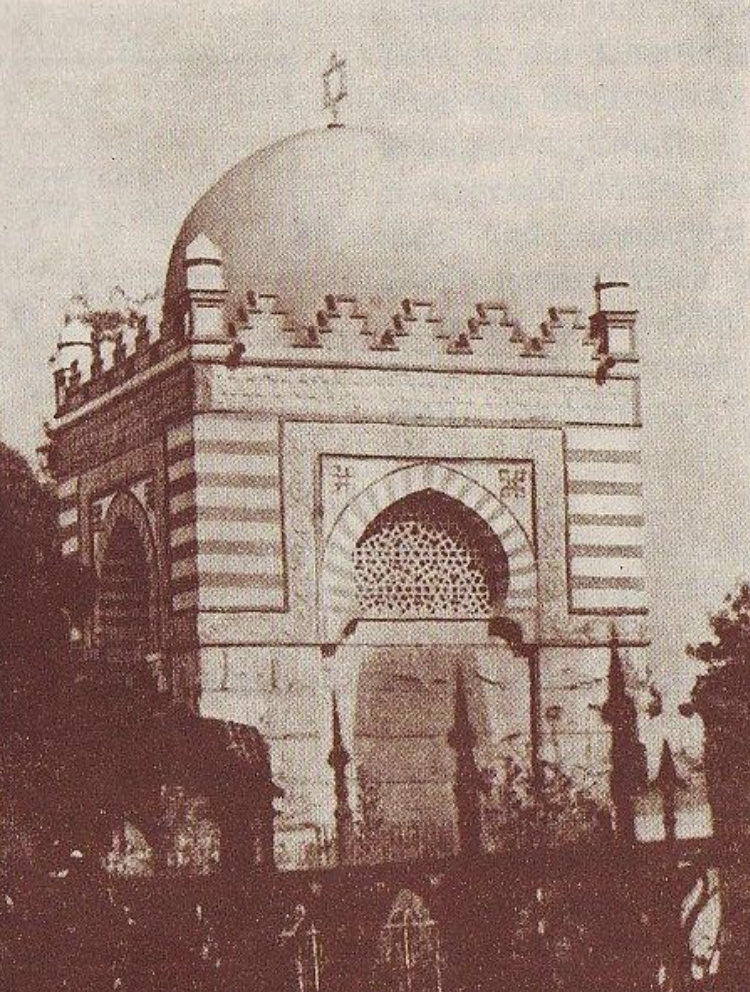
The mausoleum was planned by local Baltic German architect Jaques Rosenbaum in 1908 and was built by the end of 1910. Jaques Rosenbaum (1878-1943) was an outstanding figure among Tallinn’s architects. He studied at Riga Polytechnical Institute from 1898-1904, worked in Tartu at first, and in Tallinn from 1907. He built factories, schools, hospitals, dwelling houses, and villas. Rosenbaum was the representative of the decorative direction of the Juugend (Art Nouveau) style, preferring façades with rich ornamental and figurative decor. Rosenbaum was a perfectly suitable person for designing a mausoleum, as he could manipulate different styles.
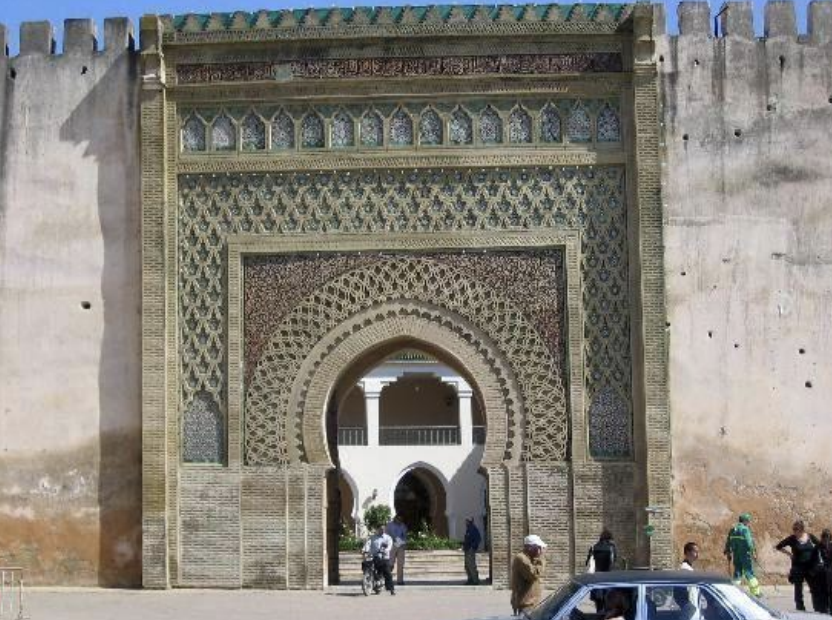
The shape of the mausoleum comes from the traditions of Moorish architecture. An example followed by Rosenbaum is the Meknes town gate in Morocco. The chapel is a 6.5 metre high stone building with a square floor plan. The upper part is built up with plain blocks. Facades are decorated with horseshoe arches with an azure ornamental lattice in their tympanums [semi-circular walls] that let the light inside. The horseshoe arches were surrounded by ornamental belts with typical Islamic ornamental motifs. A gilded Star of David was at the top of the cupola. Corners were accented with little towers.
As you can see, synagogues in Estonia were designed by Baltic German architects. These were not outstanding buildings. They showed an average level of local architecture. But nevertheless, even like this they are interesting examples of synagogue architecture around the turn of the century.