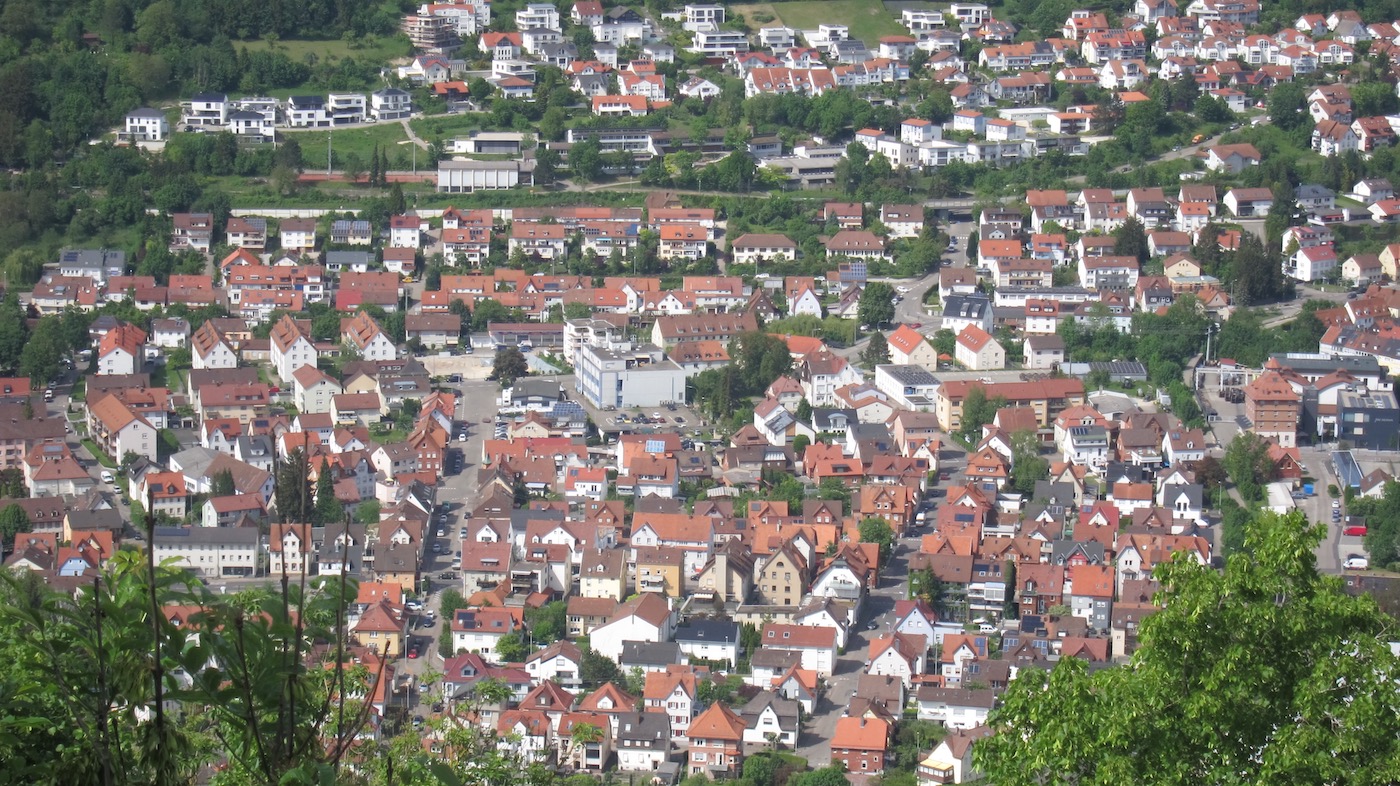
On the morning of May 22, bypassing Stuttgart, the regional capital of Baden-Württemburg and its largest city, also the headquarters of Mercedes-Benz and Porsche, we took the most direct route to Geislingen an der Steige ,the small town where I had spent nearly three of my earliest years in a refugee camp after WW ll. (“Steige” can be translated as “steep incline,” and is a reference to an important trade route from the five lower valleys up to the plateau of the Swabian Jura mountains that has connected the Rhine Valley to the Mediterranean since the fifth century.
In the immediate aftermath of the Second World War, when more than a million refugees were on the move in Europe, Geislingen became the largest DP camp for Estonians with 4,400 residents. One of 69 such camps established by the U.S. Army and run by the United Nations Relief and Rehabilitation Agency (UNRRA) and the International Refugee Organization (IRO), the camp occupied three of the town’s districts in houses from which the German residents had been expelled by the U.S. Army. There is some indication that those districts were chosen deliberately due to their heavy support of the National Socialist (Nazi) Party in the 1930s.
I had no idea what to expect. I was six months old when we arrived in Germany from Estonia, and only 4 years and nine months old when we left in December, 1948. Almost 75 years had passed since then. I had no real memories of the place, only a few scattered images put into my head by the handful of photographs my parents had managed to preserve. I had no idea which houses we had stayed in, other than that there were two of them in two different districts — six months in Rappenäcker and 2 1/2 years in Wilhelmshöhe on Karl Strasse, a long street that climbed up one of the hills. It had never occurred to me to ask my parents where we had lived, and they obviously didn’t think it necessary to write down or volunteer that kind of information.
… I thought that it would be amazing to breathe the air and walk along streets where I may have toddled hand-in-hand with Ema or Tädi. That alone, I thought, would be enough to warrant the trip…
Only after they died 30 years ago, when I started to research our family history, did I begin to take interest in such things, but it was too late. I was able to contact a few other people who had been in Geislingen, but most of them were equally in the dark. (One of the things I did learn at that time was that relatively few Geislingen Estonians had ended up in Canada, where most Estonians seem to have come via Sweden.)
So even though I didn’t expect any cathartic experience, I thought that it would be amazing to breathe the air and walk along streets where I may have toddled hand-in-hand with Ema or Tädi. That alone, I thought, would be enough to warrant the trip.
Another problem was that when we had drawn up the itinerary for this trip, I had paid no attention to which days we would be in the six places we were planning to visit. Unfortunately, we ended up in Geislingen on a Sunday, when almost everything was closed, especially the official establishments (city hall, tourist offices, libraries, schools etc.) so it ended up being nearly impossible to find anyone to talk to.
The first people we met – in a cafe on the corner of the pedestrianized main street – turned out to be representative of the new waves of immigrants who have settled in Germany in recent years: two Kosovars who were working on construction projects in the area. They did speak halting English and were happy to learn that I had spent a couple of months in Pristina, but they had been in Germany for only four years and knew almost nothing about the town. A Turkish couple who ran a fast food outlet a little further up the street, where we stopped for lunch, were similarly uninformed. Only one other place was open on the main street, a French bistro called Le Petit Bonheur, where we found the lovely Felicia, a tattooed thirtyish self-styled shaman, who had spent time travelling abroad and spoke fluent English. More to the point, she was a native of the area.
She didn’t know any Estonians nor anything about what had happened in the town 75 years ago, but was able to guide us to the main church, the old schoolhouse, and the cemetery, where she believed there was an Estonian monument. She also had a consignment of little knitted hens (?) that she was selling as a favor to a local craftswoman. These turned out to be the only souvenirs we were able to buy, to go with a handful of beer coasters from the local Kaiser brauerei that she gave us, and a few local stones that I picked up outside.
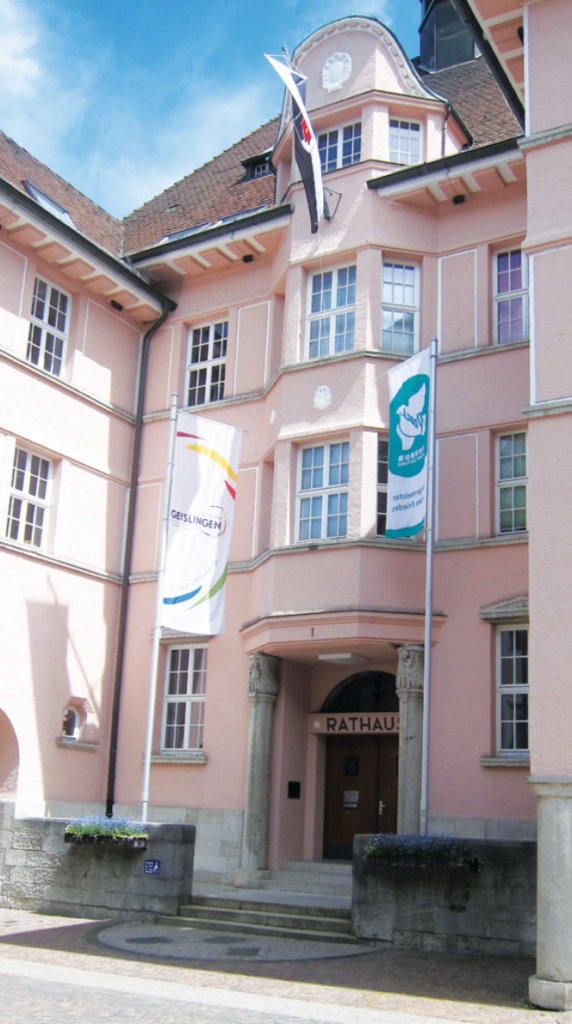
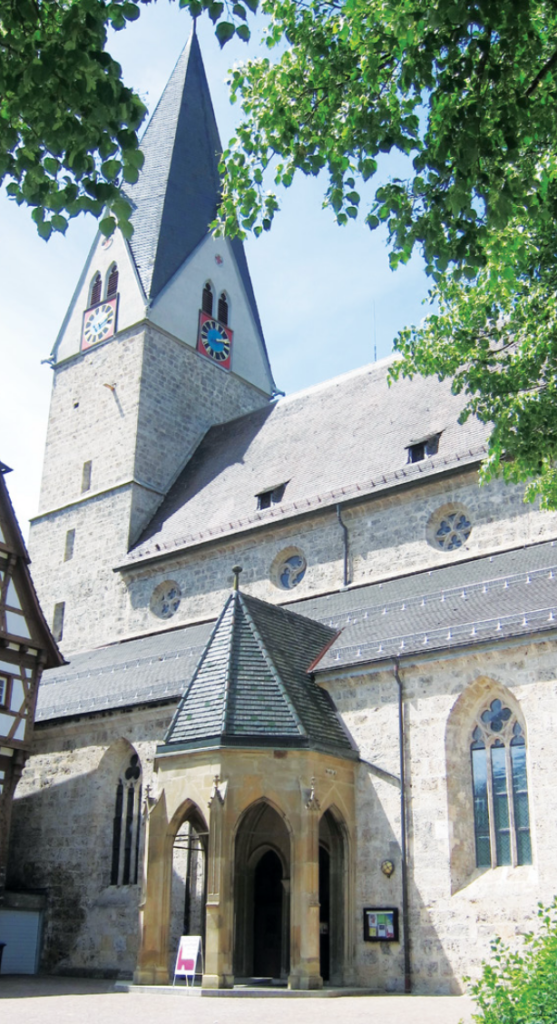
We wandered around the central area for a couple of hours, taking photographs of the main street, the Rathaus and the old school, as well as the large old Evangelische Stadtkirche, a Reformation era Gothic church where I am fairly certain that father occasionally preached and shared services with the other seven Estonian Lutheran pastors in the camp. We also drove the length of Karlstrasse up the mountain side but because the town is much modernized and bigger now than it was 75 years ago, I came no closer to understanding where we might have lived.
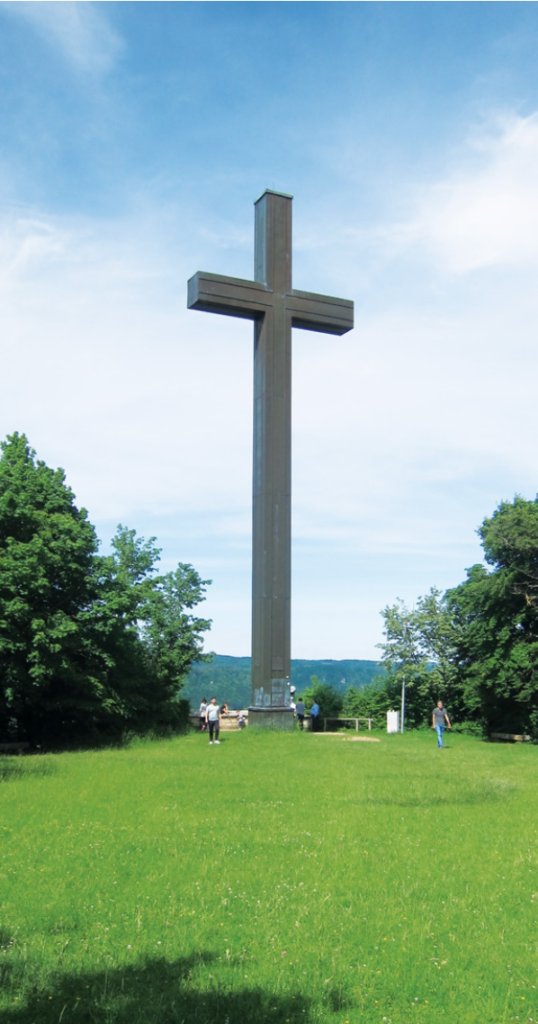
We did, however, park near the top and hike a kilometer or so to the tall iron cross that is visible from all parts of the town below, much like the cross on Mount Royal.
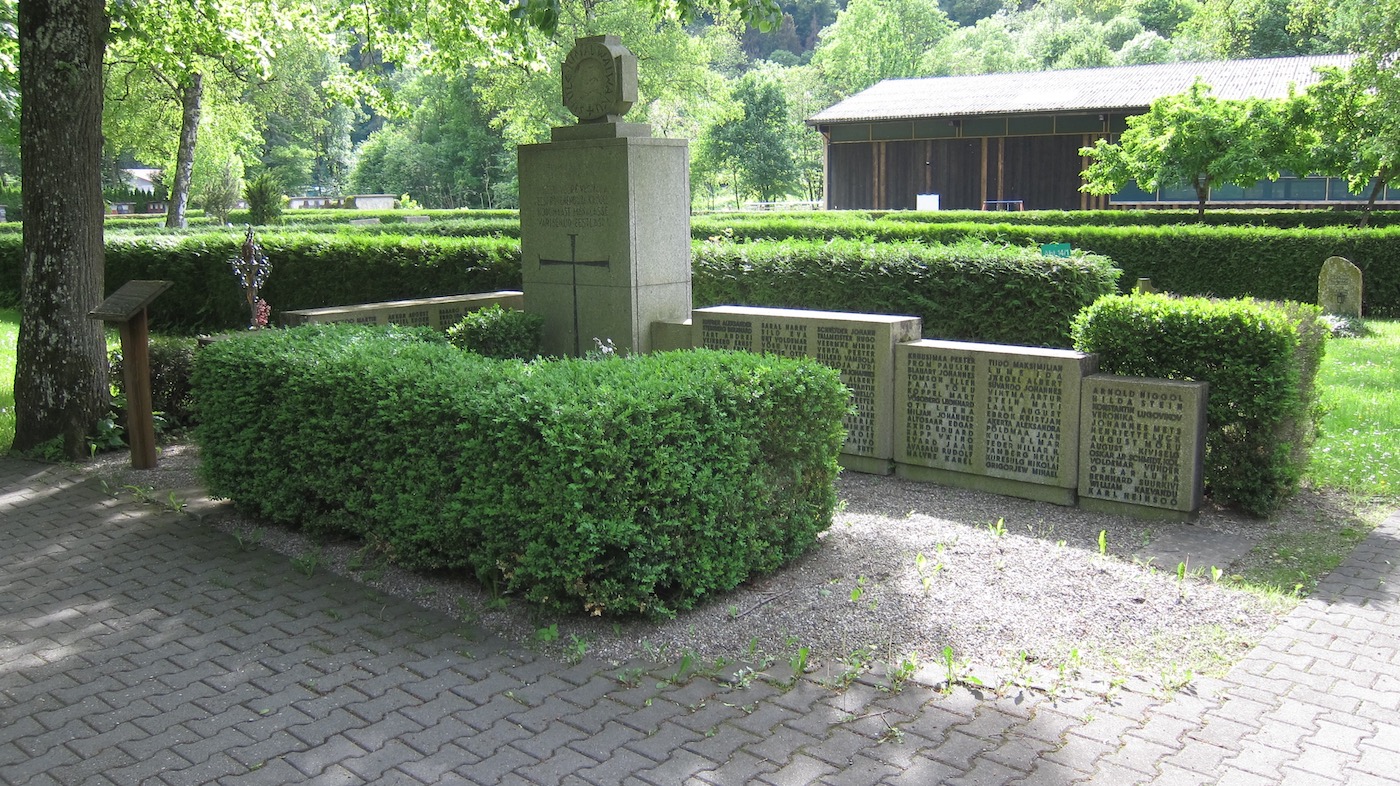
For our last destination, we fittingly reserved the cemetery, where we eventually found the monument to the 154 Estonians who had ended their life’s journey in the camp. We almost didn’t, because the half-dozen burly cemetery workers drinking vodka whose “coffee break” we had interrupted didn’t seem to know what we were talking about. We persisted until finally one of them, who had a little more English than the others, remembered that some “Estonian bigshot” had visited the cemetery maybe 10 years ago. He thought we might find what we were looking for at the far end of the cemetery.
We followed his directions as best we could, but without success. On a different path on the way back to the car, I spotted something that seemed worth looking at more closely. And it did, in fact, turn out to be the white marble monument erected just before the camp was closed in 1950. As I found out later, it had been visited in 2000 by the then Estonian President Lennart Meri, who was on a state visit to Germany. While we were examining the names on the memorial, three German men in perhaps their 50s or 60s passed by and stopped to ask us what the monument was about. They knew enough English to follow my explanation, but even though they were lifelong residents of Geislingen, none of them had known anything about the Estonian camp of 75 years ago.
In 2008, when 22 former camp residents led by Mai Maddisson, who subsequently compiled a book about the children in the camp, visited the town, only 15 Estonians still lived in Geislingen, Today no one seems to know whether any of them are still alive. It may well be that the only visible reminder of the Estonian presence in the town is this memorial. On leaving, as I turned for a last lingering look, my eyes were drawn to the foot of the monument where a small glass jar held a few faded plastic flowers.
Enn Raudsepp, Montreal