Subscribe Menu

Glehn Park Journal: A Forest Walk Through Myth and Memory

(A story from the series “Off the Beaten Track: Hidden Places of Estonia”)
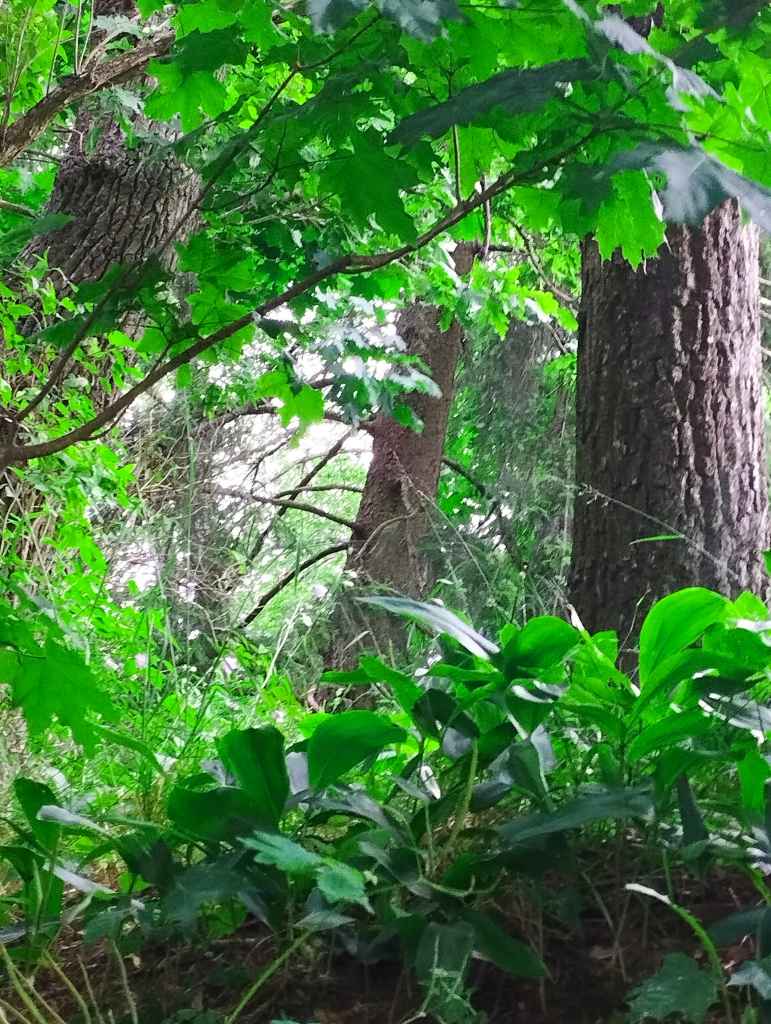
Lush foliage in the heart of Glehn Park (photo: Jerry Mercury)

Are you planning to visit Estonia’s capital but feel drained by the thought of crowds, loud music, and curated souvenir stalls? Do you long for something more hidden, more contemplative; a quiet piece of Estonia, untouched by commercial folklore, historical without becoming a museum? If you are looking to escape into nature without leaving the city but feel uninspired by regular urban parks — then perhaps what you are looking for is Glehn Park. A place that calls itself a park, but in truth is a forest. And not just any forest, but one envisioned by a man who dreamed of building a city from scratch.

In Estonian, “Nõmme” means a dry, elevated landscape, a kind of sandy heath or pine-covered rise above the lowlands.

Glehn Park, named after the Baltic German aristocrat and eccentric architect Nikolai von Glehn (1841–1923), is located just outside the center of Tallinn. Today it’s a wild mix of mossy stones, fantasy towers, half-forgotten sculptures, and winding forest trails. It was built in the early 1900s as part of von Glehn’s utopian vision for the settlement of Nõmme. In Estonian, “Nõmme” means a dry, elevated landscape, a kind of sandy heath or pine-covered rise above the lowlands.
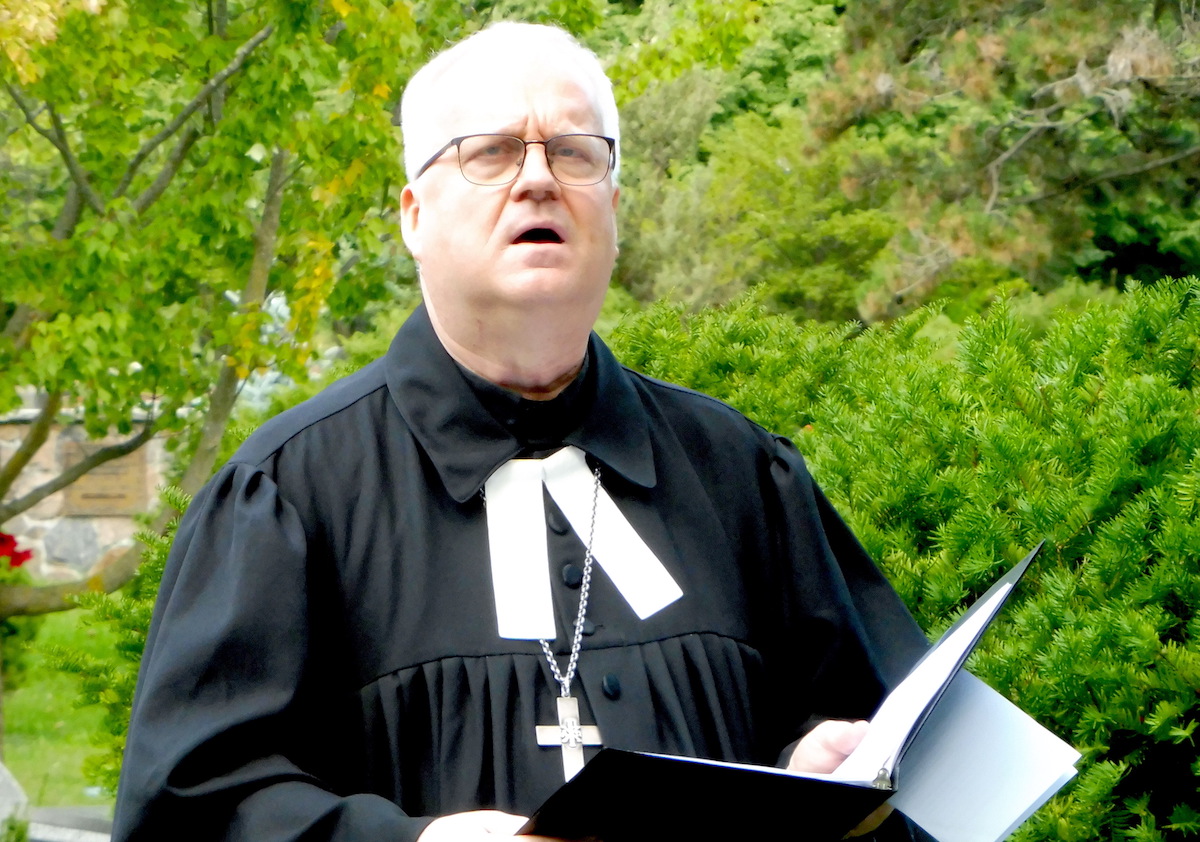
Nikolai von Glehn (photo: G. Oskar, from Harju County Museum [public domain via Wikimedia Commons])

Glehn’s dream became real: the district of Nõmme grew and flourished. But the forest he planted at its heart (known now as Glehn Park) became something else—not the civic center he once imagined, but something wilder, harder to define, and somehow closer to the soul.

Wild water and quiet woods in Glehn Park (photo: Jerry Mercury)

The bridge, the spring, and the tower

I decided to visit Glehn Park on a warm summer day. As I stepped onto the path and into the green world of trees, I felt something was already waiting for me. Something quiet and unexpected. The first thing I saw was a bridge above the road, a concrete structure with curved wooden railings. But what I saw, at first, was not a bridge at all. It looked like an overturned boat, resting among the trees. Only after looking again, a little wistfully, did I recognize it for what it was. I walked beneath it to see what lay ahead.

A bridge in Glehn Park, its wooden railing gently curved, echoing the hull of an upturned boat (photo: Jerry Mercury)

Just to the left of the path, beyond the bridge, a narrow stream was running. Later I found out that it was called the “Spring of Joy.” I stepped into its icy water. Ferns, grasses, and the cool shadows of the trees and their branches surrounded me. For a brief moment, I imagined something else: a wide tropical river, bordered by tangled greenery, with wooden canoes gliding downstream. The curved shape of the bridge’s railings seemed to echo the idea of those boats.

The Spring of Joy (Rõõmuallikas), nestled in Glehn Park (photo: Jerry Mercury)
The Spring of Joy (rõõmuallikas), nestled in Glehn Park (photo: Jerry Mercury)

I continued uphill, moving toward the area where most of Glehn Park’s monuments are located. Here and there, bicycles sped past without warning. It was clear I had to stay alert. At the top of the hill, rising among the pines, stood a tower. With its rough stone walls and domed roof, it looked almost medieval, or like something out of a fantasy novel. The tower was closed. The forest around it was deeply still. A kind of listening silence. A place that asked you to slow down. I stepped a little to the side and noticed something else: in one of the upper windows, there was a stack of books. What kind of books were they? I wondered…

Approaching the stone tower through the woods of Glehn Park (photo: Jerry Mercury)

The small sign in front, written in Estonian, told of the history of the building. Known locally as the “Star Tower” (tähetorn), the structure was built in 1910, originally intended to reach a height of 43 metres. But construction stopped at twenty-five metres after a disagreement with the builder over how to continue the upper section. The rooms inside were meant to be rented out, yet no tenants came. Instead, the tower was used to store apples and served as a viewing point. On sunny days, one could see as far as Finland from the top. In the 1920s, it was ransacked, as Glehn fell under suspicion of collaborating with the Germans. During the Soviet occupation, the structure was restored and repurposed as an astronomical observatory, and for a time, a telescope occupied its upper level. The tower now belongs to Tallinn University of Technology, though it remains closed to the public.

The Star Tower (tähetorn) in Glehn Park (photo: Jerry Mercury)

Kalevipoeg, the dragon, and their broken older versions

From the tower, a winding path led me back into the woods and toward the most iconic, most enigmatic sculptures in the park. As I stepped into a clearing, the first thing I saw was a massive stone figure. A man, or a giant? His head seemed to be crowned with horns. Only later did I realize it was a helmet. This was Kalevipoeg, the mythic Estonian hero—part warrior, part wanderer.

The sculpture is known as Kalevipoeg, though locals sometimes call it Glehn’s Devil. It was originally created by Nikolai von Glehn himself in the early 20th century. The horned helmet was not a joke. It came from the children’s books Glehn had read, where all true heroes wore horns.

Kalevipoeg as he stands today in Glehn Park (photo: Jerry Mercury)

Further from the statue of Kalevipoeg lay pieces of some sculpture, scattered across a stone platform. These fragments filled me with surprise and confusion. There was a kind of vulnerability in them, strangely left on display. Later I found out that behind this debris and the figure of Kalevipoeg towering above them lies a story.

Archival photos show Nikolai von Glehn building the sculpture of Kalevipoeg with his own hands, during the early years of the twentieth century. Some say the statue was a kind of self-portrait. Glehn reportedly calculated its size by multiplying his own height by four. But his estimates were off. The nearly finished sculpture toppled over backwards. Undeterred, Glehn had it raised and reinforced by placing a staff in the hero’s hand.

The statue was destroyed during World War I, allegedly by Russian troops. It was never rebuilt by Glehn himself. The version that stands today, made in 1990, is a near replica of the original and is now part of Estonia’s State Register of Cultural Monuments. However, why the broken pieces of the original statue were left there and what it meant remain unclear.

Fragments of the earlier Kalevipoeg statue, still lying near the current one (photo: Jerry Mercury)

A little further away, by a quiet clearing, stood a lizard sculpture, or perhaps a crocodile, its tongue painted blood red. Not far from it, another head of the same kind emerged from the ground like a warning or a memory. This one had a tongue too: grey, unpainted, as if it had been left that way on purpose. I paused for a moment, imagining it as the mouth of a spring that might once have flowed here and later vanished. There was no water, of course. But the way the stones were arranged around the head looked like the outline of a dry mouth of a vanished spring, as if the creature was guarding the silence where water once spoke. I learned that the creature was originally meant to be a dragon, though locals quickly began calling it a crocodile. The first version of the dragon’s head turned out to be too heavy and broke off. Glehn replaced it with a lighter one, and buried the original nearby in such a way that it looked as if a second beast was emerging from underground, rising to aid its companion in some silent act of menace.

In the foreground is the dragon’s original head, half-buried in the ground. In the background is the full sculpture (photo: Jerry Mercury)

According to Glehn’s design, the dragon and Kalevipoeg were part of the same mythic tableau. The creature was meant to crouch behind the hero, not just as an adversary, but as a lurking presence, watching him from the shadows. The idea, like much in the park, was drawn from Germanic legends, especially the Nibelungenlied, where danger often arrives from behind.

Glehn’s dragon sculpture (photo: Jerry Mercury)

The castle as the embassy of silence

From the dragon and Kalevipoeg, I walked toward what looked at first like a fairytale fortress or a castle. A small stairway led uphill and through a stone arch to a plateau, where wooden benches stood beneath the trees. Just in front of the castle, a wooden door was set into the slope, likely an entrance to the basement, framed by carefully laid stonework, almost like a ceremonial gateway.

The castle itself stood with quiet dignity. Its towers and crenellated walls rose behind the trees. A flag of Estonia fluttered from the facade. If this park had been a miniature city-state—an independent state within Estonia—the castle might well have been the Estonian embassy there. But in our world, the castle is closed. Not abandoned, not ruined, just… waiting.

Glehn Castle with the stone arch nearby (photo: Jerry Mercury)

This building, known today as Glehn Castle, was built in 1886 by Nikolai von Glehn himself. He designed it in the style of a medieval knight’s stronghold and named it Hohenhaupt (High Head), a name echoing a 14th-century document that marked this hilltop as the border of Tallinn.

The building was originally intended to serve as the heart of a small farm; a modest estate where Glehn and his wife Caroline Henriette could raise cattle under the care of local shepherds. But its scale and symbolism quickly went beyond that. Glehn even made a land deal with the baron of Harku to expand his territory and secure the hillside he needed for his vision.

You might also recognize it from the screen: Glehn Castle appeared in Soviet adaptations of Sherlock Holmes as the infamous Baskerville Hall, and later in a Russian film about the Three Musketeers.

Construction was done by prisoners, transferred from Tallinn jail. After Glehn left Estonia in 1918, the estate fell into ruin. The castle was looted and left to decay until the 1960s, when a major restoration began. It was finally completed in 1977.

In the decades that followed, the building became a club, then an arts venue, and eventually a site for concerts and celebrations. Though it is closed to casual visitors, you can still rent the space for special events or catch a glimpse of its interior during one of the concerts held there.

You might also recognize it from the screen: Glehn Castle appeared in Soviet adaptations of Sherlock Holmes as the infamous Baskerville Hall, and later in a Russian film about the Three Musketeers.

The moss-covered mound of the Palm House

From the castle, I made my way toward a peculiar stone structure nestled in the greenery. A dark stone panel mounted into the wall indicated it was the Palm House, built in 1910 and partially restored in 2006. Still, there was no explanation for its name.

The vaulted entrance to Glehn’s Palmhouse (photo: Jerry Mercury)
The vaulted entrance to Glehn’s Palm House (photo: Jerry Mercury)

Inside, the Palm House felt like a crypt. The air was cool and damp. Ivy-like plants clung to the walls. The sky was visible through the open archways of the ceiling, casting soft light down onto the mossy stone.

It reminded me of the mound of Aslan from The Chronicles of Narnia, a place both sacred and wild. Textured. The kind of place one might stumble into in a dream. If you love quiet ruins, overgrown thresholds, and the feeling that the world might still contain secret rooms, this is a place worth finding.

Kenilworth ivy reclaiming the stones of the Palmhouse (photo: Jerry Mercury)
Kenilworth ivy reclaiming the stones of the Palm House (photo: Jerry Mercury)

Later I learned that Baron Glehn built the Palm House as part of a larger vision—a microcosm where nature, imagination, and architecture could meet. Its vaulted ceilings and columns were made from granite rubble and cement. The original roof had stained glass inserts, letting light pour in like it was from a kaleidoscope. Two small basins once stood inside, surrounded by exotic plants.

Not a single straight line interrupted the design, a choice that brings to mind the whimsical creations of Antoni Gaudí. The structure fell into ruin over the decades, but recent restoration has preserved a glimpse of that early 20th-century wonder.

Interior view of the Palmhouse roof (photo: Jerry Mercury)
Interior view of the Palm House roof (photo: Jerry Mercury)

A monument without a name

Not far from the Palm House, I noticed a tall, lonely obelisk rising among the trees. I walked closer hoping for a marker of some kind, anything that might explain its presence. There were four bolt holes in the stone. At some point, there must have been a sign. Now, the only marker was a small metal plate with a trail number: one of the stations on the Nõmme-Harku Health Trail, which winds through the park.

This monument, sometimes called the Glehn Obelisk, is believed to be a gravestone. No one knows exactly what lies beneath. Some say it marks the grave of Glehn’s favourite horse. Others believe it is the burial place of several of his most loyal steeds.

Glehn’s obelisk (photo: Jerry Mercury)

On weekdays, the park is almost quiet. Along the outer trails, runners pass by, and every now and then, a bicycle comes speeding past without warning, fast and silent. In the central parts of the park, near the architectural monuments, some elderly people sit quietly on benches. Young families with children appear now and then. Someone might be walking a dog. But compared to the parks of the city, the number of visitors remains small. There are only a few signs near the monuments connected to Glehn. One trilingual informational board—in Estonian, Russian, and English—stands in the middle of the park. It lists the native plants and animals of the region and the rules for visitors. And that’s when I realized: this park is not only historical. It also belongs to the Nõmme-Mustamäe Landscape Protection Area, managed by RMK, Estonia’s State Forest Management Centre.

Information board in Glehn Park (photo: Jerry Mercury)

This is not just a space of memories, but one of conservation. There is also a strong emphasis on health and physical activity. The Nõmme-Harku Health Trail winds through the forest and ski tracks cross the surrounding woods. There is no clear border between Glehn Park and the Nõmme Adventure Park, which hosts a sports centre, swimming pools, rope courses, and zip lines that let visitors glide between the trees.

Its power lies not in what it shows, but in what it withholds. Its beauty is in the silence between the pines, in the moss-covered stones, and in the feeling of paused history…

As I wandered through the park, I found myself wishing I could enter the Star Tower or the Castle. But then I realized, if these buildings were open, turned into functioning museums, and the whole park reimagined as a tourist attraction, it would lose its mystery. Its power lies not in what it shows, but in what it withholds. Its beauty is in the silence between the pines, in the moss-covered stones, and in the feeling of paused history, the sense that something is waiting here, that layers of time still shimmer through the land. Before leaving, I decided to walk around the castle one last time. As I approached the stairway leading up to the stone arch, I suddenly noticed, a little way off, between the trees—a deer.

There are parks that tell you what they are. This one waits for you to ask. And then, maybe, it answers in silence.

Jerry Mercury, Tallinn

Stairway near Glehn Castle, leading to the stone arch (photo: Jerry Mercury)

Read more