“My time in the Baltics completely changed my beliefs on what choral music can be and what its purpose is in our lives,” says Thomas Burton, conductor of the Orpheus Choir of Toronto, who kicked off his first day in Riga with a run through the Old Town.
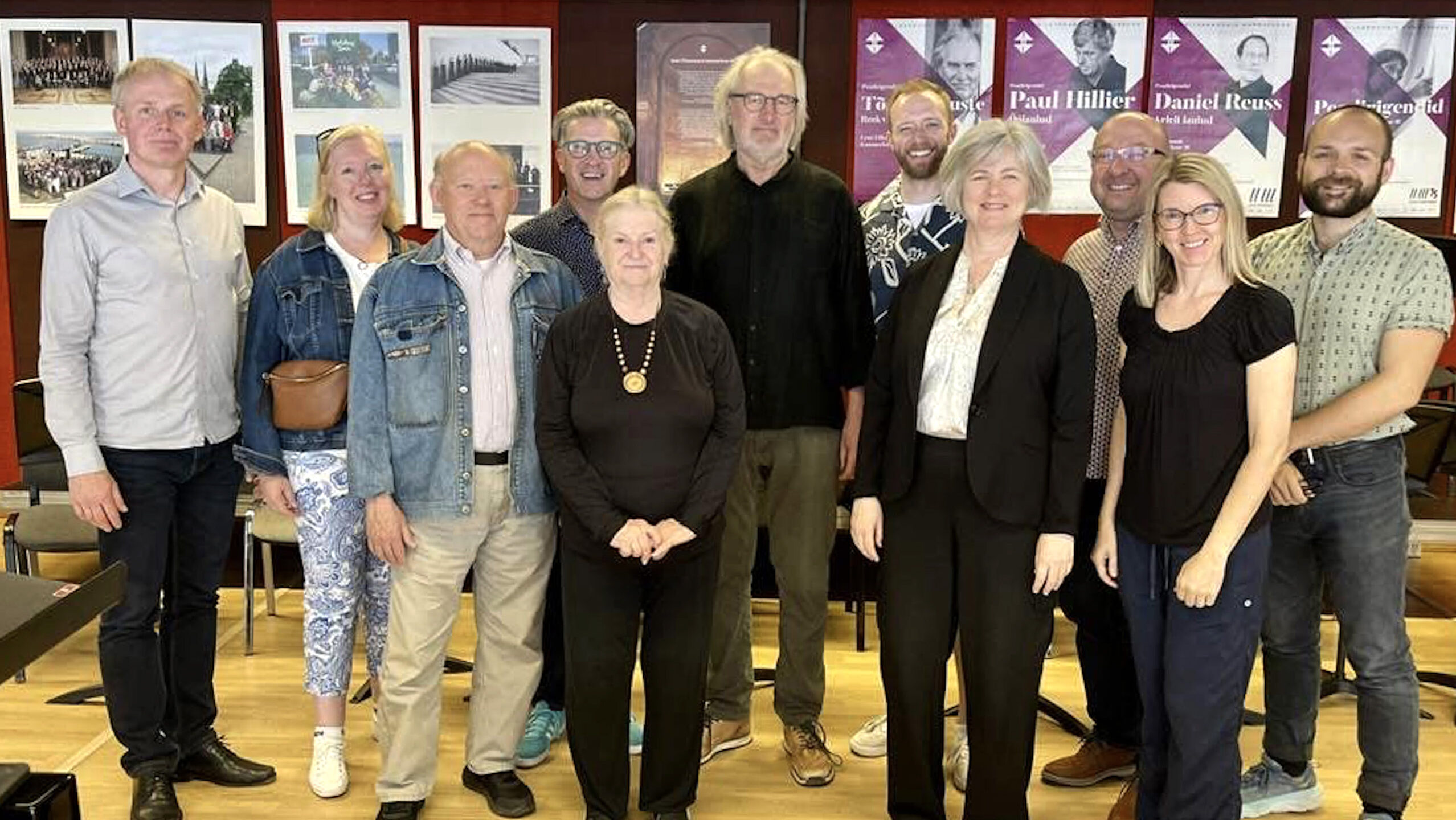
The Baltic Choral Tour 2025 was a cultural exchange where Canadian musicians learned about Latvian choral culture, “but where we also brought Canadian choral culture to Latvia,” explains tour producer Laura Adlers.
Aira Birziņš, principal conductor of the Jazeps Vitols Latvian Music Academy, organized things on the Latvia side. Tour participants lectured on Canadian choral music, led workshops, met with Latvian composers, conductors and school directors and observed many choral rehearsals.
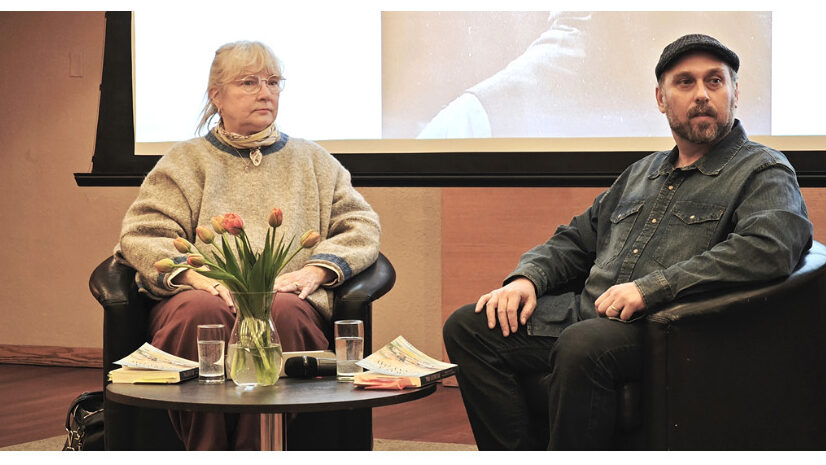
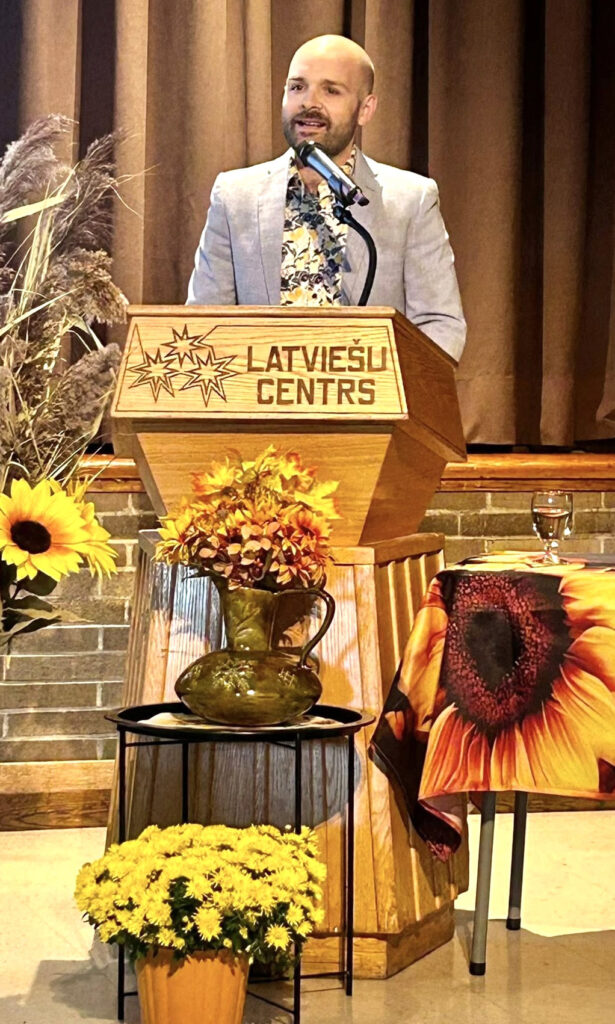
“It took less than a day to see that my colleagues had fallen for Latvia,” said Adlers at TLPA’s (Toronto Latvian Pensioners’ Association) October 2 event.
In Estonia, the group attended regional rehearsals for the upcoming Estonian Song and Dance Celebration, visited the Arvo Pärt Centre, and had a chance to observe and meet with Tallinn’s best Estonian choirs.
The tour’s goal to foster cross-cultural collaboration is already taking shape. On October 25, the Orpheus Choir of Toronto will perform works by Latvian composer Laura Jēkabsone and Estonian composer Veljo Tormis.
Watch it all here:
Baltic choral tour – Nations that sing presentation
The Singing Nations Tour 2025 film
•••
My Journey Into Baltic Choral Music
Thomas Burton is the conductor of the Orpheus Choir of Toronto and was a member of the Baltic Choral Tour 2025. Burton’s October 2 TLPA (Toronto Latvian Pensioner Association) talk has been shortened and edited.
On the first morning in Riga, I set out to explore the neighbourhood around our hotel through the lens of a brisk jog. I ran along the river, past the Opera House and into the winding maze of cobblestone streets.
One short morning into our trip and I was already falling in love with my Baltic surroundings.
The rest of the journey felt like a marathon of its own – in the best way. We observed countless rehearsals, met remarkable conductors and composers, and moved constantly from one transformative choral experience to the next.
Why these nations sing
A few days into our trip, I began to wonder why these countries – each not much larger than my home province of Nova Scotia – produce some of the world’s finest music and art?
What drives these people to create so naturally and collaboratively? What draws them to the unifying act of song?
It was our last morning in Riga. I was finishing my final run when I came upon a large, black, square building.
In North America, we’re often taught that the years following the Second World War were marked by rebuilding and celebration. But as I walked through the Museum of the Occupation of Latvia, I quickly realized that my historical knowledge had some very serious gaps.
I knew next to nothing of the over 50 years of Soviet occupation imposed on the Baltic countries. I hadn’t grasped the brutality of conflict between the Nazis and Soviets – a conflict that forced Latvians to fight brother against brother.
My time in the Baltics completely changed my beliefs on what choral music can be and what its purpose is in our lives.
I thought about how recently these countries had regained their independence and how many of the musicians and new friends I had met on the trip had spent much of their lives under this occupation. I thought about the beautiful music and art I had witnessed. Gradually, the answers began to crystallize.
Song and dance are among the most powerful tools for human connection. They forge identity and preserve language and culture in the face of oppression.
In the Baltics, singing isn’t just a pastime. It’s a vital and integral way for people to tell their story and be who they’re meant to be.
My time in the Baltics completely changed my beliefs on what choral music can be and what its purpose is in our lives.
Join us for TLPA First Thursdays
TLPA meet-ups take place every Thursday from 12:00-2:00 at the Latvian Canadian Cultural Centre. On the first Thursday of each month, programming is in English and Chef Ingo serves a hot lunch. More info: Latvianseniors.org
November 6: Ambassador of Latvia to Canada Kaspars Ozoliņš – Riga’s Art Nouveau architecture
Riga boasts the world’s largest concentration of Art Nouveau buildings, their expressive façades drawing photographers from around the globe. Latvia’s Ambassador to Canada, Kaspars Ozoliņš, will offer a closer look at this distinctive architectural style that makes Rīga so special.
In English. Chef Ingo’s lunch. Register for lunch by November 2 with Maruta Freimuta: 416-233-9552, mfreimuts@gmail.com
December 4: Navigating the Baltics’ unwritten future
As Chair of Estonian Studies at the University of Toronto and author of the award-winning A History of the Baltic States, Prof. Andres Kasekamp brings deep expertise in Baltic history, politics and culture. His timely talk will reflect the rapidly changing world around us.
In English. Chef Ingo’s lunch. Register for lunch by November 30 with Maruta Freimuta: 416-233-9552, mfreimuts@gmail.com
Join from anywhere in the world
Mara Gulens is TLPA’s Content and Communications Lead