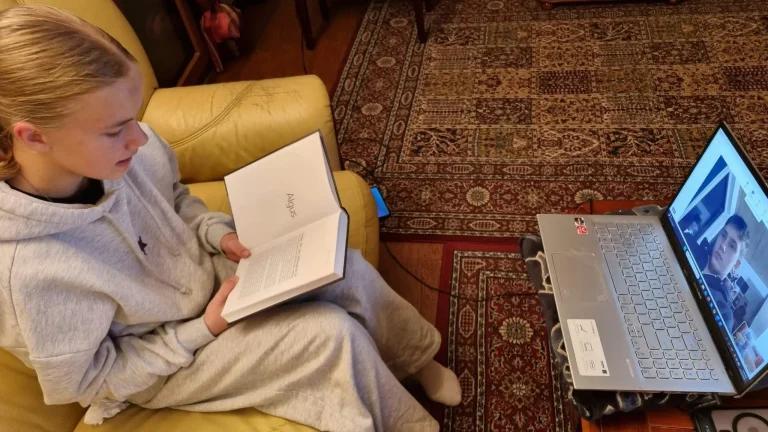
In a promotional video by cultural initiative Hakkame Santima, we see the celebration of Kadrilaupäev (Saint Catherine’s Eve) on November 24th and Kadripäev the next day in a contemporary familial context. An adult in a braided wig and fleece layers gathers around a wooden table with children in mittens, scarves, and shawls. They hold up a small round mirror, play with props like sausages near their lips, carry bundled “babies” in checkered cloth, and step into a dark, snowy night with sacks and horn-like headgear before visiting neighbours.
Traditional folk singing runs through the clip while a voiceover urges viewers to celebrate the holiday and register their participation in a census of sorts at hakkamesantima.ee.
Conversely, Eesti Folkloorinõukogu’s ten-minute overview of Estonian mumming traditions for mardipäev (Saint Martin’s Day on November 9th) and Kadripäev explains “santimine” as a playful, reciprocal ritual between disguised visitors and hosts, rooted in centuries of autumn-winter soul veneration and fertility magic. Mardisandid (the participants of Mardipäev) typically dress as noisy, soot or mask-covered male figures in inside-out dark furs, while kadrisandid appear two weeks later in lighter, more restrained attire such as veils, beads, ribbons, feathers, animal or character disguises, and symbolic “babies,” singing at the door, testing household readiness, tossing grain, peas, or rice for luck, and receiving treats, food, or coins.
Become a subscriber to continue reading!
Every week we bring you news from the community and exclusive columns. We're relying on your support to keep going and invite you to subscribe.
Starting from $2.30 per week.