Subscribe Menu

On the Market: Estonian Folk Culture Brought to Our Hands by Instrument Maker Mihkel Soon

The notes from a kannel, the Estonian zither, a historic folk instrument, sparkle and twang in a marvelous way. It’s not as smoothed out and regulated as the notes of instruments you hear in many popular recordings and performances, such as electric guitars, pianos, or drum kits. Those are satisfying in their own right, but there’s a mystery to folk instruments.

You may have heard modern examples of the kannel at the most recent Estonian Music Week, and the festival edition before that as well, played by Tuulikki Bartosik and Mari Kalkun respectively. Similarly, you might have seen folk duo Puuluup, Estonian Music Week veterans and Eurovision contestants, playing the talharpa, a bowed lyre. Estonian folk instruments have been experiencing a steady revival, perhaps based on their use by these major artists.
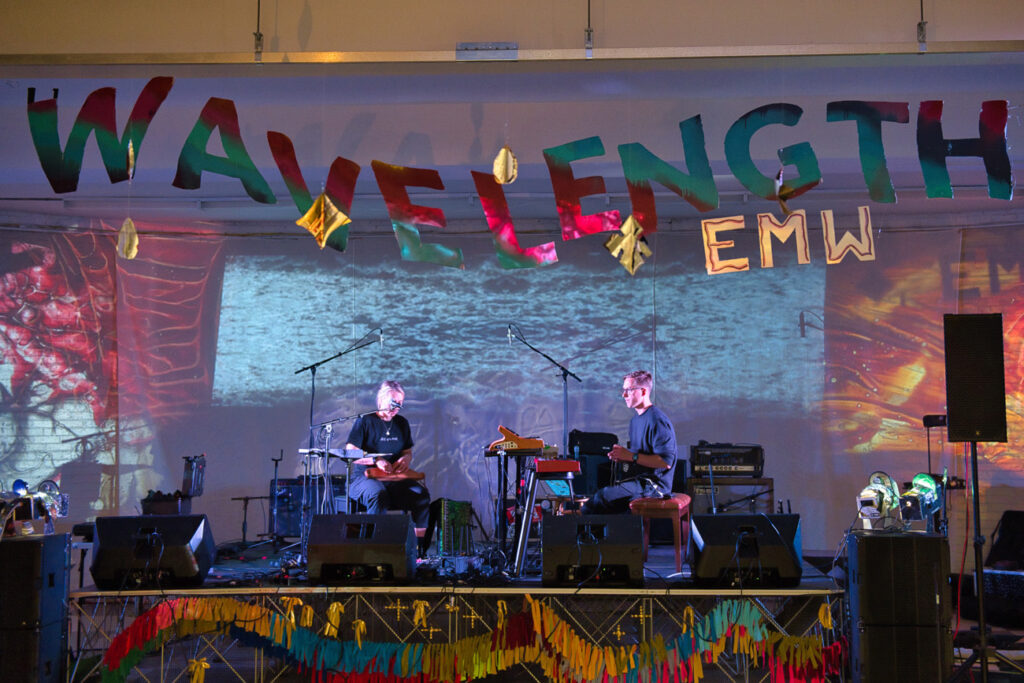
Tuulikki Bartosik (left), playing her kannel together with Sander Mölder (right), (photo: Peeter Põldre)
Tuulikki Bartosik (left), playing her kannel together with Sander Mölder (right) (photo: Peeter Põldre)

While investigating the kannel (among a number of zithers) played by Tuulikki Bartosik in particular, it came up that these folk instruments were created by an instrument maker by the name of Mihkel Soon, based in Võru County.

Soon, born on December 16th, 1980, takes on instrument creation with precision and artistic sensibility. Interestingly, early studies of his included a Bachelor’s degree in ecology at the University of Tartu, where he researched forest habitats with botanist Asko Lõhmus, which would have placed him around the source materials of what he now works with as an instrument maker.

“Using machines in the first steps of instrument making, the final shape and look is given working with hand tools. That way I can use my skills and experience to get the best out of the particular piece of wood and tree species.”

(Mihkel Soon)

It’s unsurprising, too, to hear what he says about instrument making considering his scientific background. As Soon states, “I am inspired by the [aesthetic] feeling that has formed inside me while studying historical instruments in museums. I want my instruments to have the look of an old instrument while fitting into contemporary [aesthetic] standards, instrument ergonomics and playability.” He makes sure that his instruments are truly playable, not museum display pieces, that work within contemporary performances that, in turn, push folk culture forward.

A kannel made by Mihkel Soon (source: mihkelsoon.com)

How are the instruments made, technically speaking? Soon clarifies, “All my instrument sound boxes are made of a single hollowed out piece of wood and finished with hand tools. Using machines in the first steps of instrument making, the final shape and look is given working with hand tools. That way I can use my skills and experience to get the best out of the particular piece of wood and tree species.” Finally, “Natural oils are used to give a [finish] that makes the surface warm to the touch, strong and easy to clean.” Each instrument stands alone, without exact duplicates. In a market saturated with mass-produced factory goods, this emphasis on hand-built and one-of-a-kind products puts it in the top tier of music products.

Having built instruments for two decades now, Soon appreciates “experimenting with a wide range of sound timbres,” seeking sounds that are “generally pleasing to a broad audience” as well as “unique and special sounds that would be desired by a musical connoisseur.” Once again, instruments are a key to experimentation and musical development, as mentioned previously. For his efforts, in 2019, Soon received the Cultural Endowment of Estonia’s Ela ja sära” (“Live and Shine”) endowment in the field of folk culture, a high-level Estonian national recognition.

The kannel (ranging from 320 to 640 euros; with six, seven, ten, or twelve strings) is a central piece among his catalogue of instruments. One of his twelve-string zithers (in the key of D) can be made with spruce, ash, or black alder for the body, with a belly made of spruce. In terms of hardware, it has steel tuning pins and uses steel strings.

Some of his zithers, such as a seven-string kannel, are built with a “wing,” which could offer more of a resting place for one’s non-strumming/plucking hand while playing. At the time of publication, available cover patterns for this kannel include a flower, a simple hole, or an octagon.

Those in his online shop are made of black alder, with hardwood pegs and strings made of horsehair or nylon. Horsehair is also the material that’s used for the bows he makes, to help you picture what’s happening materially when these lyres are bowed.

The talharpa is another instrument that Soon crafts, ranging from 550 to 810 euros in price. Those in his online shop are made of black alder, with hardwood pegs and strings made of horsehair or nylon. Horsehair is also the material that’s used for the bows he makes, to help you picture what’s happening materially when these lyres are bowed. A slightly shorter (45cm tall as opposed to 53cm) model for children is available, so kids can pick up this musical tradition early on.

Talharpa lyres made by Mihkel Soon (source- mihkelsoon.com)
Talharpa lyres made by Mihkel Soon (source: mihkelsoon.com)

Within the higher price range (over 1,300 euros), Soon branches outside of Estonian folk instruments into two types of Gaelic harps, including the 20-string Ceirnín that includes deep bass strings.

A Ceirnín harp made by Mihkel-Soon (source- mihkelsoon.com)
A Ceirnín harp made by Mihkel-Soon (source: mihkelsoon.com)

Customers interested in Soon’s instruments can make direct purchases of readily available models through his web store at mihkelsoon.com. Otherwise, they can get in touch with him by email at mihkel.soon@gmail.com or by phone at +372 53541175.

When you hold and examine a product that’s made with care by a human and rooted in tradition, such as these instruments, you can see why folk culture and folk creations will only continue to grow in value looking ahead.

Read more