Nestled in the Haliburton Highlands, the Haliburton School of Art & Design (HSAD)—a campus of Fleming College—has long served as a pillar for creative education and cultural tourism in rural Ontario. Established in 1967, the school draws thousands of students each summer, ranging from novice enthusiasts to seasoned creators. Beyond providing artistic instruction, institutions like HSAD play a growing role in post-retirement life, offering structured environments where older adults can pursue lifelong learning, maintain physical dexterity, and build community connections.

I recently attended a week-long stained-glass course with my wife, Ellen, at the Haliburton School of Arts. Last summer, I took stone sculpting, while Ellen tried out collage art. When low enrollment cancelled stone sculpting this session, we compromised and enrolled in stained glass together.
My interest has been inspired by the incredible works of art in the great cathedral windows of Europe, particularly Antoni Gaudí’s colourful panels in Barcelona. Stained glass in North America has evolved significantly from these grand ecclesiastical origins into accessible studio craft, largely thanks to the copper-foil technique popularized by Louis Comfort Tiffany in the late nineteenth century. While Ellen had experimented with glasswork decades prior, I was completely new to the process and entered the studio with modest expectations. Our class brought together beginner and intermediate students—spanning a wide demographic, including a mother and daughter—filling seventeen of the eighteen available studio spots.
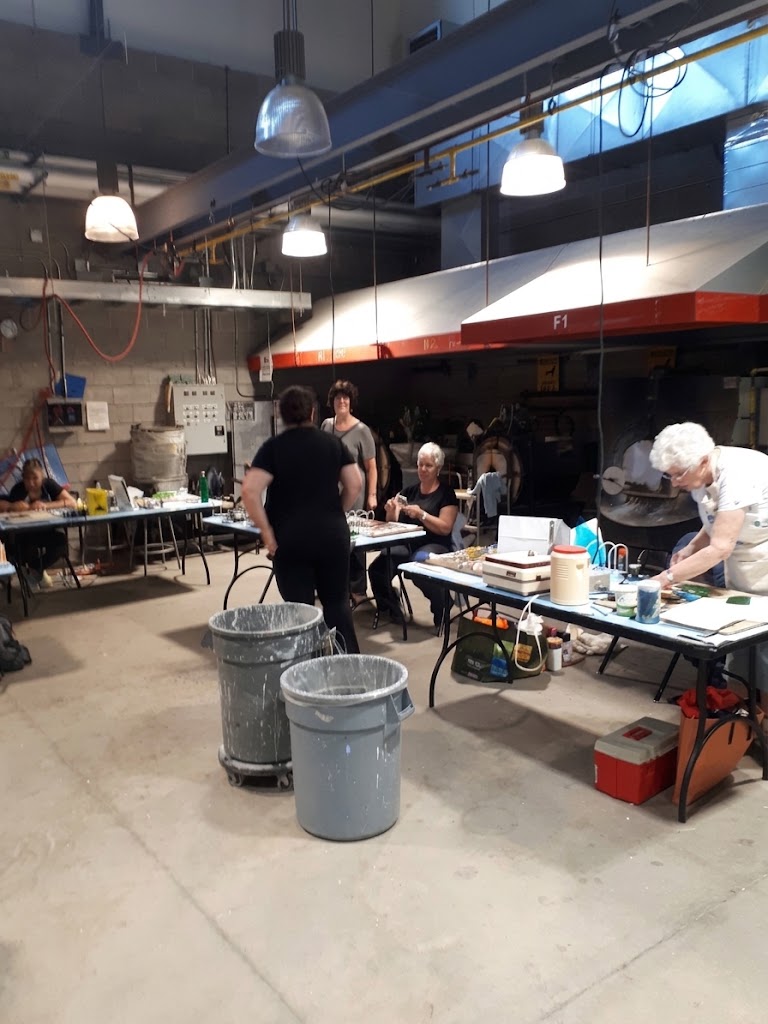
Stained glass demands a rigorous combination of geometric precision, fine motor control, and continuous physical engagement. Studies in active aging consistently highlight the cognitive benefits of tackling unfamiliar, complex tasks in retirement. Engaging in novel hands-on activities stimulates neuroplasticity, while the precise hand-eye coordination required for cutting and grinding materials supports motor function.
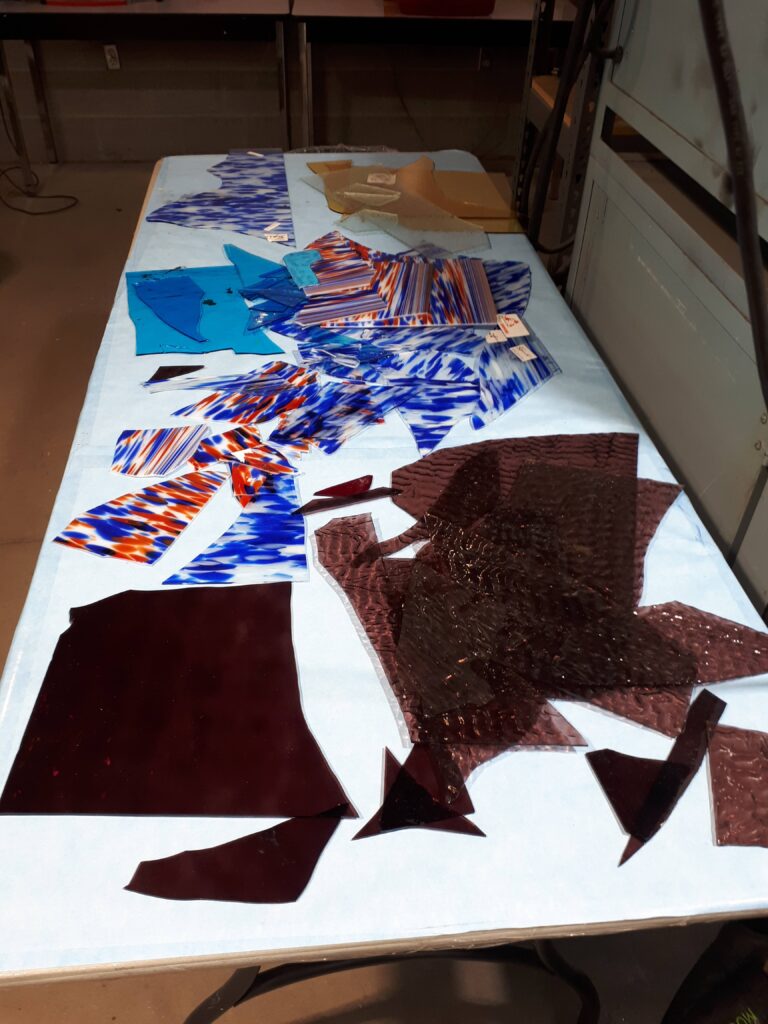
Overall, I was pleased with my work. In hindsight, I should not have been surprised at just how much precision and concentration was required. After all, glass is an extremely fragile material to handle. For example, I took two attempts at cutting a special burgundy coloured rippled glass, but the curve was too challenging for me to cut. I finally asked our instructor, Maureen, to make the cut for me. “Damn it!” she exclaimed as the piece broke yet again. “I’m sorry. I think you should select a different type of glass for your panel, Mihkel.” So, of course, I did go with a less textured, but less interesting piece, to work with.
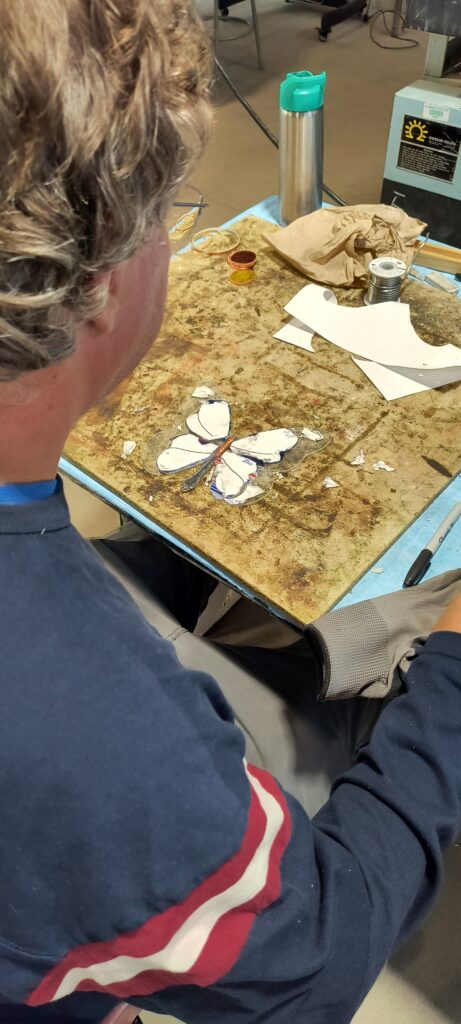
Working at this level of concentration for six and a half hours every day for five days left me exhausted. There was a lot of getting up and down out of my chair to fetch more supplies, to grind the glass, or to view someone else’s progress. All of this is to say, it’s not the type of desk work I had grown used to.
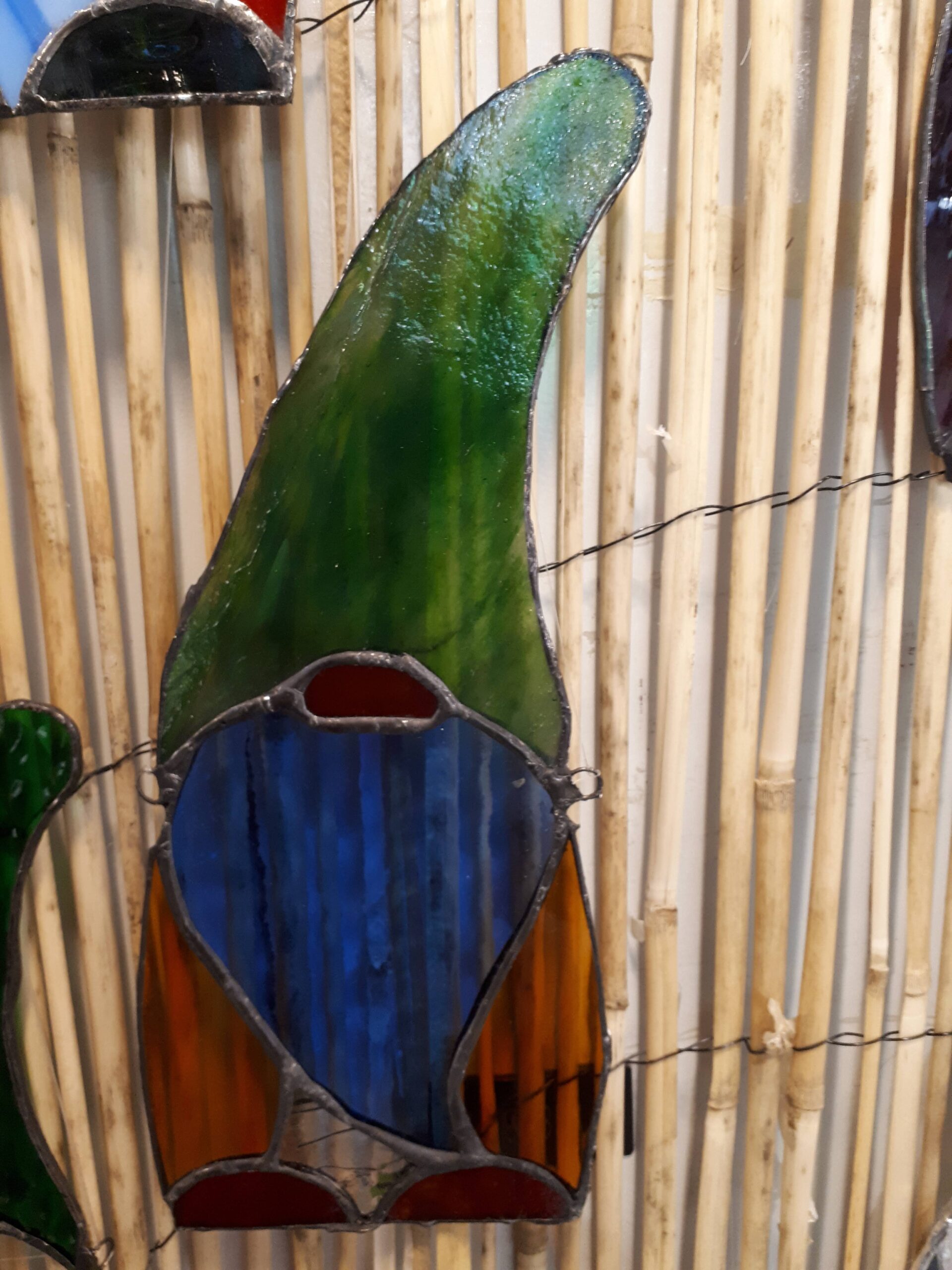
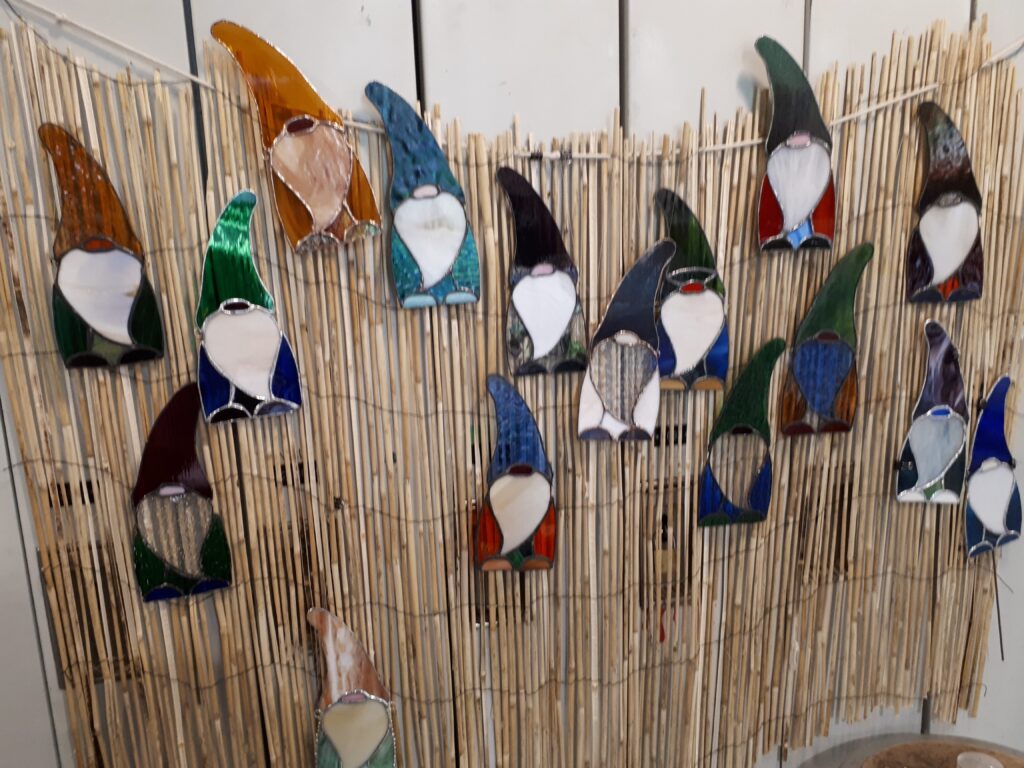
Our instructor didn’t speak about design, techniques, material, or history of the medium. We all jumped right into hands-on work with the glass. Everyone was given a gnome pattern to make as their first project. This was an achievable and satisfying creation, since there were only eight pieces to cut and join together.
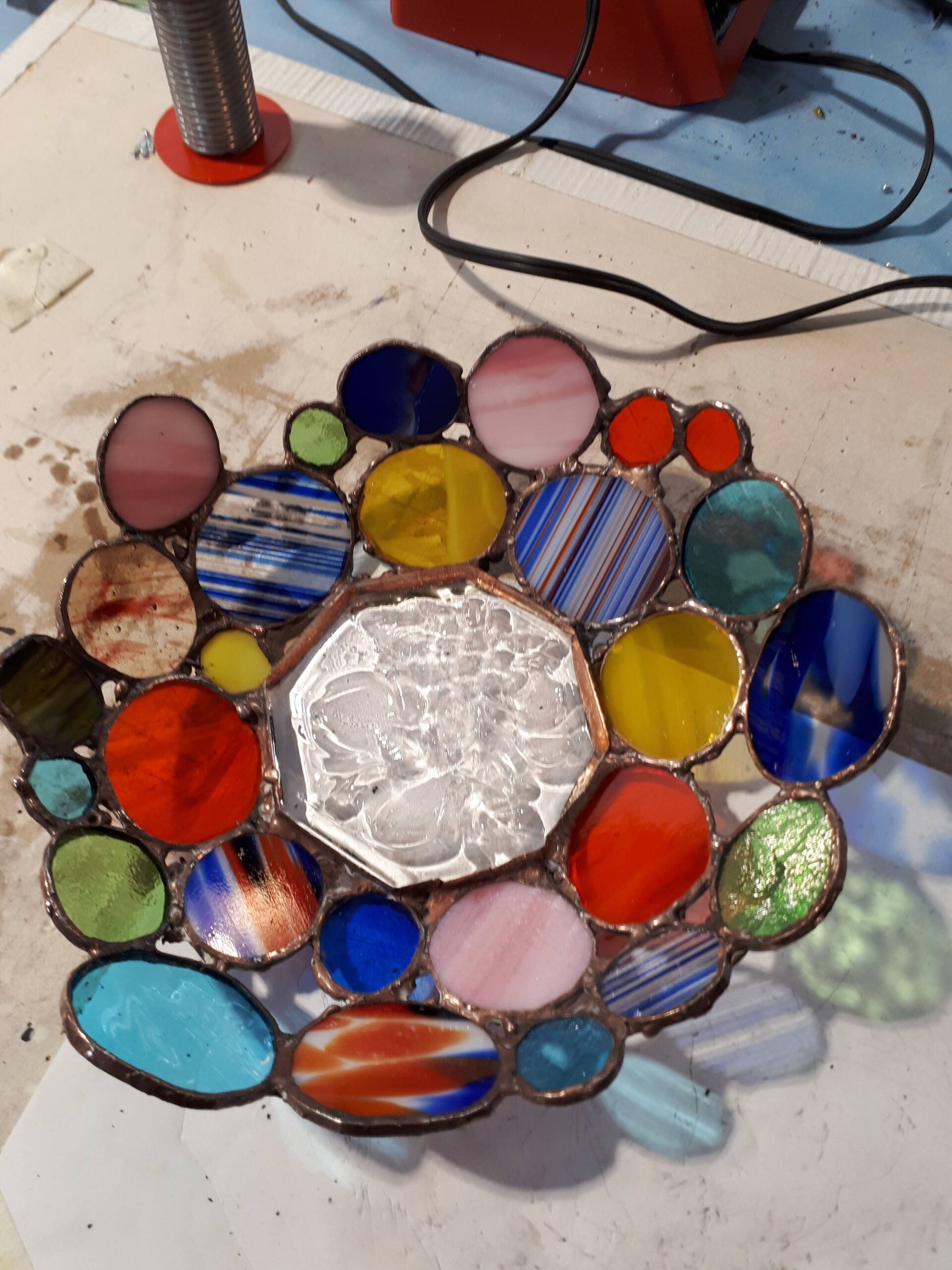
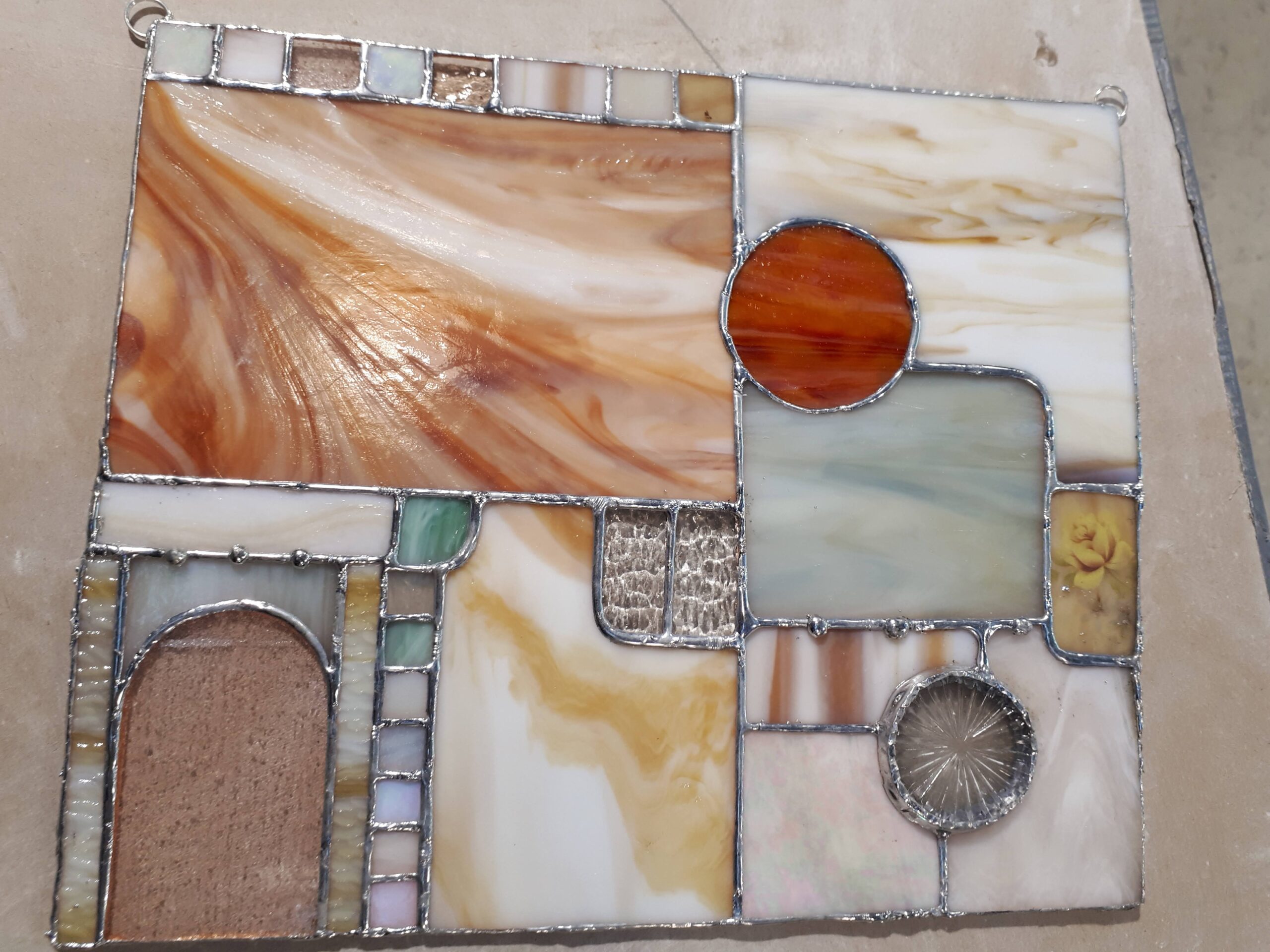
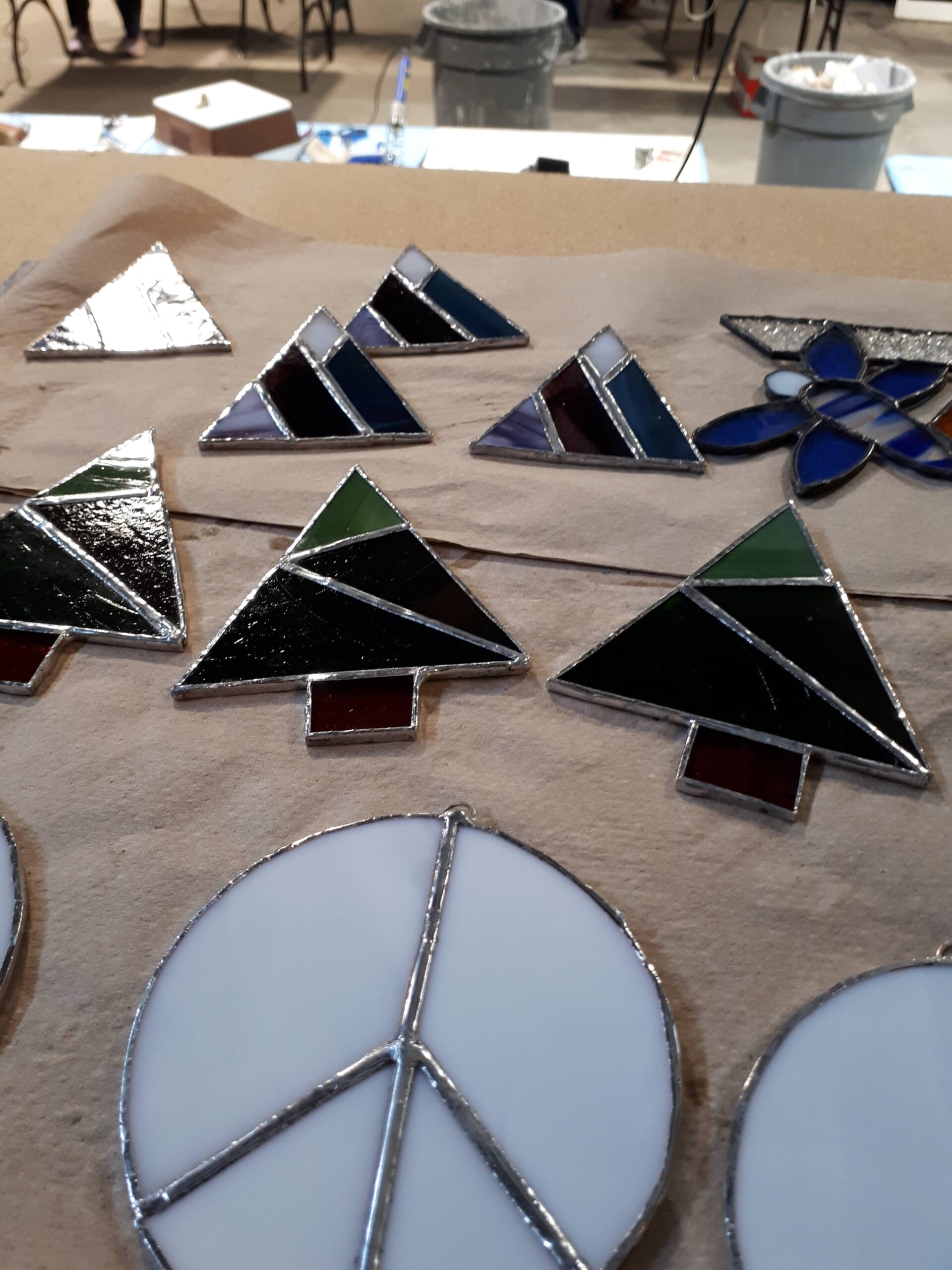
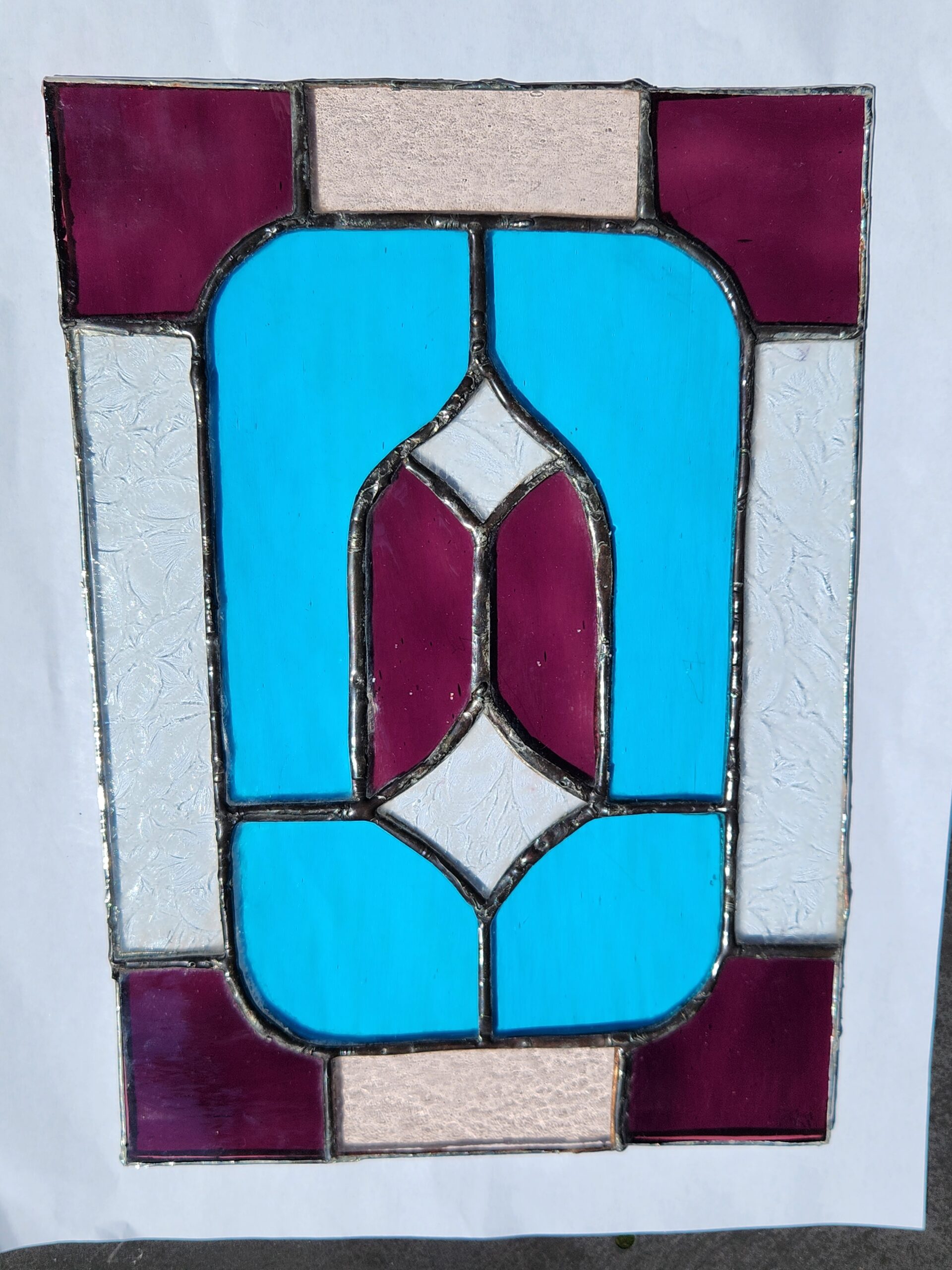
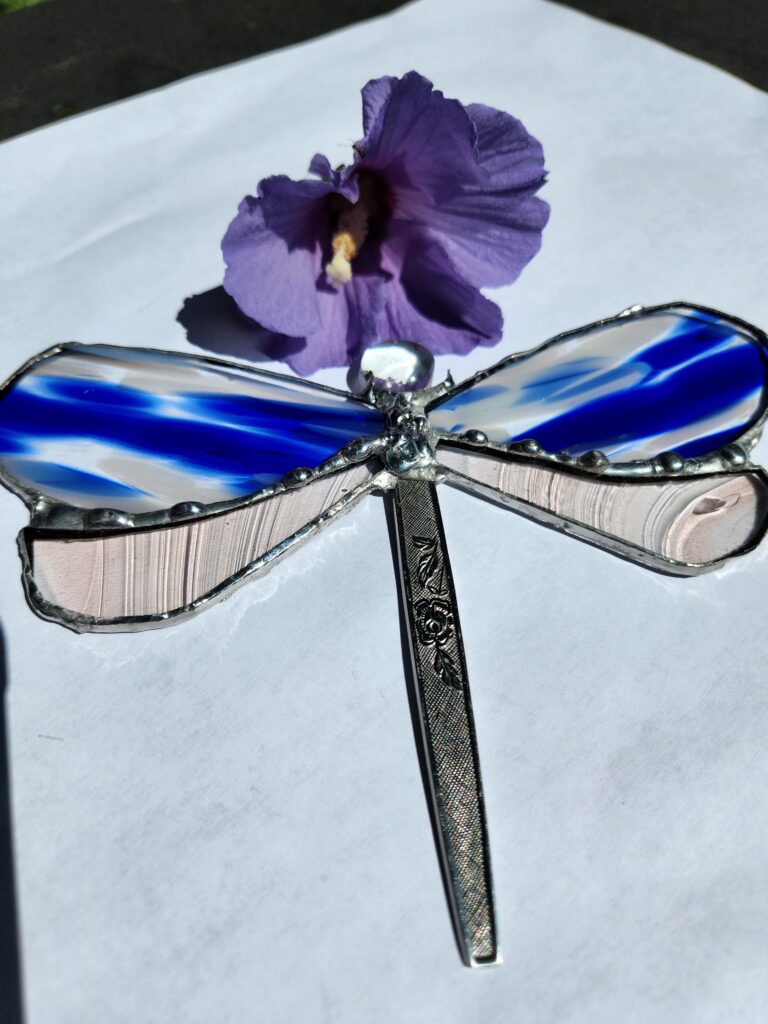
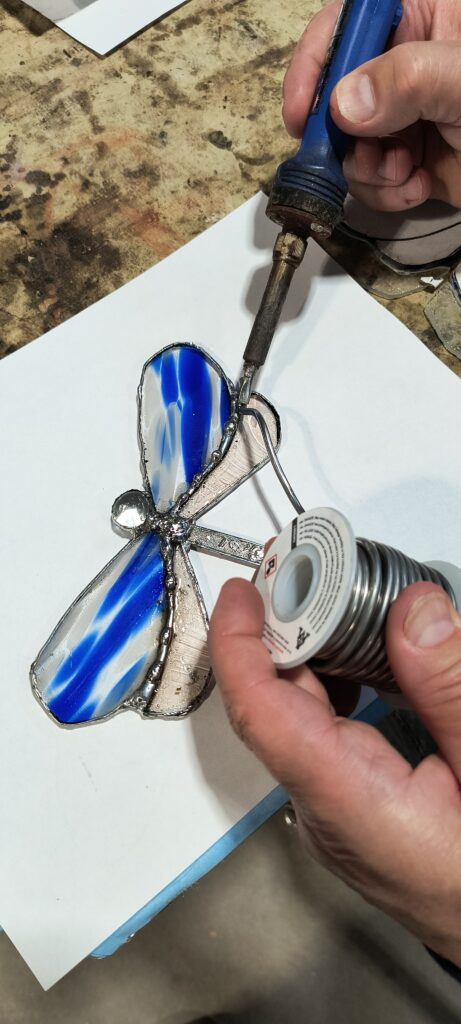
Next, we were encouraged to select our own project. I decided to make a 10 x 8 inch panel to hang in a window. This consisted of sixteen pieces of glass, with not too many challenging curves to cut. Some of us had time to create a smaller item or two. Maureen showed us how she uses fancy fork and spoon handles to make attractive dragonflies and butterflies.
Creating a stained-glass piece of art can be described with the following steps: select a design and make two copies. Ensure the number of pieces and types of cuts are doable for your skill and experience level. Cut the paper sections into pieces to glue onto the stained glass. Next comes cutting out your glass pieces. Grind down all the edges.
What nobody can warn you about enough is how important it is to have edges that are as precise as possible, so that the soldering is consistently neat throughout your work. When cutting, it’s best to leave extra glass, which you can grind down—but not too much, or you’ll never finish grinding.
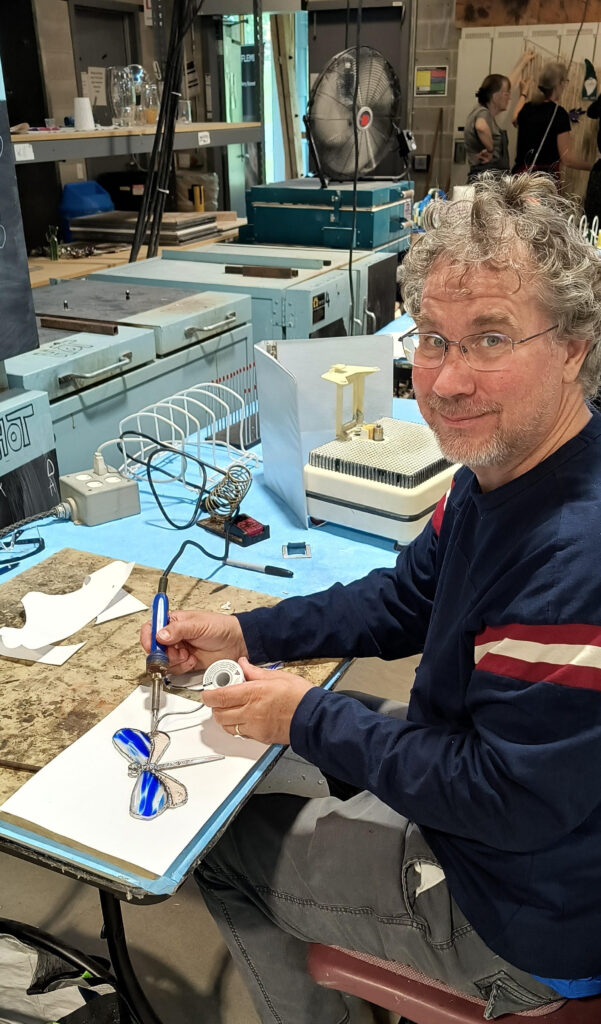
Then wrap all the edges with copper foil, so that the solder will bind all the pieces together. At the end comes the fine art of soldering. Like all skills, soldering improves with practice and I noticed I was able to get my solder lines smoother over the week.
The educational experience at HSAD extends beyond individual studio rooms. On Thursdays, the school has an official open-house and walkabout, where students and the general public visit different studio rooms to see what other arts and crafts are being made. Glassblowing, painting, photography, ceramics, quilting, and jewelry are all very popular. I was very impressed by the large looms and weaving, which I’d never seen before. The process and geometric patterns of weaving looked so complex. In addition to the open house, there are live concerts on Thursday evenings. On Wednesdays at noon, the school hosts presentations about different topics and there are always exhibits of art on-view. Just outside the school is the Haliburton Sculpture Forest, where there are forty sculptures to admire, as described in a previous Eesti Elu article. One unadvertised feature I enjoyed very much was seeing deer at the edge of the woods while driving to the school every morning.
Ellen has already signed up for a one-day course in September. While I’ve not yet selected my next course, the experience reinforced the value of discovering unexplored interests in retirement. Embracing new artistic challenges not only sharpens the mind and body but offers a refreshing avenue for personal growth.
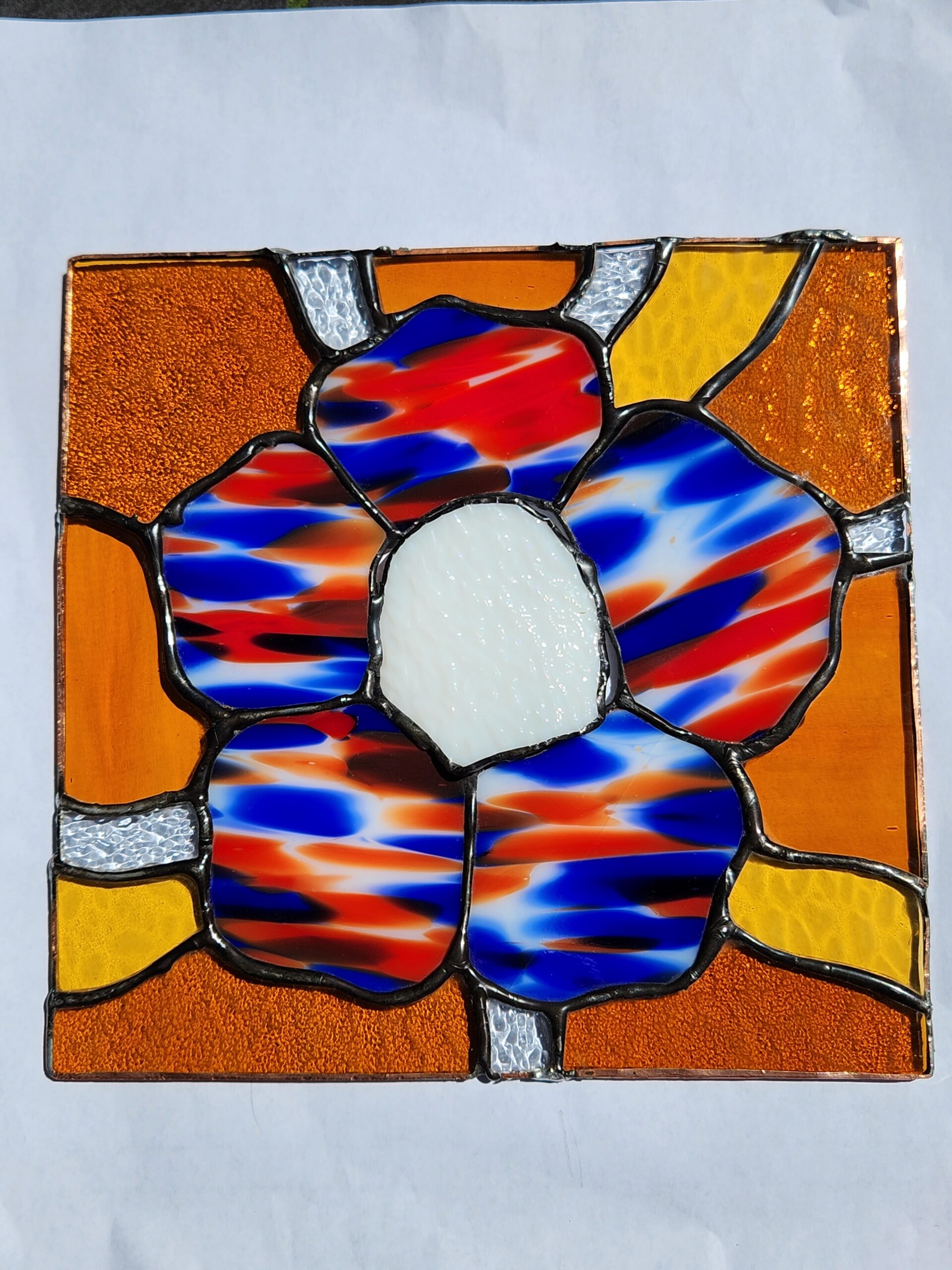
Photo gallery
Photos by Mihkel Jürima