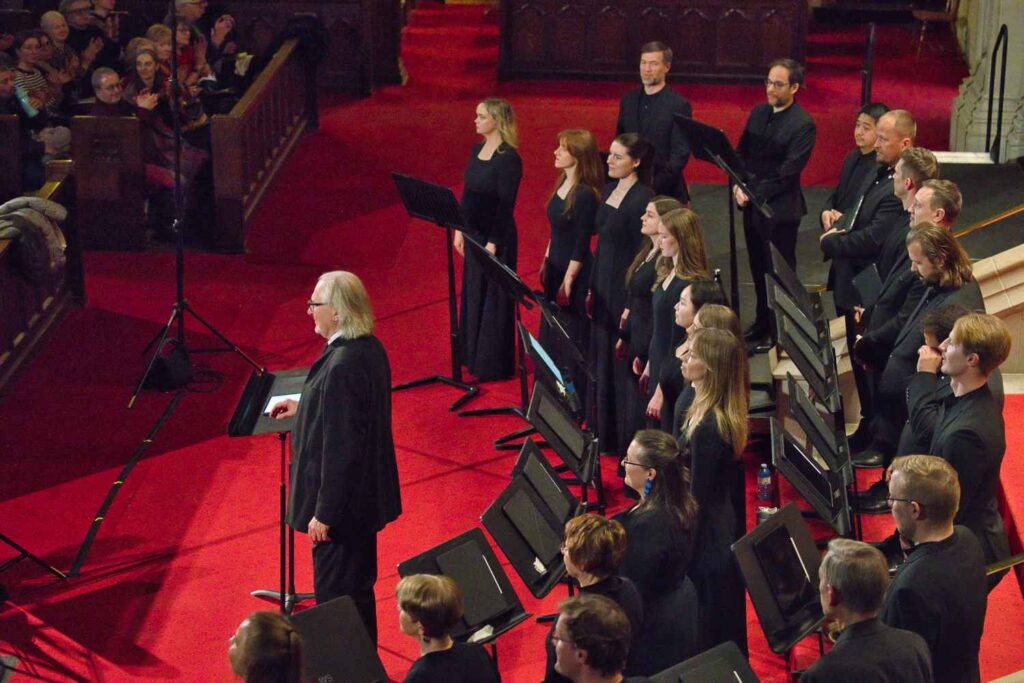
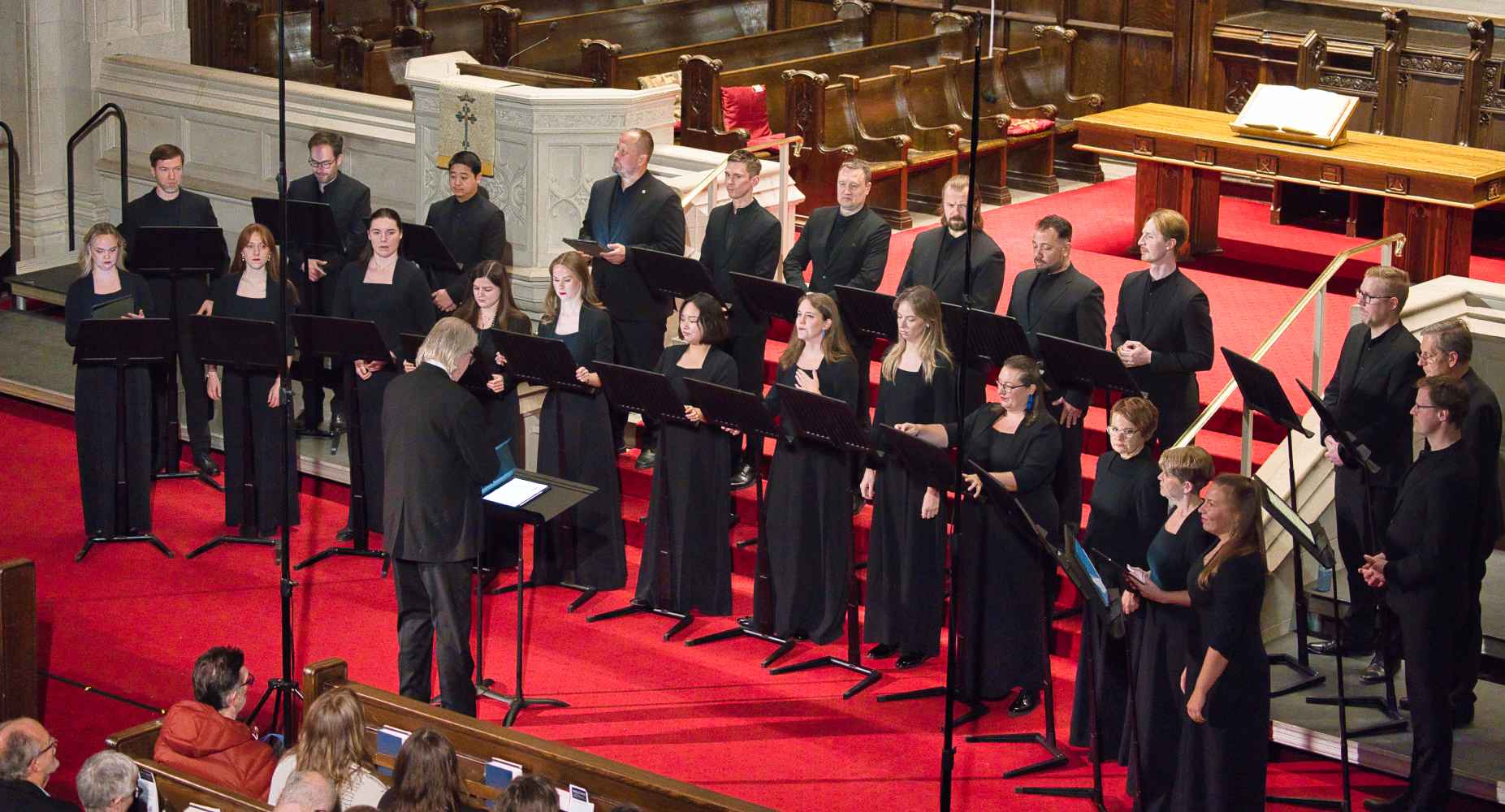
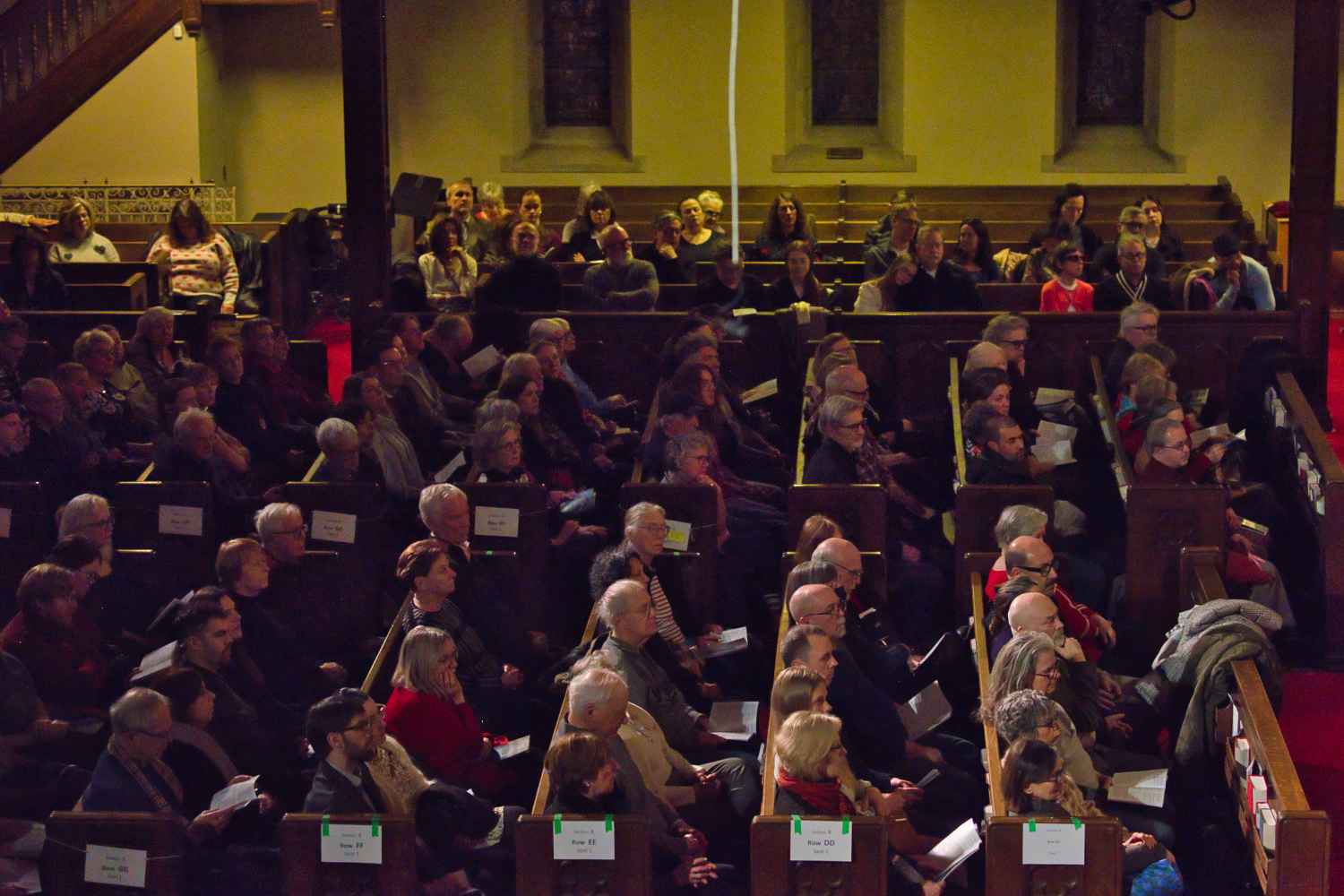
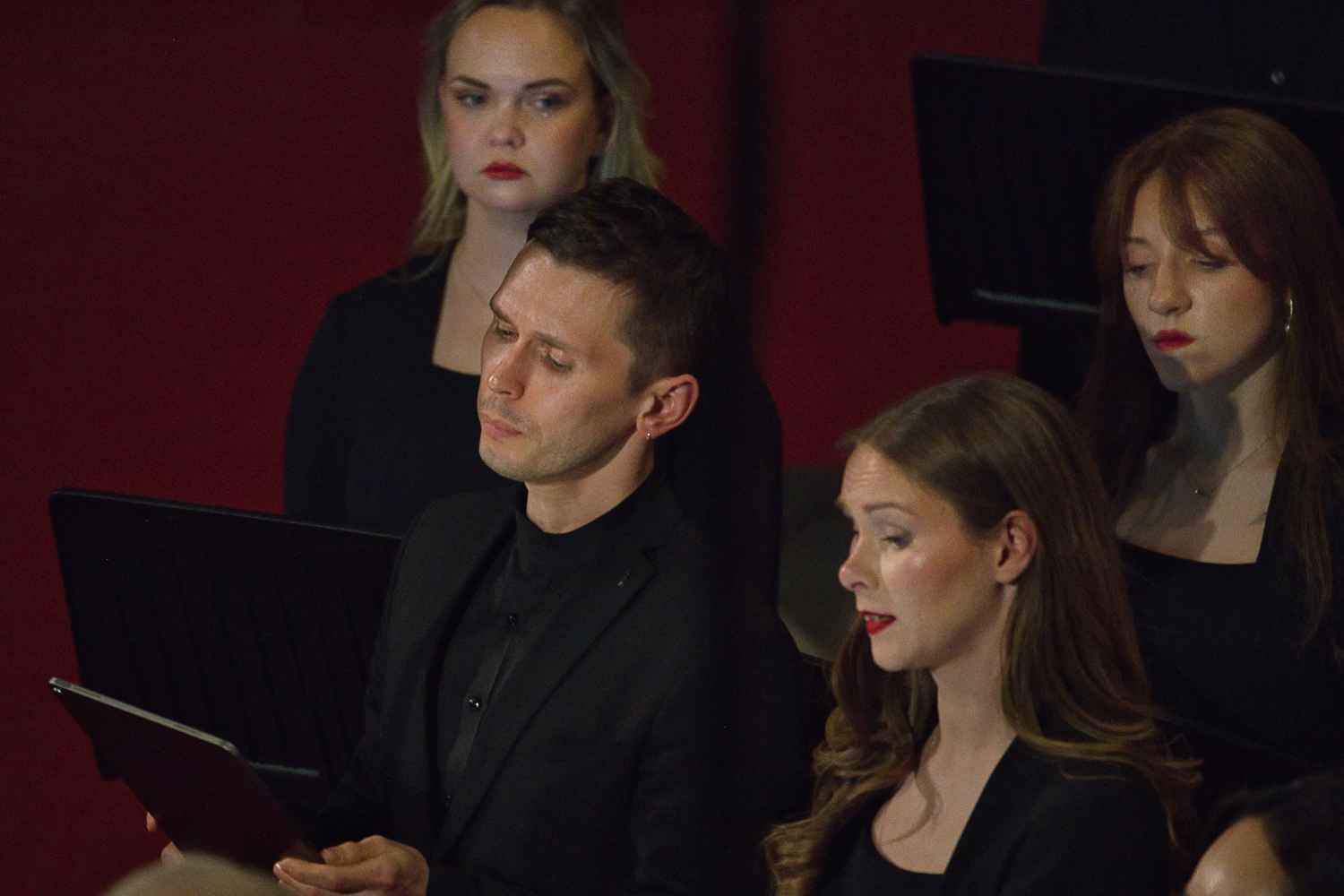
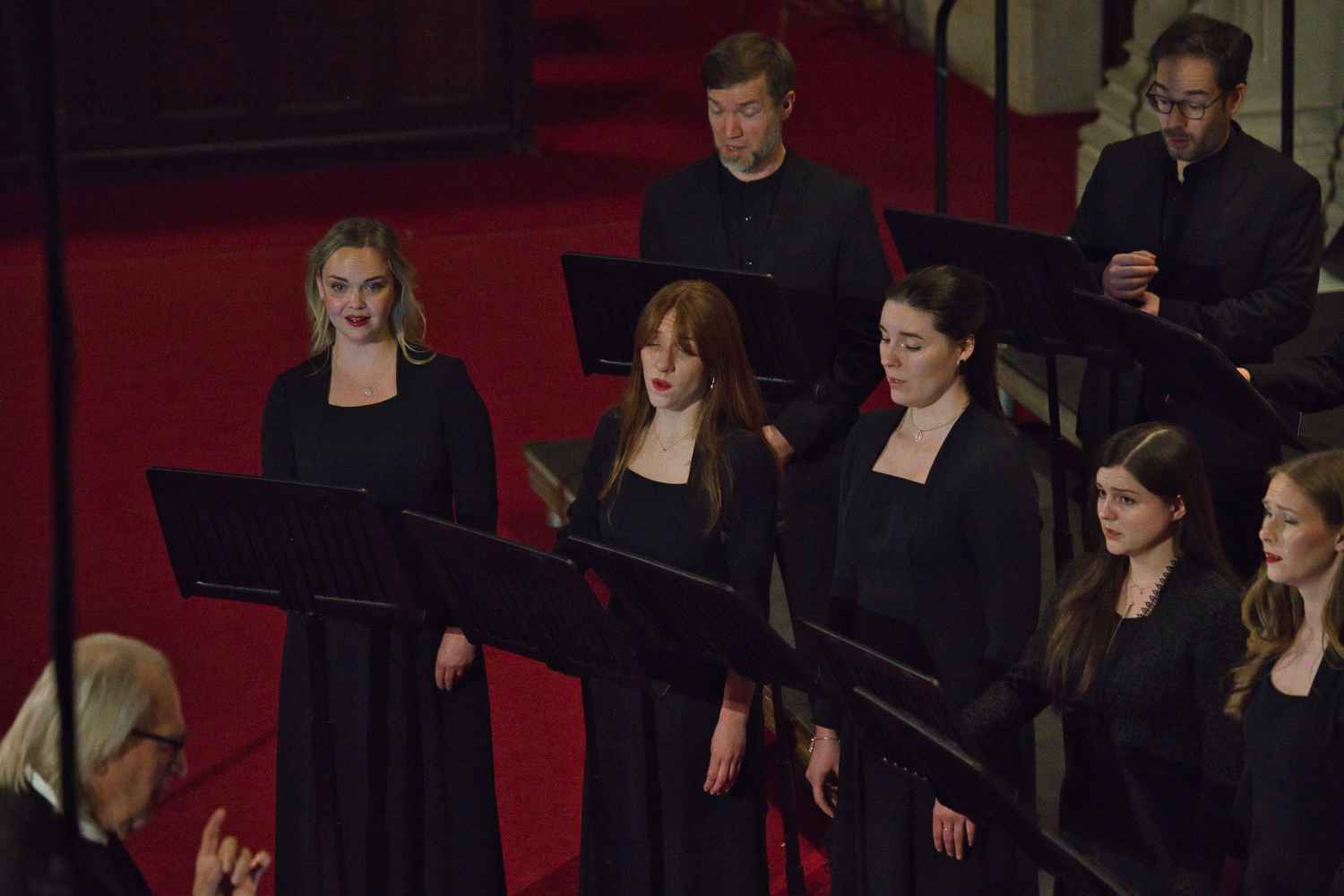
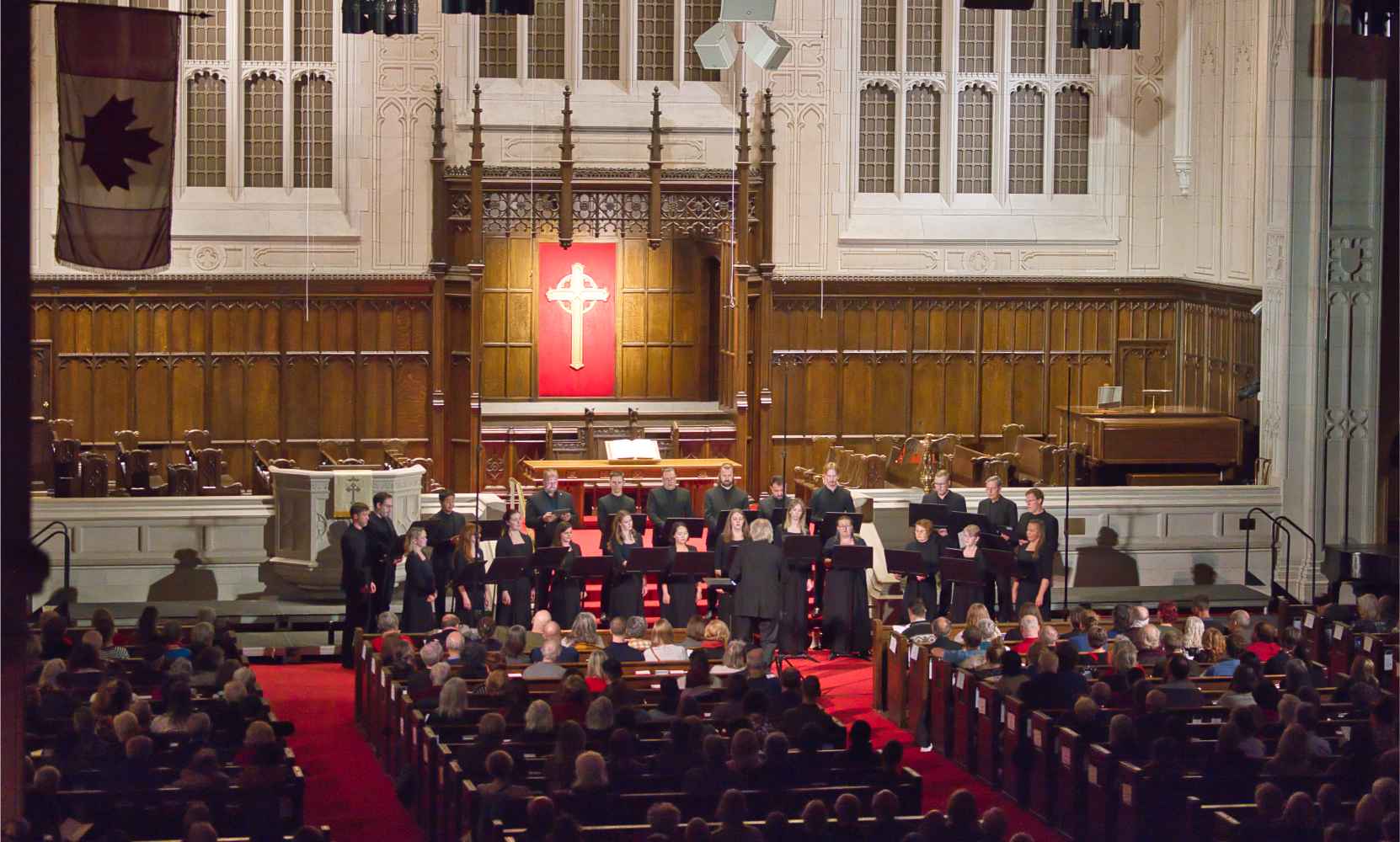
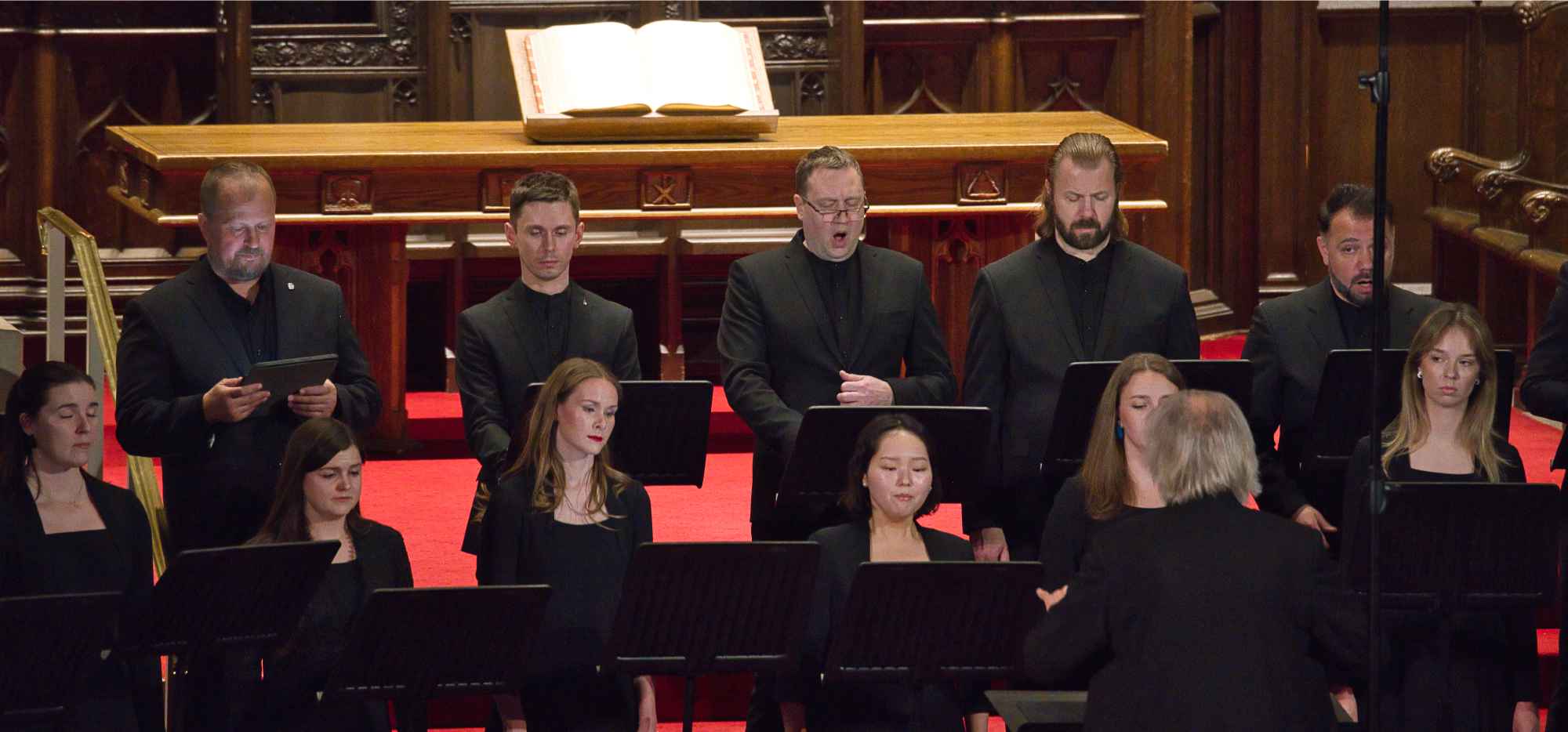
The first half was dedicated entirely to the compositions of Arvo Pärt, beginning with “Magnificat” (1989), built upon the Virgin Mary’s song of praise for the immaculate conception. Being near the front was a particular treat. All voices were extraordinarily clear. One could perceive the distinction of each singer. When you “zoomed out,” that collective sound became singular. The sopranos were flawless, infused with a grounding blend of bass, tenor, and alto. There’s a satisfying dissonance and then blending in Pärt’s work, which David Jaeger’s excellent programme notes describe as moving around the single axis of the note C in the piece.
Biblical name lists are notoriously long and toilsome. But here, the lineage of Jesus became playful through rolling Rs and dynamic emphases on names like Abraham and Jesse.
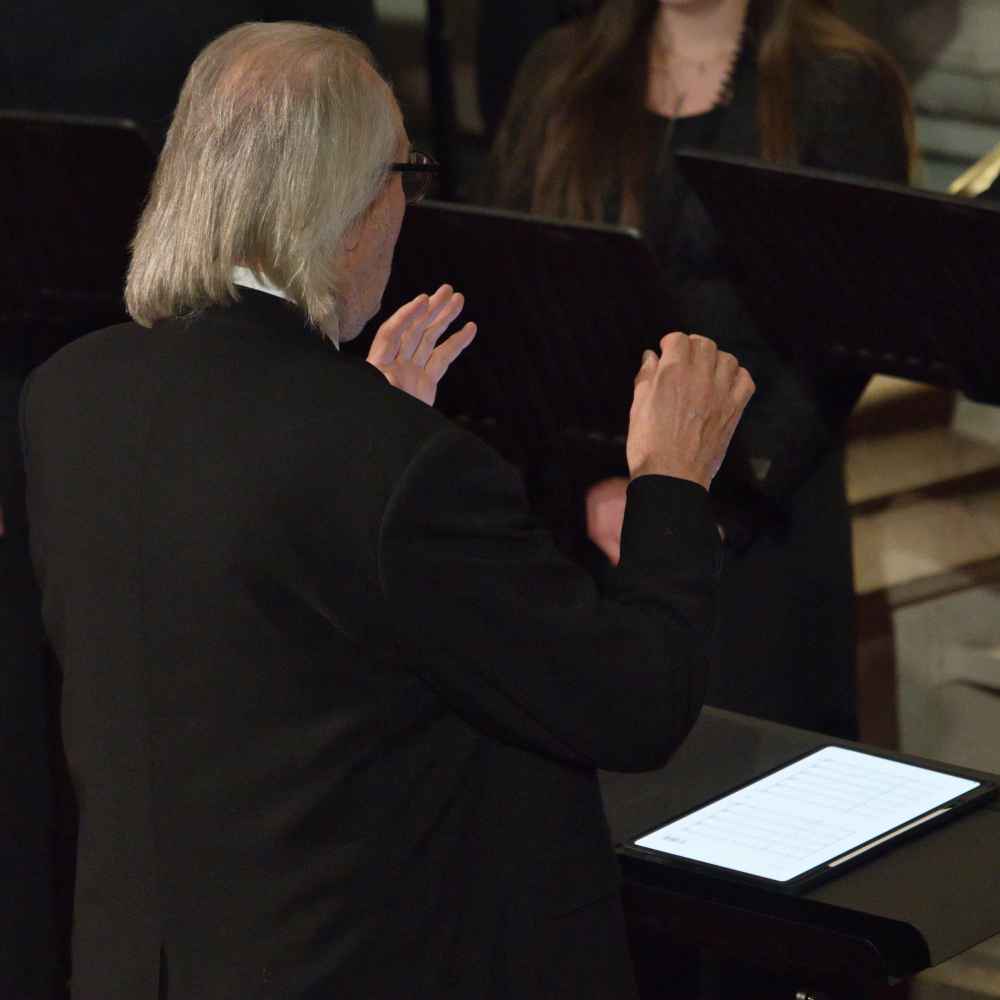
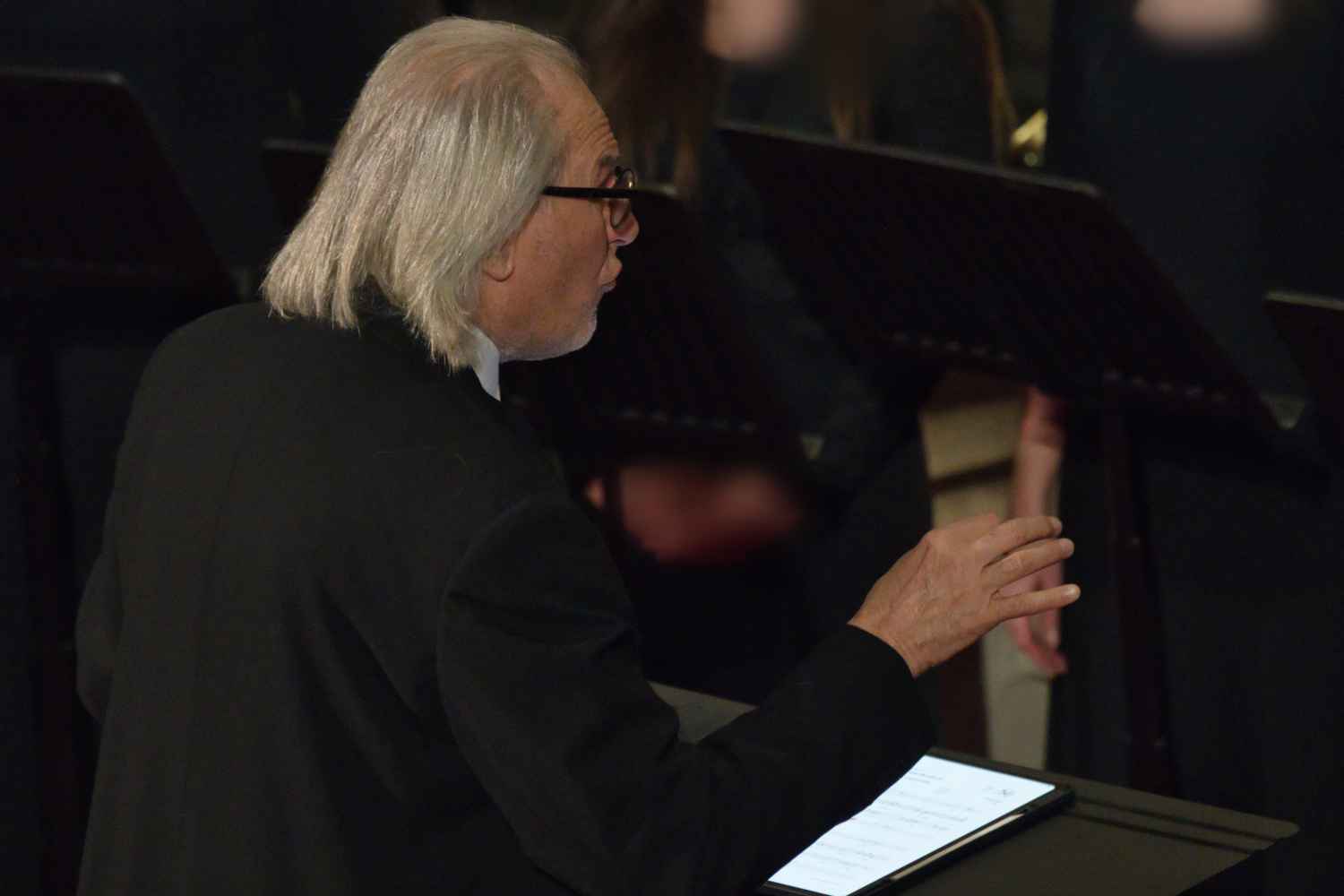
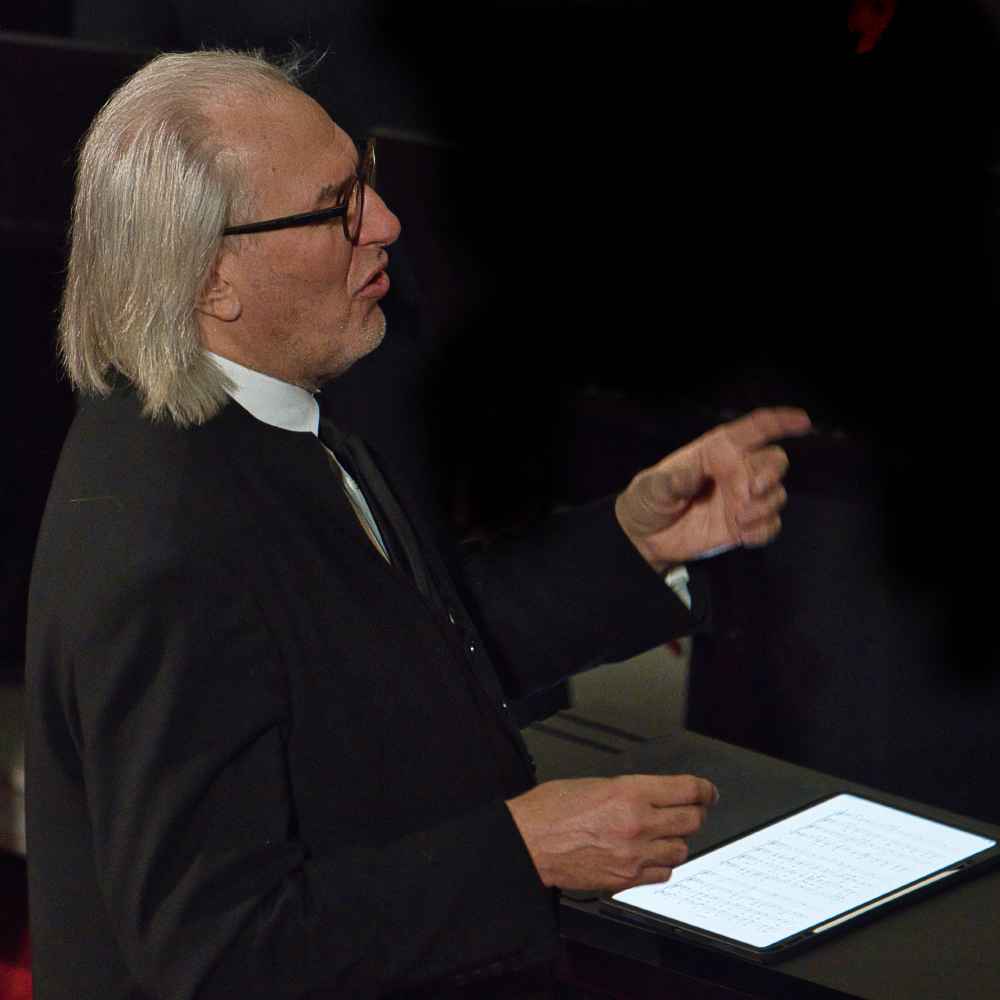
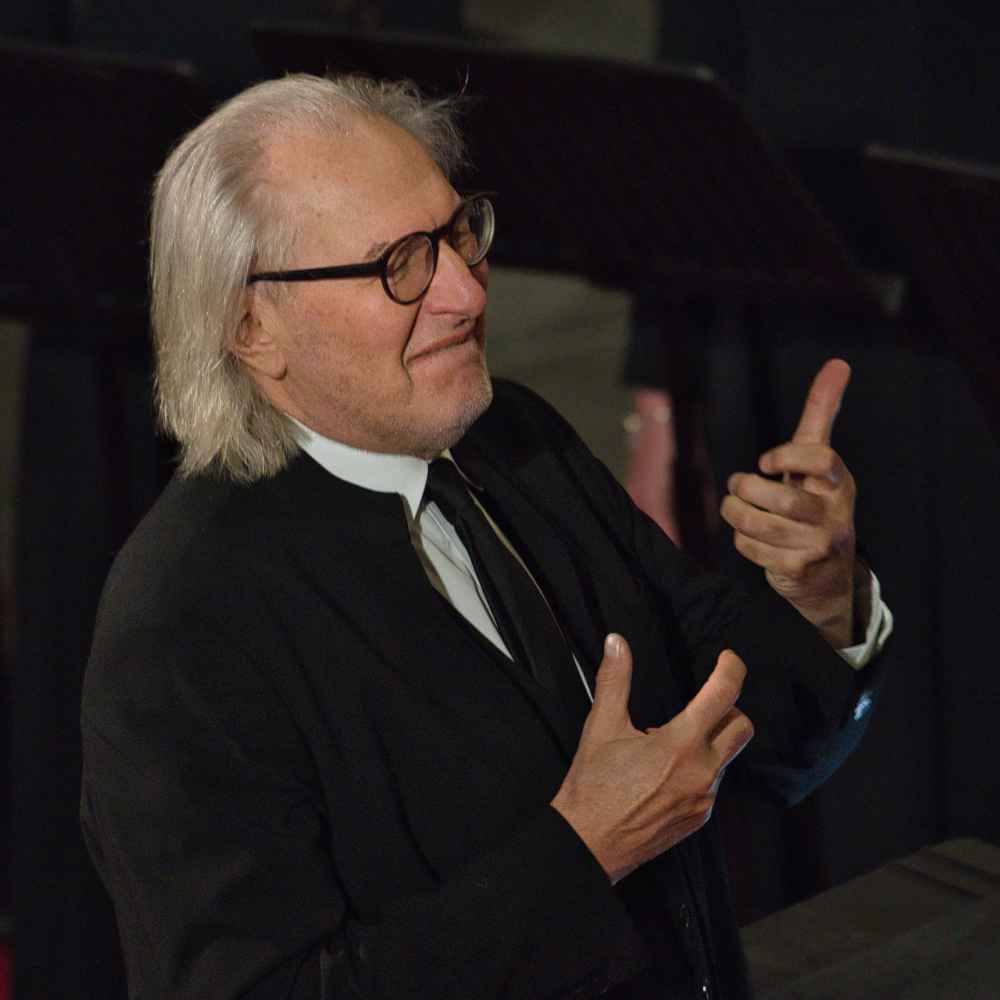
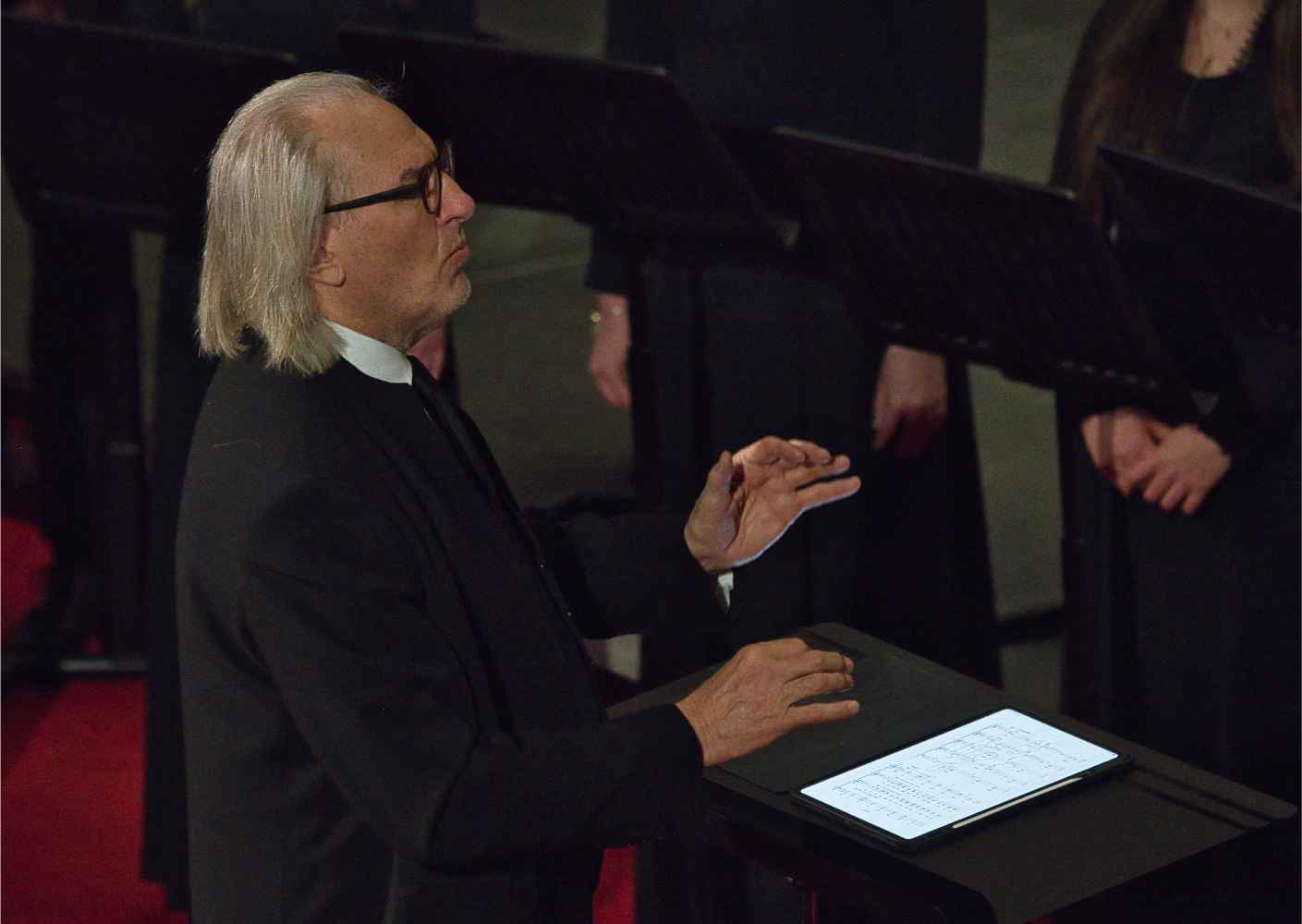
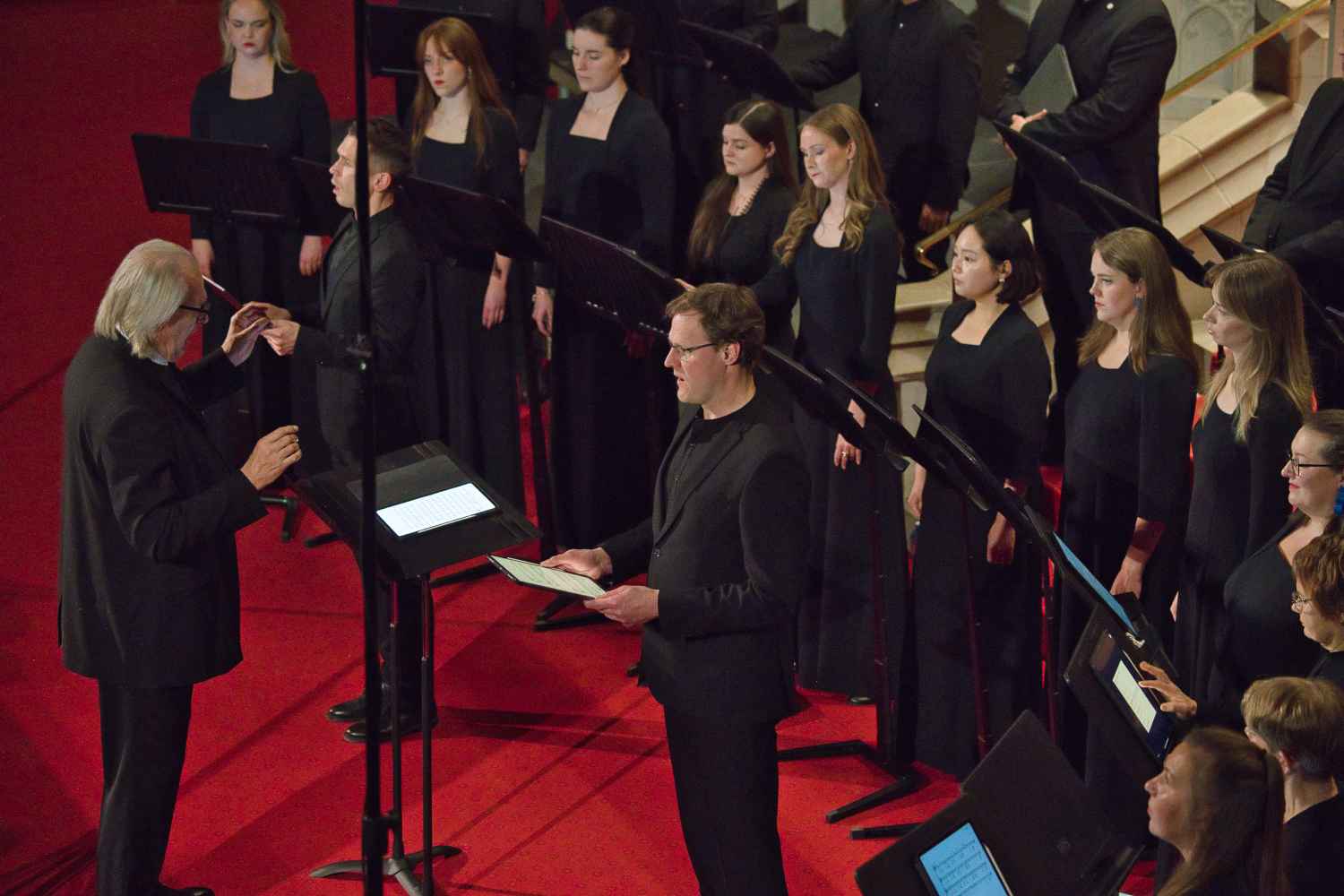
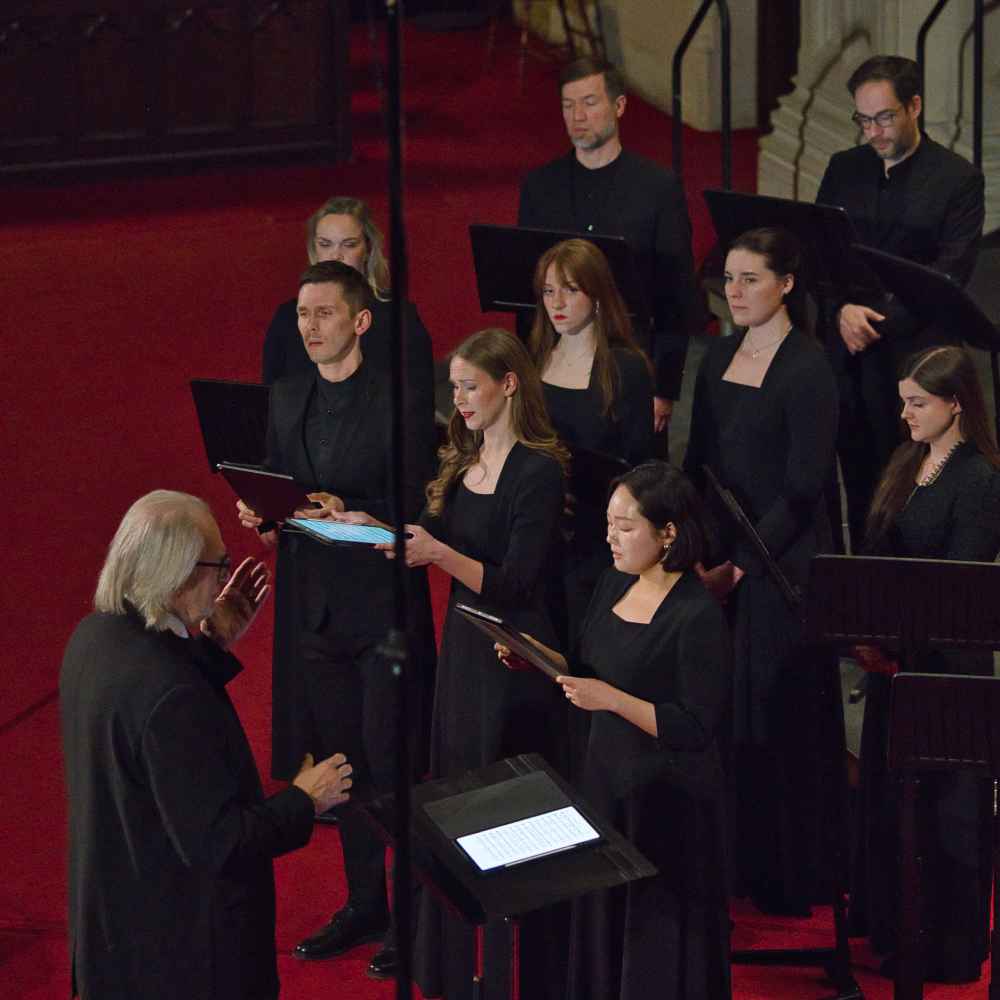
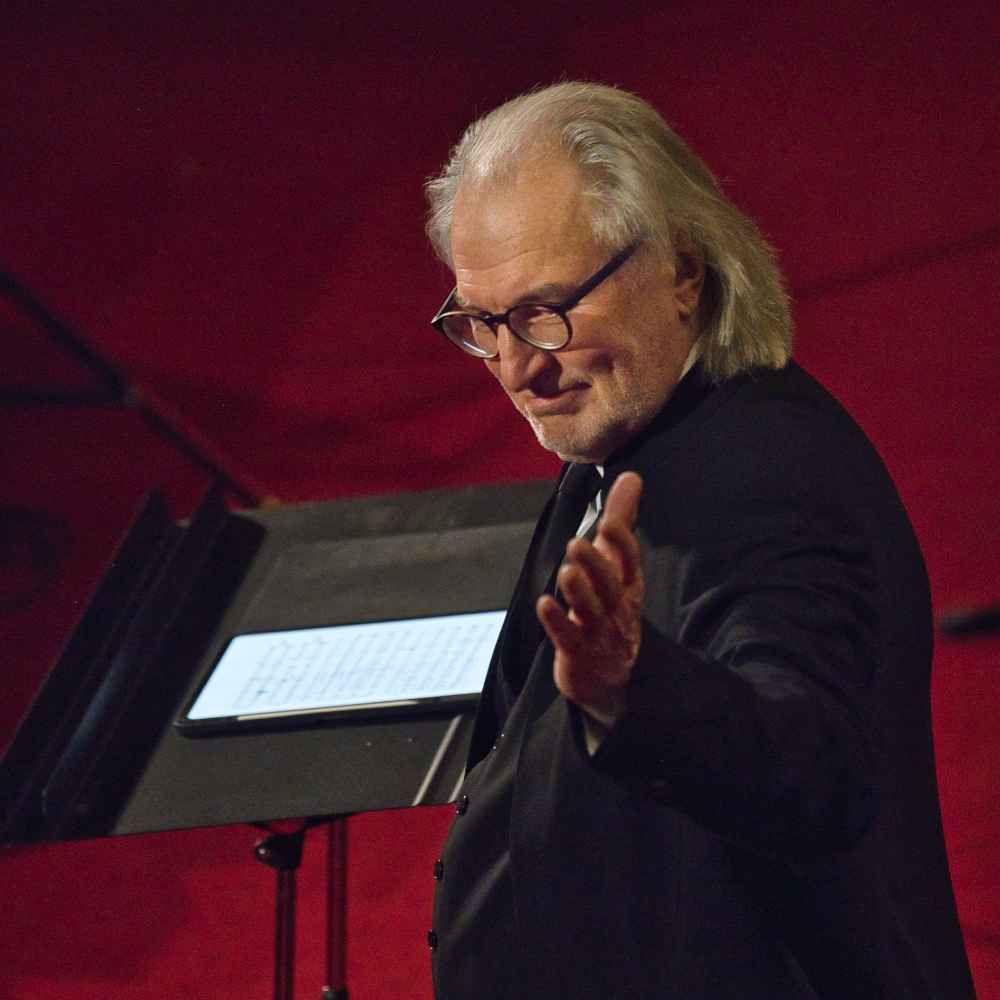
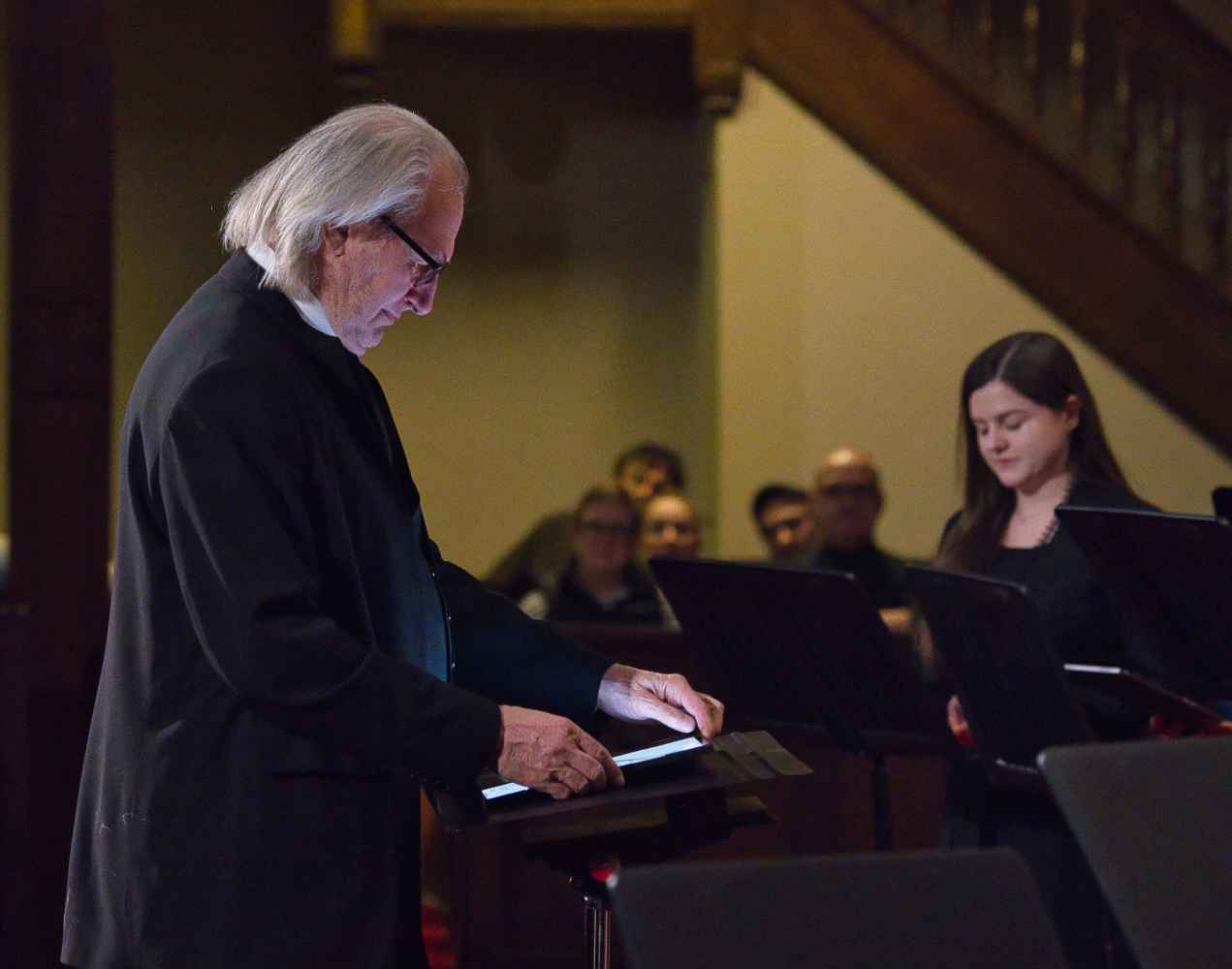
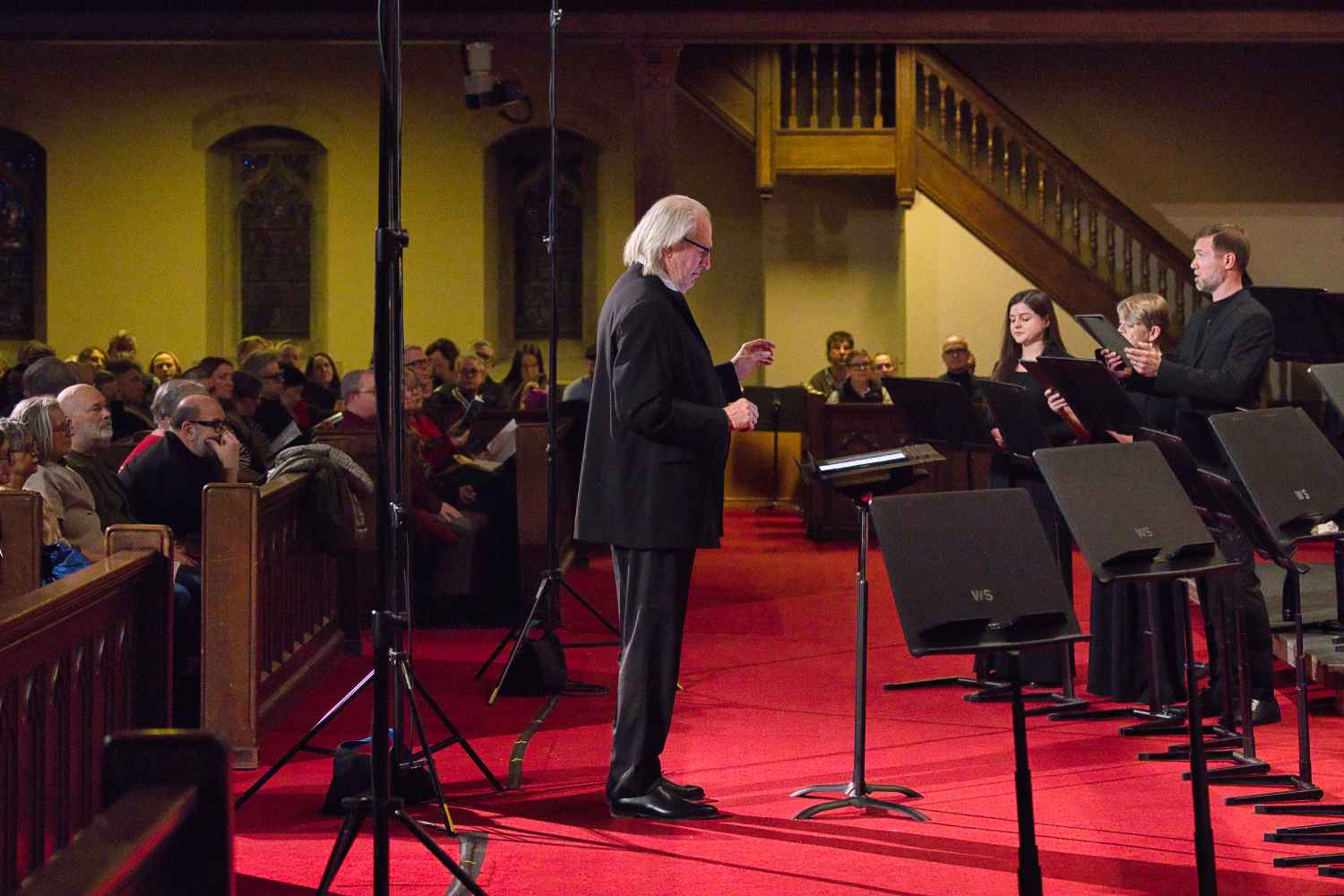
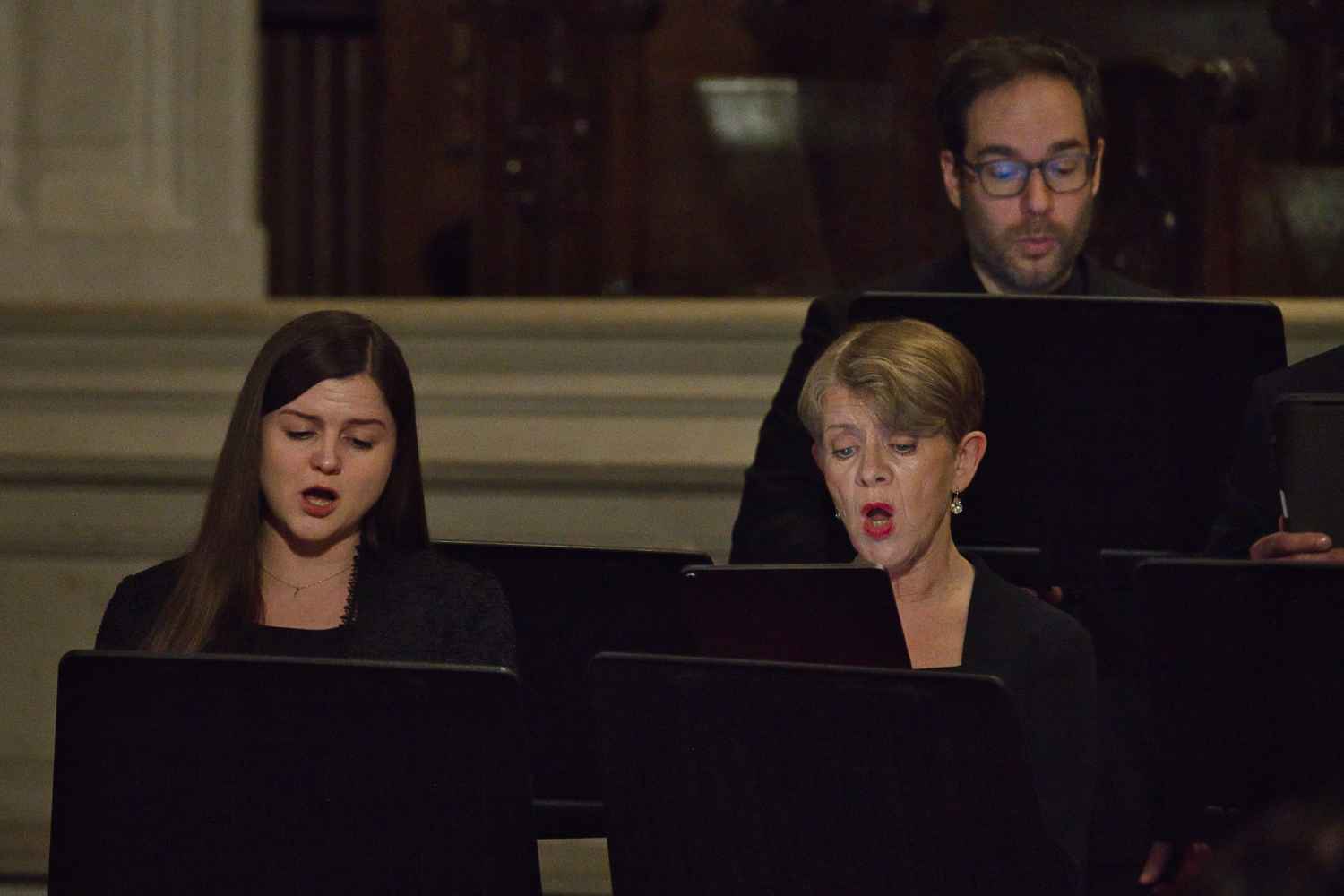
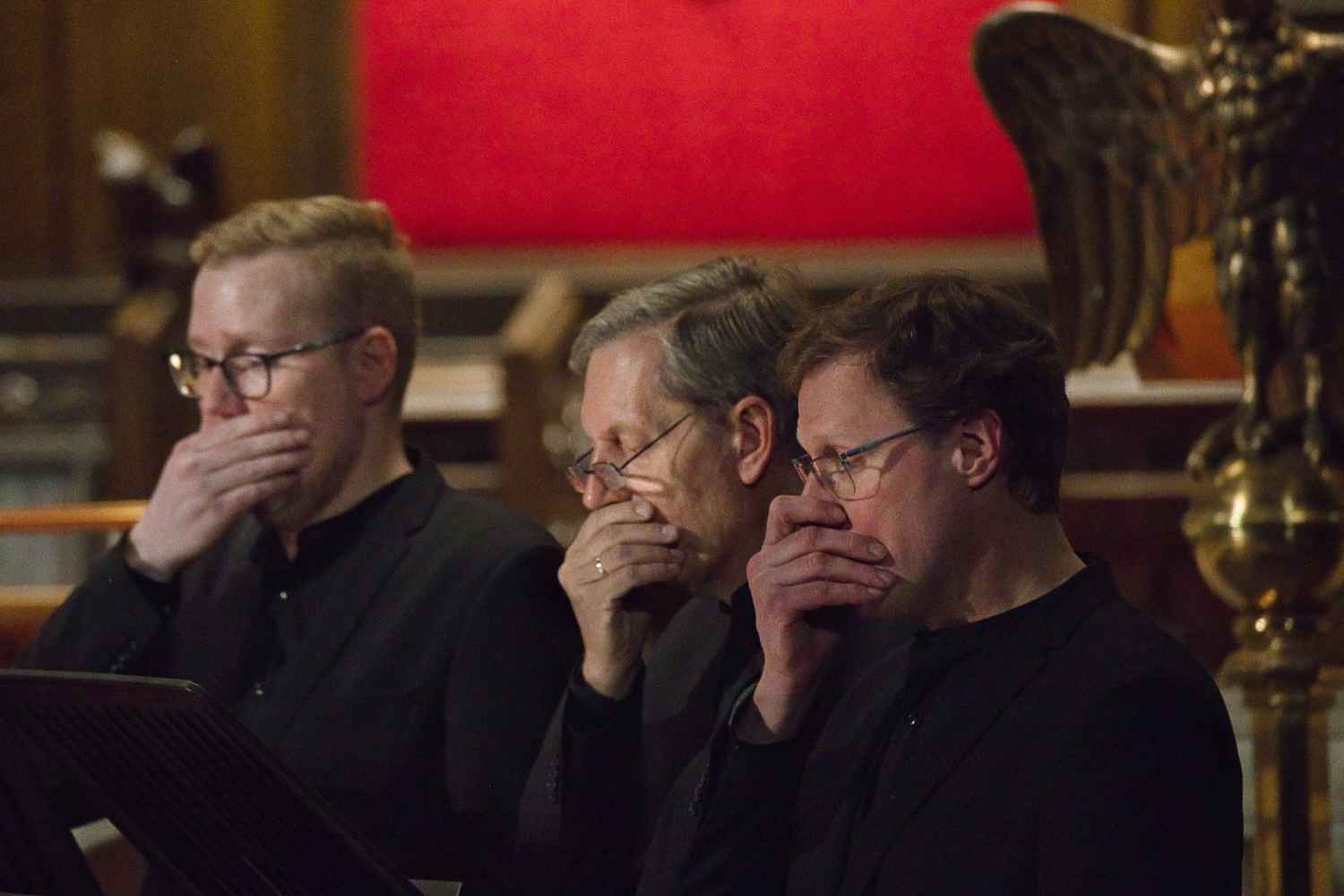
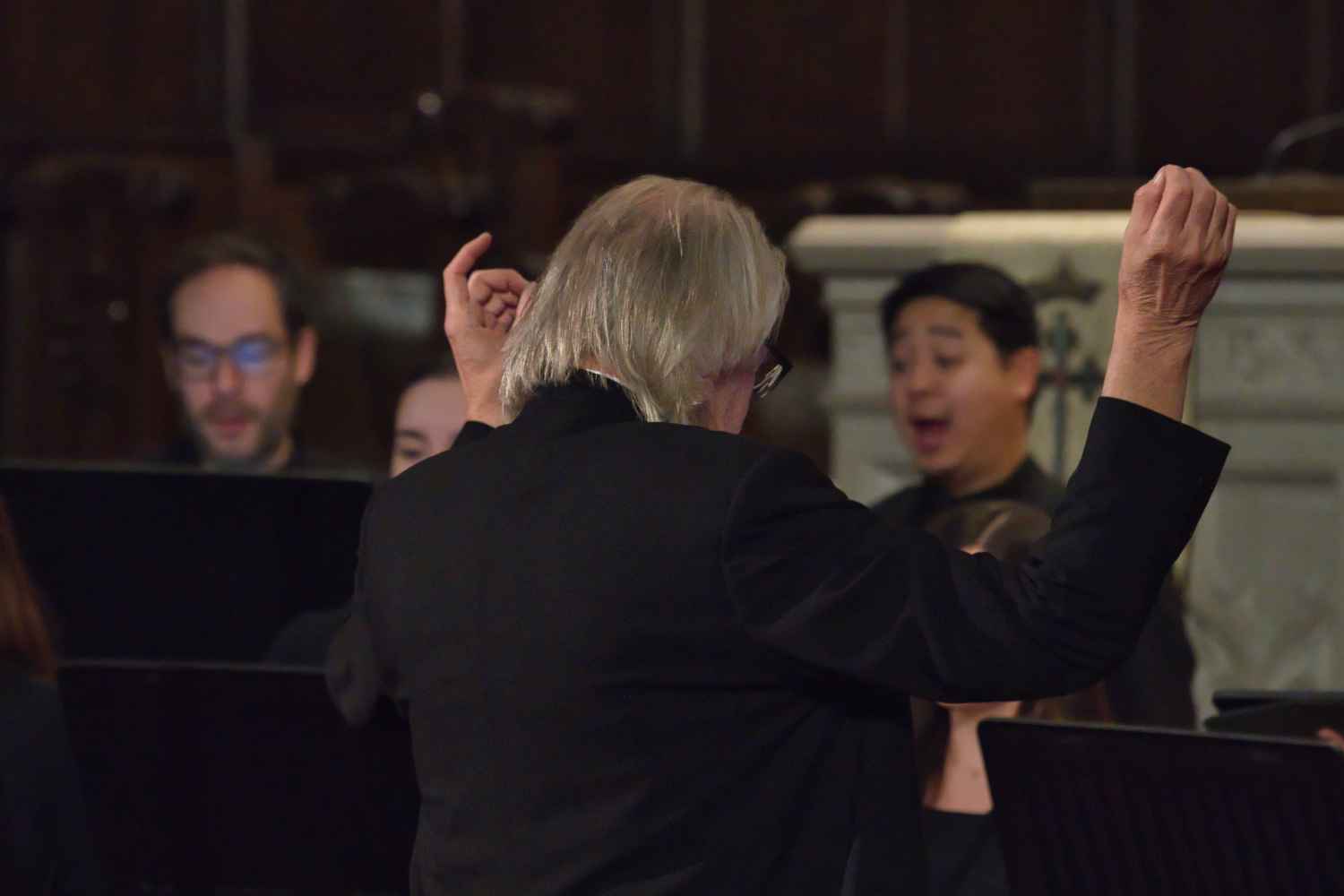
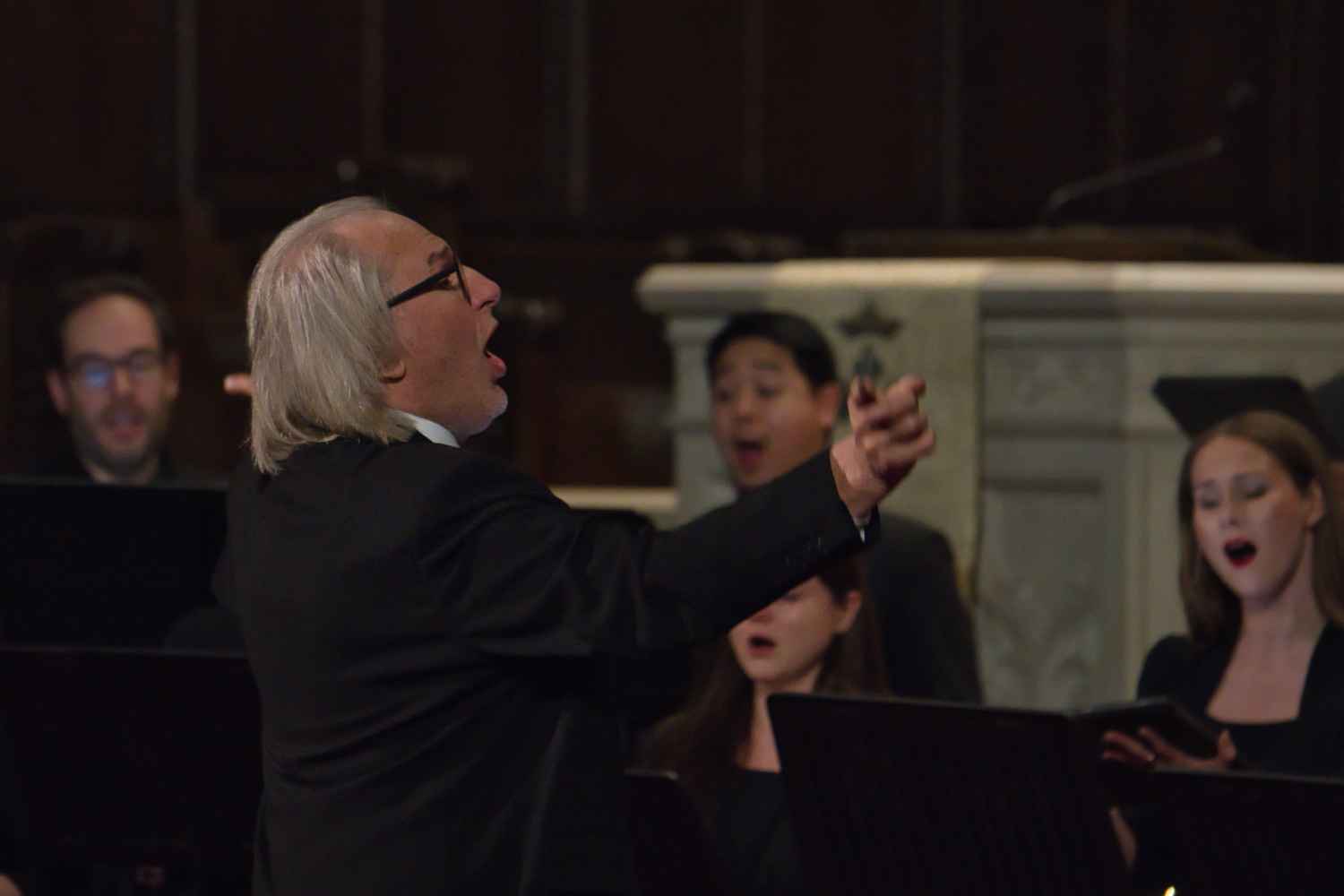
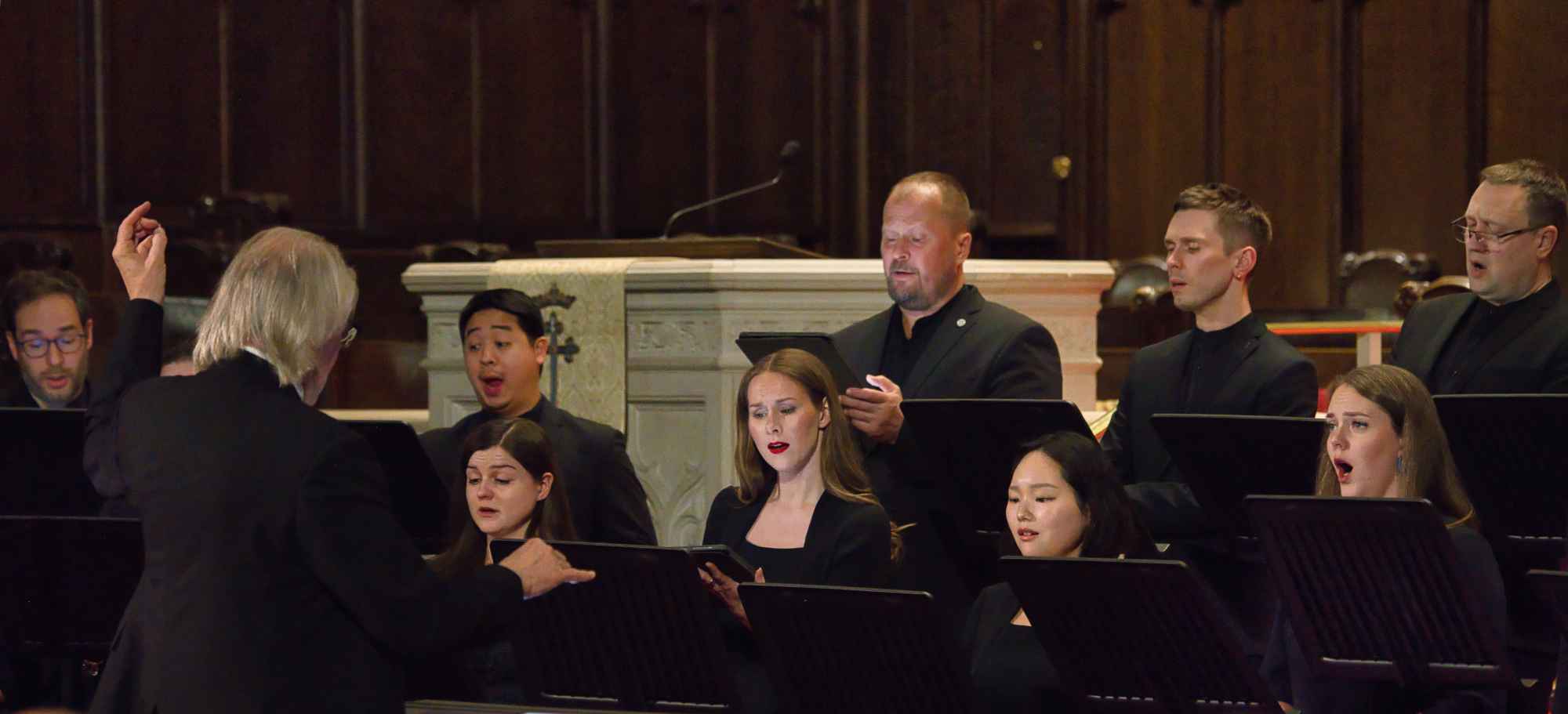
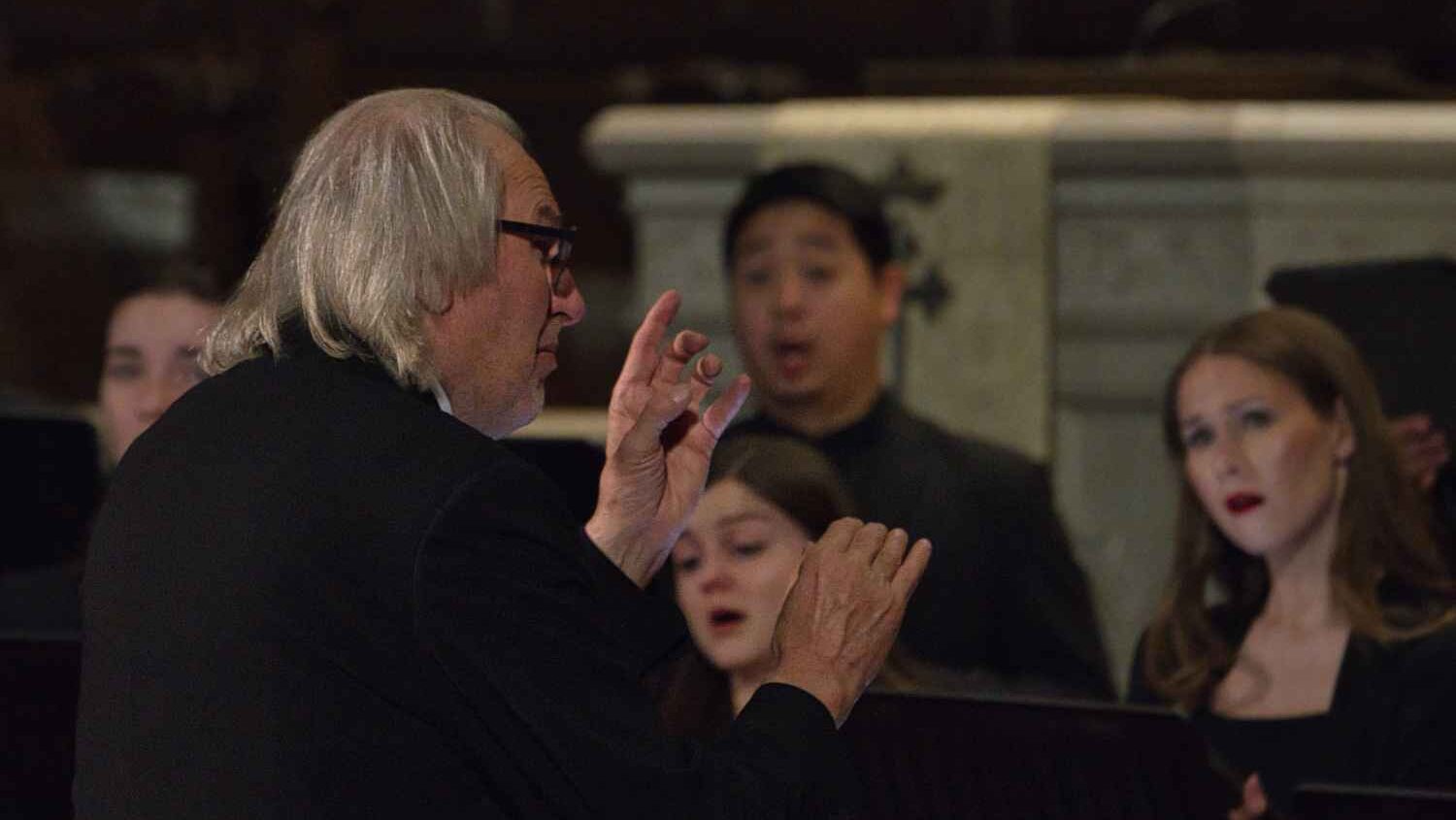
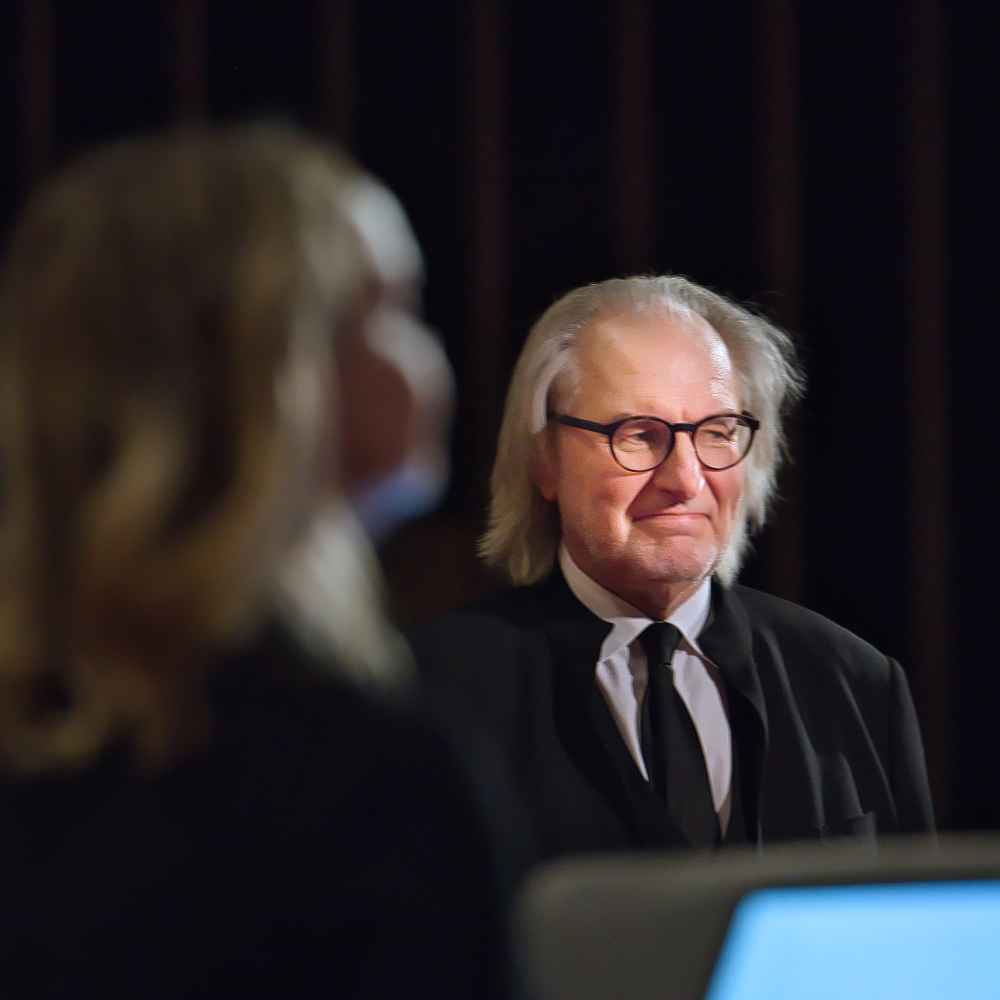
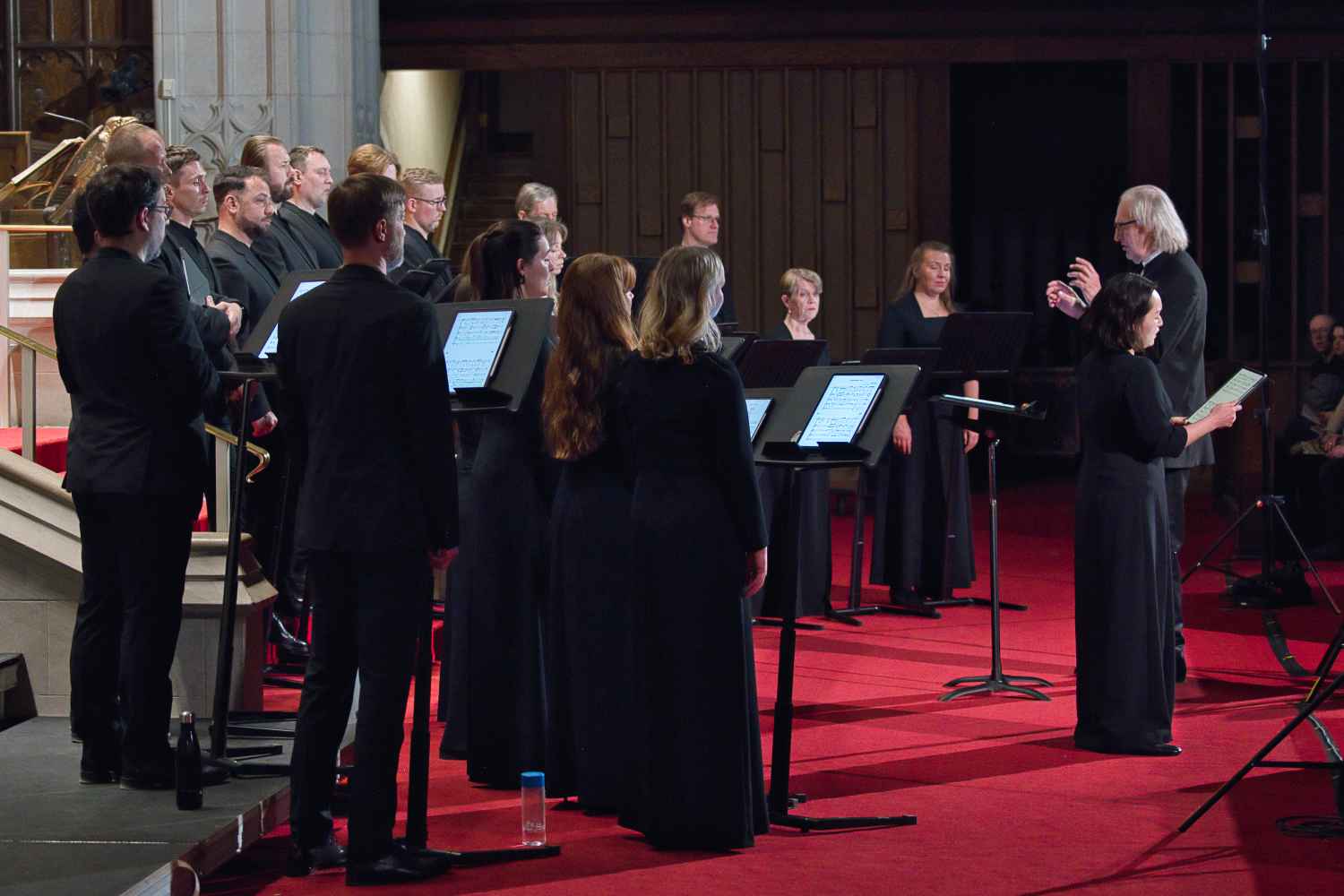
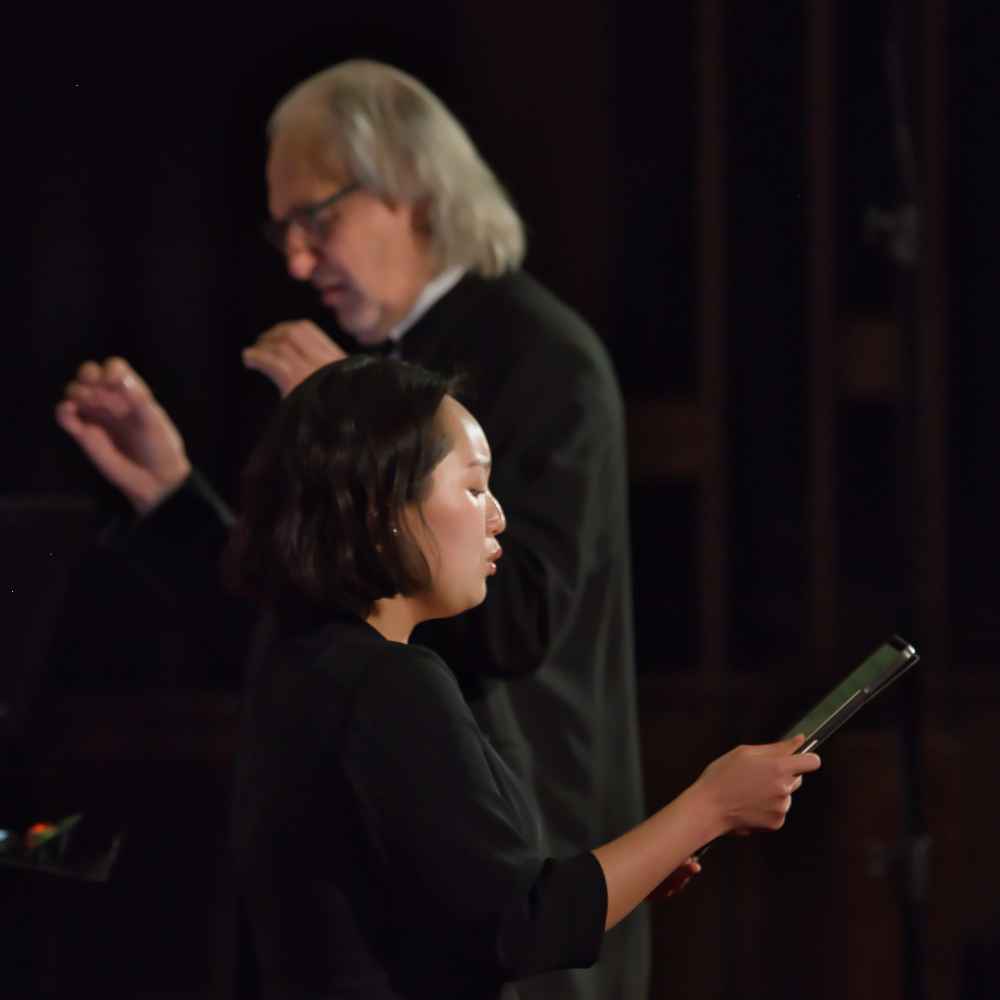
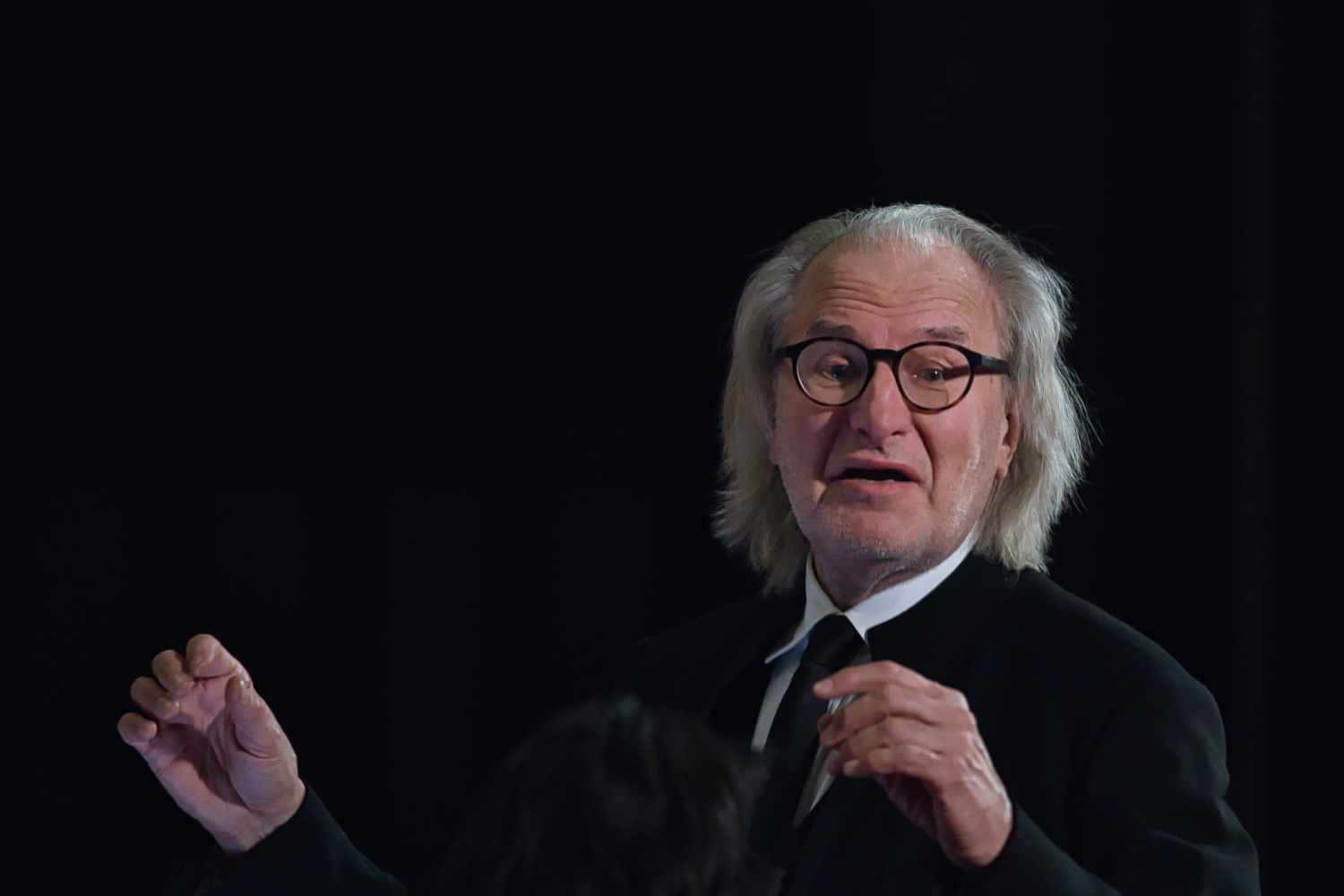
In “Which was the Son of…” (2000), the choir tackled the English text with a left to right ping-pong effect. Biblical name lists are notoriously long and toilsome. But here, the lineage of Jesus became playful through rolling Rs and dynamic emphases on names like Abraham and Jesse. The piece concluded with the declaration “son of God” and a rising “amen,” a peak Pärt reaches in several works. This was followed by a Pärt favourite, “The Deer’s Cry” (2007), anchored by a prayer of survival from St. Patrick, who uttered those well known words of “Christ with me, Christ before me, Christ behind me…” During “Dopo la Vittoria” (1996), which had a skipping start, conductor Tõnu Kaljuste was notably invested, singing and mouthing along with the choir. The ceiling was struck with piercing highs and low roars, alongside bumping and shuffling rhythms. The first half closed with “Kanon Pokajanen” (1997). This was our first glimpse of theatrical, persistent, closed-mouth humming that droned cleanly underneath the female vocalists’ melody. And also temporary, smaller groupings of choir members before reverting to the full ensemble.
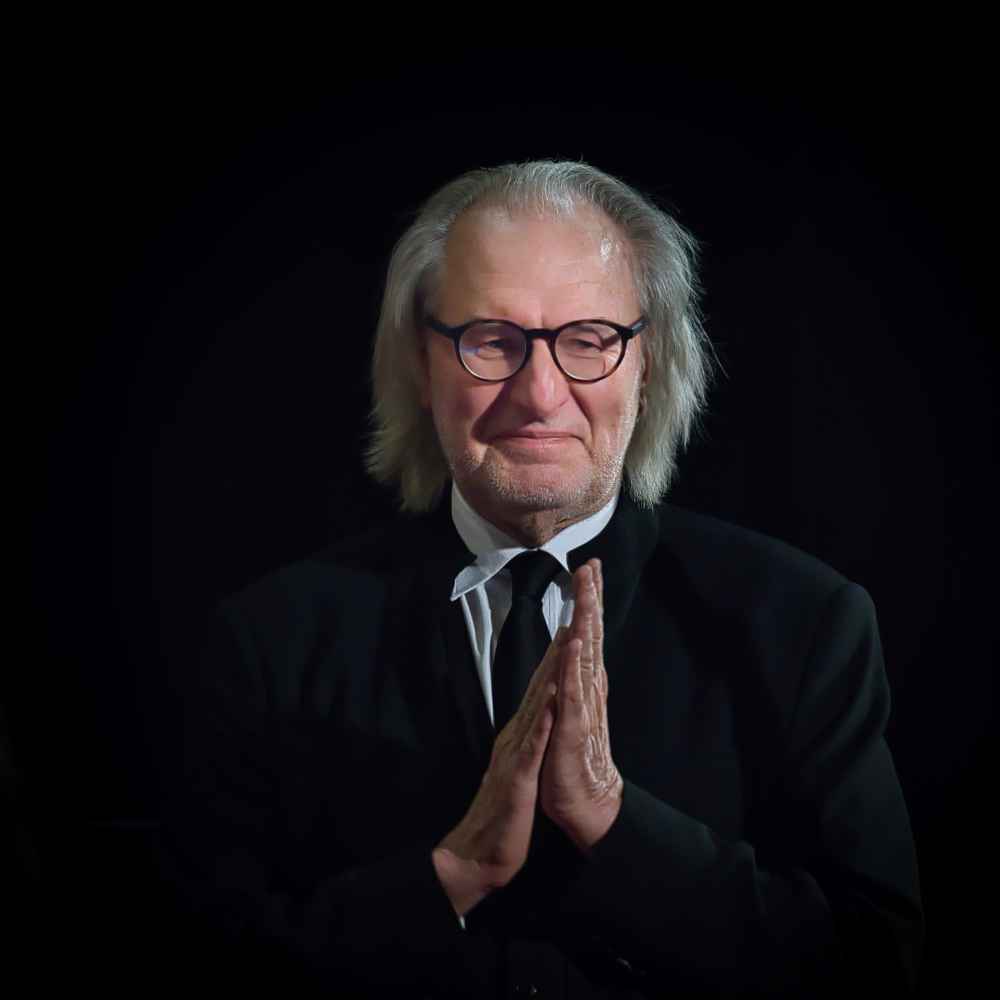
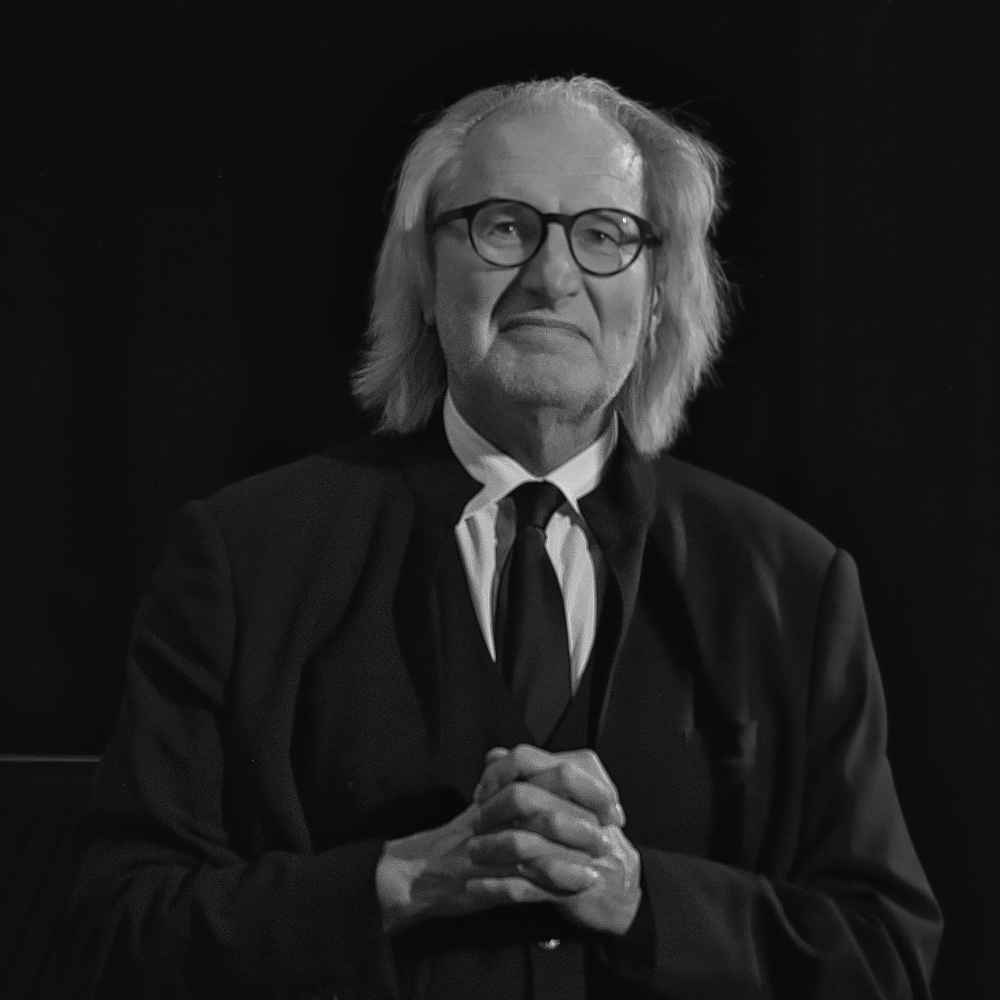
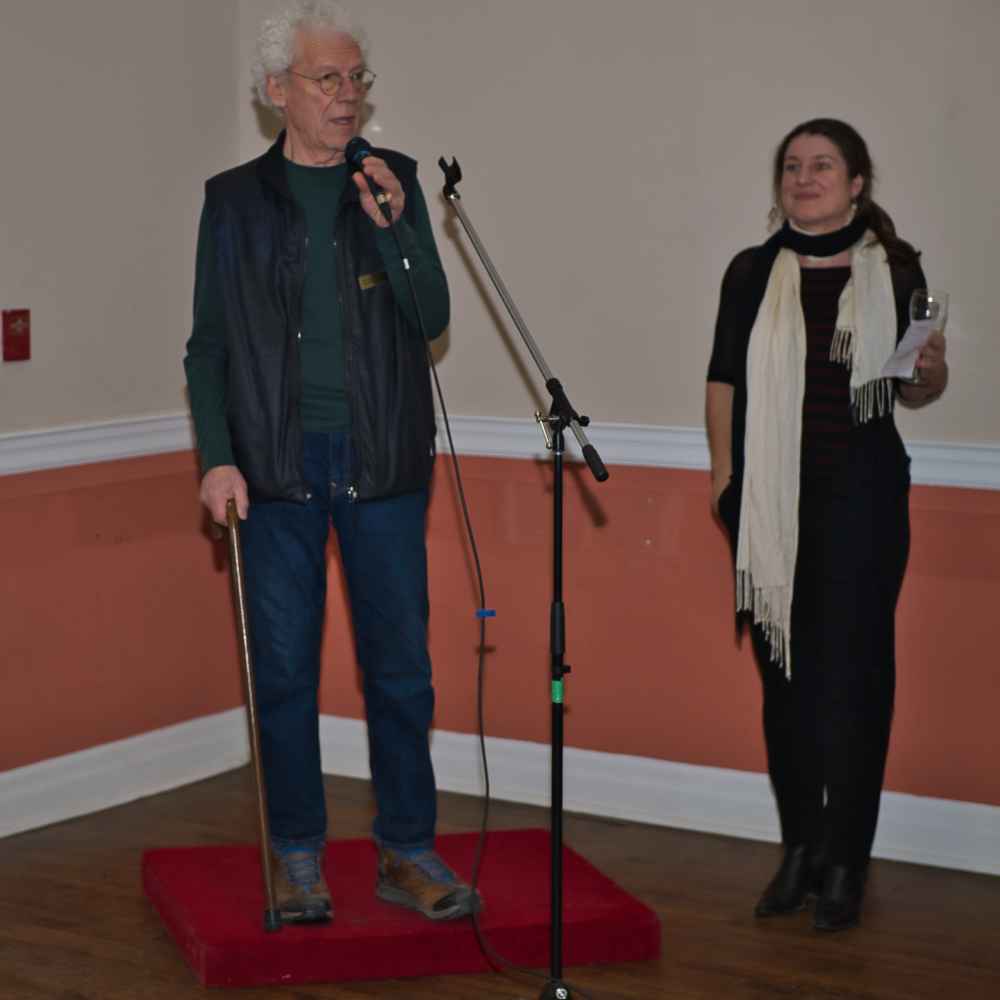
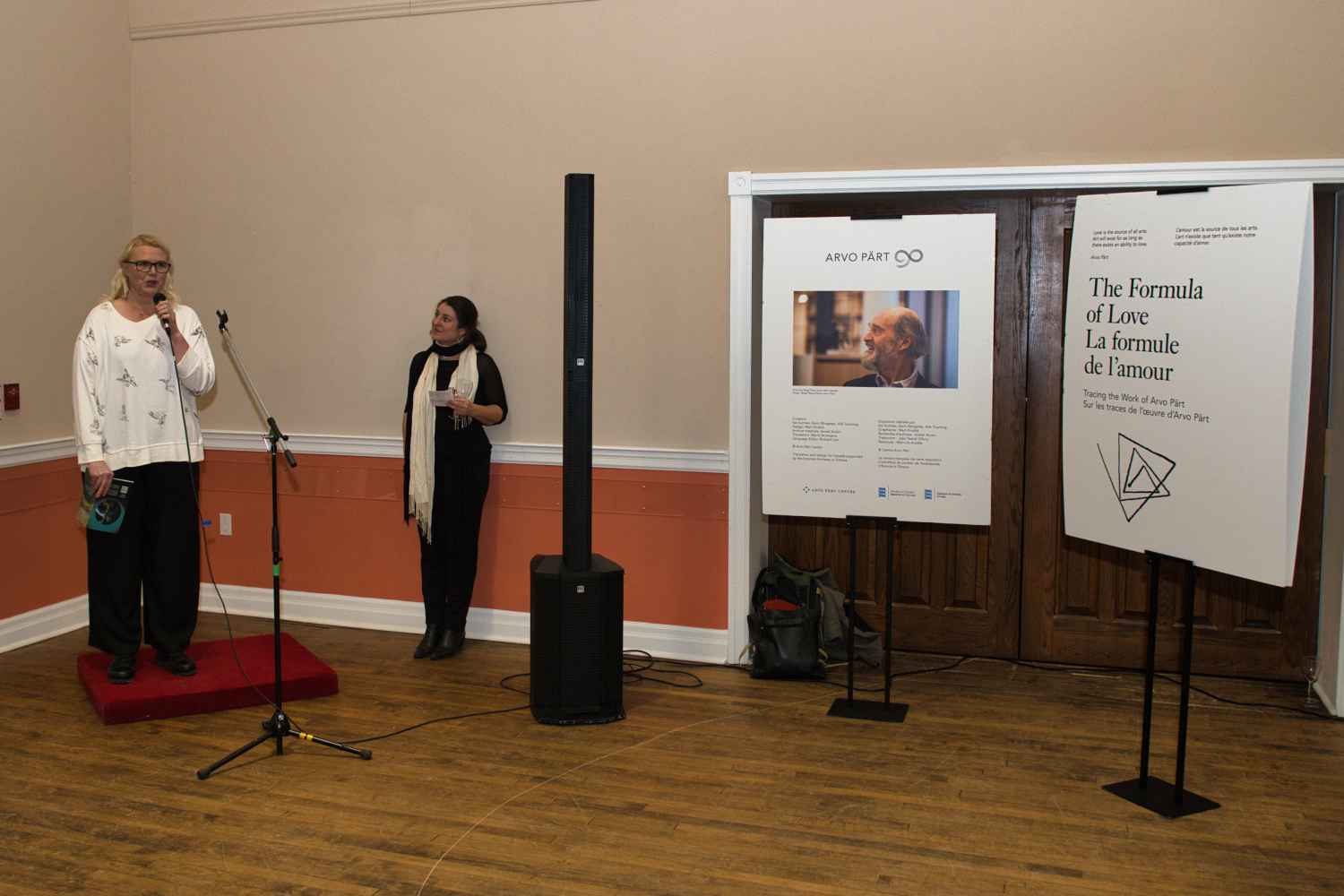
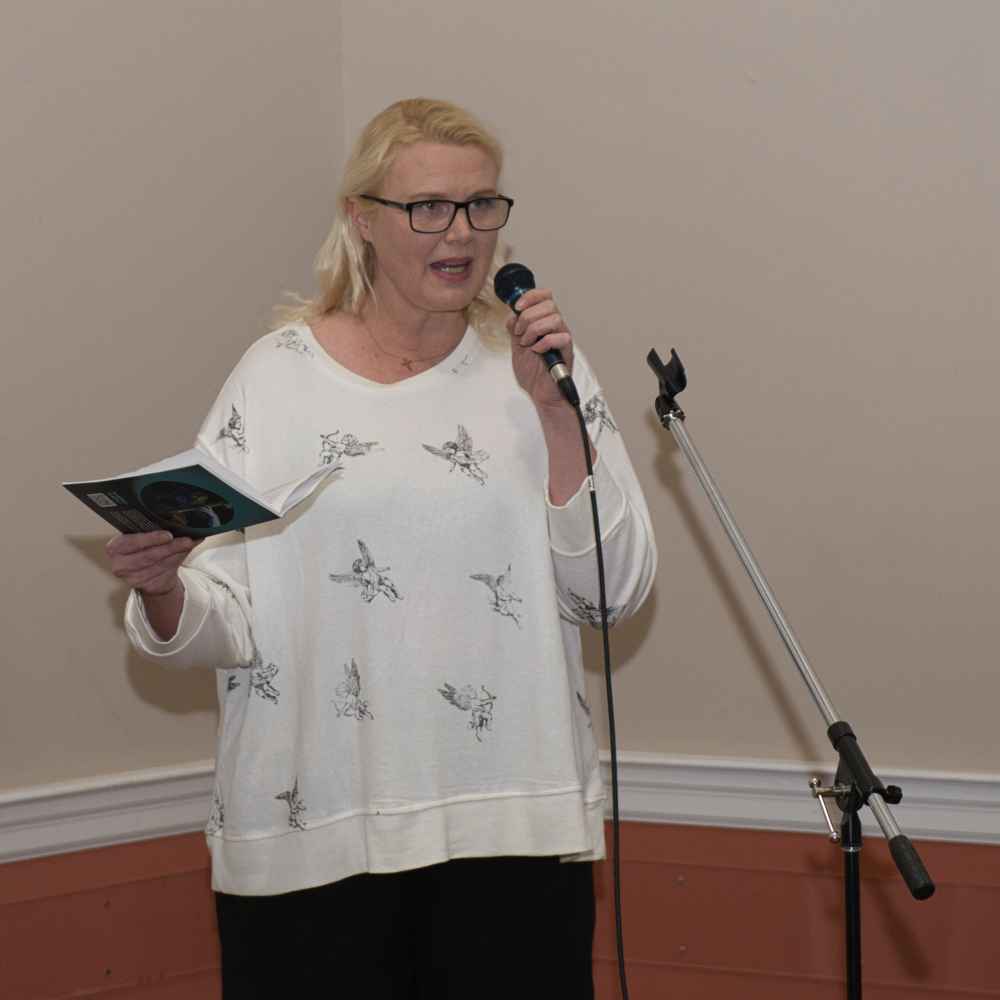
Photo gallery
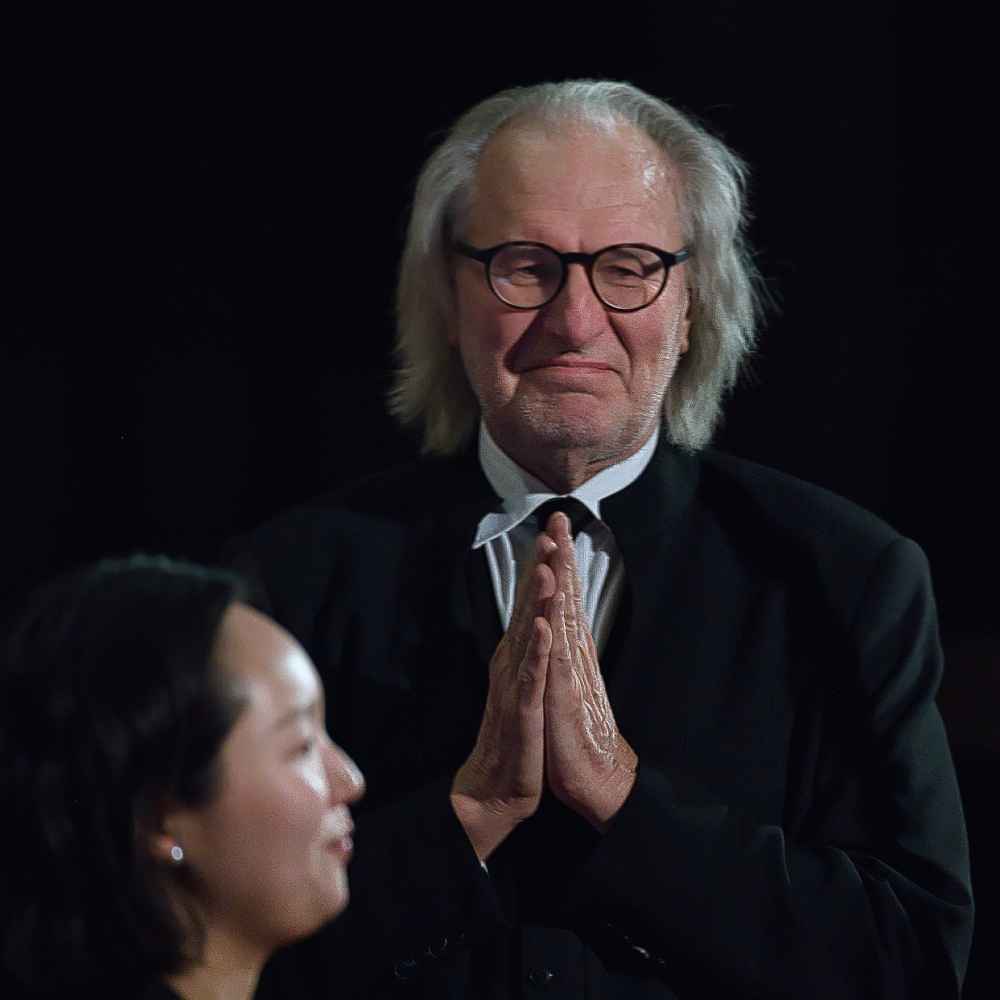
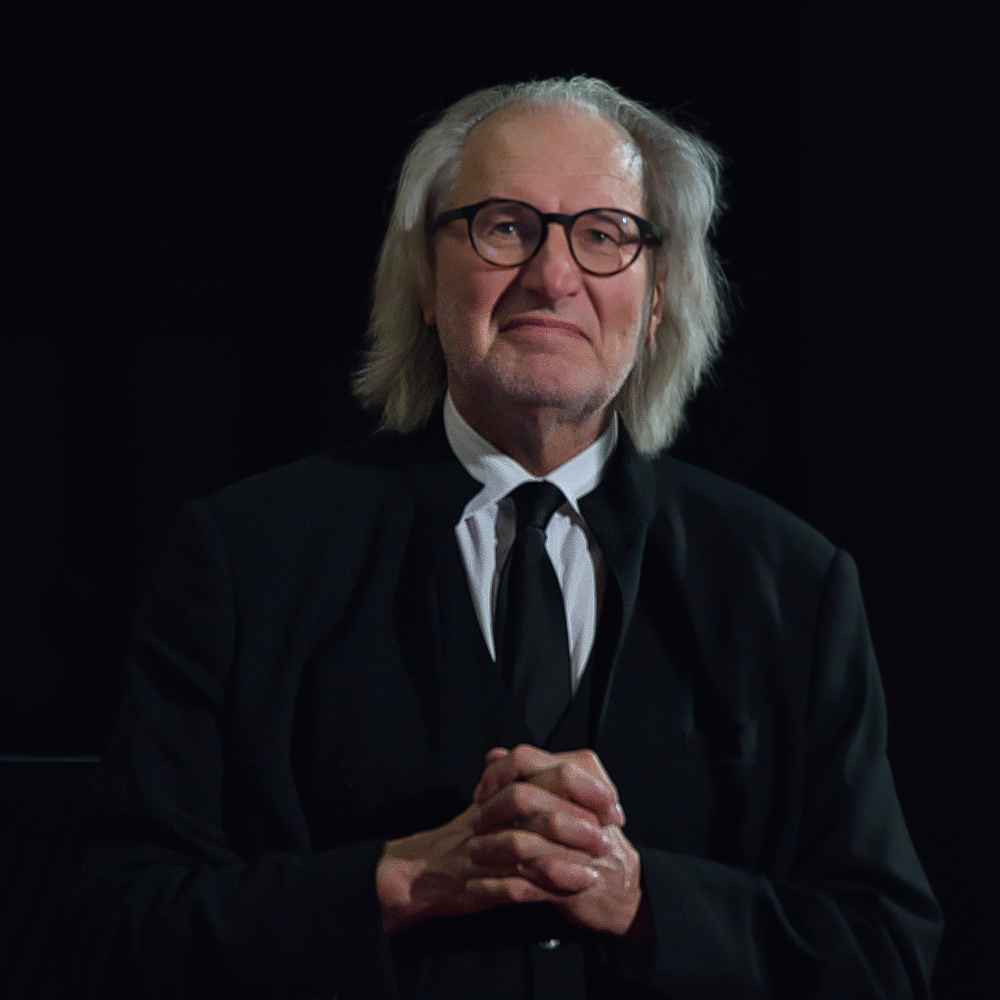
Photos by Peeter Põldre

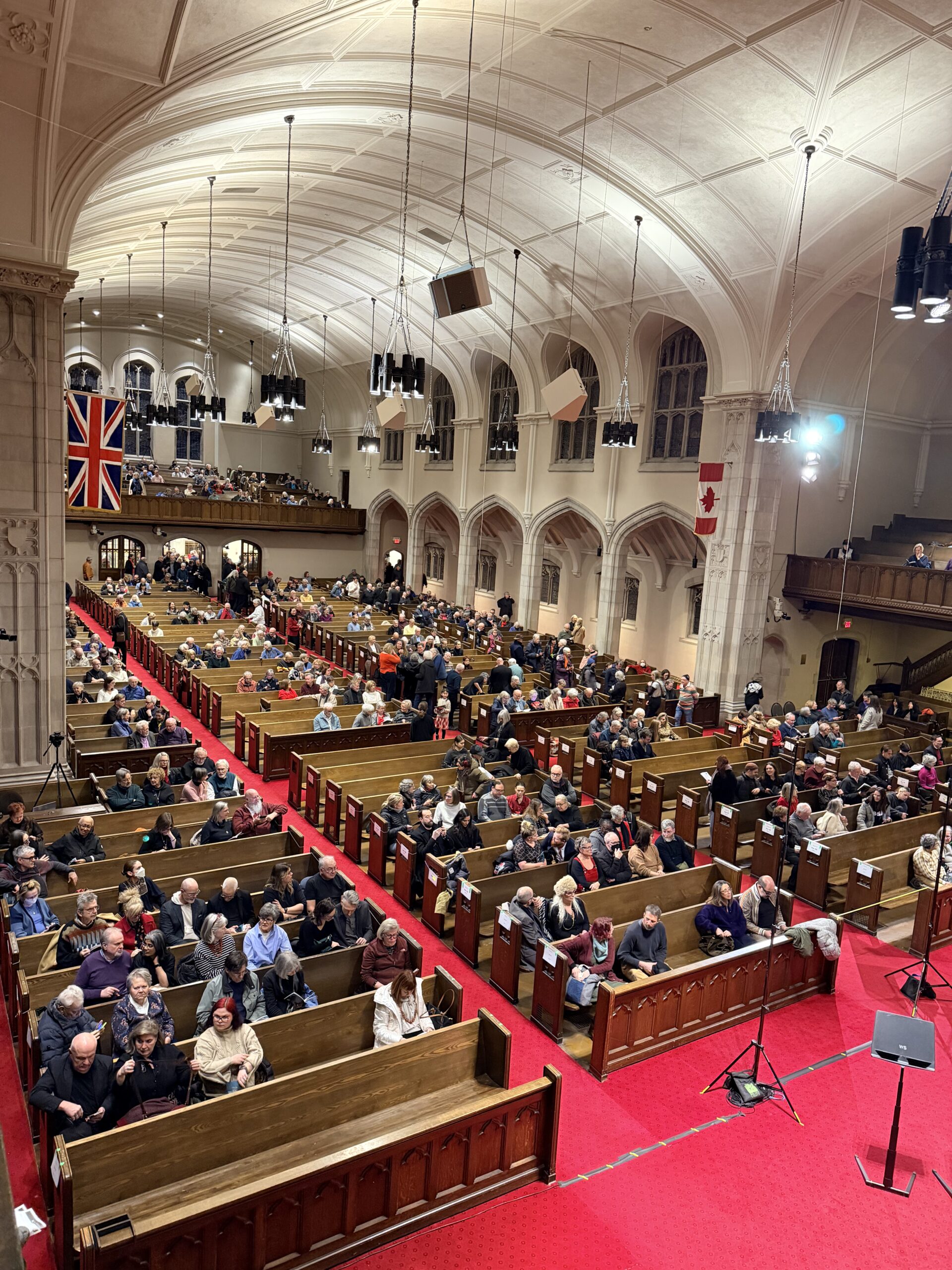
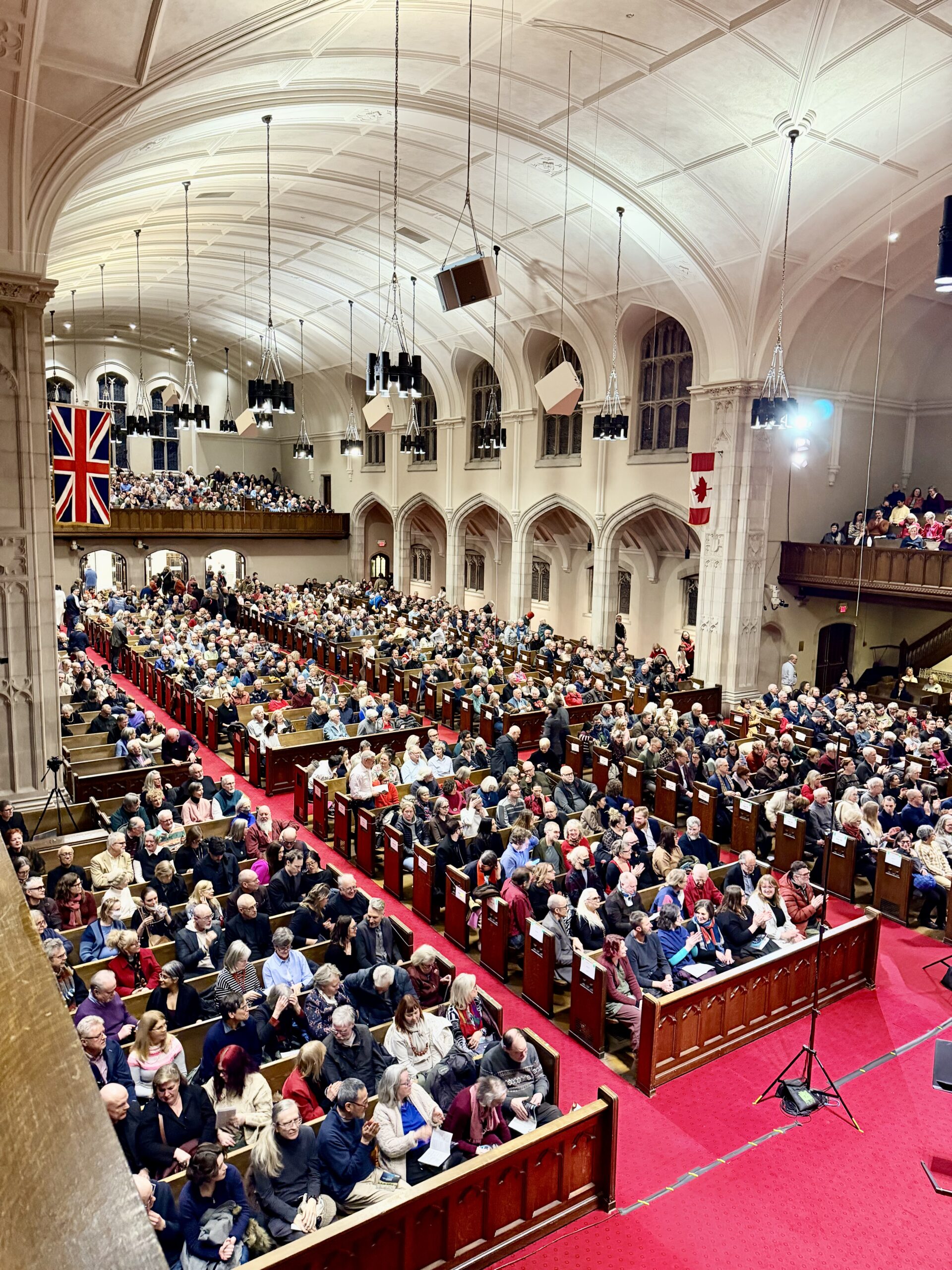
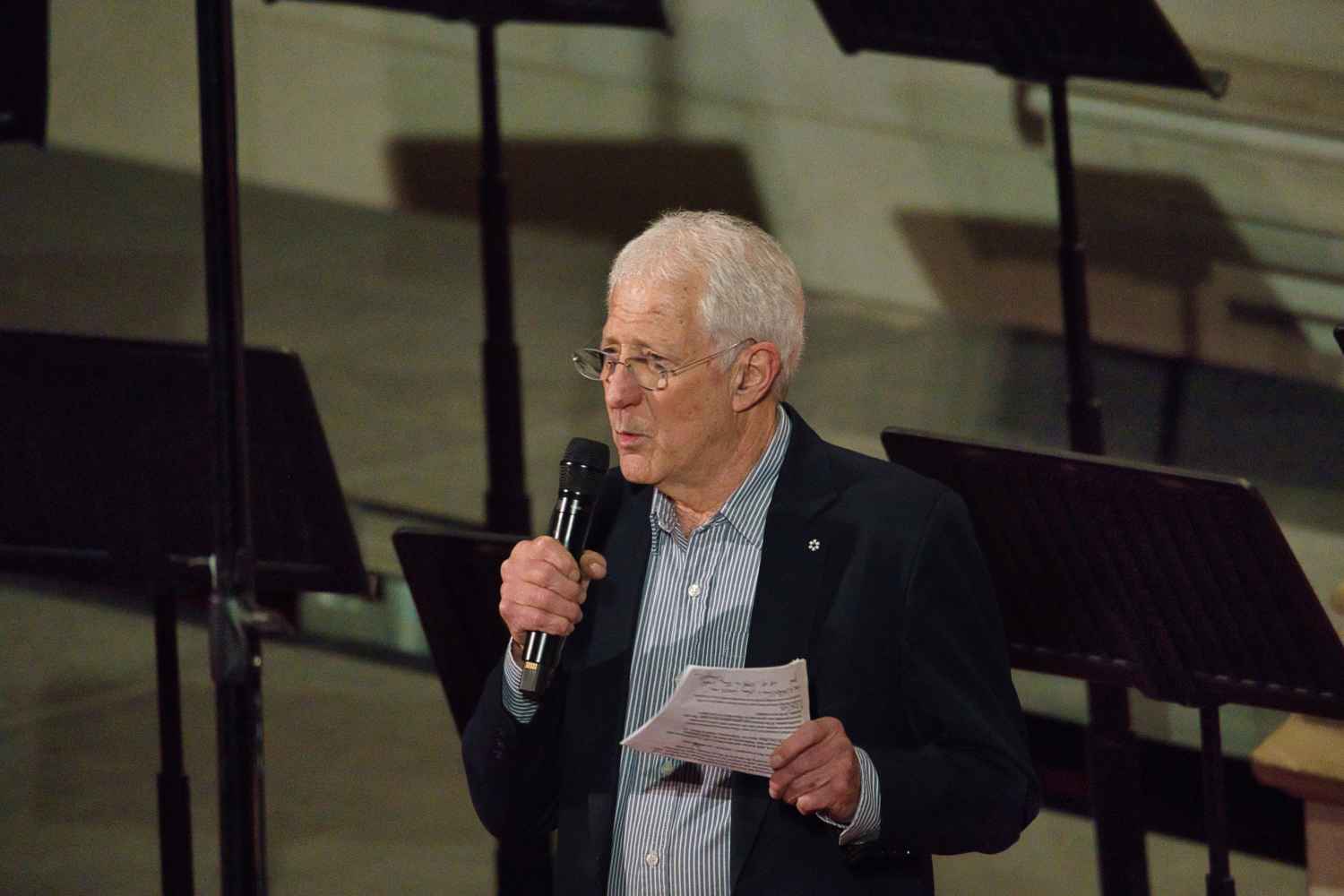
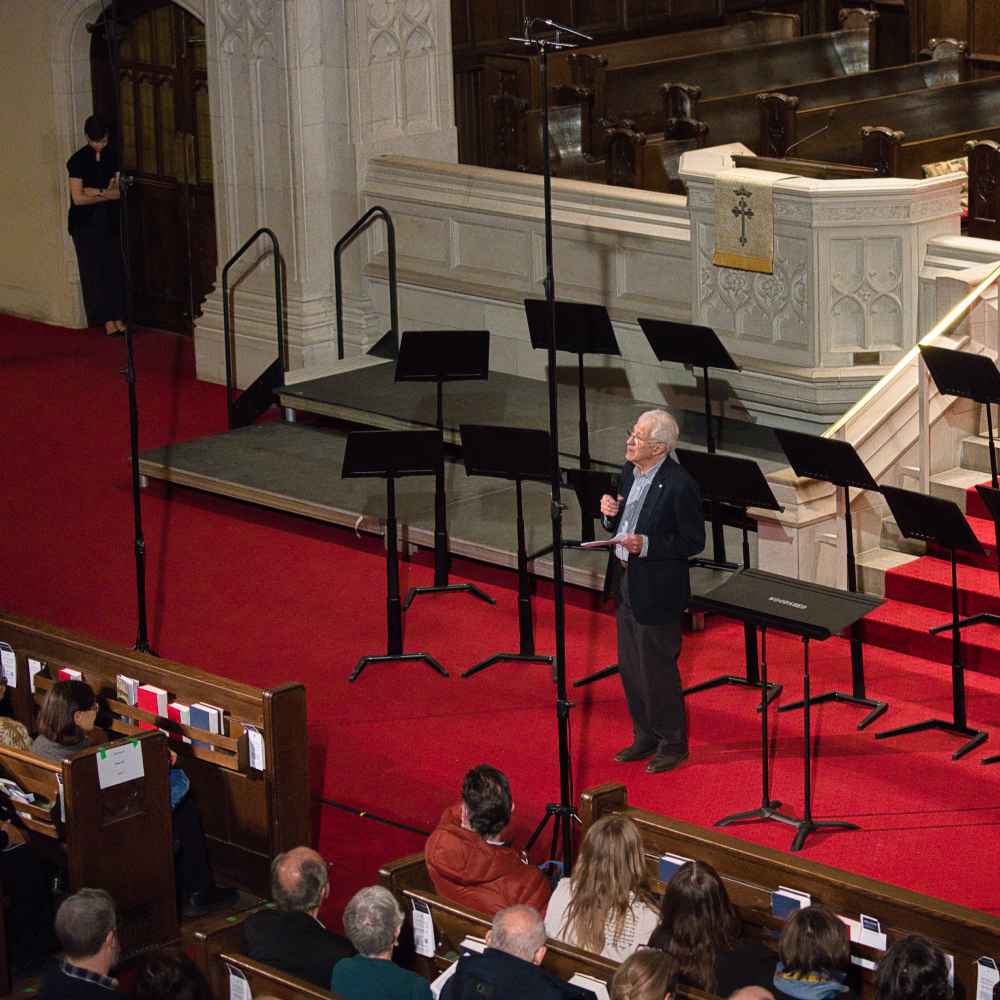
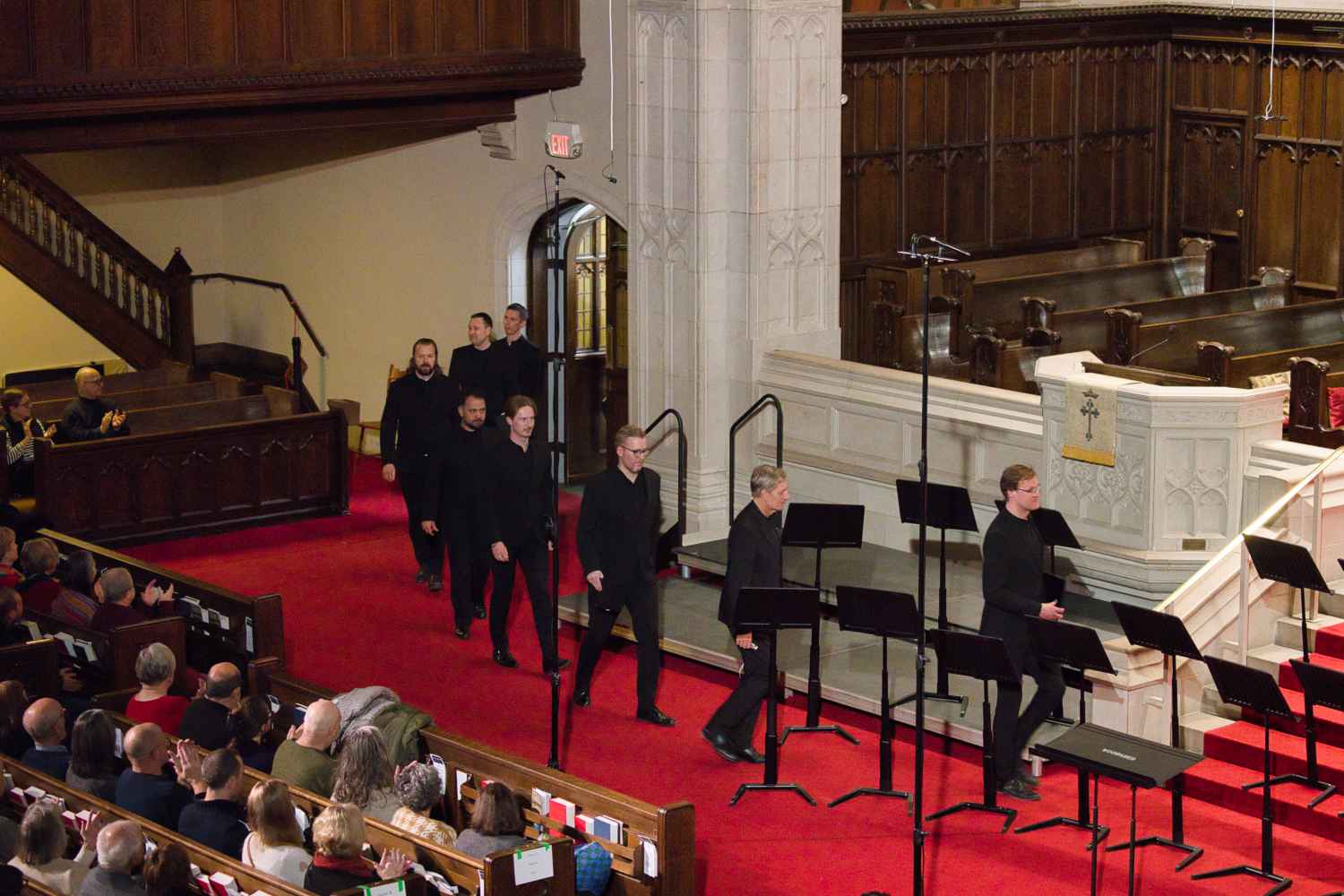
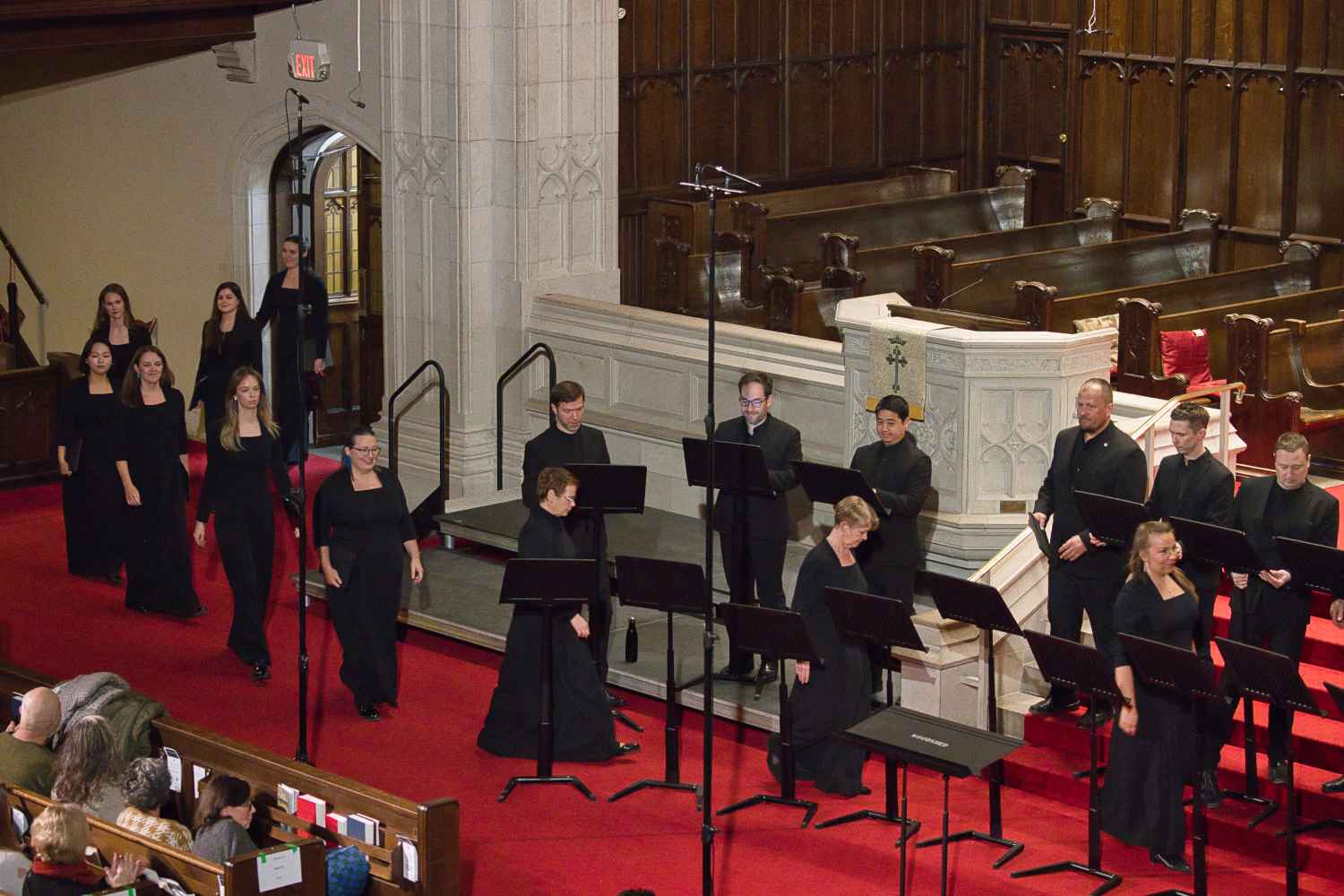
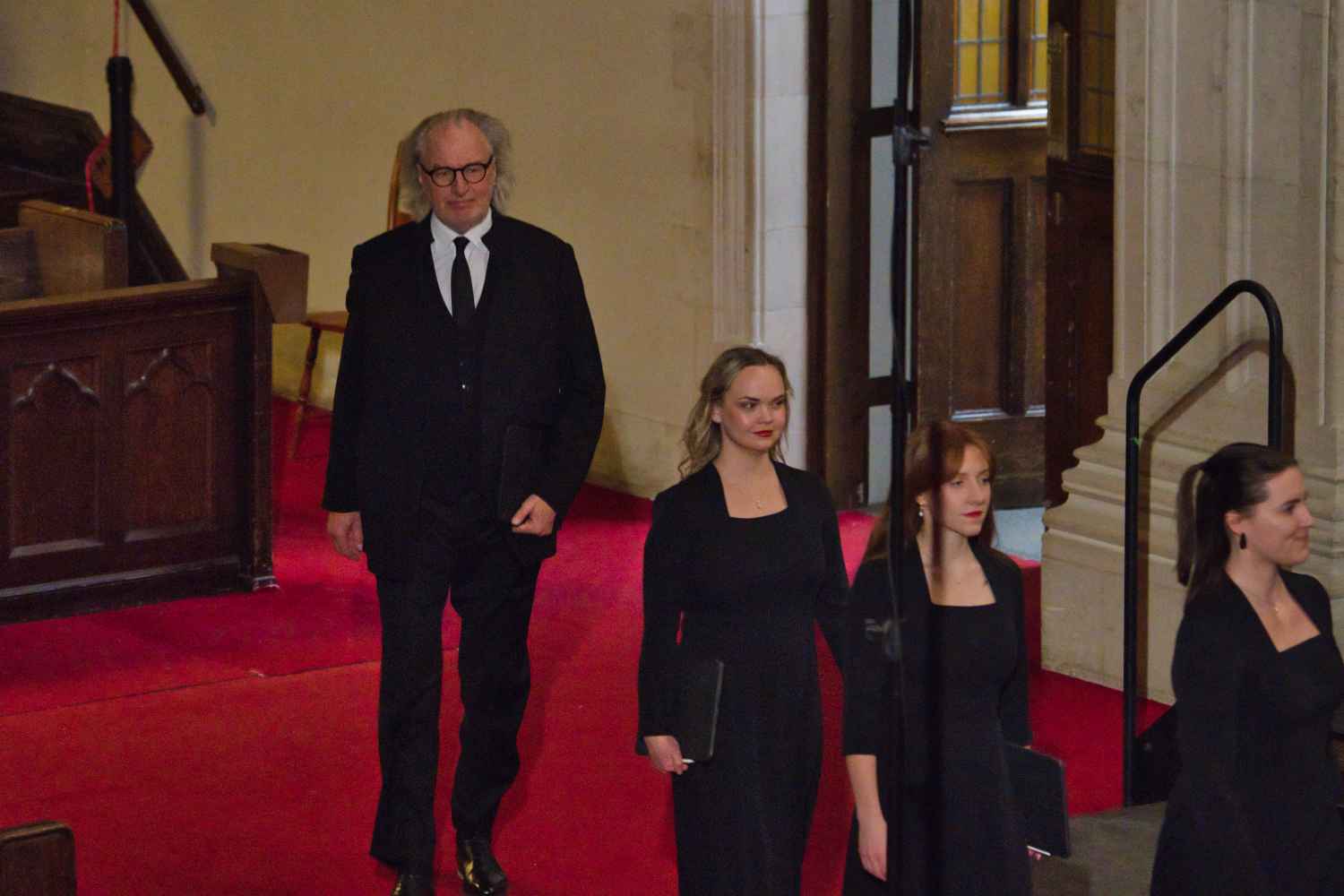
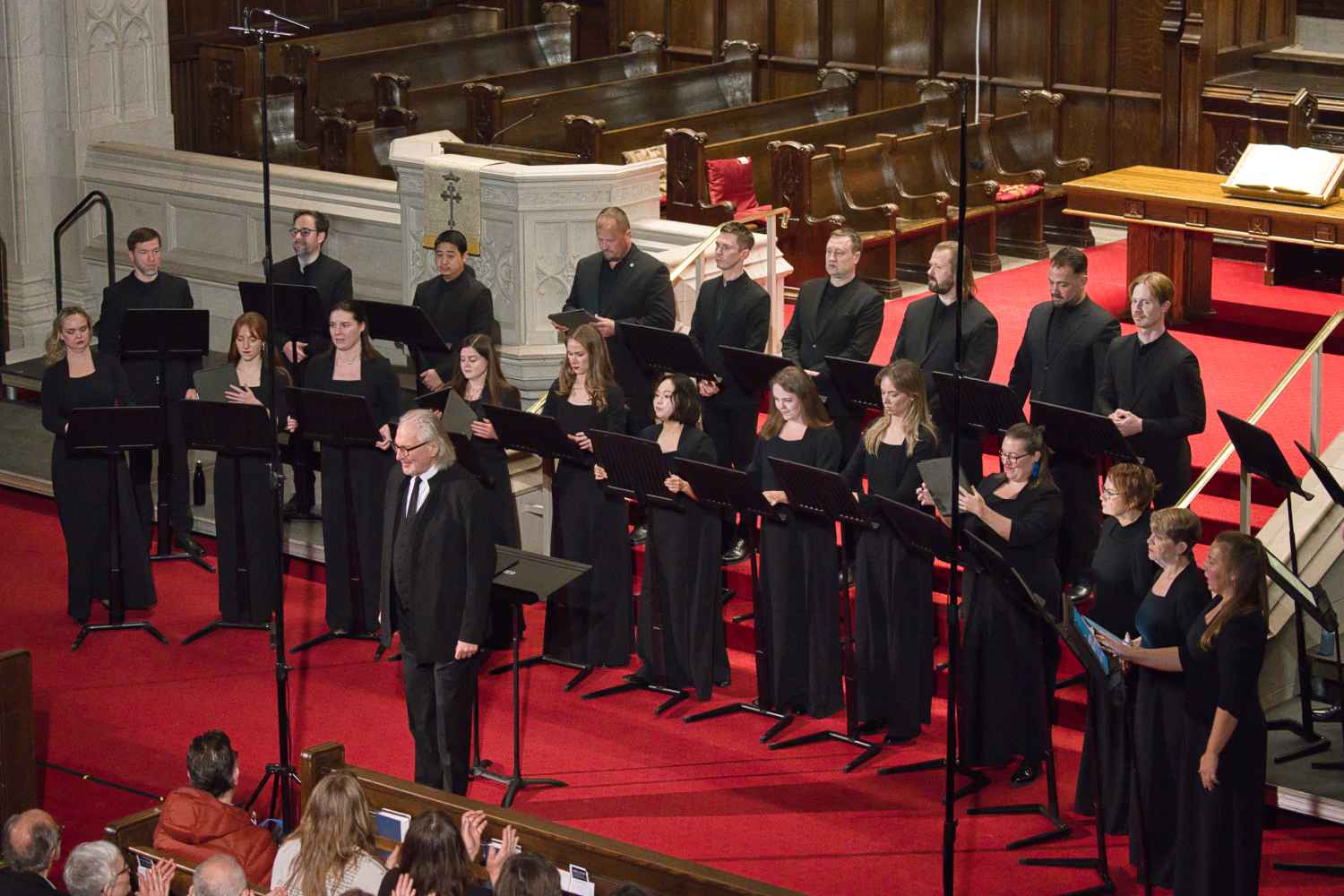
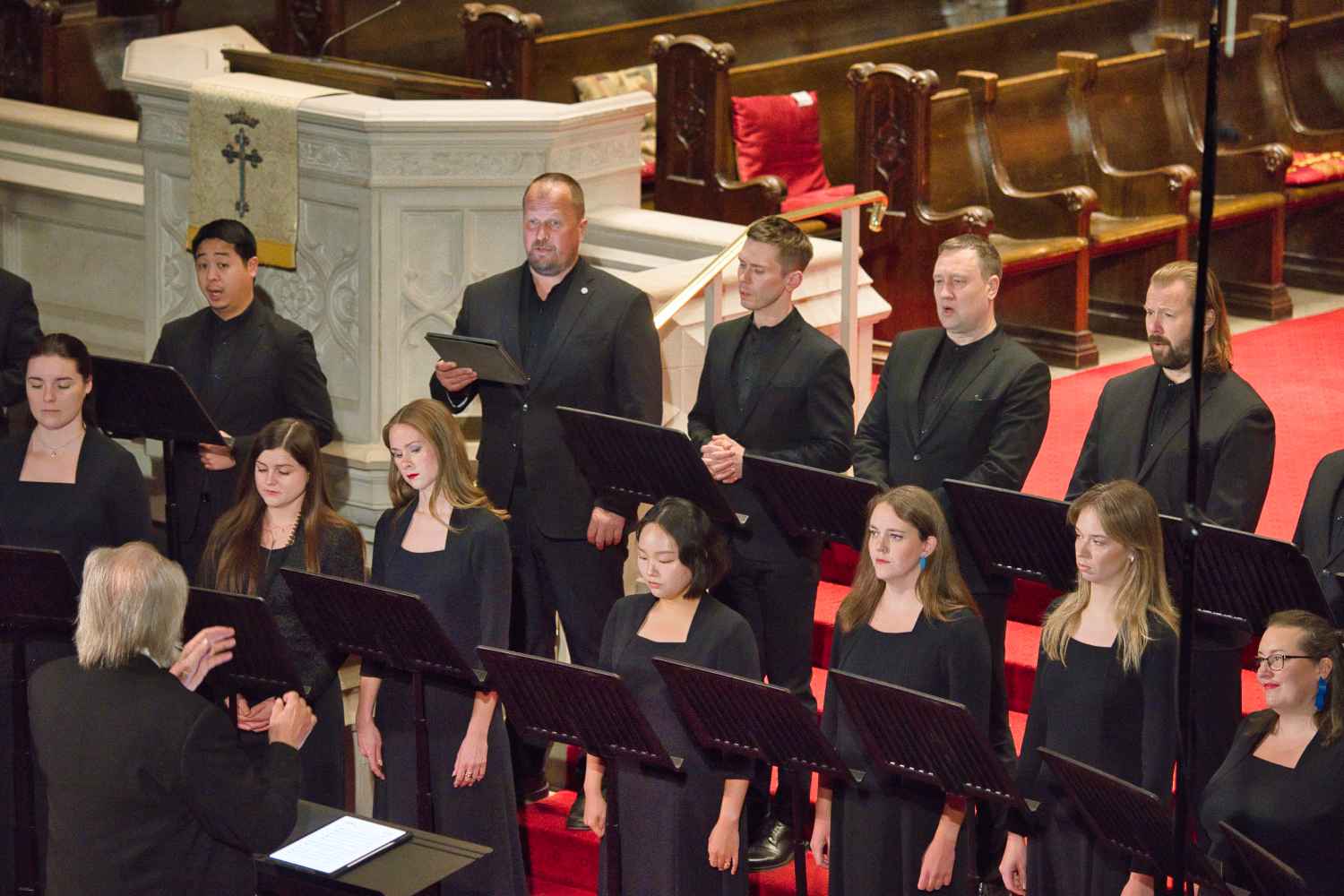
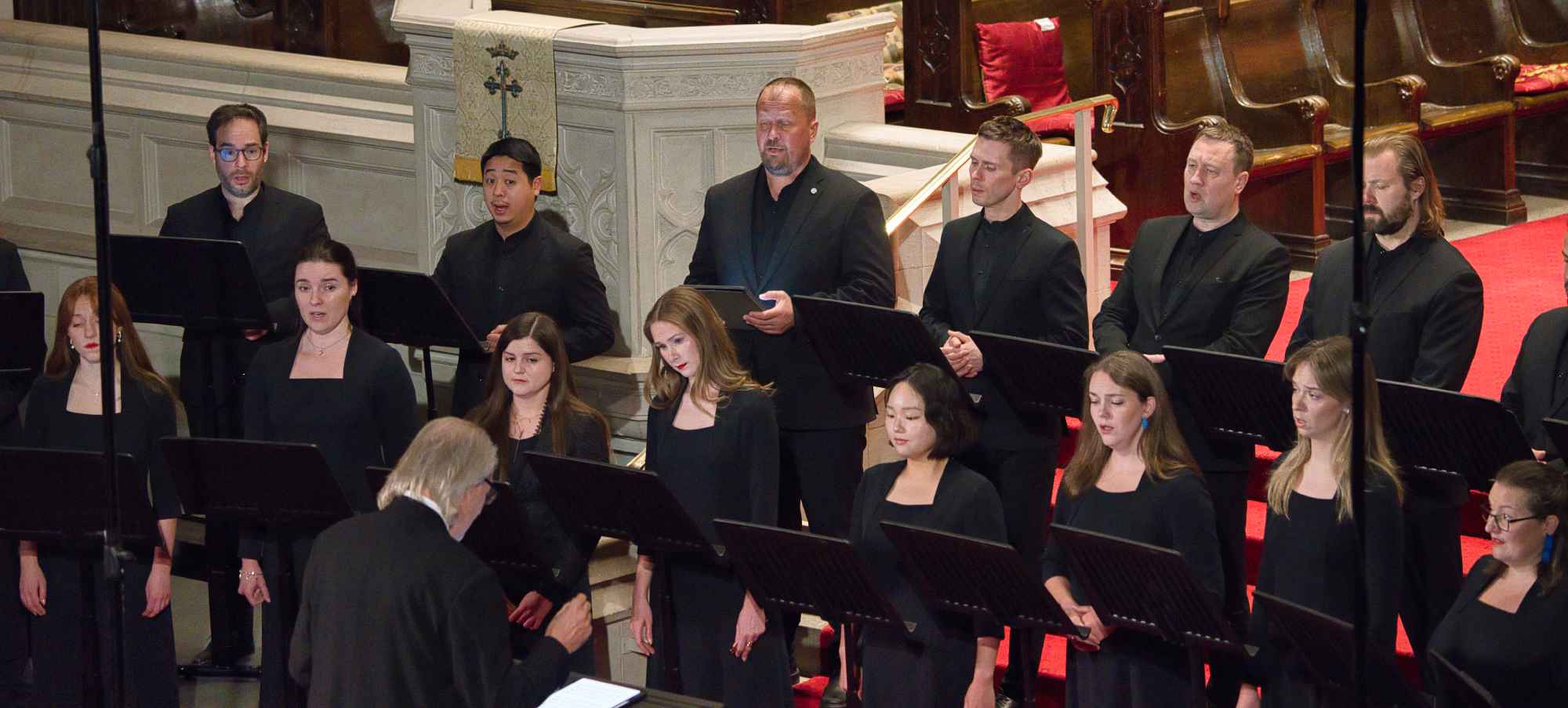
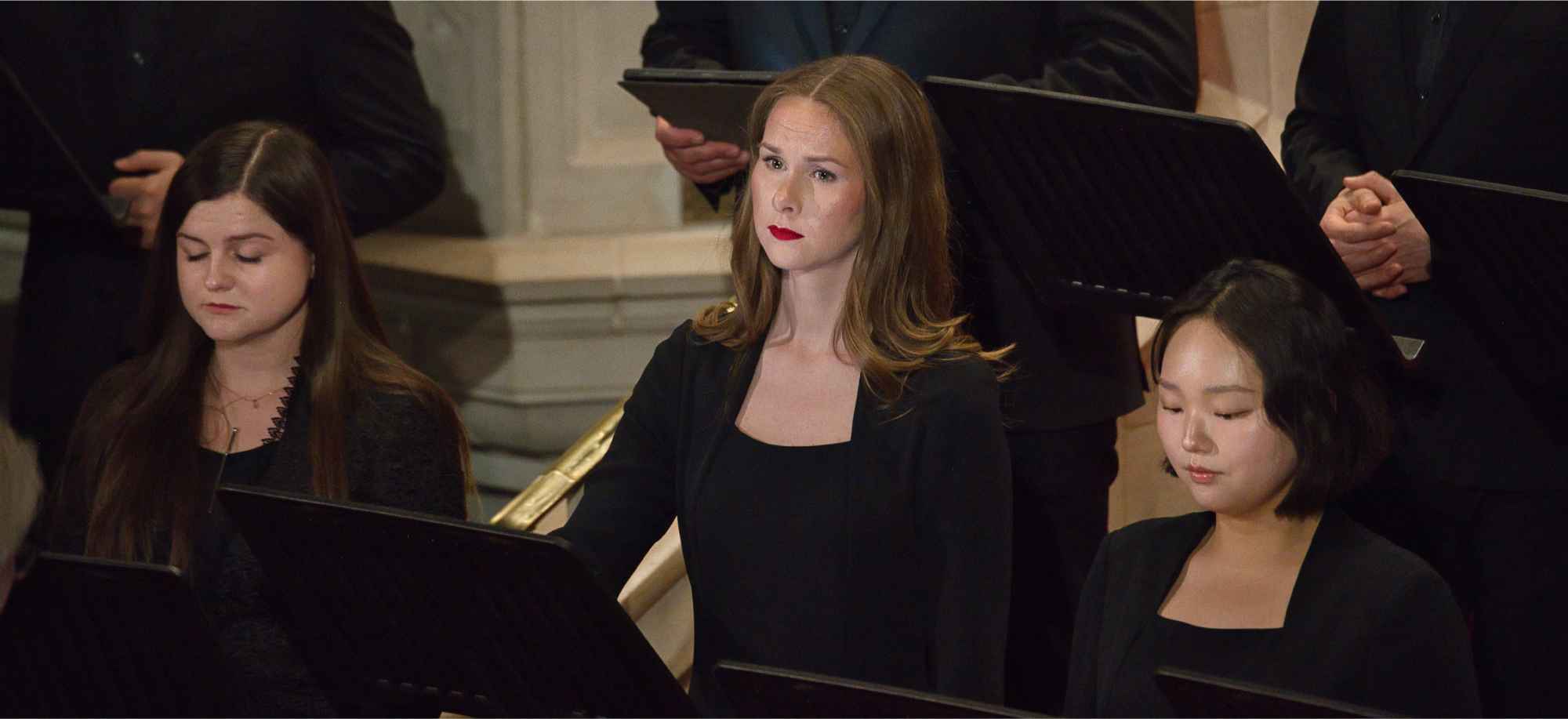
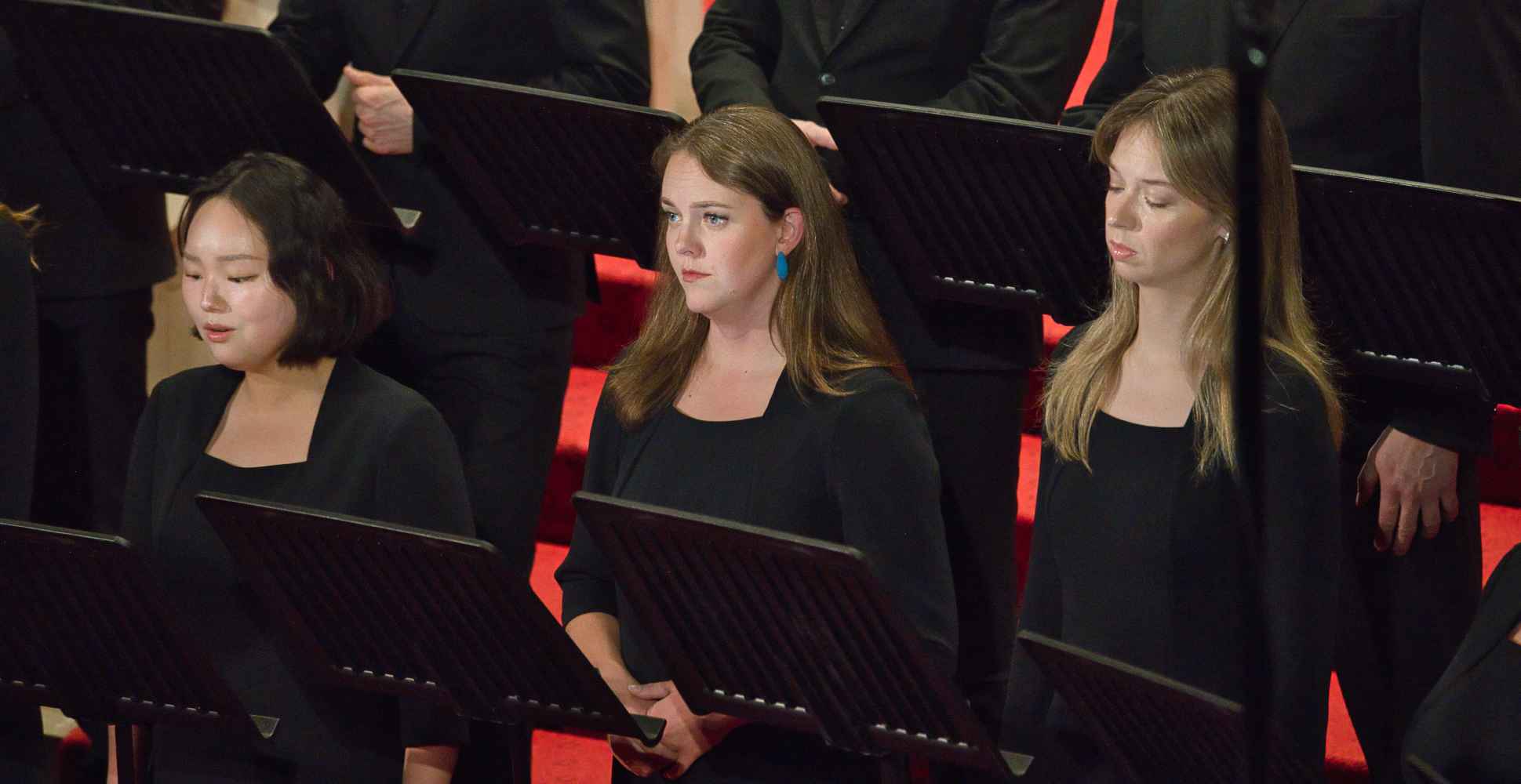
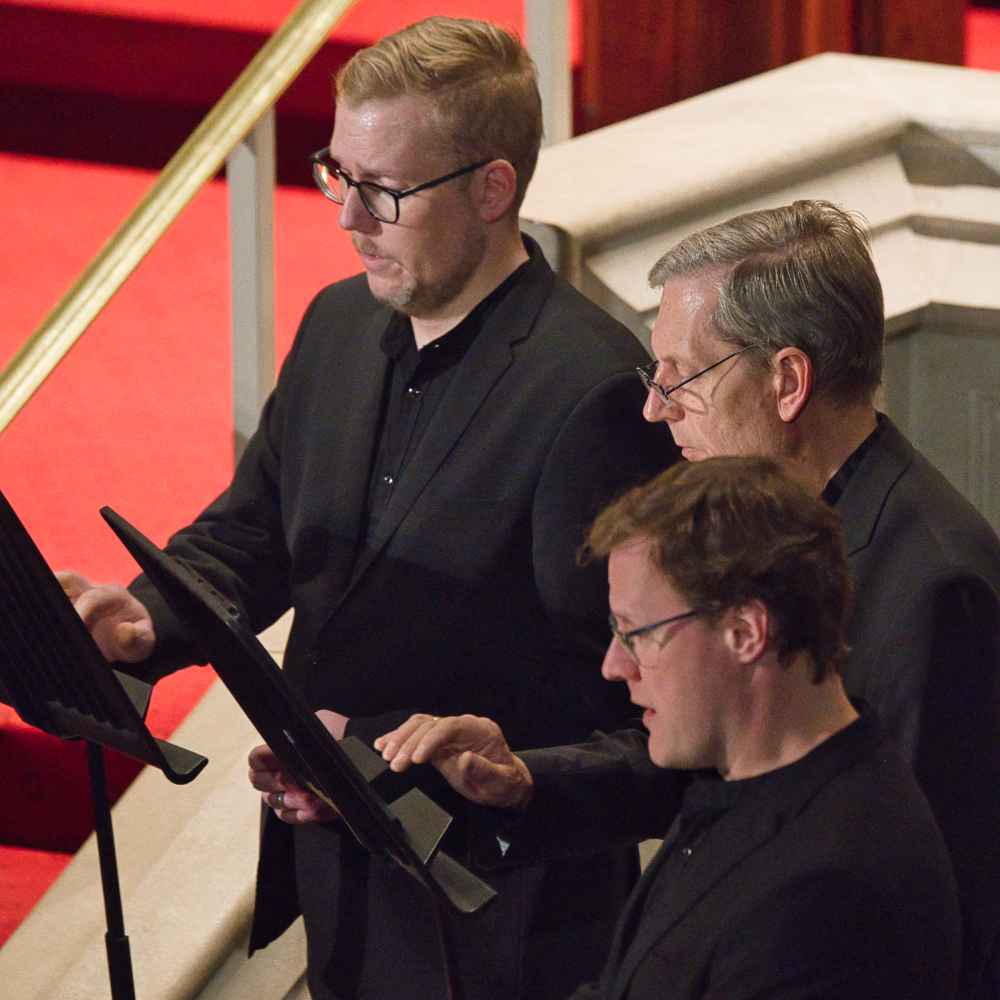
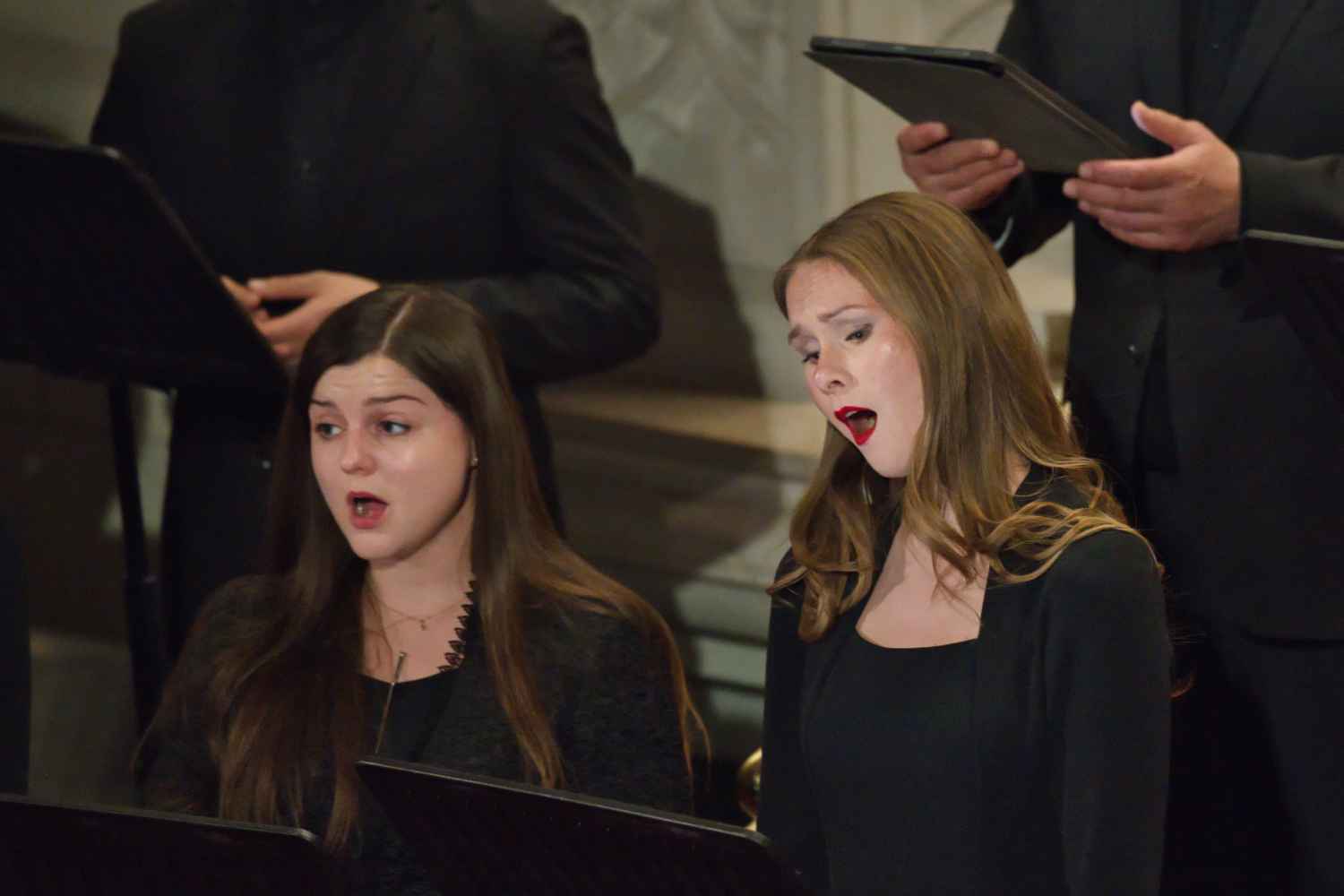
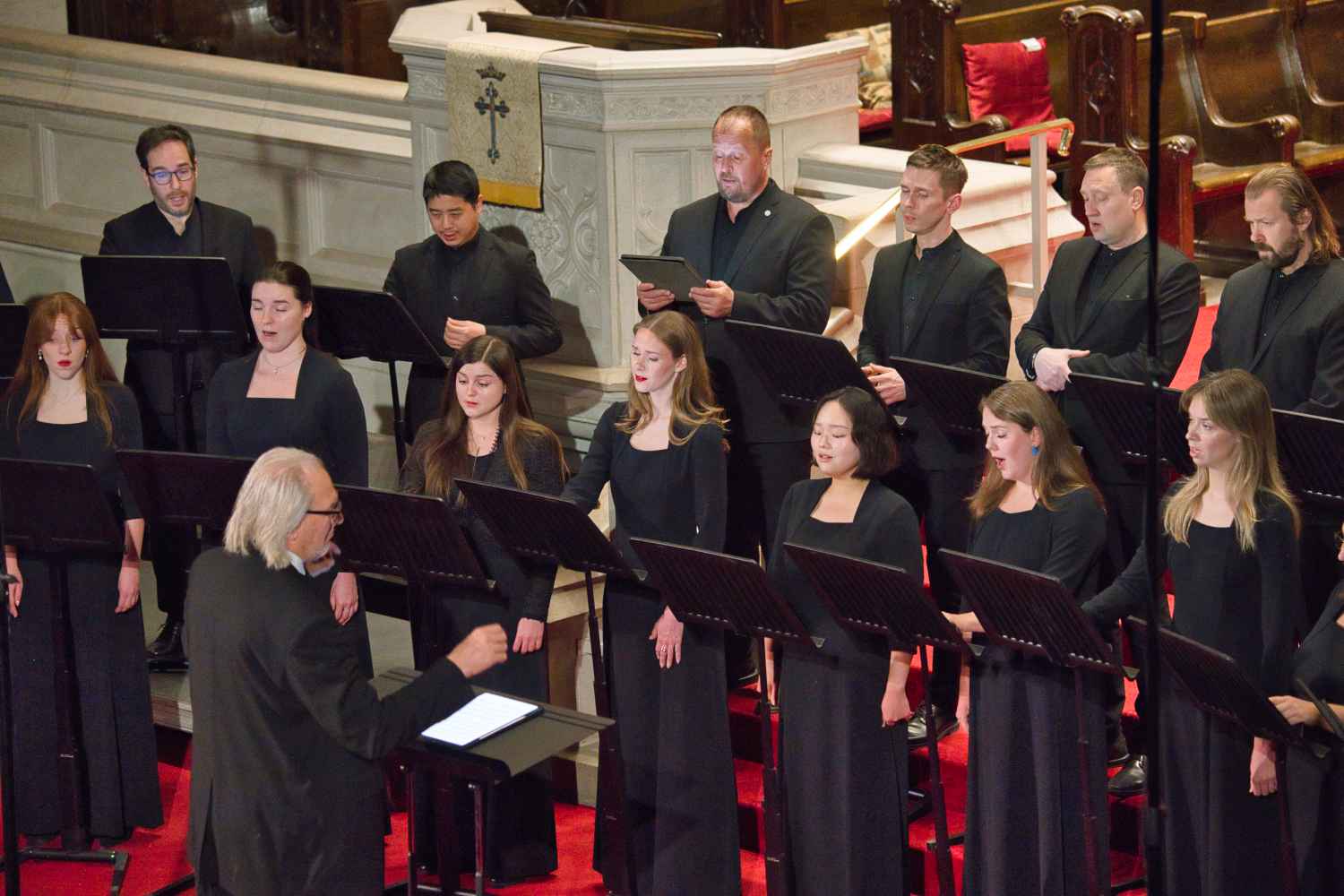
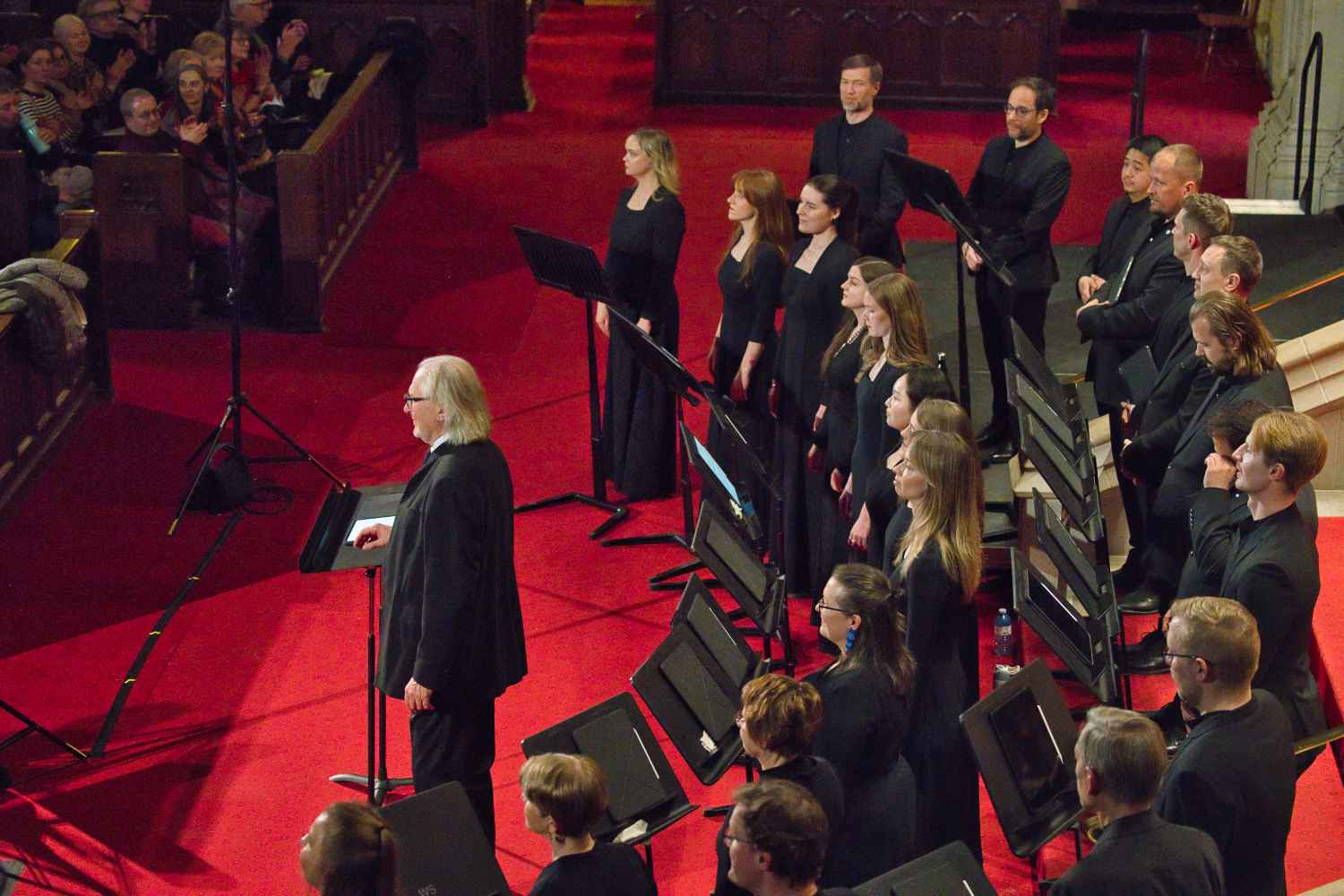
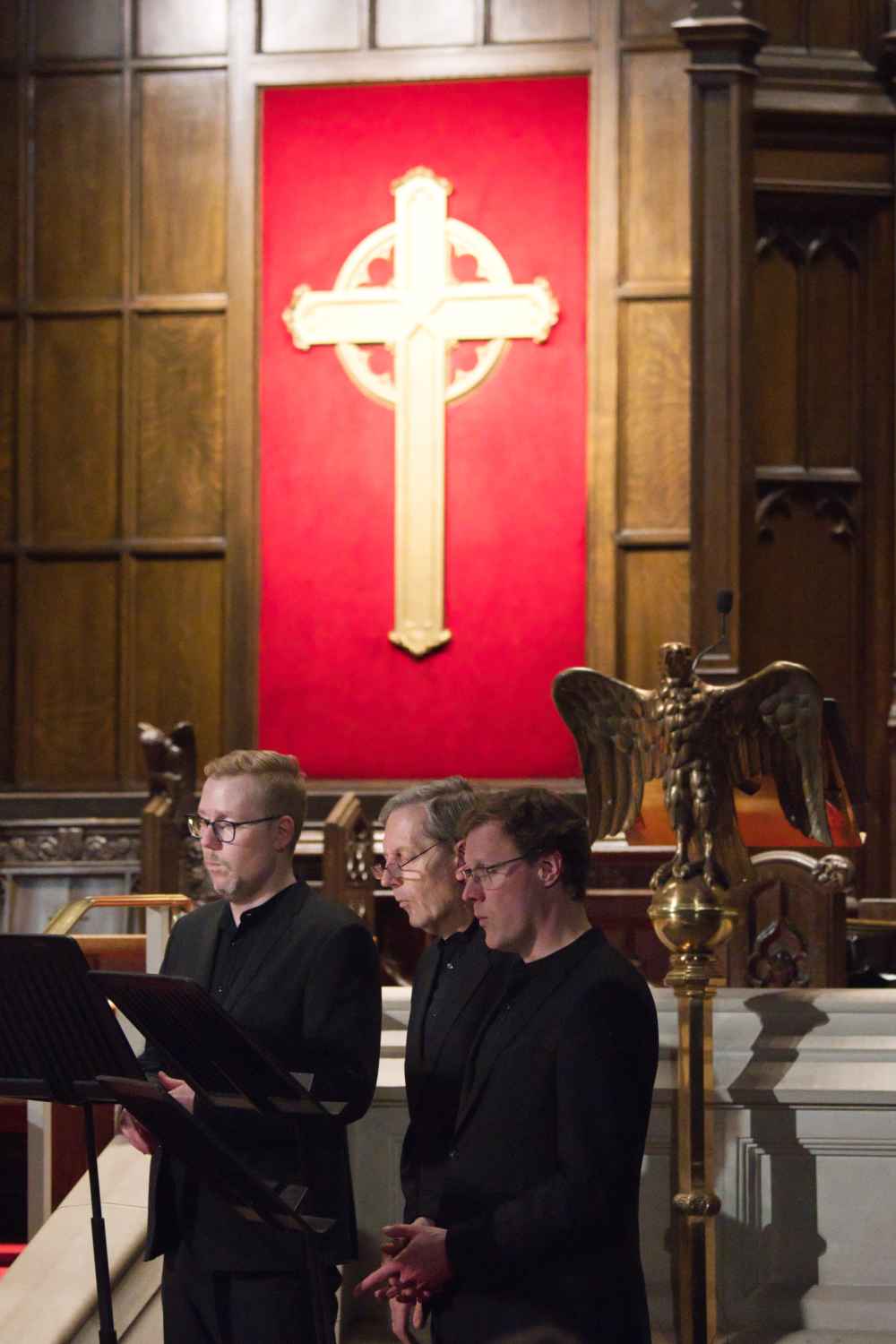
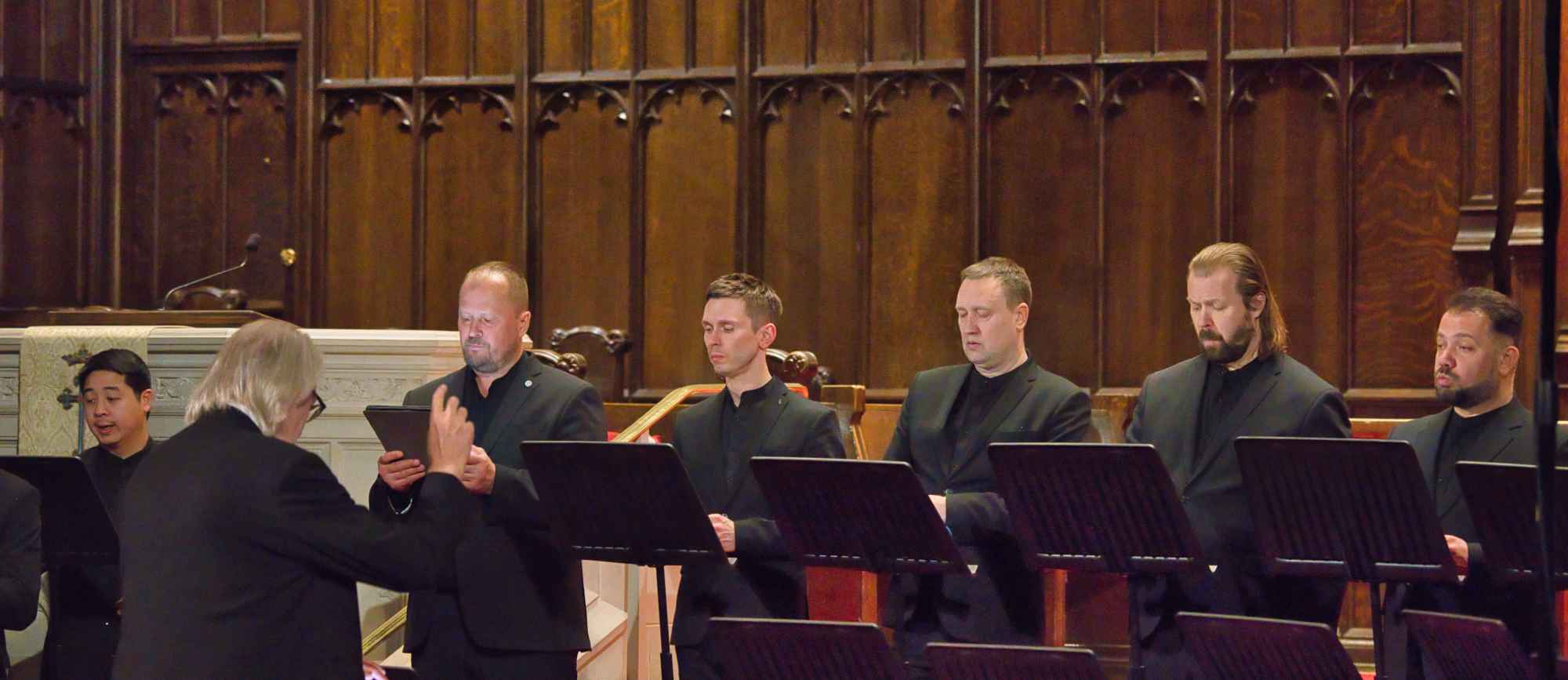
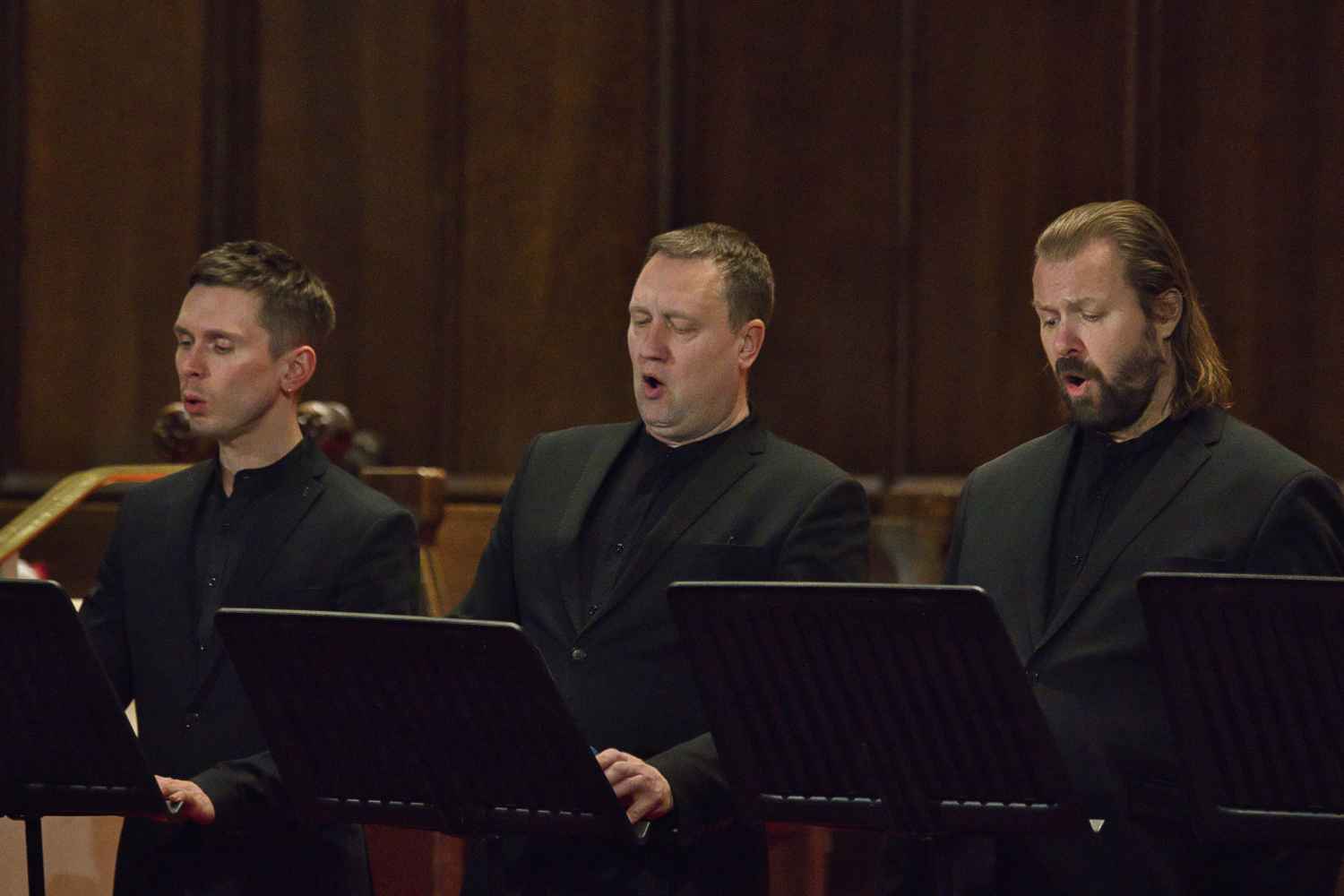
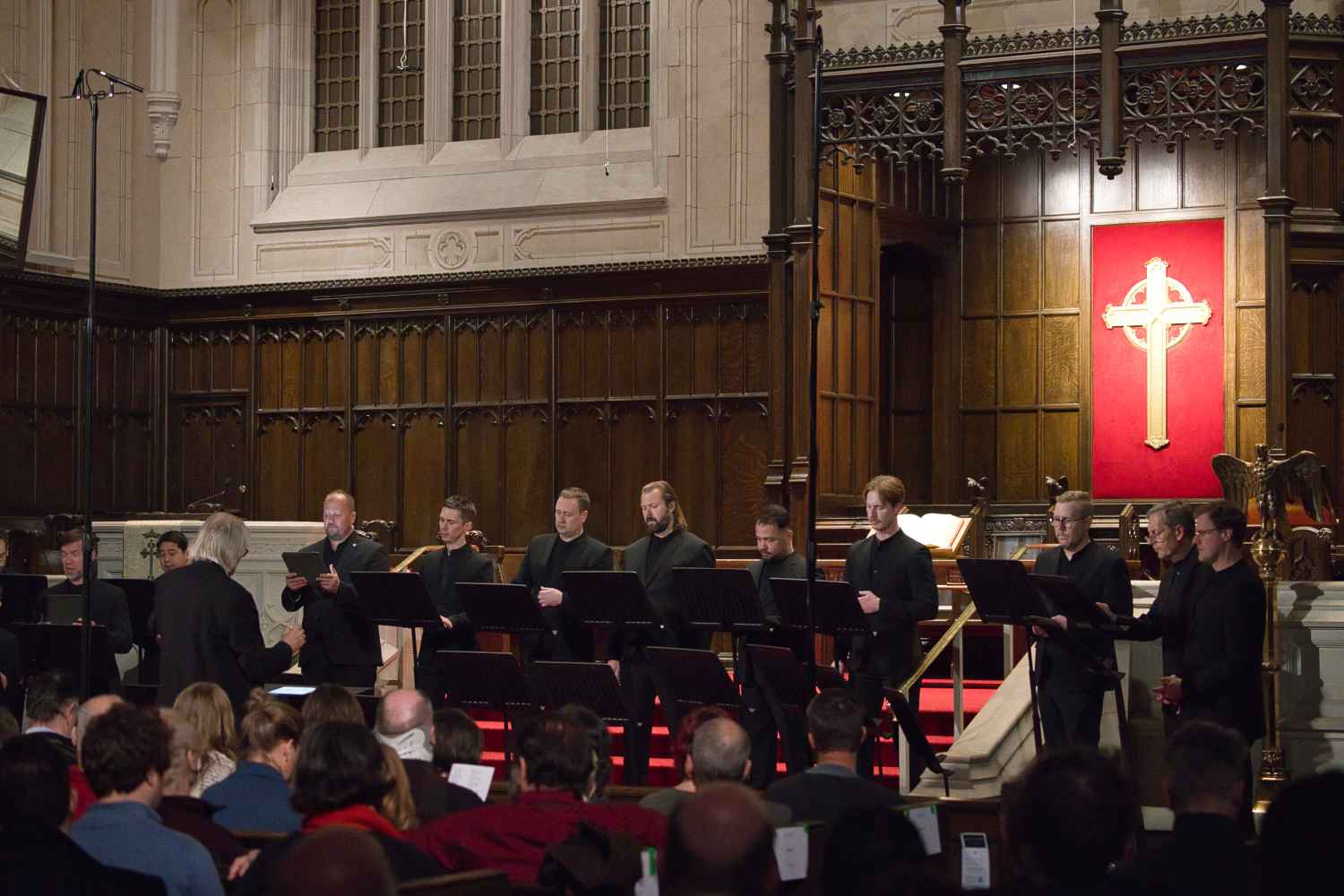
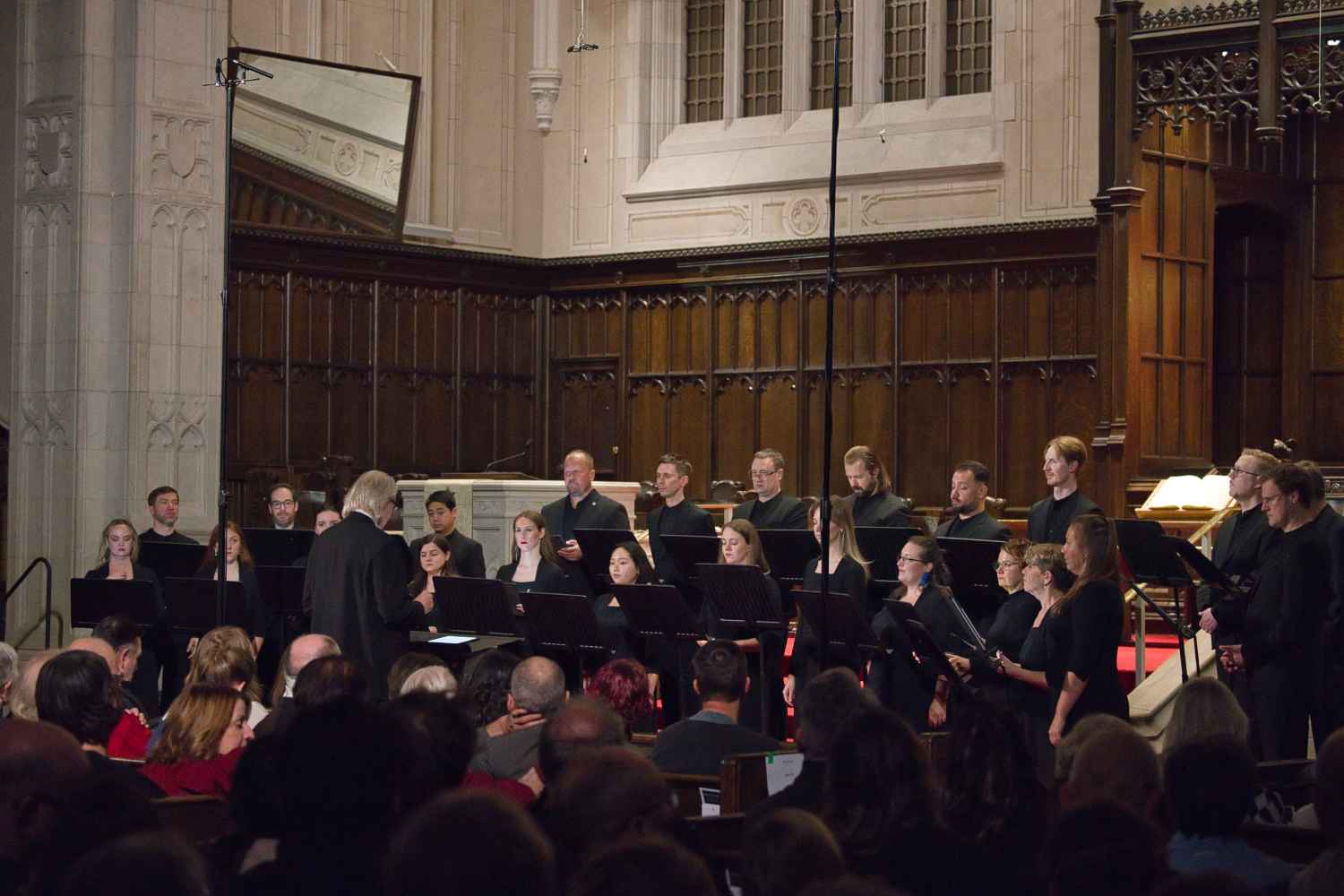
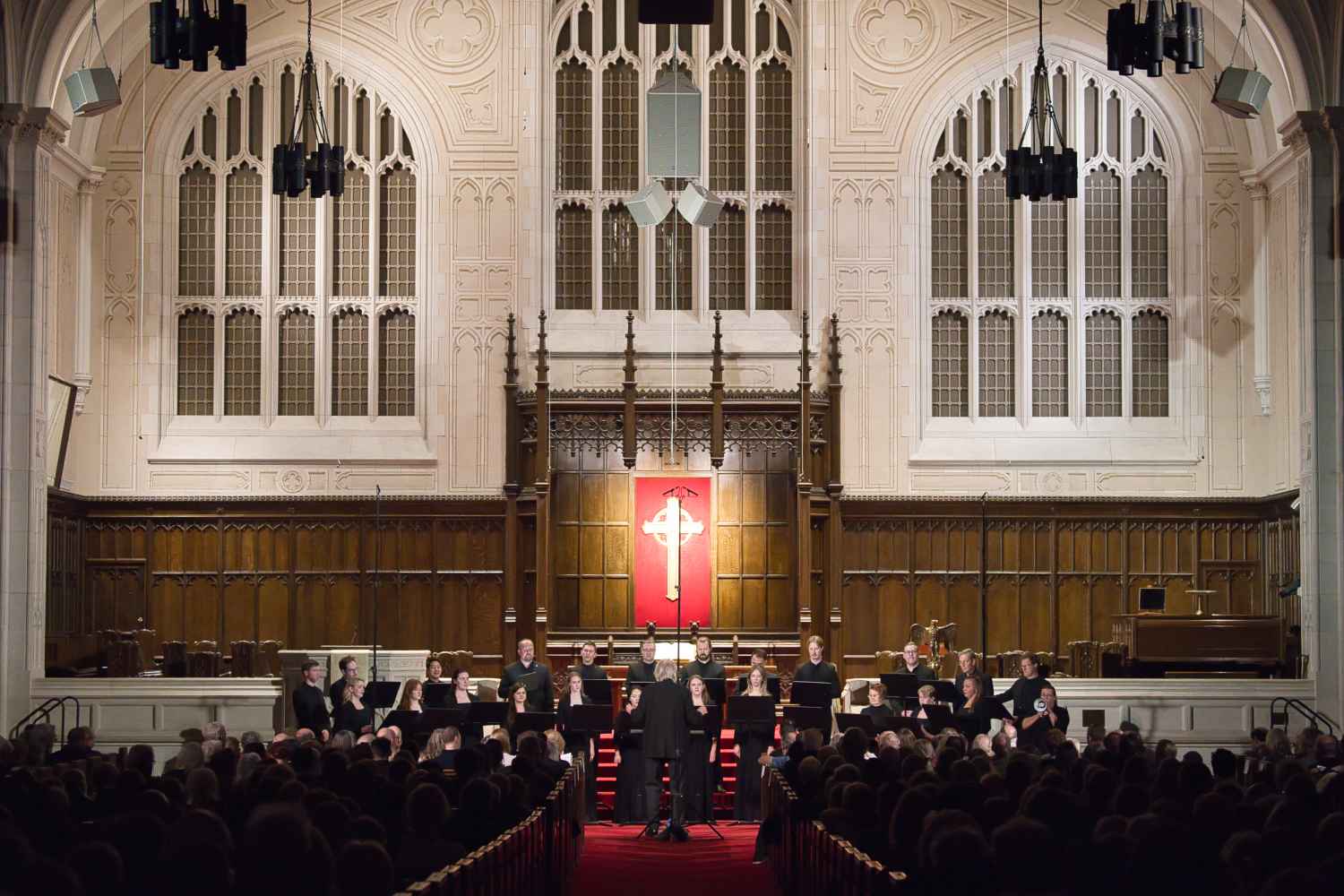
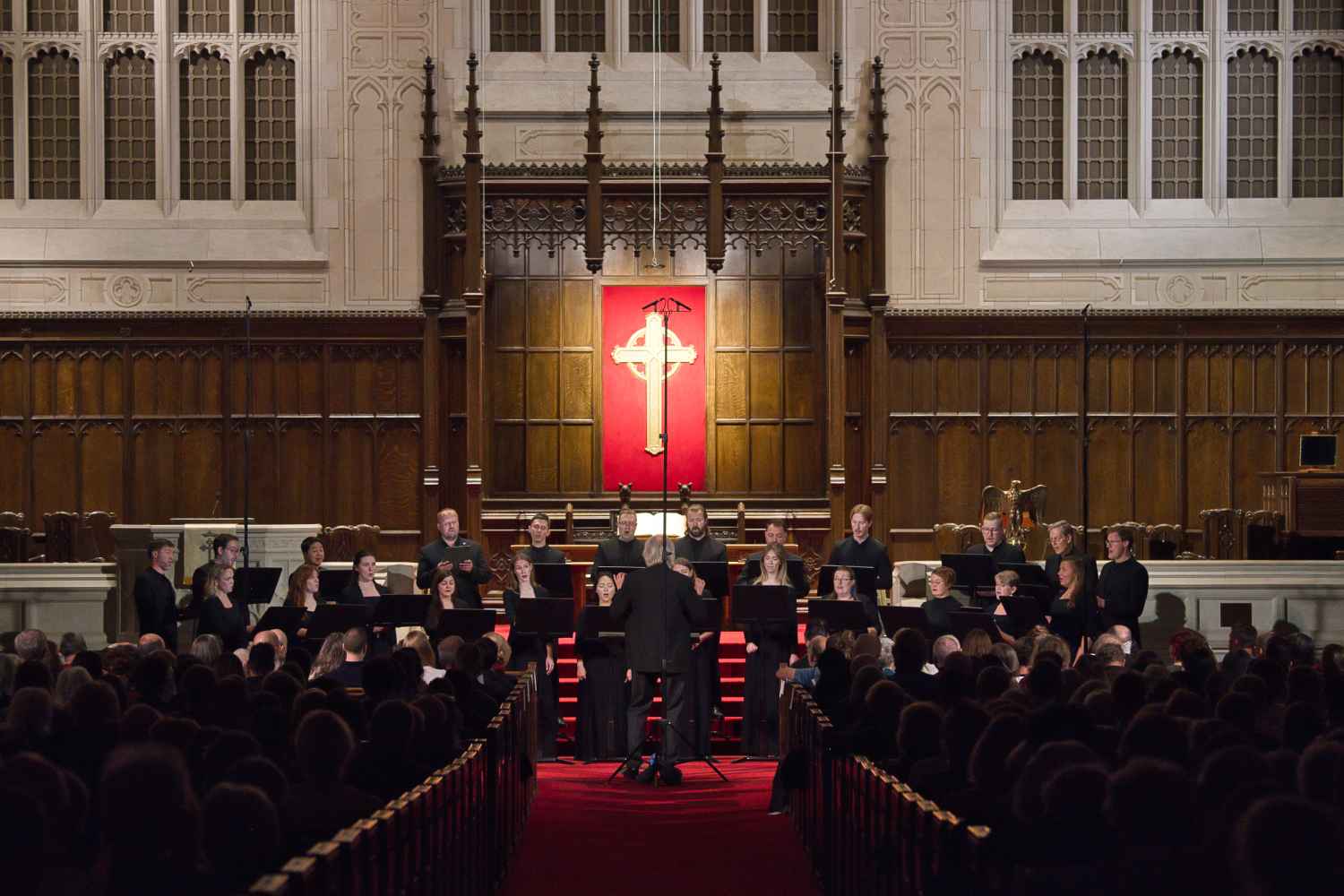
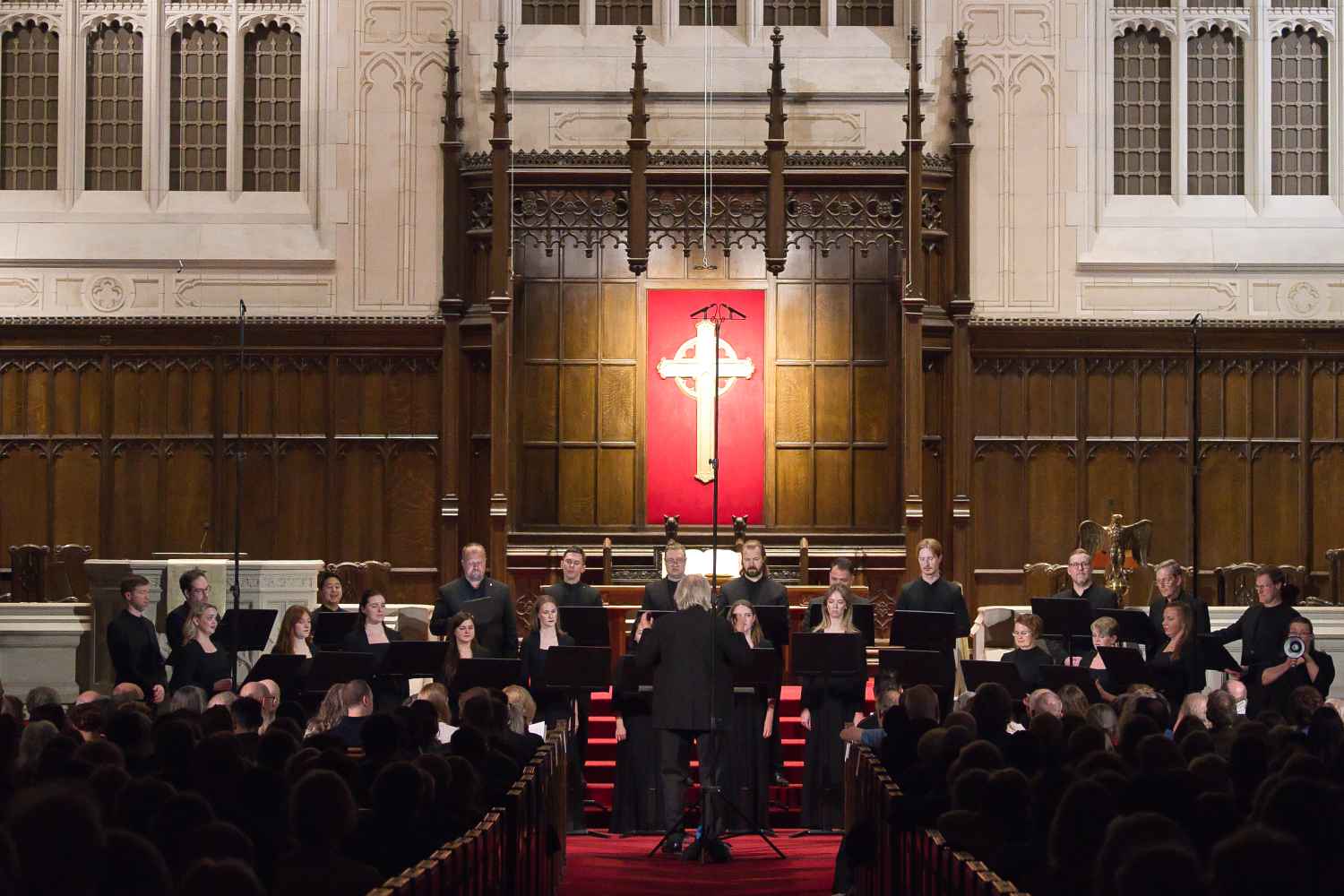
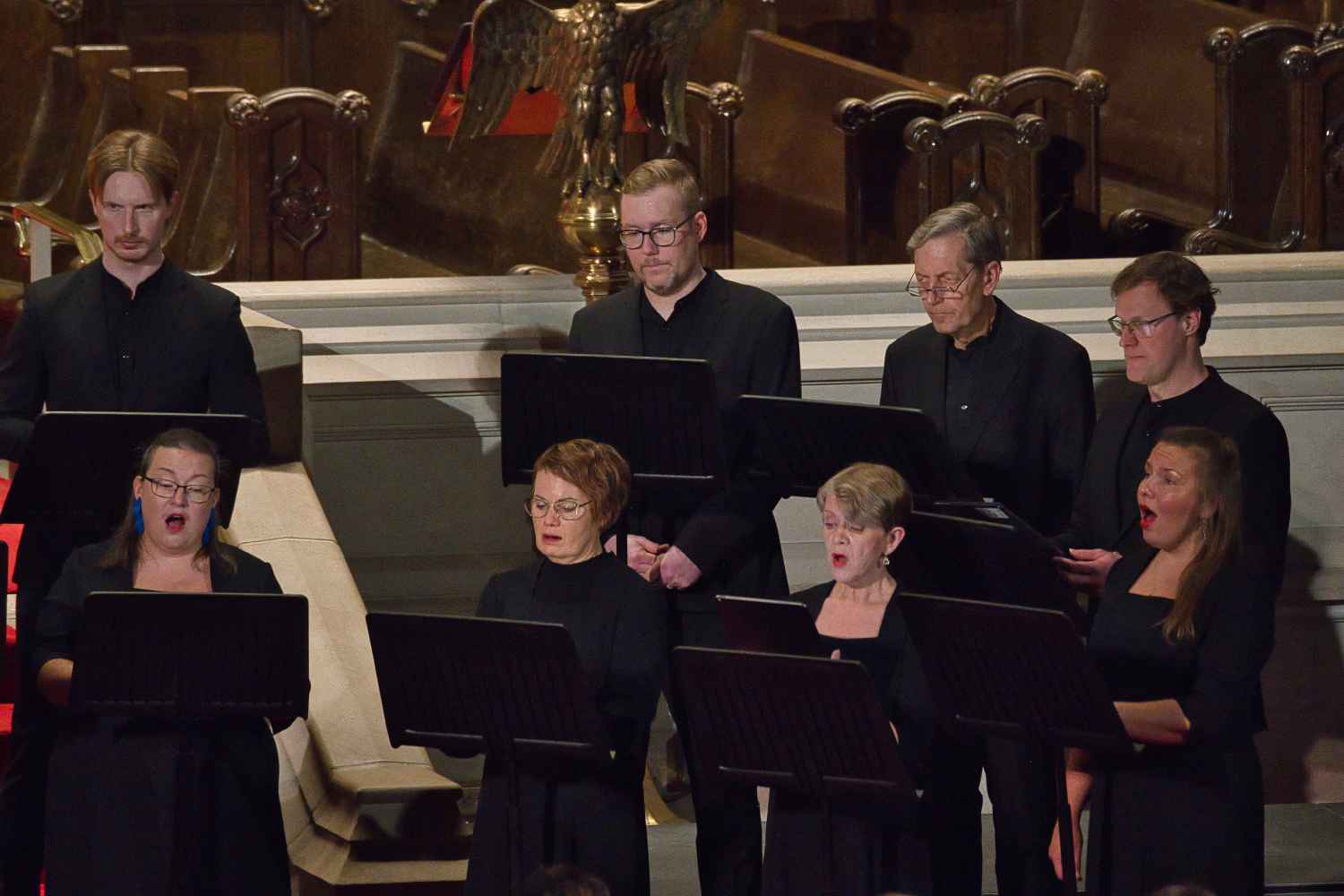
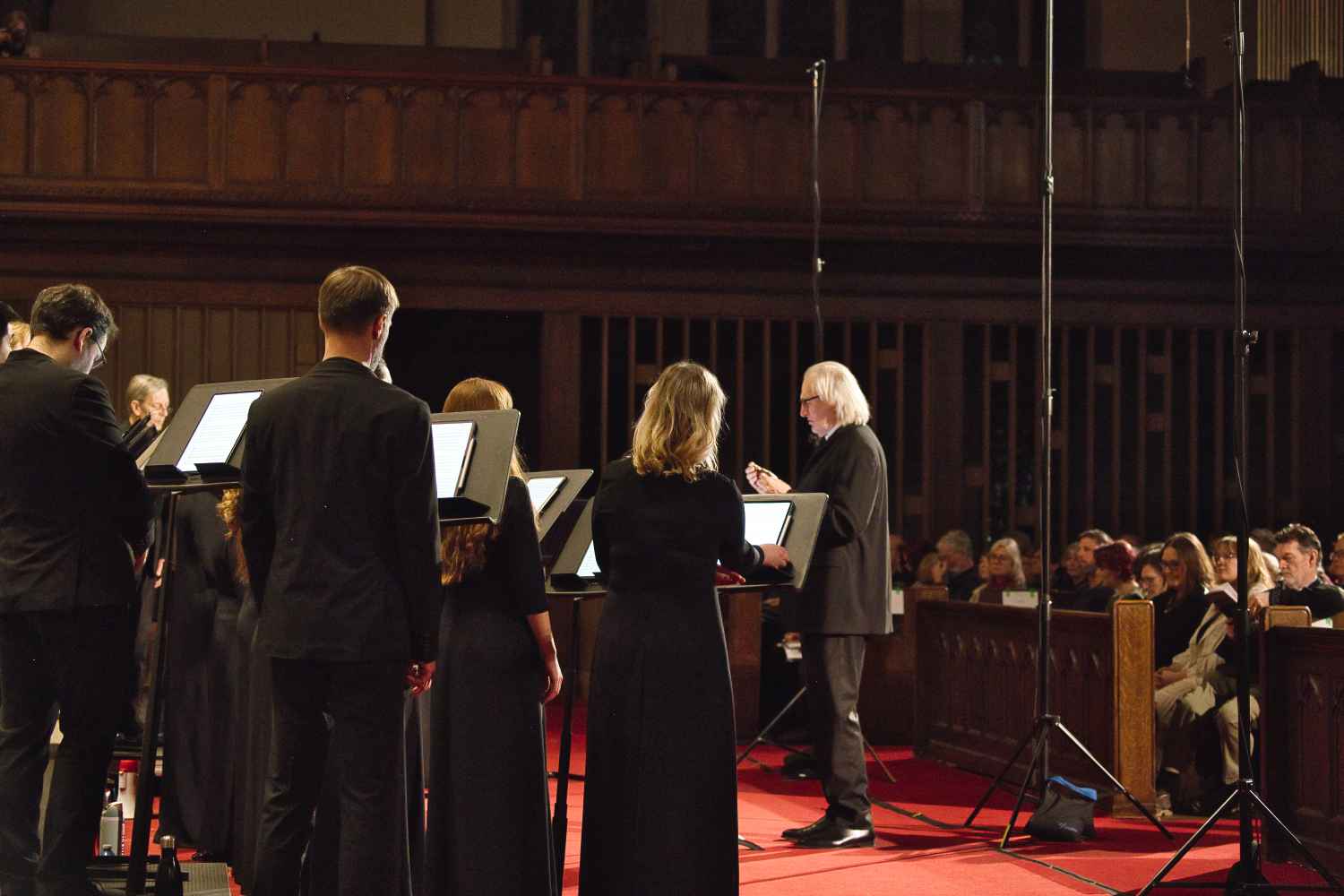
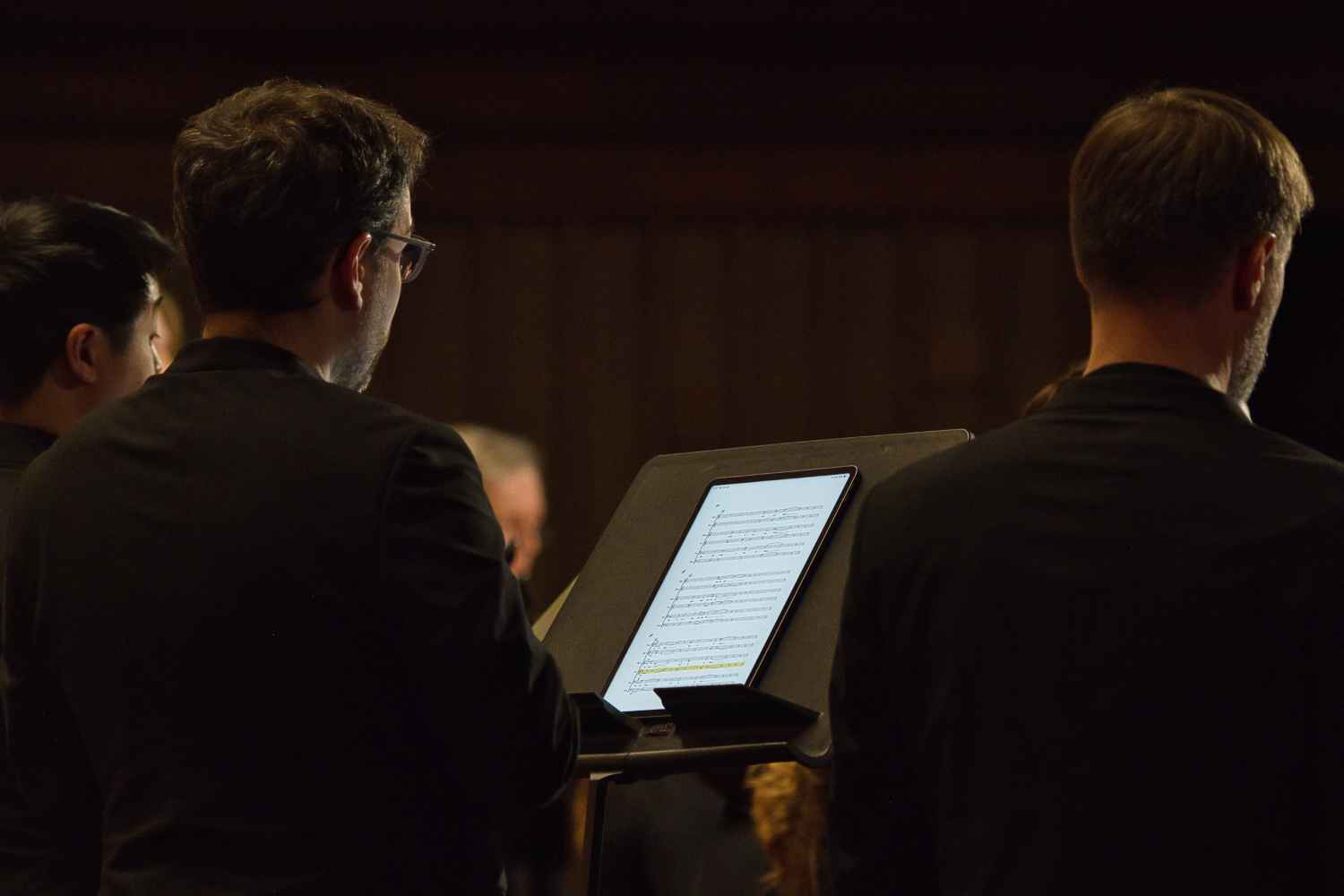
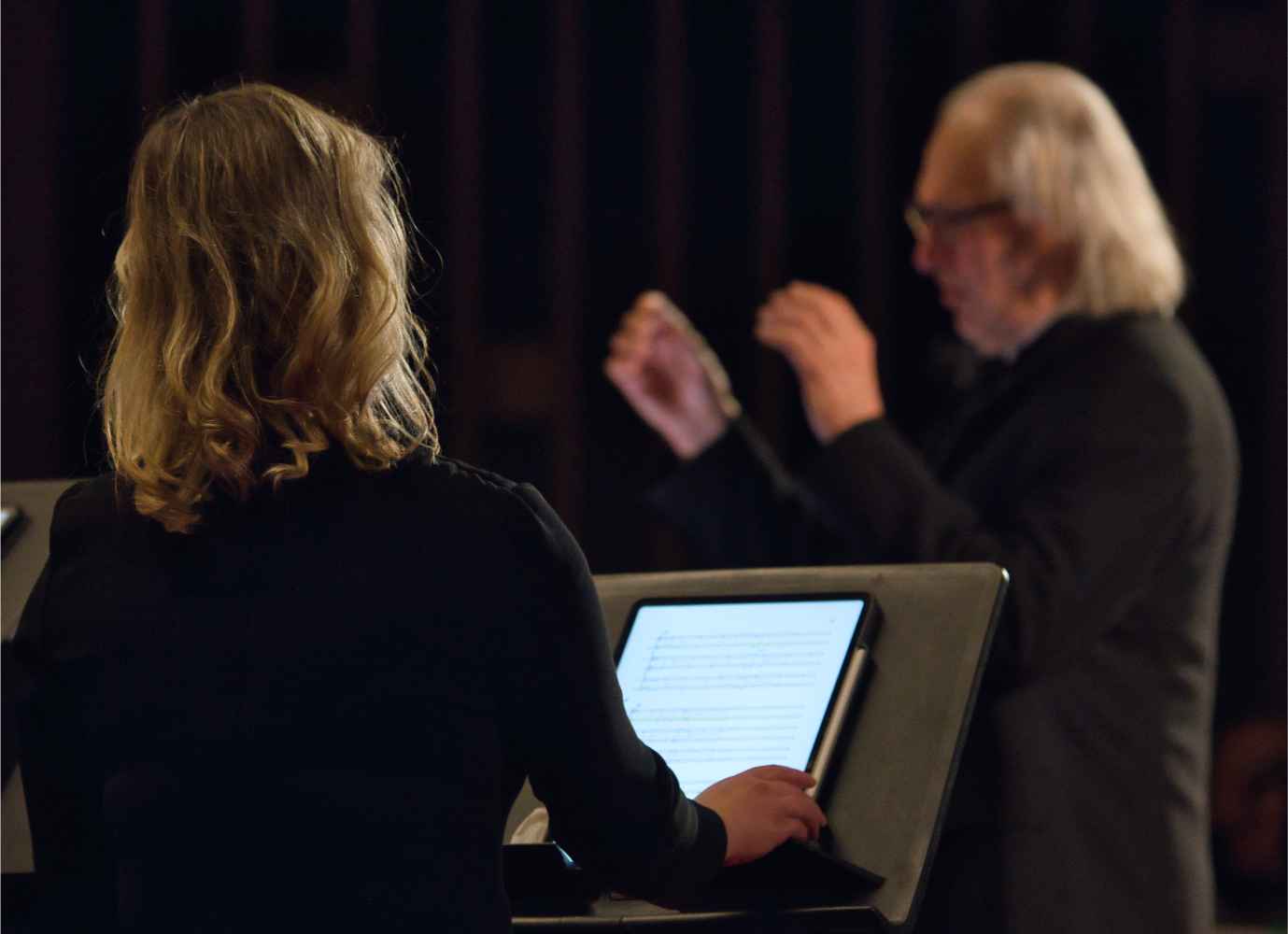
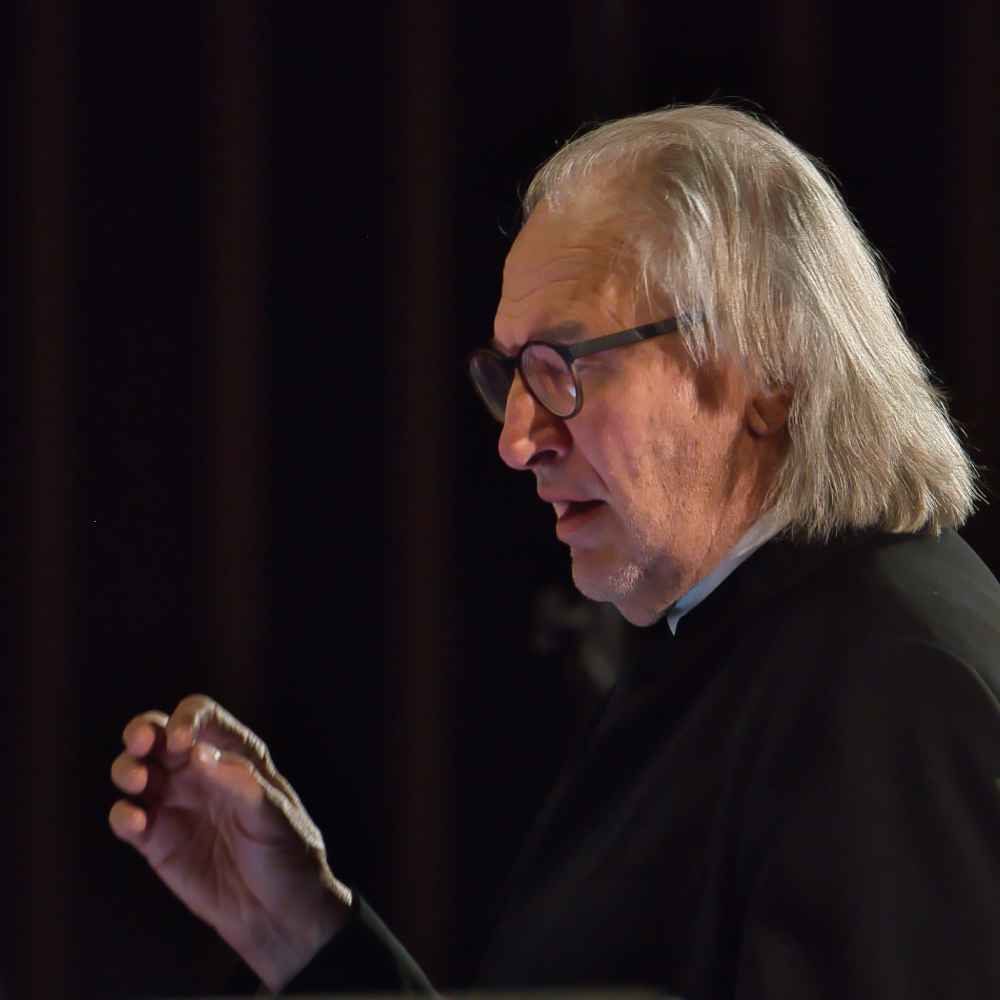
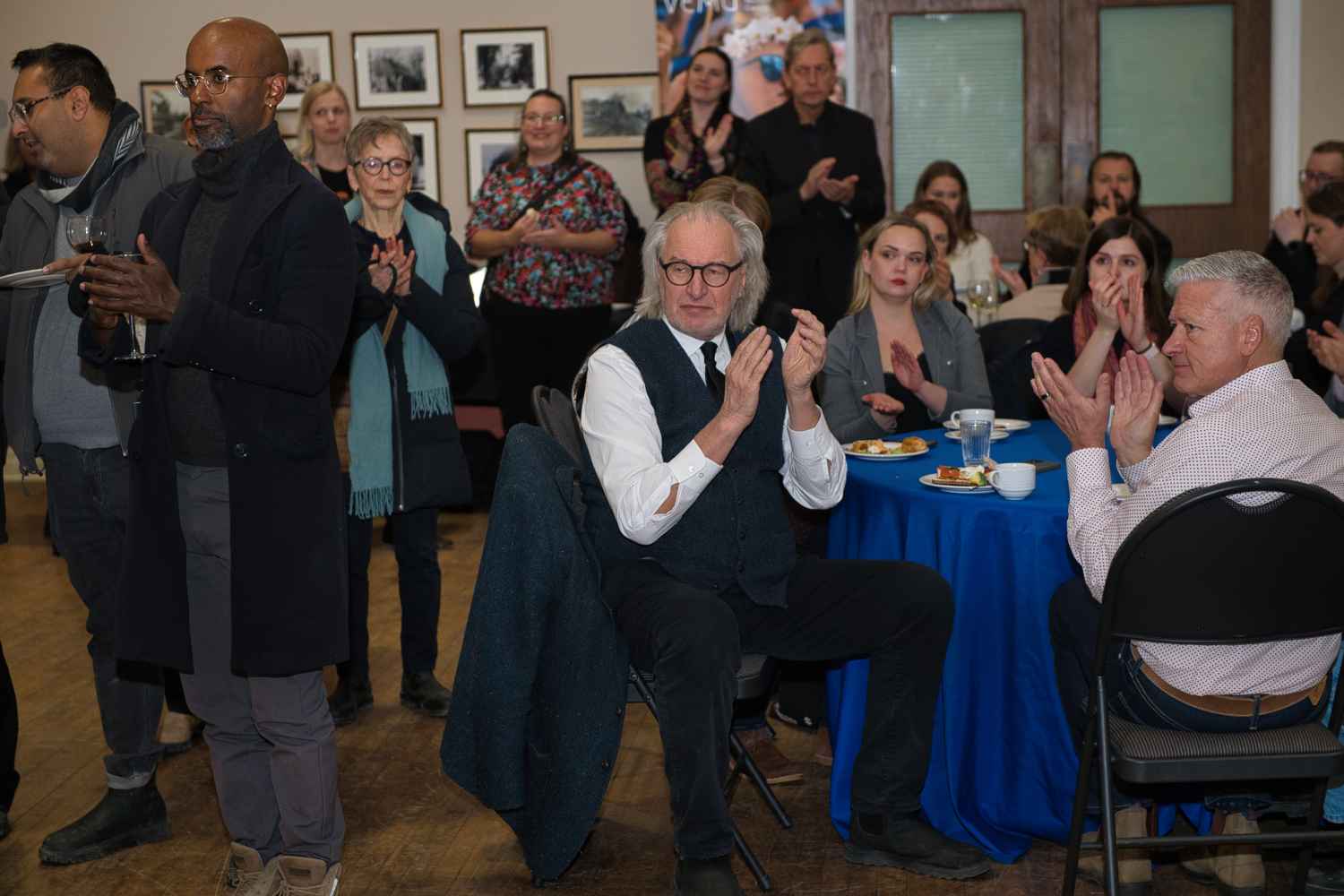
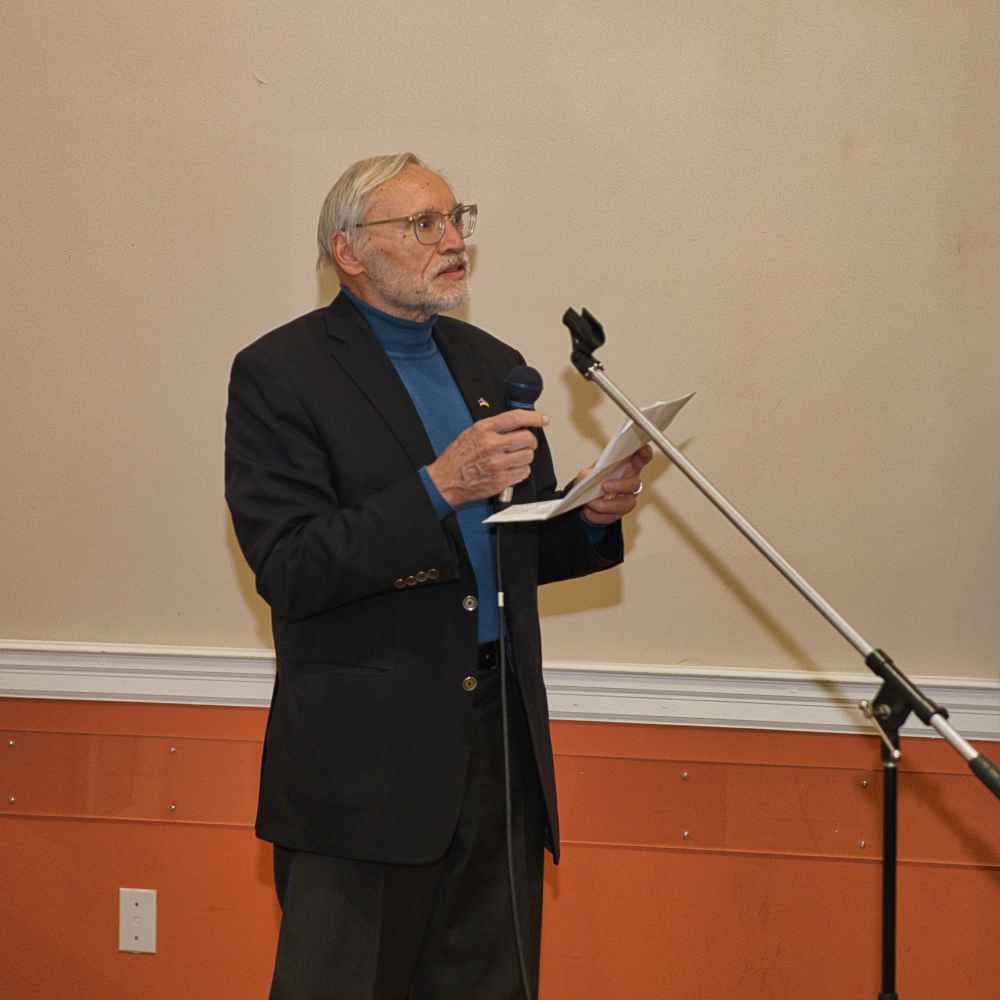
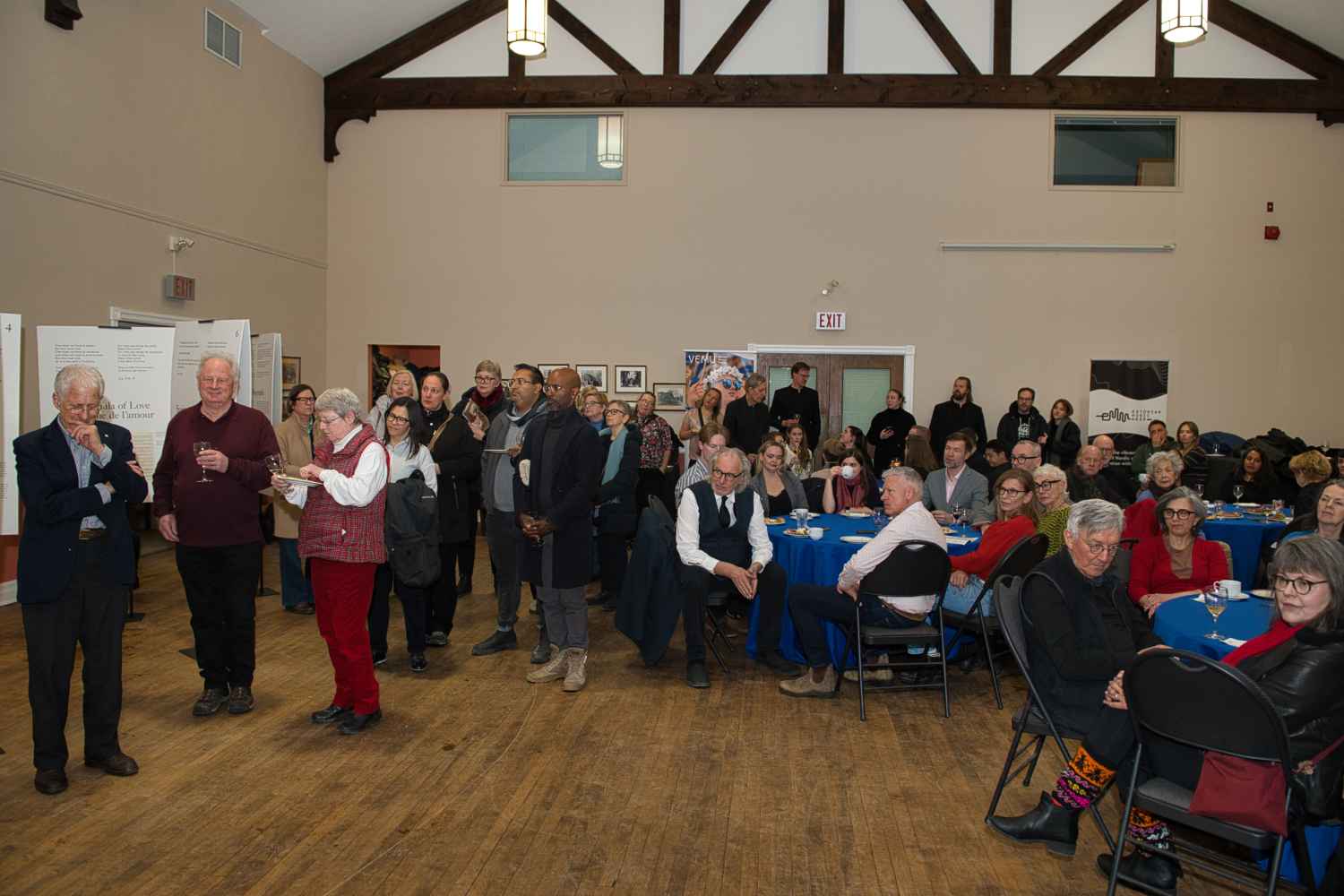
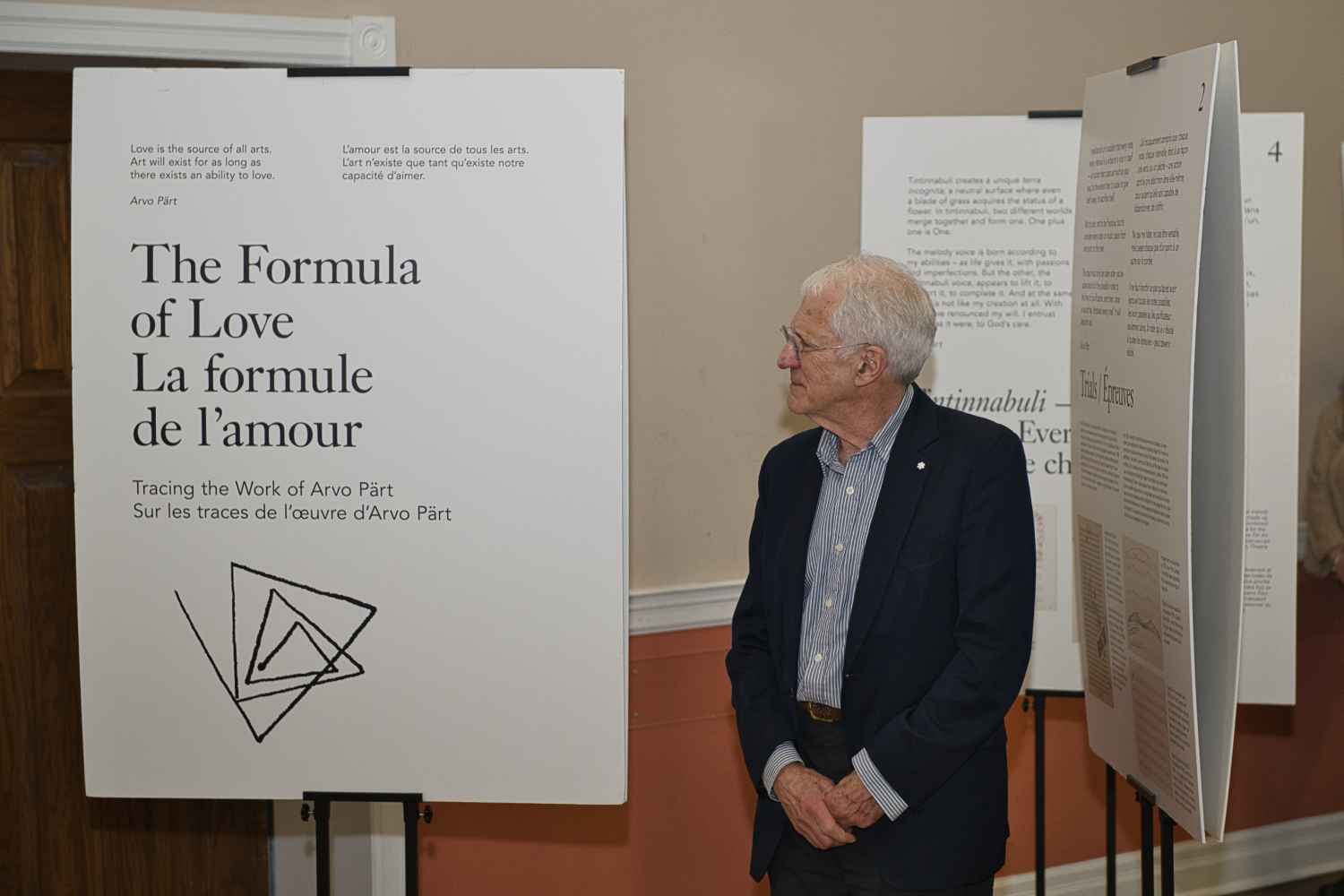
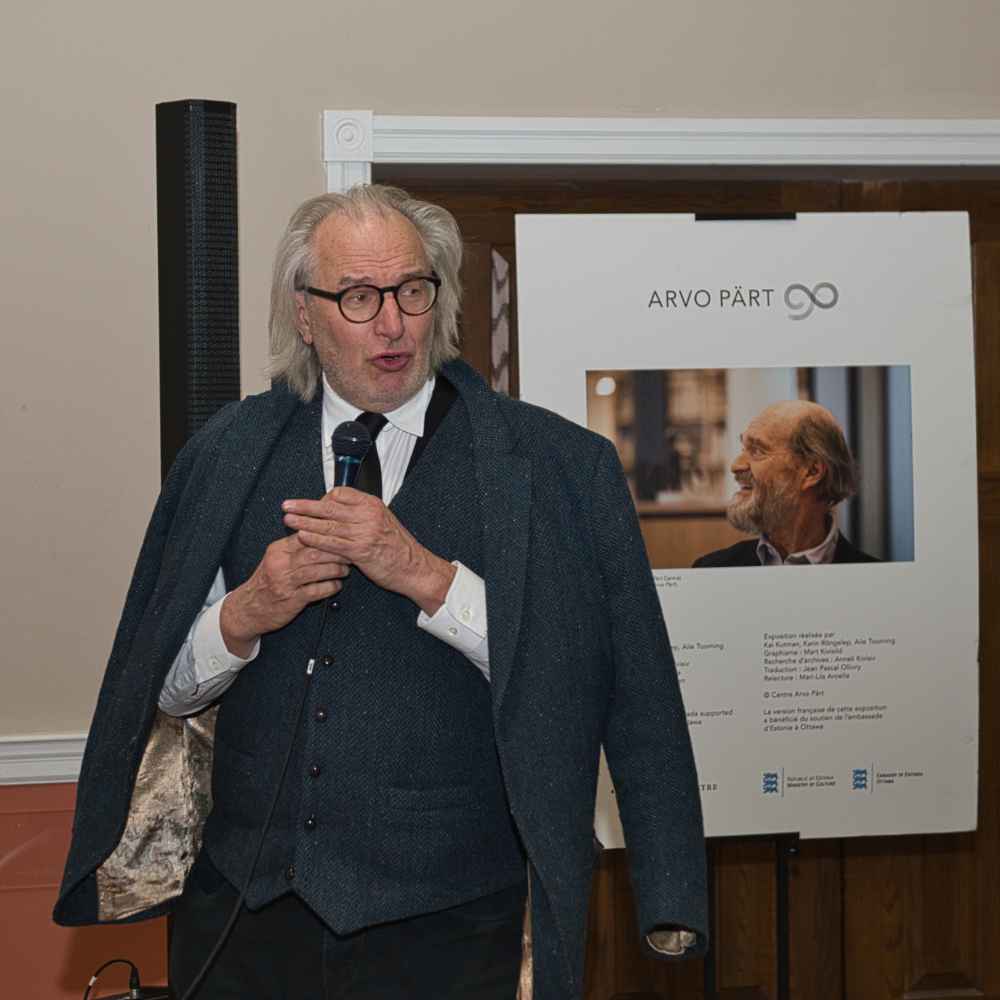
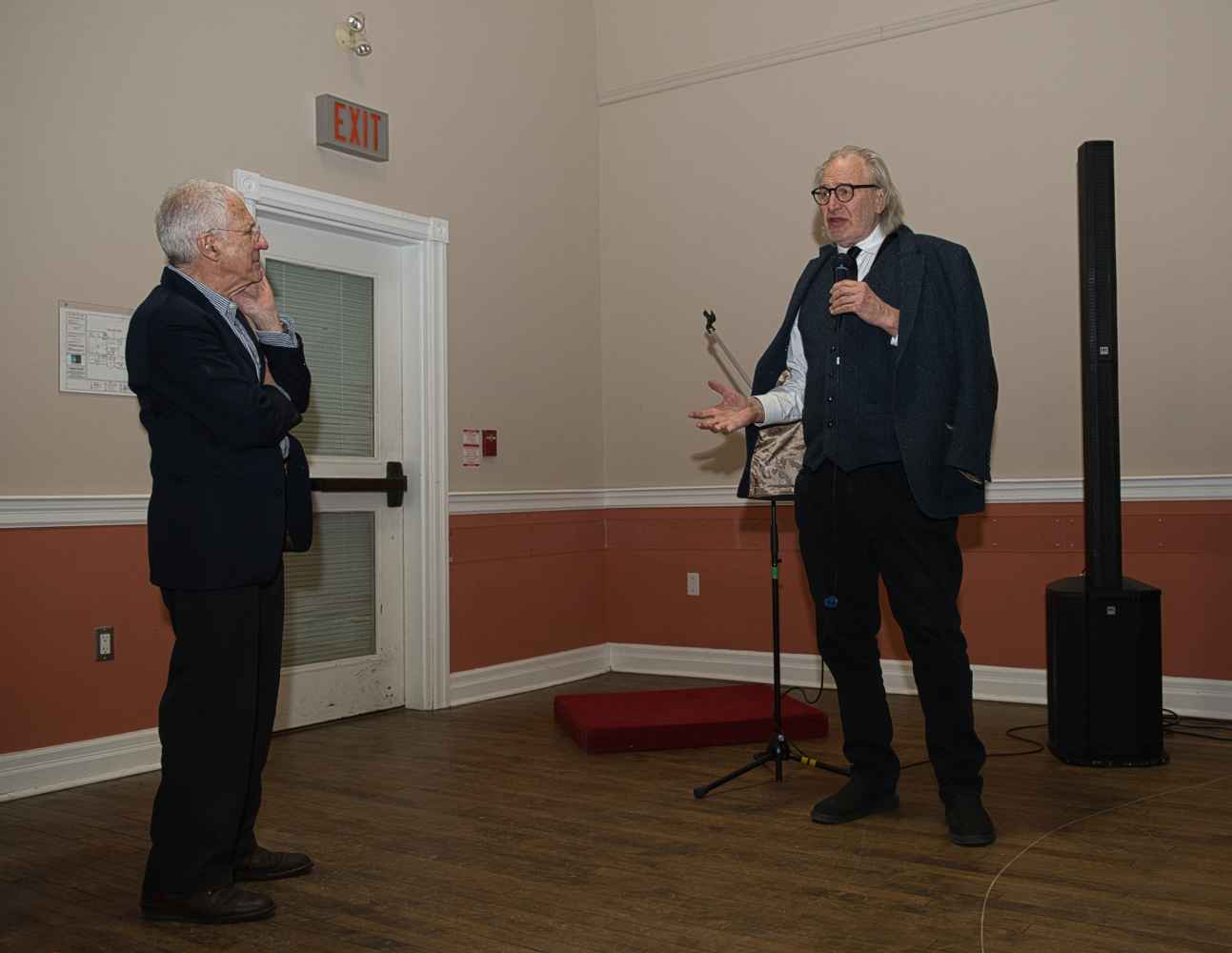
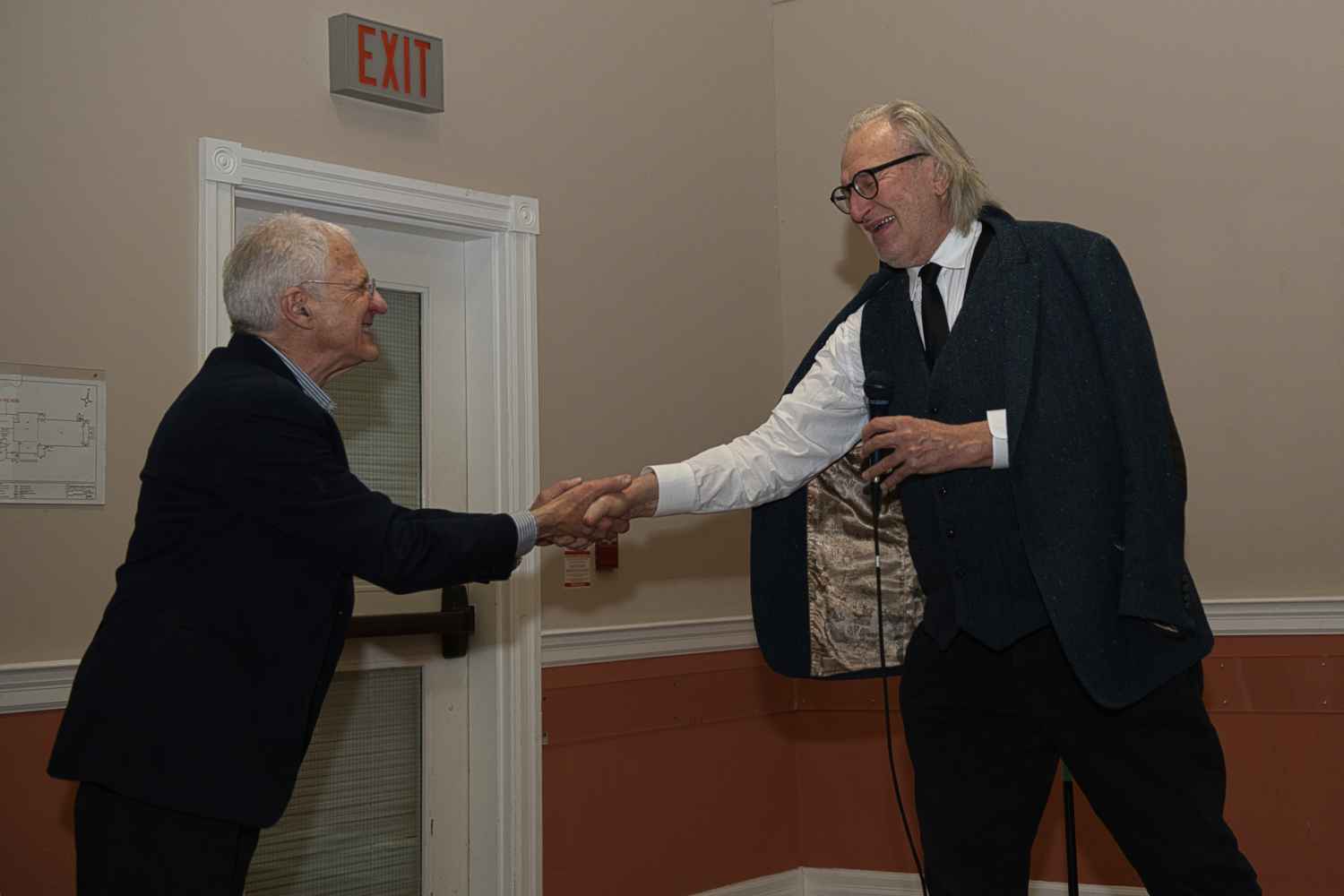
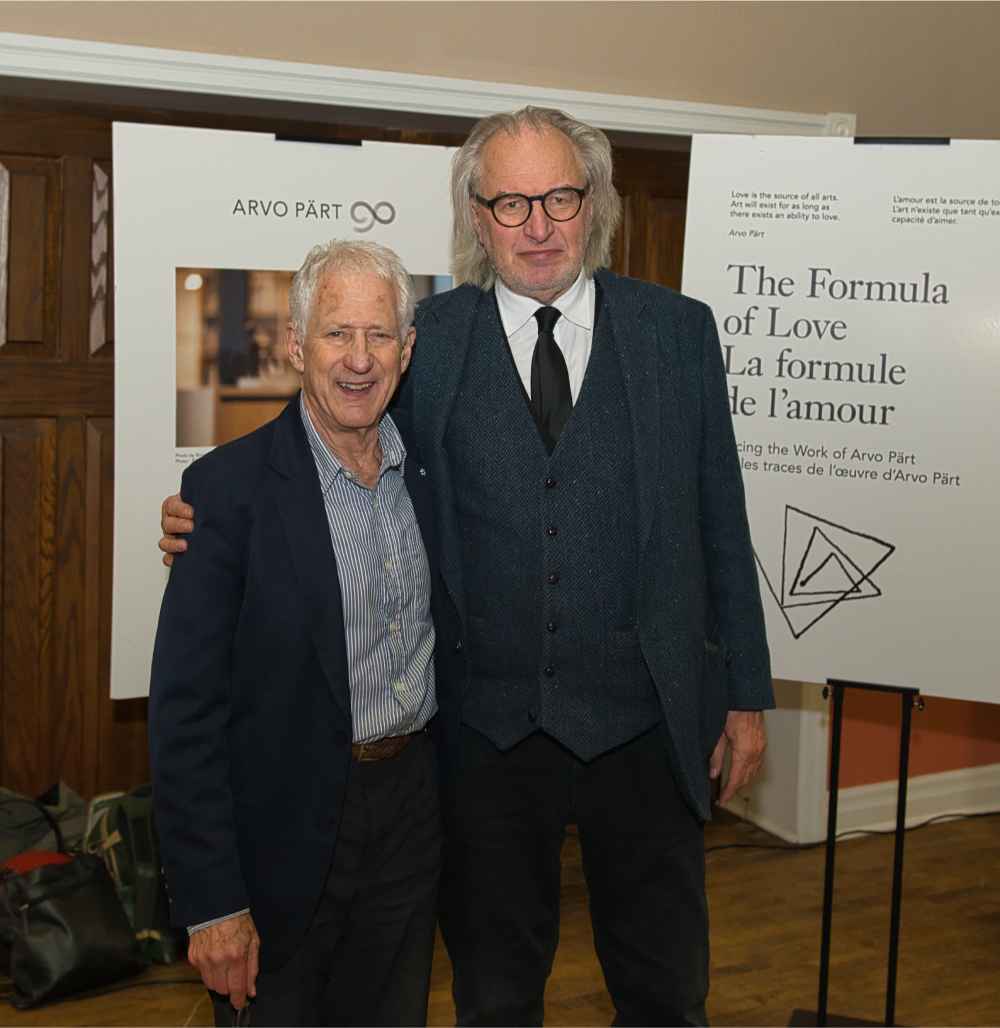
After the intermission, the programme steered away from familiar Pärtian meditations. With Veljo Tormis’ “Piiskop ja pagan” (“The Bishop and the Pagan”), the sound became male-heavy. We heard Tormis’ characteristic fiery, war-like chanting, utilizing medieval-sounding scales and repeating two-note descending bass parts.
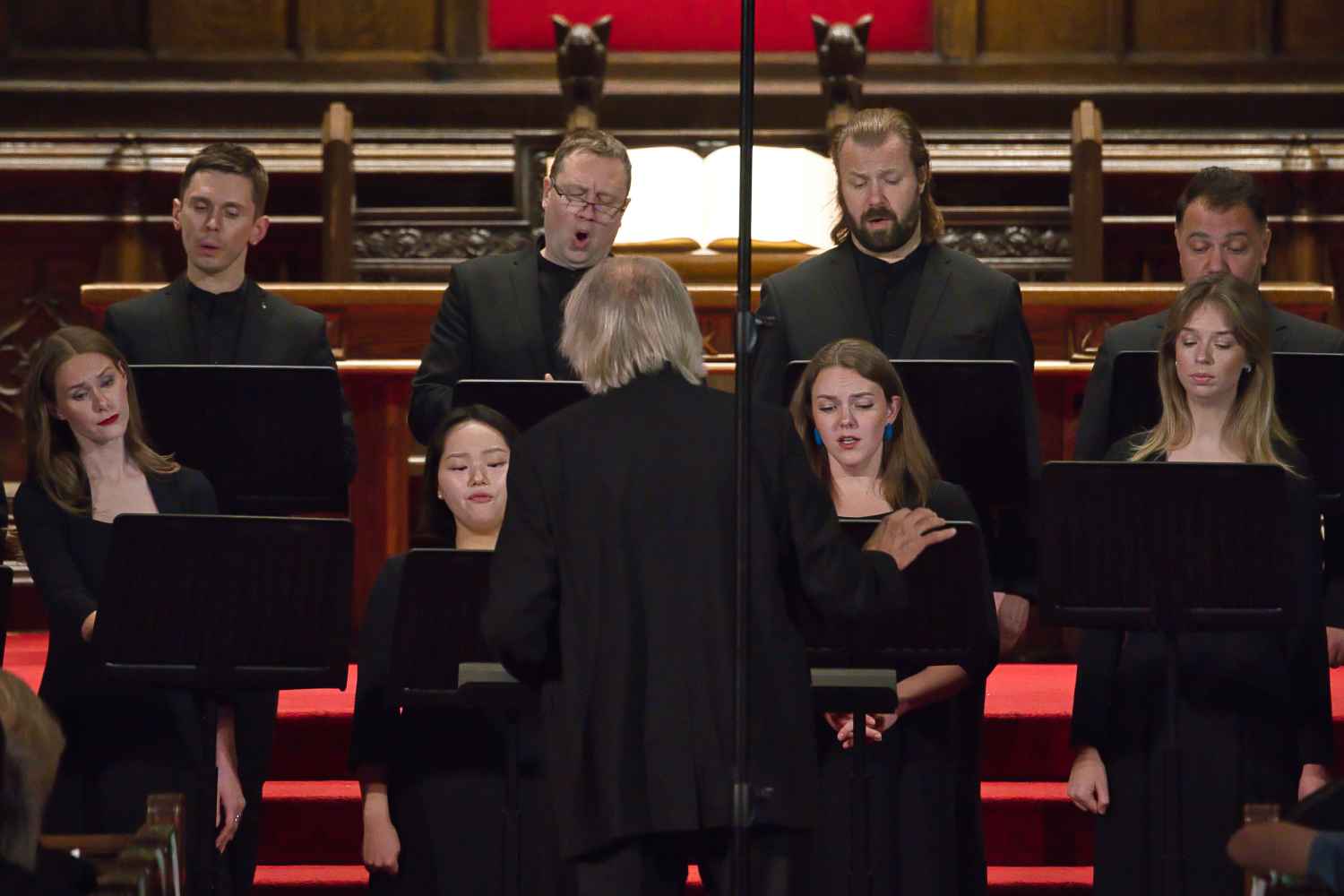
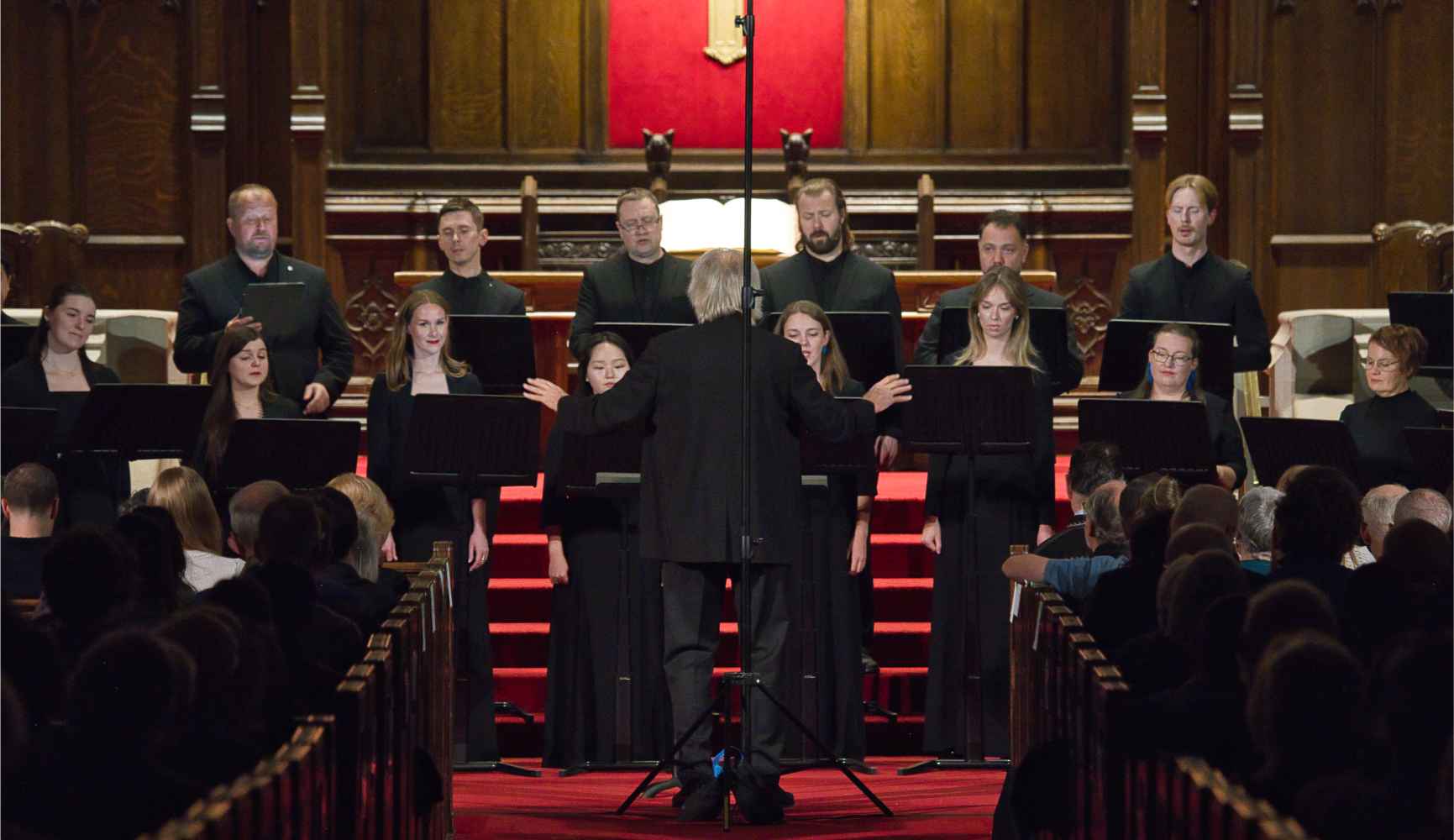
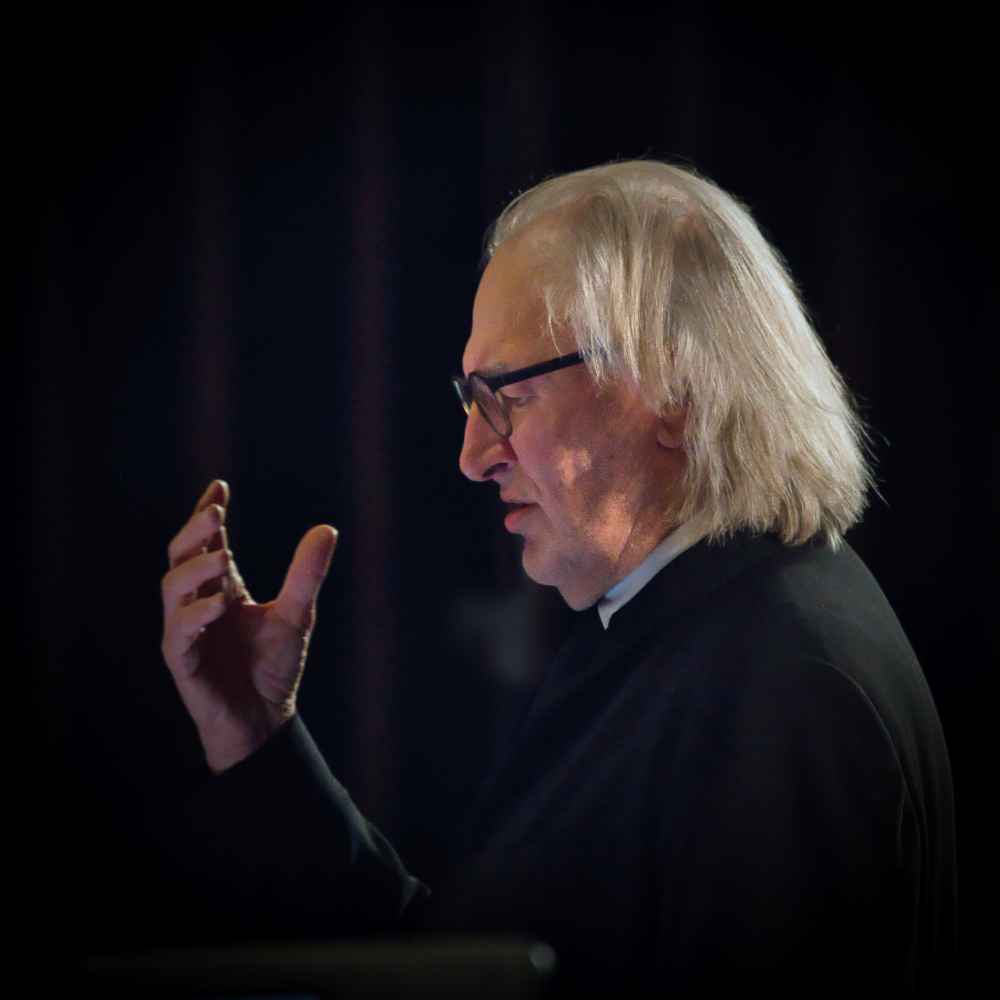
A key point of the night was the world premiere of Toronto born-and-raised Riho Esko Maimets’ “Inglihääl ja pasunad” (“Angel’s Voice and Trumpets”), commissioned by the Michael and Sonja Charitable Foundation and the SOCAN Foundation. The composition was permeated with seemingly one word that hit the audience from all sides. A first assumption was the word “sin,” but the programme explained that the text comes from song 172 of the Estonian Lutheran Hymnal: “See aeg on tõesti ukse ees, et Kristus meile jõuab […] siis inglihääl ja pasunad on kõigis paigus kuulda” (“The time is truly at hand, when Christ will come to us […] then the voice of angels and trumpets will be heard in all places”). Maimets’ work demanded the utmost from every voice. Everyone was turned to “high.” Kaljuste and the EPCC achieved an eerie floating sensation, like the biblical, end-of-the-world trumpet blast was truly being heard. That fits, as Maimets wrote this as a response to the bleakness of our current era, where civilizational façades are collapsing. Kaljuste’s left hand fingers pointed and flickered to direct that mood. Then, as life felt suspended in those final breaths, the piece reached a perfect decay.
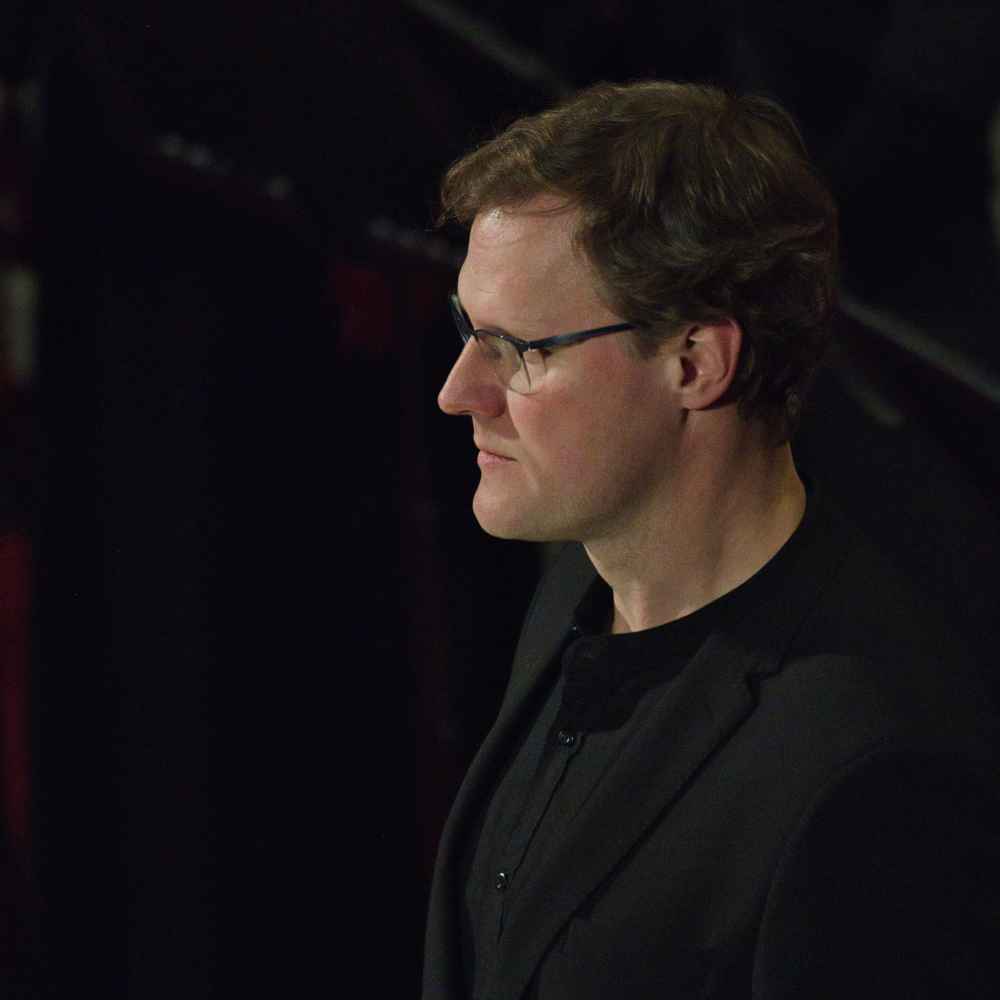
The most unexpected inclusion of the night was Luciano Berio’s “Cries of London.” At the side of the stage, alto Annely Leinberg sang into a megaphone, met with the choir’s tongue rolls and sighs. We were hearing the hustle and bustle of city folks and vendors across time. For instance, “If you lose your health / my garlic then come buy.” Tenor Danila Frantou provided sharp falsetto lines like “old clothes to sell” amidst a throng of voices.
The choir shaped the feeling of death with tender hands, treating it as a long-awaited reunion… the Epicurean idea that death is not a theft of life but a return to our pre-birth state.
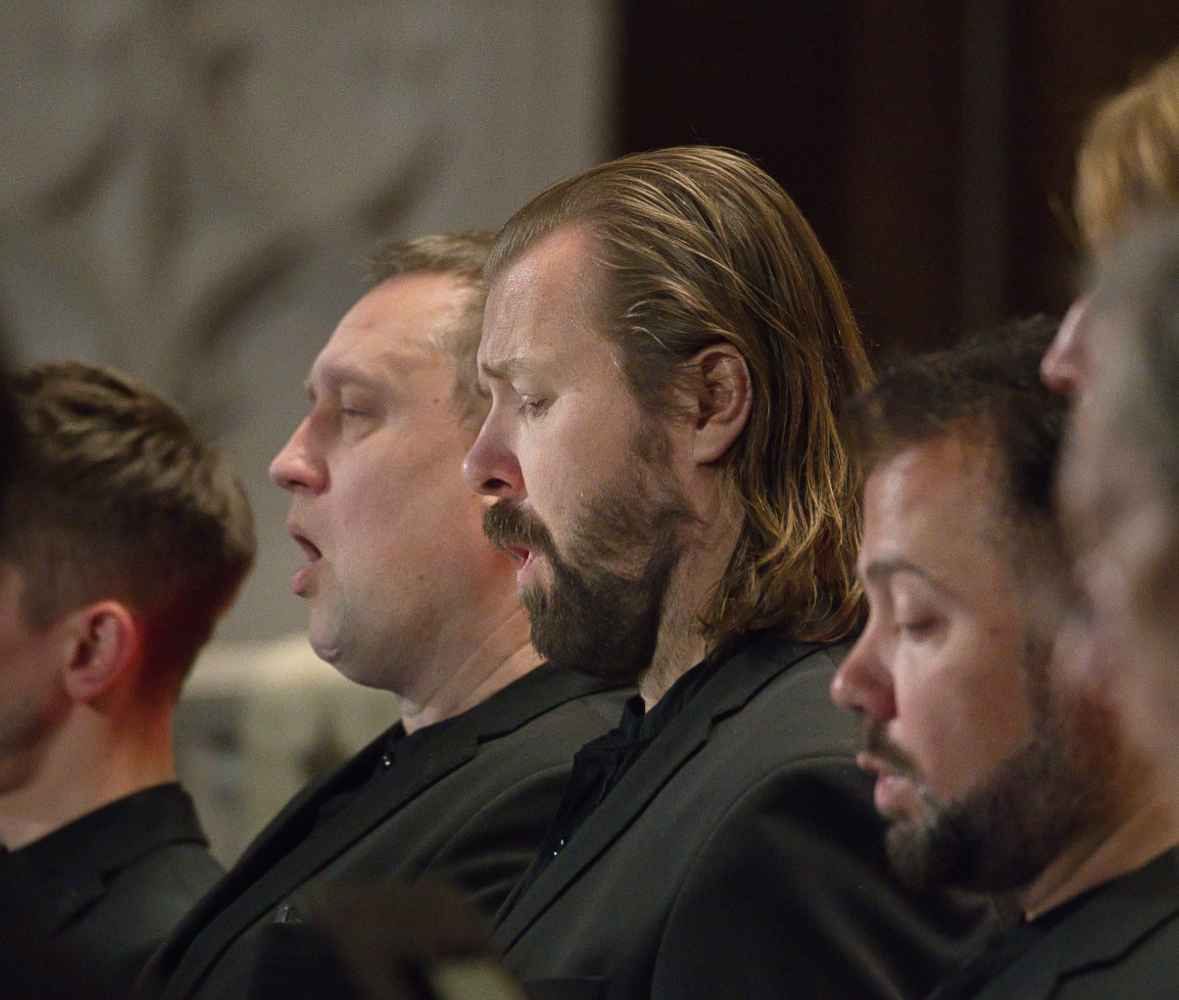
Then, “Iris,” with music by Evelin Seppar and text by Jaan Kaplinski, cultivated an emphatic blast, flying into the highest range of the choir. This led us to the last stage of the mortal itinerary: Philip Glass’ “Father Death Blues” from the opera Hydrogen Jukebox. Given Allen Ginsberg’s text, one would expect a dreamy poetic trip. Still, the result was a deeply moving dirge. It began with a low, plane-like hum. The men’s voices were akin to some countryfolk’s farewell song, while the female voices looked to the beyond.
The notes here were exceptionally sweet. The choir shaped the feeling of death with tender hands, treating it as a long-awaited reunion. There is a symmetry here; the Epicurean idea that death is not a theft of life but a return to our pre-birth state.
As such, the second half of the concert offered a different spiritual perspective than Pärt’s, but was no less meaningful.
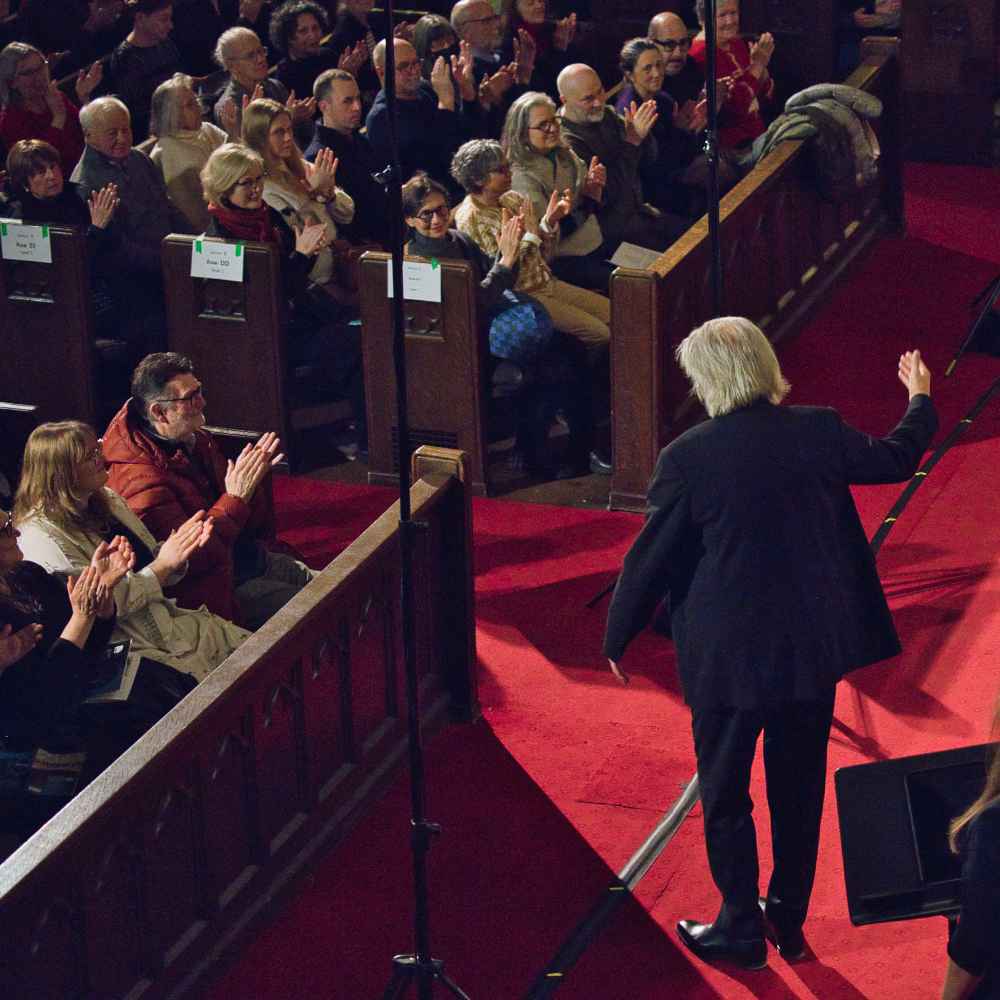
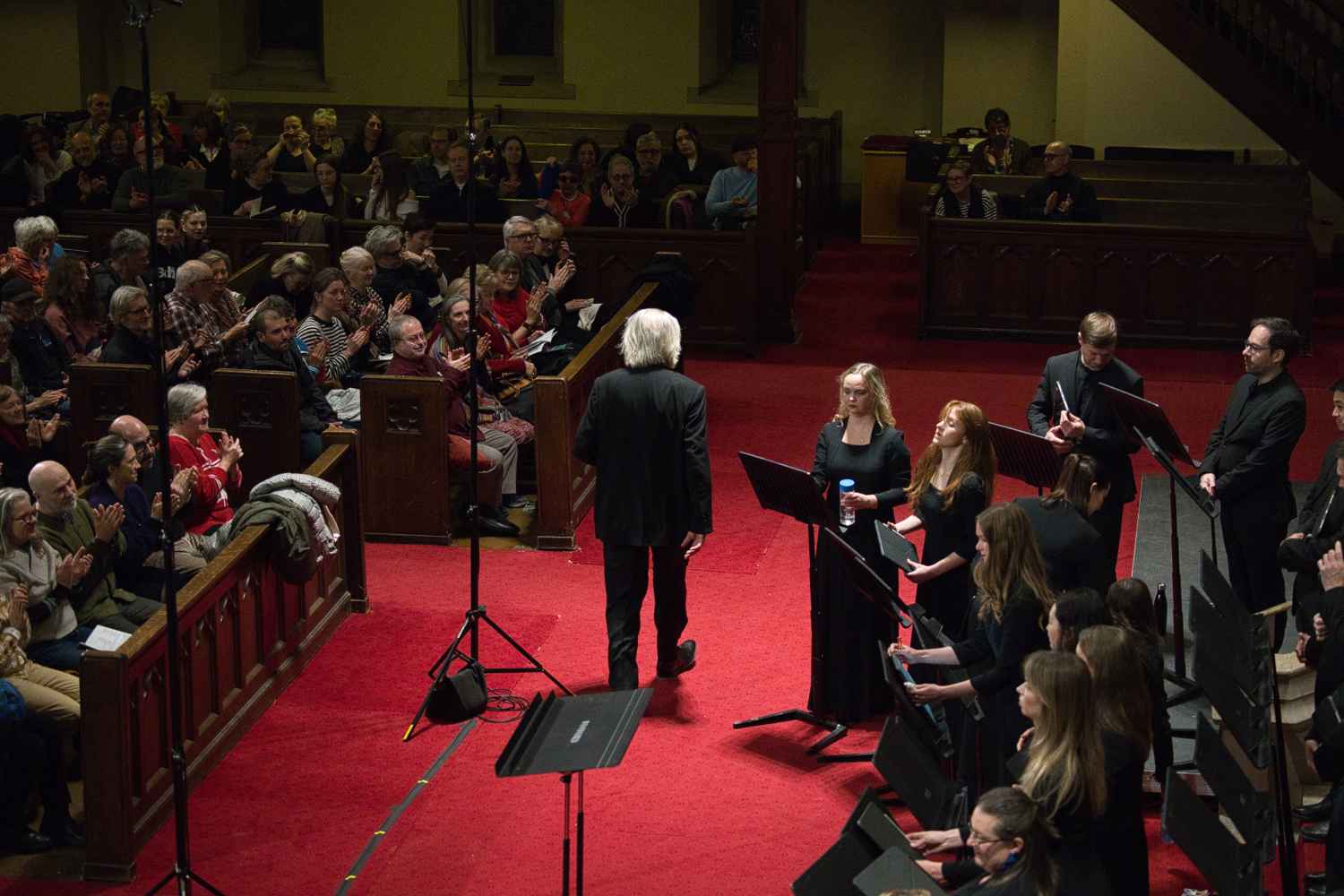
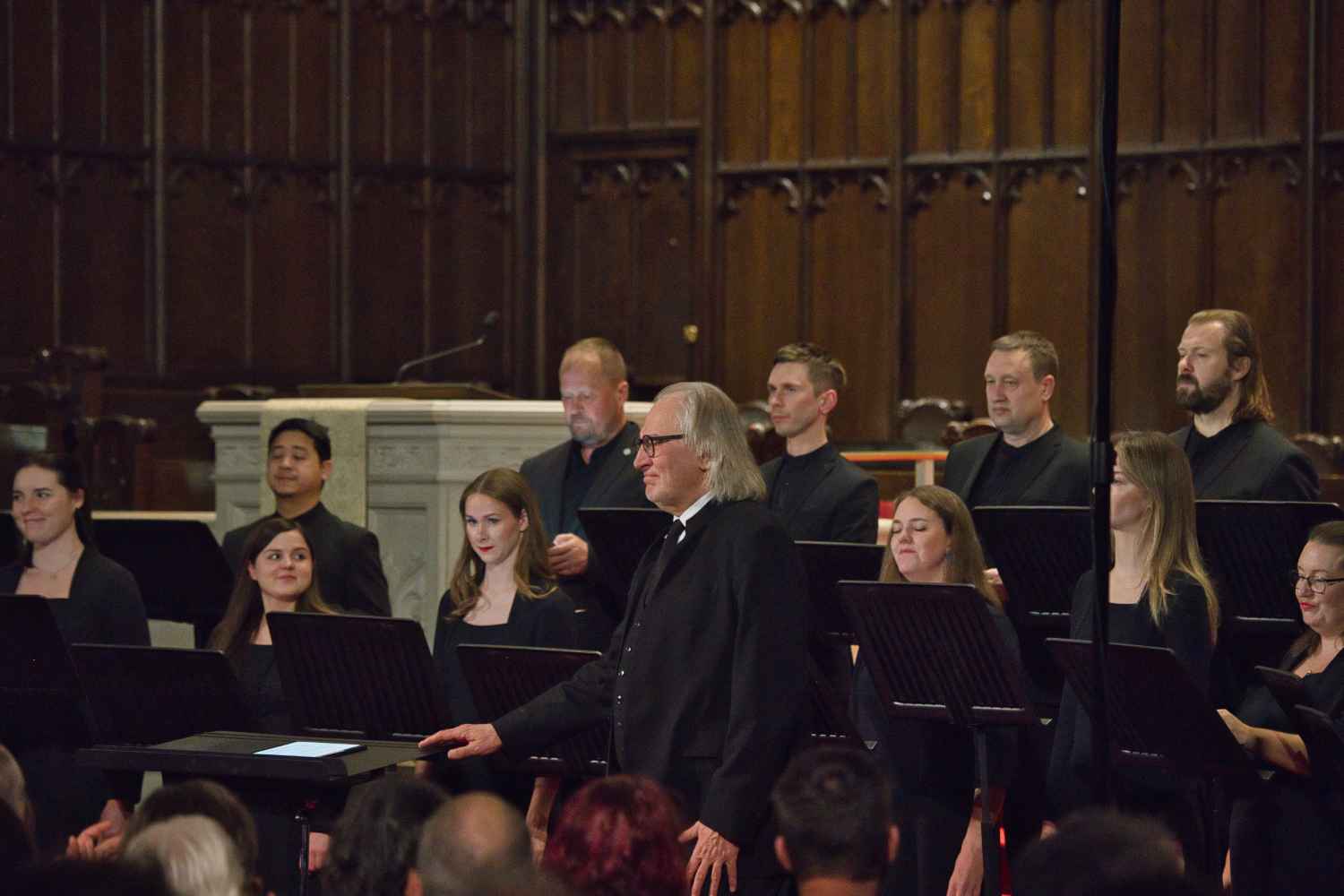
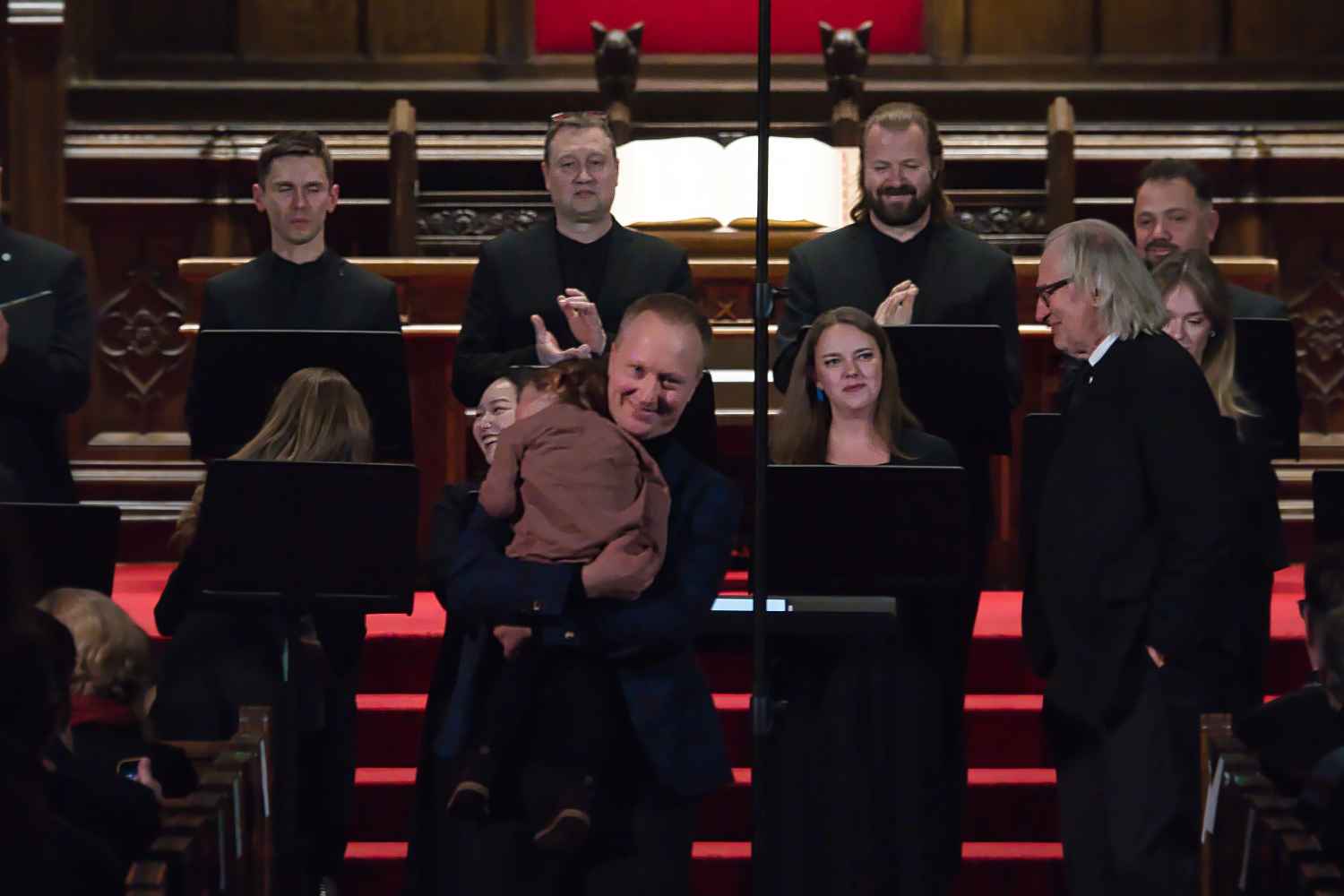
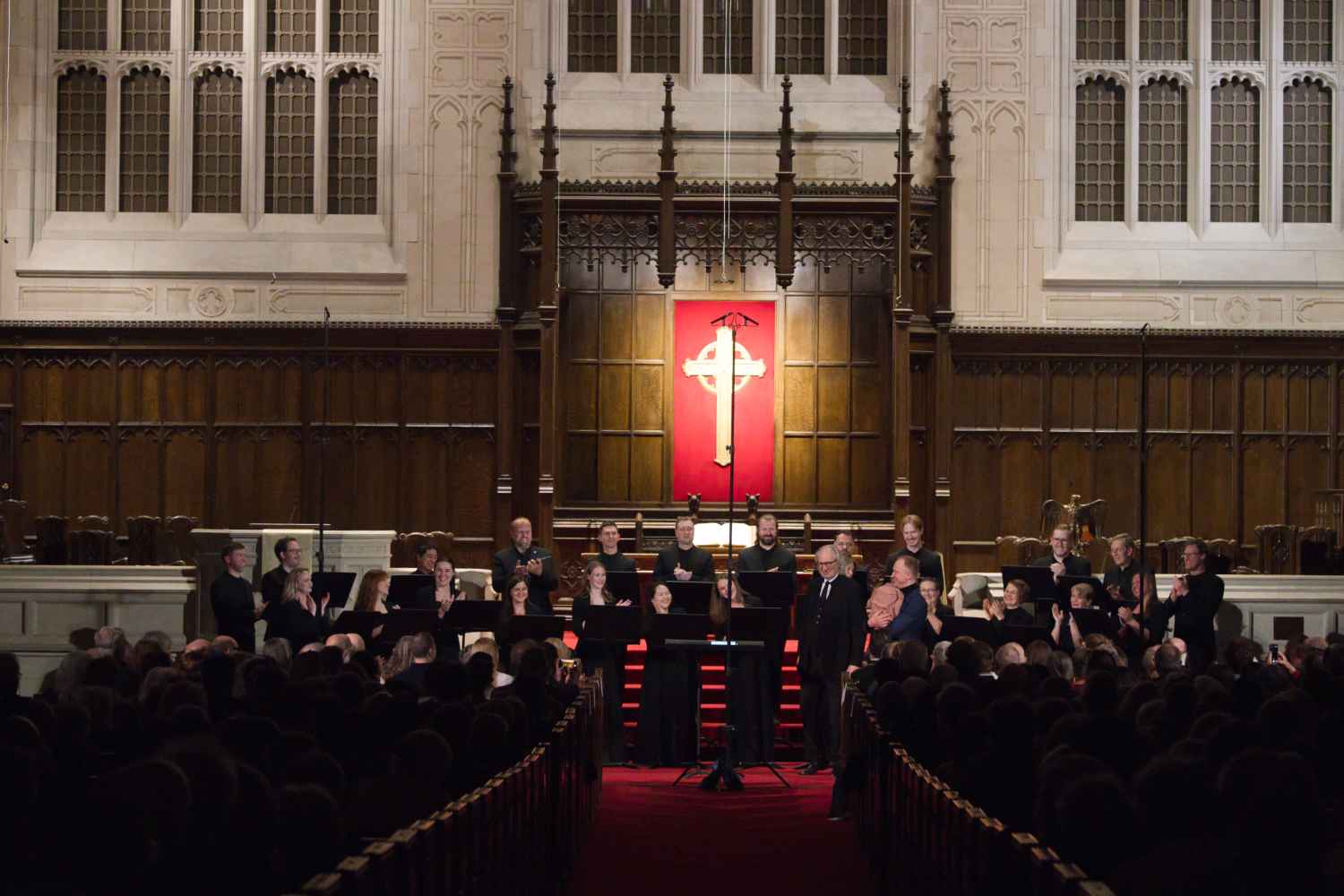
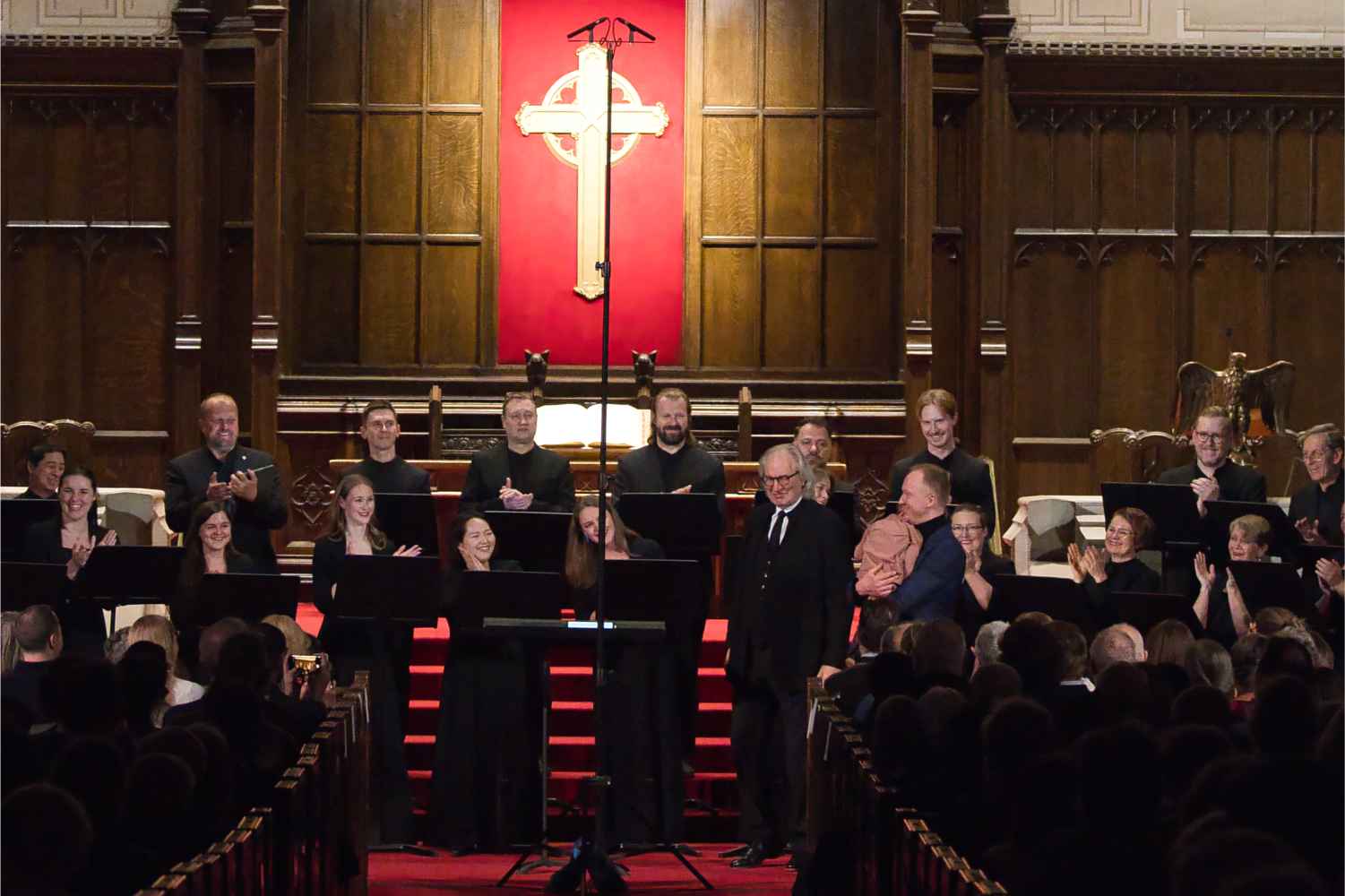
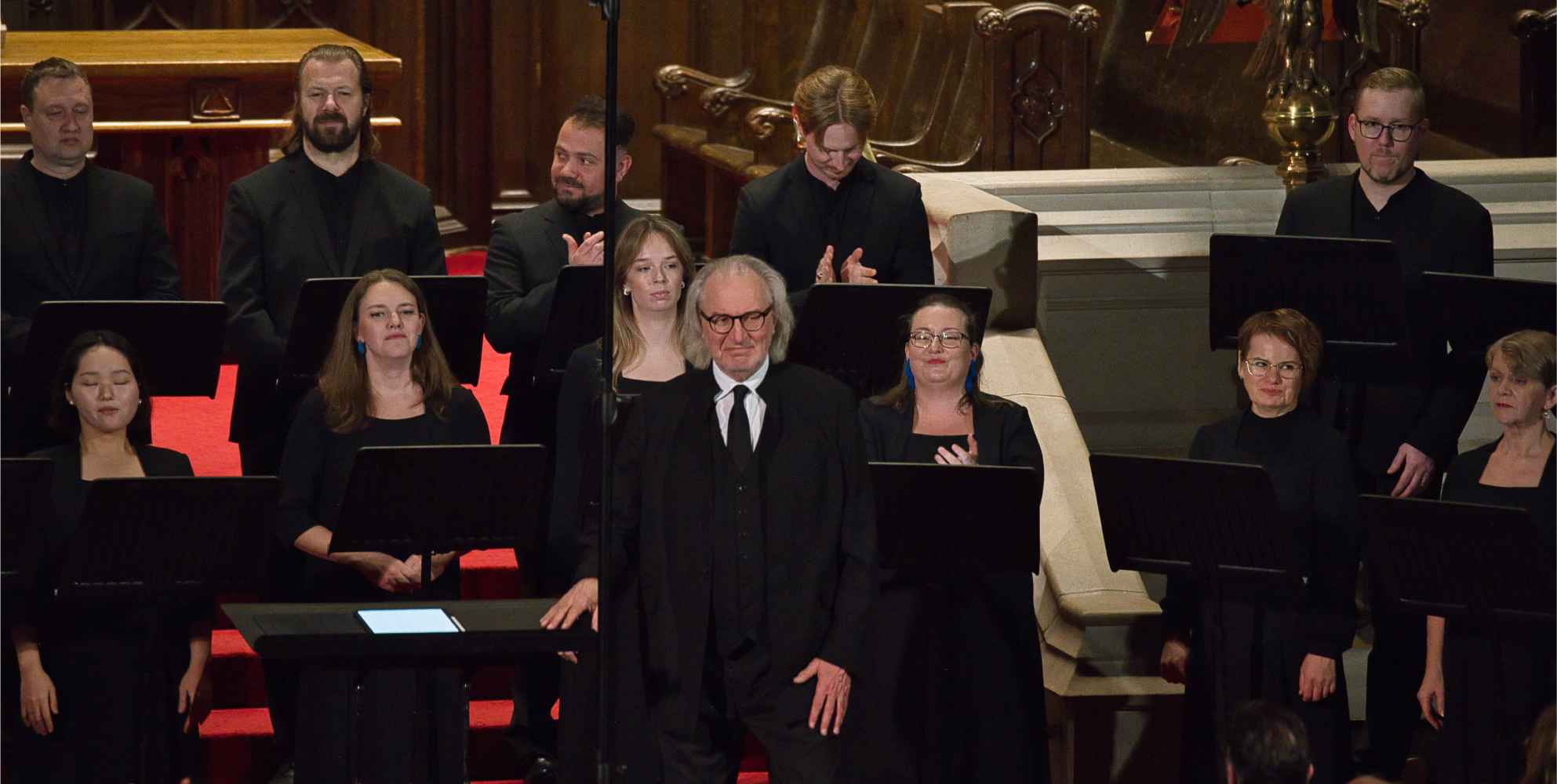
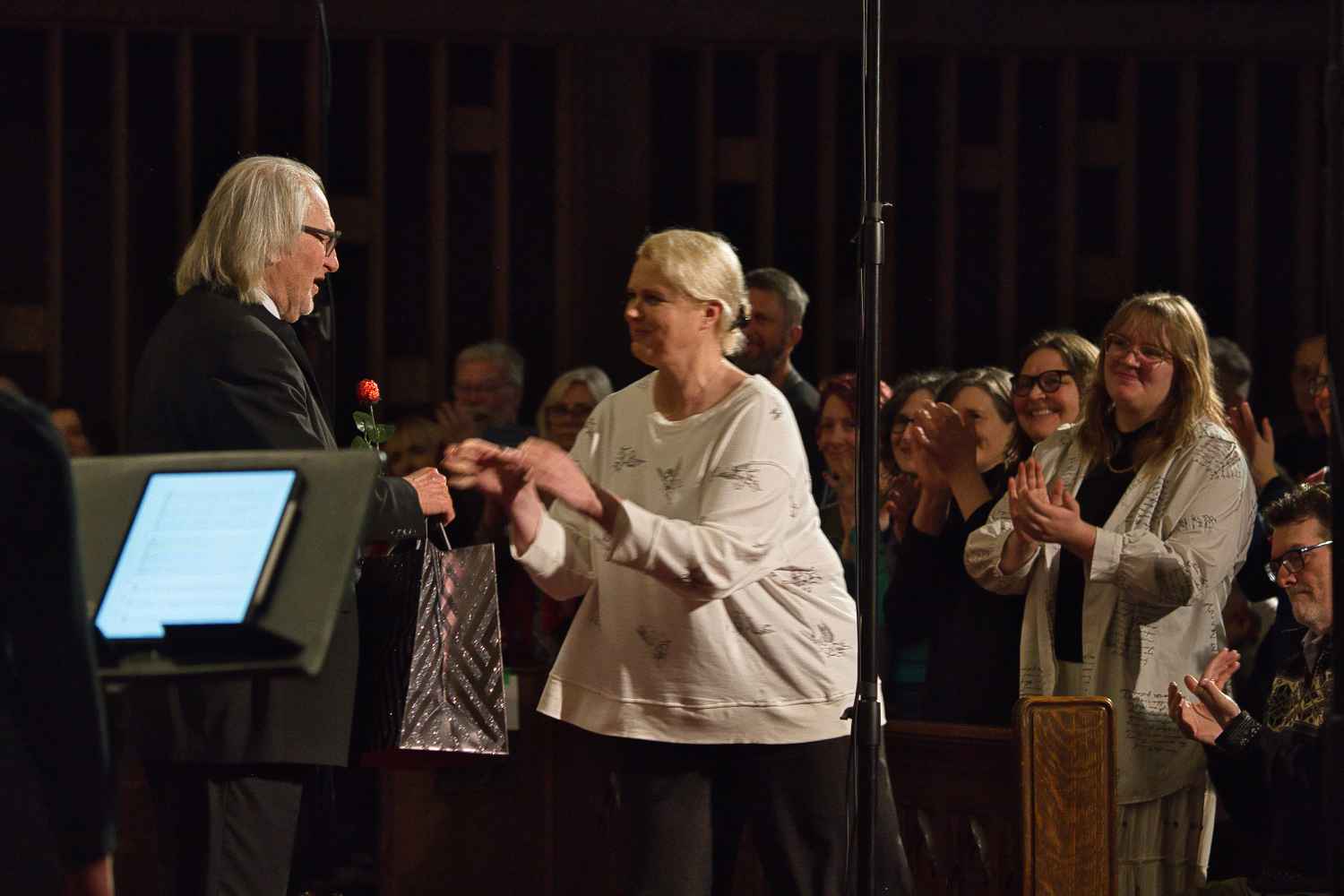
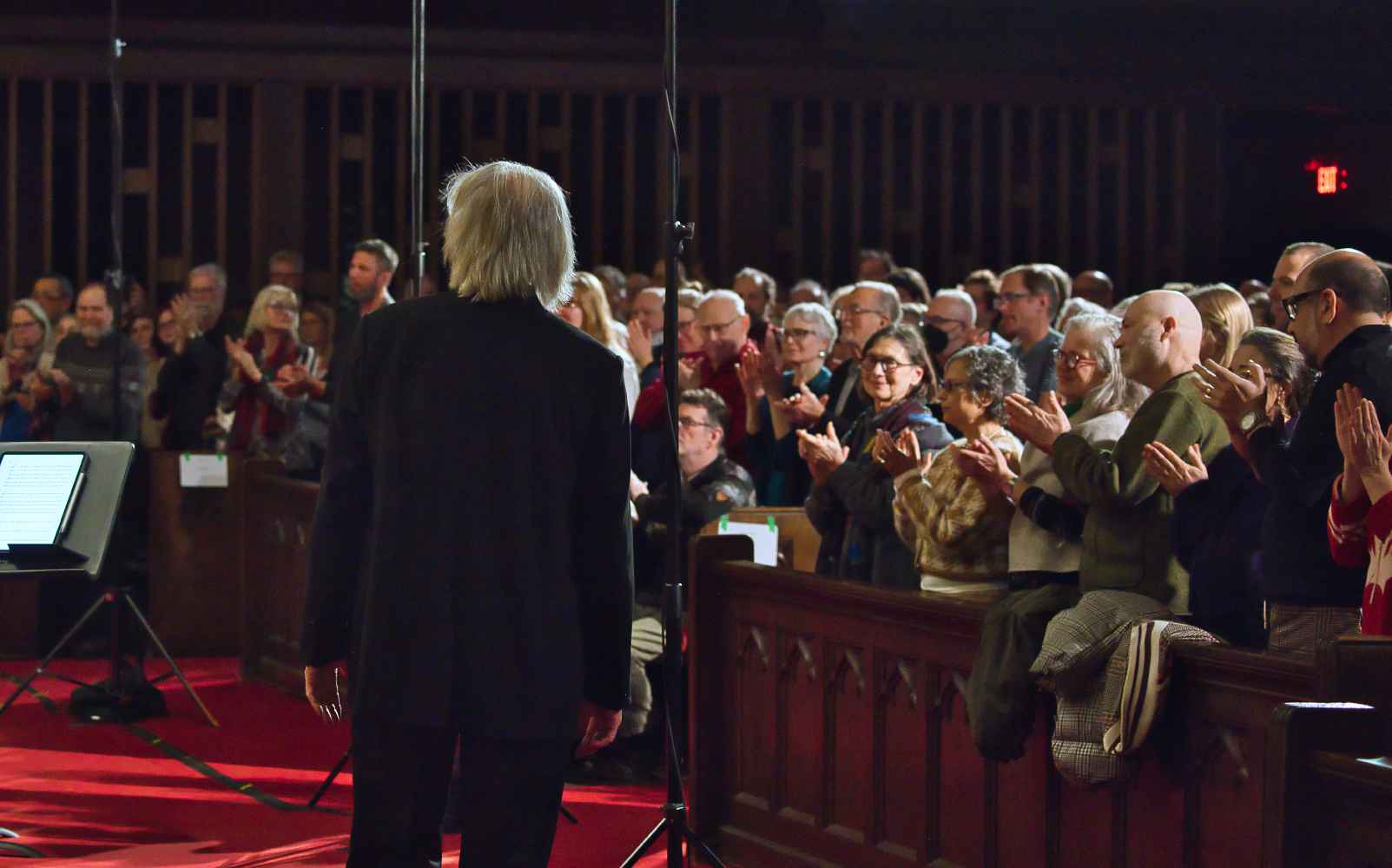
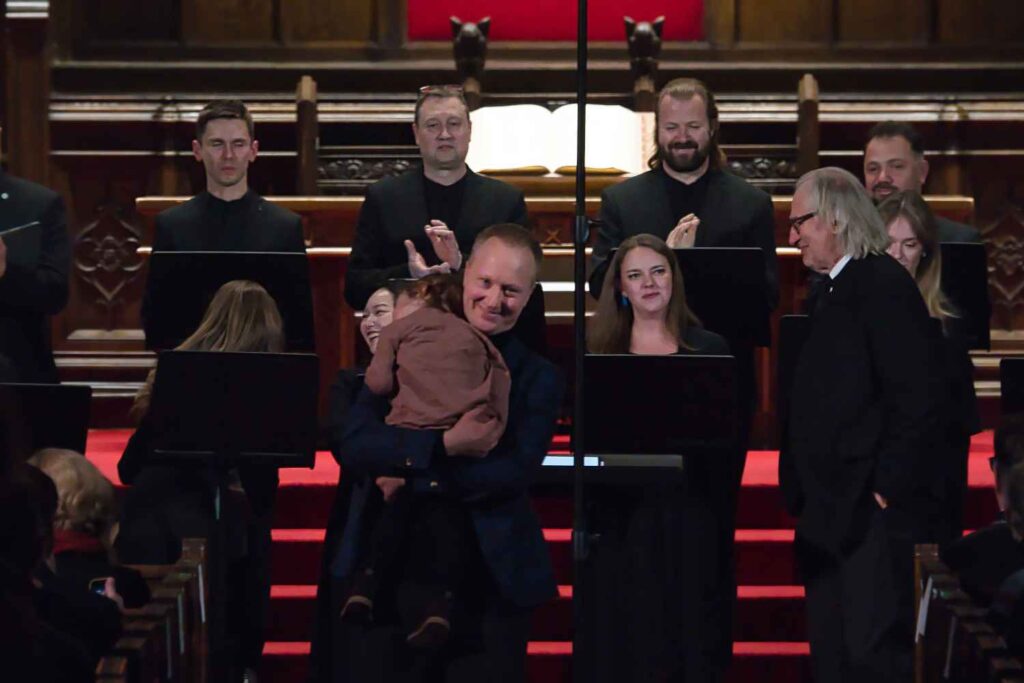
A standing ovation brought Kaljuste and the EPCC back for a Danish love song, their voices remaining clean and crisp despite the demanding programme. While a busy reception followed at Christ Church Deer Park across the street, the true spiritual conclusion occurred earlier. Kaljuste turned to us and said warmly, “It’s been a long concert… I think you need a lullaby now.” The final song was a Greenlandic lullaby, offering peace and hope until the next morning. Another day is never guaranteed, but the thought counted. We had been shown the duration of a spirit in these twelve pieces.