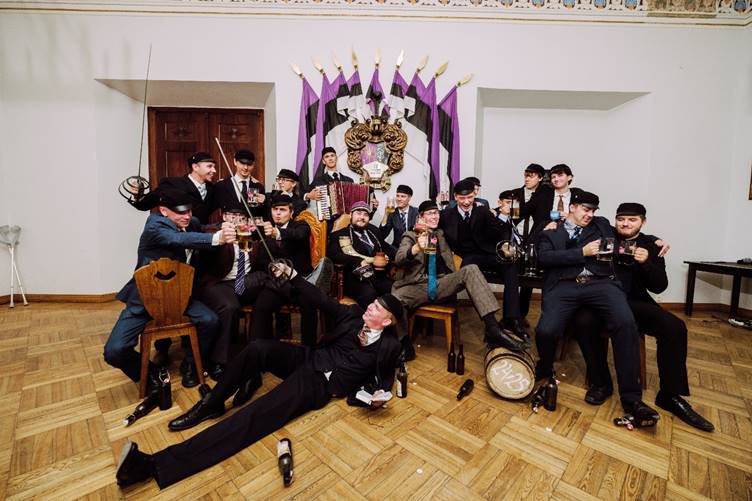
Estonian korporatsioonid and seltsid (student societies, a different type of organization) had their heyday in Tartu in the 1920s and 1930s. They had their own buildings („konvendid“) in Tartu, where active social lives were led by both male and female members.
Where did the idea of korporatsioonid come from? Estonians do not like to admit this, but korporatsioonid got their start at the University of Tartu in the 1820s, with the Baltic Germans establishing four main fraternities: Curonia, Estonia, Livonia, and Fraternitas Rigensis. They, however, began winding down their activity after Estonia obtained independence. The Estonian korporatsioonid took over many of the customs of the Baltic German fraternities, but added to them an Estonian nationalistic element. All four Baltic German fraternities owned their own buildings/konvendid, but after World War II, only one of the four buildings survived. Today, it is owned by korp! Rotalia and is their konvent (chapter house) in Tartu (at the address Tähe 3).