Telli Menüü

An Overview of Estonian Naiskorporatsioonid (Sororities’) Origins

How and why were naiskorporatsioonid (sororities) created in Estonia, and are they active in today’s academic world?
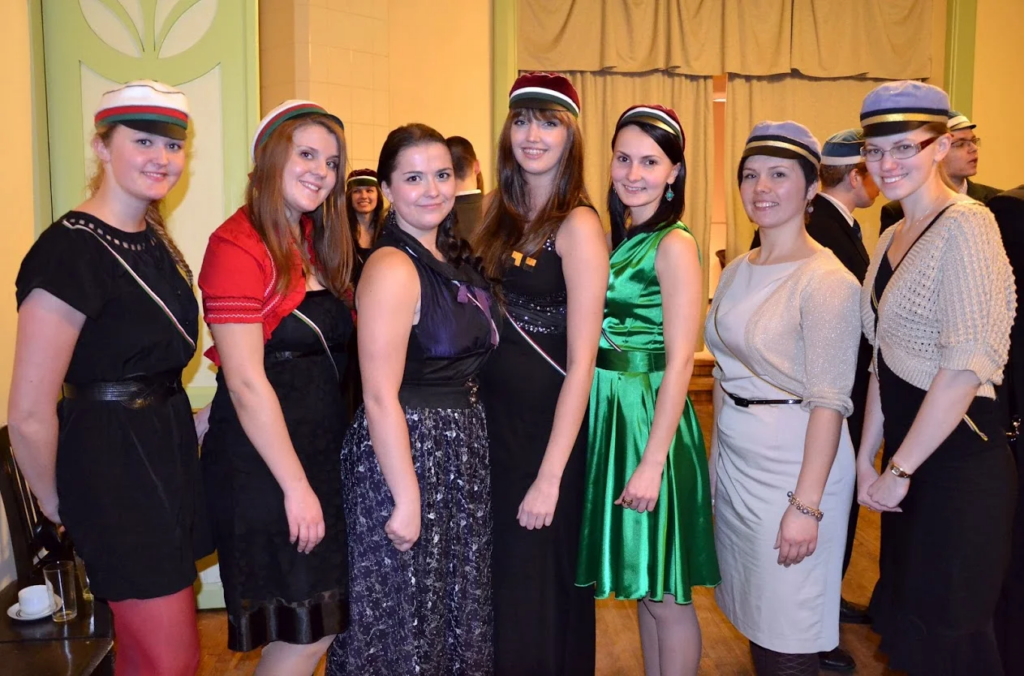
Photo from the homepage of naiskorporatsioon Sororitas Estoniae, with members from left to right from Korp! Sororitas Estoniae, Korporatsioon Indla, and Korporatsioon Amitcitia wearing their “tekklid” (caps)
Photo from the homepage of naiskorporatsioon Sororitas Estoniae, with members from left to right from Korporatsioon Filiae Patriae, Korporatsioon Indla, and Korporatsioon Amicitia wearing their “teklid” (caps)

In Tsarist Russia (which included Estonia until 1918), women were admitted to universities as “free observers” (“vabakuulajad” in Estonian) beginning in 1905. Times changed in 1915, when the Tsar decreed that all universities in the Russian Empire (which still included Estonia) could formally accept female students and women could formally graduate from university. For example, from 1915-1917, The University of Tartu had 103 female university students.

Täismahus artikkel on loetav Eesti Elu tellijatele

Igal nädalal toome me sinuni kõige olulisemad kogukonna uudised ja eksklusiivsed lood uutelt kolumnistidelt. Räägime eestlastele südamelähedastest teemadest, kogukonna tegijatest ja sündmustest. Loodame sinu toele, et meie kogukonna leht jätkuks pikkadeks aastateks.

Hind alates $2.30 nädalas.

Vaata tellimispakette

Loe edasi