As with many events, arriving early was invaluable. Not only did I secure a good parking spot, but my introduction to a new facility was extremely useful.
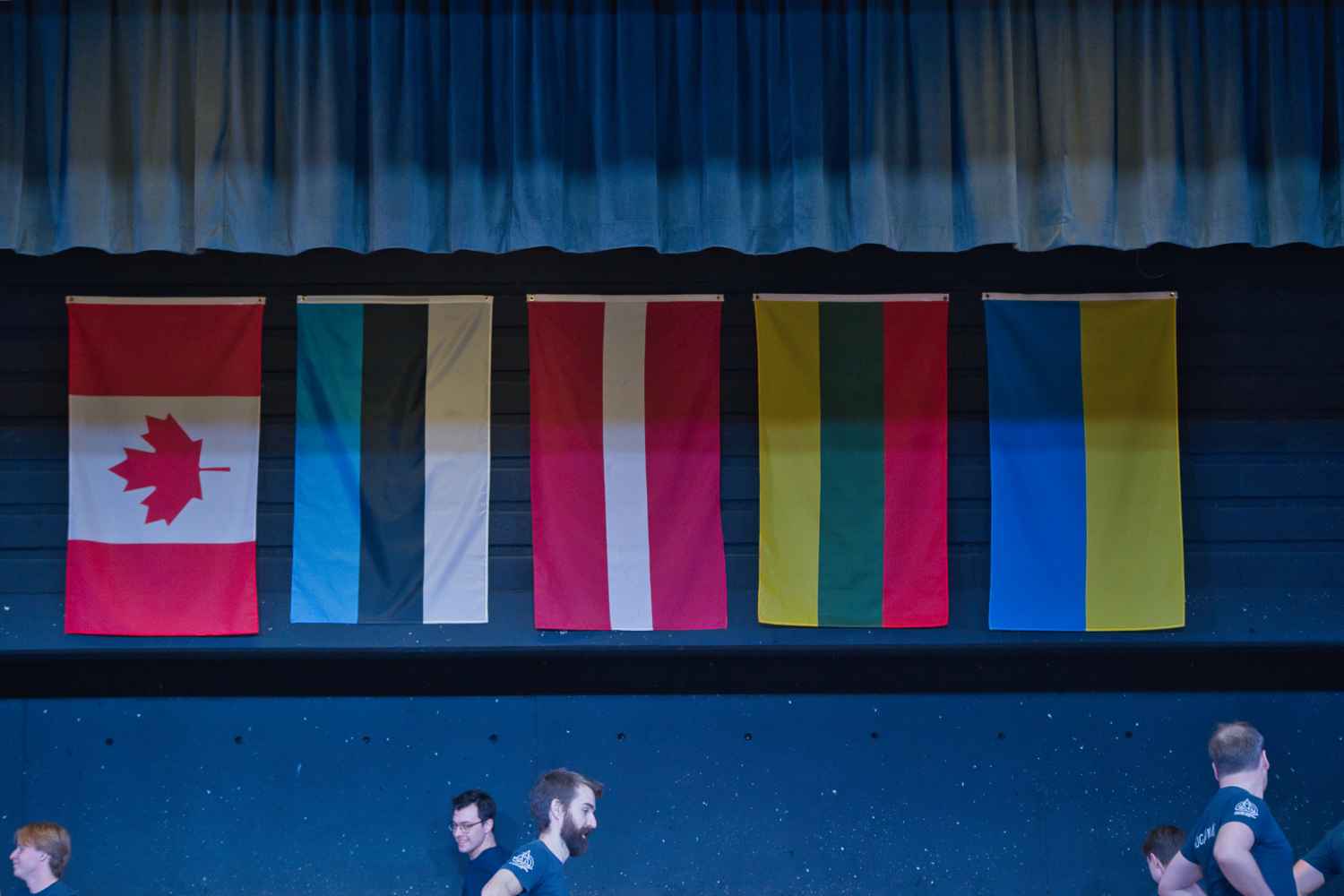
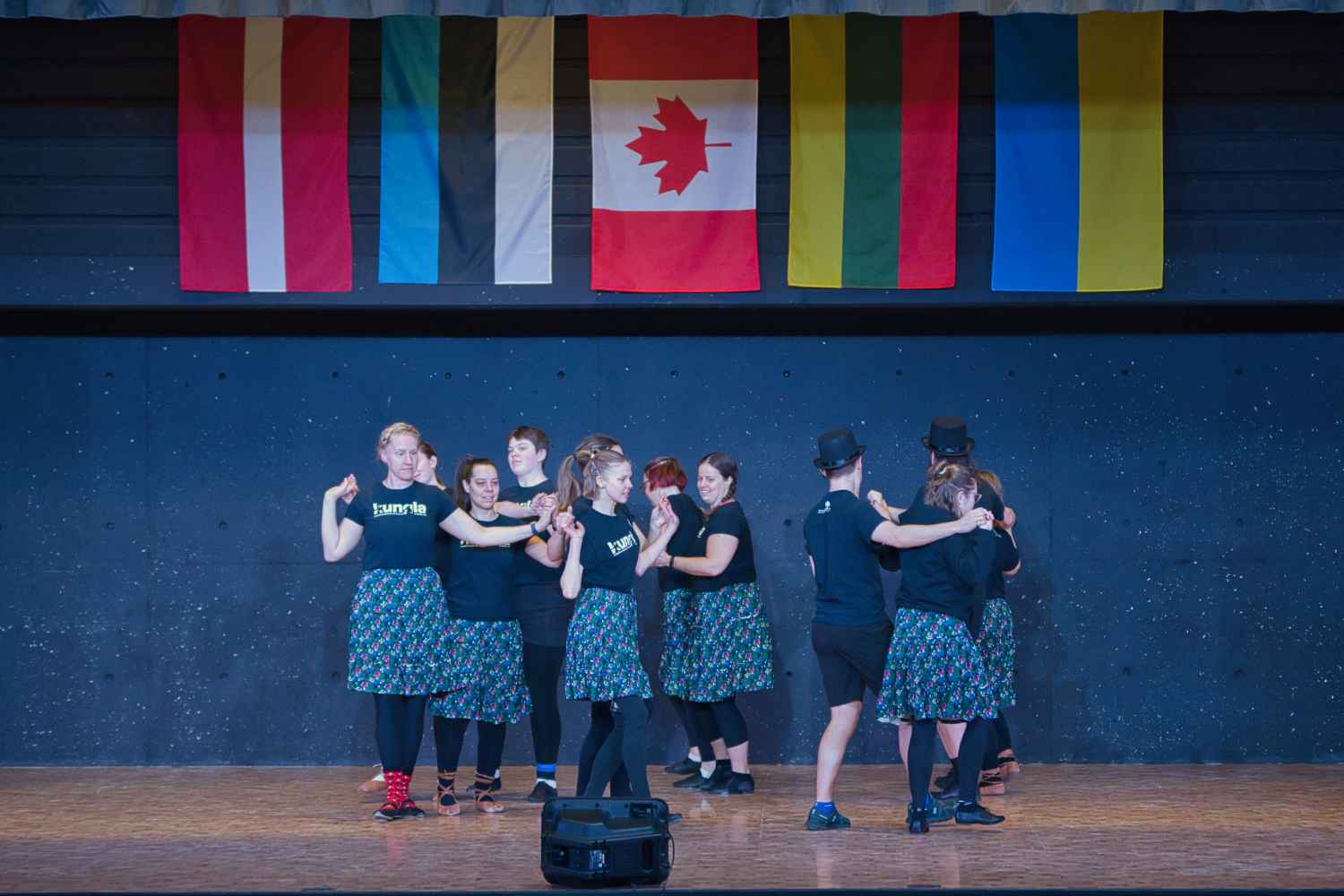
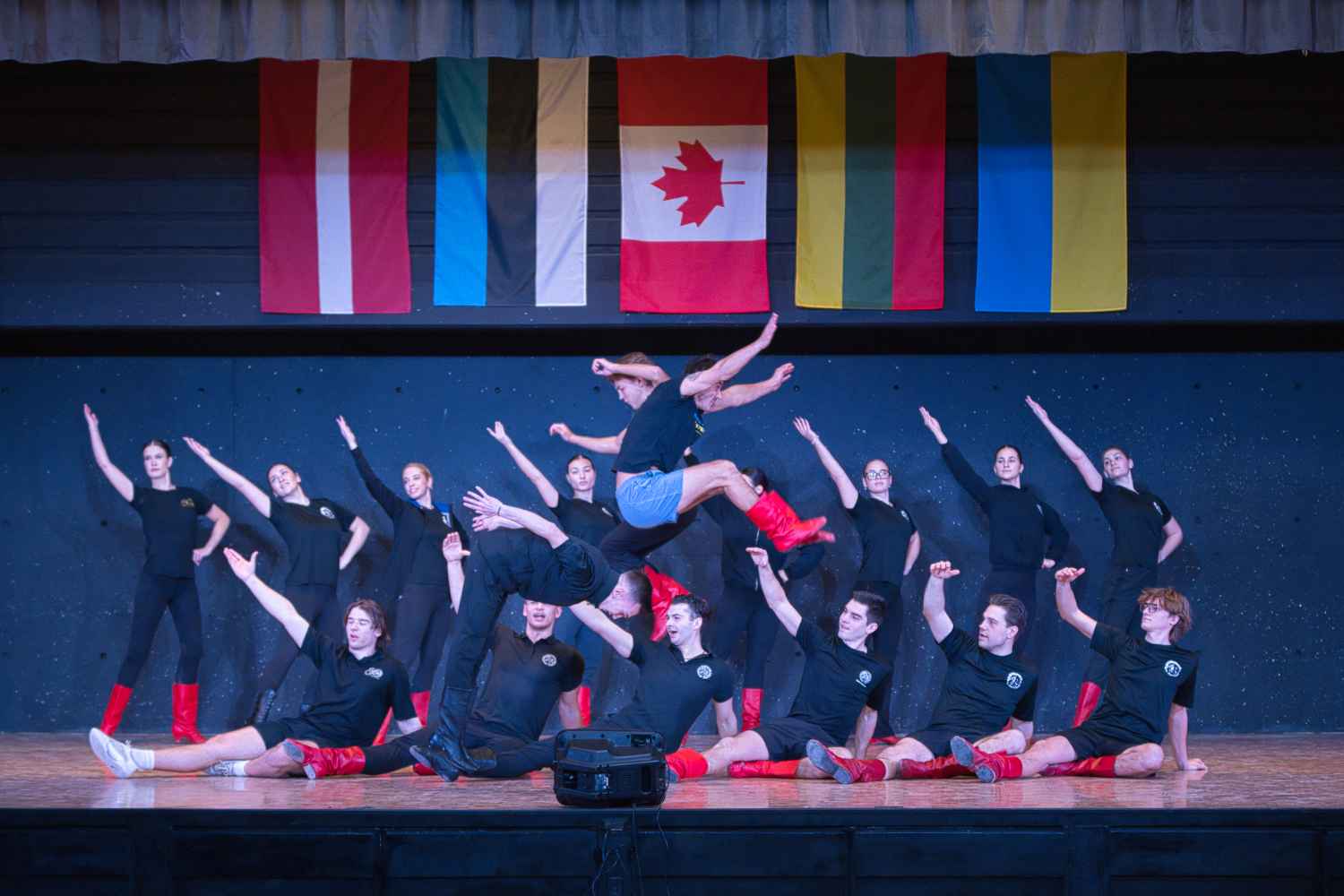
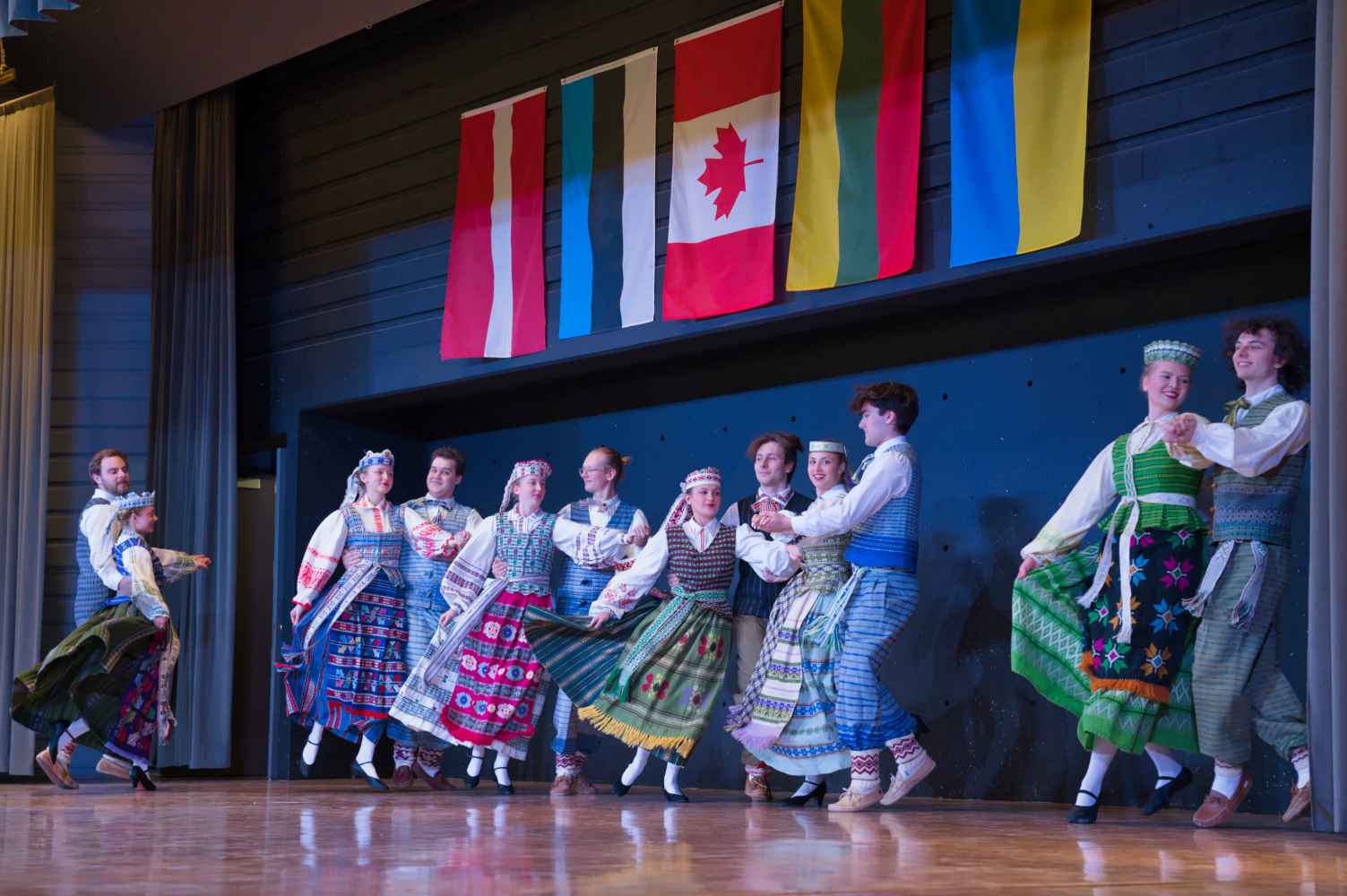
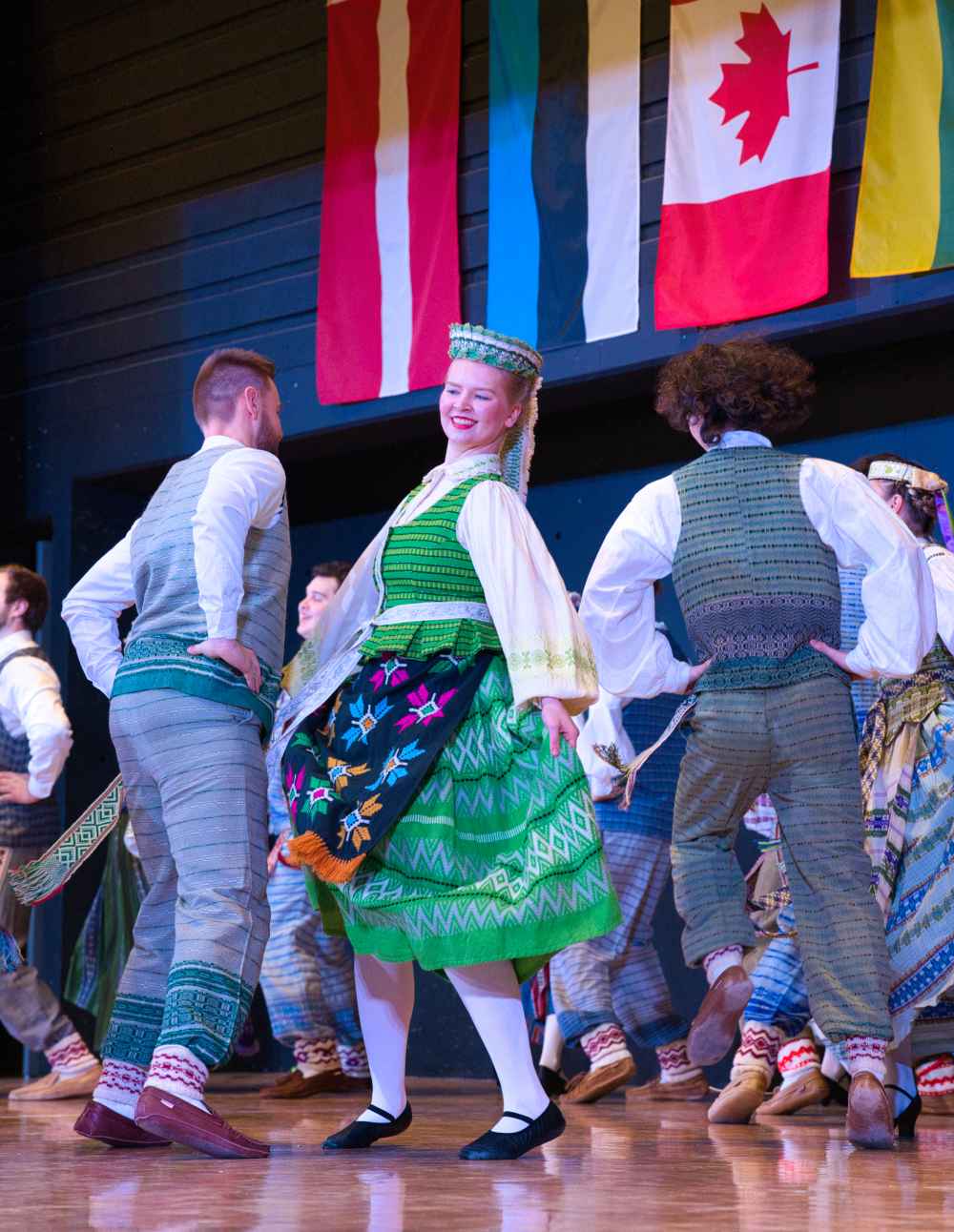
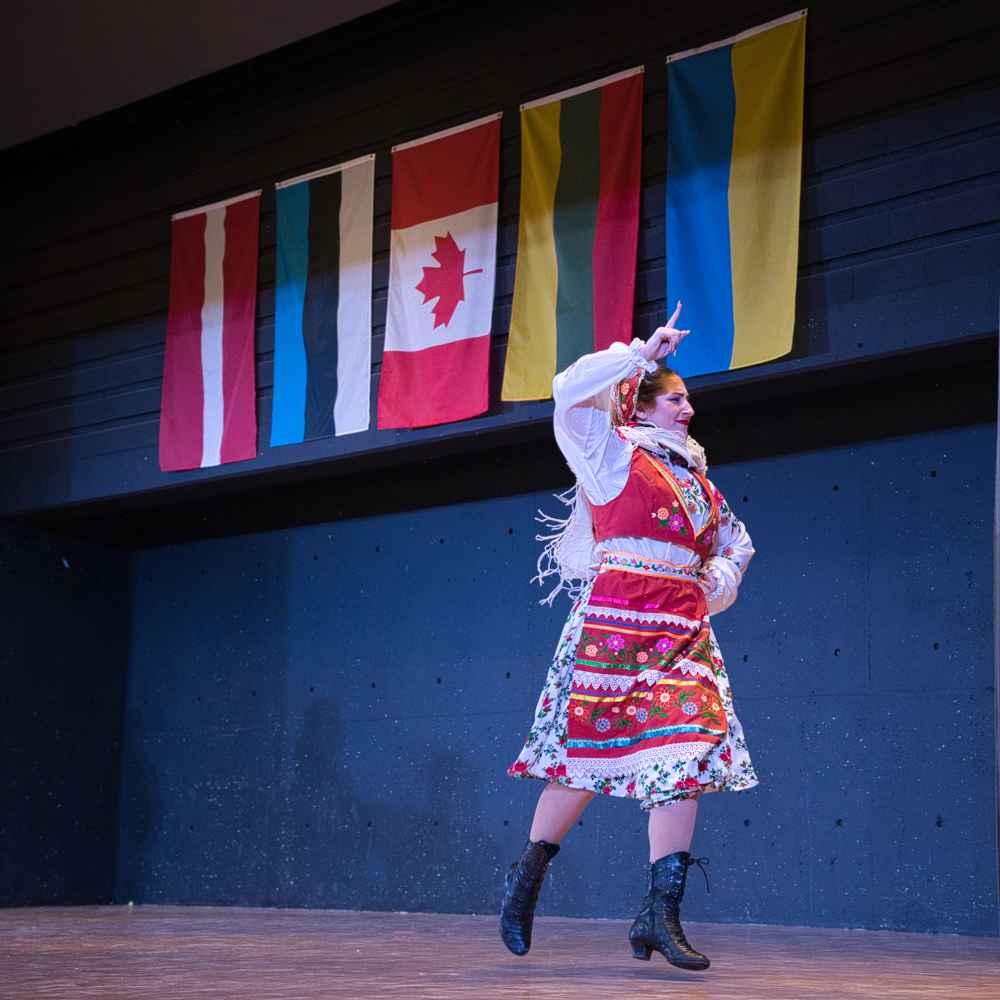
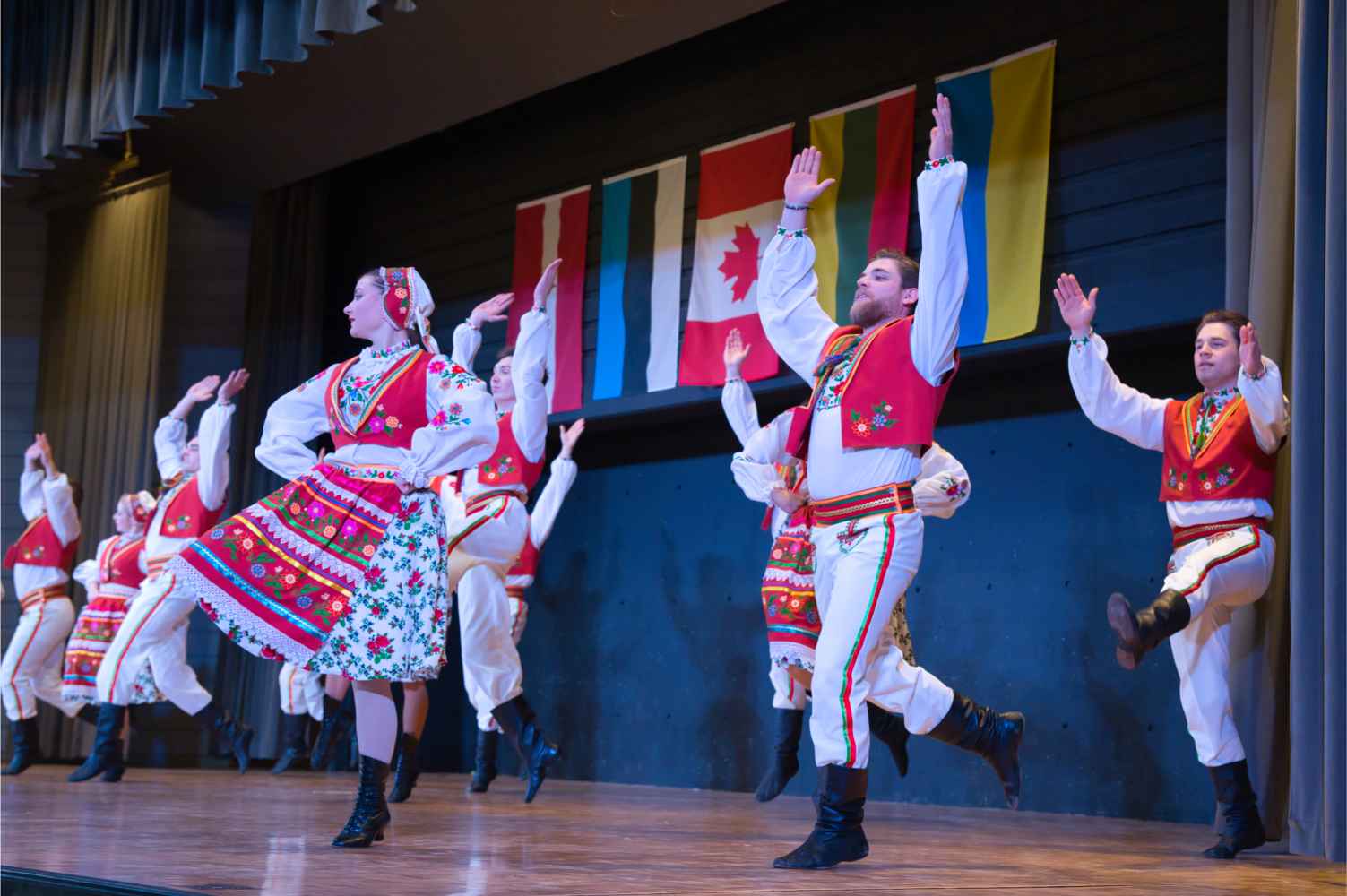
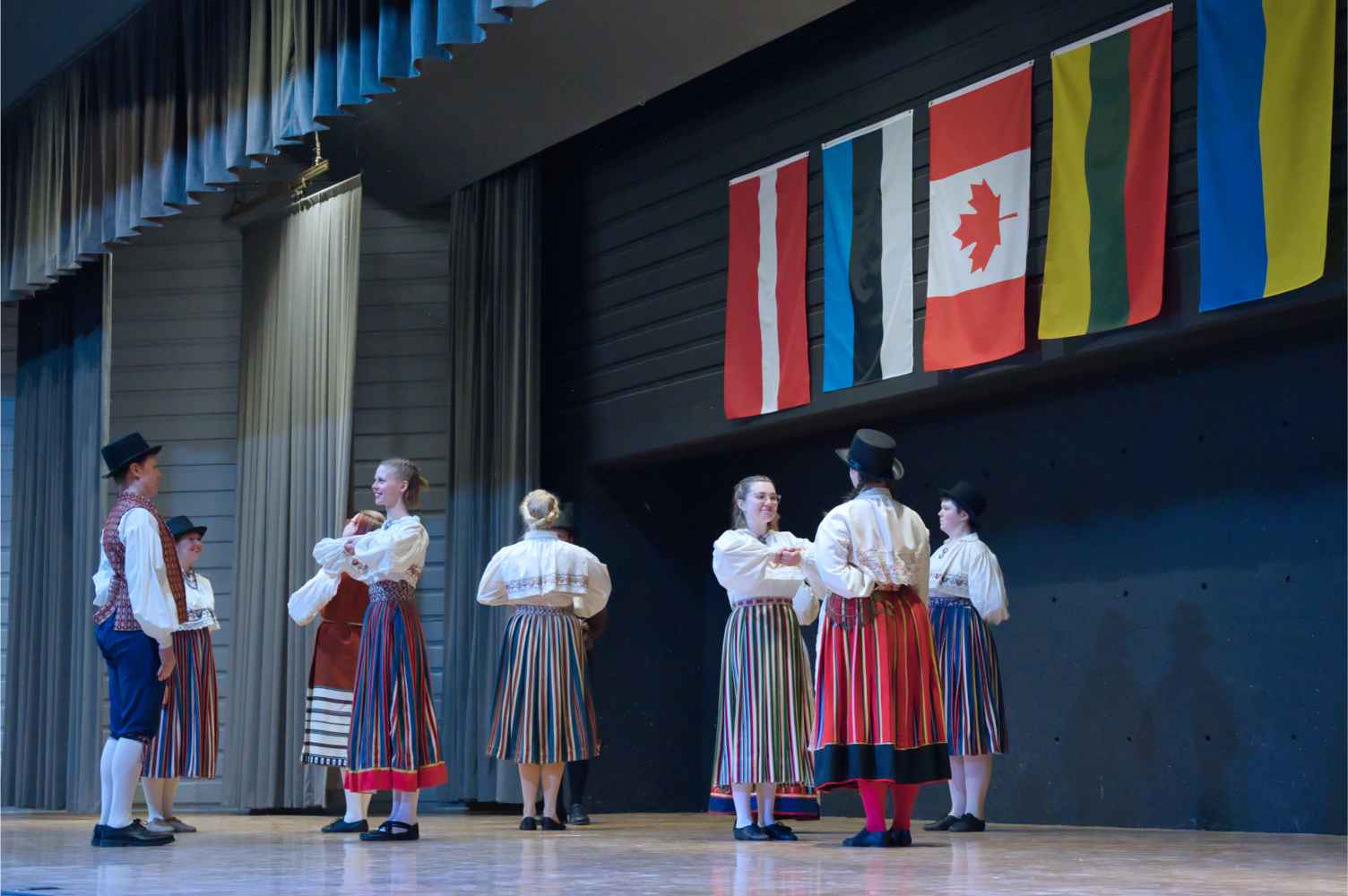
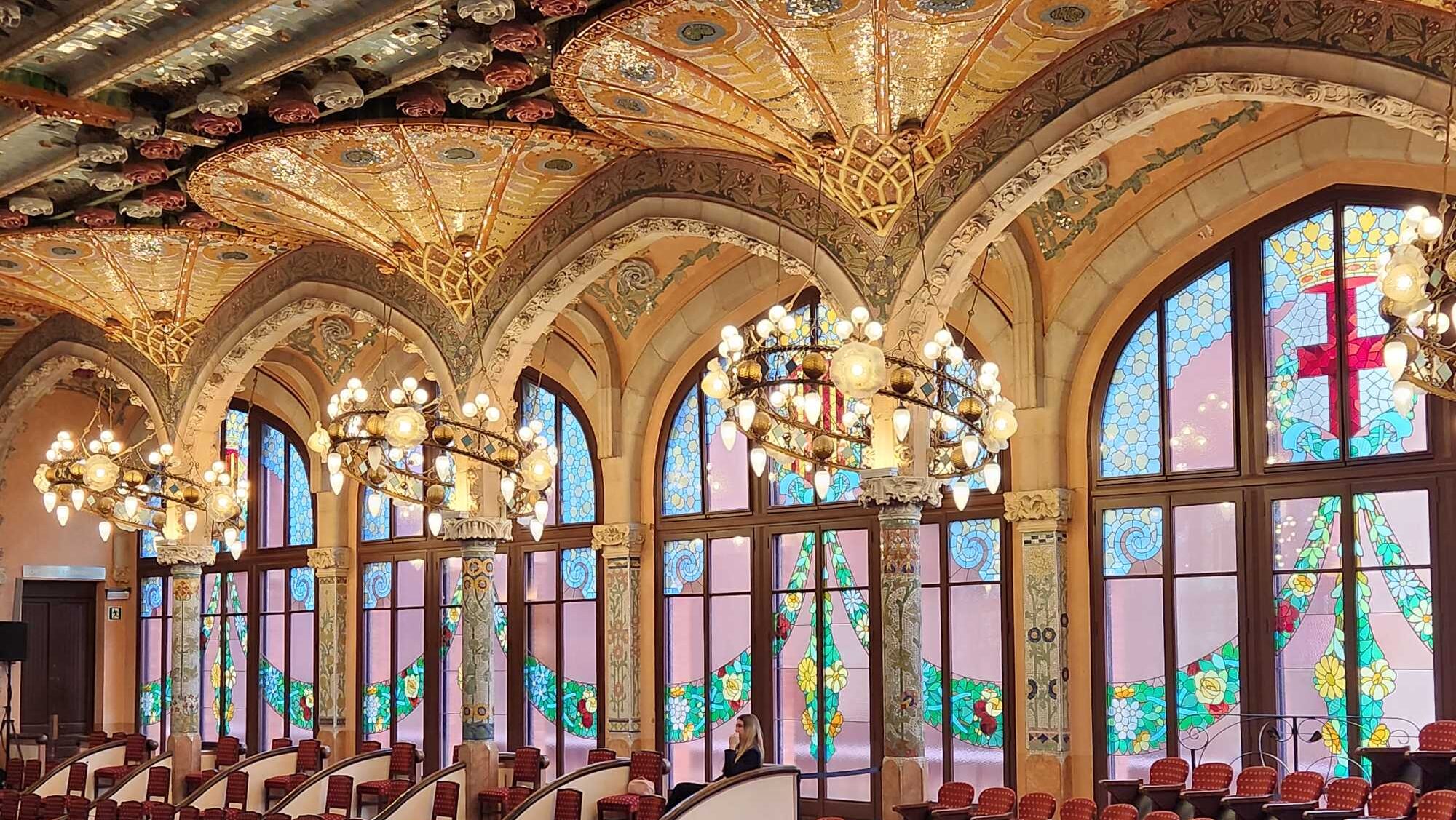
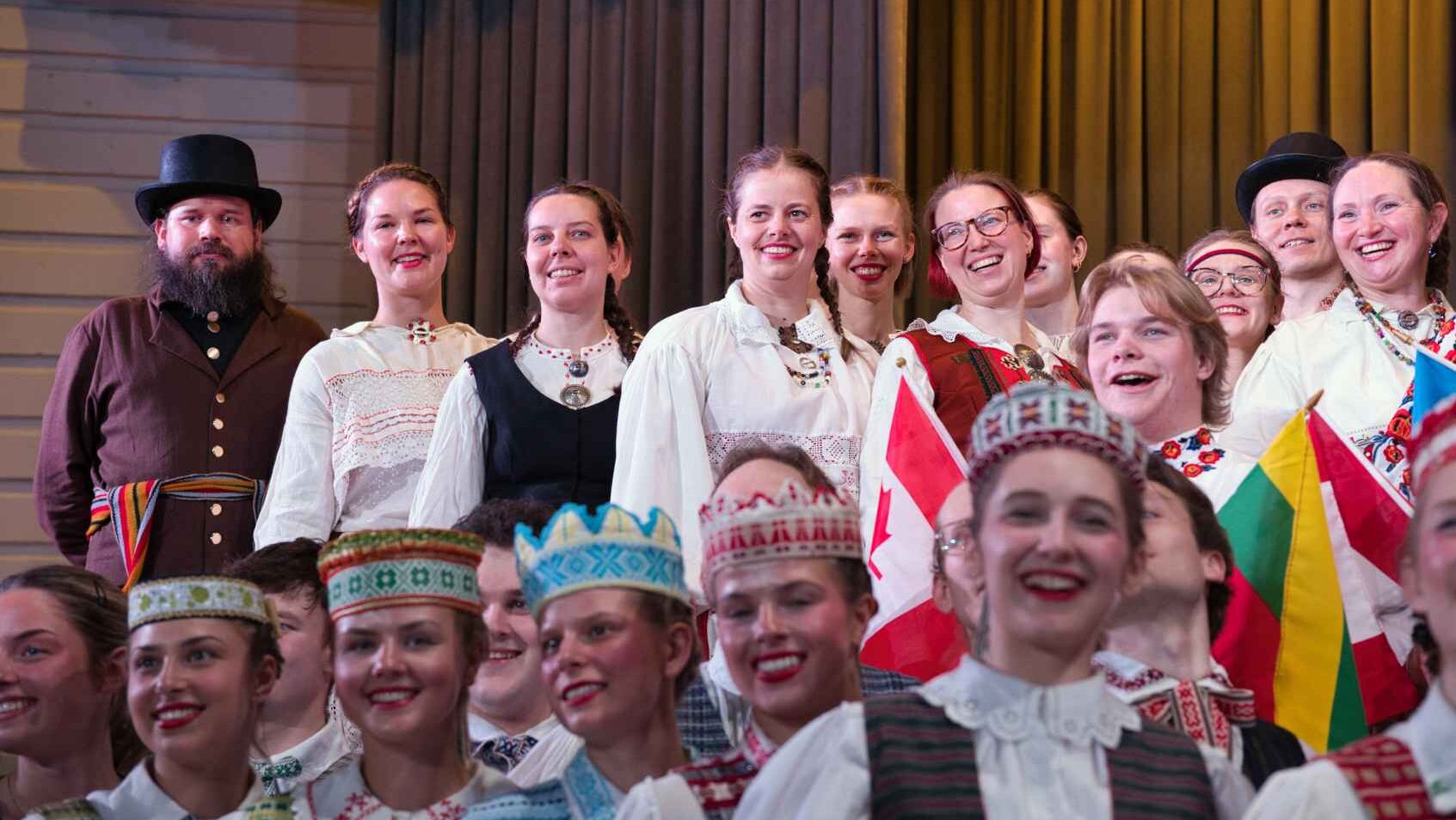
I met immediately with the event organizer who, thanks to Talvi Parming’s advanced notice, was aware of who I was representing. I was provided with a personally labelled seat in the far right corner of the beautiful Anapilis Hall. Although this location was not central, it provided for easy movement around the hall without interfering with the audience. In addition to floor level seating, the hall also had a rear balcony that was about six steps raised from the floor level. This was sufficient elevation for me to take many of the “head on” images seen in the first article. Arriving early allowed me to see the rehearsals of each folk dance group, which was especially helpful in anticipating the athletics of the Ukrainian folk dance group Barvinok. It was also amusing to see how the arrangement of flags was altered, with the Canadian flag ultimately claiming its central location among the five flags.
As flash photography was not an option, the technical aspects of the cameras’ shutter speed, white balance, and sensitivity (ISO) had to be established. A shutter speed that was too slow would blur the image and not freeze the action. All images of the dancing were adequately captured at 1/500 second.
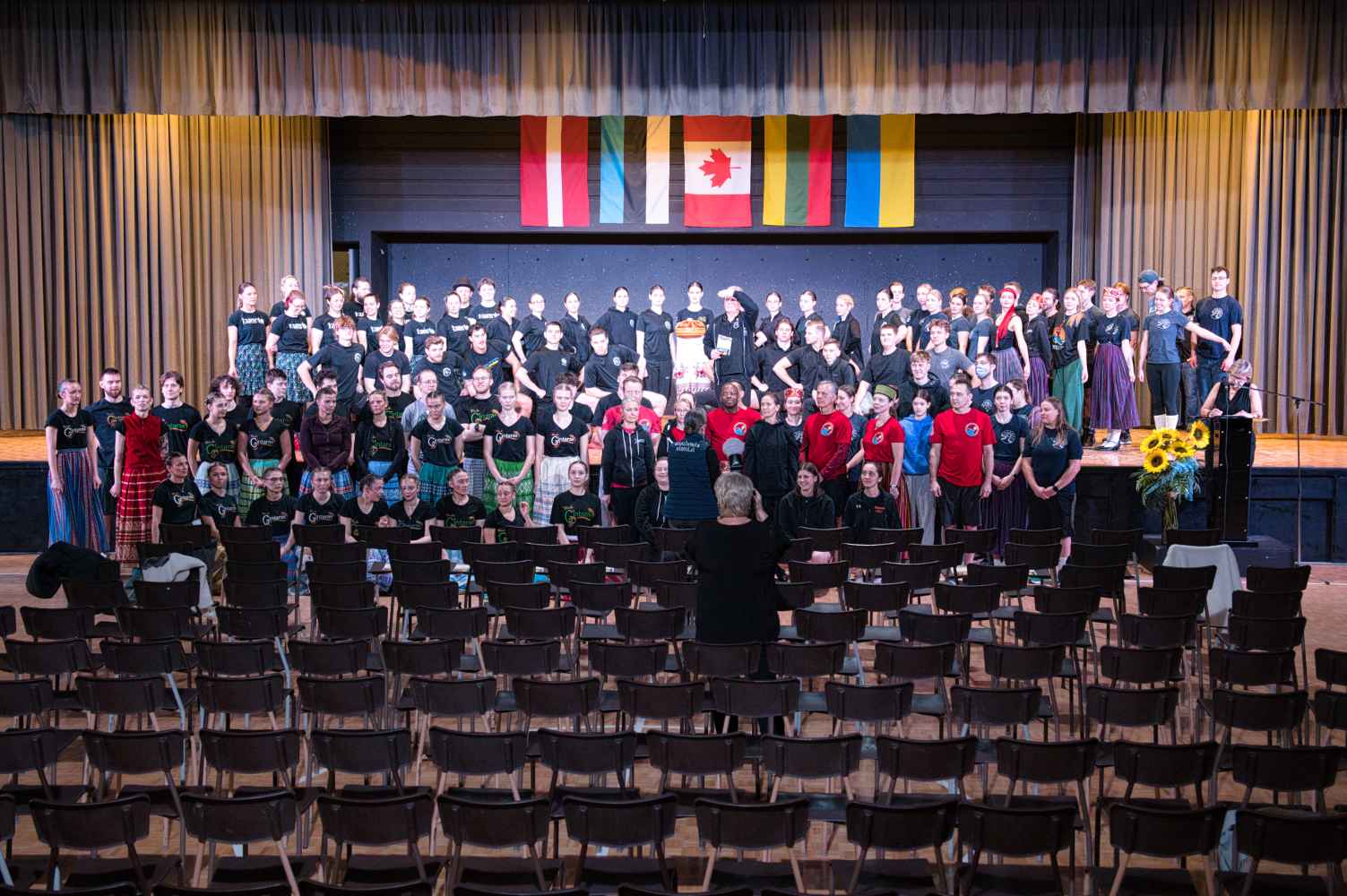
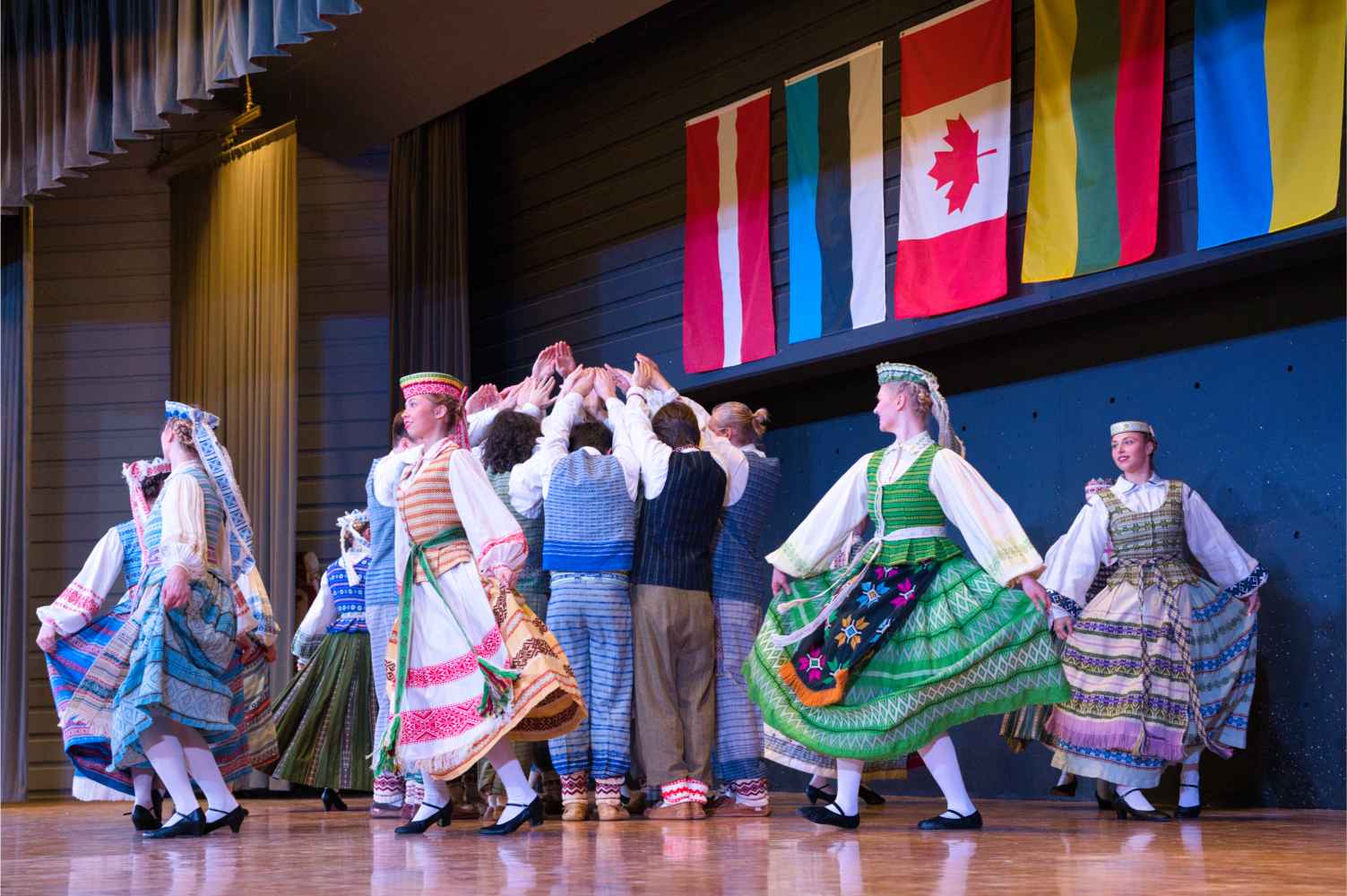
Indoor action photography is very dependent on excellent lighting and during the rehearsal, especially as seen with the rehearsal photo of the finale, the lighting technician was experimenting with the correct exposure for the stage. As flash photography was not an option, the technical aspects of the cameras’ shutter speed, white balance, and sensitivity (ISO) had to be established. A shutter speed that was too slow would blur the image and not freeze the action. All images of the dancing were adequately captured at 1/500 second. The correct appearance of colours is determined in the camera by white balance settings. These can be very tricky with artificial lighting. Fortunately, editing software can offer corrections, and in this case, the white of the Estonian flag in many photos was used to select for “white,” which then corrected most colours accordingly.
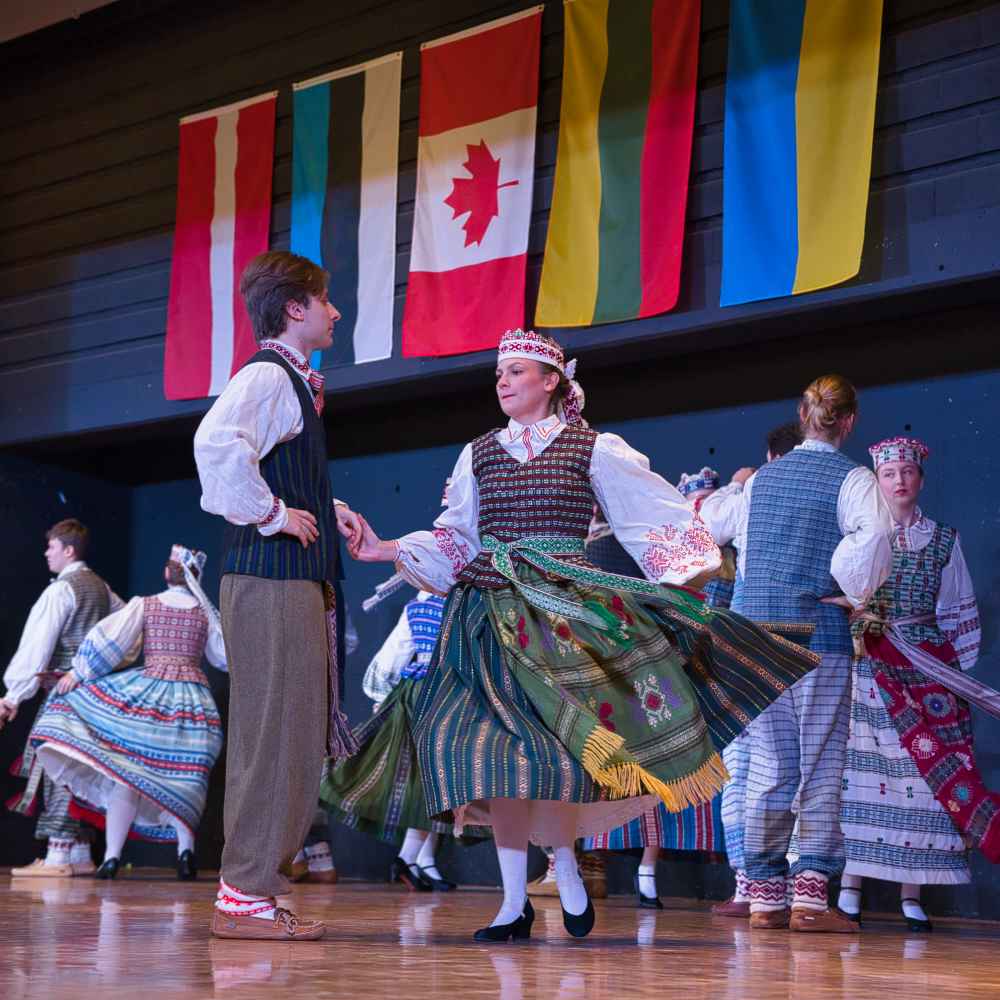
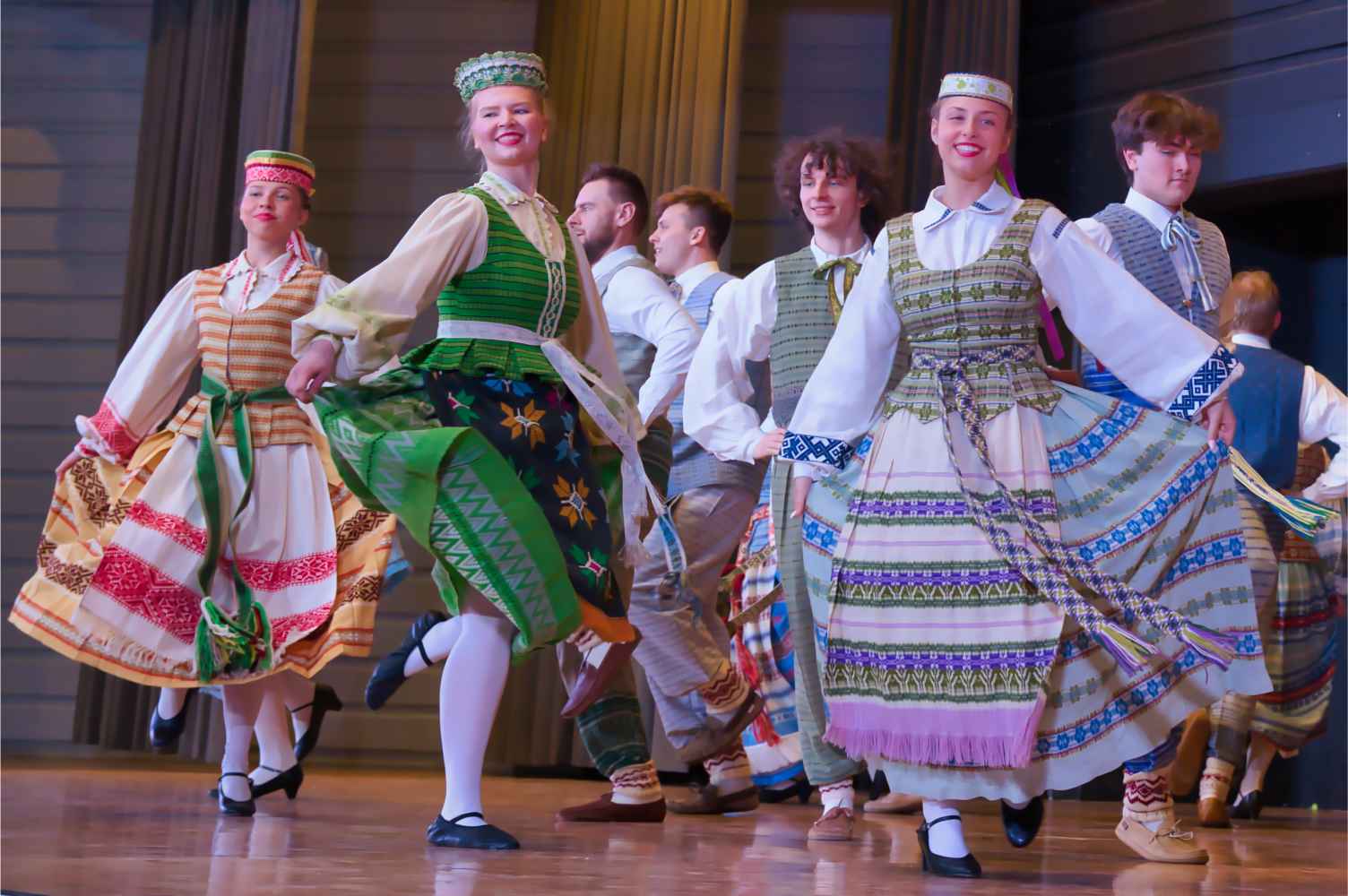
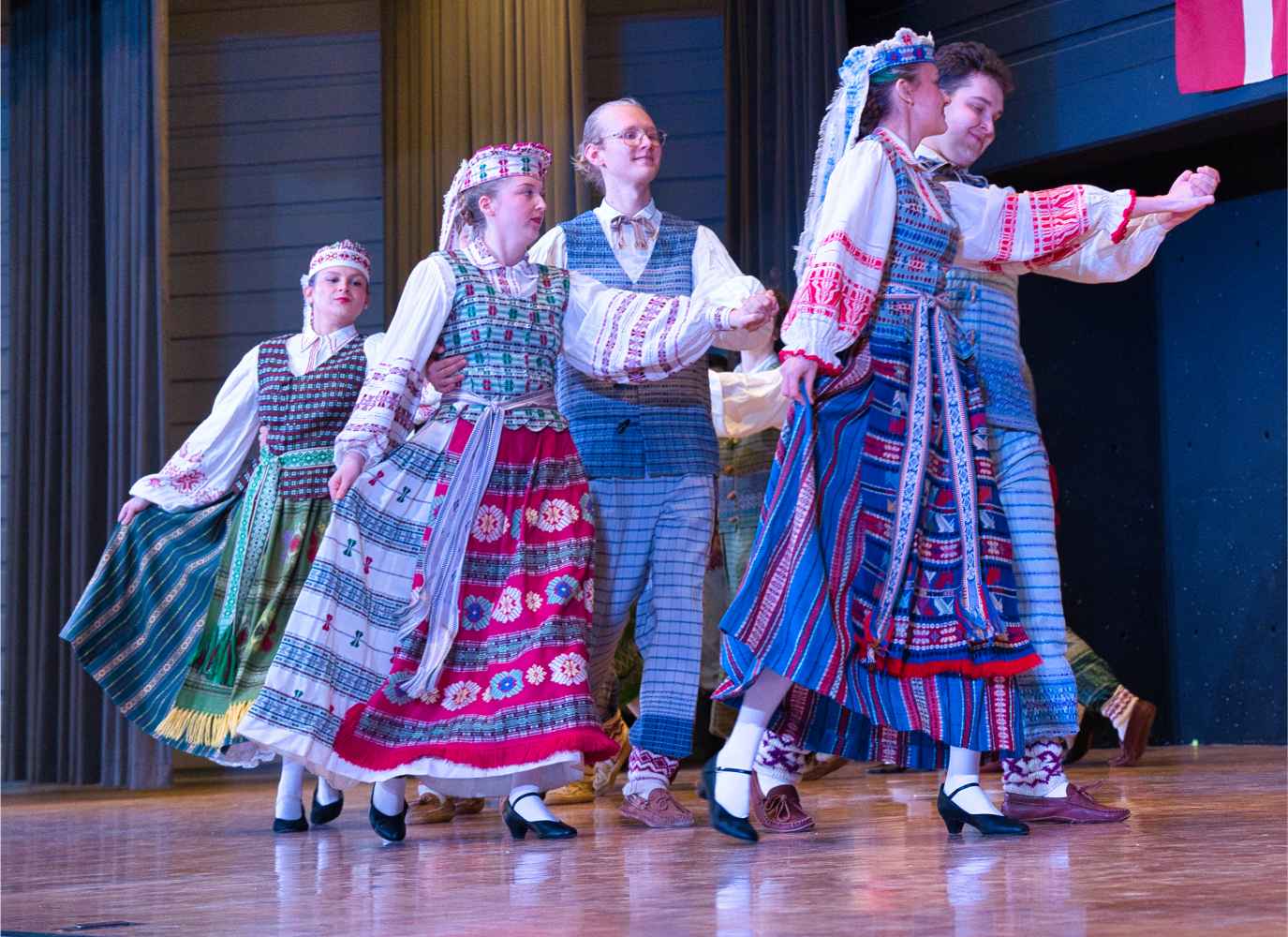
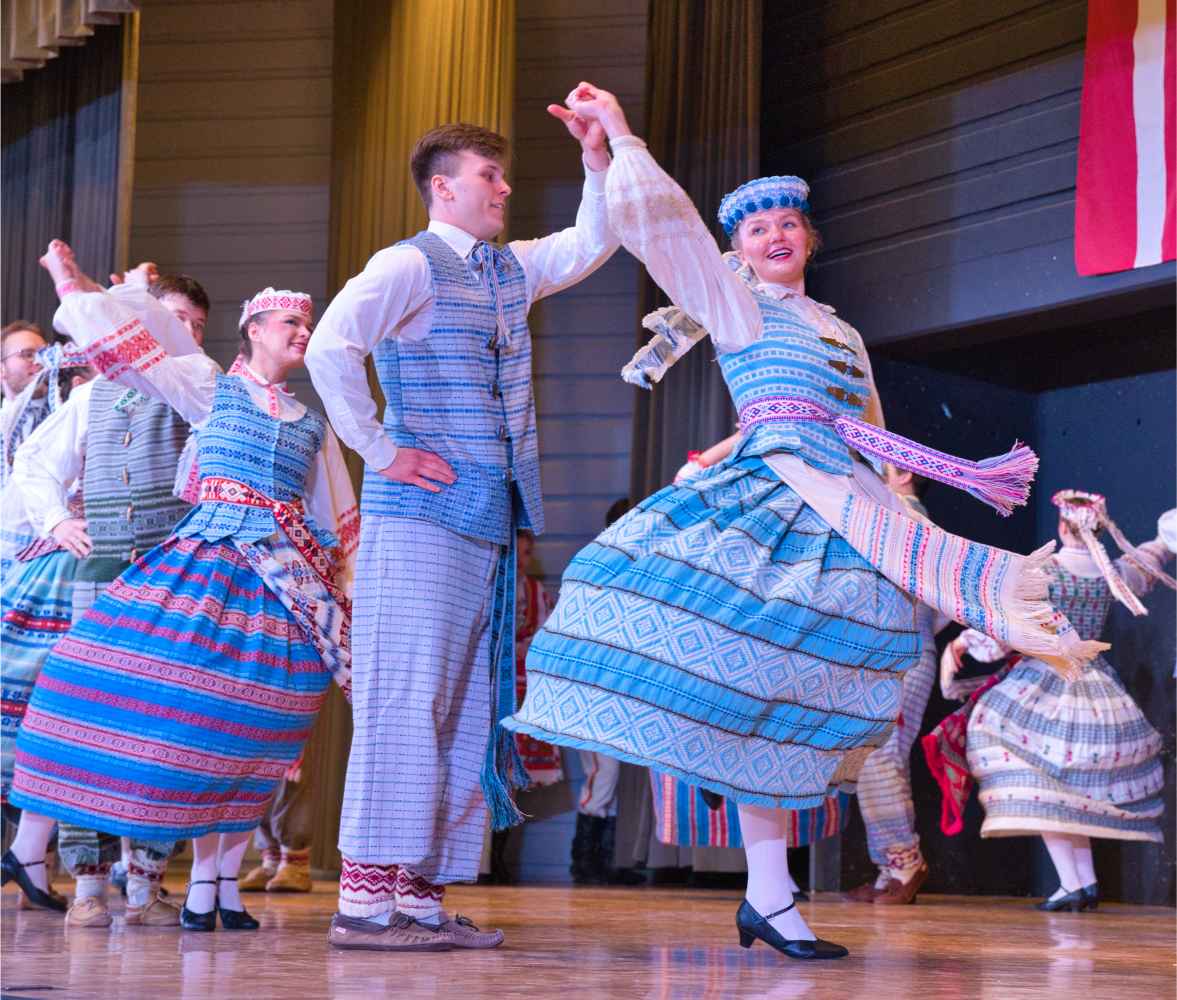
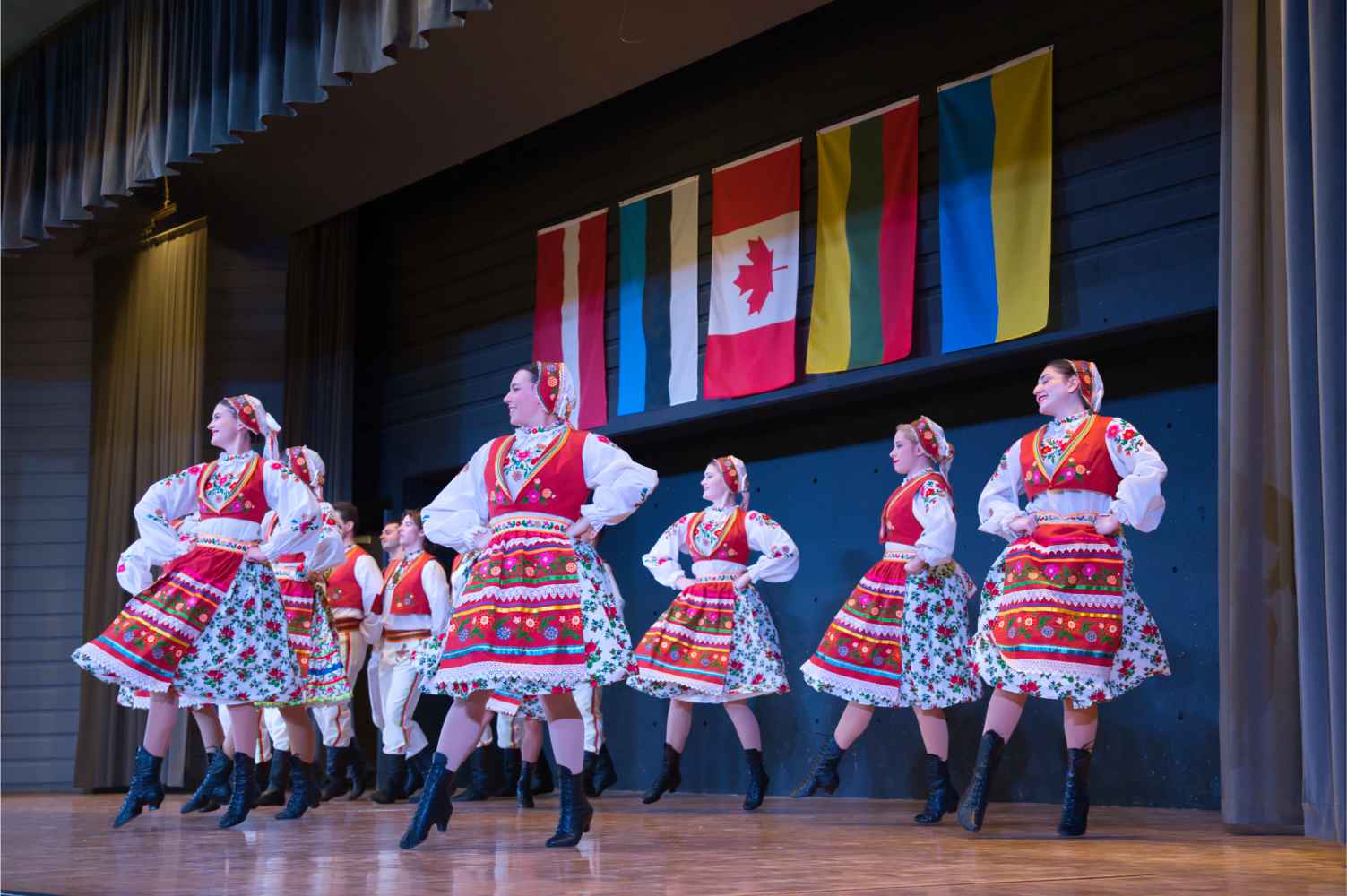
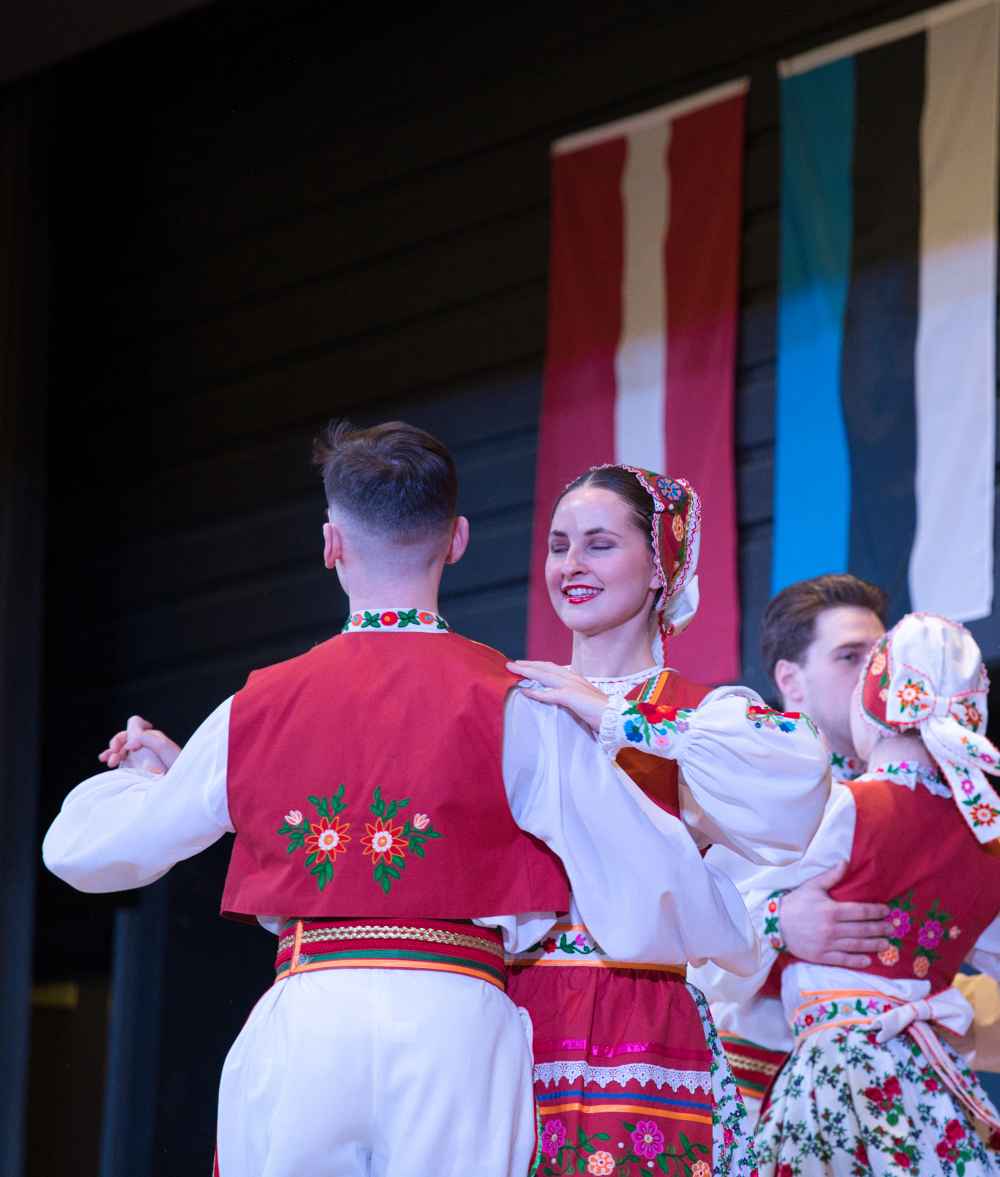
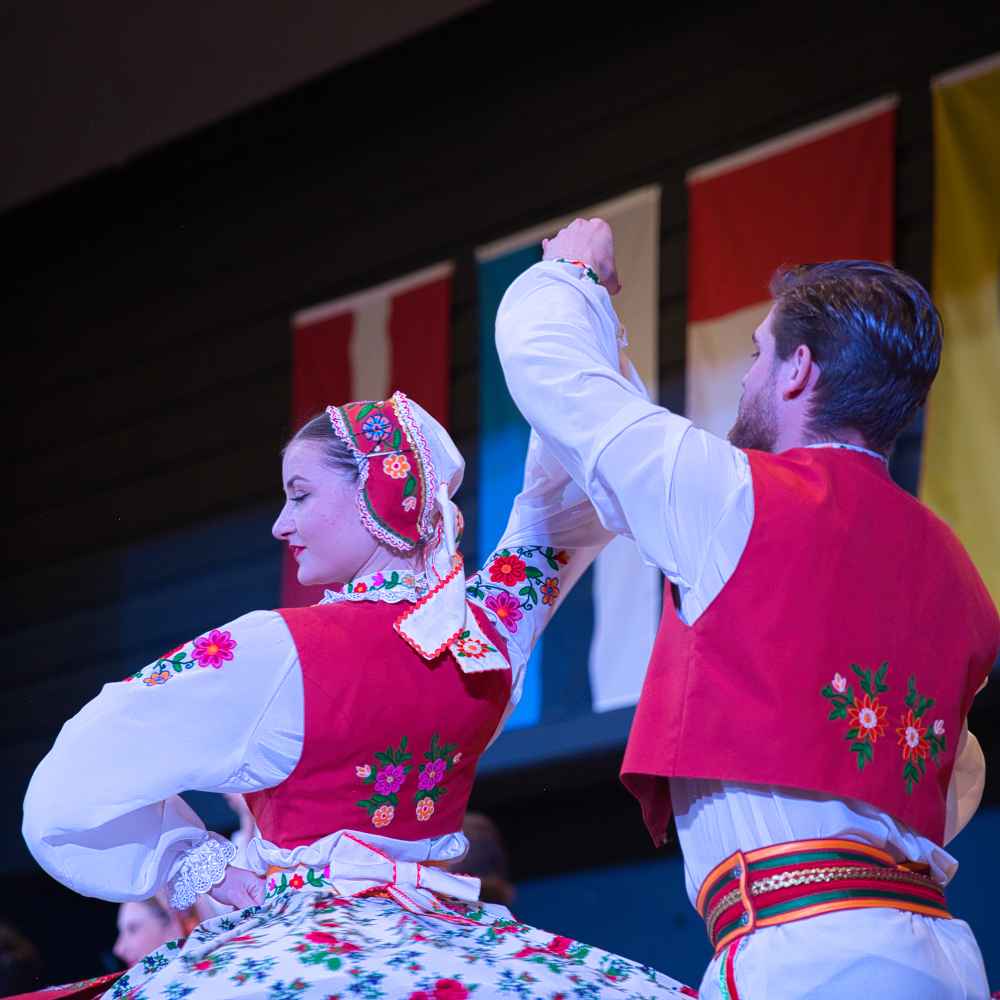
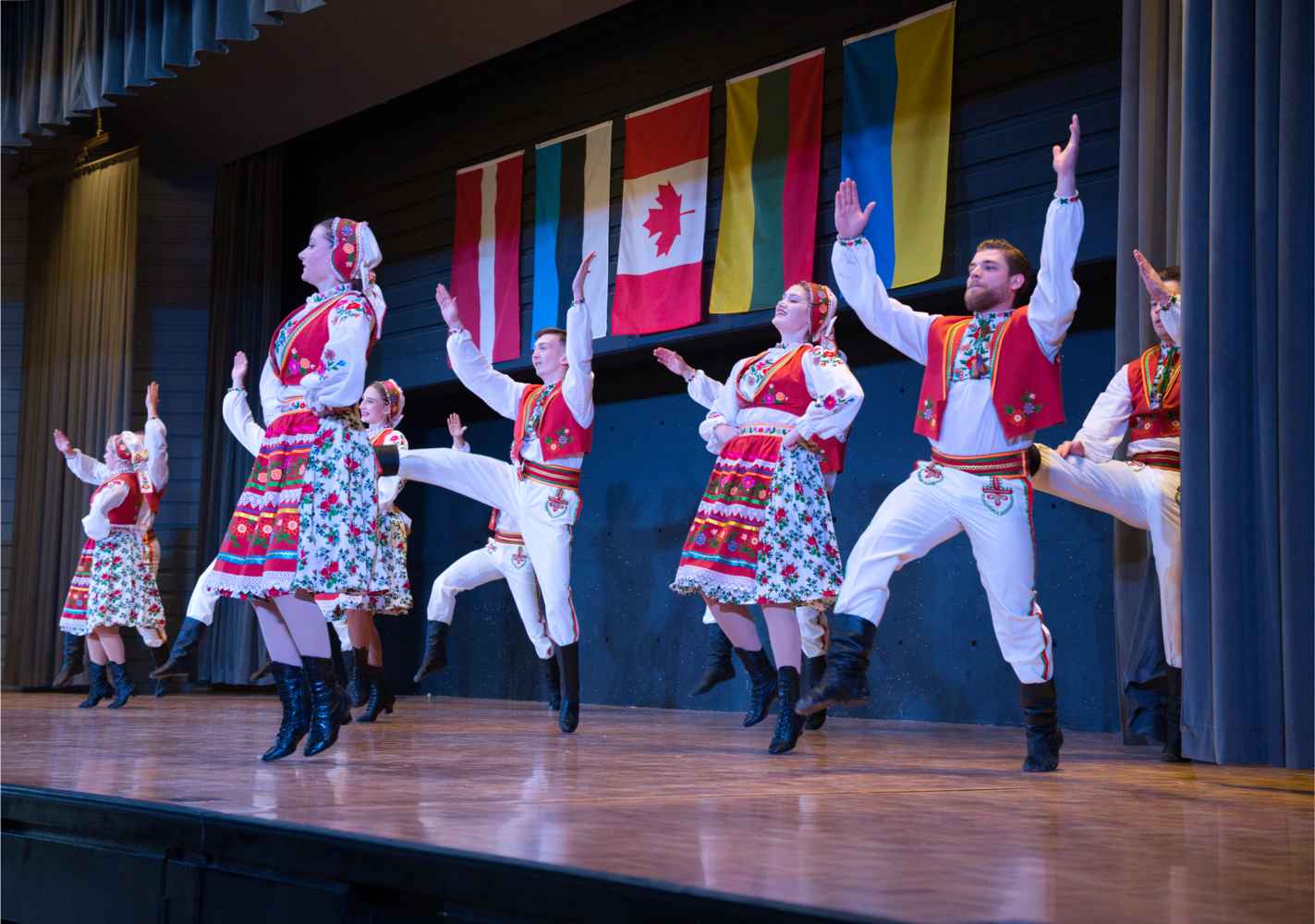
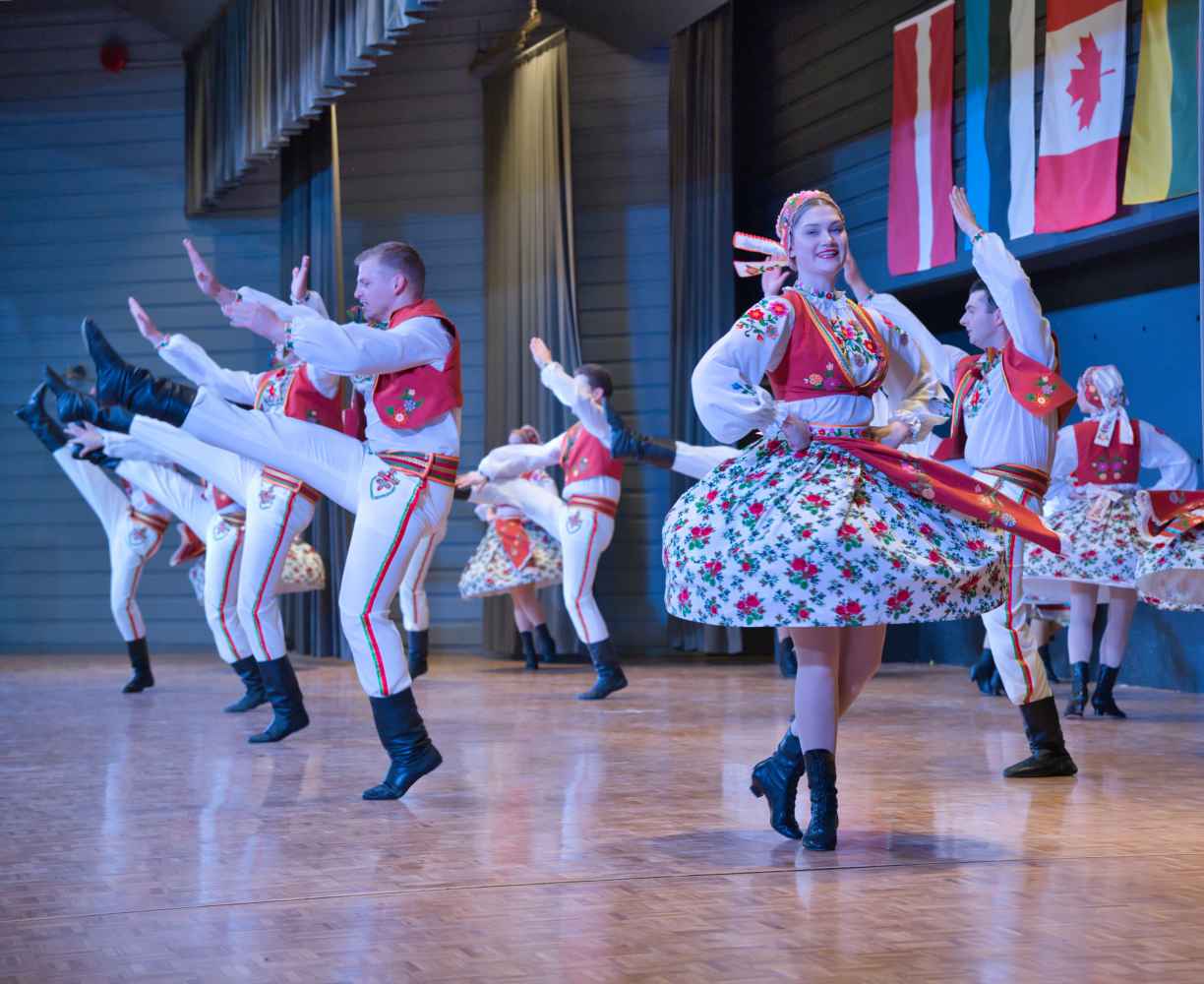
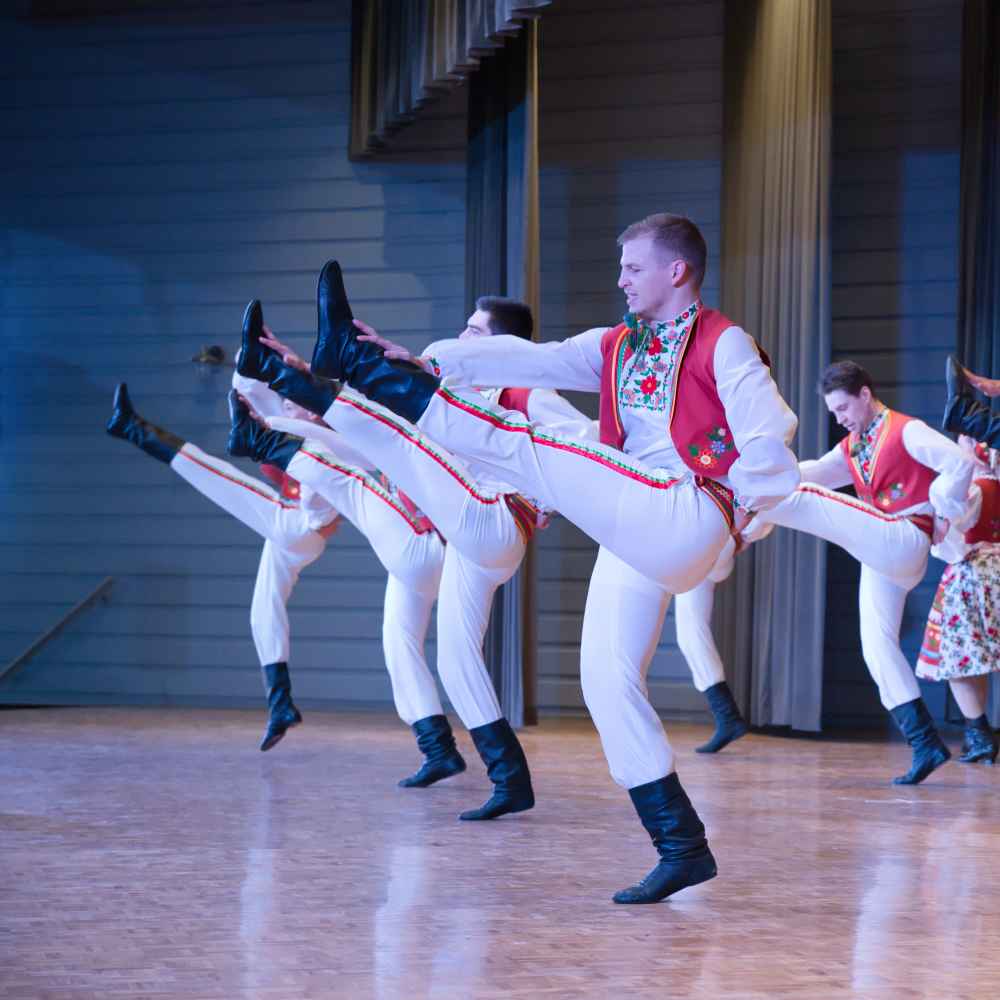
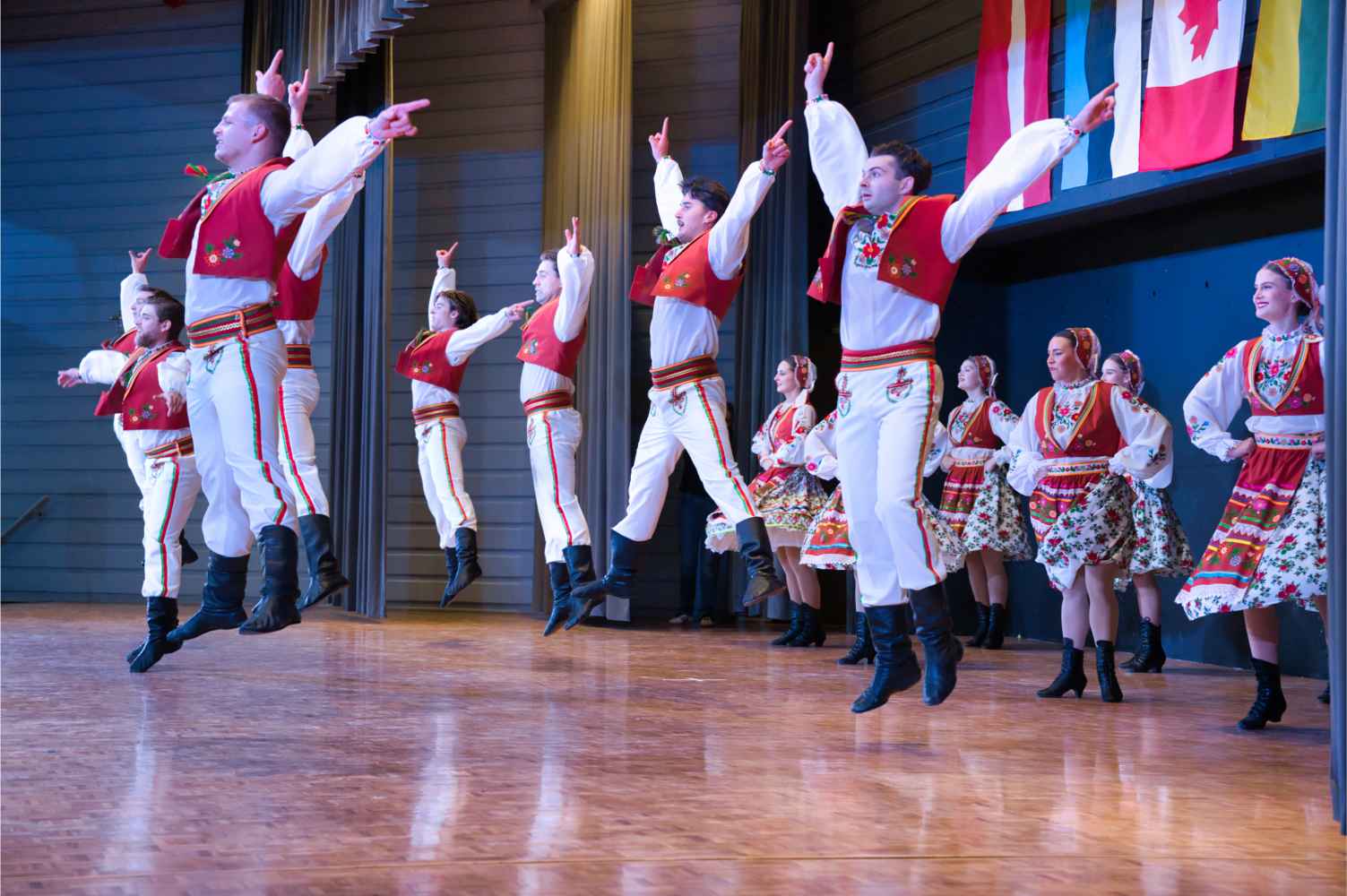
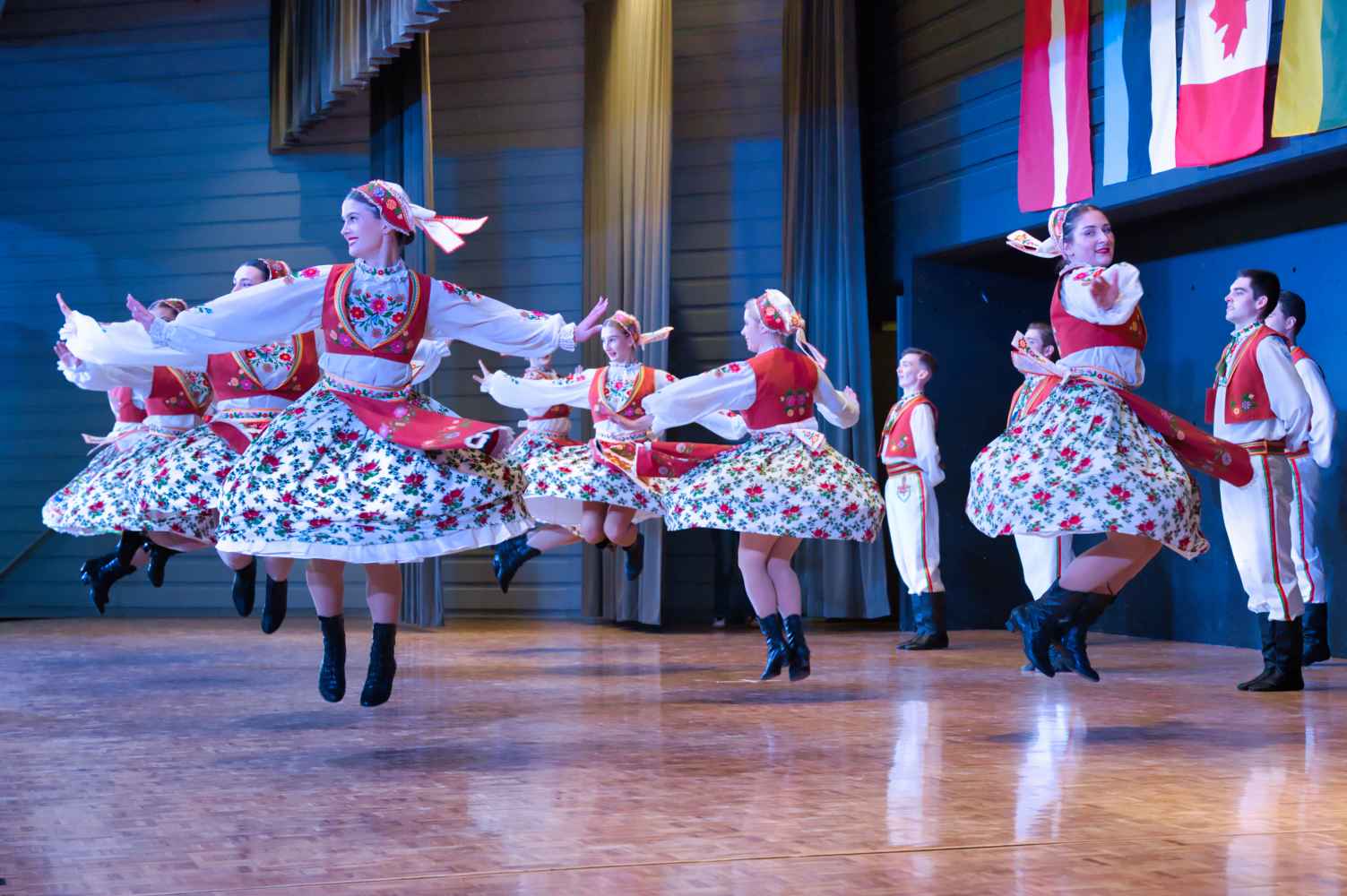
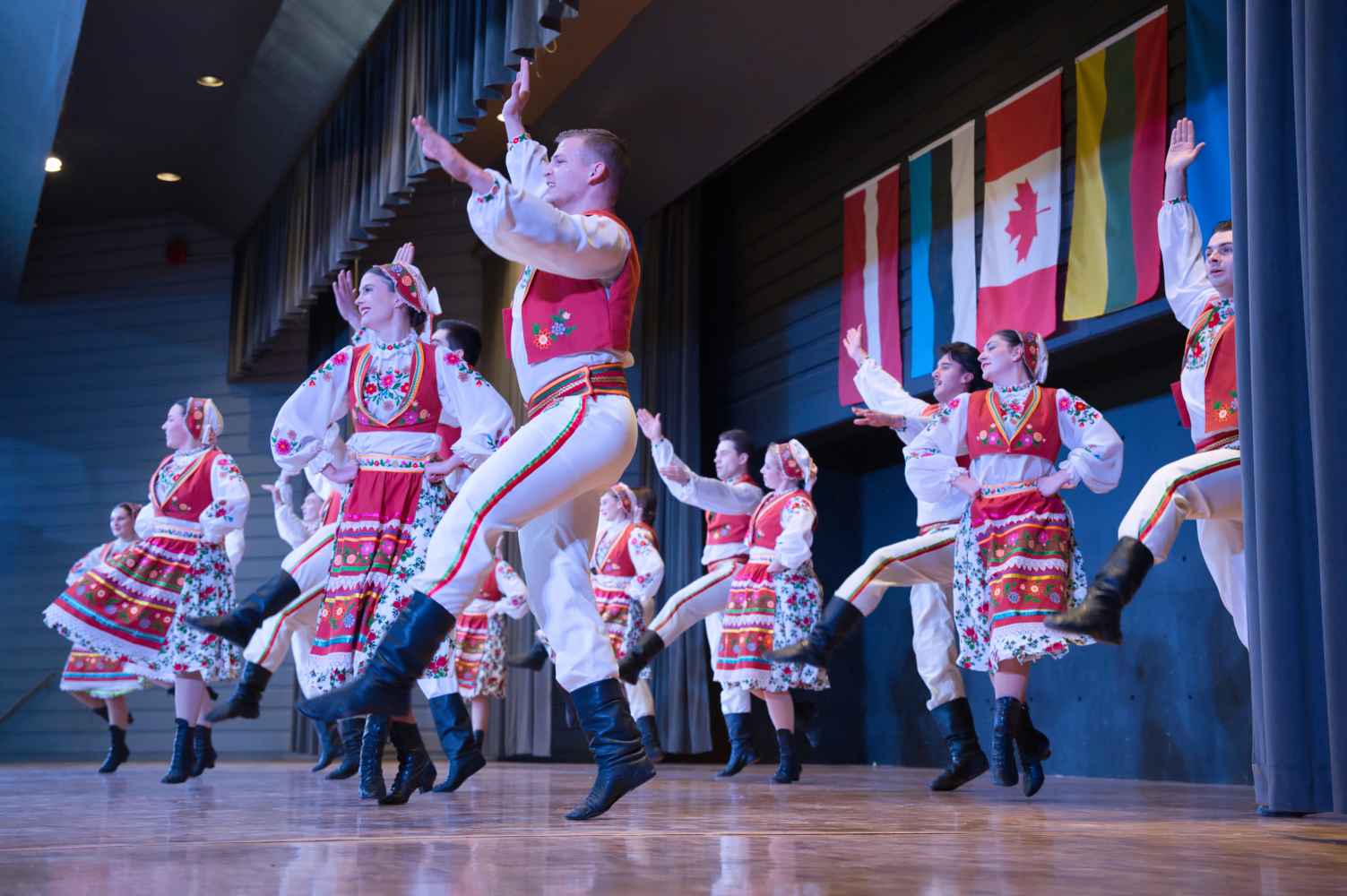
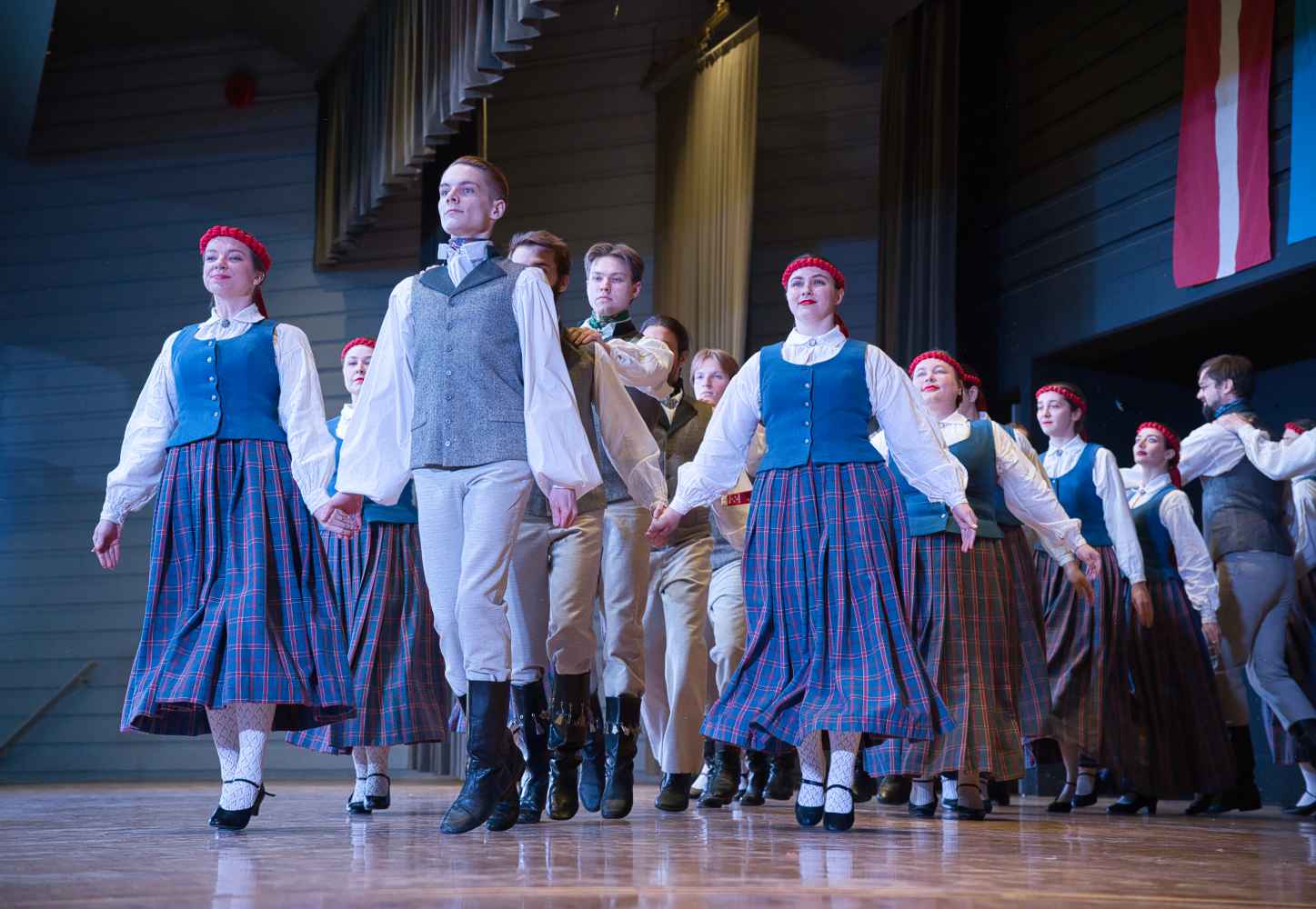
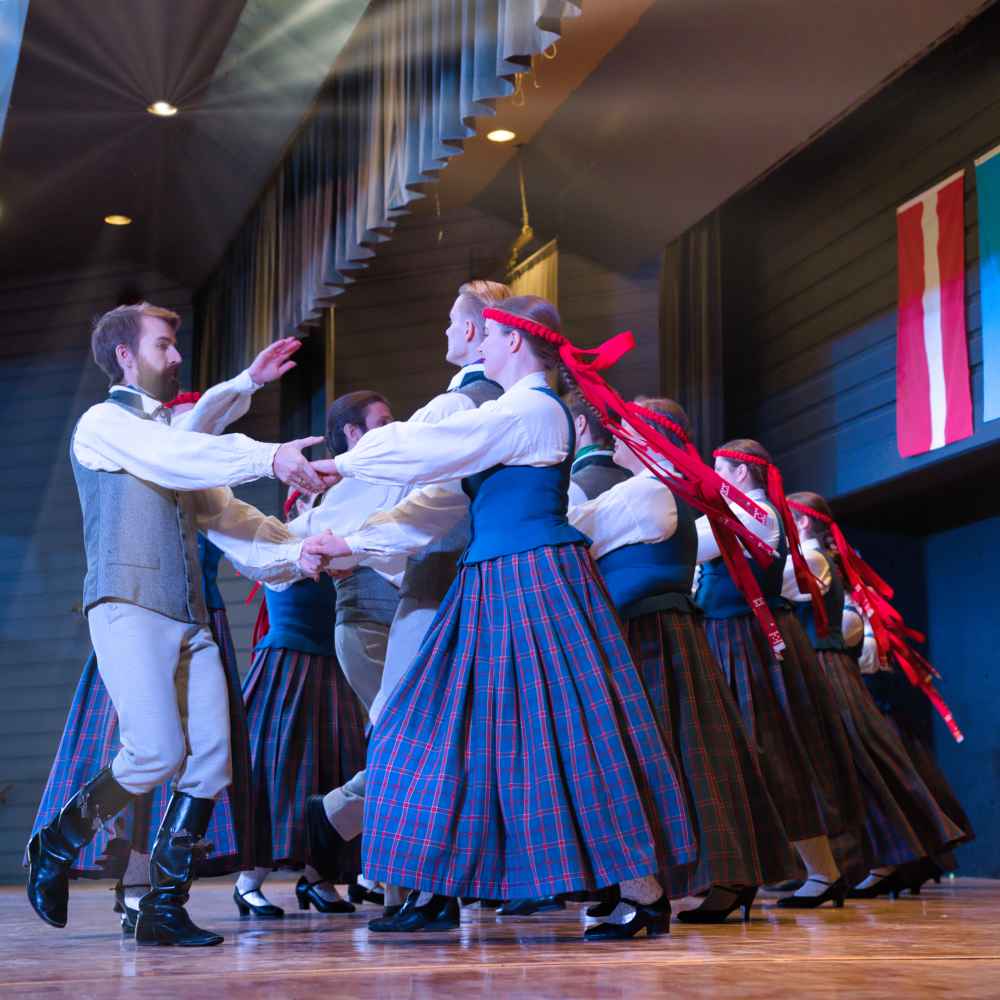
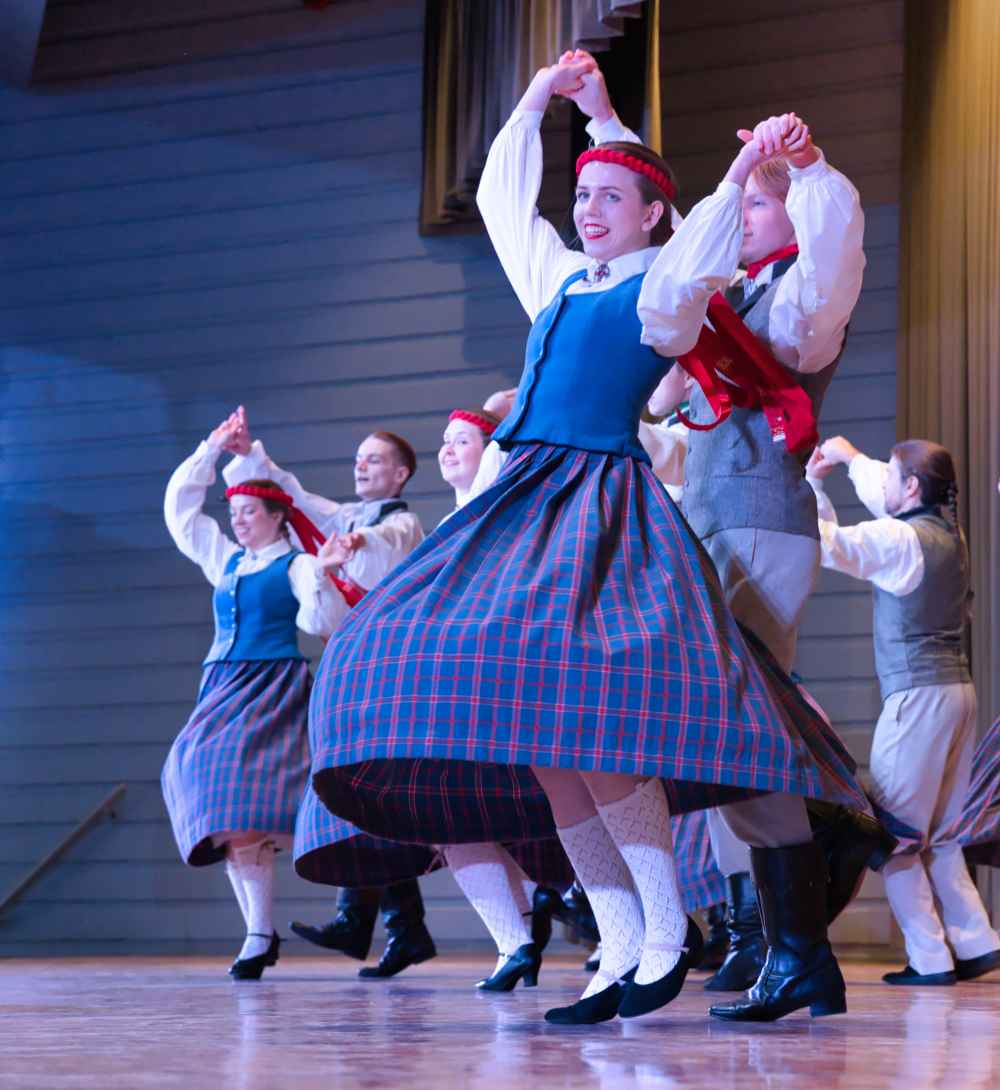
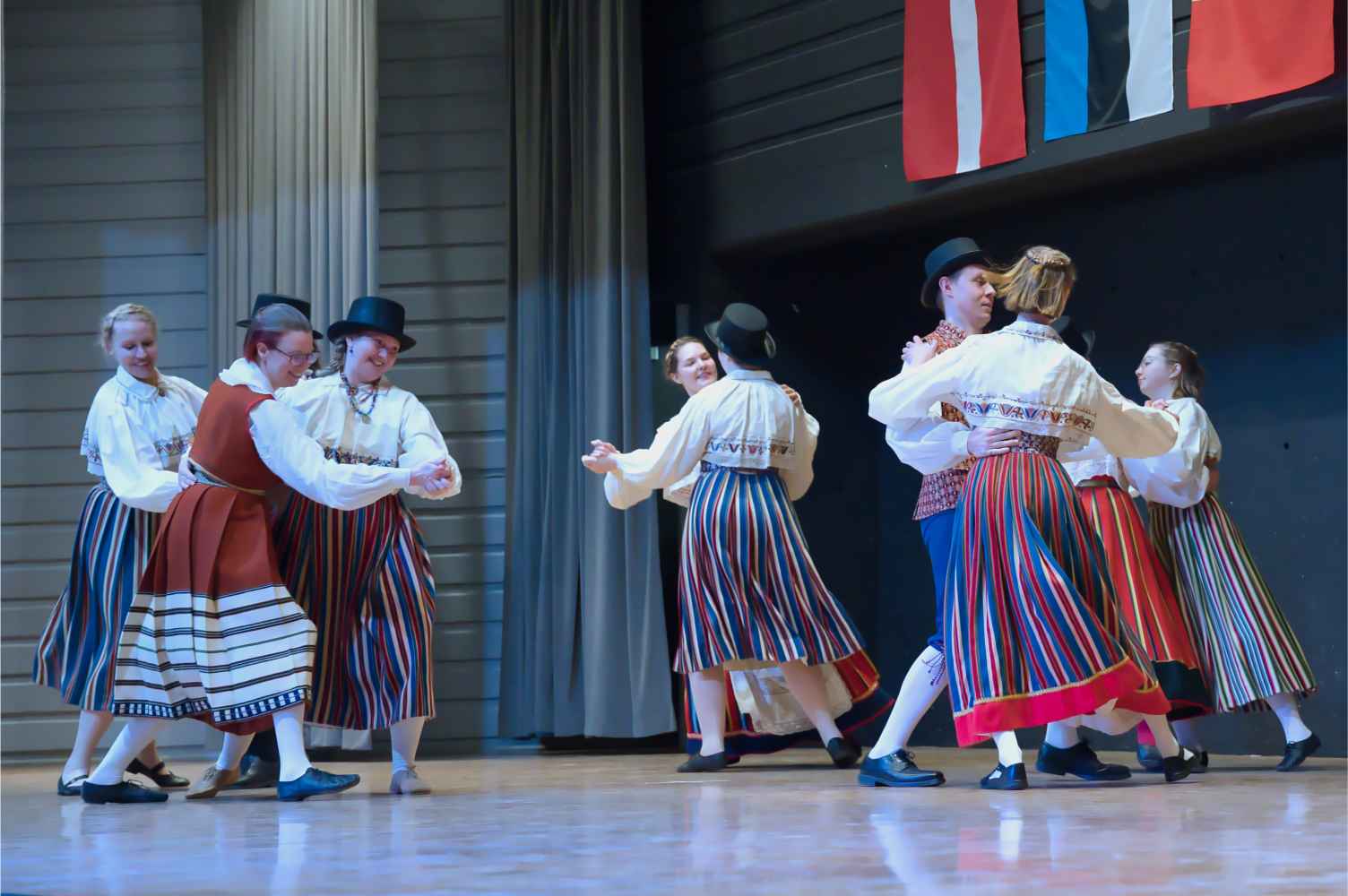
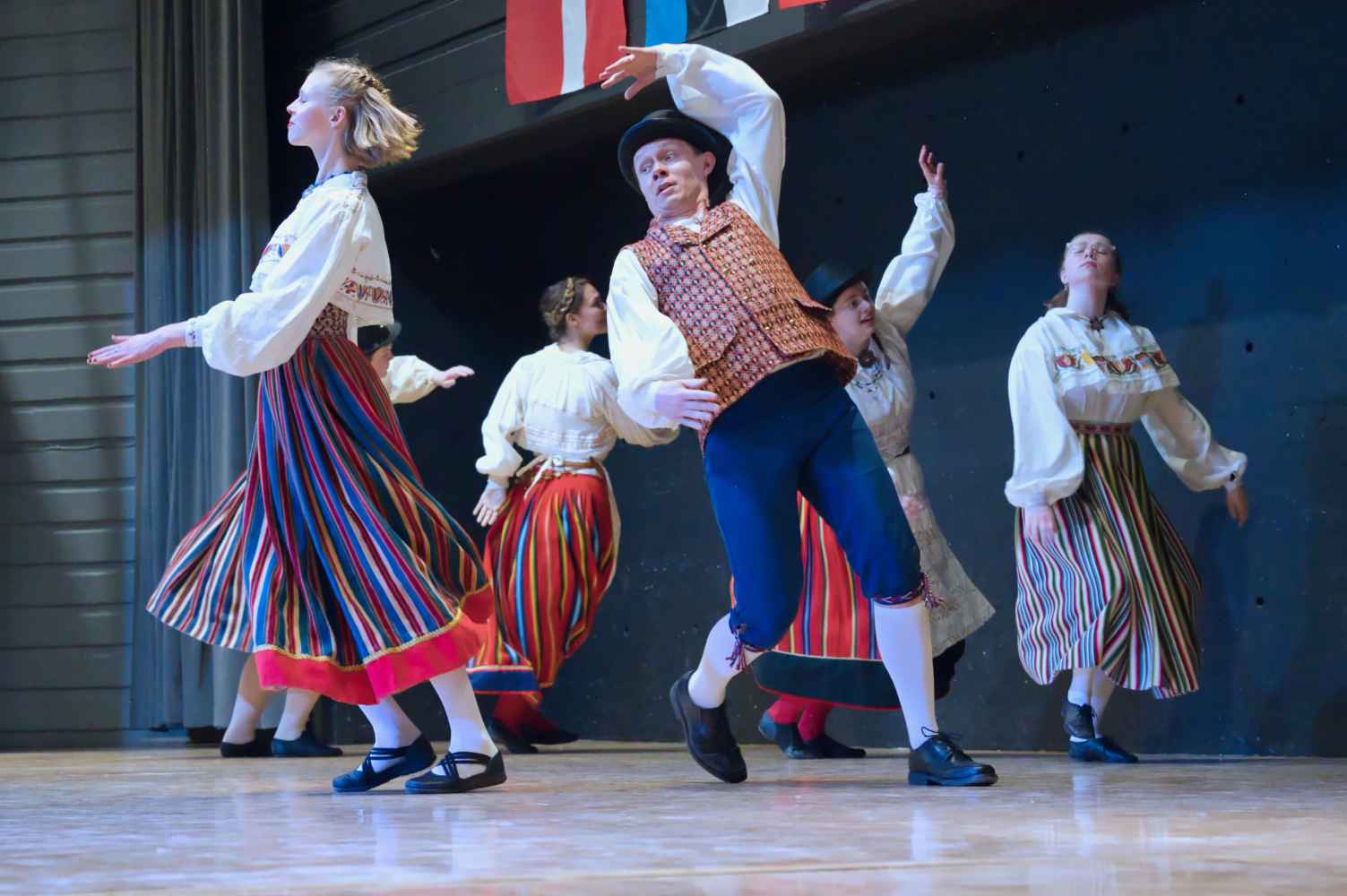
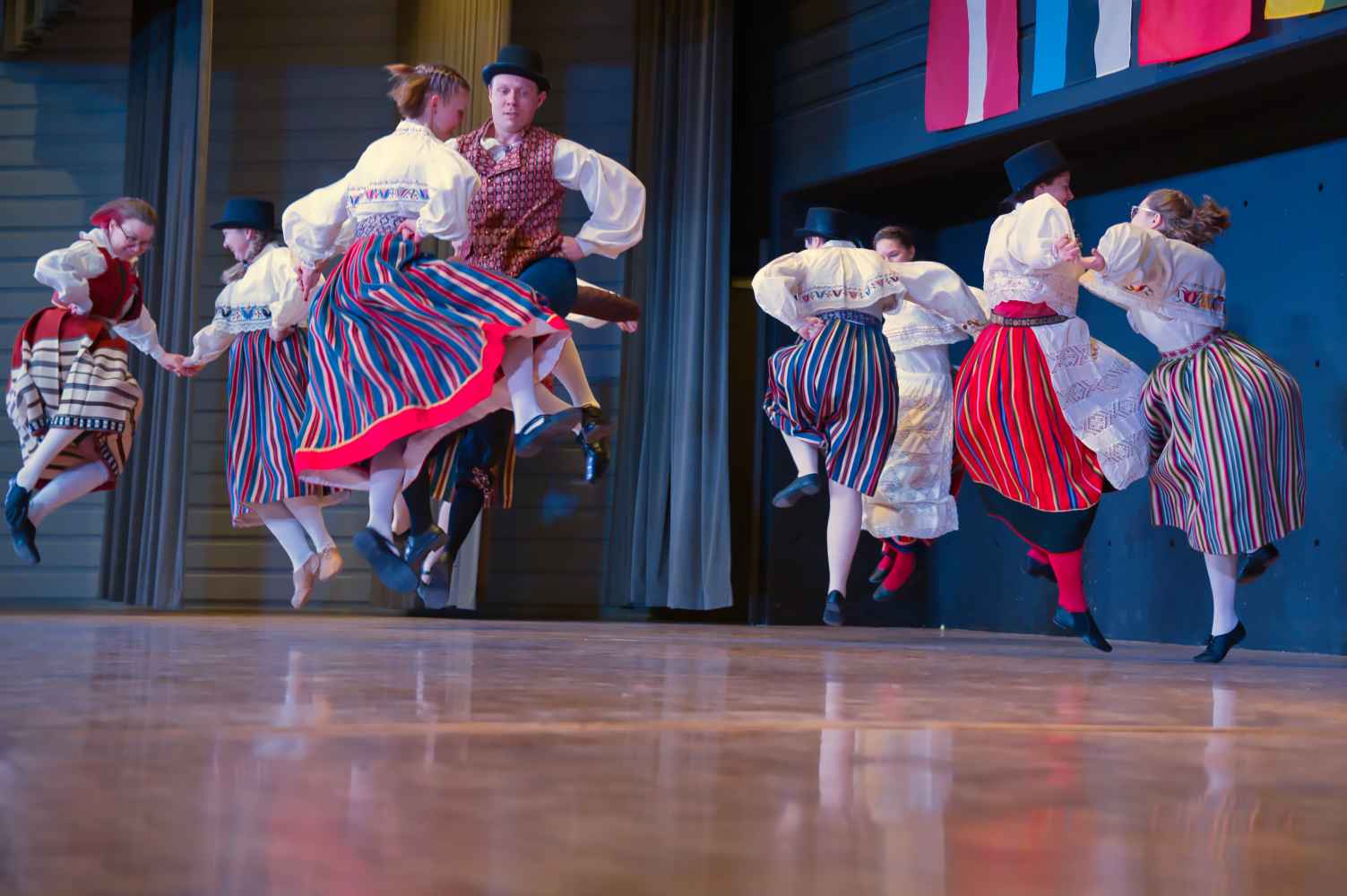
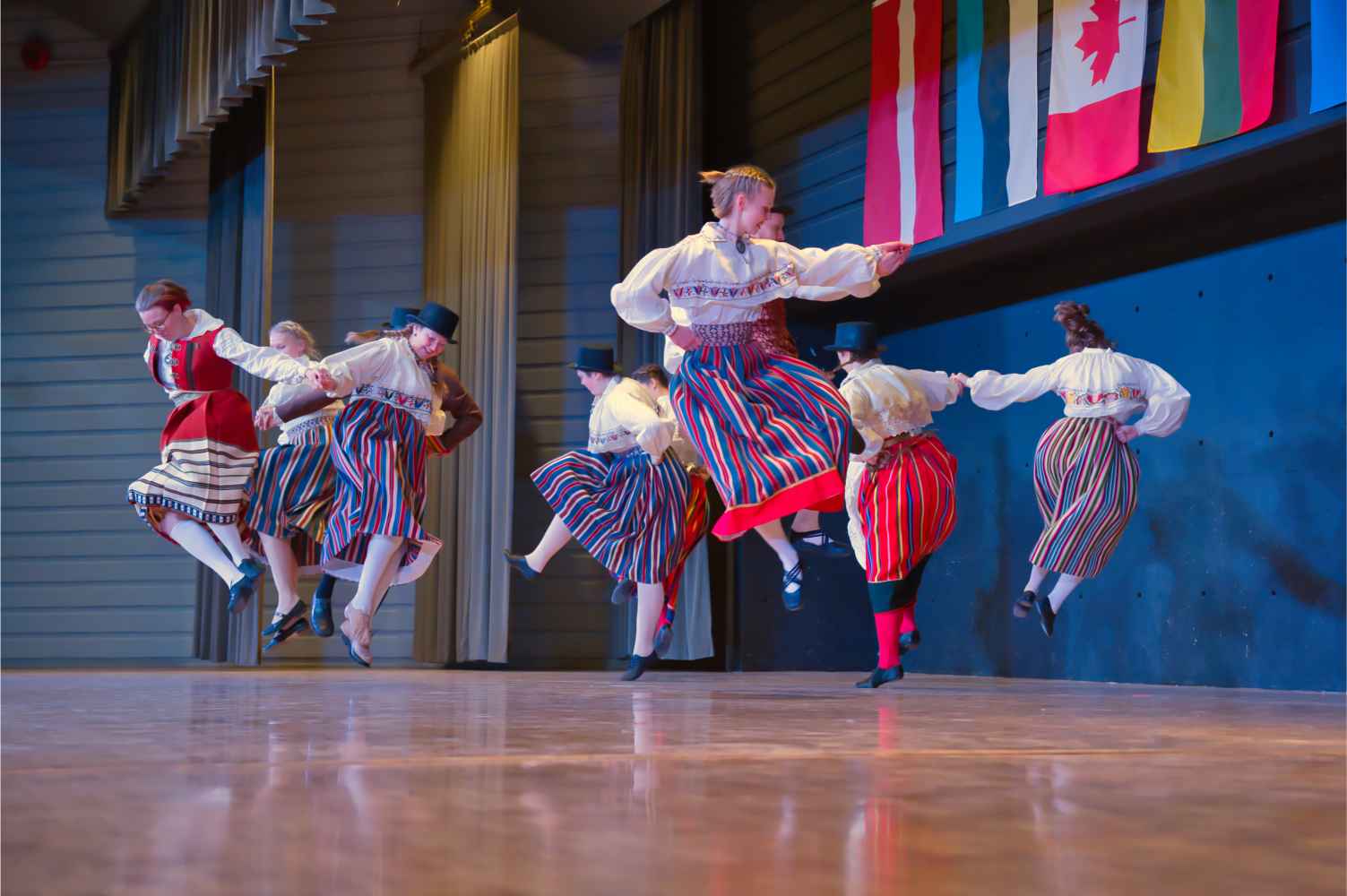
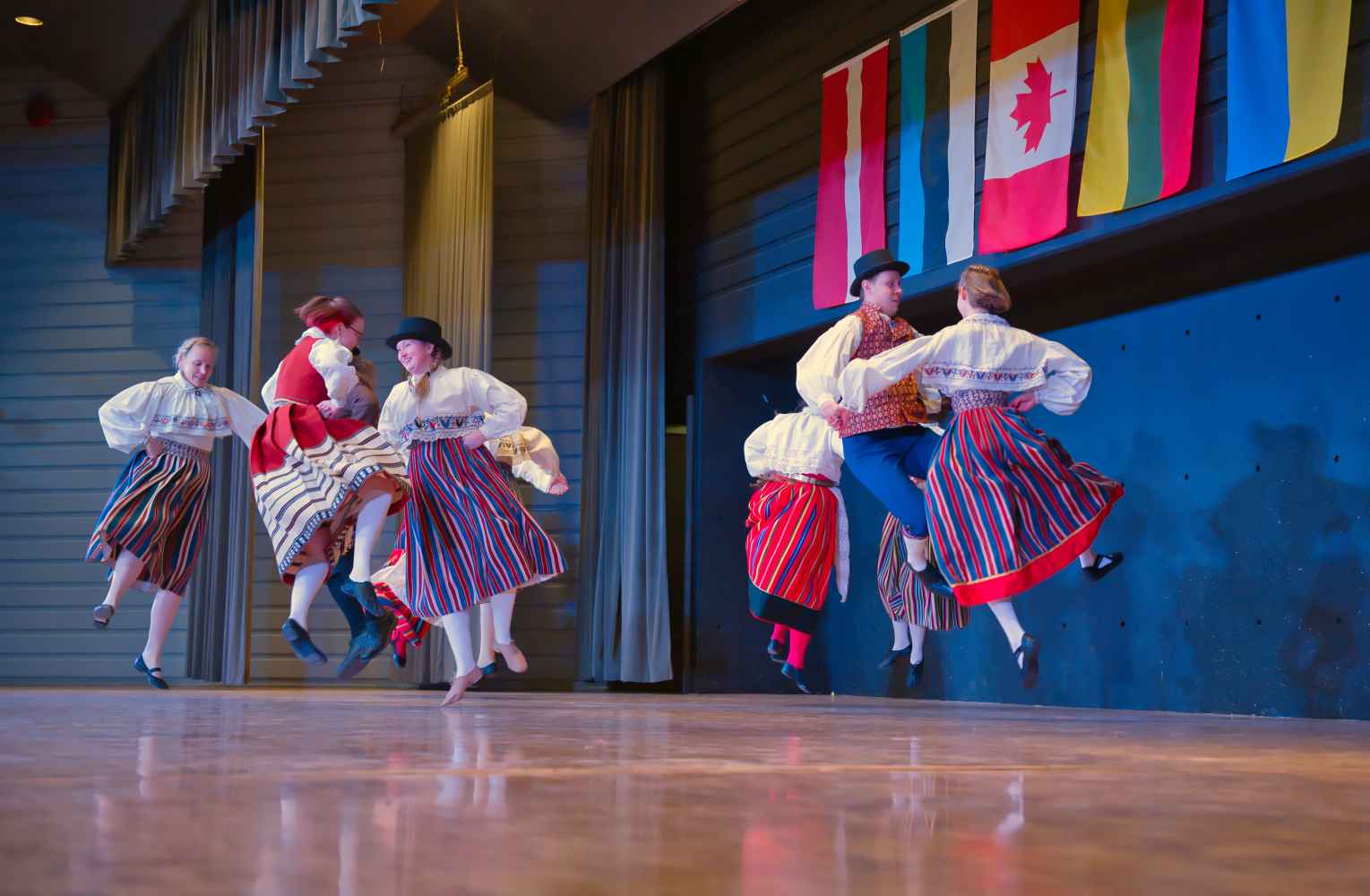
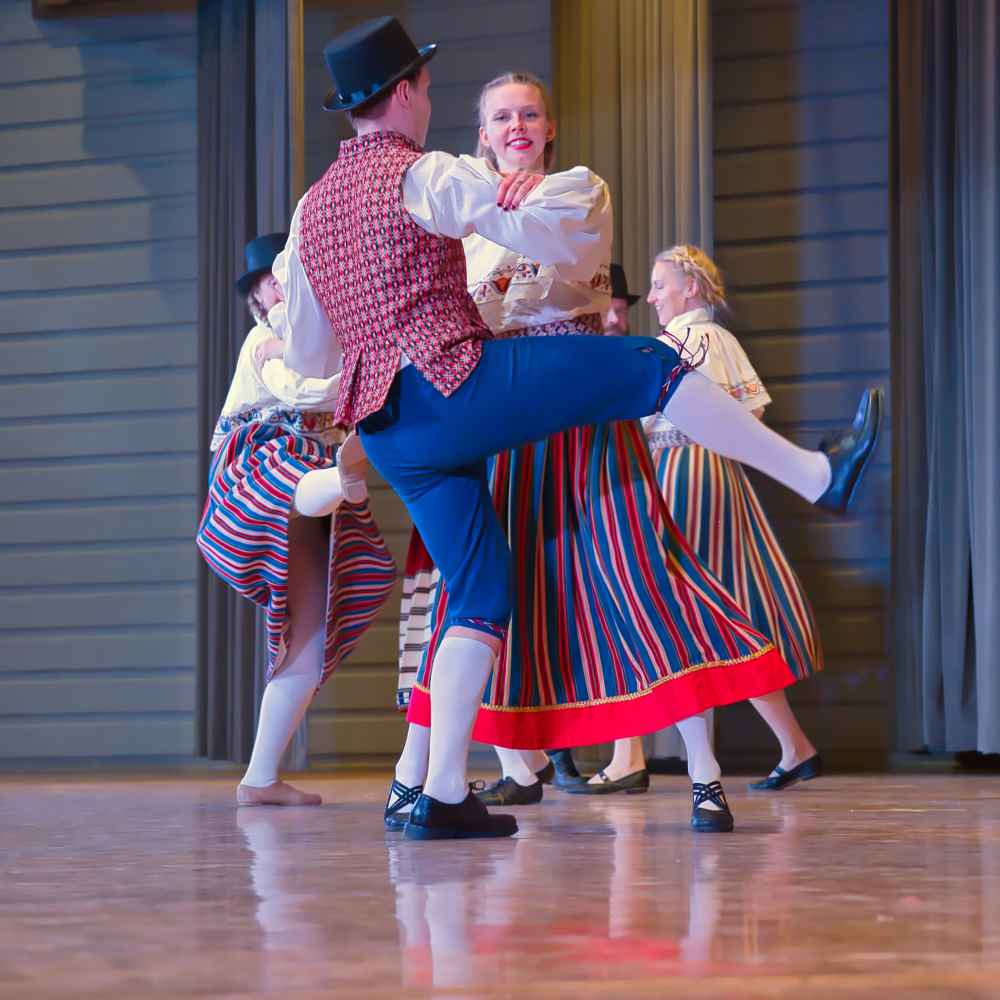
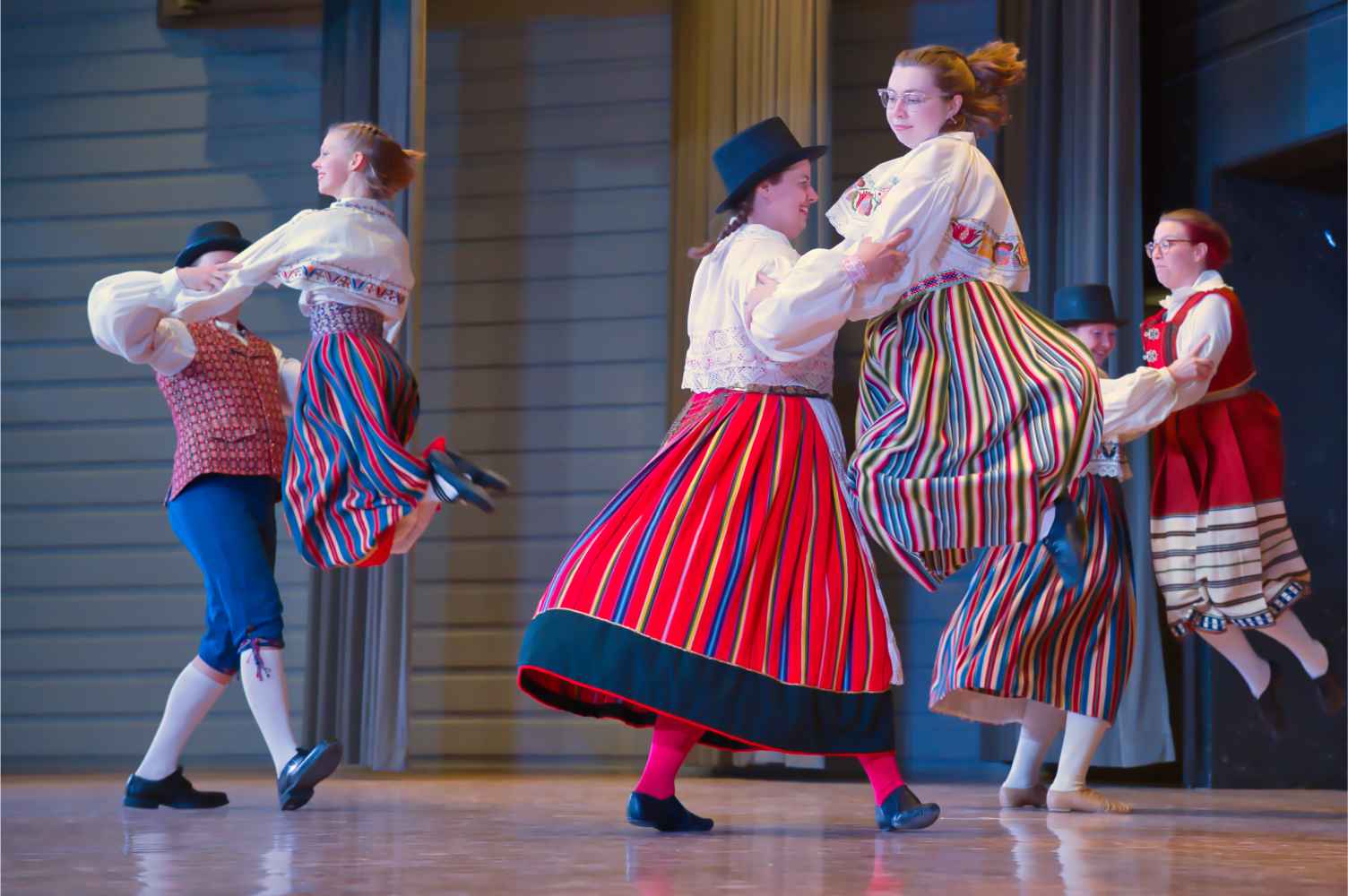
The choice of camera lens was the next decision. I used a 70-200mm fast lens (f2.8) for the majority of my images as it allowed for fast shutter speeds in uncertain lighting conditions. It was also reasonably versatile except for very wide angle images. My 24-70mm slower lens (f4) is the subject of the photo gallery paired with this article. I captured four dances after the intermission, including Gintaras (Lithuania), Barvinok (Ukraine), Daugavina (Latvia), and concluding with Toronto Estonia’s Kungla, performing the energetic and athletic “Grandfather’s Polka” (“Vanaisa polka”). These photos were taken from the far right corner of the stage and right at stage floor level, thus providing very good wide angle views. In addition, these images were able to capture the height of the dancers during their jumps!
For the final three dancers, I again went to the central location on the balcony knowing, from the rehearsal, what excitement awaited the audience.
My sincere thanks to TERR Kungla for inviting me to photograph.
Text and photos by Peeter Põldre
Fotogalerii