Subscribe Menu

Children of the 1944 Estonian diaspora


By photographer Maria Spann

In 1944, when the Germans had seized Estonia, but the Russians were closing in, thousands of Estonians made the precarious escape across the Baltic sea to Sweden, Finland or Germany in whatever vessels they could get hold of. My uncle and mother were seven and five years old when they escaped with their mother on the boat Juhan, which made nine journeys from Tallinn to Stockholm that year. Juhan was transporting Coastal Swedes living in Estonia back home to Sweden. My mother and her family were Estonians rather than Coastal Swedes, so they had to be smuggled onboard without tickets. My grandfather followed a few weeks later in a small rowing boat together with three friends.

During my childhood my grandparents often told me the story of their escape and I was fascinated, but wondered what it was like for the children. Many, many stories have been told about this difficult period of time, but most often from an adult point of view. I am interested in how you process something like this as a child. What memories do you keep hold of? So as a photographer, I decided to turn this into a project. I want to find these ‘children’ and hear their stories. They are now all in their late seventies and early eighties but most of them have at least one clear memory from the escape.
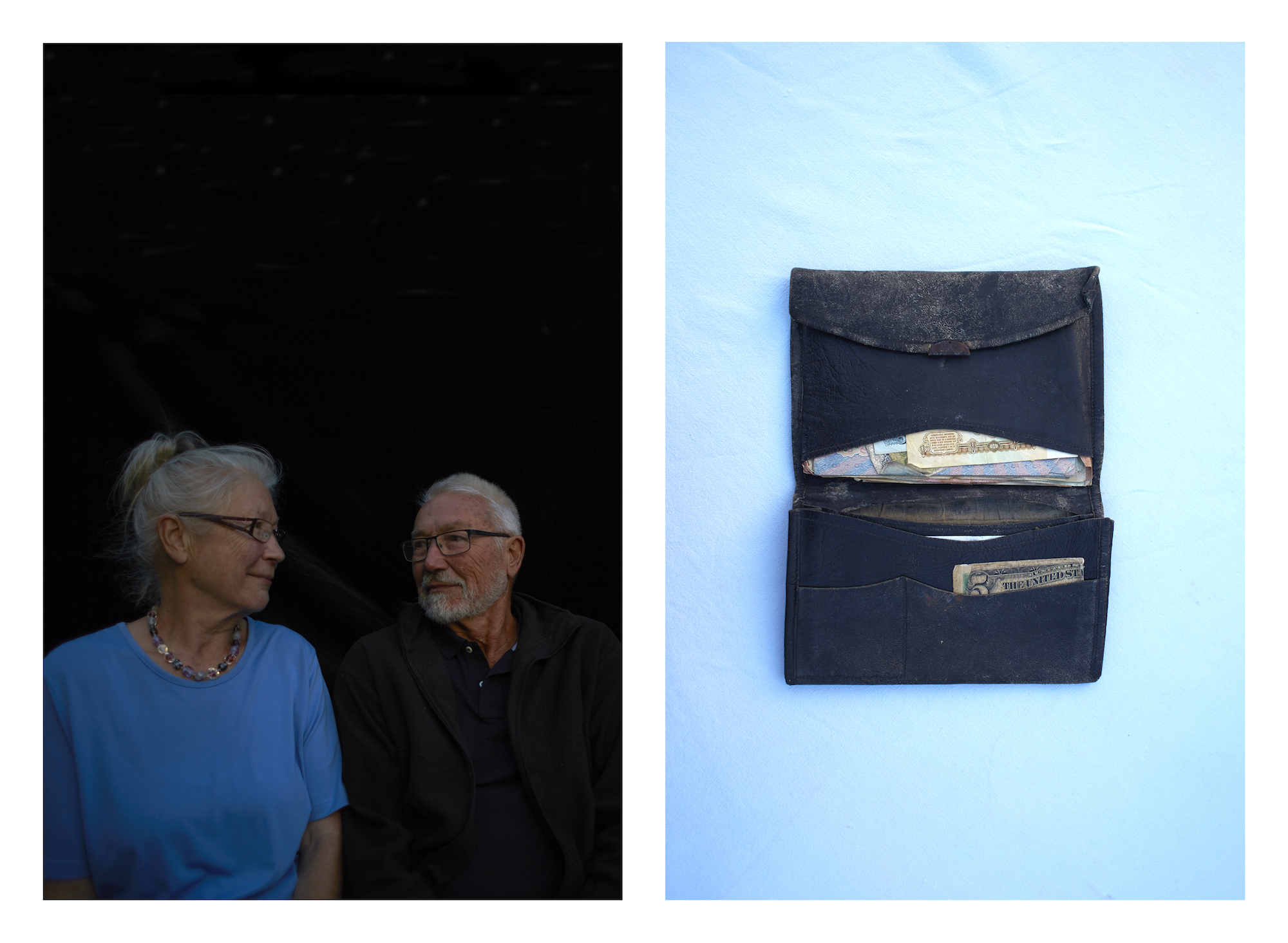
Ilme Spann and Jüri Sonn. 5 and 7 years old. Ilme remembers the strong smell of engine-oil from the tool box she hid inside. Juri remembers the soft white bread and hot milk they were served as they arrived in Sweden. Ilme and Jüri's father's wallet filled with German, Russian and American bank notes.

To this day, my mum can’t stand the smell of engine-oil as she was hiding in a tool box. My uncle has no memories of the boat journey itself, but remembers the soft white bread and hot milk they were served as they arrived in Sweden. This is what I am most interested in when pursuing this project – what memories do these ‘children' have of the escape?

I met with and photographed ten people in Sweden this summer. As I met my subjects and they told their stories, my interest slightly shifted. As well as hearing their memories of the escape itself, it was also fascinating to hear how differently they took to their new homes. Some embraced their new country fully and – whilst still speaking Estonian at home and eating Estonian food – didn't worry too much about their children losing their Estonian identity. To others, it was much more important to keep the Estonian heritage alive with literature, newspapers, organized activities and Estonian school for the children.

I decided to make portraits of each child (siblings together if possible) but also photograph an object of their choice – something they'd brought with them from Estonia or something else that they had kept from that time.

I started the project this summer in Sweden, and plan to find more subjects in Sweden but also in Canada and on the US east coast. Please get in touch if this sounds like you, or someone in our family and you would like to be a part of it. I’d like to emphasise that there is absolutely no commercial aim of the project – I just want the world to remember what happened. I see this as a book once I’ve gathered enough portraits. It feels especially poignant as there are so many boat refugees fleeing across waters all over the globe today.

me@mariaspann.com +1(917)436 0742
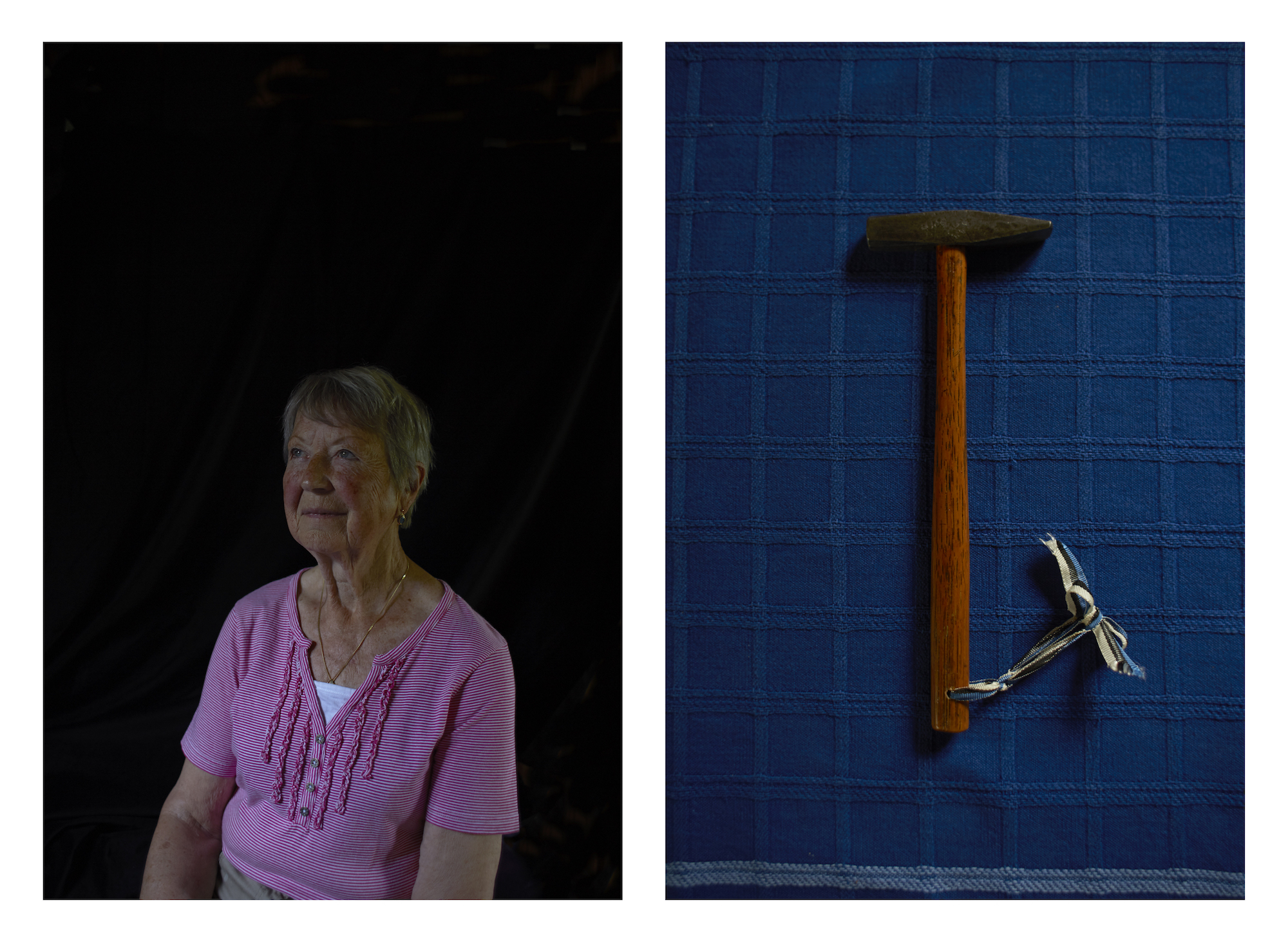
Mai Malmström. 5 years old. Remembers seeing her grandmother waving on the porch with the family dogs as they drove off from the house.  Mai's father was a carpenter and made her this hammer when she was 3 years old.

Read more