In this interview, we meet Estonian artist Maire Valdma, who shares the story of her creative path and of how Lummus, a café-gallery in Tallinn’s Old Town, came into being.
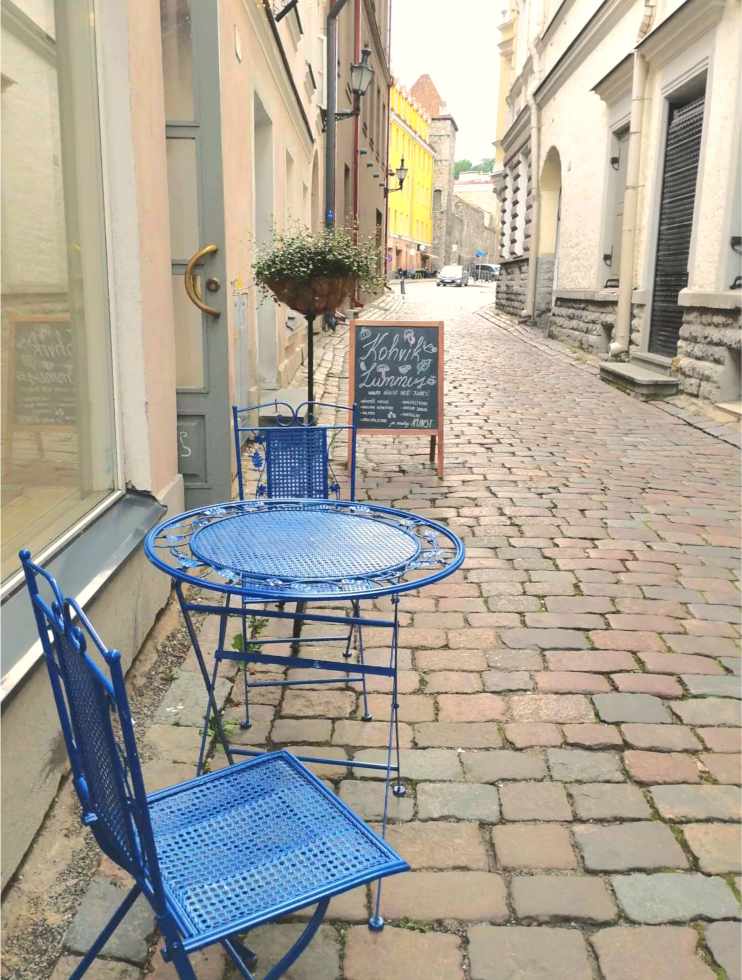
Do you remember the quieter times before the recent wars and pandemic, before economic crises, before the world grew heavy with headlines and uncertainty? Times when one could wander through the narrow streets of old European towns and slip into small courtyards where cafés invited you to linger over tea, coffee, long conversations, or a book, and when time itself seemed to flow differently? It flowed with a freshness and clarity, untouched by the constant pressure of bad news, economic worries, and the weight that now hangs in the air. Do you wish you could return there, even for just an hour or two?
Time cannot be turned back, yet in Tallinn there are places where the rush of everyday life seems to pause, and where the atmosphere recalls those earlier times.
One summer afternoon, I was sitting in the courtyard of Lummus, a café-gallery in the Old Town, its name translated from Estonian as “enchantment.” I had my Estonian language textbook with me, a cup of tea, and a pencil case filled with pens and pencils. I was jotting down unfamiliar words between the lines with an ordinary pencil, thinking how much easier it would have been if I had refills for my old mechanical pencil. It was made for thin leads and far more convenient than a regular one. But I had not used it for months: the leads were long gone.
Still, I opened the case that had been empty for months—and all of a sudden, two thin leads dropped into my palm. To say I was surprised would be an understatement. Yet here, in a place that bore the name of enchantment, it seemed less like a coincidence. A small discovery, but in that little garden, in twilight, with plants surrounding me and July lingering in the air, it felt like a private miracle.
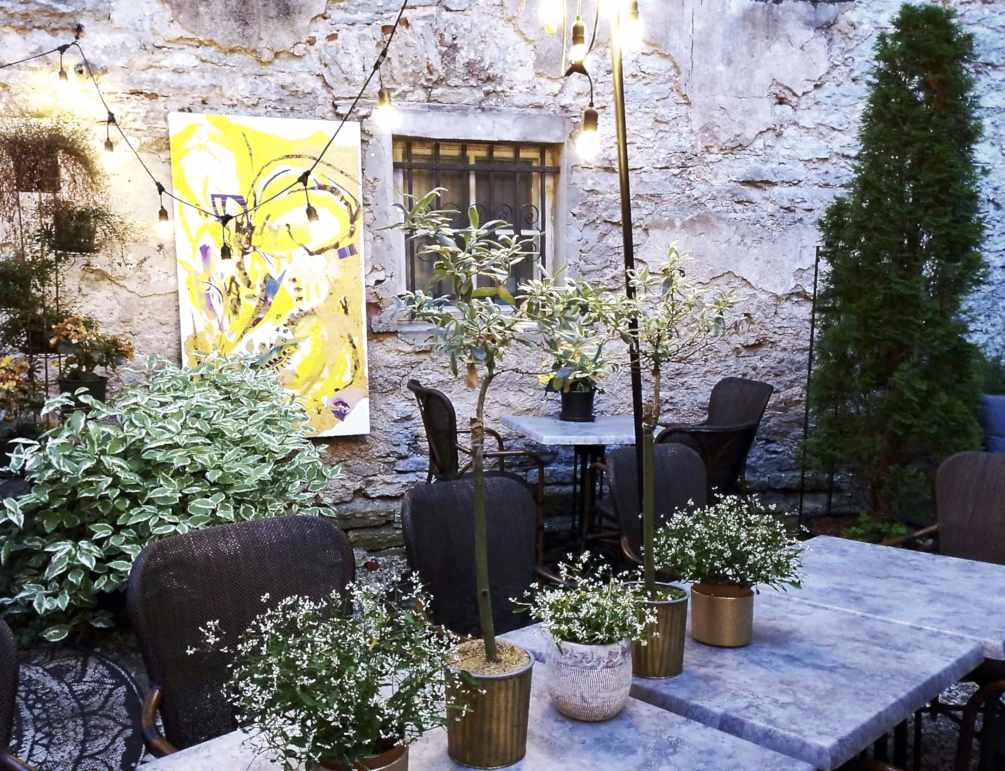
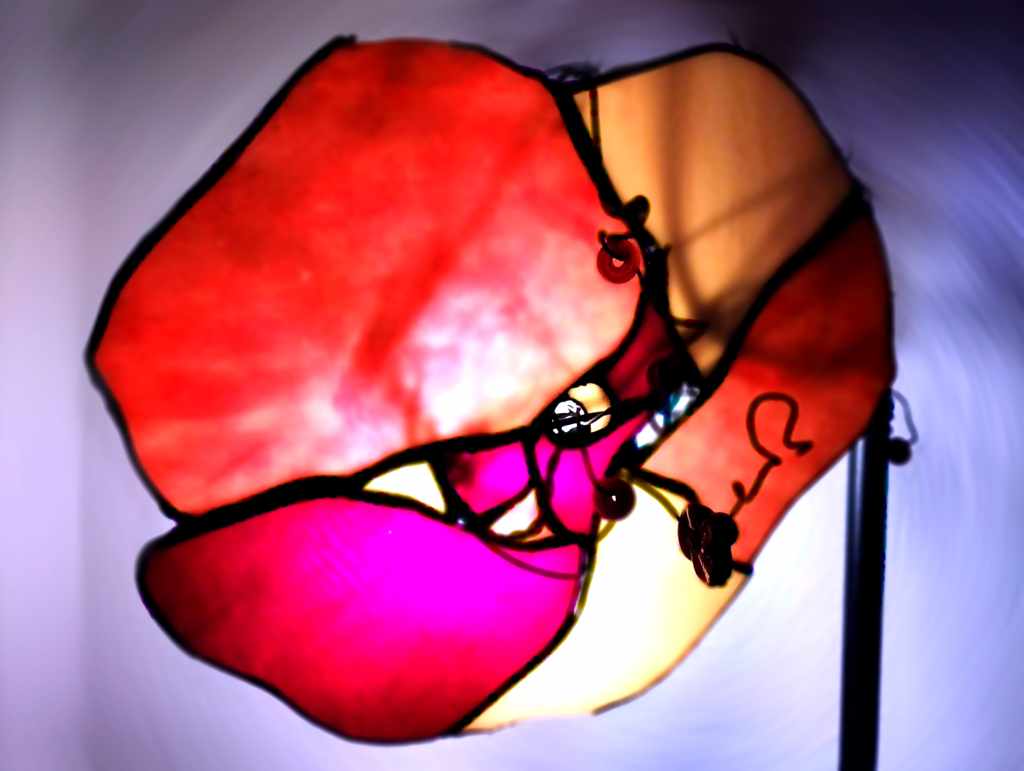
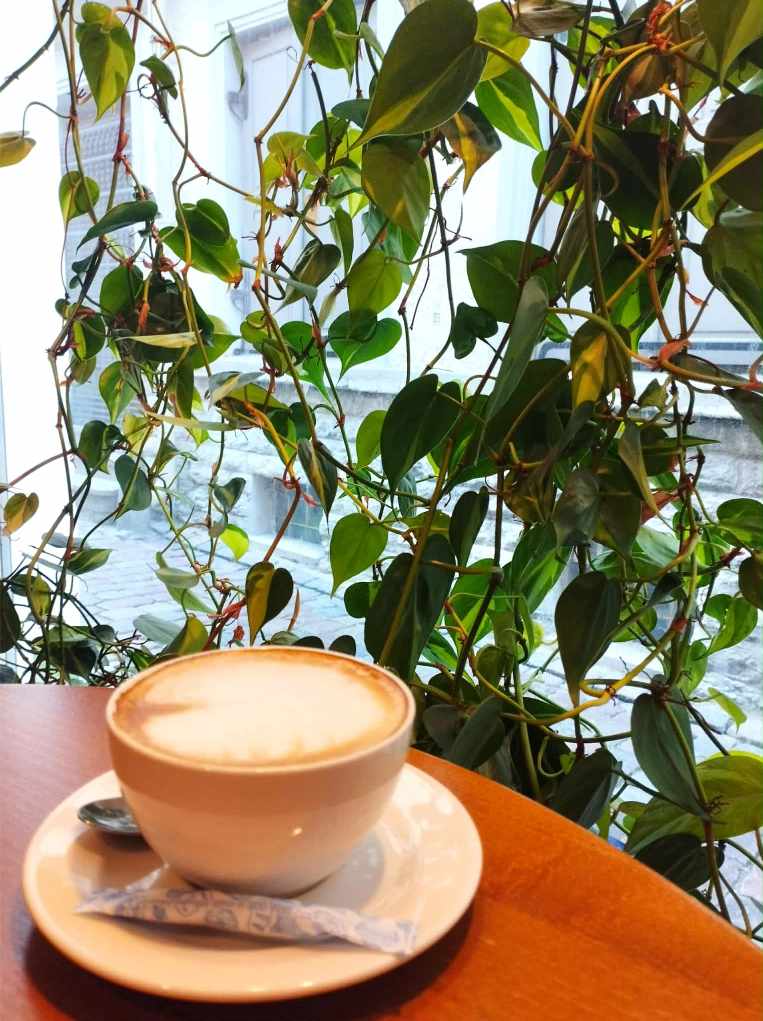
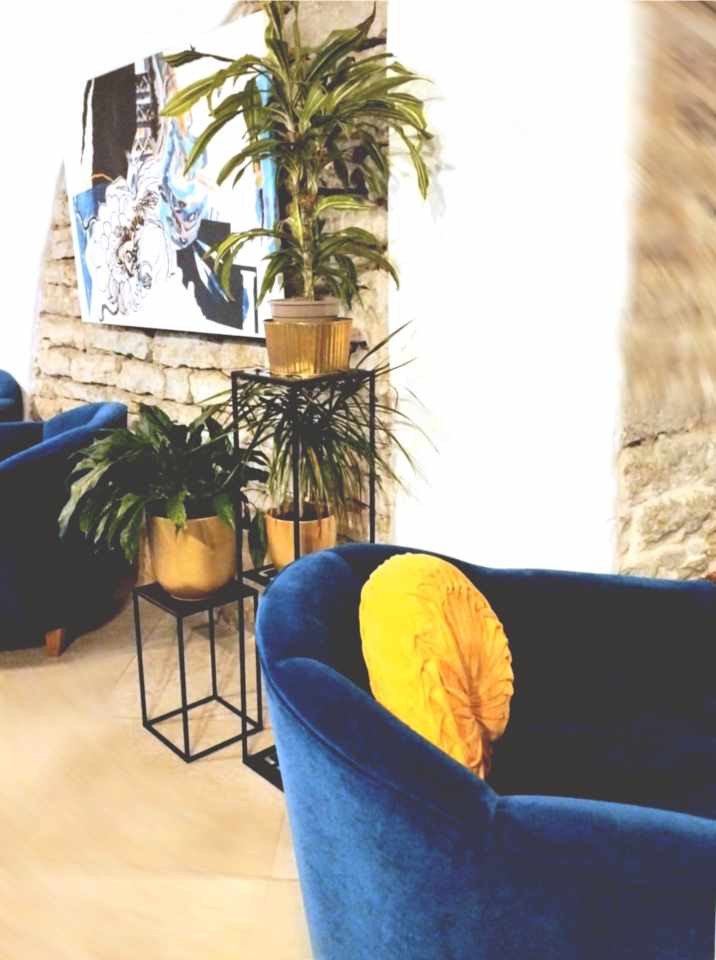
Soon I learnt that behind this atmosphere is the owner of the café, Maire Valdma, a Tallinn artist known since the Soviet era, who opened Lummus four years ago together with her daughter Sandhra-Mirella. The space welcomes visitors with a sense of calm and unhurriedness. There are soft chairs, cushions, and even blankets to use in the courtyard in summer. Living plants inside and the garden outdoors bring freshness, while the glow of fairy lights and stained-glass lamps, together with paintings and fabrics, lend a quiet solemnity. All this pulls you away from the commercial atmosphere that dominates so many dining establishments.
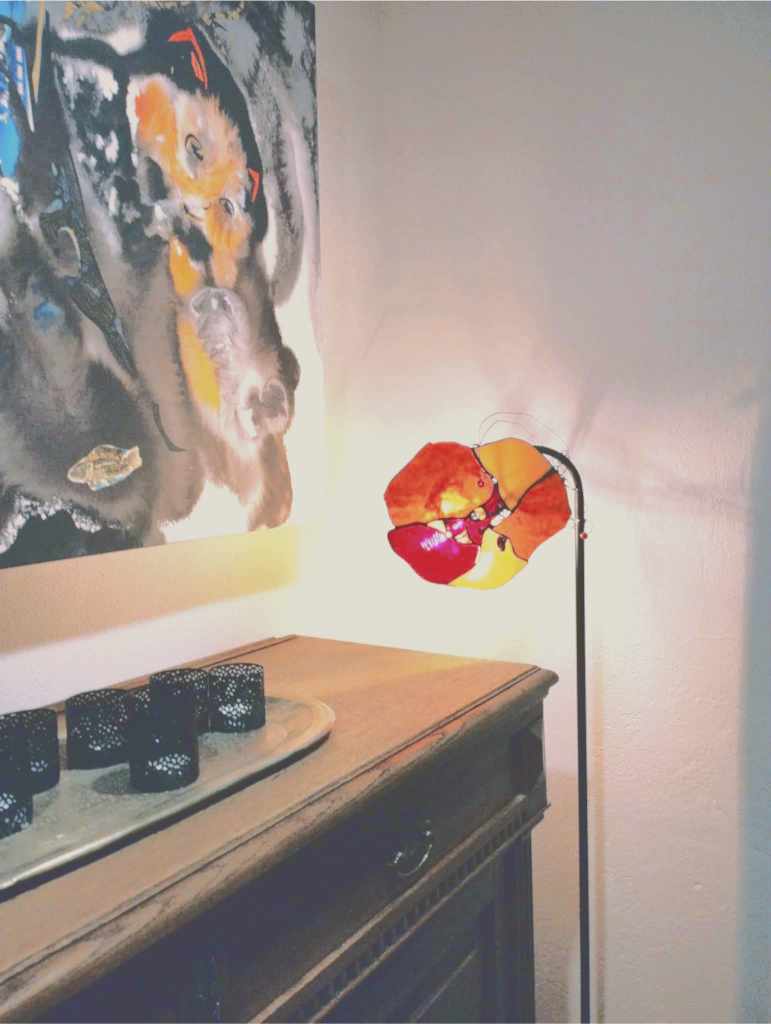
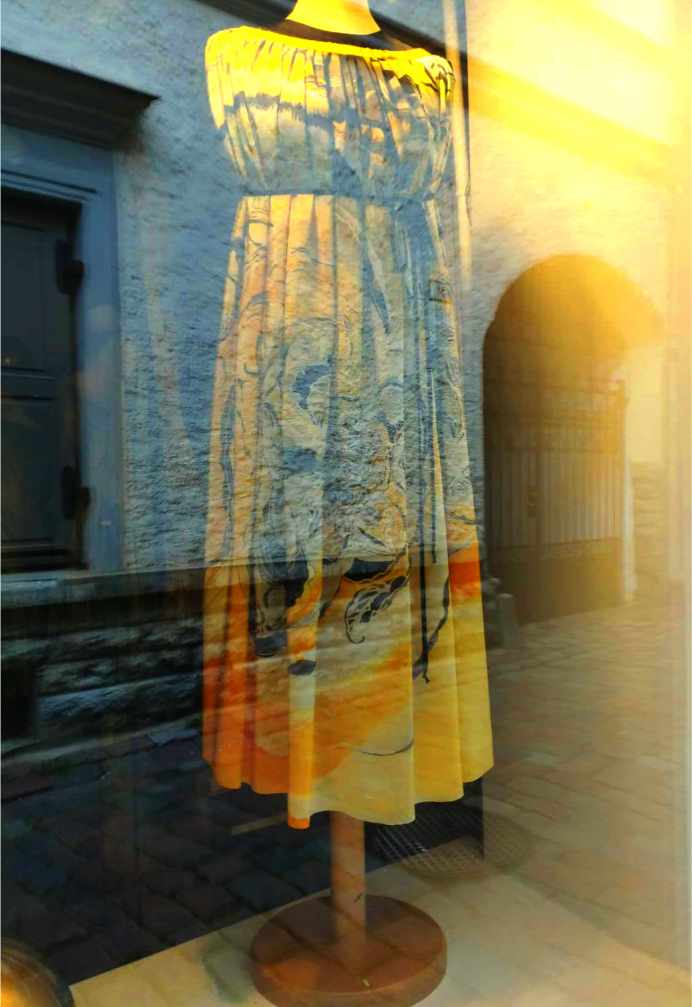
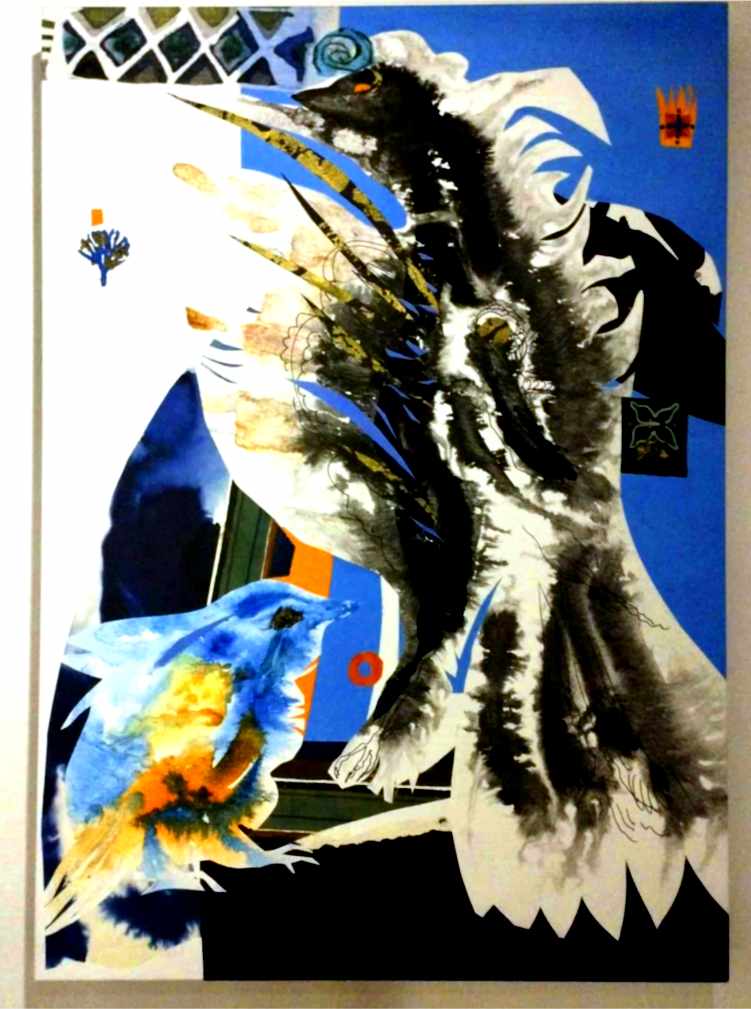
Maire’s own creative works—paintings, stained-glass lamps, fabrics suspended from the ceiling, even a mannequin draped with a dress—are not scattered objects of décor, but part of a rhythm that sets this place apart. Her art has its own aura of tranquility. It belongs to the present day, and at the same time it blends naturally with the winding, cobbled street of Müürivahe and the long history of the medieval wall integrated into the gallery’s space. Maire’s works themselves carry a similar balance: they look contemporary, yet hold a warmth and familiarity that recalls the spirit of earlier times. It’s both present and timeless, like wine that has been left to age.
As a regular visitor to Lummus, I had long felt a quiet curiosity about the artist behind its atmosphere. Maire kindly agreed to answer some questions about her background, her path in art and fashion, and the story of the café. Here is what I learned.
Born and raised in Tallinn, Maire Valdma earned her degree in fashion design from ERKI (the Estonian State Art Institute, now the Estonian Academy of Arts) in 1985. Her entrepreneurial spirit was evident even as a student. In 1982, she was among a group of art students who initiated the ERKI fashion shows, a platform for self-expression that continues to thrive and attract large audiences today.
Following her graduation, Maire began her career as an artist at the Marat Production Association, then a leading textile and garment enterprise in Soviet-occupied Estonia. This period also marked the beginning of her independent creative pursuits; she painted on textiles and canvas, exhibiting her work widely.
“It’s a pity that the borders of Estonia were closed and our collections never reached the wider world. We were young and brave, bubbling with creativity and energy, eager to grow and to practice our craft.”
(Maire Valdma)
While at Marat, Maire and her colleague Leena Ljutjuk had the opportunity to develop their own costume collections in the art workshop. Together, they presented these collections at various fashion events, and their collaboration and shared creative vision eventually led them to found the independent fashion collective NARE.
“During Soviet times such expression of creativity was unusual, but fortunately freer winds were already blowing in society,” Maire recalls. “It’s a pity that the borders of Estonia were closed and our collections never reached the wider world. We were young and brave, bubbling with creativity and energy, eager to grow and to practice our craft.”
With independence, new doors opened. Maire traveled to Finland and showed her work there, and a few years later she fulfilled a long-standing wish to open a gallery in Tallinn to present her own and her colleagues’ art. The gallery was named Müürigalerii (“Wall Gallery”), after its location on Müürivahe Street. The street’s name means “Between the Walls,” recalling the time when medieval Tallinn had a double line of fortifications with a narrow lane in between.
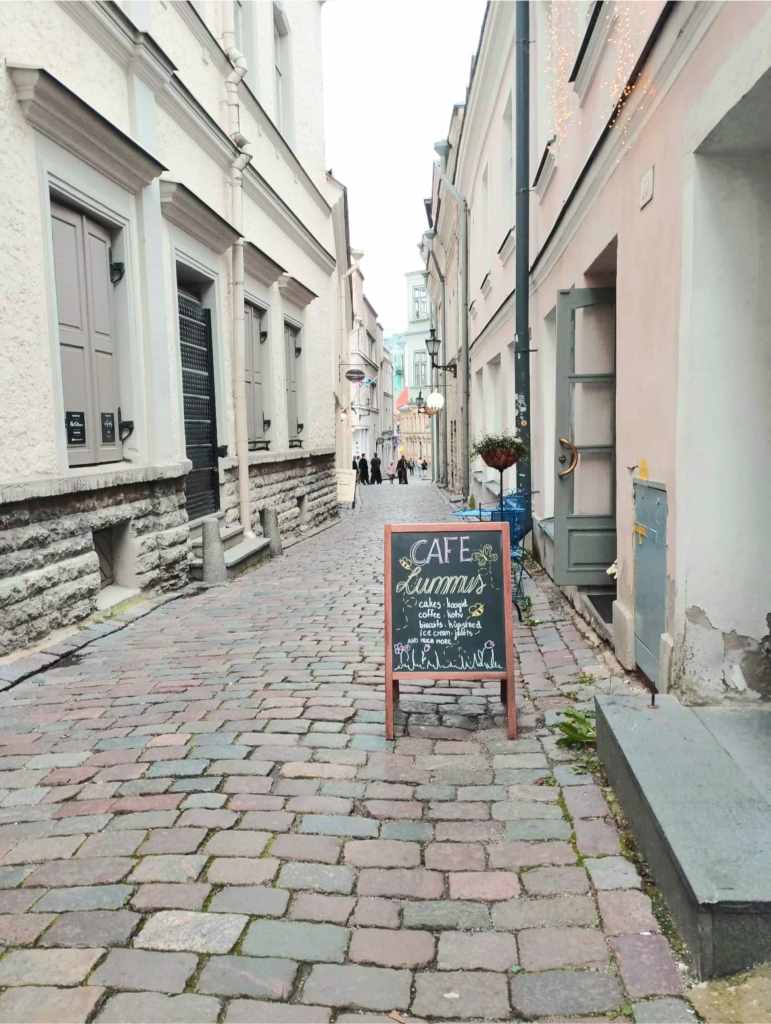
When I asked Maire how the café itself came into being, her answers took on a more personal tone.
Given your background as an artist, what inspired you to embark on this venture of opening a café?
We opened the art gallery in early 1995 and ran it for seventeen years… Afterwards, I continued with my own studio and creative work in the same building. The place itself began to inspire and shape my dreams. I feel that this building and the Old Town wall hold a special power and strength that leaves a lasting impression. Over the years, my daughter Sandhra-Mirella and I seem to have grown together with this place. It feels as though there’s a connection uniting us with it. From this inspiration, the café’s name, Lummus, was born. The wish to open a café had arisen many years prior, but bringing the idea to fruition took time. Finally, at the end of August 2021, we were able to open Café Lummus together.
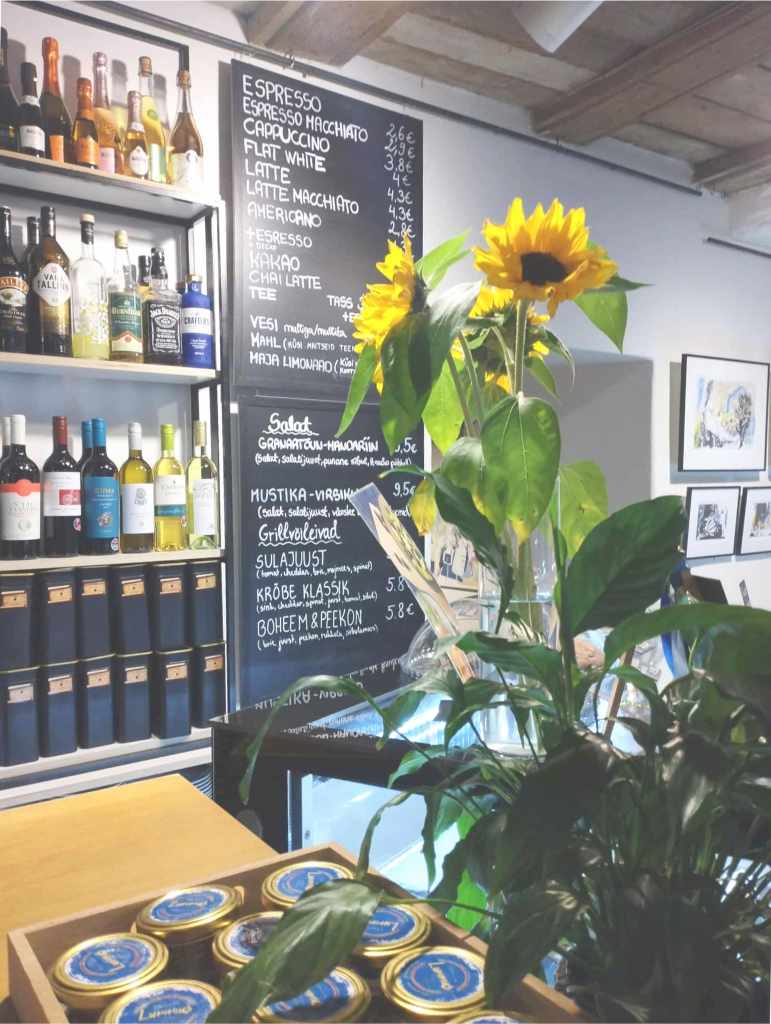
What difficulties did you have to overcome when establishing this café?
We had no prior experience in the catering industry. Everything had to be learned as we went along. It was difficult at first. During the Coronavirus pandemic, we designed the café, and it was then that I created the paintings that now hang on its walls. A few months after opening, a new wave of the Coronavirus hit, and we had to find ways to adapt to challenging circumstances. The restrictions, the economic crisis, and everything else that followed made things even harder. Life everywhere is turbulent; we hope it will eventually become calmer.
Let’s talk about your art. Your paintings, your silk dresses, the stained-glass lamps, the plants, and the overall interior design of the café seem to share one consistent style. How did you achieve this unity?
Life and experiences shape creativity. I feel that over the years my style has become more personal and more intuitive. I like to search for interesting harmonies of colours and compositions. Designing the café opened up new playfulness and the joy of discovery.
In the first room, blue and yellow stand out, from the velvet chairs and cushions to the paintings and details on the walls. Why did you choose to highlight this combination so strongly in your design?
Blue has long been my favourite colour. Maybe blue is the colour of dreams? In yellow the sun shines. Blue and yellow resonate together.
Do you see fashion and painting as distinct fields, or closely connected ones?
For decades I have been painting costumes and fabrics. For me, fashion and painting are closely connected. Painting on textiles is very similar to working with watercolours. Using different techniques brings excitement.
Your stained-glass lamps also resemble watercolours. Could you tell me how you created them? Do you have your own glass studio?
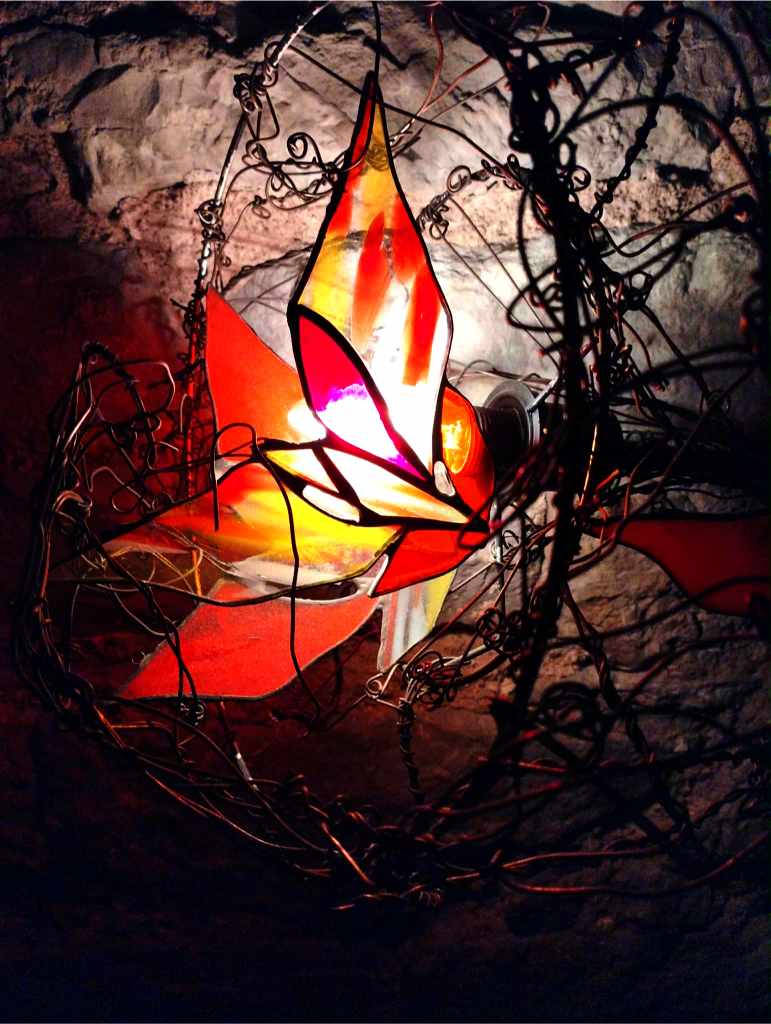
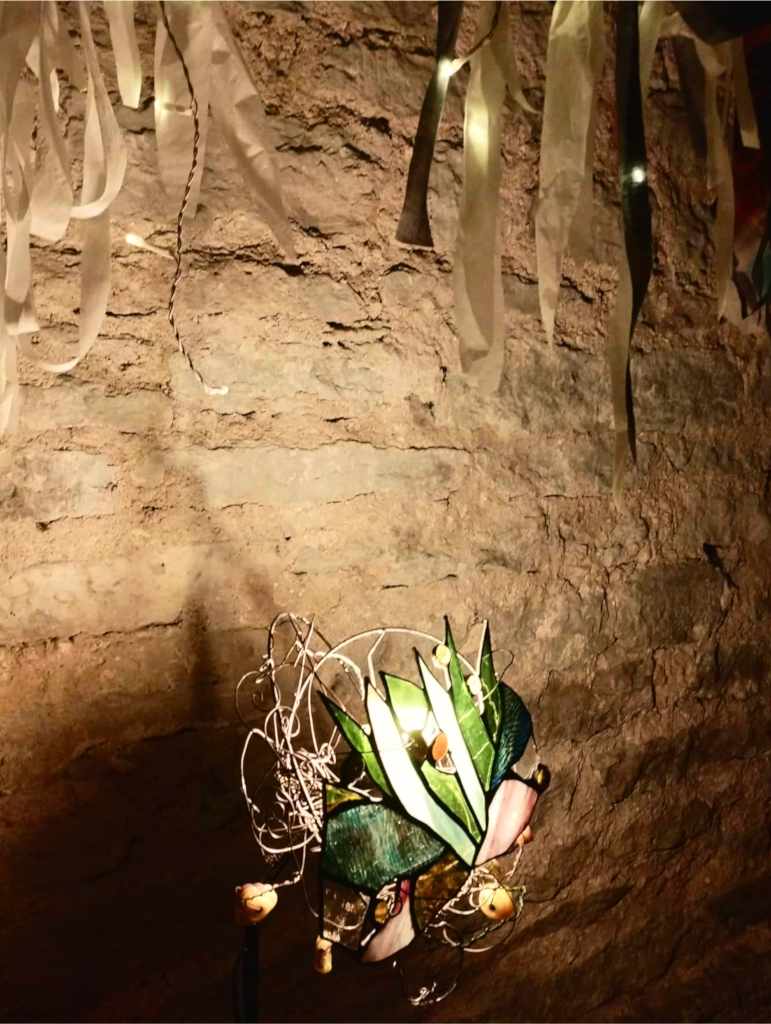
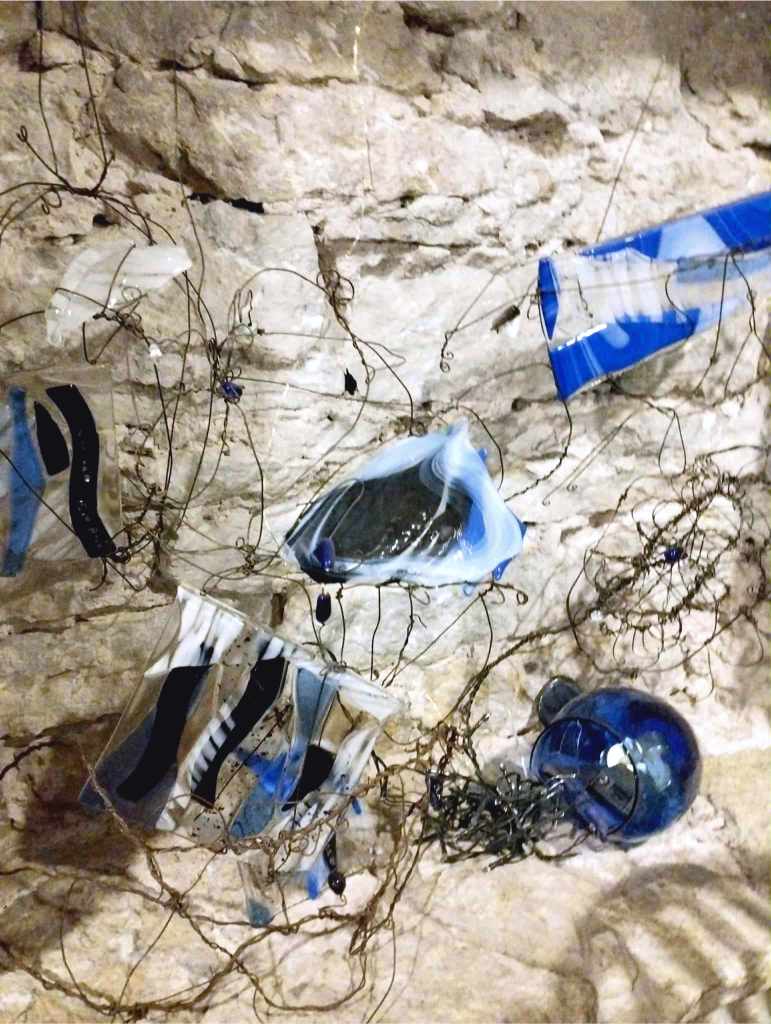
What are now stained-glass lamps in the café once began as clocks in the art gallery, made according to my designs. A new idea arose and I turned the clocks into lamps. In the first room of the café there is a composition I made of fused glass and wire. I don’t have my own glass studio, I have used other workshops for glass melting.
Do you ever draw inspiration from conversations with café visitors?
I can’t say for sure, but communication with visitors certainly has an impact. The café is also a meeting place for creative people, where ideas are exchanged, and this can be inspiring.
Could you clarify whether these creative people are everyday visitors, or do you also host special creative events?
In our café there have been several exhibitions of members of the Association of Fashion Designers. From time to time, we hold drawing sessions for quick fashion sketches in the back room of the café. Sometimes groups order art workshops, and sometimes young musicians perform here.
What plans or dreams do you have for your art in the near future?
My dream for the near future is to paint more.
Lummus can be seen as a continuation of Maire Valdma’s long creative journey: a café and space where art and everyday life meet. Unlike much of the city, which has changed under the weight of recent crises, it preserves an atmosphere of calm. The Müürivahe Street I once knew felt cleaner, free of tags and broken glass between the cobblestones. Now the view outside tells a different story. Yet stepping into Lummus, with its plants, stained-glass lamps, and works of art, restores another rhythm, inviting the visitor to slow down. And in that pause, there may still be room for a small private miracle.