With Oktoberfest fast approaching, it is absolutely necessary to revive the Language Detective column and study some very important words and expressions in Estonian.
Õlu sounds like a genuinely Estonian word, as well as a genuinely Estonian beverage. We actually share both the word and the taste for what it denotes with our fellow nations from the shores of the Baltic Sea: Latvians (“alus”), Lithuanians (also “alus”), Finns (“olut”), Swedes (“öl”), Norwegians (“øl”), and some bygone peoples such as Prussians, Livonians, Vepsians, and other smaller Finno-Ugric groups.
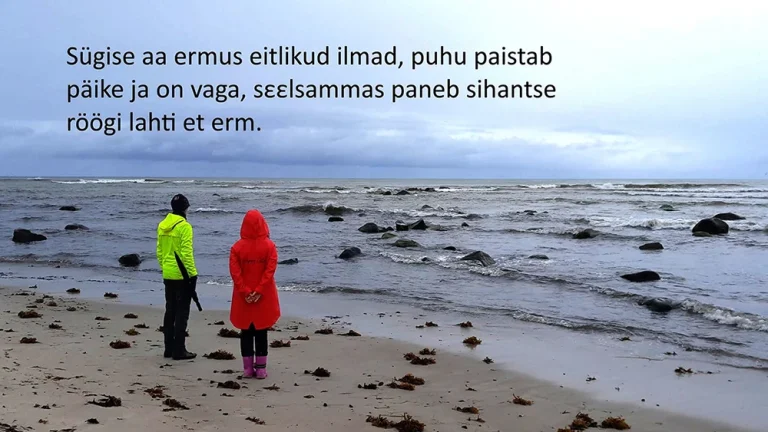
… Estonian grammar has set up some bumps and pitfalls on this path. It’s difficult to get the grammar of õlu right even when you’re sober.
Whereas it might be relatively easy to ask for a mug of beer in Scandinavian languages, Estonian grammar has set up some bumps and pitfalls on this path. It’s difficult to get the grammar of õlu right even when you’re sober.
We know the nominative: it is õlu. „Palun üks õlu.” (“One beer, please!”) For the genitive case, we normally just add a vowel to the end of the nominative. Let’s try that. Õluu? Nope. The genitive of õlu is õlle. As in „Võtan ühe õlle.” (“I’ll take a beer.”)
In order to memorise the genitive form, one might want to listen to and sing along to an
eponymous song by legendary Tartu rock group Genialistid.
The genitive form is also very important because all the other cases are derived from this form. For example, „õlled” (a number of beers); „õllega” (with a beer); „õlles” (inside one’s beer).
But what about the partitive case that answers the questions “concerning what?” or “consuming what?” when it comes to beverages. In the case of beer, we go back to the nominative form and attach a good, plain old -t ending to it: „õlut.” „Joon õlut.” (“I drink beer”) „Tahan õlut.” (“I want beer.”) „Too mulle õlut, palun!” (“Bring me a beer, please!”) Or, if you really do not fancy this drink, you can say: „Ma ei joo õlut.” (“I do not drink beer.”) It is a sad thing to say or hear indeed, but if you must, at least state it in a grammatically correct manner, to cut off all possible subsequent discussion.
The preference for õlu instead of wine in the Baltic Sea region is actually purely ecological: grapes do not like to grow in this climate, but barley does. And even in our contemporary globalized world, many people prefer to eat and drink what is local. The statement that opens the title, „õlu on elu” (“beer is life”), thus refers not only to the frivolous belief that a fully active life must always include some beer, but also to a more ecological understanding that beer can be consumed where the plants permit us to do so—in cooperation with soil, sunlight, and climate. We, the beer-consumers, are but one node in that extensive web of life.