Putting things up for sale on Facebook Marketplace or in a yard sale makes you feel better. But it still makes you wonder, “why did I get x in the first place?” On the purchasing end of the continuum, shopping at thrift stores can yield some thrilling finds, but it also exposes you to how much junk there is out there.
Yet, the solution isn’t to wear sackcloth and forsake all of one’s possessions.
That uncomfortable knowledge bothers consumers and designers alike, especially when it comes to clothing. Yet, the solution isn’t to wear sackcloth and forsake all of one’s possessions.
Instead, if buying something new, we should consider the companies and individuals out there who are making products that are meant to last forever. Okay, nothing remains in pristine condition forever. But with a few repairs, an item can be used for a lifetime, multiple generations even.
Every single item is handmade in Estonia.
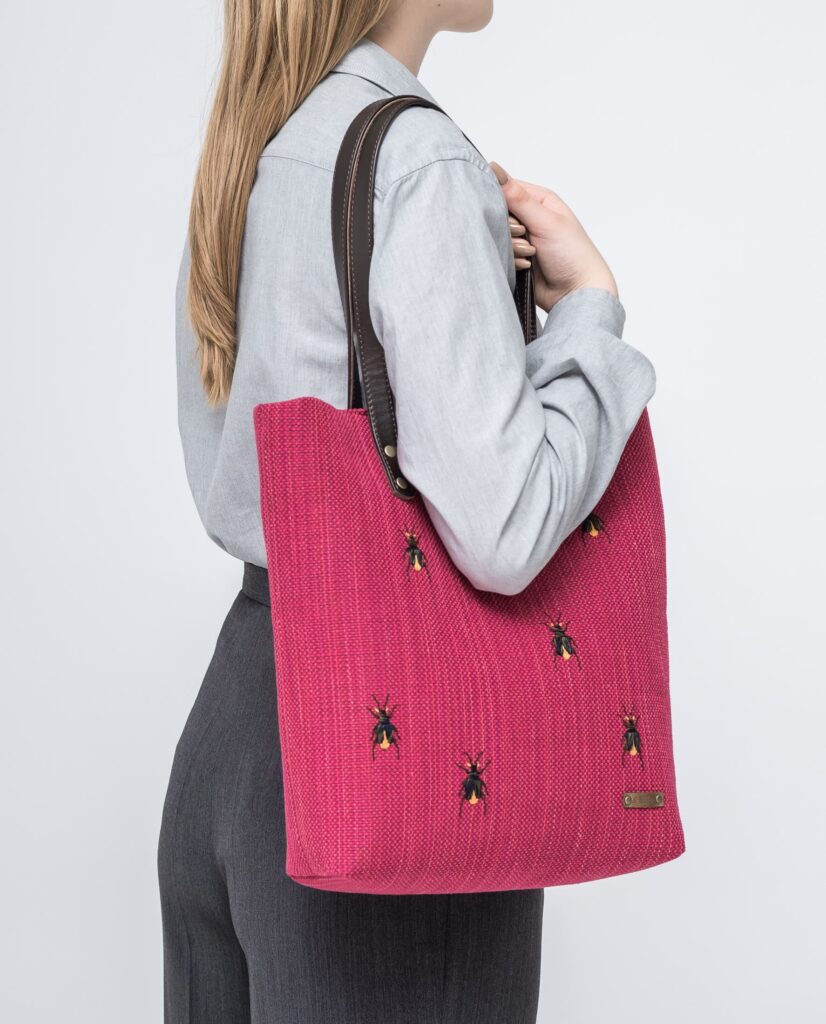
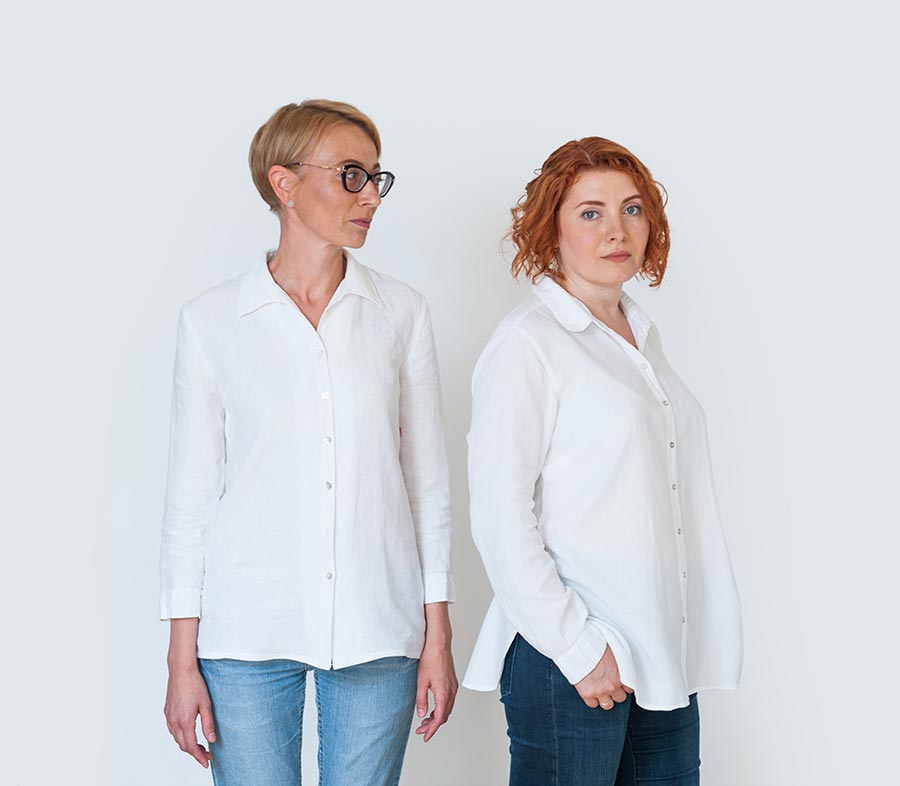
Aligning with this slower approach to fashion is the Estonian company Kango Textile (Kango Tekstiil OÜ). Founded by textile designers Nataliya Sukhorukova and Vivika Sopp in 2005, Kango Textile creates one-off pieces and small runs of clothing and accessories. And this isn’t borne out of an artificial strategy to make items more expensive. It’s because every single item is handmade in Estonia.
They often share their process on social media, starting with weaving on a pedal loom. As they slide the shuttle back and forth, the fabric grows one thread at a time. This old technology and methodology is at the heart of their scarves and shawls, as well as more structured items like tote bags, backpacks, and t-shirts. Embroidery is also used in their products: one t-shirt is embellished by a flock of sheep all over and a single wolf.
There is a lot we can gain from adopting the skills of our ancestors.
Beyond taking a handmade approach over a digital one, it’s notable that they are applying hand-woven fabrics to basics and contemporary fashion rather than to create Estonian folk costumes. Typically, we associate hand weaving on a loom with traditional clothing like vööd (belts) and seelikud (skirts). It goes to show that old methods don’t have to be restricted to old clothing. There is a lot we can gain from adopting the skills of our ancestors.
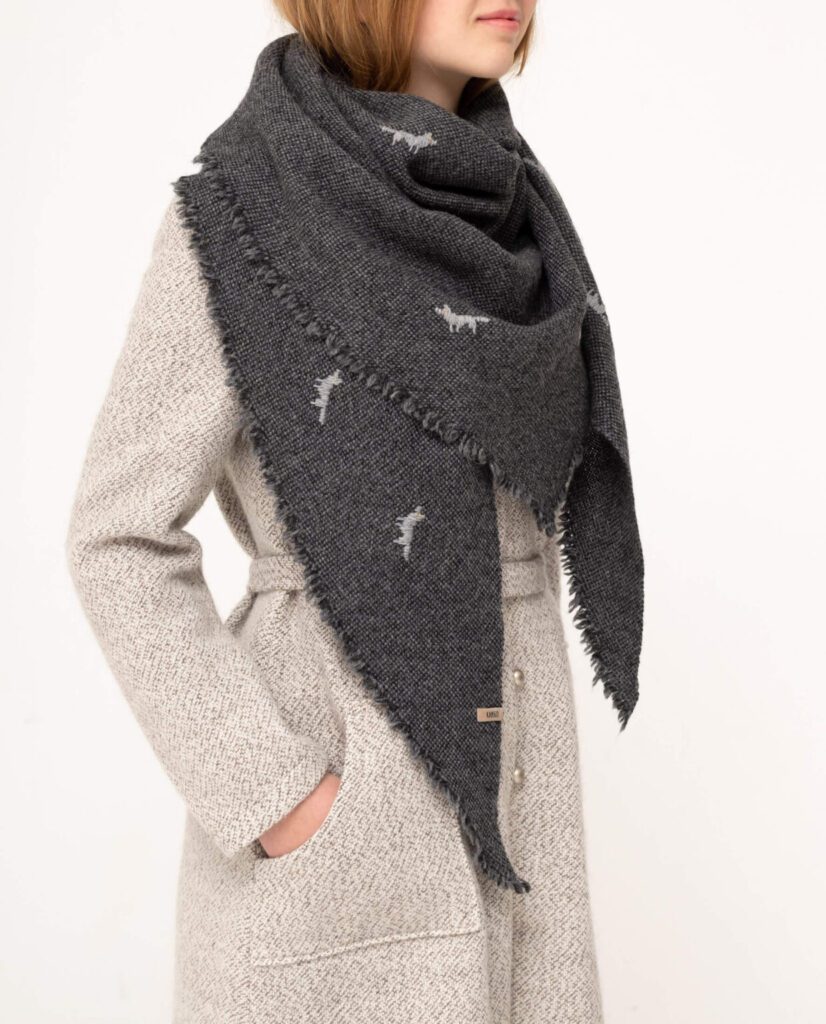
Natural fibres like wool, linen, and cotton—as Sopp and Sukhorukova employ to a large extent in their clothing—have numerous benefits. Cotton is breathable and soft on one's skin. Linen, which comes from flax plants, is durable, absorbs moisture, and keeps the wearer warmer in the winter and cooler in the summer. Wool is a superb insulator, trapping heat against your body even when it's wet. It's lightweight and breathable. If a wool product truly reaches the end of its lifetime, it will decompose in a few years. Wool is also a material that has stood the test of time. Sheep were first domesticated approximately 10,000 years ago, and Estonians have been wearing wool from the very beginning.
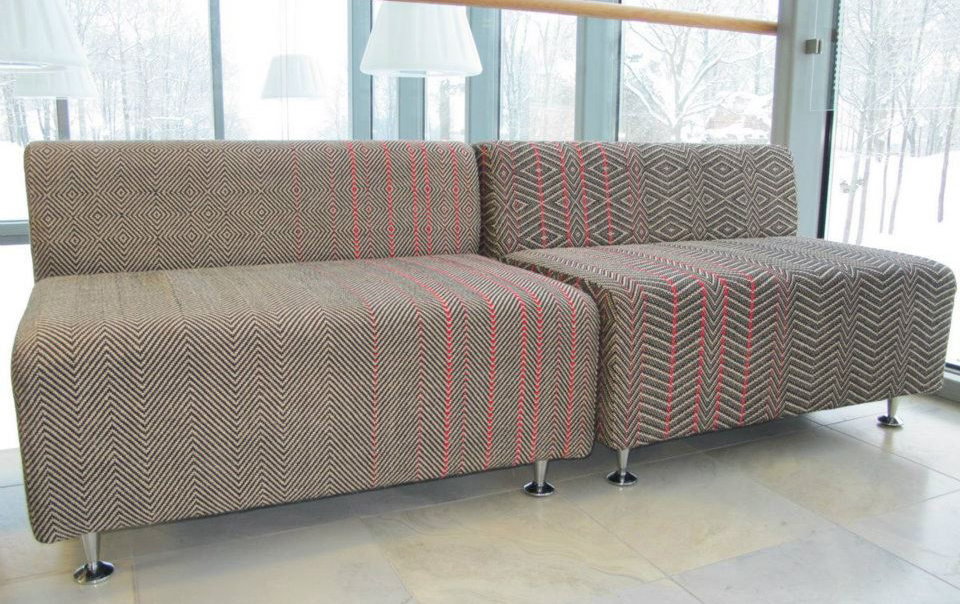
You can find their textiles on the sofas and armchairs of the Estonian Traditional Music Centre café in Viljandi.
Although they have kept their operations at a sustainable size, Kango Textile has still expanded the reach of their creations. You can find their textiles on the sofas and armchairs of the Estonian Traditional Music Centre café in Viljandi. Here, they say “The inspiration came from loom-woven towels made over a century ago.” Their fabrics were also worn by the characters Andres and Pearu in the 2019 film adaptation of A.H. Tammsaare's novel series Tõde ja õigus.
As a consumer, there are a number of places where you can find their products. The first is in the cellar of Eesti Käsitöö Maja (Pikk tänav 22) in Tallinn on Wednesdays and Saturdays. If you’re in Tallinn from November 9th to 11th, 2023, you can catch them at the 27th annual Mardilaat (St. Martin's Fair) taking place at Tallinn’s Unibet Arena, along with many other craft vendors, workshops, and Estonian food.
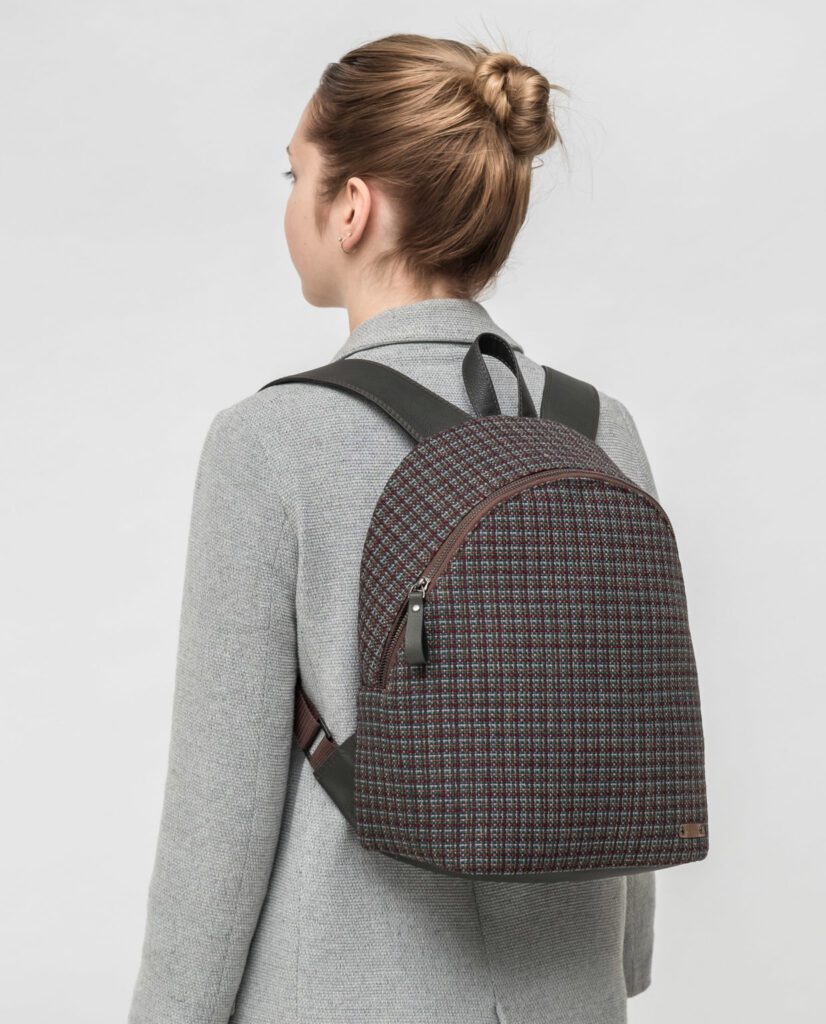
For those who are shopping from outside Estonia, their website and Etsy shop are stocked and equipped for international delivery.
If you’re seeking better quality clothing and items that will remain in your collection for a long time, these are the kinds of producers worth spending on.