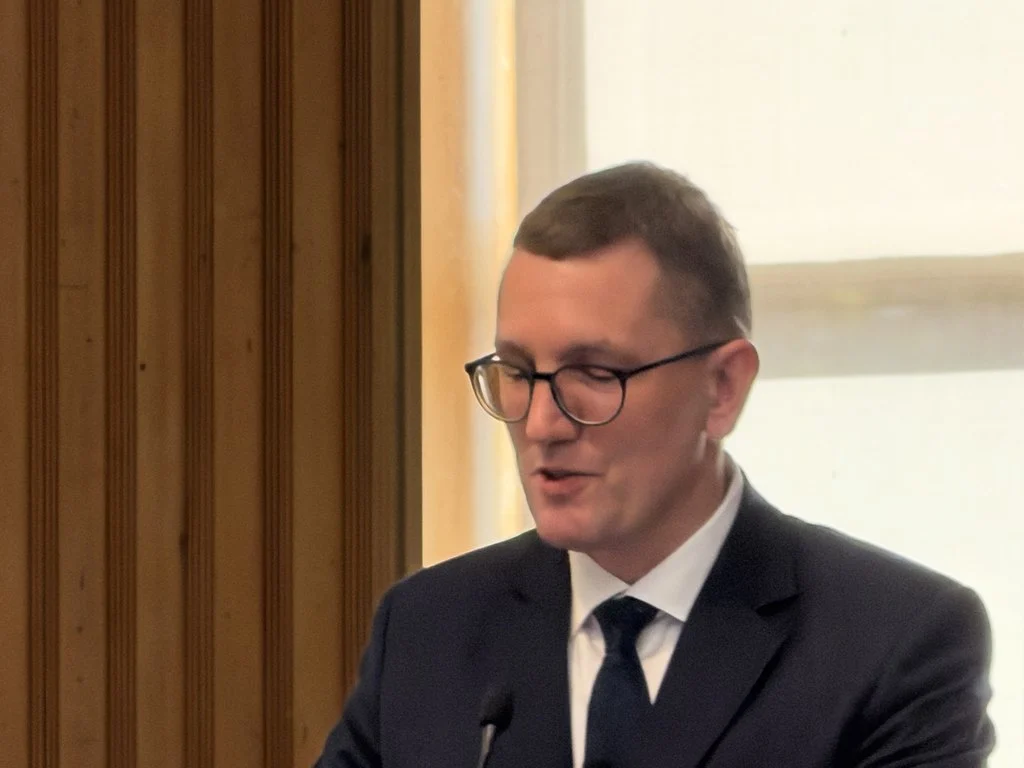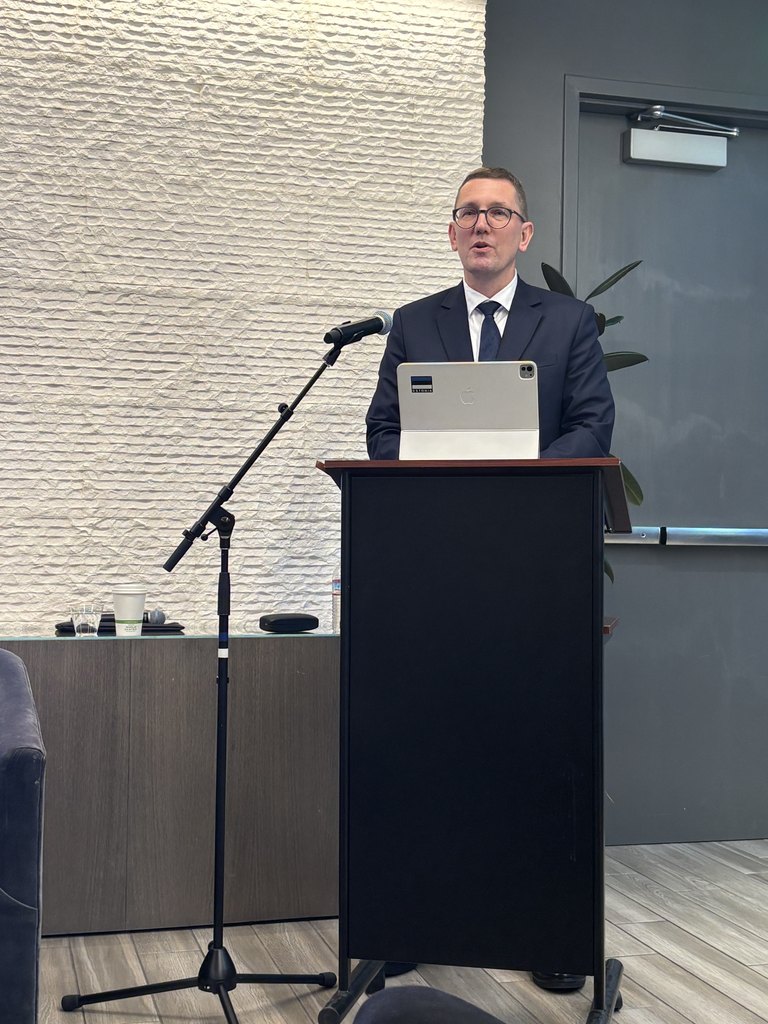
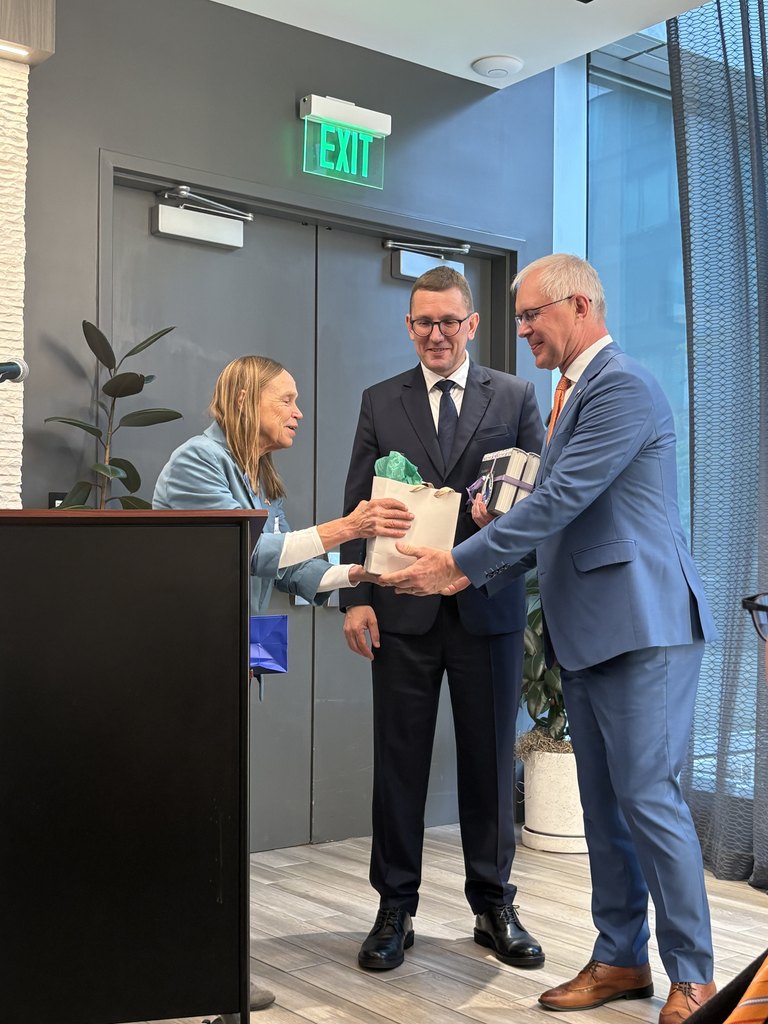
On November 15th, 2026 San Francisco Eesti Selts hosted Prime Minister Kristen Michal, together with Ambassador to the United States Hannes Hanso and their delegation. Approximately seventy-five members of the Estonian and broader Bay Area communities gathered in downtown San Francisco for an opportunity to hear directly from Prime Minister Michal and Ambassador Hanso on a wide variety of current issues including national security and the war in Ukraine, technology, AI at home and abroad, infrastructure, and US-Estonia relations. Following Prime Minister Michal’s remarks, attendees were invited to ask questions. Posed in both Estonian and English, topics ranged from AI data centres and their place in Estonia to the feasibility of geothermal energy in Estonia as it relates to rising energy costs in Europe.
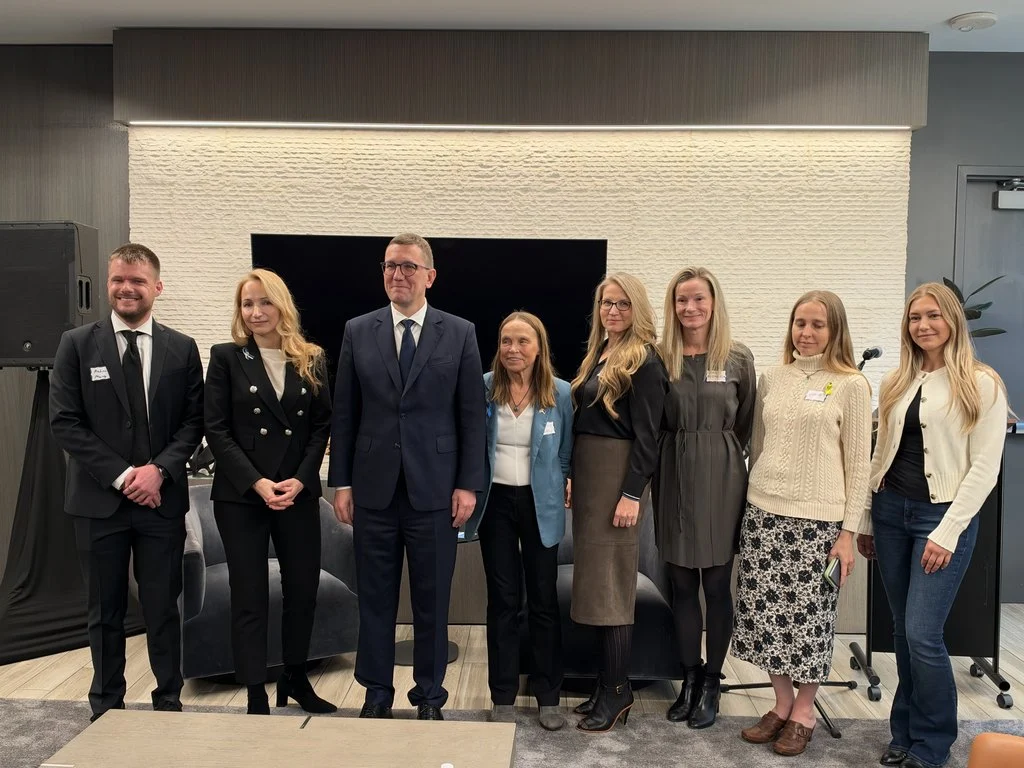
Also in attendance at the event were Mai-Liis Bartling, President of San Francisco Eesti Selts, and Christine Morgan, Honorary Consul for Estonia in San Francisco. Both women delivered remarks welcoming the Prime Minister and the Ambassador, emphasizing the importance of the close and long-standing US-Estonia relationship, as well as the opportunities available for collaboration between Estonia and the Bay Area, in particular in Silicon Valley. Anne-Marie Riitsaar also delivered an overview of the idea for an Innovation Hub for Baltic Entrepreneurs in San Francisco.
Following the November 15th event, Prime Minister Kristen Michal was hosted on November 17th at Stanford University by the Center for Russian, East European and Eurasian Studies. The event was moderated by Michael McFaul, former US ambassador to Russia. The PM spoke to an audience of around 150 people, many of whom were from the Stanford community of students and faculty. He once again provided an overview of current national security, the war in Ukraine, and a discussion of opportunities for collaboration with regard to AI. The discussion began with a series of provocative questions from McFaul and then the floor was opened to questions from attendees. Students were given priority for questions and many thoughtful and educated questions were posed. Further discussion on Estonia’s role in the EU, NATO’s Article 5, and the Nordic-Baltic Eight (NB8) was covered, with PM Michal adding that “deterrence is cheaper than war.” Questions surrounding AI and Estonia’s thorough adoption of e-services were discussed, with PM Michal noting that AI Leap or Tiger Leap 2.0, the integration of AI into the education system, is underway. However, he stressed that “critical thinking” is what will allow AI to act as a springboard for Estonian society as a whole.
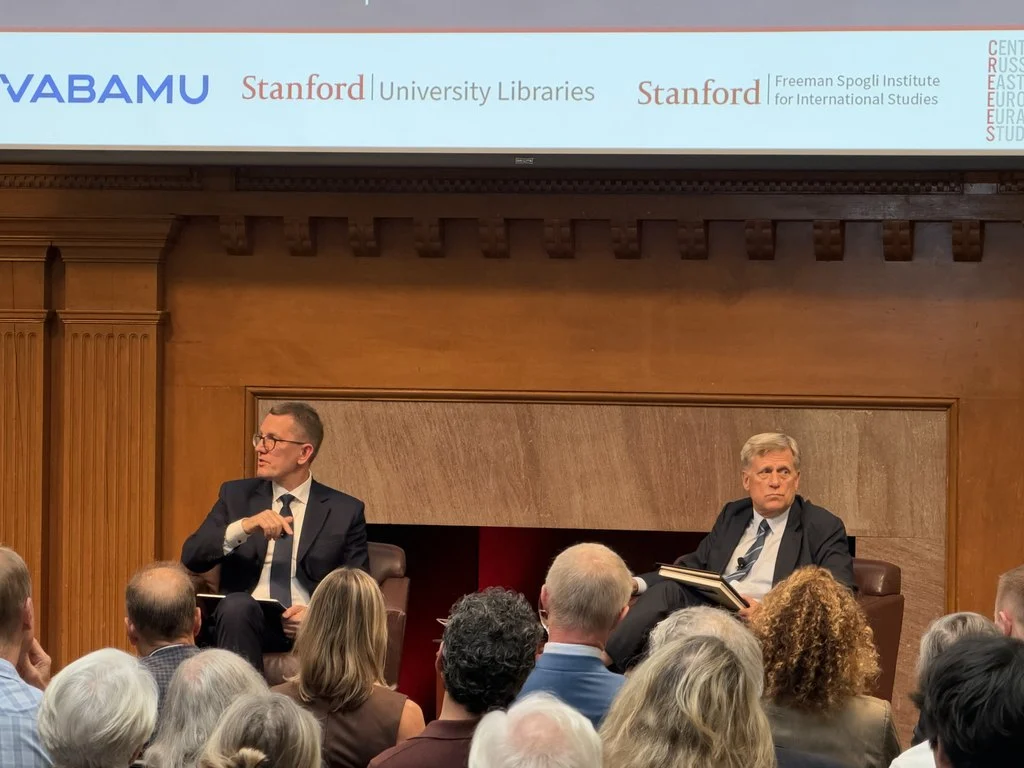
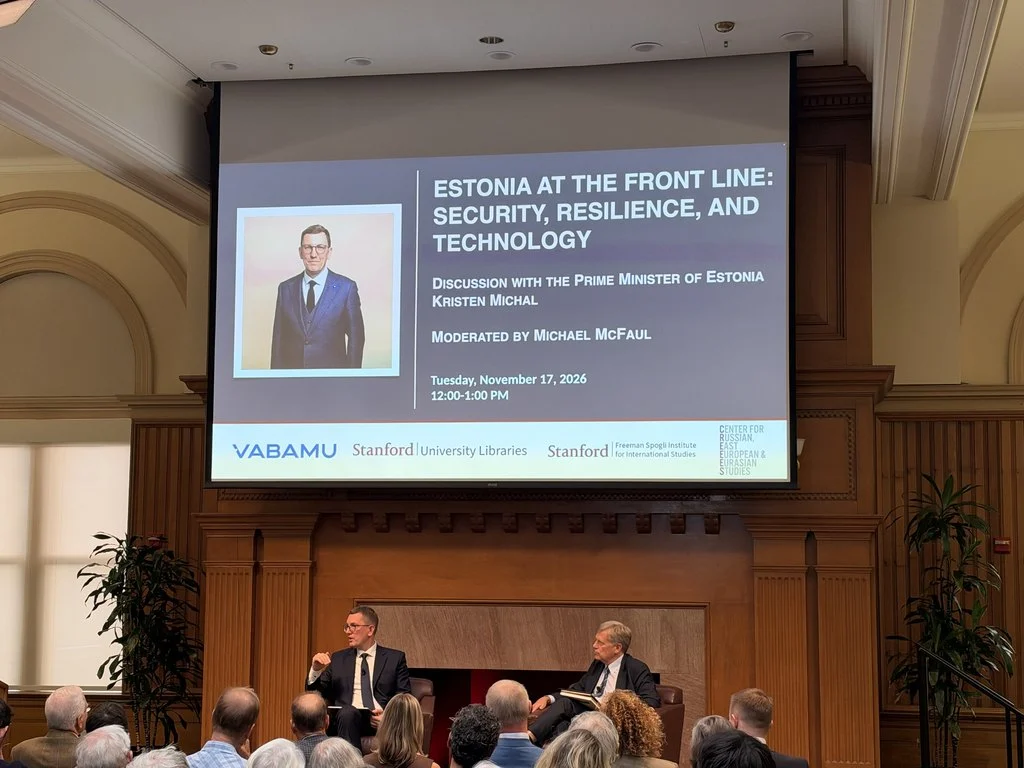
He also discussed Estonia’s support for its thriving startup culture and the challenge of fostering that culture within the somewhat more restrictive framework of European Union regulations. PM Michal referred more than once to his meetings in Dublin at the European diplomatic summits prior to arriving in the Bay Area and conveyed optimism with regard to opportunities for the Nordic-Baltic 8, which now accounts for the world’s tenth largest economy. The Stanford event concluded Prime Minister Michal’s visit to the Bay Area.