It doesn’t look like anything related to the birth of Christ, right? Right. In archaic-sounding English, we find the word “Yuletide,” and that is where the roots of jõulud also lie.
In ancient Scandinavian, “Yule” denotes the period of the winter solstice. Many of the Christian holidays have been “accommodated” on or near the more ancient celebratory times that had already been observed prior to the spread of Christianity. Christmas is no exception.
It’s said then that the Sun remains in its nest („päike on pesas”), and so should the people: snuggled up in their homes, with fires and candles lit…
Jõulud is one of those words that is always in plural form in Estonian (hence the -d ending). It means that it’s not just a single day of celebrations, but a longer period, a whole bunch of days. People who follow Estonian maausk (literally: “faith of Earth“”) traditions celebrate the period of four days when the daylight time is the shortest. It’s said then that the Sun remains in its nest („päike on pesas”), and so should the people: snuggled up in their homes, with fires and candles lit, sharing the warmth with each other. This period starts on Dec 21st and concludes on Dec 24th. But that does not mean festivities are over after that. In many places in Estonia, January 7th (the day after the Epiphany) has been considered the end date of jõulud. But there are other celebrations, too: January 17th (St. Anthony’s Day, on which half of winter is over), February 2nd (Candlemas), or even a few days after that date, if one happens to have roamed far away from one’s home during the celebrations. Jõulud is a major time of festivity indeed.
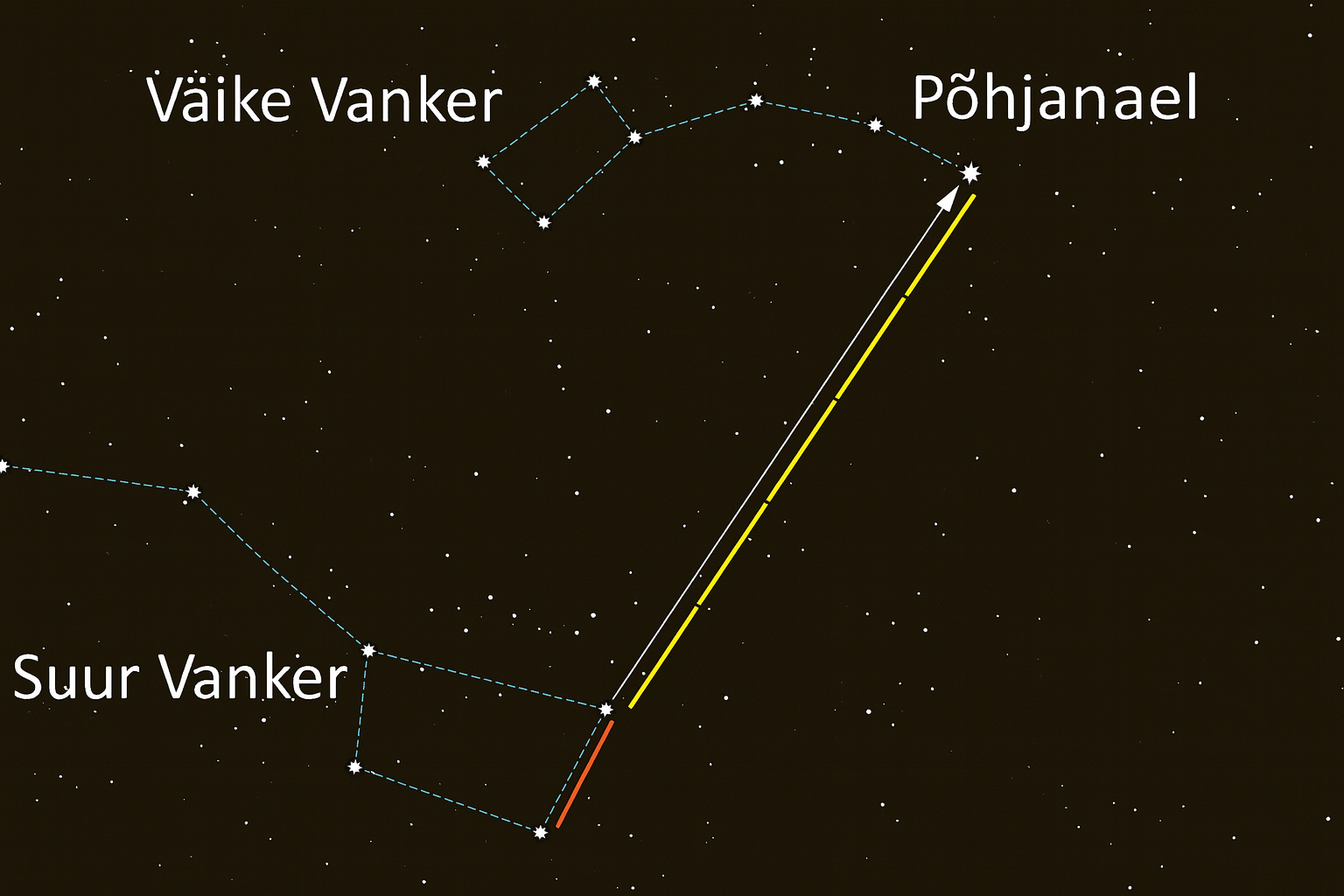
Solstice, in Estonian, is „pööripäev”—literally, “the Day of Rotating.” It celebrates the cosmic cycles of rotation, four times each year. Only the Northern Star, Põhjanael, literally “The Nail of the North,” stays in its place, a fixed reference point while other stars seemingly shift from one position to another in a circular motion. Looking up to the skies to observe the slow rotation of the constellations over the dome of sky is a very appropriate thing to do during the dark nights of Yuletide. It is best done outside big cities where light pollution does not block our view of the stars. I personally find city lights (especially those that can be observed in Toronto) also very beautiful, their only shortcoming being that they do not rotate. And while stargazing, who knows, perhaps you’ll even be able to spot the star that led the Three Wise Men to the crib of little Jesus who was born back in those days.
Häid jõule, head pööripäeva!